

Expert Infrared Leak Detection in Chicago Homes and Businesses
A hidden pipe leak can destroy your property long before you smell the mold. Most homeowners in Chicago neighborhoods like West Ridge, Lincoln Park, and Logan Square discover water damage months after it starts, when walls are already soft and drywall is warping. Thermal imaging technology lets us find that leak on day one.
Cornerstone Water Damage Restoration uses FLIR infrared cameras to detect temperature differences in walls, floors, and building envelopes that indicate moisture. We don’t tear into your plaster to hunt for leaks. We identify the exact location, stop the damage, and move into restoration.
Why Chicago’s Unique Architecture Demands Thermal Imaging
Chicago’s building stock presents challenges that standard leak detection cannot solve. Lath and plaster walls in vintage bungalows, limestone foundations in historic neighborhoods, and complex internal plumbing in high-rise condos all hide leaks behind materials that are costly and time-consuming to demolish.
The freeze-thaw cycles across Chicagoland winters put extreme stress on pipes. Water expands as it freezes, creating micro-cracks in copper, PVC, and galvanized steel. These cracks don’t always flood immediately. Sometimes water seeps slowly into walls for weeks before anyone notices dampness or a spike in utility bills.
Our climate also means basement water issues are common. Chicago’s high water table, combined with clay-heavy soil (Chicago Blue Clay) that doesn’t absorb water well, creates hydrostatic pressure that forces moisture through foundation walls. Thermal imaging reveals these wet zones faster than visual inspection alone.
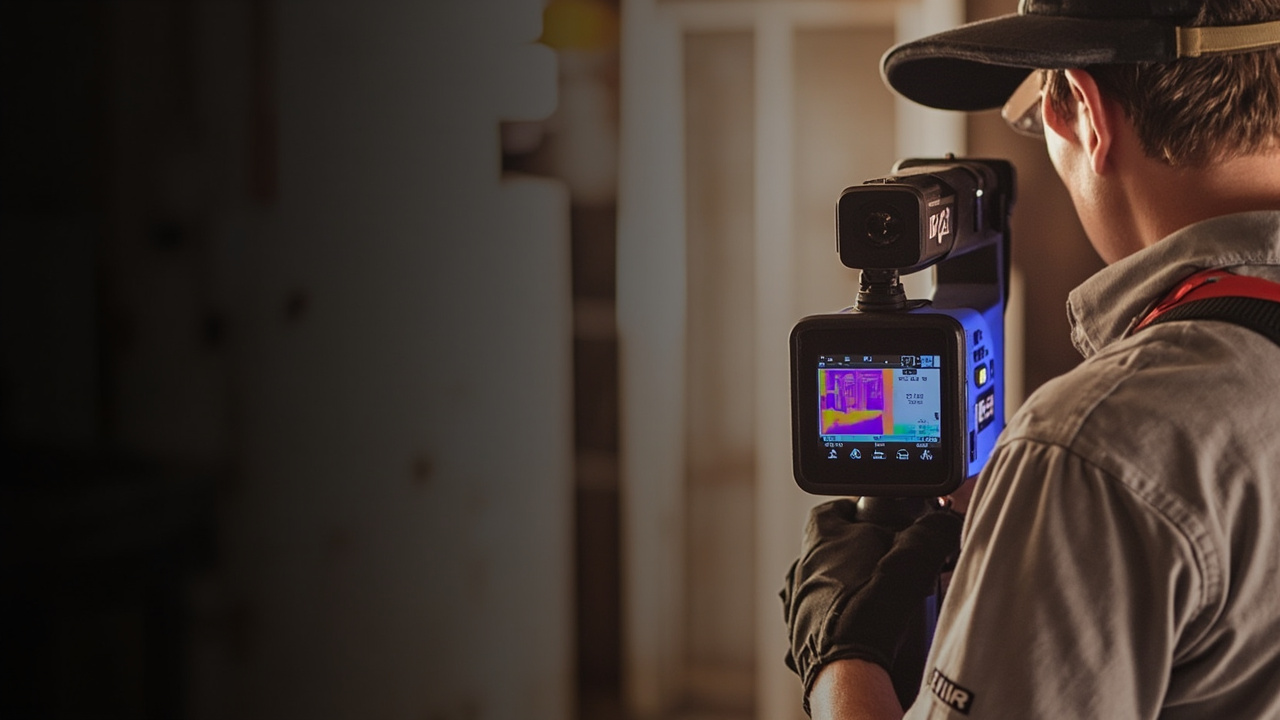
How Infrared Thermal Imaging Detects Hidden Leaks
Thermal cameras measure infrared radiation emitted by surfaces. Water has different thermal properties than dry drywall, brick, or concrete. When water accumulates behind a wall or under a floor, that area cools down because water conducts heat differently than building materials. The thermal camera displays this as a temperature anomaly on screen.
Our process works in six steps.
- Visual Assessment
We inspect the property for visible signs of water damage like discoloration, soft spots in drywall, or peeling paint. These clues help us know where to focus the thermal camera.
- Thermal Scan
Using a calibrated FLIR thermal imaging camera, we scan walls, ceilings, floors, and the building envelope. The camera translates infrared data into a color-coded image. Cool spots show where moisture is present.
- Moisture Mapping
We document the location and extent of thermal anomalies. This creates a map showing affected zones and helping us determine if the leak is localized or widespread.
- Verification with Moisture Meters
We confirm thermal findings using handheld moisture meters that measure actual water content in materials. This prevents false readings from other temperature differences like drafts or insulation gaps.
- Root Cause Analysis
We trace back to the leak source. Is it a burst pipe, roofing failure, foundation seepage, or plumbing joint that’s failed? Knowing the cause prevents the leak from restarting after we repair it.
- Professional Report
You receive a detailed report with thermal images, moisture readings, and our recommended repair plan. This report also supports insurance claims by providing objective evidence of damage.
The Non-Destructive Advantage for Chicago Homeowners
The old approach to finding leaks was simple: cut into walls and look. For homeowners in Beverly, Rogers Park, or Evanston living in 1920s-era homes with original plaster, that meant demolition costs that often exceeded the repair itself. Thermal imaging eliminates this guesswork.
We can identify a leak in your Greystone’s plaster walls without removing a single piece of historic material. For basement seepage in a classic two-flat in West Loop, we can map exactly where water enters the foundation and how far it’s traveled horizontally. This precision saves money and preserves character details that matter to older homes.
Homeowners also avoid unnecessary drywall cuts that create points for future mold entry. Mold thrives in wet environments and spreads fast in Chicago’s humid summers. Finding the leak quickly and drying the area prevents mold colonies from establishing themselves in your walls.

Common Leak Scenarios in Chicago Properties
Over 15 years serving the greater Chicago metro, we’ve found leaks in every building type. Here are the most common scenarios where thermal imaging saves time and money.
| Leak Type | Common Causes | Why Thermal Imaging Helps |
|---|---|---|
| Burst Pipes | Freeze-thaw expansion during polar vortex events. Pressure spikes in the water main. | Water spreads into walls before you see wet spots. Thermal shows the leak path so repair is precise. |
| Roofing Leaks | Damaged flashing, ice dams blocking drainage, deteriorated shingles. | Thermal reveals where water travels internally before it stains ceilings. Leaks often travel sideways before dropping. |
| Foundation Seepage | Hydrostatic pressure from Chicago’s high water table and clay soil. | Maps the entire wet zone so we can waterproof the exact entry points instead of guessing. |
| Under-Slab Leaks | Corrosion in old galvanized pipes, settlement cracks in concrete. | Finds hot spots under basement floors without jackhammering. Shows if leak is progressing toward structural support areas. |
| Plumbing Joint Failures | Solder separation, compression fitting corrosion, PVC cracking. | Pinpoints the exact joint or section so we replace only what’s failed, not the entire line. |
Thermal Imaging Versus Other Leak Detection Methods
You might wonder how infrared compares to other detection tools. Each method has strengths. Some properties benefit from combining thermal imaging with acoustic testing for a complete picture.
| Detection Method | How It Works | Best For | Limitations |
|---|---|---|---|
| Thermal Imaging | Detects temperature differences in surfaces caused by moisture and evaporative cooling. | Wall leaks, foundation seepage, flat roof water damage, sub-floor moisture. | Requires temperature difference between wet and dry areas. Works poorly in direct sunlight or immediately after rain. |
| Moisture Meters | Handheld probes measure water content in materials using electrical resistance or conductance. | Confirming moisture in drywall, wood, or concrete after thermal detection. | Requires access to the surface. Cannot detect moisture deep inside walls without cutting into them. |
| Acoustic Testing | Detects sound of water flowing or hissing inside pipes under pressure. | Active pressurized water leaks in supply lines. Helps locate leaks within pipes. | Does not work on drain lines or slow seepage. Requires a trained technician to interpret sounds. |
| Tracer Gas Testing | Introduces helium gas into pressurized water lines. Detects gas escaping at leak points with a sensitive probe. | Pinpointing exact leak location in large piping systems or when location is extremely uncertain. | Expensive and time-consuming. Requires system to be pressurized. Not useful for seepage or drain leaks. |
When to Request a Thermal Imaging Inspection
Don’t wait for visible damage. Several warning signs suggest a hidden leak is developing in your Chicago home or business.
- Water bill spikes without explanation. A sudden 20 to 30 percent increase in your water usage suggests an active leak somewhere in the supply line.
- Musty or moldy smells in basements, crawl spaces, or specific rooms. This odor means moisture is present and mold is beginning to colonize.
- Soft spots in drywall, floors, or ceilings. These indicate water saturation in structural materials.
- Peeling paint or wallpaper in isolated areas. Moisture breaks adhesion and causes bubbling or separation.
- Visible mold spots or discoloration on walls or ceilings. Mold appears where moisture is consistently present.
- Cracks in foundation walls, especially if they’re widening. Water pressure forces its way through cracks over time.
- Ice dams on roof edges during winter. Water backing up behind ice can seep under roofing materials and into attic spaces.
- Unexplained dampness after heavy rain. Even heavy spring rains shouldn’t create interior wetness if the building envelope is sound.
Property managers in commercial buildings across Joliet, Bolingbrook, and Arlington Heights also use thermal imaging to catch roof leaks before they damage tenant spaces. A small leak found in June prevents a major disaster in October when water accumulation reaches critical levels.

How Cornerstone Supports Your Insurance Claim
Insurance companies demand proof of damage. A thermal imaging report with temperature-calibrated images and moisture meter readings gives adjusters the evidence they need to approve claims quickly.
Our reports document the extent of moisture, the affected areas, and the apparent cause. This level of detail speeds up claim approval and helps you get fair compensation for restoration work. We’ve worked with hundreds of Chicago homeowners through the claims process and understand what insurers require.
Preventing Future Leaks in Chicago’s Freeze-Thaw Cycles
Finding a leak is just step one. Preventing the next one requires understanding Chicago’s specific climate risks. Winter temperatures drop below 20 degrees Fahrenheit regularly, and polar vortex events bring dangerous extremes. Pipes in exterior walls, attics, or unheated crawl spaces freeze and burst.
After we locate and repair an active leak, we recommend measures specific to your property type and location. For bungalows in Hyde Park or split-level homes in Naperville with exposed pipes, this might mean adding insulation or heat tape. For high-rise units, it means ensuring interior pipes don’t share exterior walls where cold can penetrate.
Foundation seepage in suburban properties across Evanston, Skokie, and Des Plaines is often worse on the north and west sides of homes, where shade keeps soil wet and cold longer. We recommend monitoring these zones more carefully during spring thaw and heavy rains.
The Technical Details Behind Thermal Detection
Infrared thermography measures electromagnetic radiation in the infrared spectrum, which humans cannot see. Every object above absolute zero emits infrared energy. The warmer something is, the more energy it radiates.
Water has a high thermal mass, meaning it absorbs and releases heat slowly compared to dry drywall or insulation. When water saturates a wall, that wall section feels cooler because water is conducting heat away. The thermal camera translates this into visible images showing cooler zones in blue or green and warmer zones in yellow or red.
Our FLIR cameras are calibrated to account for emissivity differences. Emissivity is how readily a material emits infrared radiation. Paint, drywall, brick, and concrete all have different emissivity values. If we didn’t calibrate for these differences, we’d get false readings. A trained thermographer sets the camera to match the emissivity of the surfaces being scanned so the temperature readings are accurate.
Thermal imaging also works best when there’s a temperature difference between the wet area and the surrounding dry area. If the entire wall is the same temperature, thermal won’t show the leak. This is why we often conduct scans in early morning or late evening when interior and exterior temperatures differ most.
Mold Prevention Starts with Early Leak Detection
Chicago’s humid summers create ideal conditions for mold growth. When moisture enters walls during a leak, spores begin colonizing within 24 to 48 hours if the area stays damp. Professional mold removal services for historic homes can address established colonies, yet prevention is far less expensive and safer.
Thermal imaging finds moisture before mold becomes visible or causes structural damage. Early detection also preserves air quality and prevents health issues that mold spores cause in vulnerable people. Parents in Logan Square, West Loop, and other neighborhoods appreciate knowing their child’s bedroom walls are completely dry.
Serving Chicago’s Diverse Neighborhoods and Building Types
Every Chicago neighborhood has unique water damage risks based on its age, architecture, soil composition, and drainage infrastructure. West Ridge homes built in the 1950s have different vulnerabilities than Lincoln Park greystones from the 1880s or modern lofts in the Loop.
We’ve detected leaks in all of them. Historic brownstones in Rogers Park often have failing exterior mortar that admits water through the facade. Brick buildings in Lakeview are subject to wind-driven rain that penetrates mortar joints. Modern condominiums in downtown Chicago sometimes have internal plumbing issues in chase spaces that are hard to access.
Our technicians understand the building code requirements for each era and neighborhood. For burst pipes in Lincoln Park, we know the typical layout of supply lines in vintage two-flats. For basement cleanup in Lakeview, we account for the high water table and sump pump reliability issues common in that area.
The Deep Tunnel Project and Its Impact on Local Sewage
Chicago’s Deep Tunnel Project, officially called the Tunnel and Reservoir Plan, affects how water moves through the city. The project was designed to reduce combined sewer overflows during heavy rain. Understanding its impact helps us identify whether a basement backup is from local sewage system stress or a property-specific issue.
In neighborhoods with older combined sewer systems, heavy spring rains can overwhelm the system faster than the Deep Tunnel can redirect water. This sometimes pushes sewage back into homes. Sewage backup cleanup in West Loop is particularly important for properties on the combined system side of the city.
Our technicians know which neighborhoods rely on combined systems and which have separate storm and sanitary lines. This knowledge helps us recommend preventive measures appropriate to your specific location.
Getting Your Thermal Imaging Inspection Scheduled
Most properties can be scanned within 24 hours of your call. We offer inspections in person for emergencies or when you suspect active water damage. If you’re concerned about a slow seepage issue, we schedule around optimal conditions for thermal detection.
Our report is delivered within 48 hours and includes thermal images, moisture data, findings, and recommended next steps. If water damage is present, we can begin mitigation and restoration work immediately or coordinate with your insurance adjuster.
If you’ve noticed unexplained moisture, a rising water bill, or musty smells in your Chicago home or business, call Cornerstone Water Damage Restoration right now. Stop guessing about where the leak is. Let thermal imaging find it today before it destroys more of your property.
Contact our 24-7 emergency water damage cleanup team to schedule your thermal imaging inspection. We serve West Ridge, Lincoln Park, Logan Square, all Chicago neighborhoods, and the surrounding suburbs. Our technicians are standing by to find your leak and stop the damage.