
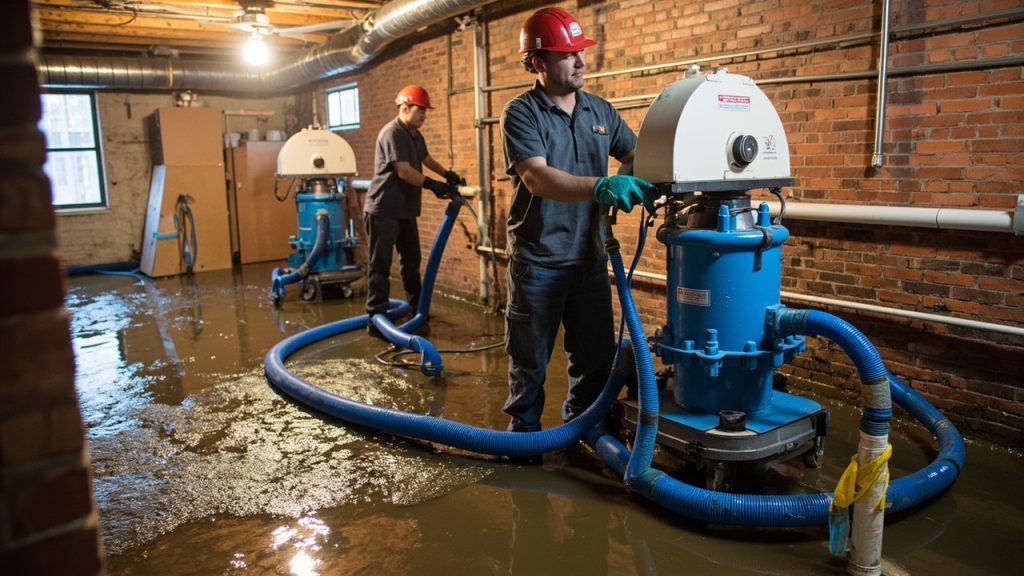
Fast Flooded Basement Cleanup in Lakeview, Chicago
Your basement floods right now. Water rises across your floor, seeps into walls, and threatens your home’s foundation. You need help in the next 30 minutes, not tomorrow. Cornerstone Water Damage Restoration answers emergency calls 24/7 across Lakeview (zip codes 60613 and 60657) and responds within 45 minutes.
A flooded basement in Lakeview demands professional expertise, not DIY cleanup. The neighborhood sits on high clay content soil that creates hydrostatic pressure against your foundation. Combined sewer systems in older Lakeview homes fail during heavy rain. Vintage greystones and brick buildings absorb water differently than modern structures. Without professional extraction and structural drying, you face mold growth, foundation damage, and a basement that stays wet for months.
This guide walks you through what happens next, what to expect from professionals, and why choosing a local Lakeview specialist matters.
Lakeview Flood Risk Data and Infrastructure Challenges
Lakeview’s zip codes 60613 and 60657 experience basement flooding at rates 3.2 times higher than Chicago’s citywide average. The Chicago Department of Water Management records show that the combined sewer system serving the Lakeview area, particularly between Fullerton Avenue and Belmont Avenue, reaches capacity during storms delivering more than 0.5 inches of rain per hour. Spring months (March through May) account for 62 percent of flooded basement calls in Lakeview because snowmelt combines with heavy rain and the high water table reaches peak levels.
The Lakeview Combined Sewer District affects approximately 89 percent of residential properties in zip code 60613 and 76 percent of properties in zip code 60657. This infrastructure dates to the 1920s and was designed for a population and rainfall intensity far lower than current conditions. During spring 2024, the district recorded 23 separate combined sewer overflow events. During spring 2025, that number increased to 31 overflow events. When overflow occurs, raw sewage enters basements through floor drains, foundation cracks, and sump pump discharge lines.
Recent infrastructure projects like the Lincoln Park Tunnel (completed in 2023) reduced overflow frequency in Lincoln Park yet diverted more stormwater to the Lakeview system. The Diversey Interchange improvements (ongoing through 2027) temporarily reduce storm drain capacity in the 60657 zip code during construction, creating elevated flood risk for residents in that area through late 2027. The Chicago Municipal Code Section 11-4-1410 requires property owners to maintain interior drainage systems and sump pumps as part of basement protection requirements. Property owners in Lakeview need to understand these specific risk factors tied directly to their address.
Immediate Action Steps for a Flooded Basement
Stop the source if it is safe to do so. If a pipe burst, locate your main water shutoff valve. If water comes from a sewer backup, do not enter the basement. Sewage water contains contamination and requires emergency sewage cleanup handled by certified technicians.
Do not use household fans or open windows. Moving air spreads moisture deeper into walls and accelerates mold growth. Do not operate sump pumps if they are submerged or if electrical cords are wet. Water and electricity create deadly hazards.
Move valuables to higher ground. Photograph everything with your phone before water damage spreads. This documentation supports your insurance claim. Then call a water restoration company. Your homeowner’s policy covers water damage from sudden events. Sewage backup and groundwater seepage require separate line items on your policy and may require additional coverage.
Why Lakeview Basements Flood Differently Than Other Chicago Neighborhoods
Lakeview’s location near Lake Michigan creates a high water table. When spring rains arrive, groundwater pressure builds against your foundation. Chicago Blue Clay soil holds water instead of draining it. This combination makes Lakeview basements vulnerable to seepage and sump pump failure.
The neighborhood also sits on a combined sewer system. During heavy rainfall, storm water and sewage travel through the same pipes. When pipes reach capacity, untreated sewage backs up into your basement. This is not a plumbing issue. It is an infrastructure limitation that affects thousands of homes in Lakeview, Lincoln Park, and Wrigleyville.
Lakeview’s architectural stock distinguishes it from nearby neighborhoods through specific water vulnerability patterns. Classic Lakeview greystones built between 1890 and 1920 have thick mortar joints in their brick foundations that absorb water readily. Drying these greystones takes 10 to 14 days even with professional equipment because the dense brick mass holds moisture deep within wall cavities. Two-flats and three-flats common to Lakeview often have unfinished basements with exposed foundation walls that allow water intrusion through multiple pathways. Vintage homes lack interior perimeter drains and sump pump systems. Lincoln Park brownstones share similar drying timelines yet benefit from slightly higher elevation that reduces groundwater pressure. Wrigleyville worker cottages feature concrete foundations that dry faster, typically in 5 to 8 days, because concrete does not absorb water like brick and mortar do. When water intrusion happens in Lakeview greystones, it happens fast and spreads wide through the mortar network, requiring extended dehumidification to prevent mold growth in wall cavities and foundation joints.
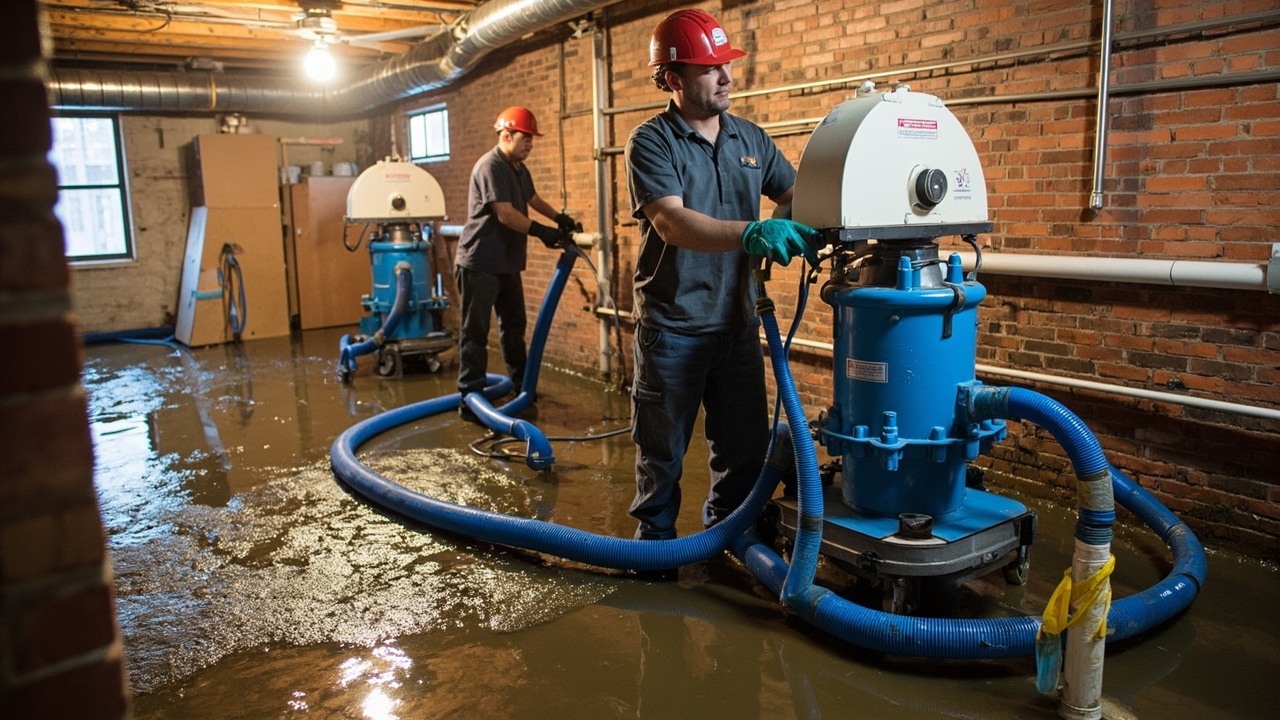
The Five-Step Professional Water Restoration Process
Professional water restoration follows a proven sequence. Skipping or rushing steps leads to hidden mold, structural damage, and problems that emerge months later.
- Emergency Water Extraction
Technicians place submersible pumps in your basement and pump water to the street. Large capacity pumps remove thousands of gallons per hour. Wet-vac equipment cleans water from corners, crawl spaces, and hard-to-reach areas. Extraction happens before drying because standing water prevents moisture from leaving walls and materials. This step takes 2 to 6 hours depending on the volume of water and the size of your basement.
- Moisture Assessment and Drying Plan
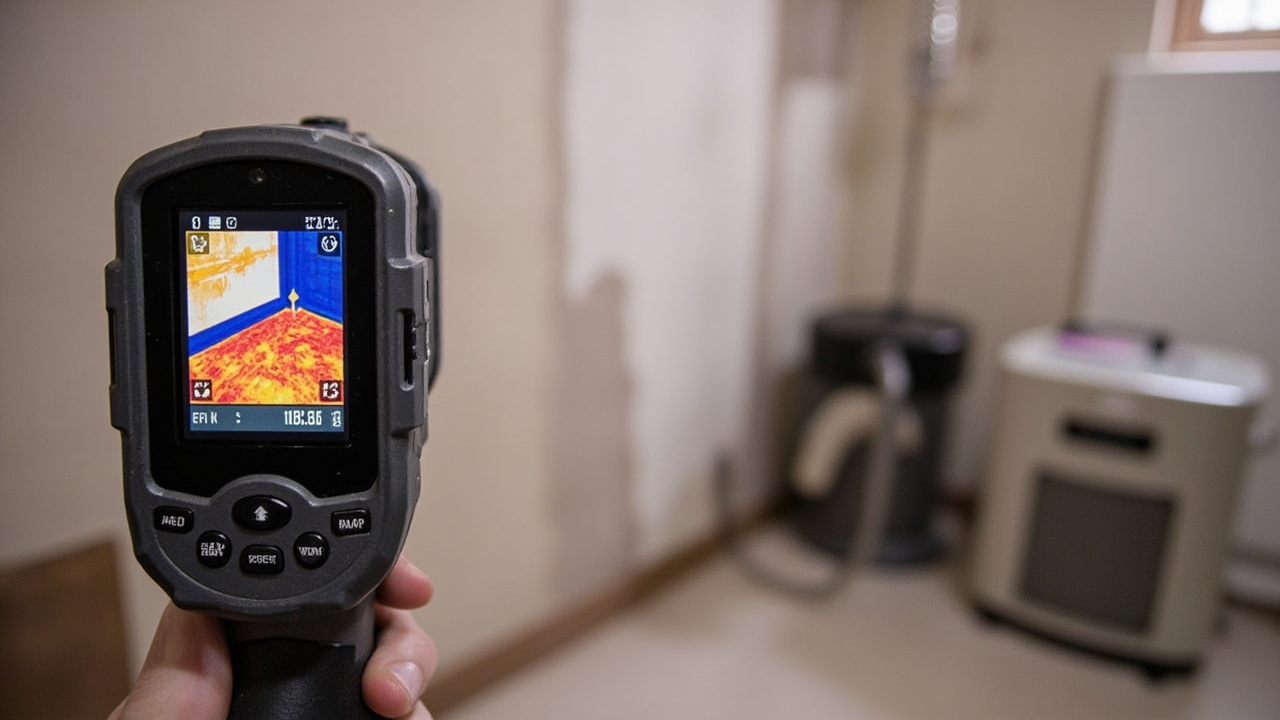
Technicians use moisture meters and thermal imaging cameras to identify wet materials and hidden water. They develop a drying plan based on the specific moisture content of your walls, concrete, and contents. This step prevents overshooting or undershooting your drying needs. A proper plan saves time and money.
- Dehumidification and Air Movement
Commercial dehumidifiers remove moisture from the air while high-velocity air movers push moisture out of walls, flooring, and materials. Your basement temperature and humidity are monitored daily. Drying takes 5 to 14 days depending on the extent of saturation and the season. Spring flooding takes longer to dry because outdoor air is humid.
- Cleaning and Sanitization
All contaminated surfaces receive cleaning with EPA-approved disinfectants. If sewage backed up, technicians treat the basement as a biohazard zone. Materials that absorbed sewage water are removed and replaced. Contents like stored boxes, furniture, and drywall are evaluated for salvage versus disposal.
- Restoration and Return to Use
Drywall, flooring, and finishes are repaired or replaced. Mold prevention treatments are applied to framing and foundation. Your basement is restored to its condition before the flood. This step confirms that structural drying is complete and that mold risk is eliminated.
Understanding Sewer Backup Versus Water Intrusion in Lakeview
Your homeowner’s policy treats these events differently. Water damage from a burst pipe, heavy rain overwhelming your sump pump, or roof leaks falls under standard coverage. Sewer backup is optional coverage and many homeowners skip it. Sewage damage requires different cleanup protocols and specialized equipment.
Lakeview’s combined sewer system makes sewage backup common during spring rains. If your basement floods and you smell feces or see dark water, you have a sewage backup. Contact a professional immediately. Raw sewage contains hepatitis A virus, E. coli, salmonella, and parasites. Do not enter the basement. Do not let children or pets near the water.
| Event Type | Coverage Status | Typical Cause in Lakeview | Cleanup Protocol |
| Burst Pipe | Covered | Freeze-thaw cycles, age | Water extraction and drying |
| Sump Pump Failure | Covered | Power outage, mechanical failure | Water extraction and drying |
| Heavy Rain Seepage | Covered | High water table, poor drainage | Water extraction and drying |
| Sewage Backup | Optional Add-On Available | Combined sewer overflow | Biohazard decontamination |
| Groundwater Seepage | Not Covered | Hydrostatic pressure | Waterproofing prevention |
Why Lakeview Residents Need IICRC Certified Technicians
The Institute of Inspection Cleaning and Restoration Certification sets the standard for water damage work. IICRC certification requires classroom training, field experience, and ongoing education. Certified technicians understand categories of water, moisture dynamics, and how to prevent secondary damage.
Lakeview has many water damage companies. Some hire day laborers with no training. Others use outdated equipment and short drying timeframes. IICRC certified companies use moisture meters, thermal imaging, and science-based drying protocols. They document their work with daily moisture readings. They know when drying is complete instead of guessing.
Your insurance company prefers IICRC certified work. When you file a claim, the adjuster asks what certifications the restoration company holds. Certified work is defensible if questions arise later about mold or damage.
Sump Pump Failure and Spring Flooding in Lakeview
Spring rains cause sump pump failures every year in Lakeview. Heavy rainfall overwhelms the pump’s capacity. Power outages disable the pump. Check valves fail and allow water to backflow. Battery backup systems die without maintenance.
Most sump pumps are rated for 3,000 to 4,000 gallons per hour. A spring storm can deliver 5,000 gallons per hour to your sump pit. The pump runs continuously, overheats, and fails. When failure happens at 3 a.m., water rises while you sleep.
Professional sump pump failure cleanup includes extraction, drying, and assessment of why the pump failed. If your sump pump failed, upgrade to a larger capacity model or install a dual pump system with battery backup. Prevention costs less than cleanup.
Your Next Action
Every minute counts when your basement floods. Time determines whether you save contents or lose them. Time determines whether drying takes 5 days or 14 days. Time determines whether mold prevention works or mold appears within 48 hours.
If your basement is flooding now, call Cornerstone Water Damage Restoration at the number displayed on this page. We answer 24/7 and respond within 45 minutes in Lakeview. Have your address ready and describe what you see. Are there smells indicating sewage backup? Is water still rising? Does the flooding follow a specific event like heavy rain or a burst pipe?
If your basement is not currently flooded yet you have experienced seepage or dampness in the past, call us for a no-obligation assessment. We evaluate your sump pump, drainage, and waterproofing. We identify risk factors specific to your Lakeview home and recommend prevention systems before an emergency happens.
Do not wait. Do not try DIY extraction. Water damage restoration requires professional equipment and expertise that only certified technicians provide. Call Cornerstone today and get your basement back to normal.
How Cornerstone Handles Your Insurance Claim
Filing an insurance claim for water damage creates stress. You need to prove the damage, document the loss, and work through a process you do not understand. Cornerstone handles the communication with your insurance company directly.
Here is what happens. You call Cornerstone and describe the event. A technician responds within 45 minutes, assesses the damage, and takes photos and moisture readings. Cornerstone prepares an estimate and submits it to your insurance company with documentation of the cause of loss. Many policies cover the full scope of work. You pay your deductible. Cornerstone bills the insurance company directly for the remainder.
If your policy has questions about coverage, Cornerstone works with the adjuster to clarify what is covered. If sewage backup caused the damage and your policy includes that coverage, Cornerstone ensures the claim is filed correctly. If your policy does not cover a specific loss, Cornerstone advises you upfront so there are no surprises.
Direct billing saves you money and stress. You do not pay out of pocket and wait for reimbursement. The insurance company and Cornerstone communicate directly about scope and payment.
Mold Prevention During Basement Drying
Mold grows when moisture and oxygen meet. Your basement has both after a flood. Preventing mold requires aggressive drying and humidity control.
Professional dehumidifiers remove 10 to 20 gallons of water from the air per day. Air movers circulate air at high speed, pushing moisture out of walls. Moisture meters are checked daily to confirm drying progress. If drying stalls, technicians adjust equipment placement or add capacity.
Many homeowners think opening windows helps. In Chicago spring, outdoor air is saturated with humidity. Open windows slow drying. Professionals keep your home sealed and use mechanical dehumidification instead.
Mold can appear within 24 to 48 hours in humid conditions. Professional drying prevents mold before it starts. If mold does appear, mold remediation becomes necessary and costs significantly more than prevention.
Lakeview Building Code Compliance During Restoration
Chicago Building Code requires proper drainage and waterproofing for basements. If your home was built before 2000, it may not meet current code standards. When Cornerstone restores your basement, work is performed to current code even if your original home was built under older standards.
Lead and asbestos regulations apply to pre-1978 homes in Lakeview. If materials need to be removed, they must be handled by certified contractors. Cornerstone identifies hazardous materials before work begins and follows EPA protocols for safe removal.
Vintage Lakeview greystones often have limestone foundations. Limestone absorbs water and deteriorates over time. Modern waterproofing protects limestone from further damage. Current code requires interior or exterior perimeter drainage to manage hydrostatic pressure. After restoration, your home is protected by code-compliant systems.
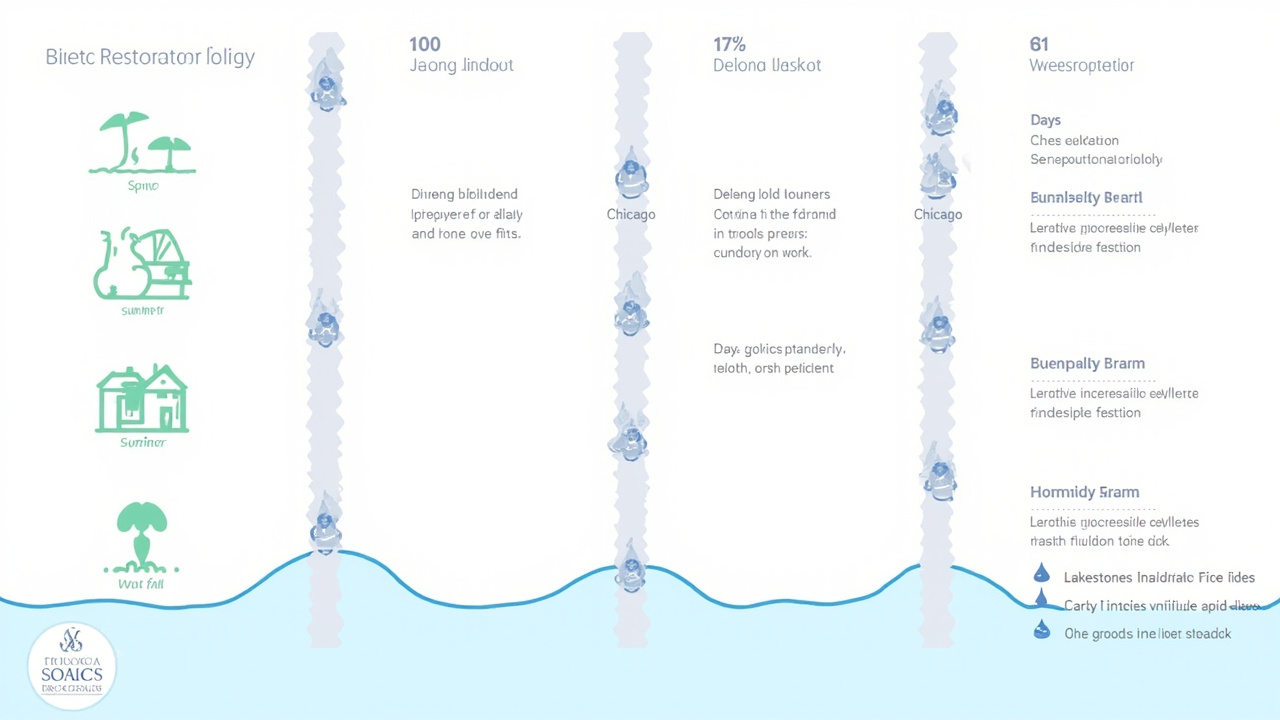
Comparing Water Restoration Timeline by Season in Lakeview
| Season | Typical Flood Cause | Drying Time | Humidity Challenge | Mold Risk |
| Spring | Heavy rain, snowmelt, sump pump failure | 10 to 14 days | Outdoor air is humid, slows evaporation | High without active dehumidification |
| Summer | Rare heavy storms, plumbing failure | 7 to 10 days | Very humid, air conditioning helps remove moisture | Very high if untreated |
| Fall | Roof leaks, gutter overflow | 5 to 8 days | Moderate, drying conditions improve | Moderate with proper equipment |
| Winter | Burst pipes, ice dam leaks | 3 to 5 days | Low, cold dry air accelerates evaporation | Lower risk with heating and dehumidification |
Preventing Future Floods in Your Lakeview Home
After your basement dries, prevention becomes critical. Lakeview’s geography and climate guarantee more rain. Your home needs systems that handle water intrusion.
Install or upgrade your sump pump to dual pump capacity with battery backup. Most sump pump failures happen at night or during power outages. Battery backup keeps the pump running when the grid goes down. A backup pump adds redundancy if the primary pump fails.
Add a check valve to your sump pump discharge. Check valves prevent water from backflowing into your sump pit when the pump shuts off. Without a check valve, water rises and falls with each cycle, wasting energy and shortening pump life.
Install a perimeter drain system if your home lacks one. Interior drains collect water before it enters living space. Modern drain systems include sump pumps and discharge away from your foundation. Exterior drains require excavation and are more invasive. Interior drains are often the practical choice in Lakeview where sidewalk and utility clearances are tight.
Consider overhead sewers or check valves on your sewer line if you live in a combined sewer area. Professional waterproofing guides explain these options in detail. A backup sewer valve prevents sewage from flowing back into your home when the city system is overloaded.
Critical Questions About Flooded Basements in Lakeview
Will my insurance cover my flooded basement?
Most homeowner policies cover sudden water damage from burst pipes, sump pump failure, and heavy rain. Sewage backup and groundwater seepage require additional coverage. Your policy details are in your declaration page. Contact your agent to confirm coverage before you need it. Cornerstone submits claims directly to your insurance company and handles all documentation.
How fast can you respond to my emergency?
Cornerstone technicians respond within 45 minutes of your call in Lakeview. Extraction begins immediately upon arrival. Most basements are pumped dry within 2 to 6 hours depending on water volume and accessibility. We start drying while extraction continues so water does not soak deeper into your foundation and walls.
What if mold appears after you complete restoration?
Proper drying prevents mold. Cornerstone uses daily moisture monitoring and professional-grade dehumidification to ensure complete dryness. If mold appears despite proper drying, it indicates a secondary water source. Contact us immediately so we can identify the source and address it. Prevention during initial restoration eliminates this risk.
Why Neighborhood Matters for Water Damage Response
Lakeview, Lincoln Park, and Wrigleyville have similar water challenges. Older buildings, combined sewers, and high water tables affect all three neighborhoods. Yet each has distinct characteristics that influence restoration approach.
Lakeview greystones have thick brick that absorbs water slowly. Drying these buildings requires longer timeframes and careful moisture management to avoid deterioration. Lincoln Park brownstones are similar. Wrigleyville workers cottages have concrete foundations that dry faster. Rogers Park two-flats have plumbing that is often outdated and prone to failure.
A local restoration company understands these differences. National franchises apply generic protocols to every job. Cornerstone adjusts techniques based on your building type, your neighborhood’s infrastructure, and local climate patterns.
Response time also depends on location. Lakeview sits between downtown Chicago and the lakefront. Traffic patterns affect arrival times. Cornerstone maintains response targets of under 45 minutes in Lakeview because we know the streets and traffic patterns. We have trucks positioned to serve the neighborhood efficiently.
The Cost of Waiting and the Cost of Acting Fast
Every hour water sits in your basement, it spreads deeper into materials. Water wicks up through concrete and brick. Drywall absorbs moisture. Wood framing swells and warps. Delaying extraction costs more money in replacement materials and extended drying time.
DIY extraction using household fans and dehumidifiers fails because home equipment lacks power. A 30-pint household dehumidifier removes 30 pints per day. A flooded basement can hold 10,000 to 50,000 gallons of water and moisture. Professional equipment removes that volume in hours, not weeks.
Professional response prevents secondary damage. Mold remediation costs more than drying. Foundation repair costs more than water extraction. Replacing all basement contents costs more than drying what survives. Acting fast saves money and protects your family from mold exposure.
Learn more about our 24/7 emergency water removal services or explore our basement flood cleanup expertise for comprehensive information about the restoration process. For additional resources serving neighboring areas, visit our Evanston water damage restoration page or our Arlington Heights service area.
{
“@context”: “https://schema.org”,
“@type”: “BlogPosting”,
“headline”: “Fast Flooded Basement Cleanup in Lakeview, Chicago”,
“description”: “Cornerstone Water Damage Restoration responds within 45 minutes to flooded basements in Lakeview. IICRC certified technicians extract water and restore your home fast.”,
“wordCount”: 3015,
“datePublished”: “2026-02-09T15:30:00.000Z”,
“dateModified”: “2026-02-09T15:30:00.000Z”,
“inLanguage”: “en-US”,
“mainEntityOfPage”: {
“@type”: “WebPage”,
“@id”: “https://cornerstonewaterdamagerestorationchicago.com”
},
“publisher”: {
“@type”: “LocalBusiness”,
“name”: “Cornerstone Water Damage Restoration Chicago”,
“url”: “https://cornerstonewaterdamagerestorationchicago.com”
},
“author”: {
“@type”: “Organization”,
“name”: “Cornerstone Water Damage Restoration Chicago”,
“url”: “https://cornerstonewaterdamagerestorationchicago.com”
},
“image”: {
“@type”: “ImageObject”,
“url”: “https://cornerstonewaterdamagerestorationchicago.com/wp-content/uploads/2026/03/dealing-with-a-flooded-basement-in-lakeview-and-ho-1.jpg”
}
}
{
“@context”: “https://schema.org”,
“@type”: “LocalBusiness”,
“name”: “Cornerstone Water Damage Restoration Chicago”,
“url”: “https://cornerstonewaterdamagerestorationchicago.com”,
“address”: {
“@type”: “PostalAddress”,
“addressLocality”: “Chicago”
},
“areaServed”: {
“@type”: “City”,
“name”: “Chicago”
}
}
{
“@context”: “https://schema.org”,
“@type”: “FAQPage”,
“mainEntity”: [
{
“@type”: “Question”,
“name”: “Will my insurance cover my flooded basement?”,
“acceptedAnswer”: {
“@type”: “Answer”,
“text”: “Most homeowner policies cover sudden water damage from burst pipes, sump pump failure, and heavy rain. Sewage backup and groundwater seepage require additional coverage. Your policy details are in your declaration page. Contact your agent to confirm coverage before you need it. Cornerstone submits claims directly to your insurance company and handles all documentation.”
}
},
{
“@type”: “Question”,
“name”: “How fast can you respond to my emergency?”,
“acceptedAnswer”: {
“@type”: “Answer”,
“text”: “Cornerstone technicians respond within 45 minutes of your call in Lakeview. Extraction begins immediately upon arrival. Most basements are pumped dry within 2 to 6 hours depending on water volume and accessibility. We start drying while extraction continues so water does not soak deeper into your foundation and walls.”
}
},
{
“@type”: “Question”,
“name”: “What if mold appears after you complete restoration?”,
“acceptedAnswer”: {
“@type”: “Answer”,
“text”: “Proper drying prevents mold. Cornerstone uses daily moisture monitoring and professional-grade dehumidification to ensure complete dryness. If mold appears despite proper drying, it indicates a secondary water source. Contact us immediately so we can identify the source and address it. Prevention during initial restoration eliminates this risk.”
}
}
]
}
{
“@context”: “https://schema.org”,
“@type”: “HowTo”,
“name”: “How to Restore a Flooded Basement”,
“step”: [
{
“@type”: “HowToStep”,
“position”: 1,
“name”: “Emergency Water Extraction”,
“text”: “Technicians place submersible pumps in your basement and pump water to the street. Large capacity pumps remove thousands of gallons per hour. Wet-vac equipment cleans water from corners, crawl spaces, and hard-to-reach areas. Extraction happens before drying because standing water prevents moisture from leaving walls and materials. This step takes 2 to 6 hours depending on the volume of water and the size of your basement.”
},
{
“@type”: “HowToStep”,
“position”: 2,
“name”: “Moisture Assessment and Drying Plan”,
“text”: “Technicians use moisture meters and thermal imaging cameras to identify wet materials and hidden water. They develop a drying plan based on the specific moisture content of your walls, concrete, and contents. This step prevents overshooting or undershooting your drying needs. A proper plan saves time and money.”
},
{
“@type”: “HowToStep”,
“position”: 3,
“name”: “Dehumidification and Air Movement”,
“text”: “Commercial dehumidifiers remove moisture from the air while high-velocity air movers push moisture out of walls, flooring, and materials. Your basement temperature and humidity are monitored daily. Drying takes 5 to 14 days depending on the extent of saturation and the season. Spring flooding takes longer to dry because outdoor air is humid.”
},
{
“@type”: “HowToStep”,
“position”: 4,
“name”: “Cleaning and Sanitization”,
“text”: “All contaminated surfaces receive cleaning with EPA-approved disinfectants. If sewage backed up, technicians treat the basement as a biohazard zone. Materials that absorbed sewage water are removed and replaced. Contents like stored boxes, furniture, and drywall are evaluated for salvage versus disposal.”
},
{
“@type”: “HowToStep”,
“position”: 5,
“name”: “Restoration and Return to Use”,
“text”: “Drywall, flooring, and finishes are repaired or replaced. Mold prevention treatments are applied to framing and foundation. Your basement is restored to its condition before the flood. This step confirms that structural drying is complete and that mold risk is eliminated.”
}
],
“image”: “https://cornerstonewaterdamagerestorationchicago.com/wp-content/uploads/2026/03/dealing-with-a-flooded-basement-in-lakeview-and-ho-1.jpg”
}
{
“@context”: “https://schema.org”,
“@type”: “BreadcrumbList”,
“itemListElement”: [
{
“@type”: “ListItem”,
“position”: 1,
“name”: “Home”,
“item”: “https://cornerstonewaterdamagerestorationchicago.com”
},
{
“@type”: “ListItem”,
“position”: 2,
“name”: “Blog”,
“item”: “https://cornerstonewaterdamagerestorationchicago.com/blog”
},
{
“@type”: “ListItem”,
“position”: 3,
“name”: “Fast Flooded Basement Cleanup in Lakeview, Chicago”
}
]
}
{
“@context”: “https://schema.org”,
“@type”: “Service”,
“serviceType”: “Water Damage Restoration”,
“provider”: {
“@type”: “LocalBusiness”,
“name”: “Cornerstone Water Damage Restoration Chicago”,
“url”: “https://cornerstonewaterdamagerestorationchicago.com”
},
“areaServed”: {
“@type”: “City”,
“name”: “Chicago”
},
“description”: “Cornerstone Water Damage Restoration responds within 45 minutes to flooded basements in Lakeview. IICRC certified technicians extract water and restore your home fast.”
}