
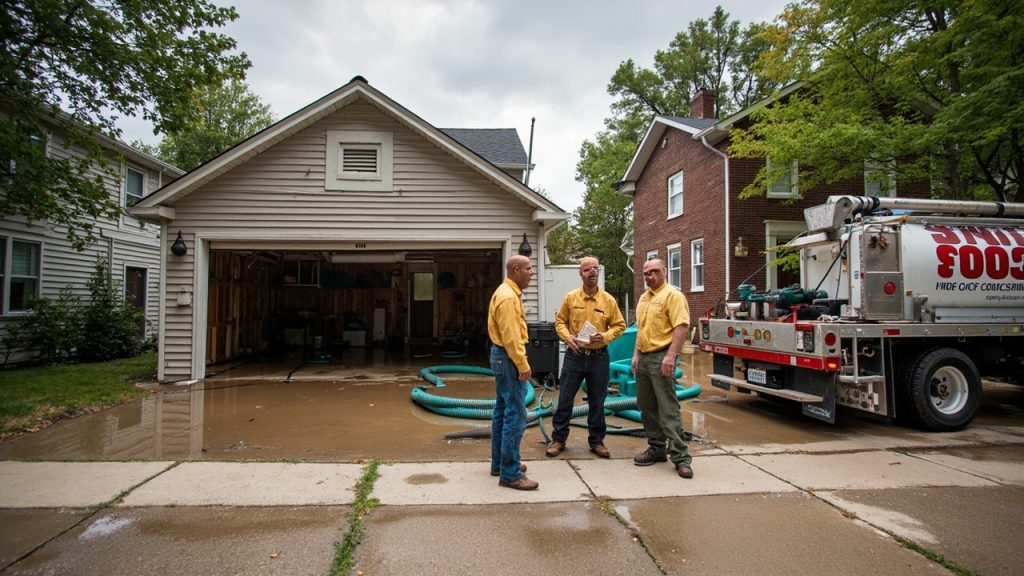
Emergency Flooded Garage Cleanup in Chicago Before Structural Damage Gets Worse
Your detached garage is flooded. Water stands three inches high across the concrete floor. You see oil sheen on the surface. Your car is parked outside. The door opener might be submerged. You do not know what to do first.
Stop. Do not enter the garage if water reaches electrical outlets or the breaker panel. Do not wade through water that may contain sewage, motor oil, or chemical runoff. Call a licensed water restoration company right now. Every hour the water sits, concrete absorbs moisture, wood studs begin to rot, and mold spores start to germinate.
Cornerstone Water Damage Restoration responds to flooded garages across Chicago, Montclare, Logan Square, Lincoln Park, and West Loop within one hour of your call. We extract standing water, assess structural damage, dry the space completely, and work directly with your insurance company to restore your garage before rot compromises the foundation.

The First 60 Minutes Matter More Than You Think
The window to prevent mold growth and structural decay is narrow. Mold germinates in 24 to 48 hours on damp materials. Concrete begins to develop efflorescence and salt damage within days. Wood studs warp and soften. Steel tools and garage door components corrode.
What you need to do right now:
- Do not touch electrical switches, outlets, or the garage door opener if water is present near them.
- If the water is rising, leave the garage and call 911 if flooding threatens your home’s structure or your safety.
- Photograph the flooded garage with your phone before any cleanup begins. Your insurance company will need documentation.
- Turn off the main electrical breaker to the garage if you can access it safely from outside the wet area.
- Note the water source. Is it coming from a sump pump failure, alley catch basin backup, downspout pooling, or sewer line backup? This detail helps us assess the root cause.
- Move high-value items like vehicles, power tools, seasonal equipment, and chemical storage containers to a dry location if you can do so safely.
- Call Cornerstone Water Damage Restoration immediately. We arrive with trucks, pumps, and industrial dehumidifiers.
Why Garages Flood in Chicago and the Suburbs
Chicago’s geography and aging infrastructure create specific risks for garage flooding. The city sits on a flat plain with clay-heavy soil that holds water rather than drains it. Lake Michigan proximity in neighborhoods like Lakeview and Rogers Park raises the water table during spring. Combined sewer systems in older areas of West Loop and Beverly can back up during heavy rain, forcing sewage into garages connected to the municipal system.
Heavy spring rains overwhelm sump pumps. One pump can handle three to five inches of rainfall. When a storm drops six inches in six hours, the pump cannot keep pace. Water rises quickly across the concrete floor.
Winter flooding follows a different pattern. Polar Vortex cold snaps freeze the ground. When a thaw arrives, snowmelt and ice dam runoff pour into alleys. If your garage sits lower than the alley grade, water channels toward your foundation. Catch basin failures in neighborhoods like Montclare and Cicero compound this problem. A clogged or damaged catch basin stops water from draining into the municipal system.
Chicago Blue Clay, the dominant soil composition across the metro area, has high clay content. This soil expands when wet and exerts hydrostatic pressure on foundation walls and concrete slabs. A concrete garage floor sitting on clay will absorb moisture from below even without visible flooding.
| Flooding Cause | Season | Warning Signs | Prevention Strategy |
|---|---|---|---|
| Sump pump failure | Spring, after heavy rain | Water rising on concrete floor, pump making noise or not running | Install battery backup sump pump, test pump monthly, replace every 7-10 years |
| Alley catch basin backup | Heavy rain, snowmelt | Water pooling in alley, water level higher outside than inside | Contact city to clear catch basin, install backwater valve if connected to sewer |
| Downspout pooling | Heavy rain, spring thaw | Water flowing from gutter toward garage, grade slope toward structure | Extend downspouts 6 to 10 feet away from foundation, grade sloped away from garage |
| Ice damming on roof | Late winter, freeze-thaw cycles | Ice ridge on roof edge, water backing up under shingles | Improve attic ventilation, remove snow and ice, install heat cables |
| Sewer line backup | Heavy rain in older neighborhoods | Water in garage floor drain, sewage smell, multiple drains backing up | Annual sewer line camera inspection, install backwater prevention valve |
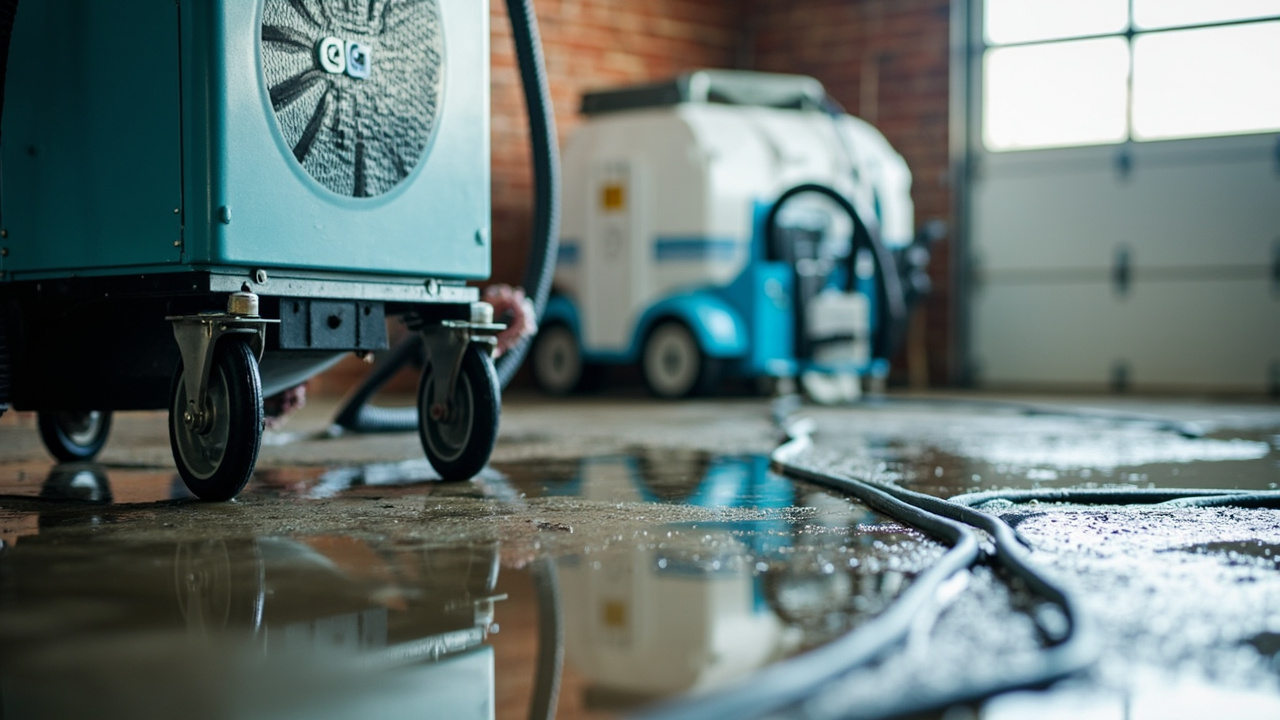
Professional Water Extraction for Garage Spaces
When Cornerstone arrives at your flooded garage, we start with rapid water extraction. Our crew uses 3000 to 5000 gallon per minute trash pumps to remove standing water. Trash pumps handle debris, sediment, and contaminants. We pump water into the alley or into a tanker truck, never back into the municipal system.
Extraction takes one to four hours depending on water volume and garage size. A single-car garage with four inches of water takes two hours. A three-car garage with six inches takes four hours.
After extraction, we assess what stays and what must be removed. Wet insulation is discarded. Wet drywall sections are cut out and replaced later. Wet cardboard, particle board, and plywood cannot be dried and are disposed of properly. Concrete is scrubbed to remove sediment, oils, and chemical residue.
Water temperature matters. Cold water from a sump pump failure or frozen runoff dries faster than warm water from a sewer line backup. Contaminated water requires biohazard-level cleaning and disposal.
Drying Out Concrete and Masonry in Chicago’s Humid Climate
Chicago summers are humid. Water evaporates slowly when outdoor air holds 70 percent humidity. A wet concrete garage floor will feel damp for weeks without professional drying.
We deploy industrial low-grain-refrigerant (LGR) dehumidifiers immediately after water extraction. LGR dehumidifiers pull moisture from the air without heating the space. A single LGR unit removes 150 to 200 pints of water per day from a 2000 square foot garage.
Air movers circulate dried air across the concrete. Moving air prevents stagnant pockets where mold can germinate. We position air movers at floor level to push moisture toward dehumidifiers.
Concrete takes seven to ten days to dry completely after extraction. The process is slower than drying drywall because concrete is porous. Water has soaked into the top two to three inches of the slab. Moisture escapes slowly through capillary action and evaporation.
We monitor moisture levels using carbide calcium tests and moisture meters. When concrete reads below 3 pounds per 1000 square feet, we remove dehumidifiers. If moisture remains trapped, we apply epoxy sealers and vapor barriers to stop ongoing moisture migration from the soil below.
Preventing Mold Growth on Garage Surfaces
Mold grows on both concrete and wood surfaces in wet garages. Concrete supports mold if algae spores and organic material are present. Wood studs, joists, and door frames support robust mold colonies within 48 hours of moisture exposure.
We spray all wet surfaces with biocide to kill mold spores and prevent germination. The biocide we use is approved by the EPA and safe for occupied garages after application dries.
Any wood framing that was submerged for more than 24 hours is removed and replaced. Wet wood cannot be dried in place if the grain is saturated. We remove affected studs, joists, and sill plates. New lumber is installed with proper grading and spacing to prevent future moisture absorption.
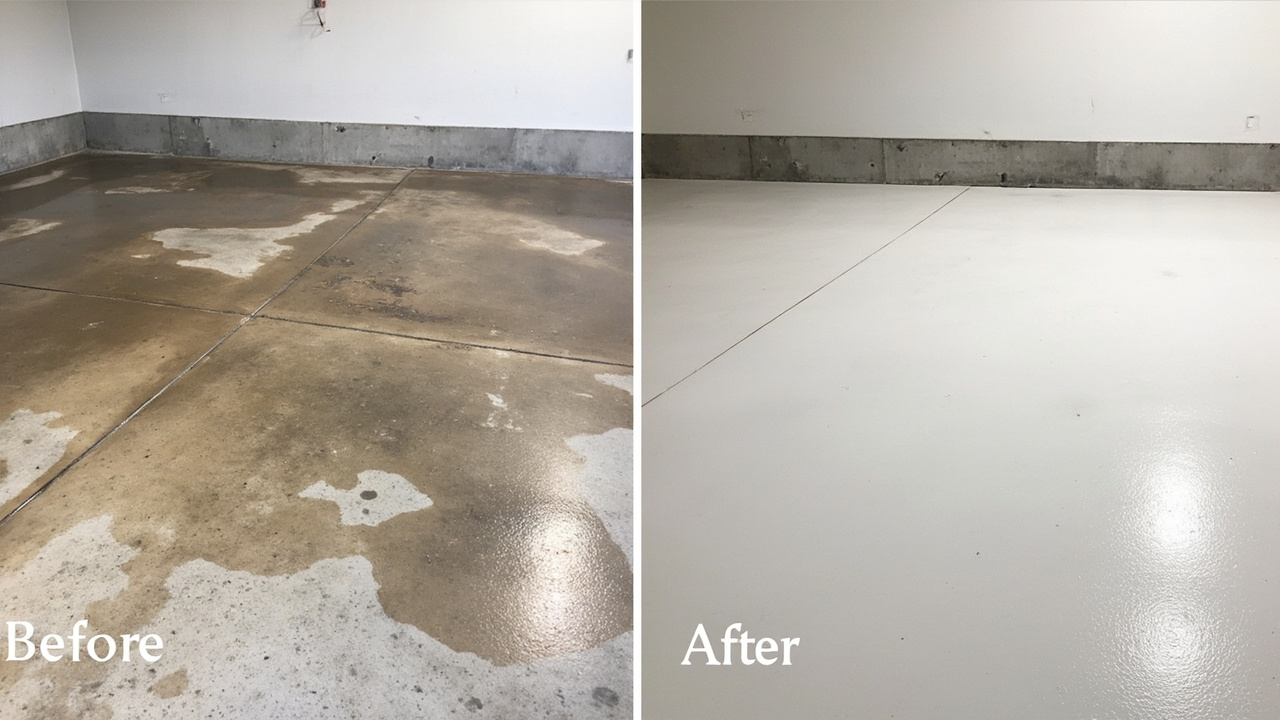
Concrete surfaces are cleaned and sealed with anti-microbial epoxy. The epoxy prevents mold germination on the surface and blocks water vapor from rising from the soil below. Sealed concrete also protects the slab from chemical staining and spill absorption.
Electrical Safety in a Flooded Garage
Garage door openers run on 120 volts. If water reaches the opener motor or control panel, electrocution risk is real. Submerged garage door openers must be replaced. Do not attempt to dry them.
GFCI outlets (ground fault circuit interrupter) protect against shock. If your garage has GFCI protection, the outlet will trip and cut power if water is present. If your garage has standard outlets, water touching the outlet can conduct current through wet materials to anyone standing in the water.
We advise turning off the main garage breaker before water extraction. Electrical cords, tools, and equipment must be removed or elevated above water level. Anything that contacted floodwater should be inspected by a qualified electrician before use.
After drying is complete, we recommend having a licensed electrician test all circuits and outlets. A wet breaker box or panel can corrode internally and cause future failures or fire risk.
Handling Hazardous Materials in Floodwater
Garages store motor oil, antifreeze, pesticides, cleaning solvents, and paint. When floodwater mixes with these chemicals, the result is hazardous waste that cannot be pumped into the municipal storm system.
We identify chemical storage locations before water extraction. Containers are labeled and inventoried. If chemicals spilled into the floodwater, we follow EPA biohazard cleanup protocols. The water must be pumped into a tanker truck and disposed of at a licensed hazardous waste facility.
Absorbent materials are deployed to contain lingering chemical residue. Concrete is scrubbed multiple times to remove oil sheen and staining. Some stains are permanent if the concrete is old and porous, but modern epoxy sealers can mask discoloration.
Salvaging Tools, Vehicles, and Seasonal Equipment
Power tools submerged in clean water can sometimes be salvaged if dried quickly. We remove them from the water and place them in a heated drying chamber if they have value. Tools in contaminated water are discarded due to health risk.
Vehicles parked in the garage may suffer engine flooding. If water entered the intake, engine damage is likely. We document the vehicle condition photographically for insurance claims. The insurance company will determine if the vehicle is salvageable.
Seasonal equipment like lawn mowers, snow blowers, and garden tools should be removed before drying begins. These items are not critical to structural restoration and are better dried in a separate space.
Insurance Claims and Coverage for Garage Flooding
Homeowners insurance covers sudden water damage from burst pipes and sewer backups in most policies. Coverage for garage flooding depends on the cause and your specific policy language.
Sump pump failure is often excluded unless you purchased sump pump backup coverage. Heavy rain that overwhelms the pump is covered as a sudden loss. Gradual seepage or water table rise is not covered.
Sewer backup coverage is optional and must be added to your policy separately. Homeowners in neighborhoods like West Loop and Beverly with combined sewer systems should add this coverage. A sewer backup can cause 10,000 to 50,000 dollars in damage.
Detached garages are covered under most homeowners policies if they are on the same property as your insured home. Coverage limits for detached structures are typically 10 to 15 percent of your home’s insured value. A home insured for 300,000 dollars might have 30,000 to 45,000 dollars in detached garage coverage.
We work directly with adjusters from State Farm, Allstate, GEICO, and regional carriers across Chicago. We provide detailed damage assessments, scope of work, and cost estimates. We document everything photographically and in writing so your claim is approved without delays.
| Coverage Type | Typical Inclusion | Exclusions and Limits | Recommended Action |
|---|---|---|---|
| Sudden burst pipe in garage | Yes, water damage covered | Gradual leaks excluded, damage from negligence excluded | Call immediately, document with photos, obtain professional inspection |
| Heavy rain overflowing gutters | Yes, water damage covered | Only if water entered through a breach not caused by lack of maintenance | Prove gutter system was maintained, get adjuster to site within 48 hours |
| Sump pump failure | Yes if sudden, no if gradual | Routine pump replacement and maintenance not covered | Add sump pump failure rider, install backup battery pump, test monthly |
| Sewer line backup into garage | No, unless backup rider purchased | Most standard policies exclude sewer backup | Add sewer backup endorsement immediately if you live in older Chicago neighborhood |
| Detached garage structure | Yes, up to 10-15 percent of dwelling coverage | Separate deductible often applies, older garages may have lower coverage limits | Review your declaration page, confirm garage is listed, verify coverage limits |
Timeline for Complete Garage Drying and Restoration
A typical flooded garage restoration takes 7 to 14 days from extraction to final cleanup.
Day 1 to 2. Water extraction and initial assessment. We remove standing water and inspect for structural damage, chemical contamination, and mold risk. Insurance documentation is completed.
Day 2 to 3. Dehumidification and air movement begin. Industrial equipment is deployed. Moisture readings are taken twice daily. If wood framing is damaged, removal begins.
Day 4 to 7. Concrete drying continues. Moisture levels drop toward acceptable ranges. Biocide application occurs if mold risk is present. Any structural repairs begin. Drywall removal is completed.
Day 7 to 10. Final moisture testing confirms concrete is dry. Epoxy sealing of concrete occurs if needed. Electrical systems are inspected and approved. Equipment is removed from the space.
Day 10 to 14. Finishing repairs occur. New drywall is installed. Paint is applied. Garage door opener is tested. The space is declared safe for use.
Speed varies based on water volume, humidity, and the extent of structural damage. A one inch flood in an open single-car garage dries in five days. A six inch flood in a finished two-car garage with drywall takes 14 days.
Neighborhoods We Serve in Chicago and the Suburbs
Cornerstone Water Damage Restoration operates 24/7 across the greater Chicago area. We maintain response stations in Lincoln Park, Lakeview, Logan Square, West Loop, and Rogers Park. We reach North Shore suburbs like Evanston, Arlington Heights, and Des Plaines within 45 minutes. We serve South Side neighborhoods including Beverly, Hyde Park, and Cicero. We extend service to southwest suburbs like Tinley Park, Orland Park, and Joliet, and west to Bolingbrook, Downers Grove, and Aurora.
Each neighborhood presents unique flooding risks. Bungalows in Montclare with unfinished basements flood differently than modern condos in Lincoln Park. Two-flats and three-flats in Logan Square have shared foundation walls that complicate drying. Worker cottages in Berwyn have limestone foundations that absorb water slowly but retain moisture for months.
We understand the specific water damage risks of Chicago and the suburbs. Every crew member is IICRC certified in water restoration. Every project follows Chicago Building Code guidelines for moisture and mold remediation.
Why Professional Drying Beats DIY Dehumidifier Rentals
You can rent a single dehumidifier from a home improvement store for 50 to 70 dollars per day. A single unit is not enough to dry a flooded garage in Chicago’s humid climate.
One dehumidifier removes 50 to 75 pints of water per day. A flooded garage releases 200 to 400 pints of moisture per day during the first week of drying. You would need four to six rental dehumidifiers running continuously for seven days to match professional drying speed.
Rental units are standard capacity dehumidifiers, not LGR (low-grain-refrigerant) models. Standard units become less effective as humidity drops. LGR dehumidifiers maintain efficiency in dry conditions and extract water even when relative humidity falls below 50 percent.
We also deploy air movers, which you cannot rent separately in most cases. Air movers cost 30 to 50 dollars per day each. A proper drying setup requires two to four air movers in a garage.
By the time you rent enough equipment, you spend 500 to 1000 dollars over seven days. You also assume the risk of incomplete drying, mold germination, and structural damage. Professional drying guarantees moisture levels are reduced to safe ranges and prevents future problems.
Structural Repairs After Garage Flooding
Concrete garage floors can crack if water damage is severe. Hydrostatic pressure from water beneath the slab forces the concrete upward. Cycles of wet and dry cause expansion and contraction. Cracks widen with each cycle.
We assess cracks using both visual inspection and moisture probes. Hairline cracks that do not leak water are cosmetic. Cracks wider than 1/8 inch that allow water seepage require epoxy injection or concrete resurfacing.
Wood framing and sill plates that contact water for more than 24 hours must be removed and replaced. We use pressure-treated lumber for any wood that sits on the concrete slab or near the foundation. Pressure-treated wood resists moisture absorption and rot.
Garage door openers submerged in water cannot be salvaged. New openers cost 300 to 800 dollars depending on features and horsepower. Insurance often covers replacement if the opener was damaged by a covered water loss.
Drywall in unfinished garages is not critical unless you have finished the space. If drywall was wet, it is removed and replaced after the space dries. New drywall can be installed in one day.
Long-Term Prevention of Future Garage Flooding
After your garage dries and restoration is complete, invest in prevention systems. A sump pump with battery backup prevents water from accumulating during power outages. A backwater valve stops sewage from flowing backward into your garage drain. Foundation waterproofing seals concrete and prevents water vapor rise from the soil.
Grade sloping is critical. Soil around your garage should slope away from the structure at a minimum of 5 percent grade (half inch per foot of distance). Proper grading directs rainwater and snowmelt away from the foundation.
Gutters and downspouts must be maintained. Clean gutters monthly during fall and spring. Extend downspouts 6 to 10 feet away from the garage with underground drainage that connects to the municipal storm system if possible.
Annual sewer line inspections using a camera scope reveal cracks, tree root intrusion, and collapsed sections before backups occur. A sewer line inspection costs 300 to 500 dollars and can prevent a 20,000 dollar backup cleanup.
We offer emergency repair services for burst pipes and basement water damage in all Chicago neighborhoods. We also provide mold remediation for historic homes where moisture has compromised old materials.
What Differentiates Professional Garage Drying From Generic Water Restoration
Generic water damage companies treat garages like residential living spaces. They focus on carpet drying and drywall restoration. Garages require different expertise.
Concrete drying requires moisture monitoring and extended dehumidification. Generic companies often declare concrete dry after four or five days. Concrete is not truly dry until moisture readings fall below 3 pounds per 1000 square feet. This takes 7 to 10 days.
Chemical cleanup in garages requires biohazard protocols. Generic companies may not test water for contamination or properly dispose of hazardous materials. Oil, antifreeze, and pesticides require licensed disposal.
Garage door openers are specific equipment that generic companies do not replace. We coordinate with garage door contractors to install new openers and test them for safe operation.
Electrical inspection is critical in garages. We ensure all circuits and outlets are tested before we declare the space safe. We coordinate with licensed electricians if damage is present.
Frequently Asked Questions
How much does professional garage drying cost?
Cost depends on water volume, contamination level, structural damage, and drying timeline. Insurance covers most of the cost if the water loss was sudden and covered under your policy. We provide free estimates and detailed scope of work before any work begins. Our goal is to help your insurance claim get approved without surprises.
Can you dry out a flooded garage in cold weather?
Yes. Cold air holds less moisture than warm air, so drying can be faster in winter. We deploy heaters to maintain space temperature above 50 degrees Fahrenheit to ensure dehumidifiers and air movers function properly. Winter drying takes 5 to 7 days instead of 7 to 10 days.
Does homeowners insurance cover garage flooding from heavy rain?
Yes, if the water entered through a sudden breach like a failed downspout or an opening created by storm damage. No, if water entered because gutters were clogged due to lack of maintenance. Coverage depends on your specific policy and the cause of entry. We help document the cause for your insurance company.
What if my garage has mold growing after flooding?
We apply biocide to kill existing mold spores and prevent new germination. We remove any materials that cannot be dried (wet insulation, cardboard, particle board). We monitor moisture levels closely to ensure conditions do not support mold growth. If mold colonies are visible, we remove affected materials and replace them.
How do I know when my garage is truly dry?
We use carbide calcium tests and electronic moisture meters to verify concrete and wood are dry. Concrete reads below 3 pounds per 1000 square feet. Wood reads below 12 to 15 percent moisture content depending on the species. We provide written moisture readings at the end of the project.
Can I prevent garage flooding from a burst pipe?
Inspect exposed pipes monthly for corrosion or leaks. In winter, open cabinet doors below sinks to allow warm air to reach pipes. Insulate pipes in unheated areas. Have a licensed plumber inspect your water line if it is over 30 years old. Install a water shut-off valve near your meter so you can stop water flow in an emergency.
Do Not Wait on Flooded Garage Cleanup
Every hour your garage remains wet increases the risk of mold, rot, and permanent structural damage. Concrete will stain. Wood will warp. Metal will corrode. Your insurance claim windows close quickly if you wait too long to document and report the loss.
Call Cornerstone Water Damage Restoration right now. We answer the phone 24 hours a day, seven days a week. We dispatch crews to Montclare, Lincoln Park, Logan Square, West Loop, and throughout the Chicago area within 60 minutes. We bring industrial pumps, dehumidifiers, and air movers. We dry your garage completely and work with your insurance company from start to finish.
Your garage is part of your home. We restore it like we would restore our own.
Call now at (your local number) for a free damage assessment and emergency water extraction. We respond 24/7 to flooded garages across Chicago and the suburbs. Time matters. Do not delay.
{
“@context”: “https://schema.org”,
“@type”: “BlogPosting”,
“headline”: “Emergency Flooded Garage Cleanup in Chicago Before Structural Damage Gets Worse”,
“description”: “Professional flooded garage drying in Chicago. Stop mold growth, prevent rot. 24/7 emergency response in Montclare, Lincoln Park, Logan Square.”,
“wordCount”: 3632,
“datePublished”: “2026-04-09T10:51:00.000Z”,
“dateModified”: “2026-04-09T10:51:00.000Z”,
“inLanguage”: “en-US”,
“mainEntityOfPage”: {
“@type”: “WebPage”,
“@id”: “https://cornerstonewaterdamagerestorationchicago.com”
},
“publisher”: {
“@type”: “LocalBusiness”,
“name”: “Cornerstone Water Damage Restoration Chicago”,
“url”: “https://cornerstonewaterdamagerestorationchicago.com”
},
“author”: {
“@type”: “Organization”,
“name”: “Cornerstone Water Damage Restoration Chicago”,
“url”: “https://cornerstonewaterdamagerestorationchicago.com”
},
“image”: {
“@type”: “ImageObject”,
“url”: “https://cornerstonewaterdamagerestorationchicago.com/wp-content/uploads/2026/03/the-best-way-to-dry-out-a-flooded-detached-garage-1.jpg”
}
}
{
“@context”: “https://schema.org”,
“@type”: “LocalBusiness”,
“name”: “Cornerstone Water Damage Restoration Chicago”,
“url”: “https://cornerstonewaterdamagerestorationchicago.com”,
“address”: {
“@type”: “PostalAddress”,
“addressLocality”: “Chicago”
},
“areaServed”: {
“@type”: “City”,
“name”: “Chicago”
}
}
{
“@context”: “https://schema.org”,
“@type”: “FAQPage”,
“mainEntity”: [
{
“@type”: “Question”,
“name”: “How much does professional garage drying cost?”,
“acceptedAnswer”: {
“@type”: “Answer”,
“text”: “Cost depends on water volume, contamination level, structural damage, and drying timeline. Insurance covers most of the cost if the water loss was sudden and covered under your policy. We provide free estimates and detailed scope of work before any work begins. Our goal is to help your insurance claim get approved without surprises.”
}
},
{
“@type”: “Question”,
“name”: “Can you dry out a flooded garage in cold weather?”,
“acceptedAnswer”: {
“@type”: “Answer”,
“text”: “Yes. Cold air holds less moisture than warm air, so drying can be faster in winter. We deploy heaters to maintain space temperature above 50 degrees Fahrenheit to ensure dehumidifiers and air movers function properly. Winter drying takes 5 to 7 days instead of 7 to 10 days.”
}
},
{
“@type”: “Question”,
“name”: “Does homeowners insurance cover garage flooding from heavy rain?”,
“acceptedAnswer”: {
“@type”: “Answer”,
“text”: “Yes, if the water entered through a sudden breach like a failed downspout or an opening created by storm damage. No, if water entered because gutters were clogged due to lack of maintenance. Coverage depends on your specific policy and the cause of entry. We help document the cause for your insurance company.”
}
},
{
“@type”: “Question”,
“name”: “What if my garage has mold growing after flooding?”,
“acceptedAnswer”: {
“@type”: “Answer”,
“text”: “We apply biocide to kill existing mold spores and prevent new germination. We remove any materials that cannot be dried (wet insulation, cardboard, particle board). We monitor moisture levels closely to ensure conditions do not support mold growth. If mold colonies are visible, we remove affected materials and replace them.”
}
},
{
“@type”: “Question”,
“name”: “How do I know when my garage is truly dry?”,
“acceptedAnswer”: {
“@type”: “Answer”,
“text”: “We use carbide calcium tests and electronic moisture meters to verify concrete and wood are dry. Concrete reads below 3 pounds per 1000 square feet. Wood reads below 12 to 15 percent moisture content depending on the species. We provide written moisture readings at the end of the project.”
}
},
{
“@type”: “Question”,
“name”: “Can I prevent garage flooding from a burst pipe?”,
“acceptedAnswer”: {
“@type”: “Answer”,
“text”: “Inspect exposed pipes monthly for corrosion or leaks. In winter, open cabinet doors below sinks to allow warm air to reach pipes. Insulate pipes in unheated areas. Have a licensed plumber inspect your water line if it is over 30 years old. Install a water shut-off valve near your meter so you can stop water flow in an emergency.”
}
}
]
}
{
“@context”: “https://schema.org”,
“@type”: “BreadcrumbList”,
“itemListElement”: [
{
“@type”: “ListItem”,
“position”: 1,
“name”: “Home”,
“item”: “https://cornerstonewaterdamagerestorationchicago.com”
},
{
“@type”: “ListItem”,
“position”: 2,
“name”: “Blog”,
“item”: “https://cornerstonewaterdamagerestorationchicago.com/blog”
},
{
“@type”: “ListItem”,
“position”: 3,
“name”: “Emergency Flooded Garage Cleanup in Chicago Before Structural Damage Gets Worse”
}
]
}
{
“@context”: “https://schema.org”,
“@type”: “Service”,
“serviceType”: “Water Damage Restoration”,
“provider”: {
“@type”: “LocalBusiness”,
“name”: “Cornerstone Water Damage Restoration Chicago”,
“url”: “https://cornerstonewaterdamagerestorationchicago.com”
},
“areaServed”: {
“@type”: “City”,
“name”: “Chicago”
},
“description”: “Professional flooded garage drying in Chicago. Stop mold growth, prevent rot. 24/7 emergency response in Montclare, Lincoln Park, Logan Square.”
}