
How to Save Water Damaged LVP Flooring in Your Dunning Home
Your luxury vinyl plank flooring looks waterproof. The manufacturer says it is. Then a pipe bursts in your West Loop basement or spring flooding seeps into your Rogers Park bungalow, and suddenly you are staring at water pooling under your LVP and wondering if the floor is salvageable.
The answer depends on speed, moisture levels, and what is happening beneath the planks. In my 15 years restoring flood-damaged homes across Chicago, I have saved thousands of square feet of LVP flooring that homeowners thought was lost. I have also recommended replacement when the subfloor moisture was too severe. The difference between success and failure comes down to understanding that the planks themselves are not the enemy. The subfloor is.
This guide walks you through the technical reality of LVP water damage, the immediate steps that matter, and when to call a professional restoration team like Cornerstone Water Damage Restoration instead of pulling up the floor yourself.
The Waterproof Myth That Costs Homeowners Thousands
LVP manufacturers market their product as waterproof. That statement is true for the planks themselves. Water sits on top of vinyl and does not soak into the material like it does with laminate or solid wood.
What flooring retailers do not emphasize is that the floor system beneath the planks is not waterproof. Your LVP sits on an underlayment, which sits on a subfloor, which sits on either a concrete slab or a wood joist system. Each layer holds water differently, and each layer can rot, swell, or grow mold if moisture gets trapped.
In Chicago basements, this is especially dangerous. Our clay-heavy soil, combined with the region’s high water table near Lake Michigan and seasonal moisture swings, creates perfect conditions for subfloor moisture to linger long after the standing water is gone.
When your LVP floor absorbs water at the seams (which they do, despite marketing claims), that moisture migrates down into the underlayment and subfloor. If your subfloor is plywood, it swells and softens. If it is concrete, moisture sits on top and prevents proper drying, creating the conditions mold needs to colonize within 24 to 48 hours.
Signs Your LVP Flooring Has Hidden Moisture Damage
Not all water damage is visible. The worst damage is the moisture you cannot see.
Watch for these warning signs in your Dunning, Lincoln Park, or Lakeview home:
- Cupping or crowning. The plank edges rise higher than the center, or the center dips down. This happens when the subfloor absorbs moisture unevenly.
- Soft or spongy spots. Press on the plank with your palm. If it gives slightly or feels mushy, the subfloor beneath has absorbed water.
- Visible mold or discoloration. Black or gray spots under or along the seams mean mold is already growing.
- Musty odor. That basement smell is mold and mildew colonizing the trapped moisture in your subfloor. Chicago’s high summer humidity accelerates this process.
- Buckling or lifting planks. Water pressure from below causes the floor to bubble up or separate from adjacent planks.
- Seam separation. Click lock systems fail when the subfloor swells. Planks begin to come apart at the seams.
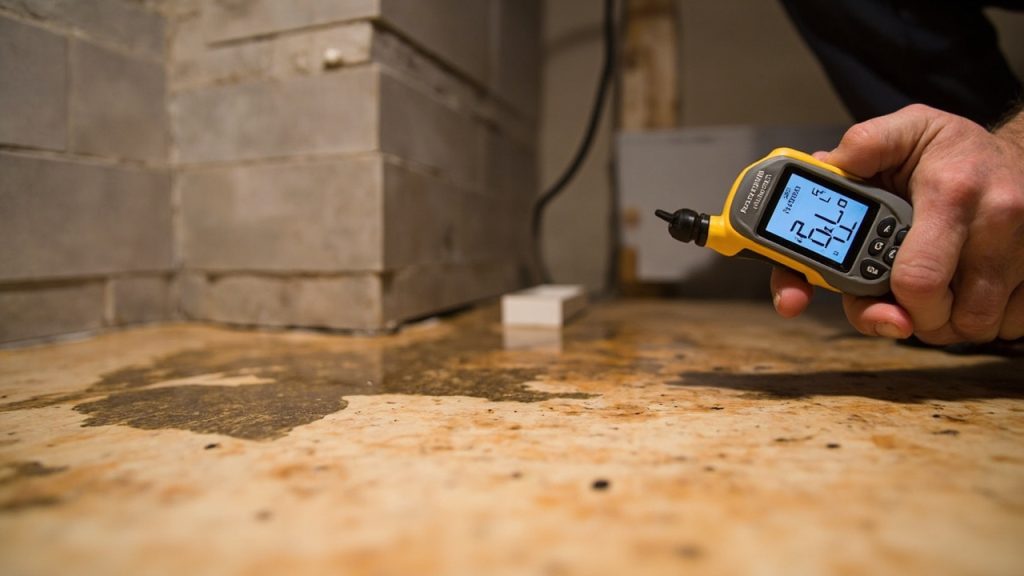
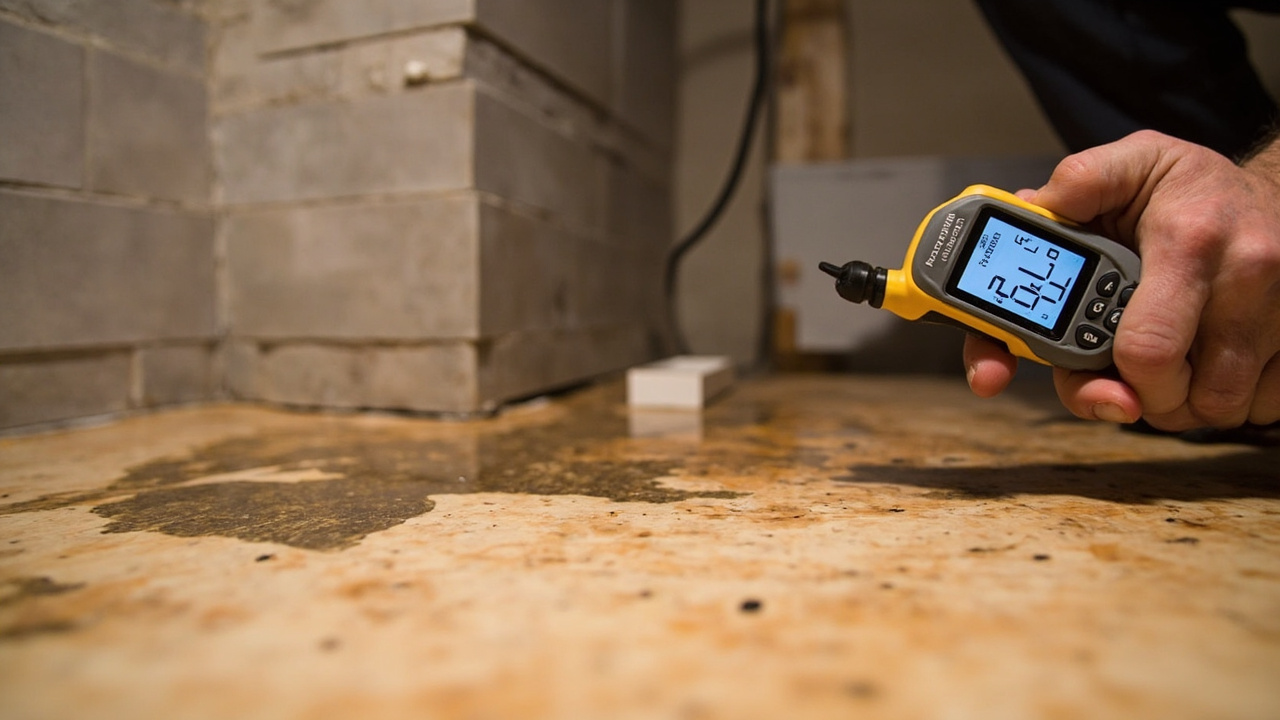
If you notice any of these signs within 48 hours of a flood or burst pipe, moisture testing becomes critical. A standard hygrometer tells you the relative humidity in the air, but a moisture meter or wood moisture probe tells you what is happening inside the subfloor. Moisture content above 12 percent in wood subfloors indicates saturation and the need for professional intervention.
Immediate Steps to Take in the First 24 Hours
If your LVP floor has been exposed to water, these steps determine whether restoration is possible or replacement is necessary.
- Stop the water source. If a pipe burst or appliance is leaking, turn off the water supply at the main valve. If water is coming from outside (basement seepage or sewer backup), identify the entry point and block it if possible. Do not enter a basement with active water flow or sewage present. Call emergency responders or a professional like Cornerstone Water Damage Restoration immediately for sewage backup cleanup in West Loop.
- Remove standing water. Use a wet vacuum or submersible pump to extract standing water. Do not use a standard shop vac on black water from sewage. Professional equipment removes water faster and more thoroughly than DIY methods.
- Remove baseboards immediately. Baseboards trap moisture and prevent air from circulating under the floor. Pry them off carefully, even if you plan to save them. Mark which walls they came from so you can reinstall them later.
- Lift the planks slightly for airflow. This is the quarter inch lift technique. Slide thin shims or wedges under the edges of every other plank to create a gap. This allows air to flow beneath the floor and begins the drying process. Do not remove all the planks yet. Leaving them in place protects the subfloor from further damage during this phase.
- Set up dehumidification and air movement. Open windows if outdoor humidity is below 50 percent. Place portable dehumidifiers and industrial air movers in the room. Position air movers to push moisture out through windows or into exhaust areas. Relative humidity should drop to the 30 to 40 percent range for effective drying.
- Take photographs and document everything. For insurance claims, photograph the damage, the water line on walls, and the affected flooring from multiple angles. Document the date, time, and cause of the damage. This documentation is essential for your insurance adjuster and for any professional restoration work.
Why Click Lock and Glue Down LVP React Differently to Water
Not all LVP is the same. The installation method affects how quickly water spreads through your floor system.
Click lock vinyl planks interlock along their edges. Water enters at the seams and travels down between the planks. The seams are the weak point. Once water gets between the locks, it spreads horizontally across the entire floor in hours. Click lock systems are faster to install but slower to dry because air cannot circulate between the planks.
Glue down LVP is adhered directly to the subfloor with vinyl adhesive. Water enters at the seams but is less likely to spread horizontally because there are no interlocking channels. Glue down systems dry more slowly because the planks are sealed to the subfloor, trapping moisture beneath.
For restoration purposes, click lock systems are easier to salvage because you can carefully lift individual planks to inspect and dry the subfloor. Glue down systems may need to be removed entirely to reach the subfloor and assess moisture damage.
The Real Battle Under Your Feet The Subfloor Moisture Crisis
Chicago homes rest on two types of subfloors, and each one behaves differently when wet.
Wood subfloors (plywood or OSB). These are common in older bungalows and two flats in Lincoln Park, Rogers Park, and Beverly. Plywood swells when wet and can rot within weeks if moisture is not removed. Moisture content above 12 percent means mold will begin to grow. Above 20 percent, structural failure becomes a concern.
Concrete slab subfloors. These are typical in basements of post 1950s homes and in condos in the West Loop and River North. Concrete does not absorb water like wood, but water sits on top of it and prevents evaporation. This creates a humid micro environment where mold grows rapidly. Concrete also develops hydrostatic pressure in Chicago’s high water table conditions, forcing moisture up through the slab even days after the initial flood.
Professional restoration teams use moisture meters to map the subfloor. Readings are taken every 2 to 3 feet across the entire affected area. Wood subfloors should be below 12 percent. Concrete should show relative humidity below 85 percent (measured with in situ probes). If readings exceed these thresholds, the subfloor cannot dry while the LVP is in place.
Chicago Climate and LVP Drying Times
Unlike homes in Denver or Austin, Chicago’s climate works against you when drying LVP flooring.
Summer humidity frequently exceeds 60 percent, especially near Lake Michigan in neighborhoods like Lakeview. This high ambient humidity slows evaporation. A plywood subfloor that would dry in 5 to 7 days in a dry climate takes 10 to 14 days in Chicago during summer. Concrete subfloors can take 2 to 3 weeks.
Winter brings a different challenge. Polar Vortex events cause rapid freeze thaw cycles that crack concrete and stress wood. A burst pipe in January in Evanston or Arlington Heights can cause catastrophic subfloor damage because moisture freezes, expands, and then thaws repeatedly.
Spring flooding from snowmelt and heavy rains raises the water table temporarily. In areas near the Chicago River or in low lying zones of Bolingbrook and Joliet, basements stay wet for extended periods. High basement water tables prevent proper drying and almost always result in mold growth if the subfloor is not actively dehumidified.
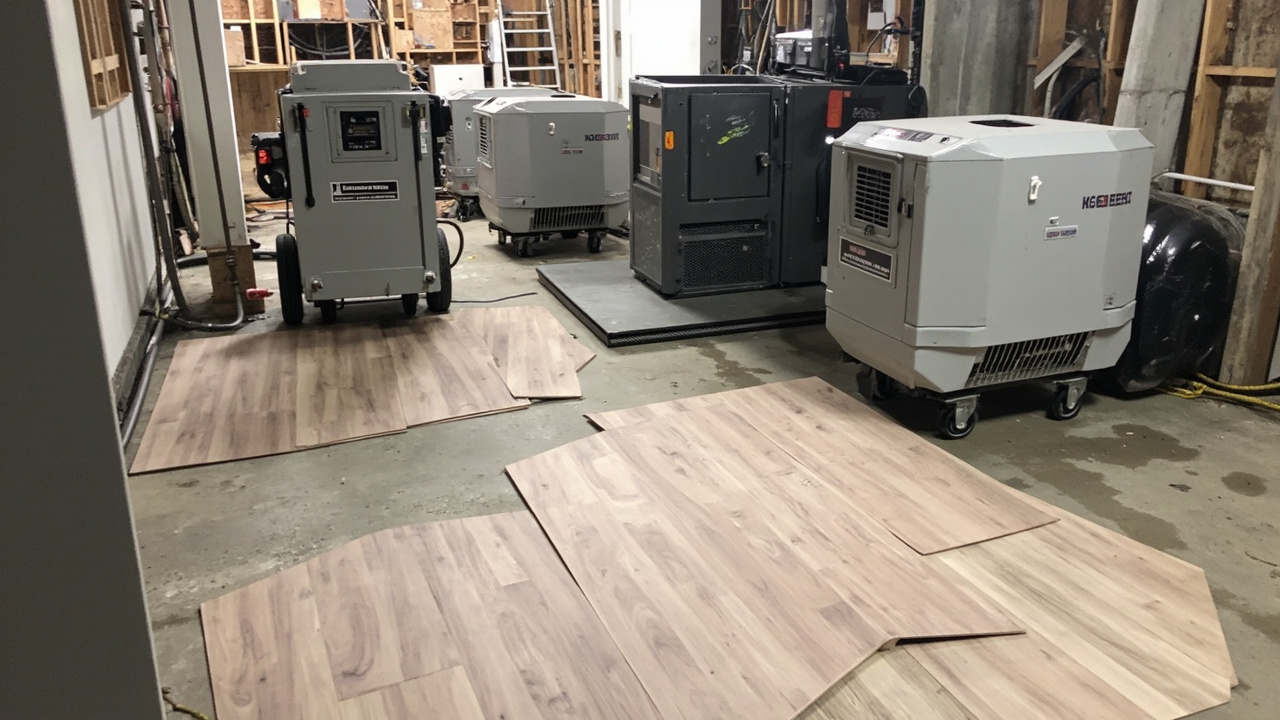
Professional restoration uses commercial grade dehumidifiers with low grain refrigerant (LGR) technology. These machines can extract hundreds of pints of water per day from the air, lowering relative humidity much faster than portable units. Combined with air movers and targeted ventilation, these systems cut drying time in half compared to DIY approaches.
Professional Restoration Process for Water Damaged LVP
If moisture testing reveals subfloor damage or if water has been present for more than 24 hours, professional restoration becomes necessary. Here is what the process looks like.
| Phase | Timeline | What Happens | Why It Matters |
|---|---|---|---|
| Assessment and Extraction | Hours 0 to 4 | Professional equipment removes standing water. Moisture meters test the subfloor at grid points. Photos document the damage for insurance. | Speed prevents mold. Data determines if planks can be saved. |
| Plank Removal and Inspection | Hours 4 to 8 | LVP planks are carefully lifted (click lock) or cut (glue down). Planks are marked and laid out to dry separately. The subfloor is exposed and inspected for swelling, soft spots, or discoloration. | You cannot restore what you cannot see. Visible mold or severe rot requires subfloor replacement. |
| Subfloor Drying and Treatment | Days 2 to 14 | LGR dehumidifiers and air movers run continuously. Moisture is monitored every 48 hours. If mold is present, antimicrobial treatments are applied. The subfloor is prepped for reinstallation. | Proper drying prevents mold and structural damage. Illinois building codes require subfloor moisture below 12 percent before new flooring is installed. |
| Plank Replacement and Sealing | Days 10 to 14 | Dried planks are reinstalled if damage is minimal. Damaged planks are replaced with new stock matching the original color and style. Seams are sealed with pH neutral cleaner. | Sealing prevents future water intrusion at the seams. |
| Final Inspection and Rebaseboarding | Days 14 to 16 | Final moisture readings confirm the floor is dry. Baseboards are reinstalled. The room is returned to normal use. | Documentation ensures insurance coverage and protects your warranty. |
The cost of professional restoration versus replacement depends on the subfloor condition and how much of the LVP can be saved. If 50 percent or more of the planks are salvageable and the subfloor is treatable, restoration typically costs less than replacement. If more than 60 percent of the planks are damaged or the subfloor has structural rot, replacement becomes more economical.
Antimicrobial Treatment and Mold Prevention
Mold grows in 24 to 48 hours on wet materials. If your subfloor was wet for more than 48 hours before drying began, mold is likely present.
Professional restoration applies antimicrobial treatments after the subfloor reaches target moisture levels. These treatments are pH neutral and do not damage wood or concrete. They prevent mold spores from germinating as the floor dries.
For historic homes in Andersonville or older buildings in Hyde Park with limestone foundations, antimicrobial treatment is essential. The porous nature of limestone absorbs and holds water, creating ideal conditions for mold. Professional teams understand mold removal for historic homes and can apply treatments that protect both the foundation and the new flooring.
Insurance Claims and LVP Replacement Rules
Insurance companies treat water damaged flooring under specific rules. Understanding these rules affects your claim payout.
Most homeowners policies cover water damage from burst pipes or internal appliance failures (Category 1 water). They do not cover damage from external flooding or sewer backups unless you have a separate flood or sump pump failure endorsement.
For covered losses, insurance adjusters typically use one of two approaches. The first is actual cash value, which reimburses you for the cost of replacement minus depreciation. The second is replacement cost, which reimburses the full cost to replace with materials of similar kind and quality.
Many policies include a continuous floor rule. If a single area of connected flooring is damaged, the insurer requires replacement of the entire continuous floor, not just the damaged section. This rule means a small water damage incident can trigger a claim to replace your entire basement floor.
Always ask your adjuster about the continuous floor rule before agreeing to any replacement estimates. Professional restoration teams can help you understand what qualifies as a separate continuous floor section, potentially reducing your out of pocket costs.
For burst pipe claims, document everything. Call a restoration professional immediately. Time is your ally in these situations. 24 hour burst pipe repair in Lincoln Park and other Chicago neighborhoods can begin the drying process before mold develops, improving your insurance outcome.
When to Replace Instead of Restore
Some water damage is too severe to repair. Replacement is the only option in these scenarios.
Structural rot in the subfloor. If a moisture meter shows wood moisture above 30 percent, or if the subfloor is soft to the touch or crumbling, the wood has begun to rot. Rotted subfloor cannot support new flooring and must be replaced. This applies to most plywood basements that have experienced extended flooding.
Sewage exposure. Category 3 water (sewage) requires complete removal and replacement of all porous materials. You cannot restore LVP or underlayment that has been exposed to raw sewage. Black water contains dangerous pathogens and must be treated as a biohazard. Sewage backup cleanup in West Loop addresses this specific risk for homeowners in areas served by Chicago’s combined sewer system.
Extensive mold colonization. If mold covers more than 30 percent of the subfloor surface or has penetrated deep into the wood, the subfloor is compromised and mold spores will return. Replacement is safer and more cost effective than aggressive remediation.
Hydrostatic pressure damage in concrete basements. Chicago’s high water table in certain neighborhoods like areas near the Calumet River in Tinley Park or near the Des Plaines River in Des Plaines creates persistent hydrostatic pressure. If water is continuously seeping up through the concrete, drying is impossible until the water intrusion is stopped with professional waterproofing. Until that work is complete, replacing LVP is premature.
DIY Mistakes That Make Restoration Impossible
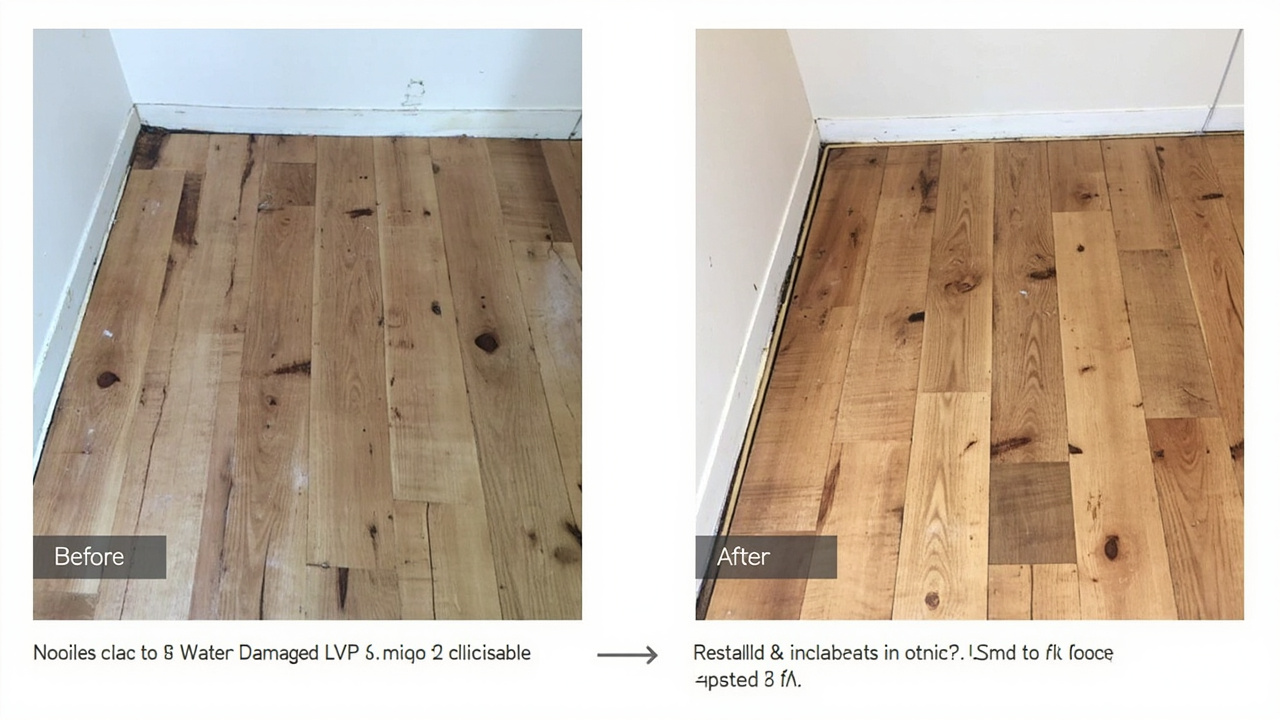
Many homeowners attempt to dry their flooring themselves and accidentally guarantee replacement becomes necessary.
Using standard shop vacs instead of professional extraction. Shop vacs remove surface water but leave moisture in the subfloor. Professional equipment uses higher pressure and better sealing to extract water from deeper layers. The difference is significant. Incomplete extraction means mold still grows.
Opening windows without monitoring humidity. If outdoor humidity is above 50 percent, opening windows adds moisture to the room. Indoor humidity increases instead of decreasing. Always check the outdoor dewpoint before opening windows. In Chicago summers, outdoor humidity rarely drops below 60 percent until late evening.
Reinstalling the floor before the subfloor is dry. The temptation to put your floor back together is strong. If you reinstall LVP before the subfloor reaches target moisture levels, you trap moisture and guarantee mold growth within weeks. Moisture meters confirm when it is safe to reinstall.
Ignoring mold that is visible. If you see black or gray discoloration under the planks, mold is already colonizing. Applying bleach or vinegar to the surface does not kill mold in the subfloor. Professional antimicrobial treatment reaches the mold in the wood grain and prevents regrowth.
Professional Restoration Versus Flooring Retailer Estimates
Flooring retailers are sales organizations, not restoration specialists. When you call a flooring store about water damage, they are incentivized to recommend replacement because that is how they make money.
Restoration professionals like Cornerstone Water Damage Restoration are incentivized to save your flooring if it is salvageable because that builds trust and leads to referrals. We only recommend replacement when the data shows restoration is not viable.
Flooring retailers lack moisture testing equipment, subfloor assessment experience, and understanding of drying protocols. Their estimate is based on visible damage only. A restoration company tests the subfloor, maps moisture levels, and provides a detailed restoration plan backed by data.
Request a professional assessment from a water damage restoration company before accepting a replacement estimate from a flooring retailer. The difference in cost can be thousands of dollars.
When to Call Cornerstone Water Damage Restoration
Call immediately if any of these scenarios match your situation.
Water is still present or draining from walls and foundations. Active water intrusion requires emergency response and source identification. This applies to basements that continue to seep after a flood or plumbing failure.
More than 100 square feet of flooring is affected. Large areas require industrial dehumidification and professional moisture mapping. DIY approaches fail at this scale.
The water source is sewage or external flooding. Category 2 and Category 3 water requires biohazard protocols and specialized equipment. Health risks are severe.
Mold is already visible or you smell a strong musty odor. Mold growth means the subfloor has been wet for more than 48 hours. Antimicrobial treatment and professional drying are necessary.
Your insurance adjuster requires a professional assessment. Many policies require restoration professionals to document the scope of damage and restoration plan. Your insurance company may even cover the cost of the assessment if the claim is approved.
Cornerstone Water Damage Restoration serves Chicago neighborhoods including Lincoln Park, Lakeview, Logan Square, West Loop, Beverly, Rogers Park, Hyde Park, and extending to areas like Joliet, Bolingbrook, Naperville, Aurora, Evanston, Oak Park, Skokie, Arlington Heights, and beyond. We respond 24/7 to emergency water damage, including burst pipes during winter freezes, flooded basement cleanup, and sewage mitigation.
The Bottom Line on Saving Your LVP Flooring
Water damaged LVP flooring can be saved if you act quickly and follow the right protocol. The planks are waterproof, but the system beneath them is not. Your success depends on removing standing water within hours, testing subfloor moisture levels within 24 hours, and beginning professional drying if moisture is elevated.
For basements in Chicago’s flood prone neighborhoods or homes with aging plumbing, the risk of LVP water damage is real. Understanding the restoration process now puts you in a position to make fast decisions if water damage occurs later.
Speed, data, and professional expertise determine whether your LVP comes back or gets replaced. If you have experienced water damage to your flooring or want to understand your options before a problem occurs, contact Cornerstone Water Damage Restoration for a professional assessment. Call our 24/7 emergency line to discuss your situation with a technician who has spent 15 years solving these exact problems for Chicago homeowners.
{
“@context”: “https://schema.org”,
“@type”: “BlogPosting”,
“headline”: “How to Save Water Damaged LVP Flooring in Your Dunning Home”,
“description”: “Learn if water damaged luxury vinyl plank flooring can be saved in Chicago. IICRC restoration guide covers subfloor drying, mold prevention, and insurance claims.”,
“wordCount”: 3180,
“datePublished”: “2026-04-07T10:57:00.000Z”,
“dateModified”: “2026-04-07T10:57:00.000Z”,
“inLanguage”: “en-US”,
“mainEntityOfPage”: {
“@type”: “WebPage”,
“@id”: “https://cornerstonewaterdamagerestorationchicago.com”
},
“publisher”: {
“@type”: “LocalBusiness”,
“name”: “Cornerstone Water Damage Restoration Chicago”,
“url”: “https://cornerstonewaterdamagerestorationchicago.com”
},
“author”: {
“@type”: “Organization”,
“name”: “Cornerstone Water Damage Restoration Chicago”,
“url”: “https://cornerstonewaterdamagerestorationchicago.com”
},
“image”: {
“@type”: “ImageObject”,
“url”: “https://cornerstonewaterdamagerestorationchicago.com/wp-content/uploads/2026/03/how-to-save-luxury-vinyl-plank-flooring-after-a-fl-1.jpg”
}
}
{
“@context”: “https://schema.org”,
“@type”: “LocalBusiness”,
“name”: “Cornerstone Water Damage Restoration Chicago”,
“url”: “https://cornerstonewaterdamagerestorationchicago.com”,
“address”: {
“@type”: “PostalAddress”,
“addressLocality”: “Chicago”
},
“areaServed”: {
“@type”: “City”,
“name”: “Chicago”
}
}
{
“@context”: “https://schema.org”,
“@type”: “HowTo”,
“name”: “How to Mitigate Water Damage to LVP Flooring”,
“step”: [
{
“@type”: “HowToStep”,
“position”: 1,
“name”: “Stop the water source.”,
“text”: “If a pipe burst or appliance is leaking, turn off the water supply at the main valve. If water is coming from outside (basement seepage or sewer backup), identify the entry point and block it if possible. Do not enter a basement with active water flow or sewage present. Call emergency responders or a professional like Cornerstone Water Damage Restoration immediately for sewage backup cleanup in West Loop.”
},
{
“@type”: “HowToStep”,
“position”: 2,
“name”: “Remove standing water.”,
“text”: “Use a wet vacuum or submersible pump to extract standing water. Do not use a standard shop vac on black water from sewage. Professional equipment removes water faster and more thoroughly than DIY methods.”
},
{
“@type”: “HowToStep”,
“position”: 3,
“name”: “Remove baseboards immediately.”,
“text”: “Baseboards trap moisture and prevent air from circulating under the floor. Pry them off carefully, even if you plan to save them. Mark which walls they came from so you can reinstall them later.”
},
{
“@type”: “HowToStep”,
“position”: 4,
“name”: “Lift the planks slightly for airflow.”,
“text”: “This is the quarter inch lift technique. Slide thin shims or wedges under the edges of every other plank to create a gap. This allows air to flow beneath the floor and begins the drying process. Do not remove all the planks yet. Leaving them in place protects the subfloor from further damage during this phase.”
},
{
“@type”: “HowToStep”,
“position”: 5,
“name”: “Set up dehumidification and air movement.”,
“text”: “Open windows if outdoor humidity is below 50 percent. Place portable dehumidifiers and industrial air movers in the room. Position air movers to push moisture out through windows or into exhaust areas. Relative humidity should drop to the 30 to 40 percent range for effective drying.”
},
{
“@type”: “HowToStep”,
“position”: 6,
“name”: “Take photographs and document everything.”,
“text”: “For insurance claims, photograph the damage, the water line on walls, and the affected flooring from multiple angles. Document the date, time, and cause of the damage. This documentation is essential for your insurance adjuster and for any professional restoration work.”
}
],
“image”: “https://cornerstonewaterdamagerestorationchicago.com/wp-content/uploads/2026/03/how-to-save-luxury-vinyl-plank-flooring-after-a-fl-1.jpg”
}
{
“@context”: “https://schema.org”,
“@type”: “BreadcrumbList”,
“itemListElement”: [
{
“@type”: “ListItem”,
“position”: 1,
“name”: “Home”,
“item”: “https://cornerstonewaterdamagerestorationchicago.com”
},
{
“@type”: “ListItem”,
“position”: 2,
“name”: “Blog”,
“item”: “https://cornerstonewaterdamagerestorationchicago.com/blog”
},
{
“@type”: “ListItem”,
“position”: 3,
“name”: “How to Save Water Damaged LVP Flooring in Your Dunning Home”
}
]
}
{
“@context”: “https://schema.org”,
“@type”: “Service”,
“serviceType”: “Water Damage Restoration”,
“provider”: {
“@type”: “LocalBusiness”,
“name”: “Cornerstone Water Damage Restoration Chicago”,
“url”: “https://cornerstonewaterdamagerestorationchicago.com”
},
“areaServed”: {
“@type”: “City”,
“name”: “Chicago”
},
“description”: “Learn if water damaged luxury vinyl plank flooring can be saved in Chicago. IICRC restoration guide covers subfloor drying, mold prevention, and insurance claims.”
}