
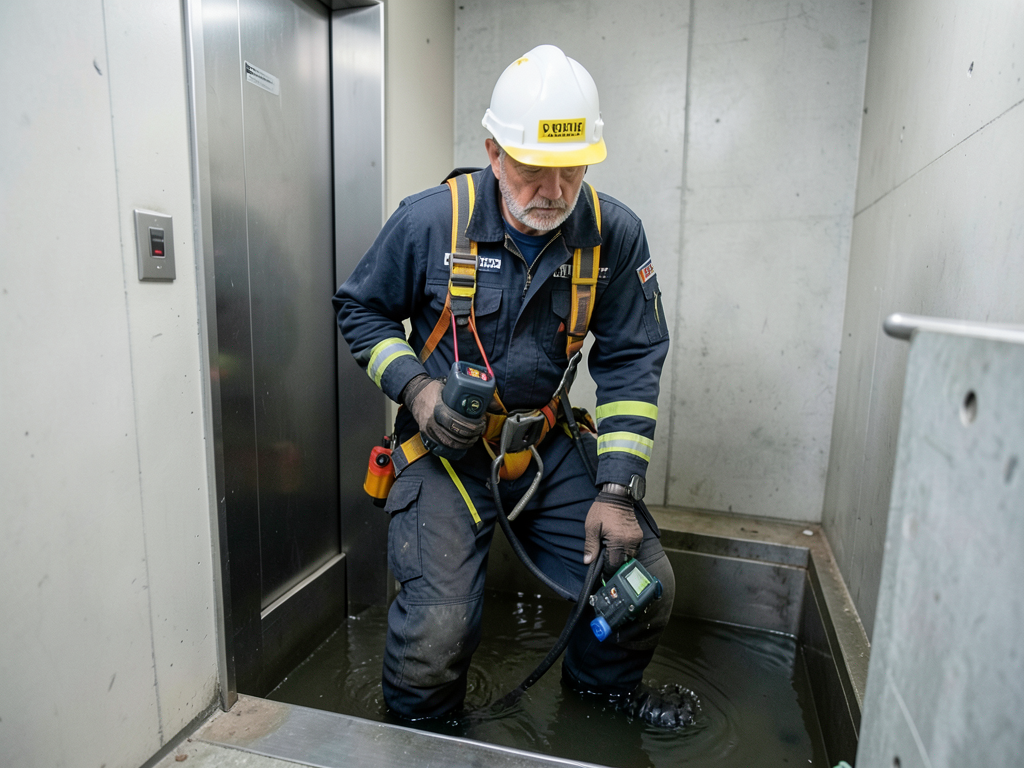
How to handle a flooded elevator pit in your Streeterville high rise
Standing water in an elevator pit is not just a maintenance issue. It is a safety emergency that can shut down your entire building. In Streeterville, where high-rise towers line the lakefront and the water table is already high, a flooded elevator pit can cause hydraulic system failure, electrical shorts, and dangerous mold growth within hours. If you are reading this, you need immediate help. The only safe way to remove contaminated water from an elevator pit is with certified confined space technicians, proper oil-water separation equipment, and EPA-compliant disposal. This guide explains what causes elevator pit flooding in Streeterville, the risks of waiting, and the exact steps a professional team follows to restore safe operation. EPA Clean Water Act summary.
Why elevator pits flood in Streeterville high rises
Streeterville sits on former lakebed near Lake Michigan. The water table here is naturally high, and many buildings have sump pumps that fail during storms or power outages. Aging plumbing, sewer backups, and even roof drainage can send water down elevator shafts. In some cases, hydraulic fluid leaks mix with rainwater, creating an oily hazardous waste that cannot go down the drain. The Chicago Department of Buildings requires elevator pits to be kept dry to prevent rust and mechanical failure. When water sits, it corrodes rails, damages electrical contacts, and can trigger emergency stop switches that lock elevators until the pit is cleared. Get sewage backup out of your West Loop basement before the damage spreads.
Golden Nugget 1: Streeterville’s high water table often sits just a few feet below grade, meaning elevator pits are already in a constant battle with groundwater pressure.
The dangers of standing water in elevator shafts
Water in an elevator pit creates multiple hazards. First, hydraulic fluid contamination. Most elevators use oil under pressure. When water enters, it separates and floats on top, but over time the two mix into a toxic sludge. This violates EPA hazardous waste rules. Second, electrical danger. Elevator controllers and wiring are often located in the pit. Water can cause short circuits, arc flashes, or complete system failure. Third, structural damage. Rust on guide rails and pistons can cause misalignment, noisy operation, or sudden stops. Fourth, mold and bacteria. Damp, dark pits with organic debris grow mold within 24-48 hours, creating air quality issues that spread through the building. Finally, code violations. The City of Chicago Elevator Safety Division can issue stop-work orders if pits are not maintained, halting all elevator use until the issue is resolved. City of Chicago Elevator Safety Division.
Golden Nugget 2: Chicago Municipal Code Chapter 11-4-1410 requires elevator pits to be kept free of standing water and debris to prevent mechanical failure and ensure passenger safety.
Emergency response: What to do right now
If you discover water in your elevator pit, do not attempt to pump it out yourself. Elevator pits are confined spaces under OSHA regulations. Entering without proper training, ventilation, and safety gear is illegal and dangerous. The first step is to cut power to the elevator at the main disconnect. This prevents accidental movement while workers are in the pit. Next, seal off the elevator lobby to keep people away. Then call a certified water damage restoration company that specializes in elevator pit extraction. They will arrive with confined space entry permits, gas monitors, and oil-water separation equipment. Most reputable firms guarantee arrival within 60 minutes in Streeterville and can begin pumping immediately upon arrival. OSHA 29 CFR 1910.146 confined space regulations.
Professional elevator pit extraction process
A certified team follows a strict sequence to remove water and restore safety. First, assessment. Technicians inspect the pit for hazards, measure water depth, and test for oil contamination. Second, lockout/tagout. The elevator system is locked out at the electrical panel to prevent accidental startup. Third, confined space entry. Workers wear harnesses, respirators, and use gas monitors to check for methane or hydrogen sulfide. Fourth, pumping. Submersible pumps with oil-water separators remove water while trapping hydrocarbons. Fifth, cleaning. High-pressure washing removes sludge and debris from rails and walls. Sixth, drying. Air movers and dehumidifiers dry the pit to prevent mold. Seventh, inspection. A licensed elevator mechanic checks hydraulic systems, electrical panels, and guide rails before restoring power. Eighth, documentation. The team provides EPA disposal receipts, confined space entry logs, and a repair recommendation report. Who to call for emergency water damage cleanup in Chicago right now.
Golden Nugget 3: Professional elevator pit extraction uses vactor trucks equipped with 300-gallon oil-water separators to handle the hazardous mix of hydraulic fluid and groundwater, ensuring EPA-compliant disposal.
Regulatory compliance and safety standards
Elevator pit work is governed by multiple regulations. OSHA 29 CFR 1910.146 covers confined space entry, requiring atmospheric testing, ventilation, and rescue plans. The EPA’s Clean Water Act prohibits discharging oily water into storm drains; violators face fines up to $50,000 per day. The City of Chicago Elevator Safety Division mandates annual pit inspections and immediate repair of water intrusion. IICRC WRT (Water Damage Restoration Technician) and ASD (Applied Structural Drying) certifications ensure technicians understand moisture science and microbial risks. Insurance companies often require documentation of these steps to approve claims. Cutting corners here exposes the building owner to liability if someone is injured or if environmental contamination occurs. Water Damage Restoration Springfield.
Preventing future elevator pit flooding
After emergency extraction, prevention is critical. Install a redundant sump pump system with battery backup to handle power outages. Seal cracks in the pit walls with hydraulic cement to stop groundwater seepage. Upgrade the drainage system around the building to divert roof water away from elevator shafts. Schedule quarterly pit inspections to catch small leaks before they become floods. Train building engineers to recognize early signs like rust streaks, musty odors, or slow elevator doors. In Streeterville, where lake-effect storms can dump inches of rain in hours, a proactive maintenance plan is the only way to avoid repeat emergencies.. Read more about What to do when a neighbor’s fire sprinkler floods your River North unit.
Cost factors and insurance coverage
Elevator pit water extraction is not a flat-rate service. Costs depend on water volume, contamination level, and required repairs. A clean water incident might cost $1,500-$3,000. An oily, contaminated pit with hydraulic fluid can run $4,000-$8,000 due to hazardous waste handling fees. Insurance may cover the extraction if caused by a sudden pipe burst or storm, but not if due to neglected maintenance. Always document the damage with photos and keep all disposal receipts. Some building management policies include rider coverage for elevator systems, so check your policy before authorizing work. Fast response for burst pipe water damage in Lincoln Park.
Why DIY methods fail and are dangerous
Homeowners and untrained staff often try to solve elevator pit flooding with a wet vacuum or a rented pump. This is illegal and unsafe. First, confined space laws require permits and safety gear. Second, oily water cannot go down any drain; it must be collected and hauled by a licensed hazardous waste transporter. Third, elevator pits contain high-voltage panels and hydraulic lines. One mistake can cause electrocution or a sudden drop of the elevator car. Fourth, incomplete drying leads to mold growth that spreads through the building’s ventilation. Finally, insurance claims are denied if non-licensed work is performed, leaving the building owner liable for all costs.
24/7 emergency elevator pit water extraction in Streeterville
When water fills your elevator pit, every minute counts. Our Chicago-based team is on call 24/7 with certified confined space technicians, oil-water separation equipment, and EPA-compliant disposal. We serve all Streeterville high rises, from luxury condos on East Grand Avenue to office towers near Navy Pier. Our average response time is under 45 minutes, and we begin pumping immediately upon arrival. We provide same-day documentation for your insurance company and coordinate with your elevator mechanic to ensure a full restoration. Do not wait for the water to damage your hydraulic system or trigger a city violation. Call now for immediate help.. Read more about Why your Chicago property manager needs a pre-approved flood response plan.
Frequently Asked Questions
How long does elevator pit water extraction take?
Extraction itself usually takes 2-4 hours depending on water volume and contamination. Drying and inspection add another 4-6 hours. Full restoration, including any needed repairs, can take 1-3 days.
Is elevator pit water considered hazardous waste?
Yes, if it contains hydraulic oil or other chemicals. Even clean groundwater can become hazardous if it mixes with existing contaminants in the pit. EPA rules require proper separation and disposal.
Can I enter the elevator pit to check the water level?
No. Elevator pits are confined spaces. Entering without permits, training, and safety equipment is illegal and extremely dangerous.
Will my insurance cover the cost?
Most commercial property policies cover sudden water damage from burst pipes or storms. Damage from neglected maintenance or groundwater intrusion may not be covered. Check your policy and document everything.
How can I prevent future flooding?
Install a battery-backed sump pump, seal pit walls, improve exterior drainage, and schedule quarterly inspections. In Streeterville’s high water table, proactive maintenance is essential.
Conclusion
Flooded elevator pits in Streeterville high rises are a serious emergency that demands professional, code-compliant response. The combination of high water table, aging infrastructure, and strict city regulations means DIY attempts are illegal and dangerous. Certified technicians use confined space protocols, oil-water separation, and EPA disposal to remove water safely and restore operation. Do not wait for rust, mold, or a city violation to shut down your building. Call a licensed elevator pit extraction specialist now for immediate, documented service. Dealing with a flooded basement in Lakeview (and how to clean it up fast).
Need emergency elevator pit water extraction in Streeterville right now? Call our 24/7 Chicago team. We arrive in under 60 minutes with the equipment and certifications to handle any pit flooding safely and in full compliance with OSHA, EPA, and Chicago building codes.
{
“@context”: “https://schema.org”,
“@type”: “BlogPosting”,
“headline”: “How to handle a flooded elevator pit in your Streeterville high rise”,
“description”: “Emergency elevator pit water extraction in Streeterville. Learn OSHA safety, EPA disposal rules, and 24/7 Chicago service for flooded high-rise elevator shafts.”,
“wordCount”: 1639,
“datePublished”: “2026-06-03T15:35:00.000Z”,
“dateModified”: “2026-06-03T15:35:00.000Z”,
“inLanguage”: “en-US”,
“mainEntityOfPage”: {
“@type”: “WebPage”,
“@id”: “https://cornerstonewaterdamagerestorationchicago.com”
},
“publisher”: {
“@type”: “LocalBusiness”,
“name”: “Cornerstone Water Damage Restoration Chicago”,
“url”: “https://cornerstonewaterdamagerestorationchicago.com”
},
“author”: {
“@type”: “Organization”,
“name”: “Cornerstone Water Damage Restoration Chicago”,
“url”: “https://cornerstonewaterdamagerestorationchicago.com”
},
“image”: {
“@type”: “ImageObject”,
“url”: “https://cornerstonewaterdamagerestorationchicago.com/wp-content/uploads/2026/03/how-to-handle-a-flooded-elevator-pit-in-your-stree-1.png”
}
}
{
“@context”: “https://schema.org”,
“@type”: “LocalBusiness”,
“name”: “Cornerstone Water Damage Restoration Chicago”,
“url”: “https://cornerstonewaterdamagerestorationchicago.com”,
“address”: {
“@type”: “PostalAddress”,
“addressLocality”: “Chicago”
},
“areaServed”: {
“@type”: “City”,
“name”: “Chicago”
}
}
{
“@context”: “https://schema.org”,
“@type”: “FAQPage”,
“mainEntity”: [
{
“@type”: “Question”,
“name”: “How long does elevator pit water extraction take?”,
“acceptedAnswer”: {
“@type”: “Answer”,
“text”: “Extraction itself usually takes 2-4 hours depending on water volume and contamination. Drying and inspection add another 4-6 hours. Full restoration, including any needed repairs, can take 1-3 days.”
}
},
{
“@type”: “Question”,
“name”: “Is elevator pit water considered hazardous waste?”,
“acceptedAnswer”: {
“@type”: “Answer”,
“text”: “Yes, if it contains hydraulic oil or other chemicals. Even clean groundwater can become hazardous if it mixes with existing contaminants in the pit. EPA rules require proper separation and disposal.”
}
},
{
“@type”: “Question”,
“name”: “Can I enter the elevator pit to check the water level?”,
“acceptedAnswer”: {
“@type”: “Answer”,
“text”: “No. Elevator pits are confined spaces. Entering without permits, training, and safety equipment is illegal and extremely dangerous.”
}
},
{
“@type”: “Question”,
“name”: “Will my insurance cover the cost?”,
“acceptedAnswer”: {
“@type”: “Answer”,
“text”: “Most commercial property policies cover sudden water damage from burst pipes or storms. Damage from neglected maintenance or groundwater intrusion may not be covered. Check your policy and document everything.”
}
},
{
“@type”: “Question”,
“name”: “How can I prevent future flooding?”,
“acceptedAnswer”: {
“@type”: “Answer”,
“text”: “Install a battery-backed sump pump, seal pit walls, improve exterior drainage, and schedule quarterly inspections. In Streeterville’s high water table, proactive maintenance is essential.”
}
}
]
}
{
“@context”: “https://schema.org”,
“@type”: “BreadcrumbList”,
“itemListElement”: [
{
“@type”: “ListItem”,
“position”: 1,
“name”: “Home”,
“item”: “https://cornerstonewaterdamagerestorationchicago.com”
},
{
“@type”: “ListItem”,
“position”: 2,
“name”: “Blog”,
“item”: “https://cornerstonewaterdamagerestorationchicago.com/blog”
},
{
“@type”: “ListItem”,
“position”: 3,
“name”: “How to handle a flooded elevator pit in your Streeterville high rise”
}
]
}
{
“@context”: “https://schema.org”,
“@type”: “Service”,
“serviceType”: “Water Damage Restoration”,
“provider”: {
“@type”: “LocalBusiness”,
“name”: “Cornerstone Water Damage Restoration Chicago”,
“url”: “https://cornerstonewaterdamagerestorationchicago.com”
},
“areaServed”: {
“@type”: “City”,
“name”: “Chicago”
},
“description”: “Emergency elevator pit water extraction in Streeterville. Learn OSHA safety, EPA disposal rules, and 24/7 Chicago service for flooded high-rise elevator shafts.”
}