
How to Check for Water Damage Behind Built-In Cabinetry and Custom Millwork
Water damage behind kitchen cabinets and custom millwork creates a perfect storm for structural decay and toxic mold growth. The dark, enclosed spaces between cabinet backs and walls trap moisture from slow leaks, making problems invisible until they become severe. In Chicago homes, where freeze-thaw cycles stress plumbing and high humidity accelerates mold growth, these hidden cavities can harbor dangerous conditions within weeks. Who to call for emergency water damage cleanup in Chicago right now.
You cannot see or smell the damage until it reaches a critical point. By then, you face cabinet removal, subfloor replacement, and costly mold remediation. The key is early detection using moisture meters, thermal imaging, and understanding the failure patterns specific to Chicago’s building stock and climate. Professional mold removal services for historic homes in Andersonville.
This guide walks you through the diagnostic process step-by-step. You will learn to identify warning signs, understand the risks of neglect, and know when professional intervention becomes necessary. The information here applies whether you live in a vintage Lincoln Park bungalow or a West Loop high-rise condo.. Read more about Restoring vintage wallpaper and designer wallcoverings after a pipe burst.
Warning Signs That Water Damage May Be Hidden Behind Your Cabinetry
Visible symptoms often appear long after damage begins. Watch for these indicators that moisture has penetrated the cabinet cavity: Water Damage Restoration Springfield.
- Musty odors near the sink or dishwasher that persist despite cleaning
- Peeling paint or wallpaper on walls adjacent to cabinetry
- Warped or discolored cabinet bases, especially near plumbing fixtures
- Soft spots when pressing on cabinet floors or kick plates
- Mold growth visible on the back of the sink base when you open cabinet doors
- Cracks in caulking around sink edges that keep reappearing
These symptoms indicate moisture has compromised the structural integrity of your cabinetry and surrounding materials. The longer you wait, the more extensive and expensive the repairs become. EPA mold guidelines.
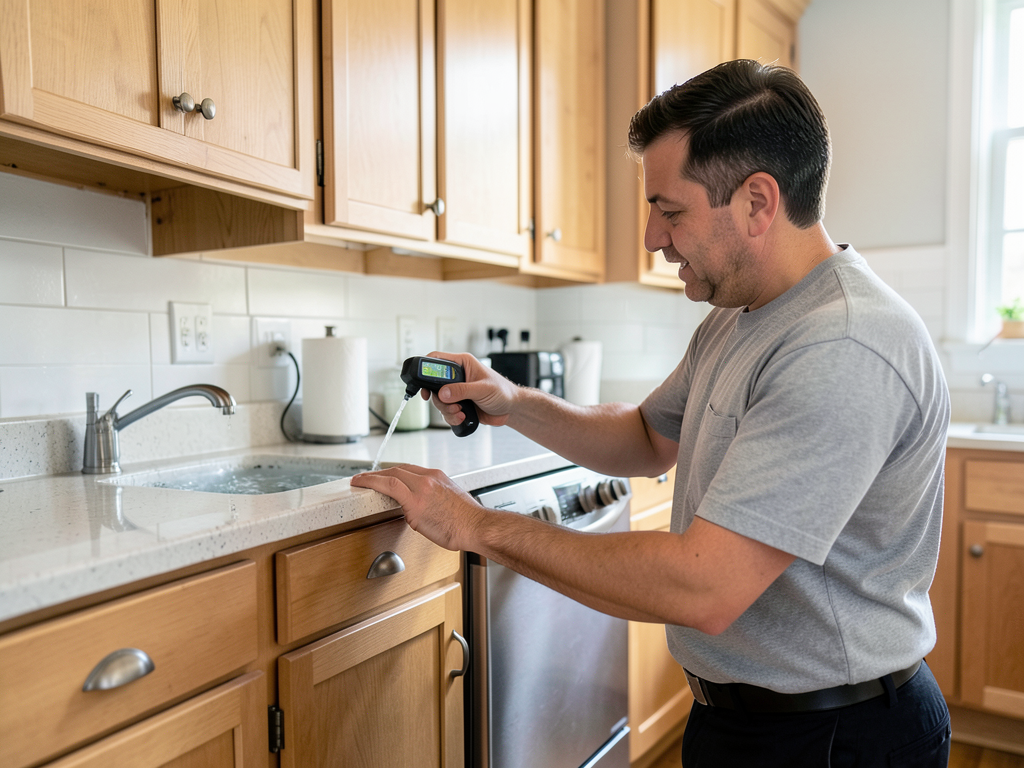
A technician uses a moisture meter to detect hidden water behind kitchen cabinets in a Chicago bungalow.
Common Sources of Water Intrusion in Chicago Kitchens
Chicago’s unique climate and building patterns create specific vulnerabilities for cabinetry water damage:
Plumbing Supply Line Failures – The freeze-thaw cycles common in Chicago winters cause pipes in exterior walls to expand and contract. Over time, this stress creates hairline fractures in supply lines that slowly drip water into cabinet cavities. The damage accumulates silently for months before becoming visible.
Dishwasher Drainage Issues – Many Chicago homes have dishwashers installed in custom cabinetry. A failing drain hose or clogged air gap allows water to back up and seep into the cabinet base. The enclosed space prevents evaporation, creating ideal conditions for mold growth.
Ice Maker Line Leaks – Refrigerators with ice makers often have small supply lines that run through cabinetry. These flexible lines can kink, crack, or become disconnected. A slow leak here goes unnoticed until you discover a saturated cabinet floor or warped hardwood flooring.
Sink Drain Trap Failures – The P-trap under your sink can develop leaks at connection points. Water drips onto the cabinet base and seeps into the subfloor. In Chicago’s humid summers, this trapped moisture creates perfect conditions for black mold (Stachybotrys) within 48-72 hours.
The Hidden Dangers of Water Damage Behind Cabinetry
Ignoring water damage behind cabinetry creates cascading problems that threaten your home’s structure and your family’s health:
Mold Growth and Indoor Air Quality – The dark, damp environment behind cabinets provides ideal conditions for mold colonies. Stachybotrys chartarum, commonly called black mold, thrives in these conditions. This toxic mold releases mycotoxins that can cause respiratory problems, headaches, and immune system suppression. The EPA classifies Stachybotrys as a Category 3 contaminant requiring professional remediation.
Structural Deterioration – Water weakens wood fibers and corrodes fasteners. Cabinet bases become spongy and unstable. The damage often extends to subflooring, where moisture causes delamination and rot. In severe cases, the structural integrity of the entire kitchen floor system becomes compromised.
Electrical Hazards – Many kitchens have electrical outlets or wiring routed through or near cabinetry. Water contact creates shock hazards and fire risks. The National Electrical Code (NEC) requires GFCI protection for kitchen outlets, but water damage can compromise these safety devices.
Property Value Impact – Undetected water damage reduces your home’s market value. Potential buyers discover the issues during inspections, leading to price reductions or deal cancellations. Insurance companies may deny claims for long-term neglect, leaving you responsible for full repair costs.
Professional Diagnostic Methods for Detecting Hidden Water Damage
Professional water damage restoration technicians use specialized equipment to detect moisture without destructive testing:
Moisture Meter Testing – Non-invasive pinless moisture meters scan through cabinet materials to detect elevated moisture content. Readings above 15-17% indicate active water intrusion. Technicians document moisture levels at multiple depths to map the extent of damage.
Infrared Thermal Imaging – FLIR thermal cameras detect temperature differences caused by moisture. Water retains heat differently than dry materials, creating visible patterns on thermal scans. This technology reveals the exact location and extent of water migration without removing cabinetry.
Destructive Testing When Necessary – When non-invasive methods indicate severe damage, technicians may remove small sections of cabinet backing or base panels. This allows direct visual inspection of wall cavities, subfloor conditions, and mold presence. The IICRC S500 standard guides these procedures to minimize unnecessary demolition.
Humidity and Dew Point Monitoring – High humidity levels in cabinet cavities indicate ongoing moisture problems. Technicians use hygrometers to measure relative humidity and calculate dew point. Persistent readings above 60% relative humidity suggest active water intrusion or inadequate ventilation.
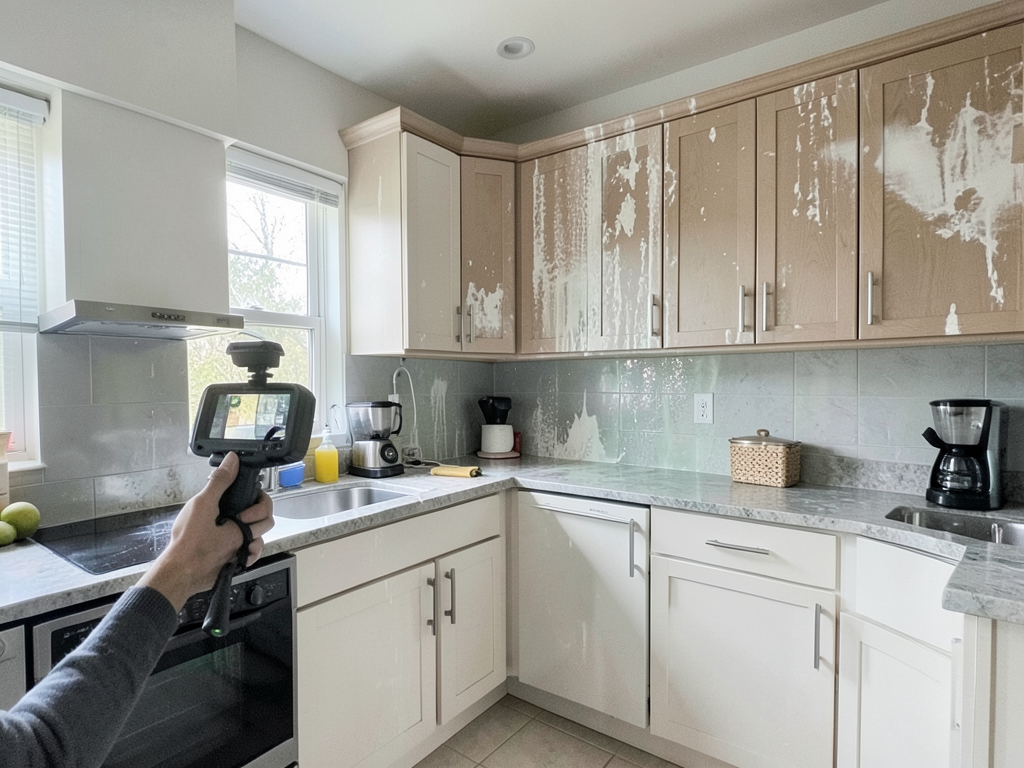
Thermal imaging reveals moisture patterns behind kitchen cabinets that are invisible to the naked eye.
Should You Remove Cabinets Yourself to Check for Water Damage?
DIY cabinet removal to check for water damage creates several risks that often cost more than professional inspection:
Structural Damage Risk – Custom millwork often integrates with countertops, backsplashes, and adjacent cabinetry. Improper removal can damage surrounding materials, requiring complete kitchen reconstruction even if water damage proves minimal.
Mold Exposure Hazards – Disturbing mold colonies releases spores into your home’s air. Without proper containment and personal protective equipment, you expose your family to toxic mold. The EPA recommends professional remediation for mold areas exceeding 10 square feet.
Hidden Complications – Water damage often affects plumbing, electrical, and structural components. DIY removal may reveal problems beyond your skill level, leaving your kitchen unusable while you determine next steps.
Insurance Complications – Insurance companies may deny claims if you perform work that a professional should handle. They may argue that DIY demolition contributed to damage extent or created new problems.
Professional inspection costs significantly less than the potential consequences of DIY removal. Most restoration companies offer free or low-cost initial assessments using non-invasive diagnostic tools.
Chicago-Specific Water Damage Considerations
Chicago’s unique building characteristics and climate create specific vulnerabilities for cabinetry water damage:
Historic Building Construction – Many Chicago homes, particularly in neighborhoods like Bucktown and Wicker Park, feature balloon-frame construction. This building method allows rapid vertical water migration between floors. Water damage on the first floor may originate from a second-floor bathroom.
Combined Sewer System Impact – Chicago’s combined sewer system can back up during heavy rains, causing sewage to back up through floor drains. This Category 3 water contamination requires immediate professional remediation to prevent health hazards and structural damage.
Freezing Pipe Vulnerability – Chicago’s extreme winter temperatures cause pipes in exterior walls to freeze and burst. The resulting water damage often affects cabinetry near kitchen exterior walls. The Chicago Building Code requires specific insulation standards for plumbing in exterior walls, but older homes may not meet current requirements.
High Humidity Challenges – Chicago summers bring high humidity levels that slow natural drying. Water trapped behind cabinetry may persist for weeks, accelerating mold growth and material deterioration. Professional drying equipment becomes essential for complete moisture removal.
Local Building Code Requirements – The Chicago Municipal Code Section 13-32-050 requires specific waterproofing standards for areas prone to water exposure. Violations or outdated installations increase vulnerability to water damage.
The Professional Restoration Process for Water-Damaged Cabinetry
When water damage requires professional intervention, restoration follows a systematic process:
- Initial Inspection and Documentation
Technicians perform comprehensive moisture mapping using thermal imaging and moisture meters. They document damage extent, mold presence, and structural integrity. This documentation becomes crucial for insurance claims and restoration planning.
- Containment and Safety Setup
Professionals establish containment barriers to prevent cross-contamination. They use negative air pressure and HEPA filtration to protect unaffected areas. Personal protective equipment becomes mandatory when Category 3 water or mold is present.
- Water Extraction and Removal
High-powered extraction equipment removes standing water and saturated materials. Technicians determine which components can be salvaged versus those requiring removal. The decision depends on contamination level, material porosity, and structural integrity.
- Structural Drying
Industrial-grade dehumidifiers and air movers create conditions for rapid moisture removal. LGR (Low Grain Refrigerant) dehumidifiers achieve the low humidity levels necessary for deep structural drying. The process continues until moisture content reaches industry-standard levels.
- Antimicrobial Treatment
EPA-registered antimicrobial agents treat affected surfaces to prevent mold regrowth. This step becomes critical when dealing with Category 2 or 3 water damage or visible mold colonies. Dealing with a flooded basement in Lakeview (and how to clean it up fast).
- Reconstruction and Restoration
Once drying completes and contamination clears, reconstruction begins. This may involve cabinet repair, subfloor replacement, drywall installation, and finishing work. The goal restores the space to pre-loss condition or better.
Industrial drying equipment creates optimal conditions for removing moisture trapped behind cabinetry.
Insurance Considerations for Kitchen Water Damage
Insurance coverage for water damage depends on the source and duration of the problem:
Sudden and Accidental vs. Gradual Damage – Most homeowner policies cover sudden, accidental water damage but exclude long-term leaks. A pipe burst qualifies for coverage, while a slow leak over months may not. Insurance companies examine maintenance records and damage patterns to determine coverage eligibility.
Documentation Requirements – Successful claims require thorough documentation. Take photos immediately upon discovering damage. Keep receipts for emergency services. Save all communication with restoration companies. Insurance adjusters need evidence to justify claim approval.
Professional vs. DIY Claims – Insurance companies prefer professional restoration services because they provide detailed documentation and follow industry standards. DIY repairs may complicate claims if adjusters question work quality or completeness.
Additional Living Expenses – Severe kitchen damage may require temporary relocation. Many policies cover additional living expenses during restoration. Keep all receipts for hotels, meals, and temporary housing.
Understanding your policy’s specific water damage coverage prevents unpleasant surprises during the claims process. Review your policy annually and discuss coverage options with your insurance agent.
Prevention Strategies to Protect Your Cabinetry
Preventing water damage costs far less than repairs. Implement these strategies to protect your cabinetry:
Regular Plumbing Inspections – Schedule annual plumbing inspections to identify potential failure points. Look for corrosion, loose connections, and signs of wear. Replace supply lines every 5-7 years, even if they appear functional.
Water Detection Systems – Install water leak detectors under sinks, behind dishwashers, and near refrigerators with ice makers. These devices sound alarms when they detect moisture, allowing you to address problems before extensive damage occurs.
Proper Ventilation – Ensure adequate ventilation in kitchens to reduce humidity levels. Use exhaust fans during cooking and for 30 minutes afterward. Consider installing a dehumidifier if your home experiences chronic humidity issues.
Quality Installation Practices – When installing new cabinetry or appliances, ensure proper waterproofing around sinks and plumbing connections. Use high-quality materials and follow manufacturer specifications for clearances and ventilation.
Emergency Response Planning – Know the location of your main water shut-off valve. Keep emergency contact numbers for restoration services readily available. Quick response to water incidents minimizes damage extent.
When to Call Professional Restoration Services
Certain situations require immediate professional intervention:
Category 3 Water Presence – Sewage backup, flooding from rivers or streams, or water containing hazardous materials requires professional remediation. These situations pose immediate health risks and require specialized equipment and procedures.
Visible Mold Growth – Mold areas exceeding 10 square feet require professional remediation according to EPA guidelines. Disturbing large mold colonies without proper containment spreads contamination throughout your home.
Structural Compromise – If cabinets feel spongy, floors sag, or walls show significant water damage, the structural integrity may be compromised. Professional assessment determines whether demolition or repair is necessary.
Insurance Claims – When filing insurance claims, professional documentation and restoration services strengthen your position. Insurance companies prefer working with certified restoration companies that follow industry standards.
Time-Sensitive Situations – Water damage requires response within 24-48 hours to prevent mold growth. If you cannot address the problem immediately, professional services provide the rapid response necessary to minimize damage.
Professional restoration services bring expertise, equipment, and insurance knowledge that DIY approaches cannot match. The cost of professional service often proves less than the consequences of inadequate restoration.
Frequently Asked Questions
How can I tell if water damage behind my cabinets is serious?
Moisture readings above 17% indicate active water intrusion. Musty odors, visible mold, or spongy cabinet bases suggest structural damage requiring immediate attention. Professional moisture meters provide accurate assessments of damage extent.
Can I dry out water-damaged cabinets myself?
Minor surface moisture may respond to DIY drying, but trapped water between cabinets and walls requires professional equipment. Standard fans cannot achieve the low humidity levels necessary for deep structural drying. DIY attempts often leave moisture that causes mold growth within 48-72 hours.
How long does professional water damage restoration take?
Initial drying typically requires 3-5 days with professional equipment. Complete restoration, including reconstruction, may take 2-4 weeks depending on damage extent and material availability. Category 3 water situations require additional decontamination steps that extend timelines.
Will my insurance cover water damage behind kitchen cabinets?
Coverage depends on the water source and damage duration. Sudden pipe bursts typically qualify for coverage, while long-term leaks may not. Review your policy and document damage thoroughly to support your claim. Fast response for burst pipe water damage in Lincoln Park.
What health risks come from water damage behind cabinetry?
Hidden water damage creates ideal conditions for toxic mold growth, particularly Stachybotrys chartarum. This mold releases mycotoxins that can cause respiratory problems, headaches, and immune system suppression. Category 3 water contamination poses immediate health hazards requiring professional remediation.
Water damage behind cabinetry represents a serious threat to your home’s structure and your family’s health. Early detection through professional diagnostic methods prevents minor problems from becoming major disasters. Chicago’s unique climate and building patterns create specific vulnerabilities that require understanding and proactive prevention.
When you discover signs of water damage, resist the urge to immediately demolish cabinetry. Professional inspection using moisture meters and thermal imaging reveals the true extent of damage without unnecessary destruction. This approach saves money and preserves your home’s integrity.
Remember that water damage restoration requires rapid response. Mold can begin growing within 48-72 hours of water exposure. Professional services provide the equipment, expertise, and insurance knowledge necessary for complete restoration. The investment in professional service protects your home’s value and your family’s health.
If you suspect water damage behind your cabinetry, contact a certified water damage restoration professional immediately. Early intervention prevents costly repairs and ensures your home remains safe and healthy for your family. For more information, visit IICRC S500 standards.
{
“@context”: “https://schema.org”,
“@type”: “BlogPosting”,
“headline”: “How to check for water damage behind built in cabinetry and custom millwork”,
“description”: “Learn how to detect hidden water damage behind kitchen cabinets in Chicago homes. Discover professional diagnostic methods, mold risks, and when to call experts.”,
“wordCount”: 2547,
“datePublished”: “2026-05-29T09:01:00.000Z”,
“dateModified”: “2026-05-29T09:01:00.000Z”,
“inLanguage”: “en-US”,
“mainEntityOfPage”: {
“@type”: “WebPage”,
“@id”: “https://cornerstonewaterdamagerestorationchicago.com”
},
“publisher”: {
“@type”: “LocalBusiness”,
“name”: “Cornerstone Water Damage Restoration Chicago”,
“url”: “https://cornerstonewaterdamagerestorationchicago.com”
},
“author”: {
“@type”: “Organization”,
“name”: “Cornerstone Water Damage Restoration Chicago”,
“url”: “https://cornerstonewaterdamagerestorationchicago.com”
},
“image”: {
“@type”: “ImageObject”,
“url”: “https://cornerstonewaterdamagerestorationchicago.com/wp-content/uploads/2026/03/how-to-check-for-water-damage-behind-built-in-cabi-1.png”
}
}
{
“@context”: “https://schema.org”,
“@type”: “LocalBusiness”,
“name”: “Cornerstone Water Damage Restoration Chicago”,
“url”: “https://cornerstonewaterdamagerestorationchicago.com”,
“address”: {
“@type”: “PostalAddress”,
“addressLocality”: “Chicago”
},
“areaServed”: {
“@type”: “City”,
“name”: “Chicago”
}
}
{
“@context”: “https://schema.org”,
“@type”: “FAQPage”,
“mainEntity”: [
{
“@type”: “Question”,
“name”: “Should You Remove Cabinets Yourself to Check for Water Damage?”,
“acceptedAnswer”: {
“@type”: “Answer”,
“text”: “DIY cabinet removal to check for water damage creates several risks that often cost more than professional inspection:”
}
},
{
“@type”: “Question”,
“name”: “How can I tell if water damage behind my cabinets is serious?”,
“acceptedAnswer”: {
“@type”: “Answer”,
“text”: “Moisture readings above 17% indicate active water intrusion. Musty odors, visible mold, or spongy cabinet bases suggest structural damage requiring immediate attention. Professional moisture meters provide accurate assessments of damage extent.”
}
},
{
“@type”: “Question”,
“name”: “Can I dry out water-damaged cabinets myself?”,
“acceptedAnswer”: {
“@type”: “Answer”,
“text”: “Minor surface moisture may respond to DIY drying, but trapped water between cabinets and walls requires professional equipment. Standard fans cannot achieve the low humidity levels necessary for deep structural drying. DIY attempts often leave moisture that causes mold growth within 48-72 hours.”
}
},
{
“@type”: “Question”,
“name”: “Will my insurance cover water damage behind kitchen cabinets?”,
“acceptedAnswer”: {
“@type”: “Answer”,
“text”: “Coverage depends on the water source and damage duration. Sudden pipe bursts typically qualify for coverage, while long-term leaks may not. Review your policy and document damage thoroughly to support your claim. Fast response for burst pipe water damage in Lincoln Park.”
}
},
{
“@type”: “Question”,
“name”: “What health risks come from water damage behind cabinetry?”,
“acceptedAnswer”: {
“@type”: “Answer”,
“text”: “Hidden water damage creates ideal conditions for toxic mold growth, particularly Stachybotrys chartarum. This mold releases mycotoxins that can cause respiratory problems, headaches, and immune system suppression. Category 3 water contamination poses immediate health hazards requiring professional remediation.”
}
}
]
}
{
“@context”: “https://schema.org”,
“@type”: “HowTo”,
“name”: “Professional Water Damage Restoration Process”,
“step”: [
{
“@type”: “HowToStep”,
“position”: 1,
“name”: “Initial Inspection and Documentation”,
“text”: “Technicians perform comprehensive moisture mapping using thermal imaging and moisture meters. They document damage extent, mold presence, and structural integrity. This documentation becomes crucial for insurance claims and restoration planning.”
},
{
“@type”: “HowToStep”,
“position”: 2,
“name”: “Containment and Safety Setup”,
“text”: “Professionals establish containment barriers to prevent cross-contamination. They use negative air pressure and HEPA filtration to protect unaffected areas. Personal protective equipment becomes mandatory when Category 3 water or mold is present.”
},
{
“@type”: “HowToStep”,
“position”: 3,
“name”: “Water Extraction and Removal”,
“text”: “High-powered extraction equipment removes standing water and saturated materials. Technicians determine which components can be salvaged versus those requiring removal. The decision depends on contamination level, material porosity, and structural integrity.”
},
{
“@type”: “HowToStep”,
“position”: 4,
“name”: “Structural Drying”,
“text”: “Industrial-grade dehumidifiers and air movers create conditions for rapid moisture removal. LGR (Low Grain Refrigerant) dehumidifiers achieve the low humidity levels necessary for deep structural drying. The process continues until moisture content reaches industry-standard levels.”
},
{
“@type”: “HowToStep”,
“position”: 5,
“name”: “Antimicrobial Treatment”,
“text”: “EPA-registered antimicrobial agents treat affected surfaces to prevent mold regrowth. This step becomes critical when dealing with Category 2 or 3 water damage or visible mold colonies. Dealing with a flooded basement in Lakeview (and how to clean it up fast).”
},
{
“@type”: “HowToStep”,
“position”: 6,
“name”: “Reconstruction and Restoration”,
“text”: “Once drying completes and contamination clears, reconstruction begins. This may involve cabinet repair, subfloor replacement, drywall installation, and finishing work. The goal restores the space to pre-loss condition or better.”
}
],
“image”: “https://cornerstonewaterdamagerestorationchicago.com/wp-content/uploads/2026/03/how-to-check-for-water-damage-behind-built-in-cabi-1.png”
}
{
“@context”: “https://schema.org”,
“@type”: “BreadcrumbList”,
“itemListElement”: [
{
“@type”: “ListItem”,
“position”: 1,
“name”: “Home”,
“item”: “https://cornerstonewaterdamagerestorationchicago.com”
},
{
“@type”: “ListItem”,
“position”: 2,
“name”: “Blog”,
“item”: “https://cornerstonewaterdamagerestorationchicago.com/blog”
},
{
“@type”: “ListItem”,
“position”: 3,
“name”: “How to check for water damage behind built in cabinetry and custom millwork”
}
]
}
{
“@context”: “https://schema.org”,
“@type”: “Service”,
“serviceType”: “Water Damage Restoration”,
“provider”: {
“@type”: “LocalBusiness”,
“name”: “Cornerstone Water Damage Restoration Chicago”,
“url”: “https://cornerstonewaterdamagerestorationchicago.com”
},
“areaServed”: {
“@type”: “City”,
“name”: “Chicago”
},
“description”: “Learn how to detect hidden water damage behind kitchen cabinets in Chicago homes. Discover professional diagnostic methods, mold risks, and when to call experts.”
}