

Secondary Water Damage Prevention in Portage Park and Chicago Homes
IMMEDIATE ACTION REQUIRED
If you experience water damage right now, call a professional restoration company immediately. Do not wait 24 hours. Every hour that moisture remains in your walls increases the risk of secondary damage. Water damage that costs $3,000 to fix in the first 24 hours will cost $50,000 or more if secondary damage spreads for one week. Professional emergency response within the first 24 hours is the difference between saving your home and experiencing structural failure.
Frequently Asked Questions
How quickly does mold grow after water damage in Chicago? Mold spore germination can begin within 24 to 48 hours on damp surfaces. In Chicago’s humid climate, especially during summer months near Lake Michigan, mold growth accelerates because outdoor humidity is naturally high. Visible mold colonies typically appear within 3 to 5 days if humidity is not controlled and antimicrobial treatments are not applied. Temperature between 70 and 90 degrees Fahrenheit accelerates mold growth. Winter water damage dries more slowly because cold air cannot hold moisture, but it still requires professional dehumidification to prevent mold.
Can I just use fans and windows to dry water damage instead of hiring professionals? Fans and open windows are ineffective in Chicago because summer humidity is already 75 to 95 percent relative humidity. Opening windows in summer brings more moisture into your home rather than removing it. Winter drying through open windows is faster, but even in winter, Chicago air retains enough moisture that fans alone cannot achieve structural drying. Industrial dehumidifiers reduce humidity to 35 to 50 percent grains per pound, which is necessary to prevent mold and wood rot. Fans and windows typically take 4 to 12 weeks to accomplish what professional equipment does in 5 to 14 days.
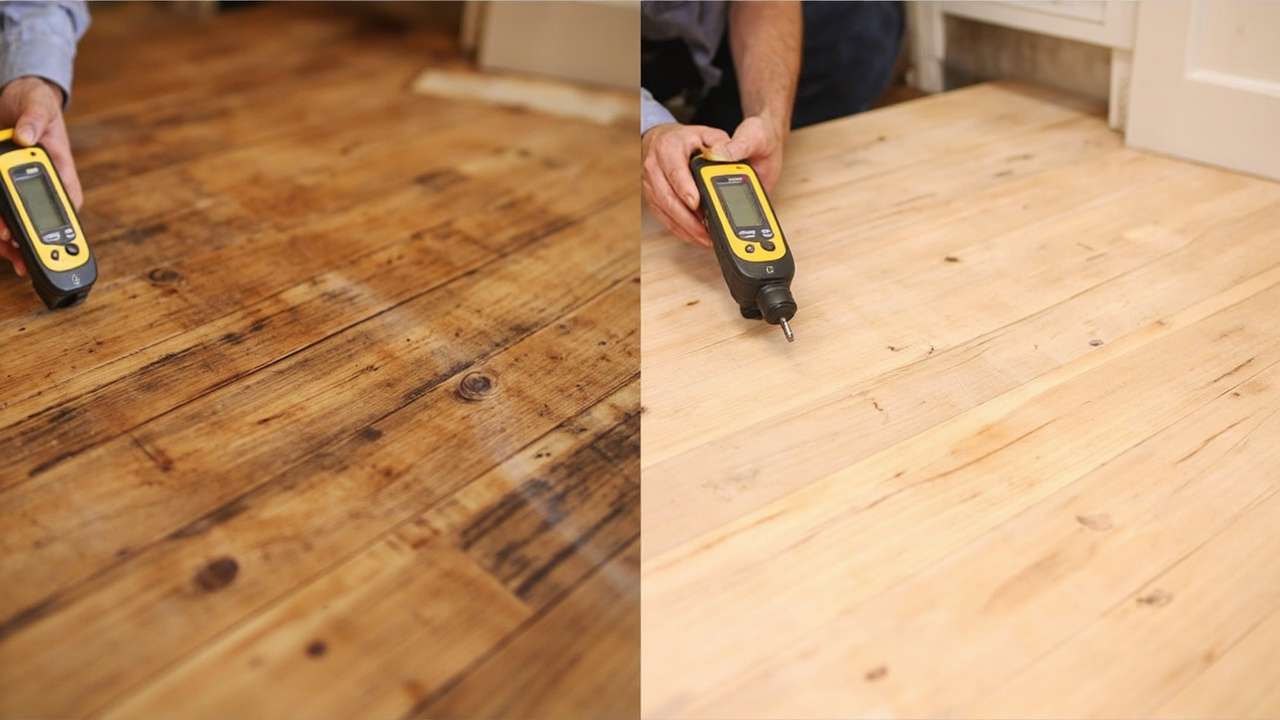
What moisture level in wood is dangerous? Wood moisture content above 20 percent signals the beginning of wood rot. Above 25 percent, fungal growth accelerates and structural integrity is compromised. A moisture meter measures moisture content as a percentage of the wood’s dry weight. Safe moisture content for structural wood in a home is 12 to 16 percent. After water damage, wood must dry to below 16 percent before you can consider the property restored. This typically requires 5 to 14 days of professional drying depending on the extent of saturation and Chicago’s seasonal humidity levels.
Does my homeowner insurance cover secondary water damage? Homeowner insurance covers water damage from sudden, accidental events like burst pipes or storm damage. Secondary damage like mold and wood rot is considered a covered loss if it results from the initial insured event. Your insurance company expects you to take prompt action to prevent further damage. If you fail to mitigate by calling professionals within 24 to 48 hours, the insurance company may deny or reduce your claim. Document everything with photographs and professional reports to support your claim.
Why is Chicago water damage harder to prevent than water damage in other cities? Chicago’s climate and architecture create unique challenges. Lake Michigan humidity keeps summer relative humidity above 75 percent, preventing natural evaporation. Older architecture like Chicago bungalows and two-flats has porous brick foundations and no vapor barriers. Chicago Blue Clay soil resists drainage and creates hydrostatic pressure. Winter polar vortex events cause freeze-thaw cycles that crack foundations and burst pipes. Combined sewer systems in older neighborhoods back up sewage into basements. All these factors mean secondary water damage develops faster in Chicago than in drier climates.
Water damage does not end when you extract the standing water from your basement or dry out a burst pipe. Moisture lingers inside your walls, floor joists, and structural framing and creates real danger. Within 24 to 48 hours, wood absorbs moisture and swells. Within 3 to 5 days, mold spores germinate on hygroscopic materials like drywall, insulation, and wood studs. Within weeks, structural rot compromises the load-bearing capacity of your foundation and floor systems. In Chicago homes, where high humidity from Lake Michigan combined with older architecture creates perfect conditions for decay, secondary water damage is one of the most costly and dangerous outcomes of initial water intrusion.
Secondary damage destroys materials that follow the primary flood or leak. It includes wood rot, mold growth, odors that persist for months, structural instability, and the silent deterioration of materials you cannot see. Unlike the visible water pooling in your basement, secondary damage spreads through vapor pressure and capillary action. It moves through foundation walls, along rim joists, and up into subfloor cavities. By the time you notice a musty smell or peeling paint, the damage is already weeks old.
This guide explains how secondary damage develops in Chicago properties and the exact steps to prevent it. The information here reflects 15 years of work in neighborhoods like Portage Park, Lincoln Park, Logan Square, Uptown, Hyde Park, Wicker Park, and Pilsen, and throughout the greater Chicagoland area.
Why Chicago Homes Face Accelerated Secondary Water Damage
Chicago’s climate, soil composition, and architectural styles create a perfect storm for secondary moisture problems. The city sits on Chicago Blue Clay, a dense soil with high clay content that resists drainage and creates hydrostatic pressure against foundation walls. Lake Michigan amplifies summer humidity to levels that prevent natural evaporation. Winter polar vortex events cause freeze-thaw cycles that crack foundations and burst pipes. Spring rains overwhelm aging sump pump systems, especially in neighborhoods like Lakeview and West Loop where combined sewer systems back up into basements during heavy storms.
Historic Chicago bungalows and two-flats in neighborhoods like Rogers Park and Beverly were built with porous brick foundations and limestone basement walls. These materials absorb moisture like a sponge and release it slowly. Modern condos near Willis Tower have routing that redistributes moisture throughout the building envelope. Crawl spaces in older workers cottages in Cicero and Berwyn trap moisture and create ideal conditions for mold growth because air movement is minimal.
Uptown properties along the North Shore feature dense clay soils and proximity to Lake Michigan, which means capillary moisture constantly migrates upward through foundation walls. Hyde Park homes on the South Side experience seasonal groundwater pressure from Lake Michigan’s water table fluctuations, creating chronic basement seepage. Wicker Park’s historic brownstones and two-flats rest on unstable fill soil that shifts with moisture content, opening foundation cracks that allow water intrusion. Pilsen’s working-class cottages were built directly on poorly compacted clay with minimal foundation depth, making them extremely vulnerable to hydrostatic pressure during spring rains.
Ravenswood features distinctive masonry construction with thick clay brick walls that absorb and retain moisture for extended periods. These Romanesque Revival and Georgian Revival homes often have limestone window sills and decorative cornices that channel water into foundation joints, creating persistent seepage problems. The neighborhood’s tree-lined streets and mature root systems crack foundations from below, allowing groundwater intrusion that other Chicago neighborhoods do not experience to the same degree.
Edgewater bungalows and vintage apartment buildings sit on glacial till deposits mixed with sand and silt, creating variable drainage patterns that leave some foundation areas permanently saturated while others remain relatively dry. The neighborhood’s proximity to Lake Michigan and its lower elevation compared to inland Chicago means water naturally flows toward Edgewater properties during heavy rain events. Many homes feature old cast iron plumbing that corrodes from the inside, creating pinhole leaks that spread moisture through wall cavities before owners notice any visible damage.
Andersonville’s Queen Anne and Victorian-era homes have ornate brick exteriors with poor mortar joints that allow water penetration during freeze-thaw cycles. The neighborhood’s older combined sewer system frequently backs up during spring snowmelt, forcing sewage into basements. These homes typically feature basement levels that were below grade even when built, making them inherently susceptible to hydrostatic pressure and capillary moisture migration.
Bucktown’s former industrial properties and converted warehouse lofts have concrete slab foundations with minimal slope toward drainage areas. The neighborhood’s heavy clay soil combines with poorly maintained foundation perimeters to create conditions where water pools against basement walls. Many loft conversions installed finished basements in originally unfinished spaces, trapping moisture against concrete that was never designed to shed water.
The Chicago Building Code requires specific sub-soil drainage and sump pump installation standards. Pre-1978 properties must follow strict lead and asbestos regulations during restoration, which complicates the drying process. Many neighborhoods face overhead sewer requirements, meaning sewage backup is not just a plumbing issue but a contamination emergency.

The Timeline of Secondary Damage Development
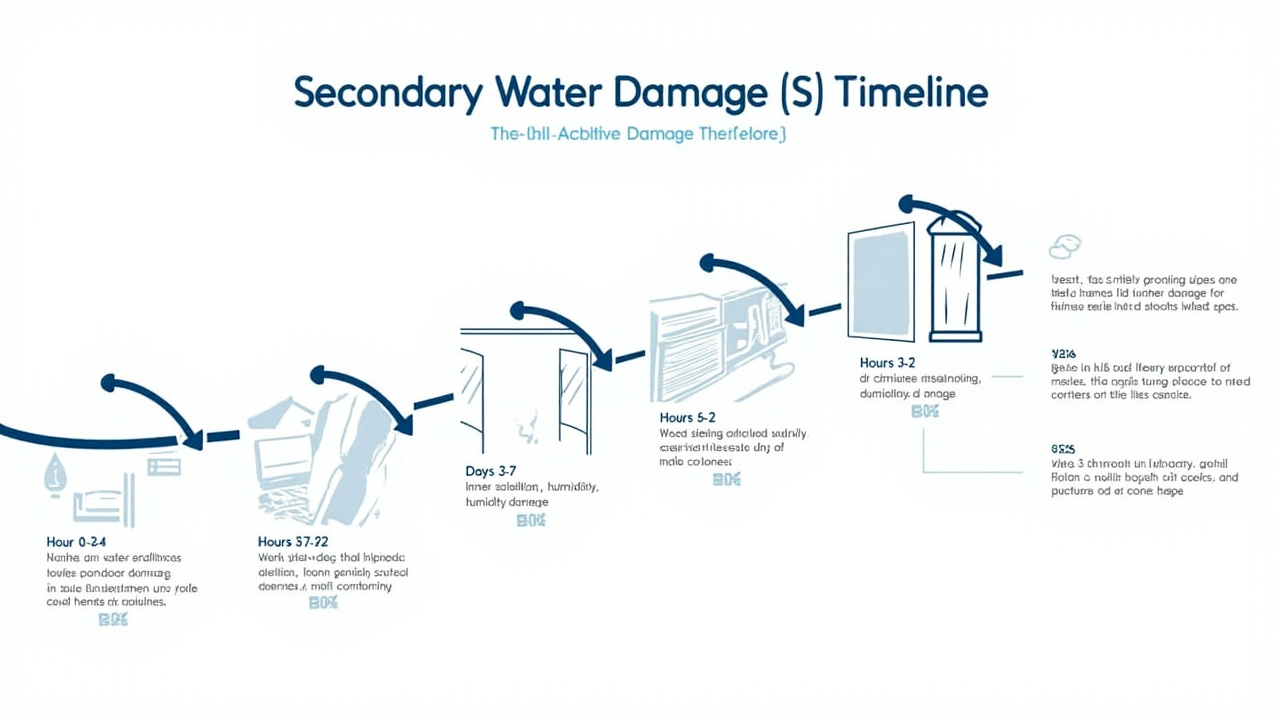
Understanding when secondary damage occurs helps you recognize the critical window for prevention. The first 24 hours after water intrusion are the most important.
| Timeframe | What Happens | Prevention Priority |
|---|---|---|
| 0 to 6 hours | Water saturates porous materials. Relative humidity in wall cavities rises above 95 percent. HVAC systems begin redistributing moisture throughout the home. | Extract standing water immediately. Turn off HVAC to prevent moisture spread. Open windows if outdoor humidity is lower than indoor humidity. |
| 6 to 24 hours | Wood swells and begins to warp. Drywall absorbs water and loses structural integrity. Metal fasteners and insulation become saturated. Capillary action pulls moisture up foundation walls. | Place industrial air movers and dehumidifiers in affected zones. Take moisture readings with a hygrometer to establish baseline humidity. Begin thermal imaging to detect hidden wet areas behind walls and under flooring. |
| 24 to 72 hours | Mold spore germination begins on damp surfaces. Wood studs, plates, and subfloor begin to show soft spots. Odors develop as bacteria and fungi multiply. Secondary damage becomes inevitable without professional drying equipment. | Activate IICRC S500 standard drying protocol. Apply antimicrobial treatments to prevent mold colonization. Monitor humidity levels every 4 to 6 hours. Perform moisture meter readings on wood framing. |
| 3 to 7 days | Structural rot becomes visible in wood members. Mold colonies visible to the naked eye. Drywall begins to fail and separate from framing. Insulation loses R-value due to moisture saturation. | Assess structural integrity with a moisture meter and thermal imaging. Remove and replace compromised materials if moisture content exceeds 25 percent in wood. Use HEPA-filtered air scrubbers to remove airborne mold spores from indoor air. |
| 2 to 4 weeks | Fungal growth spreads to untreated areas. Wood rot deepens and compromises load-bearing capacity. Drywall adhesion fails completely. Foundation walls show efflorescence, white salt deposits indicating ongoing moisture migration. | Replacement of structural members may be required. Professional mold remediation according to EPA guidelines becomes necessary. Document all damage for insurance claims. |
The Science Behind Prevention. Psychrometry and Structural Drying
Prevention works through a principle called psychrometry, which is the science of moisture in air. The air in your home can hold only a specific amount of water vapor at any given temperature. When air becomes saturated (relative humidity reaches 100 percent), it cannot absorb any more moisture. Water then condenses on cool surfaces like exterior walls, rim joists, and foundation blocks. This condensation feeds mold growth and wood rot.
Industrial dehumidifiers remove moisture from the air by cooling it below the dew point, causing water to condense and drain away. Low-grain refrigerant (LGR) dehumidifiers measure moisture in grains per pound (GPP) of air. Standard household dehumidifiers struggle to reduce grains per pound below 80 GPP. Professional LGR units drop moisture to 35 GPP or lower, creating the dry environment where wood stops swelling and mold cannot germinate.
Air movers accelerate evaporation from wet surfaces by increasing air velocity across the material. They do not remove moisture from the air. Dehumidifiers remove moisture from the air. Both work together. Without both, you will not achieve structural drying.
Relative humidity (RH) above 60 percent for more than 48 hours creates conditions for microbial growth. Black mold (Stachybotrys chartarum) thrives between 80 and 100 percent RH. In Chicago’s humid summers near Lake Michigan, outdoor RH often exceeds 80 percent, making it nearly impossible to dry a wet property without industrial equipment.
Identifying Secondary Damage Before It Spreads
You do not need specialized equipment to spot the warning signs of developing secondary damage. These indicators tell you that moisture is still active in your property and that professional intervention is urgent.
- Musty odors that intensify when you enter the basement or affected room. This smell comes from mold spores and microbial byproducts.
- Peeling wallpaper, paint, or vinyl flooring. Water breaks the adhesive bond between flooring and subfloor or between wallpaper and drywall.
- Warped or cupped hardwood floors. Wood fibers absorb water and expand unevenly, creating waves or cup-shaped deformations.
- Soft or spongy baseboards and trim. Press your fingernail against the wood. If it leaves an indent, wood rot is underway.
- Visible mold growth on drywall, insulation, or wood surfaces. Mold appears as black, green, or white fuzzy patches or staining.
- Condensation on windows or interior walls, especially in lower corners of rooms.
- Increased allergic symptoms or respiratory irritation when you enter the affected area. Airborne mold spores trigger these responses.
- Efflorescence on foundation walls. This white, chalky residue indicates water is moving through the masonry and carrying mineral deposits.
- Rising damp or water stains that appear days or weeks after the initial water event. This indicates capillary moisture being drawn up from the foundation.
Professional Prevention vs. DIY Drying Mistakes
Many homeowners attempt to dry water damage using household fans, open windows, and portable dehumidifiers. These methods fail because they do not address the physics of moisture in Chicago’s climate.
| Approach | Grains Per Pound Reduction | Timeline to Dryness | Mold Risk | Structural Safety |
|---|---|---|---|---|
| Household fans and open windows | Minimal. Summer humidity outside is 75 to 95 percent RH, so outdoor air is nearly as wet as indoor air. Opening windows in humid summer weather often worsens the problem. | 4 to 12 weeks or longer. Evaporation is slow when outdoor air is humid. | Very high. Humidity remains above 60 percent for weeks, allowing mold to colonize. | Poor. Structural materials remain saturated long enough for wood rot to begin. |
| Portable household dehumidifier (30 to 50 pints per day) | Moderate. Reduces GPP to 60 to 80 range. Standard dehumidifiers cool air to remove moisture, which works in winter, but in summer they release heat into the home, raising temperatures and slowing evaporation. | 3 to 8 weeks. Household units cannot keep pace with moisture migration from walls and floors. | High. Humidity often stays above 60 percent because the dehumidifier cannot keep pace with moisture source. | Fair. Some structural drying occurs, but slow timeline allows wood rot to begin in certain materials. |
| Professional LGR dehumidifier plus air movers following IICRC S500 standards | Excellent. Reduces GPP to 35 to 45 range. LGR units work by cooling air then reheating it, so they remove moisture without raising room temperature. | 3 to 7 days for most residential water damage. Commercial properties and large basements may take 10 to 14 days. | Minimal. Humidity is controlled below 50 percent within 24 hours, preventing mold spore germination. | Excellent. Structural materials dry quickly enough to prevent wood rot and maintain structural integrity. |
Professional drying uses a combination of extraction (removing standing water and surface moisture), dehumidification (removing moisture from the air), air movement (accelerating surface evaporation), and monitoring (tracking humidity and moisture content hourly). The IICRC S500 Standard Guide for Professional Water Damage Restoration establishes the protocol that insurance companies and building codes require.
Thermal imaging technology detects hidden moisture behind walls and under flooring. A thermal camera shows temperature differences that indicate wet areas. Since wet materials are cooler than dry materials, the camera creates a visual map of moisture that you cannot see with your eyes. This technology is essential in Chicago homes where moisture hides inside brick walls, behind drywall, and in crawl spaces.
Step-by-Step Prevention Protocol for Chicago Properties
If you experience water damage in Portage Park, Logan Square, or any Chicago neighborhood, execute this protocol immediately to prevent secondary damage.
- Stop the water source. If the leak comes from a burst pipe, turn off the main water supply. If it comes from roof leakage, install temporary tarping. If it comes from foundation seepage or sump pump failure, you may need to address the burst pipe immediately or install a temporary sump pump. Do not wait. Every hour that water continues to enter increases secondary damage risk.
- Extract standing water. Use a submersible pump, wet vac, or mop and bucket to remove all visible water within the first 6 hours. Standing water accelerates wood saturation and microbial growth. In basements, remove water completely from the floor.
- Document the damage for insurance. Take photographs and video of all affected areas. Note the date and time of the water event. Document the extent of saturation. This documentation protects your insurance claim and prevents disputes later.
- Call a professional restoration company immediately. Do not wait to see if the problem resolves on its own. Moisture-related secondary damage accelerates exponentially in the first 48 hours. Professional emergency response within the first 24 hours is the difference between a $3,000 restoration and a $50,000 reconstruction.
- Turn off the HVAC system. Do not run your furnace, air conditioning, or ventilation system. HVAC systems redistribute moisture throughout the entire home, spreading wet air from the damaged area to dry areas. This accelerates secondary damage across your property.
- Open interior doors between rooms. Leave all interior doors open so that dehumidifiers and air movers can process air throughout the home. Closed rooms trap moisture and prevent air circulation.
- Remove wet furniture, rugs, and belongings. Move items out of the affected area to speed drying. Wet furniture and rugs trap moisture against floors and walls, extending the drying timeline.
- Establish a monitoring schedule. The restoration professional should take hygrometer readings (humidity measurements) and moisture meter readings on wood and drywall at least once every 6 hours. These readings show whether the drying protocol is working and whether structural materials are reaching target moisture content.
- Apply antimicrobial treatment. Once surface water is extracted and drying begins, antimicrobial treatments prevent mold spore germination on damp materials. This is not the same as mold remediation. Antimicrobial application during the drying phase stops mold before it becomes visible.
- Perform thermal imaging every 24 hours. Moisture hides in wall cavities, under flooring, and inside foundation walls. Thermal imaging detects these hidden pockets so that technicians can focus air movers and dehumidifiers on problem areas.
- Replace or remove materials that reach critical moisture levels. If insulation, drywall, or wood framing reaches 25 percent moisture content (measured with a moisture meter), it must be removed and replaced. At this threshold, wood rot begins and mold becomes difficult to prevent. Wet insulation loses R-value and cannot be salvaged.
- Use HEPA filtration and air scrubbing. HEPA-filtered air scrubbers remove airborne mold spores from the indoor air. This prevents spore germination on secondary surfaces and improves air quality during the drying phase. Air scrubbers should run for the entire drying timeline and for at least 48 hours after structural drying is complete.
- Verify complete dryness before final sign-off. The drying phase is complete when wood moisture content drops below 16 percent, relative humidity stabilizes below 55 percent, and thermal imaging shows no hidden moisture. This typically takes 5 to 14 days depending on the extent of saturation and Chicago’s seasonal humidity levels.
Chicago-Specific Moisture Challenges in Different Neighborhoods
Water damage prevention strategies vary by neighborhood because of differences in architecture, soil conditions, and infrastructure.
In Lincoln Park and Lakeview, proximity to Lake Michigan means high ambient humidity and frequent basement seepage through older brick foundations. Summer relative humidity often exceeds 80 percent, making it nearly impossible to dry water damage without industrial equipment running 24/7. Older brownstones and greystone mansions have limestone foundations that absorb water like a sponge. Professional restoration in these neighborhoods requires extended drying timelines (10 to 21 days) and intensive dehumidification.
In West Loop and downtown areas, combined sewer systems create sewage backup risk during heavy rain. When the city’s Deep Tunnel Project (TARP) system reaches capacity, sewage backs up into basements. Secondary damage in these cases includes biological contamination that requires specialized biohazard cleanup and decontamination beyond standard water damage drying.
In Rogers Park and Evanston, clay soil with high water table proximity means hydrostatic pressure constantly pushes water against foundation walls. Crawl space moisture in older worker cottages creates ideal conditions for mold growth because humidity cannot escape. These areas benefit from permanent sump pump systems and perimeter drain installations to reduce future secondary damage risk.
In Logan Square, Cicero, and Berwyn, historic two-flats and bungalows have shared walls and connected crawl spaces. Moisture moves from one property to an adjacent property through shared foundations and rim joists. Restoration must address moisture in neighboring properties to prevent it from migrating back after your property is dried.
In Uptown, the proximity to Lake Michigan combined with older plumbing infrastructure means water damage spreads rapidly through shared wall cavities in multi-unit buildings. The neighborhood’s dense clay soil and shallow water table create constant capillary pressure against foundations. Secondary damage in Uptown develops faster than in most Chicago neighborhoods because moisture sources are both external (Lake Michigan humidity and groundwater) and internal (aging plumbing systems in older apartments).
In Hyde Park, the South Shore’s groundwater table rises and falls with Lake Michigan’s seasonal water level changes. Spring water damage from basement seepage requires extended drying timelines because the water table pressure never fully releases. Historic mansions and apartment buildings in Hyde Park feature large masonry foundation walls that act as moisture reservoirs, releasing trapped water vapor for weeks after the initial water event.
In Wicker Park, unstable fill soil and shifting clay create foundation cracks that widen with each freeze-thaw cycle. Water intrusion through these cracks becomes more severe each winter. Secondary damage prevention in Wicker Park requires permanent foundation stabilization and crack sealing because water damage will return each year unless the underlying foundation issues are addressed.
In Pilsen, working-class cottages built directly on poorly compacted clay experience chronic hydrostatic pressure during spring rains and winter snowmelt. Many properties lack proper perimeter drainage systems. Secondary damage in Pilsen often occurs in basements with no sump pump systems, meaning water remains in contact with structural materials for extended periods. Professional restoration in Pilsen frequently requires sump pump installation and perimeter drain systems to prevent secondary damage from recurring.
In Ravenswood, the distinctive thick masonry construction creates a unique moisture challenge. Water penetrates through mortar joints and then spreads laterally within the brick wall assembly rather than moving straight through. Moisture can remain trapped inside the brick for weeks, creating conditions where secondary damage develops behind the visible wall surface. Thermal imaging becomes essential in Ravenswood because the damage is often completely hidden until severe deterioration occurs.
In Edgewater, the glacial till soils and proximity to Lake Michigan mean seasonal water table fluctuations are dramatic. Properties experience rapid basement saturation during spring snowmelt followed by slow capillary moisture migration during dry months. The old cast iron plumbing common in Edgewater creates additional moisture sources that compound water damage problems. Restoration in Edgewater requires attention to both the primary water intrusion and the secondary moisture migration that continues for weeks after the initial event.
In Andersonville, the ornate brick exteriors with deteriorating mortar joints mean water penetrates the building envelope easily during freeze-thaw cycles. The neighborhood’s lower topography and combined sewer system create backup risks during heavy rain. Victorian-era construction means many homes have basement spaces that were never intended to be living areas, making them inherently difficult to dry and restore once water damage occurs.
In Bucktown, the concrete slab foundations common in converted industrial lofts present unique drying challenges. These slabs have minimal slope toward drainage, so water pools against basement perimeters. The concrete itself becomes saturated and continues to release moisture through vapor transmission for months. Many loft conversions lack adequate perimeter drainage, making secondary damage nearly inevitable unless extensive foundation repairs accompany the water damage restoration.
In suburban areas like Bolingbrook, Joliet, and Naperville, newer construction often includes finished basements and crawl spaces with vapor barriers. Water damage in these properties spreads quickly because water is trapped beneath vapor barriers and cannot evaporate naturally. Aggressive dehumidification is necessary to prevent secondary damage in spaces where moisture has nowhere to escape.
Preventing Secondary Damage in Hard-to-Reach Areas
Secondary damage often spreads through areas you cannot see. Moisture moves through rim joists (the wood framing where the first floor meets the foundation), subfloor cavities, wall cavities, insulation, and into joists and plates. Professional restoration focuses on these hidden zones because that is where mold grows and wood rot develops.
Rim joists in Chicago homes are particularly vulnerable. These wood members run around the perimeter of the foundation and support the weight of the first floor. When water damage saturates rim joists, capillary action pulls moisture up from the foundation block. The rim joist absorbs water from below while the house is not heated (winter) or cooled (summer), preventing evaporation. Mold colonies develop in rim joists first, then spread to nearby joists and subfloor.
Subfloor cavities trap moisture beneath hardwood flooring or carpet. Standing water under a hardwood floor can remain trapped for weeks if not professionally extracted. Even after water is removed, damp subfloor continues to wick moisture from the foundation below. This creates ideal conditions for wood rot and mold growth directly under the flooring you walk on.
Wall cavities in older Chicago bungalows are often open cavities with no vapor barrier. Water intrusion from exterior cracks, roof leaks, or window leaks moves through the wall cavity and saturates framing. This moisture remains hidden inside the wall. Thermal imaging detects these wet cavities by showing temperature differences in the exterior wall. Focused air movement and dehumidification then dry the moisture from inside the wall cavity.
Crawl space moisture in historic homes with limestone or brick foundations is perpetual. Even without an active water event, crawl spaces in West Loop, Rogers Park, and other older neighborhoods stay at 70 to 95 percent relative humidity year-round. This constant moisture environment accelerates wood rot in rim joists and floor framing. Secondary damage prevention in crawl spaces requires permanent solutions like vapor barrier installation, sump pump systems, and dehumidification during humid seasons.
Insurance and Compliance Considerations
Most homeowner insurance policies cover water damage from sudden, accidental causes like burst pipes, storm damage, or sump pump failure. Homeowner policies do not cover gradual moisture intrusion, poor maintenance, or foundation seepage that occurs over time. The critical distinction for insurance purposes is whether the water damage was sudden and accidental.
Failing to prevent secondary damage can void your insurance claim. Insurance adjusters expect you to take reasonable steps to mitigate (prevent further damage) as soon as you discover water damage. If you leave water standing for days, let humidity spike without attempting to dry the property, or fail to remove saturated materials, the insurance company may deny your claim for failure to mitigate. They may also reduce your settlement if secondary damage spreads because you failed to take action.
Chicago Building Code requires that all water-damaged materials that cannot be cleaned and dried within 48 hours must be removed and replaced. This is a public health and structural safety requirement. In pre-1978 homes, restoration companies must follow strict lead and asbestos abatement protocols. These regulations increase the cost of restoration but ensure that your home is safe and code-compliant after water damage.
Professional restoration documentation protects your insurance claim. The restoration company should provide detailed moisture readings, thermal imaging reports, photographic evidence of the drying process, and certification that the property meets IICRC S500 standards at completion. This documentation proves to the insurance company that you took prompt action to prevent secondary damage.
Long-Term Prevention and Future Risk Reduction
Once secondary water damage is addressed, preventing future events requires a combination of maintenance and upgrades. In Chicago homes, this includes sump pump testing and battery backup systems, foundation crack sealing, improved drainage around the foundation, and regular roof and gutter maintenance.
Sump pump failure is the leading cause of basement flooding in Chicago. Test your sump pump quarterly by pouring water into the basin and verifying that the pump activates and drains. Install a battery backup system so that the sump pump operates during power outages. During spring thaw and heavy rain events, sump pumps in neighborhoods like Lakeview and Lincoln Park run continuously. Without battery backup, a power outage means water backs up into your basement within hours.
Foundation cracks develop because of Chicago Blue Clay expansion and contraction with seasonal moisture changes. Have foundation cracks sealed by a professional before they allow water intrusion. Small cracks widen when water freezes inside them during winter polar vortex events.
Perimeter drainage systems (also called French drains) collect water around the foundation and direct it to a sump pump instead of allowing it to build up hydrostatic pressure against the foundation wall. These systems are essential in clay soil areas like Cicero, Berwyn, and Bolingbrook where drainage is naturally poor.
Roof and gutter maintenance prevent water from running down exterior walls and soaking the foundation. Clean gutters quarterly, especially in fall when leaves accumulate. Have roof flashing inspected annually. Missing or damaged flashing near chimneys, valleys, and skylights allows water to penetrate the roof assembly and leak into attics and walls.
What Happens if Secondary Damage Is Not Prevented
The costs of ignoring secondary water damage far exceed the cost of professional restoration. Untreated mold remediation in a finished basement can cost $15,000 to $40,000 depending on the extent of contamination. Structural repairs to replace rotted rim joists, floor framing, and foundation walls cost $20,000 to $100,000 or more. In severe cases where structural integrity is compromised, properties become uninhabitable until major reconstruction is completed.
Untreated mold causes long-term health effects. Mold spores trigger allergic reactions, asthma attacks, and respiratory infections, especially in children and elderly residents. Black mold (Stachybotrys chartarum) produces mycotoxins that cause neurological symptoms and immune system suppression with prolonged exposure.
Unaddressed secondary damage reduces property value by 10 to 30 percent. Buyers discover mold, odors, and structural damage during home inspections. Many buyers walk away from properties with known mold or water damage history. Even if you sell, you must disclose the water damage to the buyer, which gives them grounds to renegotiate the sale price downward.
The best investment is prevention through professional restoration in the first 24 to 48 hours after water intrusion. This investment prevents secondary damage, protects your health, maintains property value, and satisfies insurance requirements.
Contact Cornerstone Water Damage Restoration now if you experience water intrusion or notice signs of secondary damage. We operate 24/7 in Portage Park, Logan Square, Lincoln Park, Lakeview, Uptown, Hyde Park, Wicker Park, Pilsen, Ravenswood, Edgewater, Andersonville, Bucktown, and throughout Chicago. We provide emergency mitigation, moisture mapping with thermal imaging, professional dehumidification, and structural drying that meets IICRC S500 standards. Call us immediately when water damage occurs. The first 24 hours are critical.
{
“@context”: “https://schema.org”,
“@type”: “BlogPosting”,
“headline”: “Secondary Water Damage Prevention in Portage Park and Chicago Homes”,
“description”: “Prevent secondary water damage like warped studs and rotted plates in Portage Park. Emergency drying stops mold, wood rot, and structural failure.”,
“wordCount”: 5130,
“datePublished”: “2026-03-23T11:01:00.000Z”,
“dateModified”: “2026-03-23T11:01:00.000Z”,
“inLanguage”: “en-US”,
“mainEntityOfPage”: {
“@type”: “WebPage”,
“@id”: “https://cornerstonewaterdamagerestorationchicago.com”
},
“publisher”: {
“@type”: “LocalBusiness”,
“name”: “Cornerstone Water Damage Restoration Chicago”,
“url”: “https://cornerstonewaterdamagerestorationchicago.com”
},
“author”: {
“@type”: “Organization”,
“name”: “Cornerstone Water Damage Restoration Chicago”,
“url”: “https://cornerstonewaterdamagerestorationchicago.com”
},
“image”: {
“@type”: “ImageObject”,
“url”: “https://cornerstonewaterdamagerestorationchicago.com/wp-content/uploads/2026/03/how-to-prevent-secondary-water-damage-like-warped-1.jpg”
}
}
{
“@context”: “https://schema.org”,
“@type”: “LocalBusiness”,
“name”: “Cornerstone Water Damage Restoration Chicago”,
“url”: “https://cornerstonewaterdamagerestorationchicago.com”,
“address”: {
“@type”: “PostalAddress”,
“addressLocality”: “Chicago”
},
“areaServed”: {
“@type”: “City”,
“name”: “Chicago”
}
}
{
“@context”: “https://schema.org”,
“@type”: “HowTo”,
“name”: “How to Prevent Secondary Water Damage After Water Intrusion”,
“step”: [
{
“@type”: “HowToStep”,
“position”: 1,
“name”: “Stop the water source.”,
“text”: “If the leak comes from a burst pipe, turn off the main water supply. If it comes from roof leakage, install temporary tarping. If it comes from foundation seepage or sump pump failure, you may need to address the burst pipe immediately or install a temporary sump pump. Do not wait. Every hour that water continues to enter increases secondary damage risk.”
},
{
“@type”: “HowToStep”,
“position”: 2,
“name”: “Extract standing water.”,
“text”: “Use a submersible pump, wet vac, or mop and bucket to remove all visible water within the first 6 hours. Standing water accelerates wood saturation and microbial growth. In basements, remove water completely from the floor.”
},
{
“@type”: “HowToStep”,
“position”: 3,
“name”: “Document the damage for insurance.”,
“text”: “Take photographs and video of all affected areas. Note the date and time of the water event. Document the extent of saturation. This documentation protects your insurance claim and prevents disputes later.”
},
{
“@type”: “HowToStep”,
“position”: 4,
“name”: “Call a professional restoration company immediately.”,
“text”: “Do not wait to see if the problem resolves on its own. Moisture-related secondary damage accelerates exponentially in the first 48 hours. Professional emergency response within the first 24 hours is the difference between a $3,000 restoration and a $50,000 reconstruction.”
},
{
“@type”: “HowToStep”,
“position”: 5,
“name”: “Turn off the HVAC system.”,
“text”: “Do not run your furnace, air conditioning, or ventilation system. HVAC systems redistribute moisture throughout the entire home, spreading wet air from the damaged area to dry areas. This accelerates secondary damage across your property.”
},
{
“@type”: “HowToStep”,
“position”: 6,
“name”: “Open interior doors between rooms.”,
“text”: “Leave all interior doors open so that dehumidifiers and air movers can process air throughout the home. Closed rooms trap moisture and prevent air circulation.”
},
{
“@type”: “HowToStep”,
“position”: 7,
“name”: “Remove wet furniture, rugs, and belongings.”,
“text”: “Move items out of the affected area to speed drying. Wet furniture and rugs trap moisture against floors and walls, extending the drying timeline.”
},
{
“@type”: “HowToStep”,
“position”: 8,
“name”: “Establish a monitoring schedule.”,
“text”: “The restoration professional should take hygrometer readings (humidity measurements) and moisture meter readings on wood and drywall at least once every 6 hours. These readings show whether the drying protocol is working and whether structural materials are reaching target moisture content.”
},
{
“@type”: “HowToStep”,
“position”: 9,
“name”: “Apply antimicrobial treatment.”,
“text”: “Once surface water is extracted and drying begins, antimicrobial treatments prevent mold spore germination on damp materials. This is not the same as mold remediation. Antimicrobial application during the drying phase stops mold before it becomes visible.”
},
{
“@type”: “HowToStep”,
“position”: 10,
“name”: “Perform thermal imaging every 24 hours.”,
“text”: “Moisture hides in wall cavities, under flooring, and inside foundation walls. Thermal imaging detects these hidden pockets so that technicians can focus air movers and dehumidifiers on problem areas.”
},
{
“@type”: “HowToStep”,
“position”: 11,
“name”: “Replace or remove materials that reach critical moisture levels.”,
“text”: “If insulation, drywall, or wood framing reaches 25 percent moisture content (measured with a moisture meter), it must be removed and replaced. At this threshold, wood rot begins and mold becomes difficult to prevent. Wet insulation loses R-value and cannot be salvaged.”
},
{
“@type”: “HowToStep”,
“position”: 12,
“name”: “Use HEPA filtration and air scrubbing.”,
“text”: “HEPA-filtered air scrubbers remove airborne mold spores from the indoor air. This prevents spore germination on secondary surfaces and improves air quality during the drying phase. Air scrubbers should run for the entire drying timeline and for at least 48 hours after structural drying is complete.”
},
{
“@type”: “HowToStep”,
“position”: 13,
“name”: “Verify complete dryness before final sign-off.”,
“text”: “The drying phase is complete when wood moisture content drops below 16 percent, relative humidity stabilizes below 55 percent, and thermal imaging shows no hidden moisture. This typically takes 5 to 14 days depending on the extent of saturation and Chicago’s seasonal humidity levels.”
}
],
“image”: “https://cornerstonewaterdamagerestorationchicago.com/wp-content/uploads/2026/03/how-to-prevent-secondary-water-damage-like-warped-1.jpg”
}
{
“@context”: “https://schema.org”,
“@type”: “BreadcrumbList”,
“itemListElement”: [
{
“@type”: “ListItem”,
“position”: 1,
“name”: “Home”,
“item”: “https://cornerstonewaterdamagerestorationchicago.com”
},
{
“@type”: “ListItem”,
“position”: 2,
“name”: “Blog”,
“item”: “https://cornerstonewaterdamagerestorationchicago.com/blog”
},
{
“@type”: “ListItem”,
“position”: 3,
“name”: “Secondary Water Damage Prevention in Portage Park and Chicago Homes”
}
]
}
{
“@context”: “https://schema.org”,
“@type”: “Service”,
“serviceType”: “Water Damage Restoration”,
“provider”: {
“@type”: “LocalBusiness”,
“name”: “Cornerstone Water Damage Restoration Chicago”,
“url”: “https://cornerstonewaterdamagerestorationchicago.com”
},
“areaServed”: {
“@type”: “City”,
“name”: “Chicago”
},
“description”: “Prevent secondary water damage like warped studs and rotted plates in Portage Park. Emergency drying stops mold, wood rot, and structural failure.”
}