
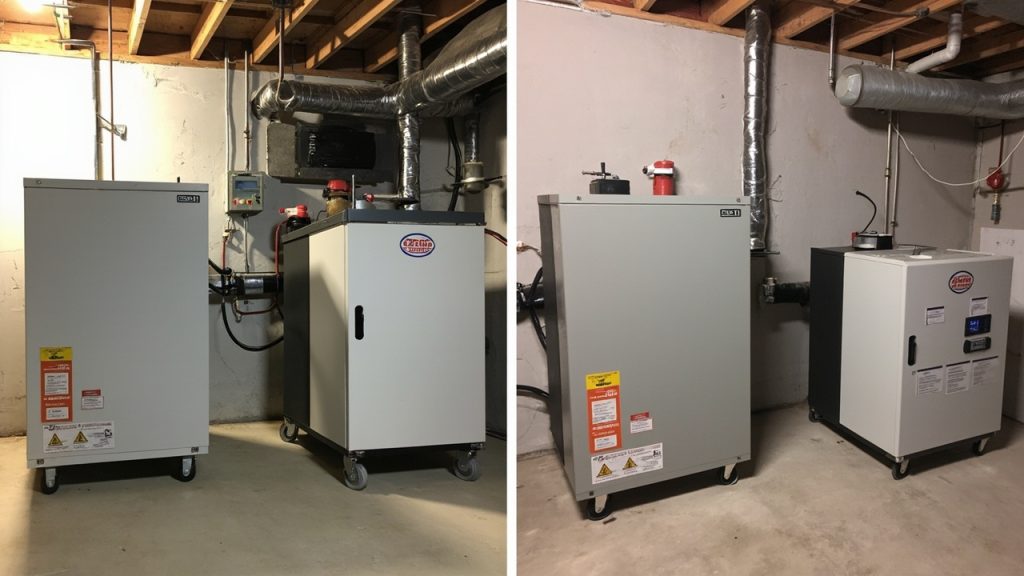
LGR vs Desiccant Dehumidifiers Which Is Right for Your Chicago Property
When your Chicago basement floods or a pipe bursts during a polar vortex, you need a fast answer: Should you run an LGR dehumidifier or a desiccant machine? The choice depends on three factors: indoor temperature, water loss severity, and how deep moisture has penetrated your materials. LGR equipment excels when temperatures stay above 60 degrees Fahrenheit and water damage remains limited to air and surface materials. Desiccant machines become essential when outdoor temperatures drop below freezing, when water saturates structural elements like drywall and framing, or when your materials must reach specific moisture content for insurance approval. In Chicago’s seasonal extremes, many professional restorations deploy both technologies together to ensure comprehensive drying within 7 to 14 days.
The difference comes down to how each machine removes moisture from the air and materials. LGR units cool air to extract water vapor through condensation, while desiccant machines use silica gel rotors to absorb moisture at the molecular level. In Chicago, where Lake Effect humidity peaks in summer and sub-zero winters trigger freeze-thaw cycles, choosing the right equipment cuts your drying timeline in half and prevents costly secondary damage like mold growth in wall cavities.
As a water damage restoration specialist serving Lincoln Park, Lakeview, Logan Square, Rogers Park, West Loop, Pilsen, Ravenswood, and the greater Chicagoland area for 15 plus years, I have deployed both technologies on thousands of jobs. Understanding when each excels is the foundation of IICRC S500 compliant drying protocols.
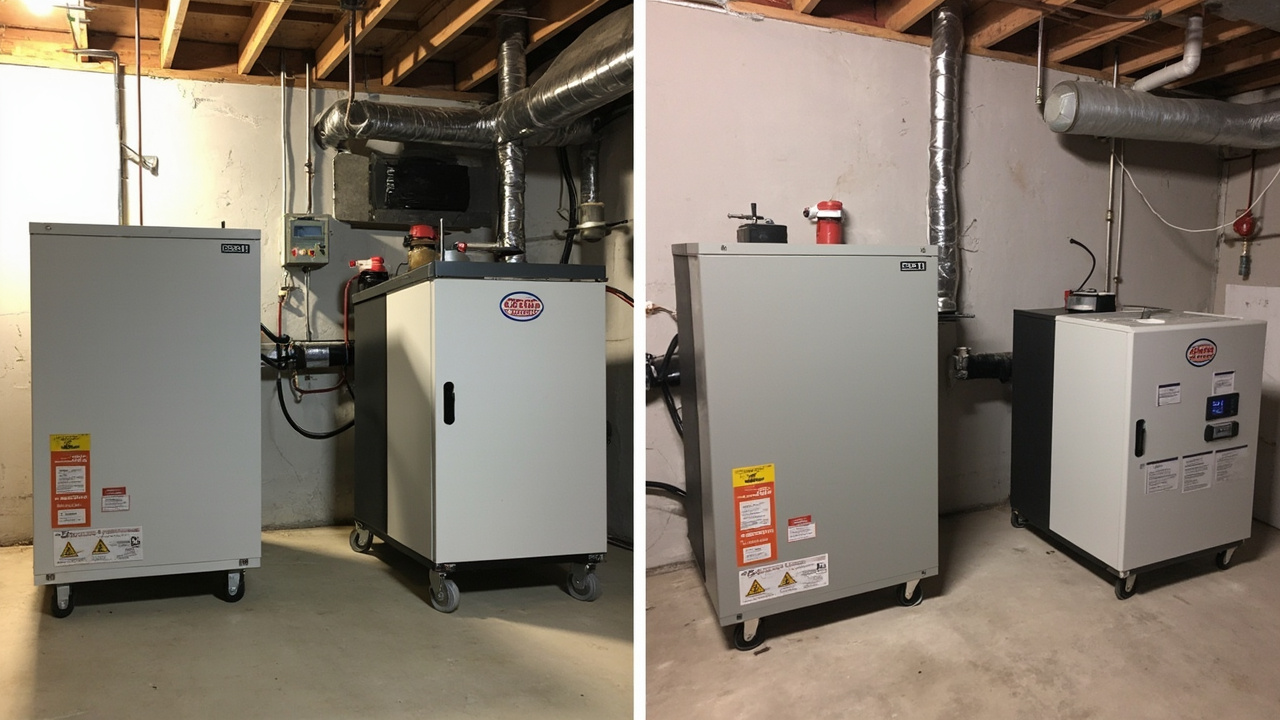
What Low Grain Refrigerant Dehumidifiers Do
LGR dehumidifiers pull moisture from the air by cooling it below the dew point temperature. As air passes over cold evaporator coils inside the machine, water vapor condenses into liquid water. That water drains away, and the now-dry air passes over warm condenser coils before leaving the unit. This process removes water vapor efficiently in standard humidity conditions.
The technology dominates most water damage restoration jobs because it works fast and costs less to operate than desiccant machines. A typical LGR unit draws 5 to 8 amperes at 115 volts, meaning you can run multiple machines on standard residential circuits without overloading electrical panels. In warm, humid environments like Chicago summers, LGR machines reduce Relative Humidity from 95 percent to 45 percent within 36 to 48 hours.
The critical limitation surfaces when temperatures drop below 60 degrees Fahrenheit. Cold air holds less moisture, so the evaporator coils frost over. The machine shuts down, stops removing moisture, and becomes nearly useless. This is where Chicago winter water losses expose LGR weaknesses.
The Grains Per Pound metric quantifies how much moisture is in the air at a given temperature and relative humidity. Standard summer air in Chicago measures around 120 to 140 grains per pound at 75 degrees and 60 percent RH. An LGR machine reduces that by 5 to 8 grains per hour. You track drying progress by monitoring GPP drops every 12 hours using a psychrometric chart. If GPP stalls, your equipment has stopped working.
What Desiccant Dehumidifiers Do
Desiccant machines remove moisture through absorption, not condensation. A rotating silica gel wheel passes through the wet airstream, pulling moisture molecules into the gel matrix. Simultaneously, a separate heater reactivates the saturated gel by driving the absorbed moisture out through an exhaust duct. Fresh desiccant wheel material cycles back to absorb more moisture.
The advantage is significant in cold climates. Desiccant machines operate effectively at temperatures as low as minus 20 degrees Fahrenheit. In Chicago, when a burst pipe occurs during January polar vortex conditions, desiccant equipment keeps removing moisture while LGR units sit idle. Desiccant machines also reduce GPP much faster than LGR units, especially in low-temperature scenarios where the air is already dry but materials remain wet.
The trade-off appears on your electrical bill and in heat output. Desiccant machines draw 12 to 15 amperes at 115 volts, requiring dedicated circuits or careful load management in older homes. They also produce 15 to 20 degrees of heat as a byproduct, raising indoor temperatures. In a sealed basement already at 65 degrees, you may need to open windows or run air conditioning to compensate.
Desiccant equipment excels at structural drying. When water penetrates drywall, subfloors, and wood framing, materials must reach equilibrium moisture content around 12 to 15 percent. Desiccant machines push moisture out of materials more aggressively than LGR units, making them essential for deep-drying jobs and Class 3 or Class 4 water losses where significant structural saturation exists.
Operating Cost Comparison for LGR vs Desiccant Over 7, 14, and 30 Days
Understanding true operational costs helps property owners and adjusters evaluate equipment choices against timeline and loss severity. The following table compares electricity costs, equipment rental charges, and total drying investment under Chicago summer and winter scenarios.
| Duration and Scenario | LGR Equipment Cost | Desiccant Equipment Cost | Total 24hr Runtime Electricity | Recommended Selection |
|---|---|---|---|---|
| 7 days, Summer conditions (75°F, 85% RH) | 140 to 180 dollars electricity, 350 dollars rental | 280 to 350 dollars electricity, 525 dollars rental | LGR uses 168 kwh, Desiccant uses 336 kwh | LGR completes job, desiccant unnecessary |
| 7 days, Winter conditions (45°F, 90% RH) | 140 dollars electricity, LGR fails, mold risk | 280 to 350 dollars electricity, 525 dollars rental | LGR ineffective below 60°F | Desiccant mandatory, prevents mold |
| 14 days, Summer Class 3 structural drying | 280 to 360 dollars electricity, 700 dollars rental | 560 to 700 dollars electricity, 1050 dollars rental | Combined LGR plus Desiccant optimal | Deploy both, reduces timeline to 10 days |
| 14 days, Winter pipe burst Class 3 saturation | Equipment fails, secondary mold cost 5000 to 15000 dollars | 560 to 700 dollars electricity, 1050 dollars rental | Desiccant cost justified by mold prevention | Desiccant only, full equipment deployment |
| 30 days, Commercial warehouse Class 4 concrete | Multiple LGR units, 840 to 1080 dollars electricity | 1680 to 2100 dollars electricity, 3150 dollars rental | Combined deployment across 10,000 plus sq ft | LGR primary dehumidification, desiccant for concrete |
Cost and Timeline Concerns That Stop Homeowners from Taking Action
Many Chicago homeowners hesitate to deploy professional equipment after water damage because they worry about cost and duration. Your concerns are valid and deserve direct answers. A typical Class 2 basement dry-out with LGR equipment costs 1,200 to 2,000 dollars total and takes 5 to 7 days. Adding desiccant machines for Class 3 structural drying raises costs to 2,500 to 4,500 dollars but prevents mold remediation expenses that reach 8,000 to 25,000 dollars in later months. Insurance typically covers professional drying when documented with IICRC protocols, so your out-of-pocket cost drops significantly if your policy includes water damage coverage.
Timeline uncertainty also stops action. You may worry that equipment will run for weeks and delay your return to normal living. The reality is that most Chicago basements dry to industry standards within 7 to 14 days when professional equipment deploys within the first 24 hours of loss discovery. Delays in equipment deployment are what extend timelines, not the drying process itself. Starting immediately with LGR units on day one, then adding desiccant equipment on day three if needed, saves money and time compared to waiting for a contractor estimate while moisture spreads into walls and framing.
Chicago Neighborhood Water Problems and Equipment Strategy
Equipment selection varies dramatically across Chicago neighborhoods based on sewer systems, soil composition, and water table depth. Understanding your neighborhood’s specific vulnerability guides the right dehumidification approach.
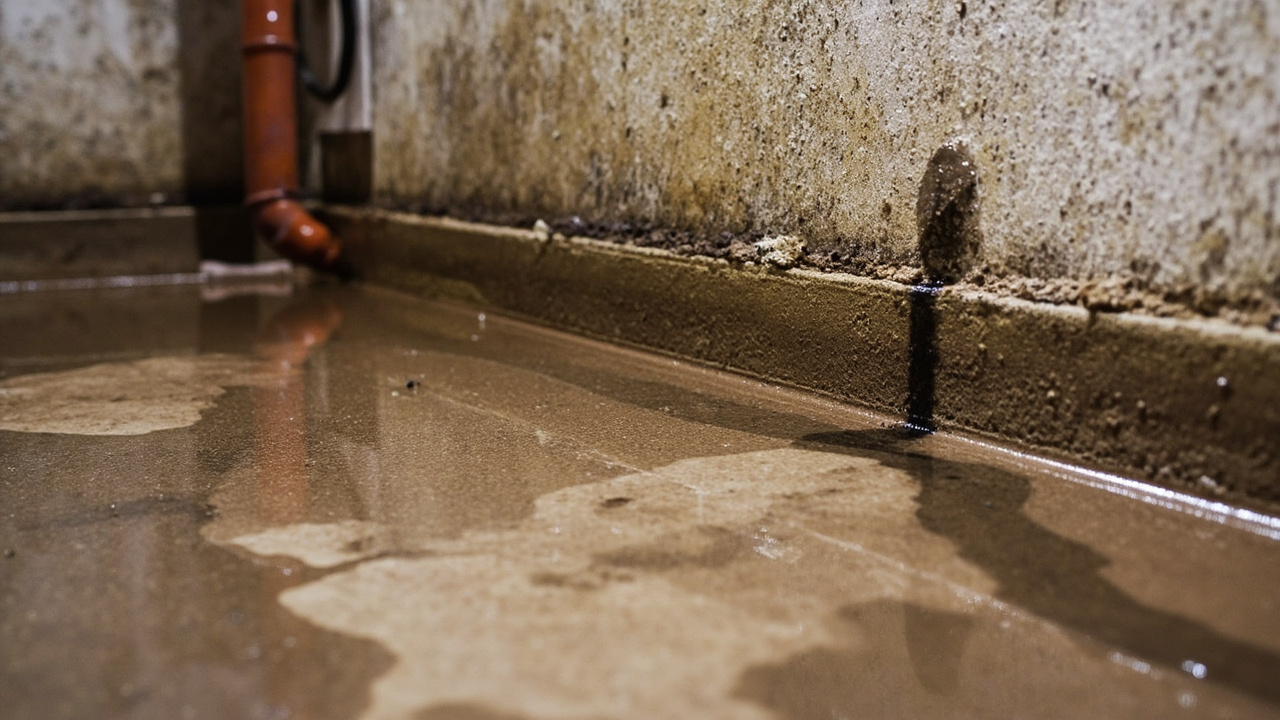
Forest Glen is a neighborhood that faces unique water damage challenges specific to Chicago’s aging infrastructure and geography. The area sits on clay-heavy soil with naturally poor drainage, creating hydrostatic pressure against basement walls during spring rains and snowmelt. Combined sewer systems in parts of Forest Glen overflow during heavy storms, forcing water up through floor drains and toilet lines. The North Branch Chicago River proximity compounds these issues, keeping water tables elevated in spring months. These conditions demand aggressive drying with both LGR and desiccant equipment to prevent water from wicking into foundation materials weeks after visible water recedes.
Sewer backups plague combined-sewer zones near Pilsen and West Loop. These neighborhoods operated combined sewers that carry both stormwater and sanitary waste in a single pipe. Heavy spring rains overwhelm the system, forcing raw sewage back into basements. These Class 3 water losses demand aggressive drying with combined LGR and desiccant equipment to prevent pathogenic contamination and mold growth. Spring saturation hits Ravenswood’s clay-heavy basements particularly hard. The combination of high clay soil content, poor drainage, and proximity to the North Branch Chicago River creates hydrostatic pressure against basement walls. Moisture wicks into poured concrete and limestone foundations weeks after visible water recedes. Desiccant machines excel at extracting this persistent moisture from materials, while LGR equipment manages airborne humidity.
Logan Square and Lincoln Park feature older brownstones with limestone foundations. These historic materials absorb water like sponges and dry extremely slowly. Winter pipe bursts in these neighborhoods require desiccant equipment from day one because frozen outdoor temperatures prevent LGR operation. Spring basement floods in Lakeview’s high-rise condos create different challenges. These buildings feature modern sump pump systems and efficient drainage, making Class 1 and Class 2 losses more common. LGR equipment alone handles these jobs within 5 to 7 days. Rogers Park and Des Plaines sit near elevation changes and retain water in low-lying areas. Heavy spring rains create flooding that requires extended drying protocols. These jobs deploy both LGR and desiccant machines simultaneously to manage the volume of moisture across 5000 to 10000 square foot basement areas.
IICRC S500 Drying Standards and Equipment Selection
The Institute of Inspection Cleaning and Restoration Certification (IICRC) S500 Standard defines professional water damage restoration protocols. Section 4.3 specifically addresses dehumidification and equipment selection based on water class and environmental conditions. IICRC requires restoration teams to document GPP reduction rates and adjust equipment deployment if drying targets are not met within established timelines.
Class 1 water losses involve minimal moisture and affect small areas. Class 2 losses involve significant moisture but affect materials that dry at normal evaporation rates. Class 3 losses include saturation of all materials including structural elements. Class 4 losses involve low-permeability materials like concrete, stone, or hardwood that demand extended drying periods.
For Chicago basements flooded during spring rains (typically Class 2 losses), LGR equipment alone handles the job within 5 to 7 days. For older Chicago bungalows with limestone foundations and burst pipes (Class 3), combining LGR units for air dehumidification with desiccant machines for material drying cuts the timeline to 8 to 10 days and prevents mold growth in wall cavities.
Chicago Climate Context and Equipment Deployment
Chicago weather patterns directly dictate which equipment deployment decisions work best. Lake Michigan creates moisture-laden summers and dry winters. The Polar Vortex brings sub-zero temperatures that cause burst pipes in uninsulated crawlspaces and attics. Spring rains overwhelm aging combined sewer systems in neighborhoods like West Loop and Pilsen, causing basement backups.
Summer flooding in Lakeview or Lincoln Park, where basements often sit below grade in historic brownstones, demands immediate LGR deployment. These units remove moisture quickly as humidity climbs above 70 percent RH. A standard LGR can reduce a flooded basement from 95 percent RH to manageable drying conditions in 18 to 24 hours.
Winter pipe bursts in neighborhoods like Rogers Park or Des Plaines require desiccant equipment from day one. Outdoor temperatures of 10 to 20 degrees below zero mean even heated basements remain cold. An LGR unit sits idle while moisture-saturated materials remain wet. Desiccant machines continue operating and extract moisture from building materials regardless of indoor air temperature.
Chicago’s flat prairie geography and high clay content soil create another scenario. Heavy clay soil retains water and generates hydrostatic pressure against basement walls. Basements in areas near the Des Plaines River or in flood-prone zones like parts of Joliet require extended drying protocols. These jobs use both LGR and desiccant machines simultaneously to handle the volume of moisture.
Understanding Grains Per Pound and Drying Progress
Grains Per Pound measures the mass of water vapor per pound of dry air. At 75 degrees Fahrenheit and 50 percent relative humidity, standard indoor air contains about 80 grains per pound. At 95 percent RH after a flood, the same air contains 140 to 160 grains per pound. Your goal is reducing GPP to target levels established by IICRC protocols.
An LGR dehumidifier removes 5 to 8 grains per pound per hour in standard conditions. A desiccant machine removes 8 to 12 grains per pound per hour, but the advantage expands dramatically in cold conditions. At 45 degrees Fahrenheit, that LGR rate drops to 1 to 2 grains per hour while desiccant performance remains consistent.
Track drying progress by measuring indoor RH every 12 hours using a digital hygrometer. Record the temperature, RH percentage, and calculate GPP using a psychrometric chart or smartphone app. If GPP drops less than 10 percent from the previous day, equipment is malfunctioning or undersized. Adjust capacity, add machines, or switch technology.
In a typical Chicago summer basement dry-out, you target reducing RH by 5 to 10 percent daily. In winter or structural drying scenarios, progress may slow to 3 to 5 percent daily. Patience and accurate monitoring distinguish professional drying from amateur guesswork.
Comparing Operating Costs and Electrical Requirements
LGR units consume 600 to 1,000 watts depending on compressor size. Desiccant machines consume 1,400 to 2,000 watts because they run both the motor driving the silica gel rotor and a heating element. Over a 7-day drying job running machines 24 hours daily, an LGR costs roughly 100 to 150 dollars in electricity while a desiccant machine costs 200 to 280 dollars.
Circuit capacity matters in residential settings. Older Chicago homes, particularly those built before 1950, feature 60-amp electrical services with limited dedicated circuits. Running an LGR and an air mover simultaneously uses about 10 to 12 amps total. Running a desiccant machine demands 13 to 16 amps, potentially overloading circuits designed for 15 amps. Restoration teams must evaluate panel capacity before deployment.
| Equipment Specification | LGR Dehumidifier | Desiccant Dehumidifier |
|---|---|---|
| Operating Temperature Range | 60 degrees to 95 degrees Fahrenheit | Minus 20 degrees to 120 degrees Fahrenheit |
| Power Draw | 5 to 8 amperes at 115 volts | 12 to 15 amperes at 115 volts |
| Moisture Removal Rate (Standard Conditions) | 5 to 8 GPP per hour | 8 to 12 GPP per hour |
| Moisture Removal Rate (45 degrees Fahrenheit) | 1 to 2 GPP per hour | 8 to 12 GPP per hour |
| Heat Output | Minimal, cools air slightly | 15 to 20 degree temperature rise |
| Maintenance | Filter changes every 2 to 3 weeks | Reactivation duct cleaning, pre-filter changes weekly |
| Best for Class 1 to 2 Water Losses | Yes | No, overkill and inefficient |
| Best for Class 3 to 4 Water Losses | No, insufficient for deep drying | Yes, essential for structural drying |
| Best for Winter Conditions Below 50 degrees | No, performance degradation | Yes, consistent performance |
Chicago Property Types and Equipment Footprint Considerations
A Lincoln Park brownstone basement differs dramatically from a Rogers Park bungalow crawlspace, and equipment selection reflects those differences. Historic high-rise condos near Willis Tower or Millennium Park feature interior plumbing walls and limited basement access. Deploying a desiccant machine may require routing reactivation exhaust through windows or roof penetrations.
Chicago bungalows, particularly in Beverly, Hyde Park, and Skokie, feature unfinished basements with open-joist framing and poured concrete floors. These spaces allow flexibility in machine placement. LGR units sit in corners while air movers push moisture toward window wells. Desiccant machines occupy more space and require dedicated electrical circuits.
Industrial warehouses in Joliet or Bolingbrook demand different strategies. Large floor areas require multiple machines, often a combination of LGR units for primary dehumidification and desiccant machines for structural drying of concrete slabs and wooden support beams. The Deep Tunnel Project (TARP) system in parts of Chicago manages sewage overflow during severe storms, but aging combined sewers still exist. When those sewers back up into commercial basements, large-scale drying operations deploy equipment strategically across 10,000 to 50,000 square foot spaces.
Addressing Reactivation Air and Airflow Requirements
Desiccant machines require both intake air and reactivation air to function. Intake air passes through the rotating silica gel wheel, where moisture gets absorbed. Simultaneously, a heating element in the reactivation chamber drives that moisture out, and exhaust air carries it outdoors. That reactivation exhaust must be ducted outside or into a controlled space.
In sealed Chicago basements, improper reactivation ducting creates problems. Hot, humid exhaust blows into the space instead of outside, raising humidity further. Teams must duct reactivation air through windows, basement window wells, or roof penetrations. In multi-story buildings or condominiums, routing exhaust can require creative solutions and coordination with building management.
Cubic Feet per Minute (CFM) measures airflow. Most desiccant machines produce 400 to 600 CFM of reactivation exhaust. That air must exit the property, not recirculate. Failure to properly duct reactivation air defeats the purpose and adds unnecessary heat and humidity back into the space you are trying to dry.
When to Deploy LGR Equipment
LGR machines are your primary choice for most Chicago water damage jobs. Spring basement floods in Lakeview, summer pipe failures in Logan Square townhomes, and sump pump malfunctions throughout the suburbs all begin with LGR deployment.
Deploy LGR units when conditions are met across these criteria.
- Temperature indoors exceeds 60 degrees Fahrenheit consistently
- Water loss is Class 1 or Class 2 (limited structural saturation)
- RH exceeds 50 percent (moisture is available for extraction)
- Job timeline allows 5 to 7 days for air dehumidification
- Electrical service can support multiple units on dedicated circuits
LGR equipment costs less to operate, requires less maintenance, and produces faster results in moderate to warm climates. For a typical 2,000 square foot Chicago basement flooded in June, two LGR units run for 96 hours reduce RH from 95 percent to 40 percent and prevent mold growth. The job costs significantly less than deploying desiccant machines.
When to Deploy Desiccant Equipment
Desiccant machines become essential in cold weather or high-moisture structural scenarios. A burst pipe in a Rogers Park kitchen during December, a frozen discharge line in Arlington Heights, or a sewage backup in a West Loop commercial space requiring deep material drying all demand desiccant technology.
Deploy desiccant equipment when any of these conditions apply.
- Indoor temperature drops below 55 degrees Fahrenheit or outdoor temps fall below freezing
- Water loss is Class 3 or Class 4 with deep structural saturation
- Materials require reduction to 12 to 15 percent moisture content for insurance approval
- Drywall, flooring, or structural lumber have absorbed significant water
- Timeline demands aggressive drying regardless of electrical or heat output concerns
Desiccant machines extract moisture from building materials more aggressively than LGR units. When materials stay wet beyond 72 hours, mold spores begin germinating inside walls and under flooring. Desiccant deployment prevents that secondary damage and justifies higher operational costs in professional restoration protocols.
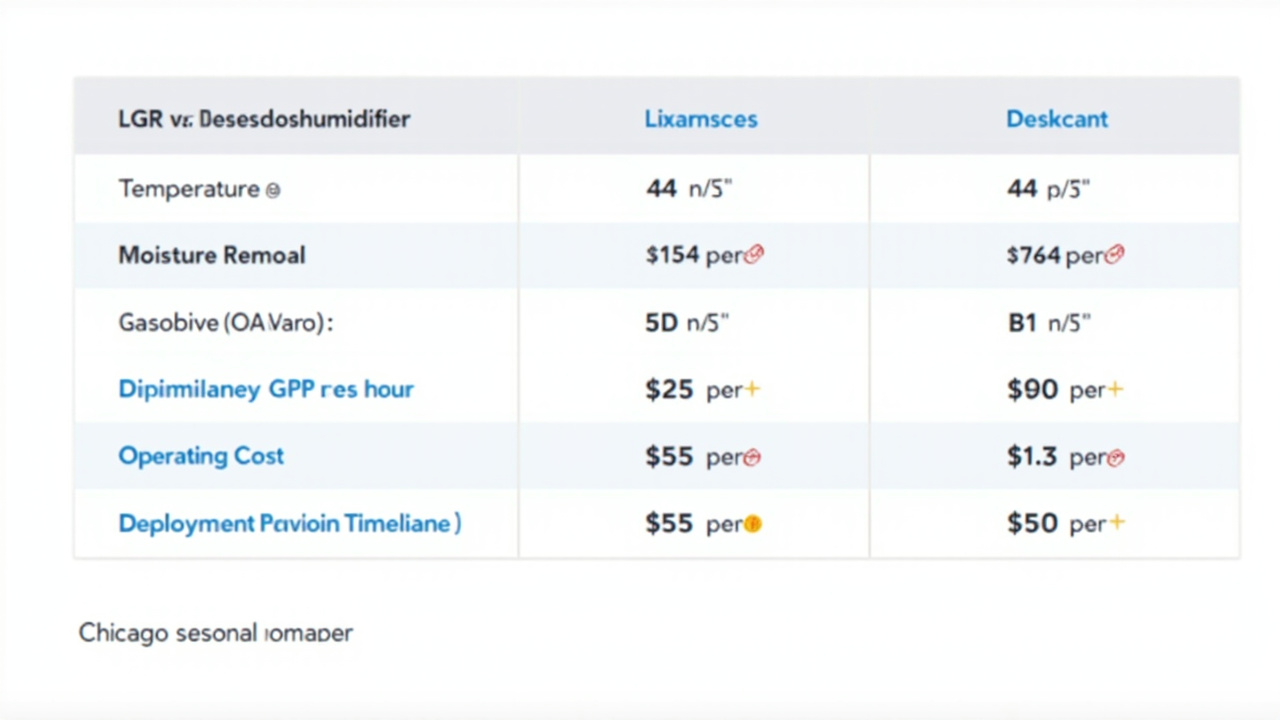
Combination Strategies for Complex Chicago Water Losses
Professional restoration teams frequently deploy both technologies simultaneously. An LGR unit dehumidifies the air while a desiccant machine extracts moisture from saturated materials. This combination approach follows IICRC S500 protocols and ensures comprehensive drying across all loss classifications.
In a typical Naperville or Wheaton basement with 8 to 12 inches of standing water followed by extraction, the strategy looks like this. First, remove standing water with pumps and air movers to displace surface moisture. Deploy LGR units immediately to reduce RH and begin evaporative drying of flooded materials. Monitor GPP every 12 hours. If RH drops below 55 percent within 36 hours and GPP reduction continues at 10 percent daily, continue with LGR only.
If after 72 hours RH remains above 60 percent or drywall and subfloor readings show moisture content above 20 percent, introduce desiccant machines. The combination of air dehumidification and material extraction accelerates drying and prevents mold. Document all measurements for insurance claims and follow-up inspections.
Measuring Success with Psychrometric Data
Success in water damage restoration depends on data, not guesswork. Maintain a drying log documenting every 12-hour measurement. Record date, time, indoor temperature, relative humidity percentage, outdoor temperature, equipment running (LGR, desiccant, air movers), and calculated GPP using a psychrometric chart.
A Chicago basement drying log over 7 days reveals clear patterns. In the first 24 hours, RH may drop from 96 percent to 80 percent as machines expel standing water. Days 2 and 3 show steady 5 to 8 percent RH reductions daily as evaporation accelerates. Days 4 through 6 often plateau as moisture moves from materials into air more slowly. Day 7 approaches target RH around 40 to 45 percent, matching outdoor summer conditions.
If your drying log shows stalled progress (RH unchanged for 36 hours), equipment has failed or capacity is insufficient. Add machines, check filter saturation, or switch from LGR to desiccant if temperature conditions warrant. Without documented measurements, you cannot justify equipment costs to insurance adjusters or prove the drying was executed per industry standards.
Insurance Claims and Equipment Documentation
Insurance adjusters scrutinize water damage claims and demand evidence of professional standards. Deploying the correct equipment and documenting drying progress strengthens your claim approval. When your restoration team employs IICRC S500 protocols and provides GPP reduction logs, adjusters approve higher equipment charges and extended timelines without pushback.
Claims adjusters understand the difference between cost-cutting dry-outs and professional restoration. A contractor deploying single LGR unit for a Class 3 water loss raises red flags. A professional deploying combined LGR and desiccant equipment with documented psychrometric measurements demonstrates competence and justifies the expense.
For your claim, request that your restoration team provide a final drying report including equipment deployment timeline, GPP reduction charts, and final moisture content readings. This documentation protects you if secondary mold issues emerge months later and proves the drying was executed to professional standards.
Why Equipment Choice Matters for Your Chicago Home
The decision between LGR and desiccant dehumidifiers determines whether you face a straightforward 7-day dry-out or a complicated battle against mold and structural damage. In Chicago, where seasonal extremes swing from polar vortex winters to humid Lake Effect summers, matching equipment to conditions is not optional for professional results.
A restoration team that deploys only LGR units year-round cuts corners and risks failed dry-outs during winter emergencies. A team that owns and deploys desiccant equipment demonstrates commitment to IICRC standards and your property protection. When your pipe bursts in January in Lincoln Park or your basement floods in July in Lakeview, the right equipment running 24 hours can prevent thousands of dollars in secondary mold remediation and structural repair.
Your insurance company will cover appropriate equipment costs when professional standards are followed. The investment in correct technology, proper monitoring, and documented drying is far less expensive than mold testing, remediation, and potential litigation years later.
Technical Reference Resources
For deeper understanding of psychrometric principles and drying science, the IICRC S500 Standard for Professional Water Damage Restoration provides the complete framework for equipment selection, monitoring, and documentation. Building science concepts like vapor pressure, dew point, and equilibrium moisture content are thoroughly explained in the IICRC curriculum.
Your restoration contractor should reference these standards directly and provide you with copies of relevant sections when explaining their approach to your specific loss.
Frequently Asked Questions
Can I run an LGR and desiccant machine simultaneously in a residential setting?
Yes, but with planning. An LGR draws 5 to 8 amps and a desiccant draws 12 to 15 amps. Together they require 17 to 23 amps. If your panel has 100-amp service and dedicated circuits available, you can run both. If your home has 60-amp service with limited circuits, you may need a temporary generator or load management. Your restoration team assesses your electrical capacity before deployment.
How often should desiccant filters and rotors be replaced?
Desiccant machine pre-filters should be inspected every week and replaced when visibly loaded with dust. Silica gel rotors do not require replacement under normal drying conditions. If moisture removal stops despite running, the rotor may be blocked or failed and requires service.
Why does my desiccant machine make the basement so hot?
Desiccant machines produce 15 to 20 degrees of heat as a byproduct. In a 65-degree basement, the machine output air reaches 80 to 85 degrees. If reactivation air is not ducted outside, that heat stays indoors. Request that your contractor duct reactivation exhaust through a window, window well, or roof penetration to expel heat outdoors.
What is the difference between RH percentage and Grains Per Pound?
Relative Humidity measures how much moisture is in the air compared to the maximum it can hold at that temperature. Grains Per Pound measures the absolute mass of moisture per pound of dry air. RH changes with temperature. GPP does not. At 75 degrees and 60 percent RH, air contains about 80 GPP. At 60 degrees and 60 percent RH, the same air contains only 55 GPP because cold air cannot hold as much moisture. Monitoring both metrics gives you a complete picture of drying progress.
Should I use LGR or desiccant for a wet crawlspace?
Crawlspaces demand desiccant equipment if temperatures drop below 60 degrees. Many Chicago crawlspaces in Arlington Heights, Schaumburg, and Elmhurst sit unheated and drop to 40 to 50 degrees in winter. LGR equipment becomes ineffective. Desiccant machines dry crawlspace materials even in cold conditions. In summer, LGR equipment handles crawlspace moisture removal efficiently.
If your home has suffered water damage and you are unsure which equipment your restoration team deployed or why, ask for detailed documentation. Request a copy of the drying log showing GPP measurements and equipment runtime. That transparency indicates professionalism and gives you confidence in the work.
Water damage restoration in Chicago demands equipment matched to climate, season, and loss classification. Whether your emergency occurs in bitter January or humid July, the right dehumidification strategy protects your home from secondary damage and ensures insurance approval.
Take Action Now to Protect Your Chicago Basement
Do not settle for generic drying advice or single-technology contractors. If your Forest Glen basement is wet from sewer backup, spring flooding, or pipe burst, contact Cornerstone Water Damage Restoration now to get a site assessment from a technician who understands Chicago’s unique seasonal challenges and neighborhood-specific water risks. If your Lincoln Park townhome needs drying, if your Rogers Park crawlspace has frozen pipes, or if your Lakeview condo has suffered water intrusion, our team deploys LGR, desiccant, and combined strategies based on real-time data and IICRC protocols. Call our 24/7 emergency line now to discuss your property, get a timeline estimate, and understand exactly which equipment will protect your home or business. Every hour without professional equipment running increases mold risk and secondary damage costs.
{
“@context”: “https://schema.org”,
“@type”: “BlogPosting”,
“headline”: “LGR vs Desiccant Dehumidifiers Which Is Right for Your Chicago Property”,
“description”: “Comparing LGR and desiccant dehumidifiers for damp Forest Glen basements and Chicago water damage. Learn which equipment works best for your situation.”,
“wordCount”: 4422,
“datePublished”: “2026-04-10T10:37:00.000Z”,
“dateModified”: “2026-04-10T10:37:00.000Z”,
“inLanguage”: “en-US”,
“mainEntityOfPage”: {
“@type”: “WebPage”,
“@id”: “https://cornerstonewaterdamagerestorationchicago.com”
},
“publisher”: {
“@type”: “LocalBusiness”,
“name”: “Cornerstone Water Damage Restoration Chicago”,
“url”: “https://cornerstonewaterdamagerestorationchicago.com”
},
“author”: {
“@type”: “Organization”,
“name”: “Cornerstone Water Damage Restoration Chicago”,
“url”: “https://cornerstonewaterdamagerestorationchicago.com”
},
“image”: {
“@type”: “ImageObject”,
“url”: “https://cornerstonewaterdamagerestorationchicago.com/wp-content/uploads/2026/03/comparing-lgr-dehumidifiers-and-desiccant-drying-f-1.jpg”
}
}
{
“@context”: “https://schema.org”,
“@type”: “LocalBusiness”,
“name”: “Cornerstone Water Damage Restoration Chicago”,
“url”: “https://cornerstonewaterdamagerestorationchicago.com”,
“address”: {
“@type”: “PostalAddress”,
“addressLocality”: “Chicago”
},
“areaServed”: {
“@type”: “City”,
“name”: “Chicago”
}
}
{
“@context”: “https://schema.org”,
“@type”: “FAQPage”,
“mainEntity”: [
{
“@type”: “Question”,
“name”: “Can I run an LGR and desiccant machine simultaneously in a residential setting?”,
“acceptedAnswer”: {
“@type”: “Answer”,
“text”: “Yes, but with planning. An LGR draws 5 to 8 amps and a desiccant draws 12 to 15 amps. Together they require 17 to 23 amps. If your panel has 100-amp service and dedicated circuits available, you can run both. If your home has 60-amp service with limited circuits, you may need a temporary generator or load management. Your restoration team assesses your electrical capacity before deployment.”
}
},
{
“@type”: “Question”,
“name”: “How often should desiccant filters and rotors be replaced?”,
“acceptedAnswer”: {
“@type”: “Answer”,
“text”: “Desiccant machine pre-filters should be inspected every week and replaced when visibly loaded with dust. Silica gel rotors do not require replacement under normal drying conditions. If moisture removal stops despite running, the rotor may be blocked or failed and requires service.”
}
},
{
“@type”: “Question”,
“name”: “Why does my desiccant machine make the basement so hot?”,
“acceptedAnswer”: {
“@type”: “Answer”,
“text”: “Desiccant machines produce 15 to 20 degrees of heat as a byproduct. In a 65-degree basement, the machine output air reaches 80 to 85 degrees. If reactivation air is not ducted outside, that heat stays indoors. Request that your contractor duct reactivation exhaust through a window, window well, or roof penetration to expel heat outdoors.”
}
},
{
“@type”: “Question”,
“name”: “What is the difference between RH percentage and Grains Per Pound?”,
“acceptedAnswer”: {
“@type”: “Answer”,
“text”: “Relative Humidity measures how much moisture is in the air compared to the maximum it can hold at that temperature. Grains Per Pound measures the absolute mass of moisture per pound of dry air. RH changes with temperature. GPP does not. At 75 degrees and 60 percent RH, air contains about 80 GPP. At 60 degrees and 60 percent RH, the same air contains only 55 GPP because cold air cannot hold as much moisture. Monitoring both metrics gives you a complete picture of drying progress.”
}
},
{
“@type”: “Question”,
“name”: “Should I use LGR or desiccant for a wet crawlspace?”,
“acceptedAnswer”: {
“@type”: “Answer”,
“text”: “Crawlspaces demand desiccant equipment if temperatures drop below 60 degrees. Many Chicago crawlspaces in Arlington Heights, Schaumburg, and Elmhurst sit unheated and drop to 40 to 50 degrees in winter. LGR equipment becomes ineffective. Desiccant machines dry crawlspace materials even in cold conditions. In summer, LGR equipment handles crawlspace moisture removal efficiently.”
}
}
]
}
{
“@context”: “https://schema.org”,
“@type”: “BreadcrumbList”,
“itemListElement”: [
{
“@type”: “ListItem”,
“position”: 1,
“name”: “Home”,
“item”: “https://cornerstonewaterdamagerestorationchicago.com”
},
{
“@type”: “ListItem”,
“position”: 2,
“name”: “Blog”,
“item”: “https://cornerstonewaterdamagerestorationchicago.com/blog”
},
{
“@type”: “ListItem”,
“position”: 3,
“name”: “LGR vs Desiccant Dehumidifiers Which Is Right for Your Chicago Property”
}
]
}
{
“@context”: “https://schema.org”,
“@type”: “Service”,
“serviceType”: “Water Damage Restoration”,
“provider”: {
“@type”: “LocalBusiness”,
“name”: “Cornerstone Water Damage Restoration Chicago”,
“url”: “https://cornerstonewaterdamagerestorationchicago.com”
},
“areaServed”: {
“@type”: “City”,
“name”: “Chicago”
},
“description”: “Comparing LGR and desiccant dehumidifiers for damp Forest Glen basements and Chicago water damage. Learn which equipment works best for your situation.”
}