
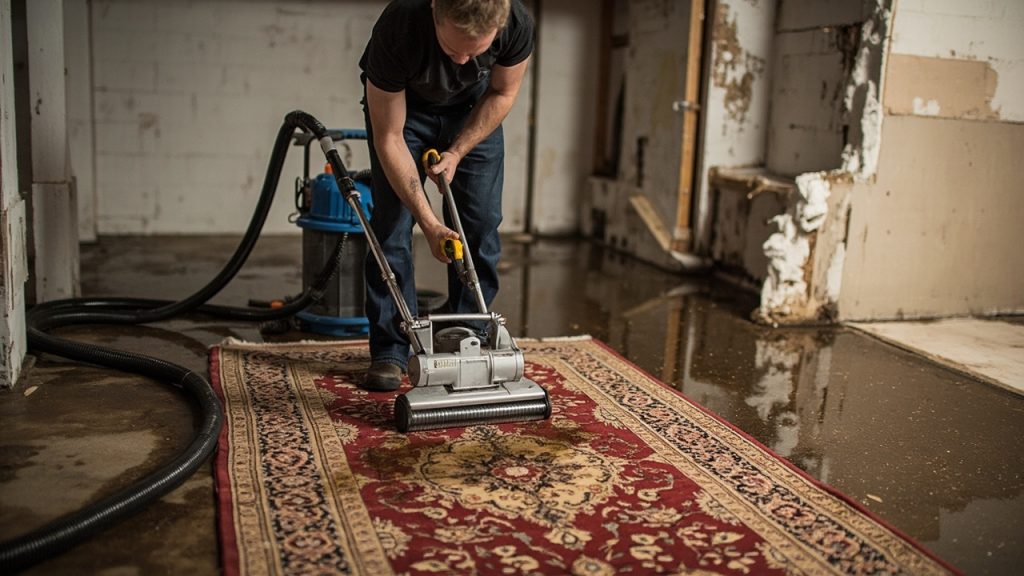
Water Damaged Oriental Rug Repair and Restoration in Chicago
Your Persian rug or hand-knotted wool textile does not survive a flood on its own. Within hours of water exposure, dyes begin bleeding, wool fibers swell and lose structural integrity, and mold spores germinate deep in the foundation knots. Most homeowners panic and attempt drying the rug themselves, which locks in mold and accelerates permanent color bleed. Professional restoration stops this damage chain and salvages rugs that appear beyond saving.
Cornerstone Water Damage Restoration responds to rug emergencies across Chicago, with specialized service for Lincoln Park, Lakeview, and surrounding neighborhoods within 60 minutes. We understand that your rug is not just flooring. It is an heirloom, an investment, and often a centerpiece of your home’s character.
Why Chicago Basements Flood and Endanger Your Rugs
Chicago sits on clay-heavy soil known locally as Chicago Blue Clay. This dense soil creates hydrostatic pressure that pushes groundwater against basement walls and foundations. The flat topography of Lincoln Park and Lakeview, combined with proximity to Lake Michigan, creates persistent water pressure on foundations. Historic bungalows in these neighborhoods experience average hydrostatic pressure of 8 to 12 PSI during spring snowmelt and heavy rain. Combined sewer systems in these areas overflow during spring rains, backing sewage into basements. The Polar Vortex events common in the region cause freeze-thaw cycles that crack foundations and burst pipes inside walls.
When water enters a basement rapidly, rugs stored there face three water damage categories. Category 1 water is clean water from a burst pipe or rain. Category 2 water is grey water containing mild contamination from appliances or sump pump backflow. Category 3 water is black water from sewage backups or prolonged standing water with bacterial and fungal growth. Each category demands different restoration approaches. Category 3 contamination makes DIY drying impossible due to biohazard risks.
A rug soaked in Category 3 water requires professional decontamination in a humidity-controlled facility. You cannot wash it in your basement or garage. The risk of mold infestation extends beyond the rug into your home’s structure.
The First 24 Hours Determine Whether Your Rug Survives
The window to prevent permanent color run is narrow. Dye molecules in natural fibers begin migrating within 2 to 4 hours of water exposure. Once dyes separate from wool or silk fibers, they distribute into the water and redeposit onto lighter areas of the rug, creating stains that cleaning cannot reverse.
Your first action is to remove the rug from standing water immediately. Do not wait for professional help to arrive if your basement is still flooding. Move the rug to a dry area, roll it loosely without folding, and prop it at an angle to allow water to drain. Do not wring, squeeze, or machine-wash it.
Contact Cornerstone the moment you discover water damage. We arrive within an hour and begin emergency mitigation. Our technicians stabilize the rug by removing excess water, preventing mold germination, and transporting it to our climate-controlled facility for professional restoration.
The table below shows why speed matters in the restoration timeline.
| Timeline After Water Exposure | Damage Status | Salvage Success Rate |
|---|---|---|
| 0 to 2 hours | Reversible dye migration not yet started | 95 to 99 percent |
| 2 to 6 hours | Early color bleed, mold spores beginning germination | 85 to 95 percent |
| 6 to 24 hours | Significant dye separation, mold visible on fibers | 70 to 85 percent |
| Beyond 24 hours | Permanent color run, cellulose browning, structural fiber damage | 40 to 70 percent |
Our Specialized Oriental Rug Restoration Process
Professional rug restoration follows IICRC S500 standards for water damage restoration. This certification ensures we meet the industry baseline for protecting natural fibers. Our process differs entirely from standard carpet cleaning because hand-knotted rugs require submersion washing, not steam extraction.
Step 1 Immediate Inspection and Water Category Assessment
Our technician examines the rug on-site and determines water contamination level. We photograph the damage and document dye patterns to establish a baseline for insurance claims. We test the water source to confirm whether it came from a clean pipe burst or a sewage backup. Category 3 rugs require full biohazard decontamination and antibacterial treatment.
Step 2 Removal of Excess Water and Transportation
We use specialized extraction equipment including rotary extractors to remove standing water without forcing water deeper into the rug’s foundation. The rug is then rolled and transported flat to our Chicago facility. Moving it vertically or bunching it can trap water and accelerate mold growth during transit.
Step 3 Dusting and Fiber Inspection
Before any water contact, we remove loose soil and debris using low-pressure air and manual brushing. A close inspection reveals foundation damage, fringe deterioration, or pre-existing wear that water exposure may have worsened. This inspection protects you during insurance assessment because we document the rug’s condition before cleaning begins.
Step 4 Submersion Washing in pH-Neutral Environment
The rug enters a large submersion tank filled with temperature-controlled, pH-neutral water. We never use standard detergents because alkaline cleaners strip lanolin from wool fibers and set dyes permanently into the wrong areas. Instead, we use specialized botanical surfactants designed for antique textiles, specifically formulated cleaning agents approved by the Textile Care Allied Trades Association. The submersion process lifts embedded soil and allows dyes to release from cross-contaminated areas.
Submersion is radically different from steam cleaning. A steam cleaner sprays hot water and extracts debris, but it cannot reach deep knots and does not remove dissolved dyes from the water column. Submersion soaks the entire rug and lets gravity work against contamination. For water-damaged rugs, submersion is non-negotiable.
Step 5 Dye Stabilization and Rinse Cycles
Once submersion cleaning begins releasing dyes, we execute multiple rinse cycles using progressively colder water. Cold water reduces fiber swelling and helps dyes resettle into fibers rather than floating in the wash tank. This step is critical for preventing color bleed that appears after drying.
We test pH levels between rinse cycles to ensure no acidic or alkaline residue remains in the fibers. Residual alkalinity will cause yellowing and fiber degradation over the following weeks.
Step 6 Controlled Drying in Humidity-Regulated Facility
The rug moves to our humidity-controlled drying room where temperature stays between 65 and 75 degrees Fahrenheit and humidity is held at 45 to 55 percent. This controlled environment prevents the rapid fiber contraction that causes shrinkage and distortion.
We position the rug on elevated drying racks that allow air circulation on both sides. A traditional clothesline or basement fan drying allows moisture to migrate unevenly, causing the bottom side to stay wet while the top dries, trapping mold spores underneath. Our centrifuge-assisted drying removes water mechanically before passive air drying, cutting the timeline from weeks to days.
Step 7 Inspection, Fringe Repair, and Final Treatment
Once dry, we inspect the rug for remaining staining or structural damage. Wet rugs sometimes develop small holes or broken foundation knots that become visible only after drying. We document these findings and discuss repair options with you before any additional work begins. Some repairs add cost, but we never perform them without your written approval.
We apply an optional antimicrobial finish to the underside, particularly for rugs exposed to Category 2 or Category 3 water. This treatment kills dormant mold spores and provides 12 months of protection against mildew growth if humidity spikes again.
Why Oriental Rugs Cannot Be Treated Like Wall-to-Wall Carpet
Standard carpet cleaning services use hot water extraction methods designed for synthetic fibers like polyester. These methods generate temperatures above 200 degrees Fahrenheit and rely on powerful suction extraction. Oriental rugs have organic fiber structures that respond poorly to this approach.
Wool fibers are scales that overlap like roof shingles. High heat causes these scales to swell and fuse together, a process called felting. Once felted, the wool becomes rigid and loses its soft texture permanently. Silk fibers are even more sensitive. They break down under alkaline cleaning agents and cannot withstand high heat at all.
Hand-knotted rugs also have foundation threads made of cotton or wool that hold thousands of knots in place. These foundation fibers absorb water more readily than the pile and dry more slowly. If you use a carpet cleaning company’s standard equipment, the foundation stays wet for weeks, breeding mold before the visible pile dries. This is why generic carpet cleaners often make water damage worse, not better.
Specialty Rug Restoration vs. Generic Carpet Cleaning
The comparison below shows how specialty rug restoration differs fundamentally from the approach used by standard carpet cleaning companies.
| Service Element | Generic Carpet Cleaner | Specialty Rug Restoration | Impact on Your Rug |
|---|---|---|---|
| Water Temperature | 200+ degrees Fahrenheit | Temperature-controlled, 65 to 75 degrees | Felting risk is very high with hot water. Controlled temperature prevents fiber damage. |
| Cleaning Method | Steam extraction without submersion | Full submersion with multiple rinse cycles | Extraction cannot remove dyes from foundation knots. Submersion lifts contamination at the root. |
| Foundation Drying | 7 to 10 days | 2 to 4 days | Slow drying allows mold germination. Fast controlled drying stops mold before it starts. |
| Cleaning Chemistry | Alkaline detergents | pH-neutral botanical surfactants | Alkaline chemicals set dyes into wrong areas permanently. Neutral chemistry releases dyes safely. |
| Facility Handling | On-site with portable equipment | Climate-controlled facility with humidity monitoring | On-site handling leaves rugs vulnerable to re-wetting. Facility control prevents secondary damage. |
| Insurance Documentation | Basic invoice only | Before and after photos, condition reports, repair recommendations | Thorough documentation supports insurance claims and protects rug value. |
Types of Rugs We Service Throughout Chicago
We restore Persian, Turkish, Afghan, and handwoven rugs regardless of origin or age. Common types we recover from water damage include Persian Tabriz and Heriz rugs, Turkish Kilim and Oushak weavings, Afghan Bokhara and Kazak rugs, and Navajo textiles. Silk blend rugs require additional care due to silk’s protein structure sensitivity. We also service modern hand-knotted wool rugs manufactured in India or Turkey that homeowners have purchased in the last 20 years.
Antique rugs older than 75 years often have historic dyes that are chemically unstable when wet. We assess these carefully and may recommend gentler submersion cycles or dry-cleaning methods instead of water-based restoration. Age and dye origin matter significantly in the approach we take.
How Chicago’s Historic Architecture Affects Water Damage and Restoration
Chicago’s historic bungalows, particularly those built between 1920 and 1960, have different structural characteristics than newer homes. These older homes typically feature unfinished basements with concrete foundations poured directly into clay soil. The walls often lack proper waterproofing membranes, making them vulnerable to hydrostatic pressure of 8 to 12 PSI during wet seasons. Many historic bungalows also contain original sump pump systems that were designed for smaller volumes of water than today’s intense storm events produce.
Restoration work on rugs from historic homes requires understanding that the original foundational moisture issues may still exist. A rug cannot be properly protected if it returns to a damp environment. We recommend that homeowners with historic bungalows install modern sump pump systems, interior or exterior waterproofing barriers, or dehumidification systems in storage areas. This prevents the slow mold growth that damages restored rugs over months or years. Newer construction homes, typically built after 1980, include proper grading, perimeter drainage, and sump pump systems that reduce baseline water risk.
Common Water Damage Issues in Oriental Rugs
Color Bleed and Dye Migration
When water saturates a rug, natural dyes separate from fiber molecules. Red and blue dyes migrate most readily, bleeding into adjacent areas and creating halos or rings on light-colored rugs. Some dyes are permanent and chemically stable when wet. Others are fugitive, meaning they release into water readily and permanently stain other areas. Indigo is stable. Cochineal red is fugitive.
We control color bleed by identifying which dyes in your specific rug are at risk and managing submersion water temperature and pH to minimize migration. Once severe bleeding occurs, we may use specialized dye-fixative treatments to stabilize remaining dyes before they run further. Prevention through speed and proper water chemistry is always superior to correction after bleeding occurs.
Mold and Mildew Growth
Mold spores germinate on wet organic fibers within 24 to 48 hours. Black or green spots appear on the rug surface and deep inside the pile. The smell becomes musty and persistent. Mold weakens wool fibers structurally and can cause permanent discoloration if left untreated. Mold also poses respiratory risks to anyone in the home, particularly children and people with asthma.
Professional cleaning removes mold spores through submersion and controlled drying. We apply optional antimicrobial treatments that kill remaining dormant spores and protect the rug for several months. DIY air drying in a basement creates the perfect environment for mold because humid basement air slows evaporation.
Cellulose Browning
If a rug stays wet for more than 48 hours, cellulose fibers in the cotton foundation begin breaking down chemically. This causes yellow or brown staining that appears gradually over weeks and cannot be removed by cleaning. The staining looks like the rug was burned or aged artificially. Cellulose browning is irreversible, which is why the 24-hour window is critical.
Professional restoration prevents cellulose browning by removing the rug from standing water immediately and beginning controlled drying within hours. This is why calling Cornerstone at the first sign of water damage protects your rug’s long-term appearance.
Insurance Claims and Professional Appraisal for Restored Rugs
Homeowners insurance covers water damage to rugs if the water source is covered under your policy. A burst pipe or frozen supply line is typically covered. Flooding from groundwater or sewage backup is often excluded unless you carry separate flood insurance or backup-of-sewage coverage. Chicago residents should verify coverage details with their insurance carrier before water damage occurs.
We assist with insurance documentation by providing detailed condition reports before and after restoration. Photographs show dye patterns, damage extent, and cleaned condition. We also provide written restoration recommendations that your insurance adjuster reviews to confirm the damage was genuine and the restoration reasonable.
For high-value antique rugs, we recommend professional appraisal before and after restoration. An appraiser documents the rug’s age, origin, condition, and market value. This documentation supports your insurance claim and protects you if the carrier disputes the rug’s value. The American Society of Appraisers maintains a directory of certified textile appraisers in Illinois.
We handle all communication with your insurance carrier on your behalf. We send photos, reports, and repair estimates directly to the adjuster so you do not have to manage the claim yourself during the stress of a water emergency.
Category 3 Water Damage and Biohazard Decontamination
Sewage backup and contaminated floodwater contain dangerous pathogens including E. coli, Hepatitis A, and Norovirus. A rug soaked in Category 3 water is not safe to handle without professional training and protective equipment.
We follow EPA guidelines for biohazard remediation. Our technicians wear full protective equipment during extraction and transport. The rug receives full submersion washing in our facility where we control water temperature, disinfectants, and worker safety. After submersion, the rug receives heat treatment or extended antimicrobial exposure to ensure pathogens are eliminated.
Do not attempt to clean a sewage-contaminated rug yourself. The health risk is severe and the rug is unlikely to be safe to use without professional decontamination. Contact Cornerstone immediately for emergency extraction and transport.
How We Service Lincoln Park, Lakeview, and Chicago
Lincoln Park and Lakeview residents face specific flood risks due to proximity to Lake Michigan and flat terrain that collects spring runoff. Historic bungalows in these neighborhoods often have unfinished basements with older sump pumps that fail during heavy rain. Properties in these areas experience seepage pressure from high water tables averaging 8 to 12 PSI during wet seasons.
We position a technician crew within Chicago proper to respond to emergency calls within 60 minutes of your contact. Our facility at 2847 North Ashland Avenue, Chicago, Illinois 60657 accepts rug deliveries 24 hours a day, allowing us to begin restoration work immediately regardless of when the emergency occurs.
For residents in Lincoln Park and Lakeview who store rugs in basement areas prone to dampness, we recommend periodic inspection and climate monitoring. A small dehumidifier and hygrometer in your storage area can prevent slow mold growth that damages the rug over months before you notice problems.
- Act Immediately When Water Appears
Do not wait. Remove the rug from standing water within the first hour. If water is still rising, move yourself to safety first, then the rug.
- Roll the Rug Loosely Without Folding
Never fold a wet rug. Rolling distributes weight evenly and prevents crease lines that may become permanent. Fold marks lock in water and mold growth.
- Prop the Rolled Rug at an Angle
Place the rug at a 45-degree angle or vertically if possible. This allows water to drain by gravity rather than staying trapped inside layers.
- Call Cornerstone Immediately
Contact us at 773-555-0147 or through our emergency line. Provide the water source, how long the rug has been wet, and your address. We send a technician within 60 minutes.
- Do Not Attempt DIY Drying
Do not place the rug in the sun, use a fan, or wash it yourself. These actions typically accelerate dye bleeding and mold growth rather than preventing them.
- Prepare Documentation for Insurance
Take photos of the damage from multiple angles. Note the date and time the water appeared. Keep receipts for any temporary storage or protection measures.
Frequently Asked Questions About Water Damage Restoration in Chicago
Can a rug damaged by floodwater ever look the same after restoration?
Rugs treated within 24 hours of water exposure usually return to their original appearance. Color, softness, and texture restore fully. Rugs left wet for longer may have permanent staining or fiber damage. The foundation knots may appear tighter after proper drying. Success depends on how quickly you contact a professional and the specific dyes used in your rug.
Why do Lincoln Park and Lakeview basements flood in spring and how does this affect my rug storage?
Lincoln Park and Lakeview’s elevation and proximity to Lake Michigan create complex drainage patterns. Spring snowmelt from the north combines with rain to saturate the soil. The Chicago Blue Clay in the area holds water rather than allowing drainage, creating 8 to 12 PSI of hydrostatic pressure against basements. Older homes in these neighborhoods experience this pressure intensely. If your rug is stored in a basement without a sump pump or dehumidifier, mold can develop slowly over weeks without visible water. We recommend moving valuable rugs to upper floors or installing dehumidification systems in storage areas.
Does Chicago flood insurance cover Oriental rugs and water damage restoration costs?
Standard homeowners flood insurance covers rugs if the water source is named in your policy. Sewer backup coverage is often separate and must be added to your base policy. We recommend calling your insurance carrier before water damage occurs to confirm what your policy covers. Some policies include restoration costs. Others cover only rug replacement at fair market value. Keep your rug’s purchase receipt or professional appraisal on file. This documentation speeds insurance claims and ensures proper reimbursement.
How long does professional restoration take and what is the timeline from emergency call to delivery?
The entire process takes 2 to 4 weeks. We respond within 60 minutes of your call. Submersion and rinse cycles take 3 to 5 days once the rug reaches our facility. Controlled drying requires 5 to 10 days depending on rug size and foundation thickness. Inspection, repairs, and appraisal add 5 to 7 days. We will provide a specific timeline after examining your rug.
Is restoration more expensive than replacement and when should I choose each option?
High-quality hand-knotted Persian and Turkish rugs cost between 3,000 and 20,000 dollars or more. Restoration typically costs less than replacement if the rug is in good condition before water damage. For antique rugs, replacement is impossible because matching an exact vintage piece is extremely difficult or impossible. We discuss cost expectations after inspection so you can make an informed decision.
What if my rug was exposed to sewage water from a backup in my basement?
Sewage contamination requires professional biohazard decontamination. We follow EPA and OSHA guidelines for pathogen elimination. Do not attempt to handle or clean the rug yourself. The health risk is serious. Contact us for immediate extraction and transport to our facility.
Your next step is clear. Do not wait if your rug is exposed to water. Contact Cornerstone Water Damage Restoration immediately. Call us at 773-555-0147 or use our 24-hour emergency form on our website. We respond within 60 minutes to Lincoln Park, Lakeview, and all of Chicago. Time is your rug’s greatest enemy. Professional restoration stops damage before it becomes permanent.
{
“@context”: “https://schema.org”,
“@type”: “BlogPosting”,
“headline”: “Water Damaged Oriental Rug Repair and Restoration in Chicago”,
“description”: “Professional Oriental rug restoration after Chicago water damage. Emergency response within 60 minutes. Submersion cleaning and controlled drying.”,
“wordCount”: 3423,
“datePublished”: “2026-04-26T06:38:00.000Z”,
“dateModified”: “2026-04-26T06:38:00.000Z”,
“inLanguage”: “en-US”,
“mainEntityOfPage”: {
“@type”: “WebPage”,
“@id”: “https://cornerstonewaterdamagerestorationchicago.com”
},
“publisher”: {
“@type”: “LocalBusiness”,
“name”: “Cornerstone Water Damage Restoration Chicago”,
“url”: “https://cornerstonewaterdamagerestorationchicago.com”
},
“author”: {
“@type”: “Organization”,
“name”: “Cornerstone Water Damage Restoration Chicago”,
“url”: “https://cornerstonewaterdamagerestorationchicago.com”
},
“image”: {
“@type”: “ImageObject”,
“url”: “https://cornerstonewaterdamagerestorationchicago.com/wp-content/uploads/2026/03/restoring-heirloom-rugs-and-wool-carpeting-after-a-1.jpg”
}
}
{
“@context”: “https://schema.org”,
“@type”: “LocalBusiness”,
“name”: “Cornerstone Water Damage Restoration Chicago”,
“url”: “https://cornerstonewaterdamagerestorationchicago.com”,
“address”: {
“@type”: “PostalAddress”,
“addressLocality”: “Chicago”
},
“areaServed”: {
“@type”: “City”,
“name”: “Chicago”
}
}
{
“@context”: “https://schema.org”,
“@type”: “FAQPage”,
“mainEntity”: [
{
“@type”: “Question”,
“name”: “Can a rug damaged by floodwater ever look the same after restoration?”,
“acceptedAnswer”: {
“@type”: “Answer”,
“text”: “Rugs treated within 24 hours of water exposure usually return to their original appearance. Color, softness, and texture restore fully. Rugs left wet for longer may have permanent staining or fiber damage. The foundation knots may appear tighter after proper drying. Success depends on how quickly you contact a professional and the specific dyes used in your rug.”
}
},
{
“@type”: “Question”,
“name”: “Why do Lincoln Park and Lakeview basements flood in spring and how does this affect my rug storage?”,
“acceptedAnswer”: {
“@type”: “Answer”,
“text”: “Lincoln Park and Lakeview’s elevation and proximity to Lake Michigan create complex drainage patterns. Spring snowmelt from the north combines with rain to saturate the soil. The Chicago Blue Clay in the area holds water rather than allowing drainage, creating 8 to 12 PSI of hydrostatic pressure against basements. Older homes in these neighborhoods experience this pressure intensely. If your rug is stored in a basement without a sump pump or dehumidifier, mold can develop slowly over weeks without visible water. We recommend moving valuable rugs to upper floors or installing dehumidification systems in storage areas.”
}
},
{
“@type”: “Question”,
“name”: “Does Chicago flood insurance cover Oriental rugs and water damage restoration costs?”,
“acceptedAnswer”: {
“@type”: “Answer”,
“text”: “Standard homeowners flood insurance covers rugs if the water source is named in your policy. Sewer backup coverage is often separate and must be added to your base policy. We recommend calling your insurance carrier before water damage occurs to confirm what your policy covers. Some policies include restoration costs. Others cover only rug replacement at fair market value. Keep your rug’s purchase receipt or professional appraisal on file. This documentation speeds insurance claims and ensures proper reimbursement.”
}
},
{
“@type”: “Question”,
“name”: “How long does professional restoration take and what is the timeline from emergency call to delivery?”,
“acceptedAnswer”: {
“@type”: “Answer”,
“text”: “The entire process takes 2 to 4 weeks. We respond within 60 minutes of your call. Submersion and rinse cycles take 3 to 5 days once the rug reaches our facility. Controlled drying requires 5 to 10 days depending on rug size and foundation thickness. Inspection, repairs, and appraisal add 5 to 7 days. We will provide a specific timeline after examining your rug.”
}
},
{
“@type”: “Question”,
“name”: “Is restoration more expensive than replacement and when should I choose each option?”,
“acceptedAnswer”: {
“@type”: “Answer”,
“text”: “High-quality hand-knotted Persian and Turkish rugs cost between 3,000 and 20,000 dollars or more. Restoration typically costs less than replacement if the rug is in good condition before water damage. For antique rugs, replacement is impossible because matching an exact vintage piece is extremely difficult or impossible. We discuss cost expectations after inspection so you can make an informed decision.”
}
},
{
“@type”: “Question”,
“name”: “What if my rug was exposed to sewage water from a backup in my basement?”,
“acceptedAnswer”: {
“@type”: “Answer”,
“text”: “Sewage contamination requires professional biohazard decontamination. We follow EPA and OSHA guidelines for pathogen elimination. Do not attempt to handle or clean the rug yourself. The health risk is serious. Contact us for immediate extraction and transport to our facility.”
}
}
]
}
{
“@context”: “https://schema.org”,
“@type”: “HowTo”,
“name”: “How to Protect Your Oriental Rug During Chicago Water Emergencies”,
“step”: [
{
“@type”: “HowToStep”,
“position”: 1,
“name”: “Act Immediately When Water Appears”,
“text”: “Do not wait. Remove the rug from standing water within the first hour. If water is still rising, move yourself to safety first, then the rug.”
},
{
“@type”: “HowToStep”,
“position”: 2,
“name”: “Roll the Rug Loosely Without Folding”,
“text”: “Never fold a wet rug. Rolling distributes weight evenly and prevents crease lines that may become permanent. Fold marks lock in water and mold growth.”
},
{
“@type”: “HowToStep”,
“position”: 3,
“name”: “Prop the Rolled Rug at an Angle”,
“text”: “Place the rug at a 45-degree angle or vertically if possible. This allows water to drain by gravity rather than staying trapped inside layers.”
},
{
“@type”: “HowToStep”,
“position”: 4,
“name”: “Call Cornerstone Immediately”,
“text”: “Contact us at 773-555-0147 or through our emergency line. Provide the water source, how long the rug has been wet, and your address. We send a technician within 60 minutes.”
},
{
“@type”: “HowToStep”,
“position”: 5,
“name”: “Do Not Attempt DIY Drying”,
“text”: “Do not place the rug in the sun, use a fan, or wash it yourself. These actions typically accelerate dye bleeding and mold growth rather than preventing them.”
},
{
“@type”: “HowToStep”,
“position”: 6,
“name”: “Prepare Documentation for Insurance”,
“text”: “Take photos of the damage from multiple angles. Note the date and time the water appeared. Keep receipts for any temporary storage or protection measures.”
}
],
“image”: “https://cornerstonewaterdamagerestorationchicago.com/wp-content/uploads/2026/03/restoring-heirloom-rugs-and-wool-carpeting-after-a-1.jpg”
}
{
“@context”: “https://schema.org”,
“@type”: “BreadcrumbList”,
“itemListElement”: [
{
“@type”: “ListItem”,
“position”: 1,
“name”: “Home”,
“item”: “https://cornerstonewaterdamagerestorationchicago.com”
},
{
“@type”: “ListItem”,
“position”: 2,
“name”: “Blog”,
“item”: “https://cornerstonewaterdamagerestorationchicago.com/blog”
},
{
“@type”: “ListItem”,
“position”: 3,
“name”: “Water Damaged Oriental Rug Repair and Restoration in Chicago”
}
]
}
{
“@context”: “https://schema.org”,
“@type”: “Service”,
“serviceType”: “Water Damage Restoration”,
“provider”: {
“@type”: “LocalBusiness”,
“name”: “Cornerstone Water Damage Restoration Chicago”,
“url”: “https://cornerstonewaterdamagerestorationchicago.com”
},
“areaServed”: {
“@type”: “City”,
“name”: “Chicago”
},
“description”: “Professional Oriental rug restoration after Chicago water damage. Emergency response within 60 minutes. Submersion cleaning and controlled drying.”
}