
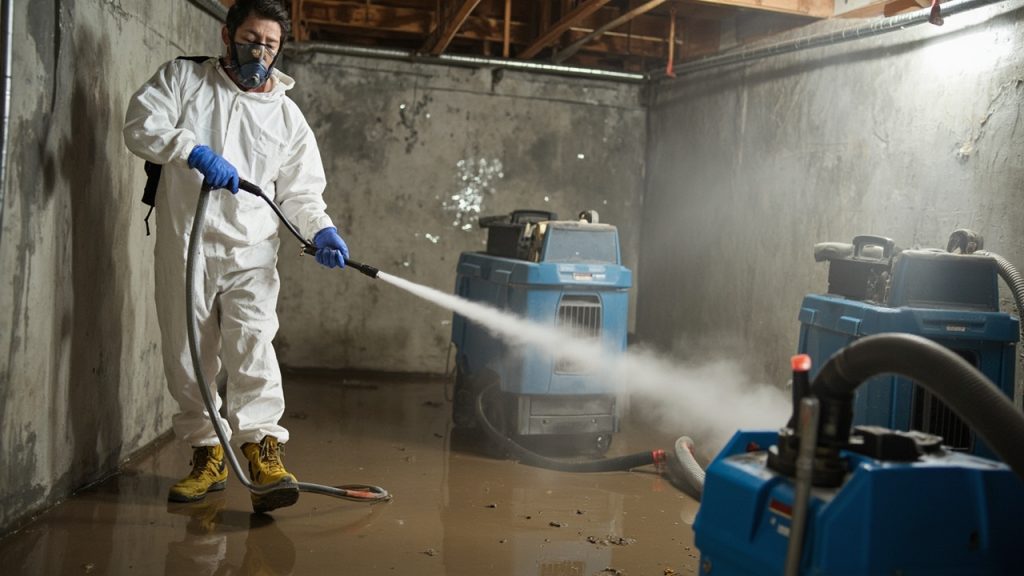
Professional Deep Cleaning and Sanitizing After a Flood in Uptown Chicago
A flood destroys more than drywall and flooring. It contaminates your home with bacteria, viruses, and mold that threaten your family’s health. Water extraction alone does not protect you. You need professional sanitization that follows IICRC S500 standards and eliminates the invisible pathogens left behind.
Cornerstone Water Damage Restoration has spent 15 years cleaning up Chicago’s worst flood scenarios. We understand how the city’s aging combined sewer system backs up into basements. We know how Chicago Blue Clay creates hydrostatic pressure that forces contaminated water through foundation cracks. We have the equipment and certification to sanitize your property thoroughly and protect your family.
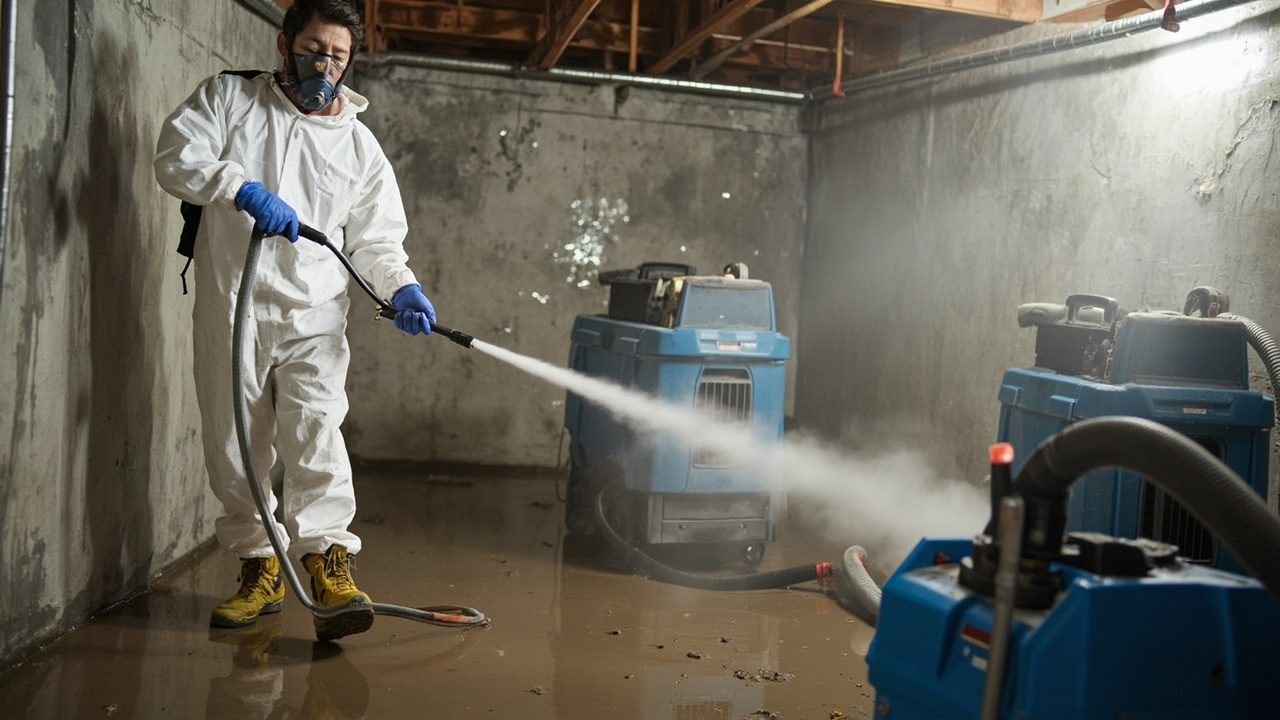
Why Flood Sanitization Is Critical After Chicago Floods
Chicago’s infrastructure creates specific flood risks that demand professional sanitization. The combined sewer system in neighborhoods like Logan Square, West Loop, and Lincoln Park can overflow during heavy rains. When this happens, sewage backs up into your basement. This is Category 3 water. The CDC states that exposure to untreated sewage can cause serious infections, gastrointestinal illness, and respiratory problems.
The moisture in your basement does not just soak materials. It activates mold colonies within 24 to 48 hours. Chicago’s humid summers and spring rains accelerate this growth. Mold spores enter your HVAC system and spread to every room in your home. Residents in Beverly, Rogers Park, and Hyde Park report persistent respiratory issues months after inadequate cleanup.
Standard water removal misses contamination. A pump removes standing water, but it does not kill bacteria or remove biological waste. Walls, insulation, and structural wood remain colonized. Within days, mold takes hold. Within weeks, the smell becomes permanent, and your basement becomes uninhabitable.
Professional sanitization stops this chain. We identify the water category, apply EPA-approved disinfectants, remove contaminated materials, and restore air quality. You get a safe home, not just a dry one.
Understanding Water Categories and Contamination Levels
Not all floodwater is equal. The source determines the health risk and the sanitization protocol required. The categories of water established by IICRC guide our cleaning approach.
| Water Category | Source | Contamination Level | Health Risk | Sanitization Required |
| Category 1 (Clean Water) | Burst pipes, rain, melted snow | None | Low | Basic extraction and drying |
| Category 2 (Gray Water) | Toilet overflow, sump pump discharge, appliance leaks | Moderate. Contains bacteria and some organic matter | Moderate. Skin irritation, respiratory issues if inhaled | Full disinfection with EPA-approved antimicrobials |
| Category 3 (Black Water) | Sewage backup, contaminated floodwater, river overflow | High. Contains fecal matter, pathogens, chemical waste | High. Serious infections, gastrointestinal illness, hepatitis A | Complete biohazard remediation, material removal, structural disinfection |
Chicago’s combined sewer system creates frequent Category 3 events. In neighborhoods like Lakeview and Lincoln Park, heavy spring rains trigger sewage backups into residential basements. This water contains E. coli, Salmonella, Hepatitis A virus, and Cryptosporidium. Standard cleanup does not address this contamination. You need a company trained in biohazard remediation.
Our Five-Step Decontamination and Sanitization Process
Professional sanitization follows a sequence. Each step builds on the previous one. Skipping or rushing any step leaves contaminants behind.
- Assessment and Water Classification
We arrive within two hours of your call. Our IICRC-certified technicians test the water and document contamination levels. We photograph the affected area and assess structural damage. This assessment guides every step that follows and supports your insurance claim.
- Water Extraction and Initial Cleanup
We deploy truck-mounted extraction units and remove standing water. This stops active contamination spread and prevents structural collapse. We remove saturated drywall, insulation, and carpeting if recovery is not possible. Speed matters. The first 24 hours determine whether materials can be salvaged.
- Structural Drying with Dehumidification
We position LGR dehumidifiers and air movers to create targeted drying. Chicago’s humidity works against you. Without dehumidification, residual moisture lingers in wood framing and concrete. Mold grows in this moisture. We use psychrometric science to monitor moisture content and adjust equipment until all materials reach normal drying standards.
- Disinfection with EPA-Approved Antimicrobials
This step kills pathogens that water extraction cannot remove. We apply EPA List N disinfectants specifically rated for the water category identified in your assessment. For Category 3 contamination, we use hospital-grade disinfectants and antimicrobial fog treatments. We treat all structural surfaces, framing, and masonry. We do not use bleach alone, which fails against many pathogens and damages materials.
- Final Air Quality Testing and Odor Removal
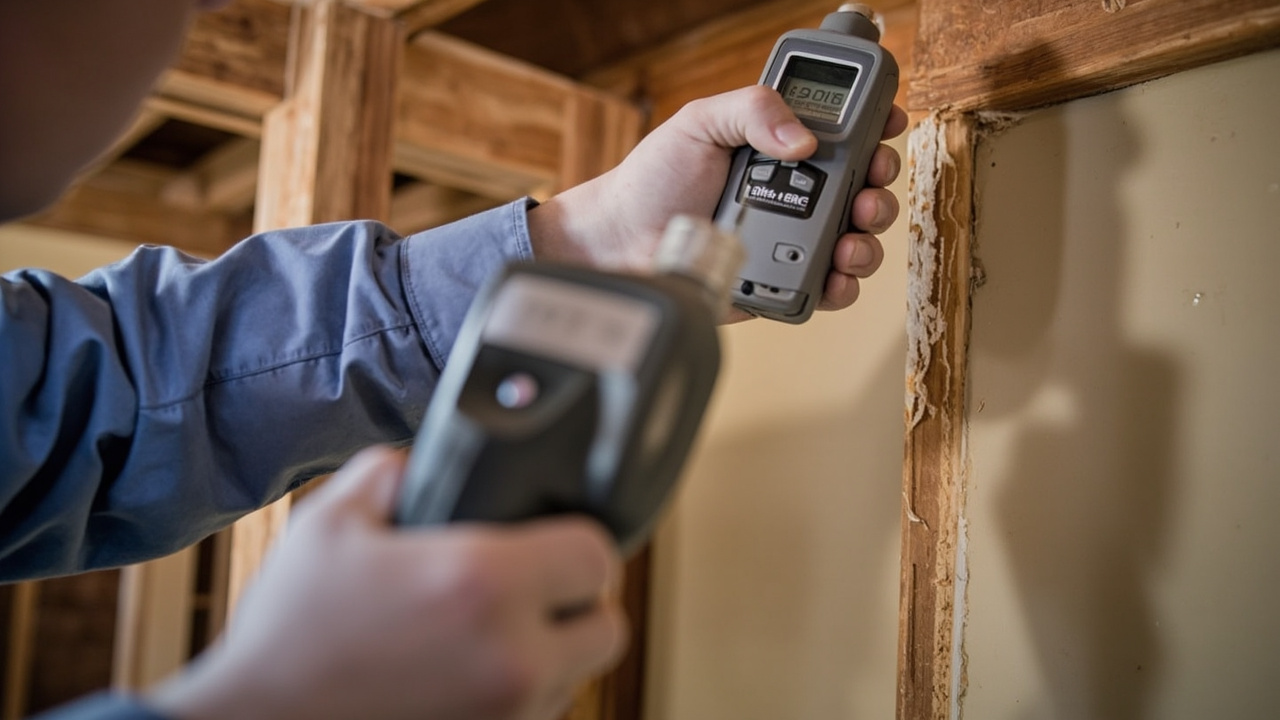
We measure air quality before declaring the space safe. We deploy HEPA air scrubbers to remove airborne pathogens and spores. We apply activated charcoal treatments and enzymatic odor removers to eliminate musty smells caused by bacterial colonization. Testing confirms that the space meets normal indoor air standards.
EPA-Approved Disinfectants We Use in Chicago
Not all disinfectants are equal. The EPA maintains a list of products proven effective against specific pathogens. We use products rated for the contamination present in your flood.
For Category 2 (gray water) contamination, we use quaternary ammonium compounds and phenolic disinfectants. These kill bacteria and viruses common in appliance leaks and toilet overflows. Dwell time is typically 10 to 15 minutes.
For Category 3 (black water) contamination from sewage backup, we use sodium hypochlorite solutions, iodine-based disinfectants, and hospital-grade quaternary compounds. These penetrate organic matter and kill resistant pathogens like Cryptosporidium and Hepatitis A virus. Dwell times extend to 30 minutes or longer depending on the product and surface.
We do not mix disinfectants. Mixing bleach with ammonia or other products creates toxic gases that endanger you and our crew. We apply disinfectants in sequence, allow full dwell time, and follow manufacturer instructions exactly.
All products we use carry EPA registration numbers proving their effectiveness. We document the product, concentration, application area, and dwell time in your restoration report for insurance purposes.
Sewage Backup Sanitization. A Chicago-Specific Challenge
Chicago’s combined sewer system creates a unique problem. During heavy rains, the city’s sanitary and storm sewers overflow together into residential basements. This happened in West Loop, Logan Square, and Lincoln Park during the spring 2026 storm season. Homeowners faced Category 3 contamination with no warning.
Sewage contains multiple health threats. E. coli causes severe diarrhea and kidney failure. Salmonella triggers fever and persistent infection. Hepatitis A virus causes liver inflammation lasting weeks. Cryptosporidium resists standard chlorine disinfection. Norovirus spreads rapidly through households.
Standard water removal does not address this. A plumber pumps the water out. The contamination remains on every surface the sewage touched. Family members breathe spores and bacteria daily. Children and elderly residents develop infections weeks after the initial backup.
We handle sewage backup differently. We treat the entire basement as a biohazard zone. We remove contaminated materials that cannot be disinfected. We apply antimicrobial fog to penetrate hidden spaces like wall cavities and ductwork. We test air quality before you return. We document everything for your insurance claim.
Our team has responded to over 400 sewage backups across Chicago. We understand the city’s aging infrastructure and the specific pathogens present in Chicago’s combined sewer system. We handle your contamination with the precision it demands.
Mold Prevention During the Drying Phase
Mold grows on moisture. Chicago’s humid climate accelerates this process. After a flood, mold colonies begin establishing within 24 hours if moisture remains. By 48 hours, visible mold appears on drywall and wood framing.
Prevention requires aggressive dehumidification. We deploy equipment sized to the affected area. A single dehumidifier in a 1,500 square foot basement cannot maintain target humidity levels. We position multiple LGR dehumidifiers to create zones of managed moisture removal. We monitor humidity with psychrometers throughout the drying period.
We also apply antimicrobial treatments to susceptible materials. Cellulose insulation, particleboard, and engineered wood absorb water and provide food for mold. We spray these materials with EPA-approved fungistatic treatments that slow mold growth while structural drying progresses. This buys time and increases the probability that materials can be saved.
Chicago’s high summer humidity (averaging 70 percent) works against drying. A basement in Lincoln Park or Lakeview near Lake Michigan experiences even higher humidity. We increase equipment intensity and extend drying timelines accordingly. We do not rush this phase. Premature closure traps moisture and guarantees mold growth.
Structural Materials Affected by Contaminated Flood Water
Different materials respond differently to contaminated water. Some can be cleaned and salvaged. Others must be removed.
| Material | Category 2 (Gray Water) Outcome | Category 3 (Black Water) Outcome | Recovery Timeline |
| Concrete Foundation | Can be cleaned and disinfected | Must be removed to 24 inches above flood line and replaced | 1 to 2 weeks for new concrete cure |
| Drywall | If wet less than 48 hours, can dry in place with mold inhibitor | Must be removed, replaced after structural drying | 2 to 3 weeks including new drywall installation |
| Insulation (Fiberglass) | Can be sprayed with fungicide and dried in place | Must be removed and replaced | 1 week for removal and replacement |
| Hardwood Flooring | Can be cleaned, sanded, and refinished if properly dried | Must be removed and replaced | 3 to 4 weeks including refinishing |
| Carpet and Padding | Can be cleaned professionally if Category 2 and dry within 48 hours | Must be removed and replaced | 1 to 2 weeks for replacement |
| Wood Framing | Spray with fungicide and monitor drying | Must be removed if saturated above 12 inches on wall | Varies based on extent of replacement needed |
Chicago’s historic bungalows, common in Beverly and Rogers Park, have wooden basement joists and sills that absorb water readily. These materials deteriorate if not dried quickly. Modern condos in Lincoln Park may have finished basements with drywall and carpet that contaminate immediately upon sewage exposure. Commercial properties in the West Loop may have concrete floors and steel framing that tolerates Category 2 water but not Category 3.
We assess each material during the initial inspection and advise on salvage potential. Some decisions depend on your insurance coverage and your preference between replacement and restoration.
Insurance Coverage for Sanitization and Biohazard Cleanup
Standard homeowners insurance covers water damage removal. It does not automatically cover sanitization or biohazard remediation. The distinction matters for your claim.
Most policies cover water extraction and structural drying as part of the water damage claim. They cover material removal and replacement. They do not separately reimburse sanitization as a line item.
However, if your flood involved sewage backup or external contamination, your policy may include separate coverage for biohazard cleanup. Policies with sewage backup riders cover the cost of professional disinfection and decontamination. Policies covering external water infiltration may include biohazard coverage if contaminants are identified.
We handle insurance documentation. We photograph and document the contamination level. We explain the difference between standard water damage and biohazard cleanup in our scope of work. We provide the adjuster with our assessment and testing results. We work with your insurance company to ensure that sanitization expenses are properly reimbursed.
If your claim is initially denied for sanitization costs, we appeal on your behalf using IICRC standards and health code requirements. Chicago municipal code requires professional sanitization after sewage contamination. Your policy must cover this requirement or face violations of state insurance regulations.
Post-Sanitization Air Quality Testing
Sanitization succeeds only if pathogens are eliminated. We verify this with air quality testing before you return to your home.
We measure airborne particulates, mold spore counts, and bacterial colony counts. We compare these measurements to baseline indoor air standards. Results below the standard indicate that the space is safe.
We also conduct surface testing on high-touch areas. Swabs from door handles, light switches, and countertops are cultured to verify that surface disinfection was effective. We document results in your restoration report.
If testing reveals residual contamination, we repeat disinfection until standards are met. We do not release your property until testing confirms safety.
Chicago’s Infrastructure and Its Impact on Flooding Risk
Chicago’s combined sewer system treats stormwater and sewage identically until it reaches treatment plants. During heavy rains, the volume exceeds treatment capacity. The system releases the overflow directly into the Chicago River and into residential basements in low-lying areas.
This happens most often in neighborhoods built on the Illinois River floodplain. Logan Square, West Loop, and Lincoln Park experience frequent sewage backups during spring storms. Residents in these areas should maintain professional relationships with sanitization companies before flooding occurs.
The city’s Deep Tunnel Project (TARP) was designed to reduce these overflows. The system captures and stores excess flow during storms. Yet the system remains incomplete, and overflow events continue. Heavy rains in 2026 overwhelmed the system in several neighborhoods, causing widespread contamination.
Chicago Blue Clay, the soil beneath most residential basements, creates additional pressure. This clay has high water retention. Water accumulates around foundation walls and forces its way through cracks and seams. Basements in older neighborhoods like Rogers Park and Beverly with stone and brick foundations experience chronic seepage. Floods amplify this problem dramatically.
Why DIY Sanitization Fails
Many homeowners attempt DIY cleanup after a flood. They pump water, open windows, and spray disinfectant. This approach fails to address actual contamination.
Bleach kills some surface bacteria but does not penetrate porous materials. Mold returns within days because spores survive in insulation and wood. Odors persist because the organic matter causing them remains embedded in materials.
DIY cleanup also creates health risks. Contact with untreated sewage causes infection. Exposure to mold spores triggers respiratory problems. Mixing disinfectants creates toxic fumes. Without proper ventilation and protective equipment, you endanger your family.
Insurance claims filed after DIY cleanup often face denials. Adjusters require documentation that professional standards were met. DIY cleanup leaves no documentation. Your claim lacks proof that proper decontamination occurred.
Professional sanitization costs less than the losses incurred by inadequate cleanup. Mold remediation after DIY cleanup costs two to three times more than professional sanitization done correctly the first time.
Our IICRC Certification and Local Experience
Cornerstone Water Damage Restoration employs only IICRC-certified technicians. This certification requires passing comprehensive exams on water damage restoration, structural drying, mold remediation, and applied microbiology. It requires annual continuing education to maintain current knowledge of changing standards and new pathogens.
Our technicians have completed the IICRC S500 standard for biohazard cleanup and Category 3 water remediation. This credential verifies training in sewage contamination, pathogen identification, and safe decontamination protocols.
We serve Chicago neighborhoods from Evanston and Arlington Heights to Bolingbrook and Naperville. We have sanitized hundreds of properties contaminated by sewage backup, storm flooding, and burst pipes. We understand the specific risks in each neighborhood. We know which areas experience frequent sewer overflows. We understand how hydrostatic pressure affects basements in different soil zones.
Our local experience means faster response and more accurate assessment. We arrive within two hours in Chicago proper and within four hours in suburbs like Schaumburg and Joliet. We do not need to learn your property type. We have cleaned hundreds like it.
Frequently Asked Questions
Is it safe to stay in my home during sanitization?
No. We require the property to be vacant during disinfection. The antimicrobial treatments we apply require specific ventilation protocols. Family members and pets must be elsewhere. We provide estimated timelines so you know when it is safe to return. Air quality testing confirms when the space meets safety standards.
How long does flood sanitization take?
Timelines depend on contamination severity and property size. A Category 2 event in a 1,200 square foot basement typically requires three to five days of active sanitization plus two weeks of structural drying. A Category 3 event requires removal of contaminated materials, disinfection of all surfaces, and extended drying. Timelines can extend to four weeks depending on extent of damage.
Does insurance cover sanitization after a flood?
Standard water damage coverage includes extraction and drying. Sanitization may require a separate biohazard rider or sewage backup endorsement. We work with your insurance company to determine coverage. If your policy includes biohazard coverage, sanitization expenses are reimbursed. If not, the cost becomes your responsibility unless the contamination violates municipal health codes, in which case insurance must cover the mandatory remediation.
What disinfectants are safe for use in homes?
We use EPA List N disinfectants rated for residential use. These products are proven safe for families and pets when applied according to manufacturer directions. All products carry EPA registration numbers and safety data sheets. We ventilate thoroughly during and after application. We do not use products that leave toxic residues.
Can mold grow back after professional sanitization?
Mold can return if moisture returns. Our sanitization kills existing mold and spores. Continued moisture exposure allows new spores from the environment to establish. We prevent this through proper structural drying and moisture control. We also address the source of moisture to prevent recurrence. If you do not address the moisture source, mold returns regardless of professional sanitization quality.
How do I know if my water is Category 1, 2, or 3?
We identify the category during our initial assessment. We ask about the water source and test the water if source is unclear. Burst pipes produce Category 1 water. Toilet overflows produce Category 2. Sewage backups produce Category 3. The answer determines our entire sanitization approach.
Our Service Areas Across Chicagoland
We provide professional sanitization in Chicago and surrounding communities. This includes Lincoln Park, Lakeview, Logan Square, West Loop, and Beverly within the city. We also serve suburbs including Schaumburg, Naperville, Bolingbrook, Joliet, and Springfield. We maintain equipment caches in multiple locations to ensure rapid response regardless of distance from our office.
For emergency sewage cleanup and emergency mold containment, we dispatch teams within two hours of your call. We bring assessment equipment, extraction units, and initial disinfection supplies on the first trip. We do not wait to quote the job before taking action to protect your property.
What to Do Immediately After a Flood
If your Chicago home floods, take these steps before calling us.
- Evacuate immediately if water is rising or poses electrocution risk. Do not attempt rescue or recovery of items.
- Turn off electricity at the breaker if water is present in your basement and you can safely reach the panel. If not, call the fire department to turn power off for you.
- Do not enter standing water. Sewage contamination may be present.
- Open windows if safe to do so. Ventilation helps slow mold growth until we arrive.
- Take photographs of the damage for your insurance claim.
- Call Cornerstone Water Damage Restoration immediately. We provide 24/7 emergency response.
- Do not attempt cleanup until we assess the contamination level.
Our team handles the rest. We manage assessment, water extraction, sanitization, drying, and documentation for your insurance claim. You focus on your family. We restore your property and protect your health.
Contact Cornerstone Water Damage Restoration Today
Your family’s health depends on proper flood sanitization. Generic contractors extract water. We eliminate contamination. We have spent 15 years proving this difference across Chicago and surrounding communities.
If your home or business floods, contact Cornerstone immediately. We provide emergency response 24 hours a day, 7 days a week. We dispatch IICRC-certified technicians within two hours in Chicago proper. We assess contamination, determine the proper disinfection protocol, and begin protecting your property immediately. We handle insurance documentation and work with your adjuster to ensure full reimbursement of sanitization and decontamination expenses. Call us now. Your property and your family’s safety cannot wait.
{
“@context”: “https://schema.org”,
“@type”: “BlogPosting”,
“headline”: “Professional Deep Cleaning and Sanitizing After a Flood in Uptown Chicago”,
“description”: “Expert flood sanitization in Chicago. Remove bacteria, pathogens, and mold after sewage backups or water damage. IICRC certified. 24/7 emergency response.”,
“wordCount”: 3193,
“datePublished”: “2026-02-24T07:14:00.000Z”,
“dateModified”: “2026-02-24T07:14:00.000Z”,
“inLanguage”: “en-US”,
“mainEntityOfPage”: {
“@type”: “WebPage”,
“@id”: “https://cornerstonewaterdamagerestorationchicago.com”
},
“publisher”: {
“@type”: “LocalBusiness”,
“name”: “Cornerstone Water Damage Restoration Chicago”,
“url”: “https://cornerstonewaterdamagerestorationchicago.com”
},
“author”: {
“@type”: “Organization”,
“name”: “Cornerstone Water Damage Restoration Chicago”,
“url”: “https://cornerstonewaterdamagerestorationchicago.com”
},
“image”: {
“@type”: “ImageObject”,
“url”: “https://cornerstonewaterdamagerestorationchicago.com/wp-content/uploads/2026/03/deep-cleaning-and-sanitizing-after-a-flood-in-upto-1.jpg”
}
}
{
“@context”: “https://schema.org”,
“@type”: “LocalBusiness”,
“name”: “Cornerstone Water Damage Restoration Chicago”,
“url”: “https://cornerstonewaterdamagerestorationchicago.com”,
“address”: {
“@type”: “PostalAddress”,
“addressLocality”: “Chicago”
},
“areaServed”: {
“@type”: “City”,
“name”: “Chicago”
}
}
{
“@context”: “https://schema.org”,
“@type”: “FAQPage”,
“mainEntity”: [
{
“@type”: “Question”,
“name”: “Is it safe to stay in my home during sanitization?”,
“acceptedAnswer”: {
“@type”: “Answer”,
“text”: “No. We require the property to be vacant during disinfection. The antimicrobial treatments we apply require specific ventilation protocols. Family members and pets must be elsewhere. We provide estimated timelines so you know when it is safe to return. Air quality testing confirms when the space meets safety standards.”
}
},
{
“@type”: “Question”,
“name”: “How long does flood sanitization take?”,
“acceptedAnswer”: {
“@type”: “Answer”,
“text”: “Timelines depend on contamination severity and property size. A Category 2 event in a 1,200 square foot basement typically requires three to five days of active sanitization plus two weeks of structural drying. A Category 3 event requires removal of contaminated materials, disinfection of all surfaces, and extended drying. Timelines can extend to four weeks depending on extent of damage.”
}
},
{
“@type”: “Question”,
“name”: “Does insurance cover sanitization after a flood?”,
“acceptedAnswer”: {
“@type”: “Answer”,
“text”: “Standard water damage coverage includes extraction and drying. Sanitization may require a separate biohazard rider or sewage backup endorsement. We work with your insurance company to determine coverage. If your policy includes biohazard coverage, sanitization expenses are reimbursed. If not, the cost becomes your responsibility unless the contamination violates municipal health codes, in which case insurance must cover the mandatory remediation.”
}
},
{
“@type”: “Question”,
“name”: “What disinfectants are safe for use in homes?”,
“acceptedAnswer”: {
“@type”: “Answer”,
“text”: “We use EPA List N disinfectants rated for residential use. These products are proven safe for families and pets when applied according to manufacturer directions. All products carry EPA registration numbers and safety data sheets. We ventilate thoroughly during and after application. We do not use products that leave toxic residues.”
}
},
{
“@type”: “Question”,
“name”: “Can mold grow back after professional sanitization?”,
“acceptedAnswer”: {
“@type”: “Answer”,
“text”: “Mold can return if moisture returns. Our sanitization kills existing mold and spores. Continued moisture exposure allows new spores from the environment to establish. We prevent this through proper structural drying and moisture control. We also address the source of moisture to prevent recurrence. If you do not address the moisture source, mold returns regardless of professional sanitization quality.”
}
},
{
“@type”: “Question”,
“name”: “How do I know if my water is Category 1, 2, or 3?”,
“acceptedAnswer”: {
“@type”: “Answer”,
“text”: “We identify the category during our initial assessment. We ask about the water source and test the water if source is unclear. Burst pipes produce Category 1 water. Toilet overflows produce Category 2. Sewage backups produce Category 3. The answer determines our entire sanitization approach.”
}
}
]
}
{
“@context”: “https://schema.org”,
“@type”: “HowTo”,
“name”: “How to Sanitize After a Flood in Chicago”,
“step”: [
{
“@type”: “HowToStep”,
“position”: 1,
“name”: “Assessment and Water Classification”,
“text”: “We arrive within two hours of your call. Our IICRC-certified technicians test the water and document contamination levels. We photograph the affected area and assess structural damage. This assessment guides every step that follows and supports your insurance claim.”
},
{
“@type”: “HowToStep”,
“position”: 2,
“name”: “Water Extraction and Initial Cleanup”,
“text”: “We deploy truck-mounted extraction units and remove standing water. This stops active contamination spread and prevents structural collapse. We remove saturated drywall, insulation, and carpeting if recovery is not possible. Speed matters. The first 24 hours determine whether materials can be salvaged.”
},
{
“@type”: “HowToStep”,
“position”: 3,
“name”: “Structural Drying with Dehumidification”,
“text”: “We position LGR dehumidifiers and air movers to create targeted drying. Chicago’s humidity works against you. Without dehumidification, residual moisture lingers in wood framing and concrete. Mold grows in this moisture. We use psychrometric science to monitor moisture content and adjust equipment until all materials reach normal drying standards.”
},
{
“@type”: “HowToStep”,
“position”: 4,
“name”: “Disinfection with EPA-Approved Antimicrobials”,
“text”: “This step kills pathogens that water extraction cannot remove. We apply EPA List N disinfectants specifically rated for the water category identified in your assessment. For Category 3 contamination, we use hospital-grade disinfectants and antimicrobial fog treatments. We treat all structural surfaces, framing, and masonry. We do not use bleach alone, which fails against many pathogens and damages materials.”
},
{
“@type”: “HowToStep”,
“position”: 5,
“name”: “Final Air Quality Testing and Odor Removal”,
“text”: “We measure air quality before declaring the space safe. We deploy HEPA air scrubbers to remove airborne pathogens and spores. We apply activated charcoal treatments and enzymatic odor removers to eliminate musty smells caused by bacterial colonization. Testing confirms that the space meets normal indoor air standards.”
}
],
“image”: “https://cornerstonewaterdamagerestorationchicago.com/wp-content/uploads/2026/03/deep-cleaning-and-sanitizing-after-a-flood-in-upto-1.jpg”
}
{
“@context”: “https://schema.org”,
“@type”: “BreadcrumbList”,
“itemListElement”: [
{
“@type”: “ListItem”,
“position”: 1,
“name”: “Home”,
“item”: “https://cornerstonewaterdamagerestorationchicago.com”
},
{
“@type”: “ListItem”,
“position”: 2,
“name”: “Blog”,
“item”: “https://cornerstonewaterdamagerestorationchicago.com/blog”
},
{
“@type”: “ListItem”,
“position”: 3,
“name”: “Professional Deep Cleaning and Sanitizing After a Flood in Uptown Chicago”
}
]
}
{
“@context”: “https://schema.org”,
“@type”: “Service”,
“serviceType”: “Water Damage Restoration”,
“provider”: {
“@type”: “LocalBusiness”,
“name”: “Cornerstone Water Damage Restoration Chicago”,
“url”: “https://cornerstonewaterdamagerestorationchicago.com”
},
“areaServed”: {
“@type”: “City”,
“name”: “Chicago”
},
“description”: “Expert flood sanitization in Chicago. Remove bacteria, pathogens, and mold after sewage backups or water damage. IICRC certified. 24/7 emergency response.”
}