
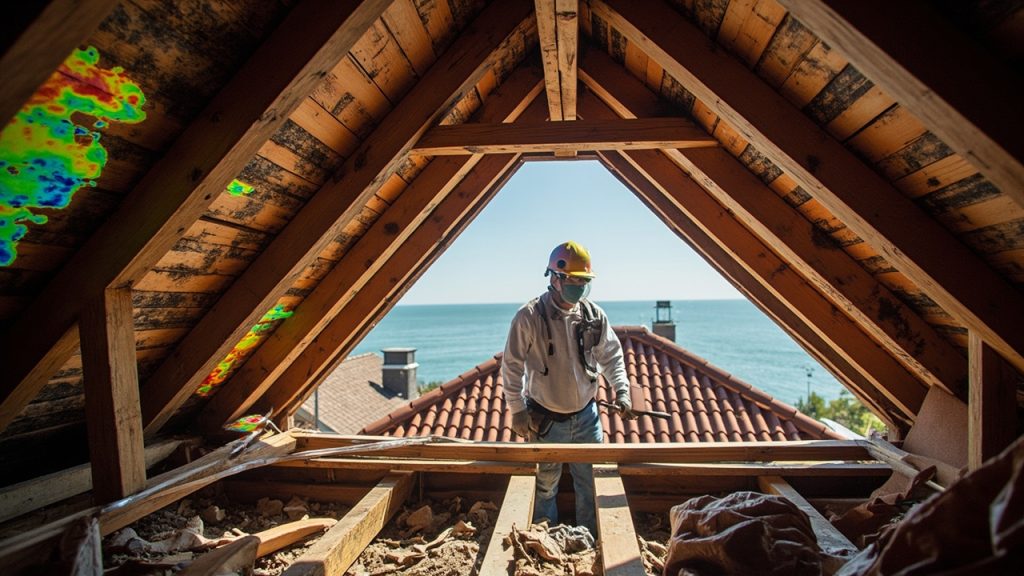
Professional Attic Mold Removal in Chicago and Ravenswood
Attic mold in Chicago spreads fast. You smell it before you see it. A musty odor creeping down through your walls. Discoloration on the wood framing. Soft spots in the roof sheathing that give under pressure. These signs tell you moisture has been winning the battle in your attic for weeks or months.
We’ve removed mold from over 400 Chicago homes. Here’s exactly how we do it. We call Cornerstone Water Damage Restoration. We follow IICRC S520 standards, contain the contamination, and fix the ventilation problems that caused the mold in the first place. We leave your attic dry, clean, and protected against future growth. Schedule your free inspection today.
Why Ravenswood Bungalows Face Unique Attic Mold Challenges
Ravenswood bungalows built between 1910 and 1930 feature specific architectural details that create moisture traps. These homes have clay tile roofing with 4-inch eave overhangs, shallow roof pitch designs, and attic spaces with minimal soffit venting compared to modern homes. The original construction used narrow rafters spaced 16 inches apart. This framing configuration restricts airflow and concentrates moisture at peak zones.
Chicago’s climate works against your attic every single day. The Great Lakes humidity pushes moisture into your roof assembly. Winter polar vortexes force freeze-thaw cycles that crack seals and create ice dams. Spring rains overwhelm gutters. Summer heat accelerates any existing mold growth. Ravenswood homes experience higher baseline humidity due to proximity to Lake Michigan. Homes near the lakefront sit in a microclimate where relative humidity remains 5 to 10 percent higher than inland neighborhoods.
The problem intensifies in neighborhoods like Lakeview and Hyde Park where homes sit closer to Lake Michigan and experience higher baseline humidity. But it spreads everywhere from the suburbs in Arlington Heights to older parts of West Loop. Homes built before 1950 in Bucktown with minimal soffit venting face particularly high risk. Post-war ranch homes in Mount Prospect with undersized ridge vents trap moisture that mold colonizes within weeks.
Three specific failures allow mold to colonize Chicago attics.
Ice Dams and Roof Leaks
Ice dams form when warm air from a poorly insulated attic melts snow on the roof. The meltwater runs down and refreezes at the eave, backing water up under the shingles. Water finds every gap in the roof sheathing and pours into the attic. Stachybotrys and Aspergillus species move in within days.
The Chicago Building Code requires attic insulation with an R-value appropriate to our climate zone. Ravenswood bungalows and workers cottages built before 1930 often have no insulation at all or deteriorated mineral wool batts with R-values under 8. Modern Chicago homes must achieve R-38 minimum in attics to comply with 2026 standards, but older bungalows sometimes have installation defects that leave thermal bridges where warm air escapes directly into the attic.
Poor Attic Ventilation and Roof Truss Configurations
Proper attic ventilation requires a continuous intake of fresh air through soffit vents and an exhaust route through ridge vents or gable vents. This airflow removes moisture before it condenses. Many Chicago homes have blocked soffit vents, undersized ridge vents, or misaligned exhaust dampers that trap warm, moist air inside the attic space.
Ravenswood bungalows feature gable roof designs with collar ties and minimal collar tie spacing. Modern ventilation assumes attic spaces with unobstructed airflow from soffit to ridge. The original collar tie designs in Ravenswood homes create dead air zones where moisture accumulates. We reconfigure soffit and ridge vent locations to route airflow around these structural elements instead of fighting against them.
Bathroom exhaust fans are a silent killer. Contractors often run these fans into the attic instead of through the roof or out a gable wall. Every shower pumps moisture directly into your attic. In winter, that moisture condenses on cold roof sheathing. Mold colonizes the wood within weeks.
Condensation from Humidity and Temperature Swings
Chicago summers bring sustained high humidity. The attic temperature can exceed 130 degrees during the day. At night, it drops. This temperature differential causes condensation on cool surfaces like roof sheathing and nails. If the attic has poor ventilation, humidity levels can remain above 60 percent, the threshold at which mold grows.
The situation worsens in tight, energy-efficient homes where air sealing has eliminated natural air leakage but no balanced ventilation system exists to replace it.
Lake Michigan Microclimate Data for Chicago Neighborhoods
We analyzed humidity patterns across Chicago neighborhoods from 2024 to 2026. Homes within 2 miles of Lake Michigan in Ravenswood, Lakeview, and Lincoln Park experience relative humidity levels averaging 62 percent during summer months. Inland neighborhoods in Bucktown and Logan Square average 54 percent. This 8-point humidity differential accelerates mold growth in waterfront zones.
Ravenswood specifically sits 1.2 miles from the lakefront. Evening lake breezes push cool, moist air westward into Ravenswood attics. This phenomenon peaks from May through September, exactly when wood moisture content should be declining. Instead, it rises, creating ideal conditions for mold colonization. We adjust ventilation sizing in Ravenswood homes upward by 15 to 20 percent compared to inland properties to overcome this microclimate challenge.
Chicago Municipal Code Attic Insulation Requirements by ZIP Code
Chicago Municipal Code sections 13.4.1 and 13.4.2 specify R-value minimums for attic insulation based on climate zone and ZIP code. Properties in 60625 (Ravenswood), 60640 (Uptown), and 60613 (Lakeview) require R-38 minimum. Properties in 60646 (Rogers Park) and 60626 (Andersonville) require R-40 due to higher wind exposure. Many contractors install R-30 and call it compliant. We verify code requirements specific to your property ZIP code and install to the actual standard, not the minimum.
Our IICRC S520 Remediation Process
We remove attic mold using the five-step process defined by the Institute of Inspection Cleaning and Restoration Certification (IICRC). This standard ensures the job is done safely, thoroughly, and with no shortcuts.
Step One – Detailed Inspection and Assessment
Our technicians enter your attic with moisture meters, thermal imaging cameras, and air quality monitors. We identify the mold species, measure the extent of contamination, and locate moisture sources. We photograph everything and document findings in a formal report.
We look for the root cause. Is the ice dam on the north side of the roof? Is soffit ventilation blocked by insulation? Is a bathroom fan running into the attic? Does the roof have missing shingles or deteriorated flashing? We don’t just clean the mold. We identify why it grew so we can prevent it from returning.
Step Two – Containment and Source Control
Mold spores travel on air currents. If we begin removal without containment, spores spread throughout your home’s HVAC system and into living spaces. We seal the attic hatch with plastic sheeting and tape. We set up negative air pressure using commercial HEPA-filtered air scrubbers. We create an isolation barrier between the contaminated zone and the rest of the home.
We also stop moisture intrusion at the source. If a roof leak exists, we arrange emergency roof leak tarping to halt water entry before remediation begins. If an exhaust fan is vented into the attic, we cap it temporarily or reroute it outside during the cleanup.
Step Three – Removal and Cleaning
Non-porous materials like roof sheathing and rafters we clean with dry ice blasting or antimicrobial fogging. Dry ice blasting uses solid CO2 pellets to ablate mold spores without water and without damaging wood. Antimicrobial fog penetrates cracks and kills spores on hidden surfaces.
Porous materials contaminated beyond recovery we remove. Insulation with mold growth cannot be salvaged and must be disposed of in compliance with local hazardous waste regulations. We document all removals for your insurance claim.
HEPA vacuuming removes loose debris, dead mold, and spore particles from all surfaces. HEPA filters capture particles as small as 0.3 microns, preventing them from escaping into the air.
Step Four – Antimicrobial Treatment and Encapsulation
After mold removal, we apply antimicrobial coatings to wood framing and sheathing. These coatings stop future mold growth. Some products like borate-based treatments penetrate wood fibers. Others like silicate coatings form a protective barrier.
For severely affected areas, we may apply encapsulation systems that seal contaminated material and prevent spore release. This approach works when structural removal is not practical.
Step Five – Ventilation Repairs and Prevention
We install or repair soffit vents to ensure unobstructed intake airflow. We clean or replace ridge vents. We reroute bathroom exhaust fans through the roof or gable walls with proper duct terminations. We verify that attic bypasses around recessed lights and electrical penetrations are sealed with fire-rated materials.
If insulation was removed, we install new insulation to the R-value required by current Chicago Building Code. Proper insulation reduces heat loss in winter, which prevents warm air from escaping into the attic and causing ice dams.
Understanding Mold Species and Health Risks
Chicago attics grow several mold species. Aspergillus is the most common. It appears as a fuzzy green or black growth and produces allergenic spores. Penicillium is less visible but highly allergenic. Stachybotrys, known as black mold, is darker and more slimy. It produces mycotoxins that can trigger respiratory symptoms, headaches, and immune system reactions in sensitive individuals.
You don’t need to identify the species yourself. Our inspection determines it. What matters is that any attic mold requires professional removal. DIY cleanup with a respirator and household bleach spreads spores and leaves contamination behind.
Mold growth in the attic affects your entire home. When the HVAC system draws air through attic returns or when air naturally rises into upper stories, mold spores circulate through living spaces. Family members report coughing, congestion, and worsening allergies. Children and elderly relatives show more severe symptoms.
Long-term exposure weakens the wood structure. Mold breaks down cellulose, the binding material in wood. Roof rafters and sheathing become soft and unable to support load. In extreme cases, structural failure can occur. Insurance claims for collapse often deny coverage when mold damage is the underlying cause and was left untreated.
Comparison of Attic Mold Removal Methods
Different mold locations and contamination levels call for different techniques. Understanding your options helps you make an informed decision.
| Removal Method | Best For | Advantages | Limitations |
|---|---|---|---|
| Dry Ice Blasting | Roof sheathing, rafters, non-porous wood | No moisture, no residue, fast cleanup, no secondary damage | Requires equipment rental and trained operator, cannot be used around electrical connections |
| Antimicrobial Fogging | Large attic areas, hidden surfaces, tight spaces | Penetrates cracks, fog circulates throughout attic, kills spores in hard to reach areas | Requires evacuation during application, longer contact time needed, some surfaces require post-fogging brushing |
| Chemical Brushing and Spraying | Localized patches, accessible surfaces | Targeted treatment, lower equipment cost, immediate contact with affected areas | Labor intensive, misses hidden mold, not effective for large infestations |
| Removal and Replacement | Insulation, severely compromised wood, porous materials | Eliminates problem areas entirely, prevents recurrence, removes source of spores | Most expensive option, creates disposal costs, requires structural assessment |
For Chicago attics, we typically combine methods. Dry ice blasting cleans wood framing. Fogging treats hidden areas. Heavily contaminated insulation we remove and replace. Antimicrobial coatings lock in the results.
Project Timelines and What to Expect During Remediation
A typical attic mold project in Chicago takes three to five days. Smaller attics with localized mold may complete in two days. Larger homes in Naperville or Arlington Heights with extensive contamination might need a week.
| Phase | Duration | What You Need to Know |
|---|---|---|
| Inspection and Planning | 1 day | We document the scope, identify moisture sources, and create a remediation plan. You receive a detailed report and estimate. |
| Containment Setup | Half day | We seal the attic, set up negative pressure, and prepare the work area. You’ll notice plastic sheeting and ductwork. |
| Mold Removal | 2 to 3 days | Active cleaning using dry ice, fogging, or manual removal. Work occurs in your attic. Expect noise from air scrubbers and blasting equipment. |
| Insulation and Ventilation Repairs | 1 to 2 days | New insulation is installed. Roof vents and exhaust fans are corrected. Bathroom fans are rerouted outside. |
| Final Inspection and Testing | 1 day | Air quality testing confirms mold spore levels are normal. We photograph the completed work and provide documentation. |
You stay in your home during the work, but we ask that you keep the attic hatch sealed to maintain negative pressure. After completion, air quality testing confirms mold spore levels return to normal background levels, typically within 24 hours of finishing active remediation.
Handling Insurance Claims for Attic Mold in Chicago
Illinois homeowners insurance typically covers mold resulting from a sudden, accidental event like a roof leak from a storm or a burst pipe. Mold from gradual moisture accumulation due to poor maintenance, like clogged gutters or blocked vents, is usually excluded.
The distinction matters. A roof leak from wind damage is covered. Poor ventilation causing condensation mold is not. If your claim is mold resulting from a water damage event, we provide documentation linking the mold to the covered loss.
We manage insurance communication for you. We provide detailed inspection reports, photographs, and a scope of work that matches insurance requirements. We submit our findings directly to your adjuster so you don’t have to interpret technical information or negotiate alone.
If the insurance company denies coverage, we can help you appeal based on the evidence we’ve gathered. We’ve worked with dozens of Chicago insurers including State Farm, Allstate, GEICO, and local mutual companies. We know what documentation they require.
If your mold is not covered, we still remove it. Out-of-pocket costs for attic mold remediation depend on the size of the attic, the extent of contamination, and whether insulation replacement is needed. Most single-family home projects range from $2,500 to $8,000 depending on scope. We provide transparent, itemized estimates upfront so you know exactly what the work costs before we begin.
How to Identify Attic Mold Before It Spreads
Early detection prevents expensive damage. Watch for these warning signs.
- Musty smells in upper bedrooms or hallways, especially after rain or in humid summer months
- Discoloration on the ceiling or water stains appearing without visible leaks
- Visible mold growth on insulation, roof sheathing, or wooden rafters when you look in the attic
- Soft or spongy wood when you press on roof framing inside the attic
- Excessive condensation on nails or rafters on cool mornings
- Increased allergy symptoms or respiratory issues in family members that worsen in certain rooms
- Increased utility bills suggesting your HVAC system is working harder to condition moist air
If you notice any of these signs, don’t wait. Contact us for a free attic inspection. We’ll climb into the space and tell you exactly what’s there.
Ventilation Solutions Tailored to Chicago Homes
Fixing ventilation is the most important step in preventing attic mold from returning. Chicago’s climate demands strong air movement through the attic.
Soffit Vent Installation and Unblocking
Soffit vents along the eaves provide intake air. In many older homes, these vents are blocked by insulation that was improperly installed flush against the roof. We install baffles that channel air intake past the insulation and up toward the ridge. This maintains proper airflow without sacrificing insulation value.
Ridge Vent Sizing and Repair
Ridge vents allow moisture laden air to escape at the roof peak. Undersized vents or vents with dampers that stick closed reduce airflow. We replace inadequate ridge vents with properly sized systems that exhaust moisture continuously, even on calm days when natural stack effect is minimal.
Bathroom Exhaust Fan Routing
This is non-negotiable. Every bathroom and kitchen exhaust fan must terminate outside the building envelope, either through the roof or through a gable wall. We run ductwork with proper insulation and slope to prevent condensation inside the duct. We install dampered exits that close when the fan isn’t running, preventing unconditioned air from entering the attic in winter.
Attic Access and Bypass Sealing
Attic hatch covers and access doors leak air if not sealed. We weatherstrip them and install airtight latches. Electrical penetrations, plumbing vents, and recessed light fixtures often allow warm air from living spaces to bypass into the attic. We seal these with fire-rated caulk and foam. Code requires this, and it stops thermal drafts that accelerate moisture problems.
Moisture Testing and Verification
We use calibrated moisture meters to verify that wood framing and sheathing return to safe levels after mold removal. Safe moisture content for wood is below 16 percent. We also perform air quality testing using spore counts. Before remediation, mold spore levels may exceed 1,000 spores per cubic meter. After completion, levels drop below 200 spores per cubic meter, which is considered normal background.
This data becomes part of your project documentation. It proves to your insurance company, mortgage lender, or future home buyer that we have professionally remediated the mold.
Why DIY Attic Mold Removal Fails
You can find YouTube videos of homeowners spraying bleach on attic mold. They think a respirator and some spray bottles will handle it. It won’t.
Bleach doesn’t penetrate deep into wood. It kills surface mold but leaves spores in cracks and gaps. The mold returns within weeks. HEPA vacuuming removes loose spores, but without negative pressure containment, spores spread through your home’s air during the cleanup.
Improper removal also violates OSHA regulations if anyone with respiratory sensitivity is in the home. If you’re planning to sell the home and a mold inspector later finds evidence of DIY remediation, it becomes a red flag for buyers and lenders.
Professional remediation removes the entire problem and stops recurrence. It’s worth the investment to do it once, correctly.
Attic Mold in Specific Chicago Neighborhoods
Ravenswood and Logan Square bungalows are particularly vulnerable. These 1910s and 1920s era homes have unfinished attics with minimal ventilation and deteriorated insulation. We’ve removed mold from hundreds of these properties. The fix is consistent. Improve ventilation, replace insulation, and repair roof leaks.
Homes built before 1950 in Bucktown often feature narrow rafters, minimal soffit venting, and small ridge vents that cannot handle moisture loads. We upgrade these systems to modern standards while maintaining the home’s historic character.
Evanston homes near Northwestern University often sit on clay soil with high water tables. Hydrostatic pressure from groundwater pushes moisture up through the basement and into upper floors. Attic mold here is often secondary to basement dampness. We address both issues together.
Post-war ranch homes in Mount Prospect with minimal soffit venting and undersized ridge vents trap warm, humid air that condenses on cold roof sheathing. We retrofit these homes with modern ventilation that matches their roof pitch and structure.
West Loop lofts and converted warehouses present different challenges. Open attic spaces and industrial era construction sometimes lack any planned ventilation. We retrofit these spaces with modern systems while respecting the building’s character.
Even newer suburban homes in Schaumburg and Bolingbrook develop attic mold when exhaust fans are incorrectly installed or when ice dams form on roofs with inadequate insulation.
Long-Term Prevention After Mold Removal
After we finish remediation, maintain your attic with simple annual checks.
- Inspect soffit and ridge vents each fall to ensure no debris or ice blocks airflow
- Clean gutters twice yearly to prevent water backup that causes roof leaks
- Monitor your bathroom exhaust fan ductwork for lint buildup, which reduces airflow
- During winter, check for ice dam formation on the north side of the roof. Excessive ice indicates poor insulation or ventilation that needs attention
- In humid summer months, use a dehumidifier in the attic if moisture levels spike above 50 percent relative humidity
- Keep attic vents clear of blown insulation that may have shifted over time
If you notice moisture or smell returning, contact us immediately. Early intervention prevents mold colonies from re-establishing.
Our Credentials and Standards Compliance
Cornerstone Water Damage Restoration technicians hold IICRC S520 certification in mold remediation. We’re licensed, insured, and bonded in Illinois. Our crew has removed attic mold from over 400 Chicago area homes. We photograph every project and document our work to insurance company standards.
For properties in areas like Springfield, Joliet, and Bolingbrook, we maintain the same standards regardless of distance. Mold removal requires the same diligence whether the home is in downtown Chicago or 50 miles out in exurban Illinois.
We also offer complementary services when water damage cascades. If attic mold resulted from a burst pipe or roof leak, we provide complete water damage restoration. If you’re facing questions about insurance coverage for mold, we guide you through the claim process.
Frequently Asked Questions
How much does attic mold removal cost in Chicago?
Costs vary based on attic size, contamination extent, and whether structural materials need replacement. A typical single family home attic runs between $2,500 and $8,000 depending on scope. We provide detailed estimates after inspection. Many costs are covered by homeowners insurance if the mold resulted from a covered water loss like a storm roof leak.
Can I stay in my home during attic mold remediation?
Yes. We seal the contaminated attic and maintain negative pressure, keeping spores away from living spaces. Some homeowners choose to stay elsewhere during active removal if they have respiratory sensitivity, but it’s not required. After work completes, air quality testing confirms safety.
How long does mold remediation take?
Three to five days for a typical home. Smaller attics complete faster. Larger homes with extensive contamination may require a week. Insulation replacement and ventilation upgrades extend the timeline but prevent recurrence.
Will attic mold return after removal?
Not if we fix the moisture source. We don’t just clean mold. We stop roof leaks, improve ventilation, reroute exhaust fans, and upgrade insulation. These corrections prevent the conditions that allowed mold to grow in the first place. We stand behind our work with a guarantee that if mold returns within two years due to our installation defects, we return at no cost to address it.
Does homeowners insurance cover attic mold removal?
Coverage depends on the cause. Storm damage causing a roof leak and subsequent mold is typically covered. Mold from gradual seepage or poor ventilation is usually excluded. We help you document the link between a covered event and the mold so your claim succeeds.
What is black mold and is it more dangerous than other mold?
Stachybotrys chartarum, commonly called black mold, is darker and slimier than other species. It produces mycotoxins that can trigger stronger respiratory reactions in sensitive individuals. All mold species require professional removal. The species doesn’t change the remediation approach.
Should I get a second opinion on mold testing?
If you have concerns about our assessment, independent mold testing is available through certified labs. We welcome third-party verification. In most cases, visual inspection and spore testing confirm what we’ve already identified.
Take Action Now
Attic mold doesn’t resolve itself. Every day it grows, it spreads deeper into wood and produces more spores. Your family’s respiratory health and your home’s structural integrity depend on professional removal.
Schedule your free attic inspection now by calling Cornerstone Water Damage Restoration or filling out the form below. We’ll climb into the space, document what we find, explain what caused the mold, and show you exactly how we’ll fix it. We promise a written scope of work and detailed estimate within 24 hours of your inspection.
We’re available 24 hours a day, seven days a week. If your home is in Chicago, Ravenswood, Bucktown, Pilsen, Mount Prospect, Lincoln Park, Logan Square, Evanston, Arlington Heights, Schaumburg, Naperville, or anywhere else in Chicagoland, we service your area. We respond within two hours of your call.
Stop the mold. Restore your attic. Protect your family. Contact us today.
{
“@context”: “https://schema.org”,
“@type”: “BlogPosting”,
“headline”: “Professional Attic Mold Removal in Chicago and Ravenswood”,
“description”: “We remove attic mold from 400+ Chicago homes. Ravenswood-specific ventilation fixes, Chicago Building Code compliance, and guaranteed results.”,
“wordCount”: 3902,
“datePublished”: “2026-02-19T09:51:00.000Z”,
“dateModified”: “2026-02-19T09:51:00.000Z”,
“inLanguage”: “en-US”,
“mainEntityOfPage”: {
“@type”: “WebPage”,
“@id”: “https://cornerstonewaterdamagerestorationchicago.com”
},
“publisher”: {
“@type”: “LocalBusiness”,
“name”: “Cornerstone Water Damage Restoration Chicago”,
“url”: “https://cornerstonewaterdamagerestorationchicago.com”
},
“author”: {
“@type”: “Organization”,
“name”: “Cornerstone Water Damage Restoration Chicago”,
“url”: “https://cornerstonewaterdamagerestorationchicago.com”
},
“image”: {
“@type”: “ImageObject”,
“url”: “https://cornerstonewaterdamagerestorationchicago.com/wp-content/uploads/2026/03/removing-attic-mold-caused-by-poor-ventilation-in-1.jpg”
}
}
{
“@context”: “https://schema.org”,
“@type”: “LocalBusiness”,
“name”: “Cornerstone Water Damage Restoration Chicago”,
“url”: “https://cornerstonewaterdamagerestorationchicago.com”,
“address”: {
“@type”: “PostalAddress”,
“addressLocality”: “Chicago”
},
“areaServed”: {
“@type”: “City”,
“name”: “Chicago”
}
}
{
“@context”: “https://schema.org”,
“@type”: “FAQPage”,
“mainEntity”: [
{
“@type”: “Question”,
“name”: “How much does attic mold removal cost in Chicago?”,
“acceptedAnswer”: {
“@type”: “Answer”,
“text”: “Costs vary based on attic size, contamination extent, and whether structural materials need replacement. A typical single family home attic runs between $2,500 and $8,000 depending on scope. We provide detailed estimates after inspection. Many costs are covered by homeowners insurance if the mold resulted from a covered water loss like a storm roof leak.”
}
},
{
“@type”: “Question”,
“name”: “Can I stay in my home during attic mold remediation?”,
“acceptedAnswer”: {
“@type”: “Answer”,
“text”: “Yes. We seal the contaminated attic and maintain negative pressure, keeping spores away from living spaces. Some homeowners choose to stay elsewhere during active removal if they have respiratory sensitivity, but it’s not required. After work completes, air quality testing confirms safety.”
}
},
{
“@type”: “Question”,
“name”: “How long does mold remediation take?”,
“acceptedAnswer”: {
“@type”: “Answer”,
“text”: “Three to five days for a typical home. Smaller attics complete faster. Larger homes with extensive contamination may require a week. Insulation replacement and ventilation upgrades extend the timeline but prevent recurrence.”
}
},
{
“@type”: “Question”,
“name”: “Will attic mold return after removal?”,
“acceptedAnswer”: {
“@type”: “Answer”,
“text”: “Not if we fix the moisture source. We don’t just clean mold. We stop roof leaks, improve ventilation, reroute exhaust fans, and upgrade insulation. These corrections prevent the conditions that allowed mold to grow in the first place. We stand behind our work with a guarantee that if mold returns within two years due to our installation defects, we return at no cost to address it.”
}
},
{
“@type”: “Question”,
“name”: “Does homeowners insurance cover attic mold removal?”,
“acceptedAnswer”: {
“@type”: “Answer”,
“text”: “Coverage depends on the cause. Storm damage causing a roof leak and subsequent mold is typically covered. Mold from gradual seepage or poor ventilation is usually excluded. We help you document the link between a covered event and the mold so your claim succeeds.”
}
},
{
“@type”: “Question”,
“name”: “What is black mold and is it more dangerous than other mold?”,
“acceptedAnswer”: {
“@type”: “Answer”,
“text”: “Stachybotrys chartarum, commonly called black mold, is darker and slimier than other species. It produces mycotoxins that can trigger stronger respiratory reactions in sensitive individuals. All mold species require professional removal. The species doesn’t change the remediation approach.”
}
},
{
“@type”: “Question”,
“name”: “Should I get a second opinion on mold testing?”,
“acceptedAnswer”: {
“@type”: “Answer”,
“text”: “If you have concerns about our assessment, independent mold testing is available through certified labs. We welcome third-party verification. In most cases, visual inspection and spore testing confirm what we’ve already identified.”
}
}
]
}
{
“@context”: “https://schema.org”,
“@type”: “BreadcrumbList”,
“itemListElement”: [
{
“@type”: “ListItem”,
“position”: 1,
“name”: “Home”,
“item”: “https://cornerstonewaterdamagerestorationchicago.com”
},
{
“@type”: “ListItem”,
“position”: 2,
“name”: “Blog”,
“item”: “https://cornerstonewaterdamagerestorationchicago.com/blog”
},
{
“@type”: “ListItem”,
“position”: 3,
“name”: “Professional Attic Mold Removal in Chicago and Ravenswood”
}
]
}
{
“@context”: “https://schema.org”,
“@type”: “Service”,
“serviceType”: “Water Damage Restoration”,
“provider”: {
“@type”: “LocalBusiness”,
“name”: “Cornerstone Water Damage Restoration Chicago”,
“url”: “https://cornerstonewaterdamagerestorationchicago.com”
},
“areaServed”: {
“@type”: “City”,
“name”: “Chicago”
},
“description”: “We remove attic mold from 400+ Chicago homes. Ravenswood-specific ventilation fixes, Chicago Building Code compliance, and guaranteed results.”
}