



menu

Peeling Paint & Wallpaper in Chicago – Expert Diagnosis Stops Hidden Water Damage Before Structural Failure

Bubbling paint and lifting wallpaper signal active moisture intrusion behind your walls. Cornerstone Water Damage Restoration Chicago traces the water source, confirms structural integrity, and eliminates the hidden threat before mold colonizes or framing rots.

Slider Image 1
Slider Image 2
Slider Image 3
Slider Image 4
Slider Image 5
Slider Image 7
Slider Image 8
Slider Image 9
Slider Image 10
Slider Image 11

Why Your Walls Are Failing in Chicago

You walk past the same wall every day. Then you notice it. A bubble in the paint. Flaking edges near the baseboard. Wallpaper peeling at the seam. You press it with your finger and the surface feels soft, spongy, wrong.

This is not a cosmetic problem. Blistering wall paint and loose wallpaper are alarm bells. They tell you water is moving through your wall cavity right now.

Chicago's freeze-thaw cycles make this worse. When temperatures swing from 15 degrees in January to 85 in July, your building materials expand and contract. Ice dams form on roofs during hard winters, forcing meltwater under shingles and into attic insulation. That water migrates down wall studs, pooling behind drywall. The paint blisters. The wallpaper lifts. You see the symptom, but the real damage is hidden.

Broken supply lines, leaking radiator valves, foundation cracks after heavy spring rains, all of these push water into wall assemblies. Humidity from Lake Michigan compounds the problem. Interior moisture condenses on cold exterior walls, especially in older brick buildings common in Lincoln Park, Wicker Park, and Hyde Park. The result is the same. Lifting wallpaper. Bubbling paint. Water where it does not belong.

You cannot fix this with a roller and a gallon of primer. You have to stop the water, dry the cavity, and confirm the framing is sound. Anything less is covering rot with fresh paint.

Why Your Walls Are Failing in Chicago
How We Trace and Eliminate the Moisture Source

How We Trace and Eliminate the Moisture Source

Peeling paint is the clue. The water source is the problem. We do not sand and repaint until we know why the wall is wet.

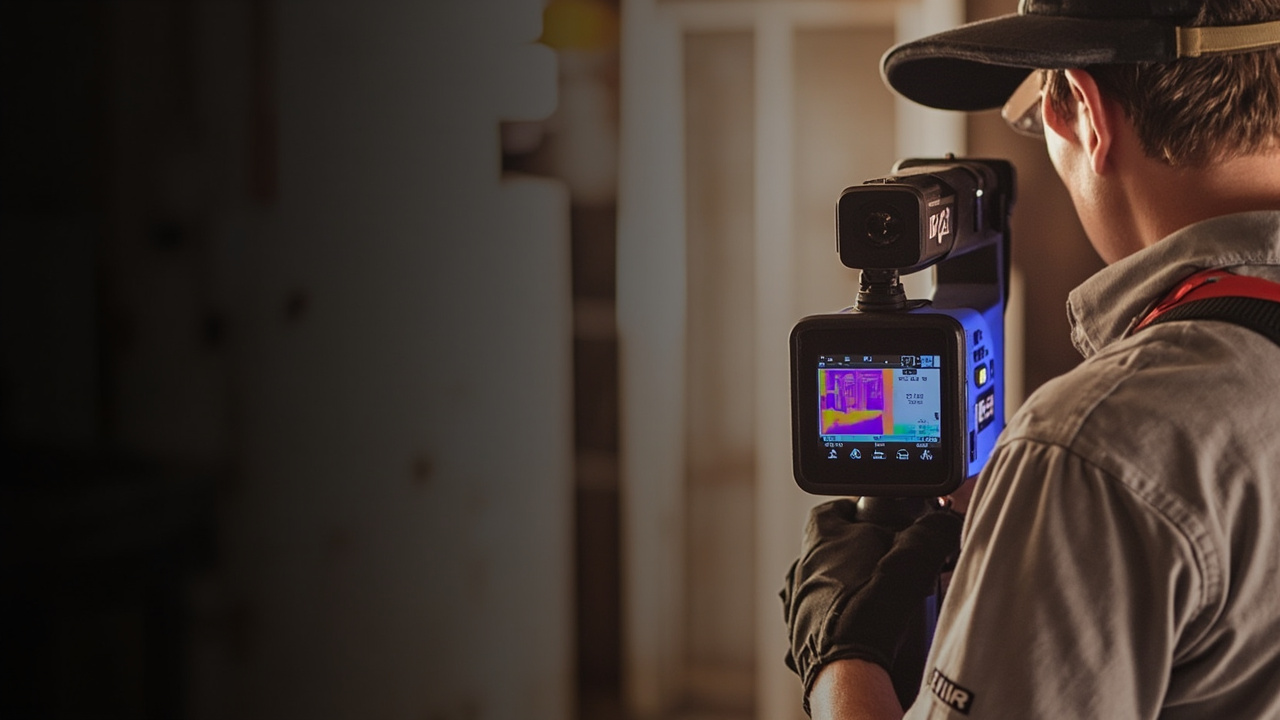
We start with infrared thermal imaging. This camera shows temperature differentials across the wall surface. Wet areas appear cooler because evaporating moisture pulls heat away from the substrate. We scan the entire wall plane, floor to ceiling, left to right. This reveals the moisture pattern and points us toward the entry point.

Next, we use pin-type and non-invasive moisture meters. Pin meters penetrate the drywall and measure electrical resistance in the gypsum core. Non-invasive meters detect moisture deeper in the wall assembly without puncturing the surface. We take readings at the bubble zone, at the floor line, at the ceiling, and at adjacent walls. This maps the extent of saturation.

Once we know where the water is, we find where it came from. We inspect plumbing risers, check for roof leaks in upper floors, examine window head flashing, and test HVAC drain pans. In Chicago's older masonry buildings, we look for failing tuckpointing, cracked lintels, and compromised brick ties that let rain penetrate the wythe.

When we locate the source, we stop it. Then we open the wall cavity, remove wet insulation, confirm the framing is dry and structurally sound, treat for microbial growth if necessary, and install proper vapor barriers. Only after the cavity is dry and sealed do we close the wall and prep for paint. This is how you prevent recurrence.

What Happens When You Call About Flaking Paint

Peeling Paint & Wallpaper in Chicago – Expert Diagnosis Stops Hidden Water Damage Before Structural Failure
01

Initial Moisture Assessment

We arrive with thermal imaging and moisture detection equipment. You show us the bubbling paint or loose wallpaper. We scan the affected area and surrounding zones to map moisture distribution. We document baseline readings and photograph the damage. This takes 20 to 30 minutes and confirms whether active water intrusion is present or if this is residual moisture from a past event.
02

Source Identification and Containment

We trace the moisture pattern back to its origin. This may involve inspecting crawl spaces, attics, plumbing chases, or exterior building envelope details. Once we locate the leak, we stop it. This might mean replacing a valve, sealing a roof penetration, or repairing failed flashing. We document the source and the corrective action taken before moving to remediation.
03

Drying and Structural Verification

We open the wall cavity if needed, remove saturated materials, and install commercial air movers and dehumidifiers. Drying takes 48 to 72 hours depending on saturation depth. We re-check moisture levels daily until readings drop below 15 percent. We inspect framing for rot or mold. Once the cavity is verified dry and sound, we close it and hand off to your painter.

Why Chicago Property Owners Choose Cornerstone

You need someone who understands how Chicago buildings fail. Our technicians know the difference between a Queen Anne in Oak Park and a three-flat in Pilsen. We know the challenges of brick veneer on wood frame, the failures common in 1920s plaster-and-lath, and the risks of tuckpointing neglect in masonry construction.

We work with your insurance adjuster if you file a claim. We document the loss with photos, moisture maps, and detailed scope narratives that meet carrier standards. We know what State Farm, Allstate, and Farmers require for proof of loss. This speeds your claim and reduces your out-of-pocket expense.

We also understand Chicago's seasonal extremes. Ice dams in January. Torrential rains in May. Humid summers that push dew points into the mid-60s. Each season introduces different failure modes. We adapt our diagnostics and drying protocols to match the conditions we find.

Our equipment is commercial-grade. We use truck-mounted extraction units, low-grain refrigerant dehumidifiers, and HEPA-filtered air scrubbers. We do not rent consumer-grade box fans from a hardware store. Our gear is calibrated, maintained, and designed to dry structural cavities in days, not weeks.

You will not wait a week for a callback. You call, we answer. We schedule an assessment within 24 hours for non-emergency situations and within two hours if you have active flooding. We show up on time, in marked vehicles, with uniformed technicians who carry photo ID.

This is not guesswork. This is forensic water damage investigation, and we have done it in every neighborhood from Rogers Park to Beverly.

What to Expect When You Work With Us

Response Time and Scheduling

We dispatch a technician within 24 hours for assessment appointments. If you discover active water intrusion, we respond within two hours to stop further damage. Inspections take 30 to 45 minutes. We provide a written estimate the same day. Drying and remediation typically begins within 48 hours of approval. Emergency water extraction happens immediately. You will know the timeline before we start, and we update you daily during the drying process.

The Inspection and Diagnosis Process

Our technician uses thermal imaging and moisture meters to map the affected area. We check adjacent rooms, floors above, and crawl spaces below to trace the water path. We test plumbing, inspect roofing components, and examine exterior walls for penetration points. You receive a detailed written report with photos, moisture readings, and identified leak sources. We explain what we found in plain language and walk you through recommended repairs before you approve any work.

Drying Standards and Final Verification

We dry your wall cavities to below 15 percent moisture content, measured with calibrated pin meters. Structural lumber must reach equilibrium moisture content before we close walls. We document daily moisture readings and provide you with a drying log. Once verified dry, we remove equipment, clean the work area, and provide a certificate of completion. Your walls are ready for insulation, drywall, and paint. No shortcuts, no damp framing left to rot.

Documentation and Insurance Coordination

We photograph the damage, map moisture readings, and document the leak source with detailed notes. If you file a claim, we provide your adjuster with an itemized scope, material costs, and labor hours. We can bill your insurance directly or work on a pay-and-reimburse basis. We do not inflate estimates or add services you do not need. Our documentation meets industry standards for evidence of loss, which speeds claim approval and reduces disputes.

Frequently Asked Questions

You Have Questions,
We Have Answers

Why is my paint peeling like wallpaper? +

Your paint peels in sheets because water trapped beneath the surface breaks the adhesion bond between layers. In Chicago, this often happens when moisture from basement seepage, roof leaks, or plumbing failures saturates drywall before you notice. The water migrates through porous surfaces and pushes the paint film outward. Poor surface prep during initial application makes it worse. If the substrate was dusty, greasy, or damp when painted, the coating never bonded properly. Check for active leaks, bulging walls, or discoloration. Address the moisture source first or new paint will fail the same way.

What to do if paint is peeling off the wall? +

Stop and identify the moisture source before you touch anything. Check for roof leaks, burst pipes, or foundation cracks common in Chicago's freeze-thaw cycles. Once the area dries completely, scrape loose paint with a putty knife and sand edges smooth. Prime bare spots with a moisture-resistant primer rated for your substrate. If water damage caused soft drywall or plaster, cut out affected sections and patch properly. Repainting without fixing the underlying problem wastes time and money. Document damage with photos for insurance claims if the cause was sudden and accidental.

Is it cheaper to paint or peel and stick wallpaper? +

Peel and stick wallpaper costs more per square foot upfront but requires zero professional labor. Quality paint with proper prep usually costs less overall for large areas. In Chicago homes with plaster walls, paint often makes more sense because peel and stick adhesive struggles on textured or uneven surfaces. Paint also hides imperfections better. If you rent or want temporary decoration, peel and stick offers flexibility. For permanent solutions in moisture-prone areas like basements, paint with mold-resistant additives outperforms wallpaper. Calculate material costs plus your time or contractor fees to compare accurately for your specific project.

Can I wallpaper over peeling paint? +

No. Wallpaper applied over peeling paint will fail quickly because the substrate lacks structural integrity. The wallpaper adhesive reactivates moisture in the damaged layer, causing both materials to separate from the wall. You must scrape all loose paint, sand the surface smooth, and prime properly before wallpaper application. In Chicago's older homes with multiple paint layers, this prep work takes longer but prevents costly failures. If the underlying wall has water damage or plaster deterioration, repair those issues first. Shortcuts lead to bubbling, wrinkling, and premature peeling that looks worse than the original problem.

Will Kilz stop peeling paint? +

Kilz primer seals stains and improves adhesion but does not stop active peeling. If paint peels due to moisture intrusion or poor substrate bonding, primer alone will not fix it. You must scrape loose material first, then apply Kilz to bare or stable surfaces. In Chicago homes with water damage, Kilz helps block stains from leaks but does not address structural moisture problems. Use it after you fix the leak and dry the area completely. Kilz works best on properly prepped surfaces as part of a complete repair, not as a bandage over failing paint.

Should I scrape off all the peeling paint? +

Yes. Remove all loose and unstable paint before recoating. Peeling paint indicates failed adhesion, and new coats will not bond to compromised layers. Use a putty knife or scraper to remove flaking material until you reach sound paint or bare substrate. In Chicago's older homes, you may find multiple layers from decades of repainting. Sand edges smooth to feather transitions between bare and painted areas. This prep work takes time but prevents recurring failures. If scraping reveals soft drywall or damaged plaster, repair those defects before priming. Proper surface prep determines coating longevity.

Can I paint over paint that's peeling? +

No. Painting over peeling paint traps the problem underneath and leads to rapid failure. New coats add weight to already compromised adhesion, accelerating delamination. You must scrape loose material, sand smooth, and prime exposed areas before topcoating. In Chicago's climate, moisture cycling from seasonal temperature swings stresses paint films. Shortcuts fail faster here than in stable environments. If the peeling covers large areas, complete removal and proper substrate repair costs less long-term than repeated patch jobs. Address the root cause, prep correctly, and use quality primers designed for problem surfaces.

Why would paint just peel off walls? +

Paint peels when moisture, poor prep, or incompatible coatings break the adhesion bond. In Chicago, common causes include water intrusion from aging roofs, foundation cracks, or condensation in poorly ventilated spaces. Painting over dirty, greasy, or glossy surfaces without sanding creates weak bonds. Applying latex over oil-based paint without proper primers causes delamination. Temperature extremes during application prevent proper curing. High humidity in bathrooms and kitchens without exhaust fans saturates drywall and pushes paint outward. Identify your specific cause through close inspection of the substrate and surrounding areas before attempting repairs.

What is the difference between flaking and peeling paint? +

Flaking describes small chips or fragments breaking away from the surface in irregular pieces. Peeling involves larger sections of paint lifting away in sheets or curls, often with visible edges. Flaking usually indicates surface-level coating failure from weathering or minor prep issues. Peeling signals deeper adhesion problems, typically from moisture intrusion or substrate incompatibility. In Chicago homes, you often see flaking on exterior wood trim from UV exposure and peeling on interior walls from water damage. Both require scraping and proper prep, but peeling demands more investigation into underlying causes before repair. Address moisture sources first.

What is the cost of painting a 1000 sq ft house? +

Painting costs vary widely based on surface condition, ceiling height, and prep requirements. A 1000 square foot house typically needs 2-3 gallons of quality paint plus primer. Material costs run several hundred dollars. Professional labor in Chicago adds significantly more, especially in older homes with plaster walls requiring extensive prep. Factor in costs for patching, sanding, and priming damaged areas. Water-damaged surfaces need repair before painting, increasing total expenses. Get written estimates from multiple contractors that itemize prep work separately from coating. DIY saves labor costs but requires time and proper equipment for quality results.

How Chicago's Freeze-Thaw Cycles Cause Chronic Paint Failure

Chicago's winter temperatures drop below freezing for weeks at a time. Snow accumulates on roofs, then melts during brief warm spells. This melt-freeze cycle creates ice dams at roof edges and forces water under shingles, into soffits, and down wall cavities. The water re-freezes inside the wall assembly, expanding as it turns to ice and cracking the drywall paper face. When it thaws, the paint blisters. Wallpaper lifts at the seams. This cycle repeats all winter, progressively worsening the damage. Coastal climates with mild winters do not see this failure mode. Chicago buildings do.

We work with Chicago building inspectors, insurance adjusters, and general contractors every week. We know the city's building code requirements for vapor barriers, insulation R-values, and mold remediation protocols. We understand the architectural quirks of Chicago's housing stock, from bungalows with raised basements to brick two-flats with shared plumbing chases. When you hire a local water damage specialist, you get someone who has dried out hundreds of Chicago homes and knows how your building is constructed, how it fails, and how to fix it correctly.
Water Damage Restoration Services in The Chicago Area

Cornerstone proudly serves the entire Chicago area with fast, dependable water damage restoration services. Whether you’re located in downtown, the suburbs, or surrounding neighborhoods, we’re ready to respond to your call—day or night. Use the map below to see our local service coverage and find our nearest team. With mobile units throughout the city, help is never far away. If you’re facing water damage, reach out now and let us show you why homeowners and businesses choose Cornerstone.

Address:
Cornerstone Water Damage Restoration Chicago, 171 N Aberdeen St, Chicago, IL, 60607

Additional Services We Offer

Our news updates

Latest Articles & News from The Blogs

High Humidity and Mold Growth in Chicago Summers What Homeowners Need to Know Your basement smells musty. Your bathroom mirror…

Why high humidity in the Chicago summer makes water damage worse in Calumet Heights

High Humidity and Mold Growth in Chicago Summers What Homeowners Need to Know Your basement smells musty. Your bathroom mirror…

Managing water damage restoration in the high-end luxury builds of the Near North Side

Luxury Home Water Damage Restoration in Chicago's Near North Side A burst pipe at 2 AM in your Gold Coast…

How we use thermal imaging to find hidden leaks in West Ridge homes

Expert Infrared Leak Detection in Chicago Homes and Businesses A hidden pipe leak can destroy your property long before you…

Contact Us

Peeling paint will not fix itself. The water is still there. Call Cornerstone Water Damage Restoration Chicago at (872) 266-1616. We will identify the leak, dry your walls, and stop the damage before mold colonizes or framing rots. We answer 24/7.