
Moisture Behind Vinyl Siding: Signs, Risks, and Chicago-Specific Solutions
Water doesn’t always announce itself with a flood. Sometimes it sneaks behind your vinyl siding, sits there for months, and destroys the structural bones of your home. If you own a Chicago bungalow or vintage two-flat in neighborhoods like Clearing, Garfield Ridge, or Cicero, this threat is real. The freeze-thaw cycles that define Illinois winters, combined with Lake Michigan’s humidity and wind-driven rain, create the perfect conditions for moisture to penetrate behind siding where you cannot see it.. Read more about The best ways to prevent water damage in a Chicago vacation rental or second home.
By the time you notice buckling panels or smell mold in your basement, the damage has often progressed to the point where simple caulking won’t fix it. The OSB sheathing behind your siding may already be rotting. The framing studs may be compromised. What started as a moisture problem has become a structural emergency.
This guide explains how water gets behind your siding, what signs to watch for, and why professional water damage restoration matters more than general home repair.
Is Moisture Behind Vinyl Siding Normal?
Yes and no. Vinyl siding is not waterproof. It’s water-resistant. The product was designed with a critical assumption: water would get behind it, but it would drain out through small openings called weep holes located at the base of each panel.. Read more about The real cost of ignoring a small damp spot in your Lincoln Park brownstone.
These weep holes exist for a reason. Builders and manufacturers knew that wind-driven rain would penetrate the overlapping panels. They expected the house wrap underneath (usually Tyvek or similar material) to shed that water downward to the weep holes, where it drains to the exterior.
But this system fails when three things happen together. Wind-driven rain pushes water sideways into the seams. The house wrap tears or was installed improperly. The weep holes become clogged with dirt, debris, or caulk. When all three occur, water sits behind your siding instead of draining away.
In Chicago, this scenario happens more than homeowners realize. Our winters bring heavy snow melt. Spring and fall rains come hard and sideways off Lake Michigan. Summer humidity keeps everything damp. The siding expands and contracts with temperature swings of 40 degrees or more in a single week.
5 Warning Signs of Water Damage Behind Your Siding
Water damage behind siding doesn’t always look obvious from the street. The siding itself may look fine. The damage hides inside. Look for these five warning signs.
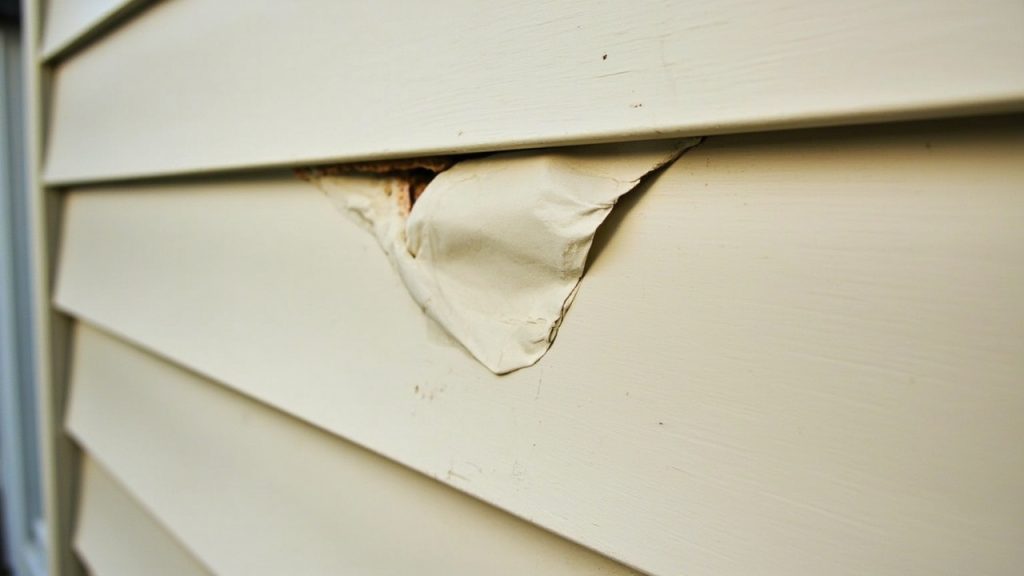
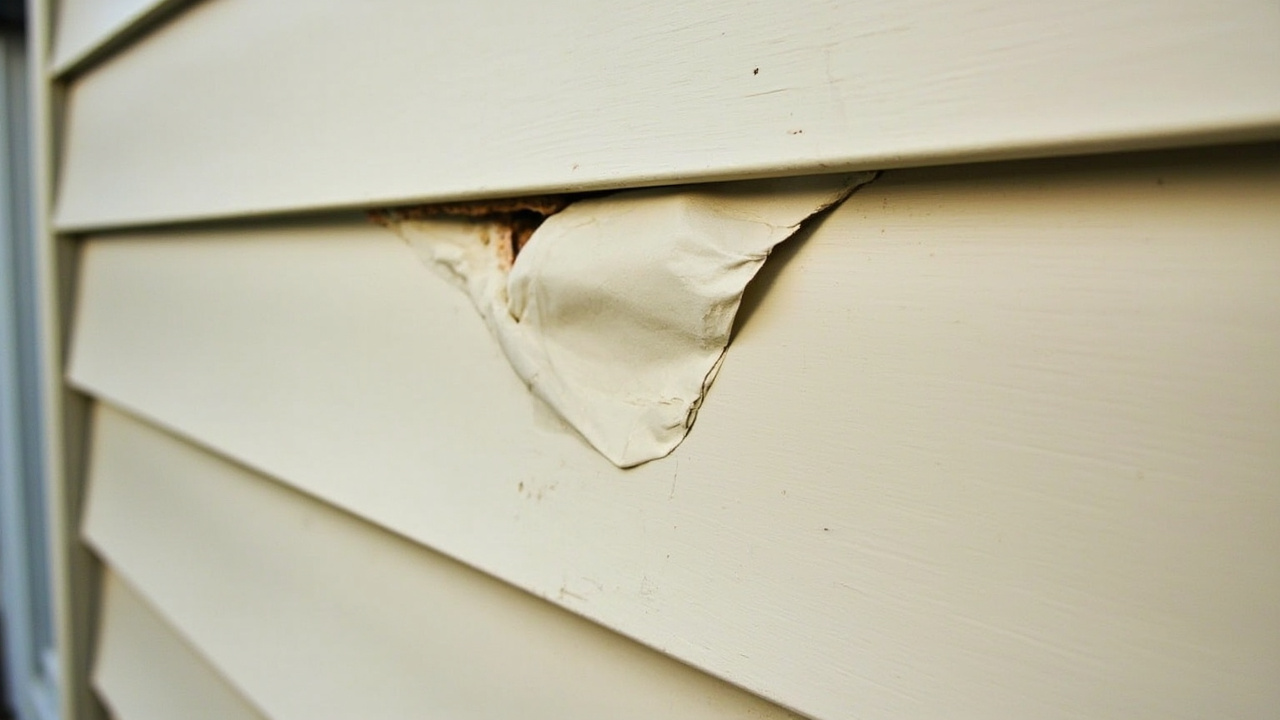
- Buckling or warping panels. If vinyl siding bows outward or inward, moisture is pushing from behind. This happens when water gets trapped between the siding and the sheathing and has nowhere to dry.
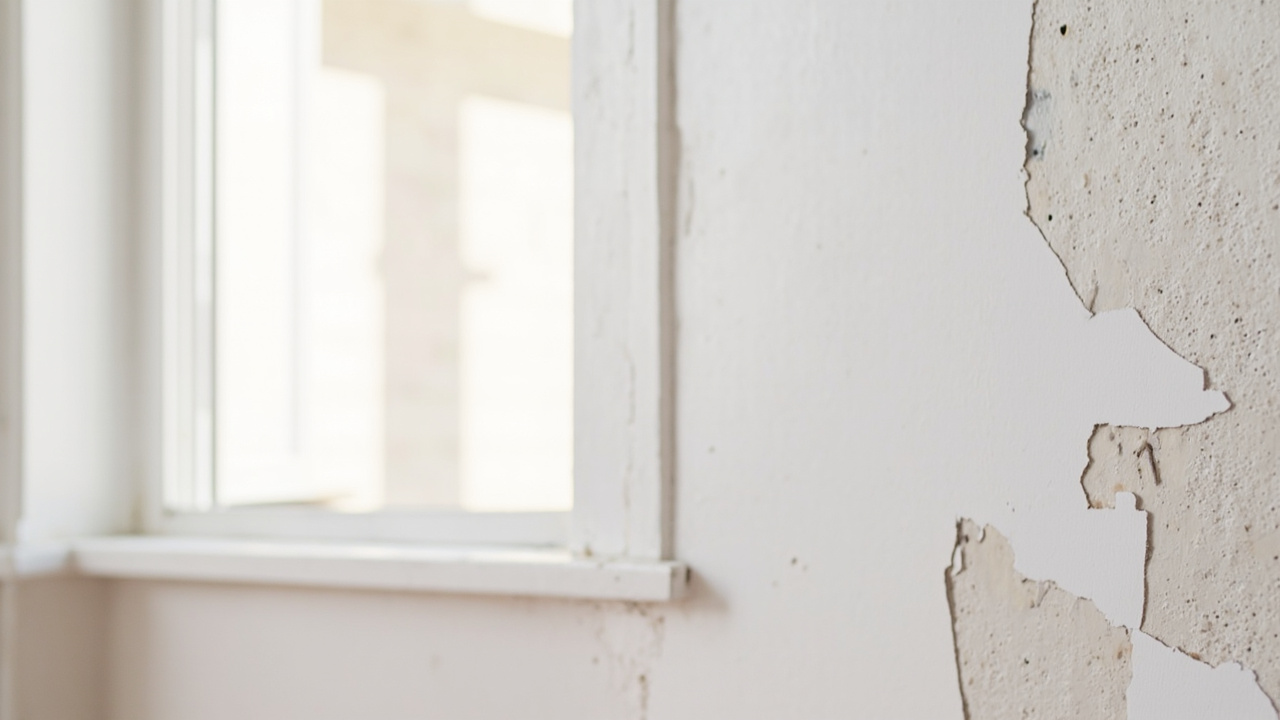
- Interior paint peeling near exterior walls. Water migrating inward causes drywall paint to bubble and peel. This sign often appears in bedrooms or living rooms on the side facing Lake Michigan winds.
- Musty odors in rooms near external walls. Mold and mildew growing on hidden OSB sheathing produce a distinct smell. If your bedroom smells damp even after the weather clears, moisture is trapped behind the wall.
- Mold or discoloration on interior baseboards. Look at the bottom of walls where they meet the floor. If you see black or green spots, water is wicking up from the foundation or through compromised wall cavities.
- Increased pest activity. Termites, carpenter ants, and other insects invade homes where wood is wet. If you notice sawdust or insect trails near the base of exterior walls, moisture has made the wood vulnerable.
The Chicago Climate Factor: Why Our Homes Are at Risk
Chicago’s weather is brutal on building envelopes. The city experiences nearly 40 inches of precipitation per year, much of it falling as heavy spring rain or winter snow melt. Lake Michigan sits three miles east and creates wind patterns that push moisture-laden air directly at homes for six months of the year.
Winter brings the freeze-thaw cycle. Water freezes and expands inside gaps and cracks. As it thaws, it opens those gaps wider. By March, small leaks become large ones. This cycle is especially hard on siding seams and J-channel connections that hold the edges of panels together.
Summer humidity in Chicago averages 65 to 75 percent. The air is wet. Wet siding takes longer to dry. If rain happens on a humid day, moisture can sit behind your siding for days. Mold begins to grow in 24 to 48 hours on damp wood or OSB.
Homes in Clearing and Garfield Ridge face additional challenges. These neighborhoods sit on Chicago Blue Clay, a heavy soil with poor drainage. The water table is high. The ground slopes slightly toward Lake Michigan. A hard rain doesn’t drain away quickly. Water pools against foundations and puts hydrostatic pressure on basement walls. If siding seals fail, that groundwater finds its way up the exterior framing.
Historic Chicago bungalows, common in these neighborhoods, often have unfinished basements with exposed rim board and band board connections. These wood elements sit just a few feet below the siding and are vulnerable to wicking water from above.
Hidden Dangers: Structural Rot and Black Mold
The OSB sheathing behind your vinyl siding costs less than plywood, so builders chose it. OSB is compressed wood particles bonded with resin. When it absorbs moisture, it swells. It loses its structural strength. It becomes soft. It rots from the inside out.
Once OSB begins to rot, it cannot be dried out and saved. Professional restoration requires removal and replacement. On a full wall, this means removing all siding, the house wrap, the rotted sheathing, the insulation, and often sections of the framing studs themselves if they also absorbed water.
The health risk comes from mold. Stachybotrys, commonly called black mold, grows on damp wood and OSB. This mold produces mycotoxins, compounds that trigger respiratory problems, allergic reactions, and asthma symptoms. Residents of Clearing and nearby neighborhoods who report mysterious mold symptoms often find the source is not in their basement or bathroom. It’s behind the living room wall.
Once mold colonies establish themselves inside wall cavities, they spread through the house wrap and into the insulation. Spores become airborne. Humid basements draw air upward through wall cavities in a process called stack effect. That moldy air enters living spaces.
Prolonged exposure to black mold has been linked to chronic inflammation, memory problems, and immune system dysfunction. Children and elderly people are more vulnerable. A home with structural mold growth behind the siding is not just damaged. It becomes a health liability.
How Water Gets Behind Vinyl Siding: The Technical Reality
Understanding the pathway water takes helps you prevent the problem. Vinyl siding installation involves several layers working together to shed water.
The siding panels overlap. Each upper panel slides over the lower one about one inch. This overlap should shed water downward. But wind-driven rain doesn’t fall straight down. It approaches at an angle. On the north and west sides of Chicago homes, where prevailing winds come off Lake Michigan, rain hits the siding at 30 to 45 degrees. That water can travel upward and backward into the seam.
Below the siding sits house wrap. This material is a vapor barrier designed to allow water vapor to escape outward while blocking bulk water from entering. But house wrap is only as good as its installation. If it was stapled instead of taped at seams, water flows through the gaps. If it tears during installation or from settling, water pours through the hole. If the wrap doesn’t extend all the way to the bottom and sides of the wall, water reaches the rim board and band board where it causes the most damage.
Behind the house wrap sits the OSB sheathing. This is the first solid layer. It provides structural bracing and a substrate for fastening the house wrap and siding. Once water reaches this layer, it stays. There’s nothing behind the sheathing except insulation and the interior framing. Water wicks into the wood studs. It migrates sideways along the rim board. It travels downward until it reaches the foundation sill plate.
The sill plate connection is where water causes the most damage. This wooden beam sits directly on the concrete foundation. It’s where the framing of the house begins. If water reaches it and stays damp for weeks, the sill plate rots. The framing above it becomes unstable. The structural integrity of the wall fails.
Professional Detection: Moisture Mapping and Thermal Imaging
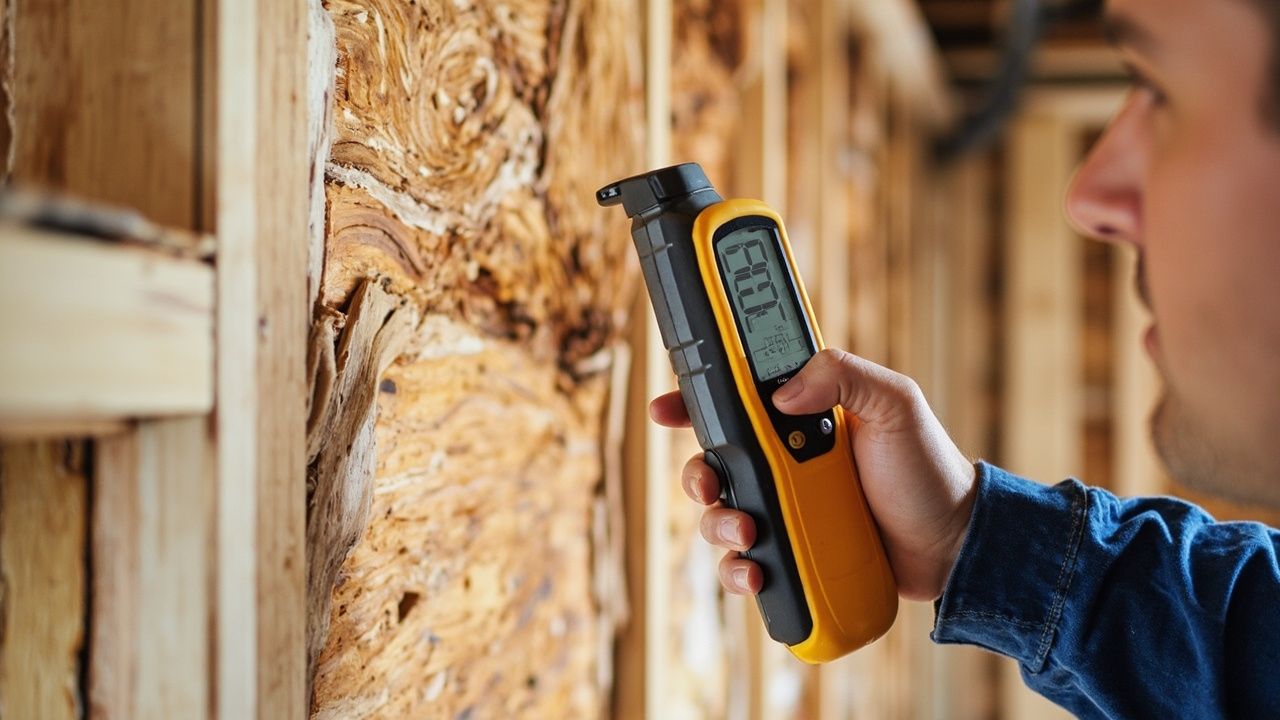
You cannot see behind vinyl siding without removing it. Professional restoration companies use technology that does. The most important tool is a moisture meter. This device measures the water content of wood, OSB, and drywall. A reading above 20 percent indicates active moisture. Readings above 30 percent indicate rot is likely already present.
Thermal imaging cameras detect temperature differences. Wet materials stay cooler than dry ones. On a sunny day, a restoration technician can photograph your home’s exterior with a thermal camera and identify cold zones where moisture is hidden. These cold spots match perfectly with areas where the moisture meter later confirms water damage.
Invasive moisture detection involves drilling small holes through the siding at suspected problem areas and inserting the moisture meter probe directly into the sheathing and framing. This gives precise readings and confirms damage depth. The small holes are later sealed.
A comprehensive moisture mapping of a two-story bungalow takes two to four hours. The technician creates a map marking the location and severity of wet zones. This map becomes the basis for the restoration plan. It tells the crew exactly which siding panels must come off, which sheathing requires replacement, and which framing studs need drying or removal.
The Restoration Process: What Actually Happens When You Call a Professional
Water damage restoration differs from siding repair. A roofer can replace shingles. A carpenter can patch drywall. But a certified restoration technician must manage moisture, prevent mold, document the damage for insurance, and ensure the house dries properly without trapping water deeper inside the walls.
The restoration process follows these steps.
Step 1. Complete moisture inspection and mapping. The team inspects the entire exterior and interior. They use moisture meters and thermal imaging to find all wet zones. They drill small test holes to assess sheathing and framing damage. They document everything with photos and written notes for your insurance claim.
Step 2. Remove affected siding and house wrap. Siding removal requires careful work to preserve the salvageable portions. In Clearing’s historic bungalows, original siding may have value. The crew removes fasteners, takes off panels, and carefully removes or cuts away the house wrap.
Step 3. Extract moisture from sheathing and framing. If OSB or framing is wet but not yet rotted, specialized drying equipment can save it. Commercial-grade dehumidifiers and air movers are positioned to pull moisture out. Holes are drilled in strategic locations to allow air circulation deep into the wall cavity. Moisture meters are checked every 24 hours to track drying progress. This phase can last from three days to three weeks depending on damage severity.
Step 4. Remove and replace rotted materials. If wood or OSB is soft, discolored, or shows visible decay, it must be cut out and replaced. The crew removes the damaged section, treats the edges with an anti-microbial agent, and installs new pressure-treated lumber or OSB. Flashing and J-channel connections are upgraded to prevent future leaks.
Step 5. Apply antimicrobial treatment. Even if mold is not visible, damp wood is vulnerable. The restoration crew applies an approved antimicrobial treatment to all exposed wood surfaces. This prevents mold colonization during the drying phase.
Step 6. Install new house wrap and siding. Once the sheathing and framing are dry and treated, new house wrap is installed with proper overlaps and tape at all seams. New siding is then fastened. Sealing at corners, windows, and J-channel is meticulous to prevent future water infiltration.
Step 7. Verify dryness and document completion. Before the job ends, moisture meters confirm that all materials are at normal levels. Photos document the completed work. A detailed invoice and scope of work report are provided for your insurance file.
| Restoration Phase | Timeline | Equipment Used | Cost Driver |
|---|---|---|---|
| Inspection and moisture mapping | 2 to 4 hours | Moisture meters, thermal camera, drill | Hourly labor |
| Siding and wrap removal | 1 to 2 days | Pry bars, saws, fastener removal tools | Square footage of siding |
| Drying and moisture extraction | 3 to 21 days | Dehumidifiers, air movers, moisture meters | Duration and equipment rental |
| Material removal and replacement | 2 to 5 days | Saws, sanders, anti-microbial sprayers | Amount of rot, framing damage |
| House wrap and siding reinstallation | 2 to 4 days | Staple guns, tape, fasteners, saws | Square footage, complexity |
| Final verification and documentation | 4 to 8 hours | Moisture meters, camera, paperwork | Hourly labor |
A typical water damage restoration project behind vinyl siding on a two-story Chicago bungalow lasts 10 to 30 days depending on the extent of rot and weather conditions. The crew cannot work in rain. Drying equipment must run continuously, which requires power and ventilation. If framing damage is severe, structural repairs may extend the timeline another week or two.
When to Call a Professional vs. When DIY Fails
Many homeowners try to handle water damage themselves. They remove the siding, let it dry for a week, and reinstall it. This approach fails because it doesn’t address the hidden damage.
You cannot tell if OSB is wet by looking at it. You cannot see inside wall cavities. You cannot safely assess whether framing studs are compromised. When you reinstall siding over wet sheathing, you trap the moisture inside. It continues to rot. Mold grows out of sight. Six months later, you have a bigger problem than when you started.
Mold removal also requires certification and safety protocols. Black mold spores are toxic when inhaled. Disturbing mold colonies without proper containment spreads spores throughout your home. Many Chicago homeowners who attempted their own mold cleanup reported respiratory symptoms for months afterward. Professional mold remediation involves isolating the contaminated area with plastic sheeting, using HEPA air scrubbers, and disposing of contaminated materials as hazardous waste.
Chicago’s building code requires that water damage restoration in homes built before 1978 includes lead and asbestos testing. Older bungalows in Clearing commonly contain both. Disturbing these materials during siding removal and sheathing replacement creates a serious health hazard. Only licensed professionals with proper certifications can safely handle lead and asbestos in residential settings.
Insurance claims also depend on professional documentation. If you perform the work yourself and then file a claim, the insurance company may deny it. If damage continues to worsen after your attempt, they may argue you caused additional loss through improper repair. Professional restoration companies are trained to document damage and track repairs in ways that satisfy insurance requirements. They work directly with adjusters and defend your claim if the company challenges it.
Insurance Coverage and Documentation
Most homeowners insurance policies cover sudden water damage from burst pipes, ice dams, or wind-driven rain. They do not cover slow leaks or lack of maintenance. Water behind vinyl siding is typically covered if it resulted from a specific weather event like heavy rain or ice damming.
To maximize your claim, you need professional documentation. Here’s what insurance companies require. A detailed inspection report with photos of the damage from multiple angles. Moisture meter readings showing the extent of water penetration. Thermal images showing wet zones. A written scope of work listing all materials to be removed and replaced. Receipts for all materials and labor. Before and after photos of the completed restoration.
A professional restoration company provides all of this. They are trained to document damage in ways that insurance adjusters understand. They know which damage is covered and which is not. They negotiate on your behalf if the insurer tries to deny or reduce the claim. This expertise often recovers thousands of dollars that homeowners lose when filing claims without professional help.
Learn how to handle a Chicago water damage insurance claim without getting overwhelmed.
Preventing Future Water Intrusion Behind Siding
Once your siding is restored, prevention becomes critical. Small maintenance steps can add decades to the life of your installation.
Seal all seams and connections. Have a professional caulk all J-channel seams, corner posts, window flanges, and siding-to-foundation transitions. Use polyurethane caulk rated for exterior wood. Re-caulk every five to seven years or whenever you notice cracks.
Inspect flashing annually. Flashing is metal trim that directs water away from vulnerable junctions. Check flashing around windows, doors, and where the siding meets the roof or foundation. If flashing is bent, rusted, or missing, have it repaired immediately.
Keep gutters clean. Clogged gutters cause water to overflow and run down the outside of the wall. In Chicago’s fall, gutters fill with leaves quickly. Clean them at least twice in autumn and once in spring.
Grade the soil away from the foundation. Water should drain away from your home. If the ground slopes toward the foundation, regrade it so water flows away. This reduces hydrostatic pressure on basement walls and foundation seals.
Monitor siding for damage. After storms, walk around your home and look for dents, cracks, or separated panels. Even small damage allows water entry. Address it quickly before water gets behind the siding.
The Long Term Cost of Ignoring Water Behind Siding
Moisture damage behind vinyl siding worsens quickly in Chicago’s climate. A small leak detected in summer becomes a major restoration project by spring. Here’s why speed matters.
| Timeline | What Happens | Restoration Complexity | Structural Risk |
|---|---|---|---|
| Weeks 1 to 4 | OSB absorbs water, house wrap fails, mold begins | Siding removal, sheathing drying, antimicrobial treatment | Low – materials still salvageable |
| Months 2 to 3 | OSB softens and loses strength, mold spreads, framing studs begin absorbing water | Siding and sheathing removal, selective stud replacement, insulation replacement | Moderate – some framing may require replacement |
| Months 4 to 6 | Sill plate and band board rot, rim board compromised, interior drywall shows damage, mold spreads into basement or crawlspace | Extensive framing repair, possible structural reinforcement, mold remediation in interior spaces | High – foundation connection weakened |
| Over 12 months | Structural framing failure, widespread mold throughout home, wood-destroying insect infestation, foundation movement | Full wall reconstruction, interior demolition and rebuild, professional mold remediation throughout | Critical – structural integrity compromised |
A project that costs a few thousand dollars in month two can cost fifty thousand or more by month twelve. Delaying restoration also impacts property value. Homes with hidden mold or structural damage sell for significantly less. If you need to sell in the future, you’ll either disclose the problem and accept a reduced offer or attempt to hide it and face legal liability.
Why Experience Matters in Water Damage Restoration
Not all contractors who claim to handle water damage are qualified. General home repair companies may know how to install siding, but they lack training in moisture detection, mold assessment, and structural drying. Insurance restoration companies come from varying backgrounds. Some are franchises with minimal local experience. Others are longtime local firms with deep knowledge of Chicago’s specific weather challenges.
A restoration company serving Chicago since the early 2010s has lived through the polar vortex of 2014, the record spring floods of 2019, and the freeze-thaw cycles of consecutive winters. They’ve seen how Chicago Blue Clay responds to heavy rain. They understand the vulnerabilities of historic bungalows in Clearing and Garfield Ridge. They know Chicago’s building codes and work closely with insurance adjusters familiar with local damage patterns.
Certification matters too. IICRC (Institute of Inspection, Cleaning and Restoration Certification) credentials mean a technician passed rigorous exams on water damage restoration, mold remediation, and structural drying. These credentials are not given freely. A technician must complete classroom training, pass written exams, and document field experience. When you hire IICRC-certified technicians, you hire people held to professional standards.
Getting Your Chicago Home Assessed
If you suspect water is behind your vinyl siding, the first step is a professional inspection. Many restoration companies offer free moisture inspections. They send a technician to your home, walk the exterior and interior, use a moisture meter to scan suspicious areas, and provide an honest assessment of whether water is present.
A free inspection costs you nothing and gives you certainty. If there is no moisture problem, you walk away relieved. If water is present, you have a professional diagnosis and a clear restoration plan. You know exactly what needs to be done, how long it takes, and what to expect from your insurance claim.
Don’t ignore the early warning signs. Buckling siding, interior paint peeling, or musty smells in rooms adjacent to exterior walls deserve professional evaluation. These signs almost always indicate moisture behind the siding. The longer you wait, the worse the damage becomes.
Chicago’s climate is unforgiving. The freeze-thaw cycles, Lake Michigan humidity, and heavy spring rains test building envelopes constantly. Your home’s defense is only as strong as its weakest point. A small failure in house wrap installation or a clogged weep hole becomes a major structural problem in months.
Learn the seven critical signs of mold after water damage in Chicago homes.
What to Expect from Your Restoration Company
A reputable water damage restoration company sets clear expectations upfront. They explain what they found, why it matters, and what the restoration process involves. They answer your questions without pressure. They provide a detailed written estimate before work begins. They don’t surprise you with additional charges midway through the project.
They also communicate transparently with your insurance company. They submit inspection reports and damage documentation directly to the adjuster. They advocate for your claim without overstating the damage. When the adjuster approves coverage, the restoration company completes the work as specified in the approved scope.
Professional restoration companies carry liability insurance and are properly licensed in Illinois. They pull permits for structural work. They dispose of contaminated materials legally. They respect your home and protect your property from further damage during the repair process.
Most importantly, they provide warranty on their work. If they dry out materials and they remain wet, the company revisits and addresses it at no charge. If they remove and replace sheathing and it rots again within a reasonable timeframe, they stand behind their work. This warranty gives you confidence the job was done right.
The Time to Act Is Now
Spring is coming to Chicago. Snowmelt will soak into the ground. Rain will drive sideways off Lake Michigan. If your siding has weak spots, this is when water will find them.
Don’t wait until fall to discover your basement smells like mold. Don’t wait until interior walls start peeling paint. Don’t wait until the sill plate rots and your home develops structural movement. Get your home inspected now while you have time to plan the restoration before peak weather season.
A free moisture inspection from a certified professional takes two hours. It gives you a clear picture of whether your home has a problem. If it does, you’ll have a professional plan to fix it. If it doesn’t, you’ll have peace of mind. Either way, you eliminate the uncertainty that comes with ignoring warning signs.
Contact a local water damage restoration company in Chicago today. Describe what you’ve noticed. Buckling siding. Peeling paint. Musty smells. Request a free inspection. Bring the technician to the areas you’re concerned about. Listen to their assessment. Ask questions. Get the inspection report in writing.
Your home is your largest investment. Protecting it from hidden water damage protects your property value, your family’s health, and your peace of mind. The small step of calling for an inspection today prevents the large crisis of structural failure and mold contamination tomorrow.
{
“@context”: “https://schema.org”,
“@type”: “BlogPosting”,
“headline”: “Moisture Behind Vinyl Siding: Signs, Risks, and Chicago-Specific Solutions”,
“description”: “Learn how water trapped behind vinyl siding damages Chicago bungalows. Identify warning signs, understand the freeze-thaw risk, and when to call a professional.”,
“wordCount”: 3911,
“datePublished”: “2026-05-14T10:48:00.000Z”,
“dateModified”: “2026-05-14T10:48:00.000Z”,
“inLanguage”: “en-US”,
“mainEntityOfPage”: {
“@type”: “WebPage”,
“@id”: “https://cornerstonewaterdamagerestorationchicago.com”
},
“publisher”: {
“@type”: “LocalBusiness”,
“name”: “Cornerstone Water Damage Restoration Chicago”,
“url”: “https://cornerstonewaterdamagerestorationchicago.com”
},
“author”: {
“@type”: “Organization”,
“name”: “Cornerstone Water Damage Restoration Chicago”,
“url”: “https://cornerstonewaterdamagerestorationchicago.com”
},
“image”: {
“@type”: “ImageObject”,
“url”: “https://cornerstonewaterdamagerestorationchicago.com/wp-content/uploads/2026/03/the-hidden-danger-of-water-trapped-behind-the-viny-1.jpg”
}
}
{
“@context”: “https://schema.org”,
“@type”: “LocalBusiness”,
“name”: “Cornerstone Water Damage Restoration Chicago”,
“url”: “https://cornerstonewaterdamagerestorationchicago.com”,
“address”: {
“@type”: “PostalAddress”,
“addressLocality”: “Chicago”
},
“areaServed”: {
“@type”: “City”,
“name”: “Chicago”
}
}
{
“@context”: “https://schema.org”,
“@type”: “FAQPage”,
“mainEntity”: [
{
“@type”: “Question”,
“name”: “Is Moisture Behind Vinyl Siding Normal?”,
“acceptedAnswer”: {
“@type”: “Answer”,
“text”: “Yes and no. Vinyl siding is not waterproof. It’s water-resistant. The product was designed with a critical assumption: water would get behind it, but it would drain out through small openings called weep holes located at the base of each panel.”
}
}
]
}
{
“@context”: “https://schema.org”,
“@type”: “BreadcrumbList”,
“itemListElement”: [
{
“@type”: “ListItem”,
“position”: 1,
“name”: “Home”,
“item”: “https://cornerstonewaterdamagerestorationchicago.com”
},
{
“@type”: “ListItem”,
“position”: 2,
“name”: “Blog”,
“item”: “https://cornerstonewaterdamagerestorationchicago.com/blog”
},
{
“@type”: “ListItem”,
“position”: 3,
“name”: “Moisture Behind Vinyl Siding: Signs, Risks, and Chicago-Specific Solutions”
}
]
}
{
“@context”: “https://schema.org”,
“@type”: “Service”,
“serviceType”: “Water Damage Restoration”,
“provider”: {
“@type”: “LocalBusiness”,
“name”: “Cornerstone Water Damage Restoration Chicago”,
“url”: “https://cornerstonewaterdamagerestorationchicago.com”
},
“areaServed”: {
“@type”: “City”,
“name”: “Chicago”
},
“description”: “Learn how water trapped behind vinyl siding damages Chicago bungalows. Identify warning signs, understand the freeze-thaw risk, and when to call a professional.”
}