
Lake Michigan Rising Water Table and Basement Moisture for Edgewater Residents
If your Edgewater basement is seeping now, call a professional immediately. Water pressure pushing against your foundation walls comes from Lake Michigan, which sits just miles from your home. When the lake’s water table rises, groundwater seeps into basements through cracks, joints, and porous concrete. This is not a surface drainage problem you can solve with gutters. This is hydrostatic pressure, and it affects hundreds of Chicago properties every spring. Managing lakefront seepage and basement moisture for Edgewater residents requires understanding this unique pressure and acting fast.
Edgewater and Rogers Park face a unique challenge that inland properties do not experience. The United States Army Corps of Engineers manages Lake Michigan’s water levels, and recent seasonal fluctuations have pushed groundwater deeper into the Chicago Blue Clay layer that surrounds your foundation. Your sump pump may fail during peak intake. Your basement walls may crack. Your family’s health depends on stopping mold growth before it spreads.
This guide explains why the water table rises, how it damages your specific Edgewater home, and what professional restoration looks like when your property is affected. Speed matters. Mold colonizes damp materials within 24 to 48 hours. The faster you respond, the less damage occurs.
Understanding Rising Water Table and Hydrostatic Pressure in Edgewater
Lake Michigan’s water level fluctuates throughout the year, but the groundwater table beneath Chicago rises and falls with it. If you live in Edgewater or Rogers Park within three to four miles of the shoreline, the water table sits much closer to your basement floor than inland residents experience. Homes north of Bryn Mawr Avenue consistently report higher water table depth than those further west toward Ravenswood Avenue.
Hydrostatic pressure is the force that water exerts on your foundation walls. Imagine a swimming pool pressing against a concrete wall. That same pressure exists beneath your home. The deeper the water table, the greater the pressure. During spring thaw and heavy rain periods, the water table rises, and pressure against your basement walls increases dramatically.
Chicago Blue Clay, the predominant soil layer beneath Edgewater and Rogers Park, holds water like a sponge. This clay does not drain quickly. The flat prairie terrain of Chicago means water moves slowly through soil and stays there. Your sump pump becomes your only defense against rising groundwater.
The US Army Corps of Engineers maintains real-time water level data for Lake Michigan. This data shows that seasonal peaks occur from June through August, when snowmelt from the Upper Great Lakes combines with spring and early summer precipitation. Winter months bring lower levels, but freeze-thaw cycles in Illinois create their own basement flooding problems through different mechanisms.
Lake Michigan Water Levels and Your Edgewater Basement Risk
Lake Michigan’s water level in 2026 remains elevated compared to historical averages. The long-term average baseline, calculated by the Corps of Engineers over decades, shows that recent years have consistently exceeded this benchmark. For Edgewater and Rogers Park residents, this means elevated groundwater tables are becoming the new normal rather than a seasonal anomaly.
The water table beneath your property tracks the lake’s surface elevation yet lags by weeks or months. When the lake peaks in summer, your basement’s groundwater pressure peaks in mid to late summer and early fall. This timing matters because many homeowners mistakenly assume spring rain is the cause, when the real problem is sustained high groundwater from the lake.
Local data from the Chicago Department of Water Management shows that properties within two miles of the shoreline experience baseline groundwater pressure year-round. Properties between two and four miles from shore experience seasonal spikes. Your specific risk depends on your exact distance from Lake Michigan, your home’s foundation elevation, and your basement’s current waterproofing status. Residents near Montrose Harbor and the Edgewater lakefront parks face the most critical risk.
| Distance from Lake Michigan | Baseline Water Table Depth | Peak Season Risk Level | Sump Pump Recommended |
| Less than 1 mile | Within 4-6 feet of surface | Critical. Year-round pressure. | Mandatory with backup system |
| 1 to 3 miles | Within 6-10 feet of surface | High. Seasonal pressure spikes. | Required during peak months |
| 3 to 5 miles | Within 10-15 feet of surface | Moderate. Occasional pressure. | Recommended for protection |
Edgewater residents predominantly fall into the first two categories. Your proximity to the lake means sump pump failure during peak season can result in basement flooding within hours, not days.
High-Risk Seepage Patterns in Edgewater and Rogers Park
Edgewater and Rogers Park experience the most severe hydrostatic pressure issues in the city. These two neighborhoods share similar soil composition, similar building ages, and similar exposure to Lake Michigan’s water level fluctuations. Managing lakefront seepage and basement moisture for Edgewater residents means recognizing these neighborhood-specific patterns.
Edgewater stretches from Bryn Mawr Avenue north to Foster Avenue and west from the lake to Ravenswood Avenue. This area contains hundreds of historic Chicago bungalows and two-flats built between 1920 and 1960. These properties have unfinished basements with poured concrete foundations or stone foundations. Both types are vulnerable to hydrostatic pressure. Stone foundations, common in older Edgewater homes, are especially prone to seepage because mortar joints deteriorate over time. Homes in the area between Broadway and Sheridan Road near Montrose Harbor face particularly intense seasonal pressure.
Rogers Park, immediately north of Edgewater, mirrors these vulnerabilities. The neighborhood’s architecture is nearly identical. The soil composition remains consistent. The distance to Lake Michigan is nearly the same. Rogers Park residents report flooding incidents at rates proportionally higher than Chicago neighborhoods further inland.
Both neighborhoods sit on relatively flat prairie terrain. Unlike areas with higher elevation and better natural drainage, Edgewater and Rogers Park have minimal slope. Water does not run away from homes. Water pools. Water pressure builds.
Foundation Cracks and Hydrostatic Pressure Damage
Hydrostatic pressure creates visible damage to basement walls and floors. Understanding this damage helps you recognize problems before water enters your living space.
Water pressure against foundation walls causes horizontal cracks that run across the wall, usually in the lower third where pressure is greatest. These cracks typically run nearly straight, unlike vertical settling cracks which step diagonally through blocks or mortar joints. Horizontal cracks indicate active pressure. Do not ignore them.
Bowing walls indicate severe, ongoing pressure. The wall bends inward slightly. This is permanent structural deformation. If you observe bowing, your foundation is under dangerous stress, and professional assessment is urgent.
Efflorescence appears as white or gray mineral deposits on basement walls. You see this chalky residue where water has seeped through concrete or mortar and minerals have leached out. Efflorescence is a visible sign that water is moving through your foundation. It is a warning, not the final stage of damage.
Water intrusion at the wall-floor joint is the most common entry point. Water seeps horizontally along the interface where the wall meets the floor. You may see puddles forming in the corner before you see water streaming down the wall. This pattern tells you that hydrostatic pressure is exceeding the drainage capacity of your sump pump or existing waterproofing.
Sump Pump Failure During Peak Water Table Conditions
Your sump pump is your basement’s first line of defense against rising groundwater. When Lake Michigan’s water table is elevated, your sump pump runs continuously. Standard residential sump pumps have capacity limits that many homeowners do not understand.
During peak groundwater pressure in Edgewater and Rogers Park, water entering a sump pit can exceed the discharge capacity of standard equipment. When intake exceeds discharge, the sump pit overflows, and water enters the basement around the pump.
Backup power failure compounds this problem. Chicago’s power grid experiences strain during heavy weather events. If your sump pump loses power during the peak of a spring storm or sustained high water table period, your pit fills with water in minutes. You may have no warning. You wake to standing water in your basement.
Battery backup sump pumps exist, but they provide only limited run time. If power is out longer than the backup system can support, the backup system exhausts. Many homes in Edgewater still use older pump systems with no backup whatsoever. This is a critical vulnerability.
Pump failure occurs when intake screens become clogged with sediment. Chicago Blue Clay particles clog pump screens. When flow through the screen decreases, pump performance degrades. The pump runs more frequently, heating up and failing prematurely. Sediment clogging is preventable with regular maintenance, but many homeowners do not know this simple fact.
Immediate Actions When Your Sump Pump Cannot Keep Up
If water is actively entering your basement, take these steps immediately. Speed matters.
- Stop water entry at the source. If you can identify where water is entering, place sandbags, tarps, or towels to redirect flow back toward the sump pit. This is temporary, yet it slows damage to stored items and reduces standing water.
- Remove standing water. Use a submersible pump or wet-dry vacuum to remove standing water. Do not wait for the sump pump to catch up. The more water you remove manually, the faster your sump pump can reduce the level. Faster drying reduces mold growth risk.
- Increase ventilation and reduce humidity. Open basement windows if weather permits. Set portable fans to circulate air. Turn on your HVAC system to pull moisture out of the basement. Every percentage point of humidity reduction slows mold colonization.
- Document everything with photos and video. Take photos of water levels, damage to stored items, and staining on walls. Document the date and time. This documentation is essential for insurance claims.
- Call a professional water mitigation company. Do not attempt structural drying on your own. Professional equipment and expertise prevent hidden moisture that leads to mold and rot.
Long-Term Solutions for Managing Seepage in Edgewater
Installing or upgrading a sump pump addresses the symptom, not the underlying problem. Sump pumps are reactive. Water enters, the pump removes it. Managing lakefront seepage and basement moisture for Edgewater residents requires multiple layers of protection for homes dealing with sustained hydrostatic pressure.
French drain systems installed outside your foundation redirect groundwater away from your home before it reaches your foundation walls. A French drain consists of perforated pipe buried in gravel along the footer of your foundation. Water enters the pipe, travels downslope or to a discharge point, and never pressurizes your foundation. French drains are preventative. They stop water before it becomes a crisis.
Interior drain systems capture water that has already entered the basement and direct it to a sump pit. These systems run along the interior perimeter of your basement and include catch basins at low points. Interior systems work when exterior French drains are not feasible, yet they do not eliminate hydrostatic pressure on your walls.
Foundation sealing addresses cracks and joints where water enters. Polyurethane injection, epoxy crack repair, and hydraulic cement all serve different purposes. Polyurethane expands as it sets, filling irregularly shaped cracks. Epoxy is rigid and best for structural cracks. Hydraulic cement hardens in wet conditions, making it suitable for active seepage points. A professional assessment determines which technology matches your specific cracks.
Bentonite clay applied to exterior foundation walls absorbs water and swells, creating a moisture-resistant barrier. Bentonite panels are installed during foundation repair work and are most effective on newly exposed foundation walls. For homes where exterior excavation is not planned, interior application provides some benefit, yet it is less effective than exterior application.
Sump pump upgrades go beyond simply replacing a failed unit. Installation of a larger-capacity pump combined with a battery backup system and a secondary pump creates redundancy. If the primary pump fails, the secondary pump activates. If power fails, the battery system runs the secondary pump. This multi-layer approach is appropriate for homes experiencing chronic groundwater pressure.
Insurance Coverage and Rising Water Table Flooding
Standard homeowners insurance policies explicitly exclude coverage for flooding caused by rising groundwater or water table changes. The insurance industry classifies rising water table flooding as a maintenance issue, not a covered loss. This distinction matters enormously when your basement floods.
Flood insurance through the National Flood Insurance Program covers surface flooding, not groundwater seepage. If your home is not in a mapped flood zone near the lake, you may not qualify for NFIP flood insurance. If you do qualify, the policy excludes basement seepage from rising water tables. The exclusion exists nationwide, not just in Chicago.
This insurance gap leaves homeowners responsible for repairs. In Edgewater and Rogers Park, this means basement waterproofing and mold remediation costs fall entirely on the property owner. Some specialty insurers offer water backup coverage as an add-on, yet water backup coverage is typically limited to backup through sewers and drains, not rising groundwater.
Understanding your policy’s limits before a flood occurs protects you. Contact your insurance agent and ask explicitly whether rising groundwater seepage is covered. Do not assume coverage exists. Most policies do not cover it.
Chicago Building Code and Edgewater Basement Standards
The Chicago Building Code sets specific requirements for new basement construction and renovation. These requirements acknowledge that Chicago basements exist in a high water table environment. Compliance protects long-term property value and livability.
The code requires perimeter drain systems for new construction. A perimeter drain installed below the basement floor level captures groundwater and directs it to daylight or to a sump pump. This is mandatory, not optional. Homes built before current code was enacted may lack proper perimeter drains, creating vulnerability to groundwater seepage.
The code mandates a vapor barrier under basement slabs. Polyethylene sheeting prevents moisture from the surrounding soil from seeping up through the concrete floor. Over time, concrete floors crack, and the vapor barrier beneath them becomes the last barrier between you and groundwater capillary action. A failing vapor barrier, undetectable from above, allows moisture to enter the basement continuously.
For homes built before 1978, renovation projects in Edgewater and Rogers Park must comply with lead and asbestos regulations. These neighborhoods contain many properties from the 1920s to 1960s era. Foundation repair work that disturbs original materials requires lead-safe and asbestos-aware protocols. Professional contractors manage these hazards. Property owners should not.
Professional Water Extraction and Structural Drying
After water intrusion occurs, the speed of extraction and drying determines whether mold takes hold. Professional water mitigation teams understand this urgency.
Water extraction removes standing water using submersible pumps and vacuums rated for high-volume removal. Industrial-grade equipment moves hundreds of gallons per hour. Standard household wet-dry vacuums move far less per hour. The difference in speed is substantial. Professional extraction reduces standing water in a basement to a few inches within hours, not days.
After standing water removal, structural drying begins. Moisture remains in concrete, drywall, insulation, and wood framing. This hidden moisture is invisible yet dangerous. Mold colonizes damp materials within 24 to 48 hours of water exposure. Drying faster than 48 hours is the goal.
Professional drying equipment includes dehumidifiers that remove moisture from air and materials, air movers that increase air circulation across wet surfaces, and moisture monitoring equipment that tracks drying progress. Placement of this equipment is science, not guesswork. Equipment positioned correctly reduces drying time from weeks to days.
Monitoring with moisture meters throughout the drying process ensures that hidden pockets of moisture do not remain in walls or under floors. If monitoring stops too early and moisture rebounds, mold growth accelerates invisibly. Professional monitoring continues until all materials reach equilibrium moisture levels.
| Drying Phase | Equipment Used | Timeline | Success Indicator |
| Water Extraction | Submersible pump, wet vacuum, squeegees | 2-6 hours depending on volume | Standing water removed to basement floor level |
| Initial Drying | Air movers, dehumidifiers, evaporative equipment | 24-48 hours | Humidity drops below 55 percent |
| Deep Drying | Continuous dehumidification and air circulation | 3-14 days depending on materials affected | Moisture meter readings reach normal equilibrium for materials |
| Verification | Moisture meter, thermal imaging if needed | Final inspection before equipment removal | All readings document complete drying or identified areas needing further attention |
Some homeowners attempt DIY drying after small seepage events. This approach fails systematically. Standard household fans and dehumidifiers are undersized for the moisture load. A basement containing significant water generates moisture that overwhelms residential equipment. Professional teams deploy equipment scaled to the problem.
Mold Prevention and Hidden Moisture Detection
Mold grows in damp basements within days. Edgewater and Rogers Park residents need to understand that mold prevention starts with moisture control. Once mold colonies establish themselves in wood framing or drywall insulation, removal becomes expensive and intrusive.
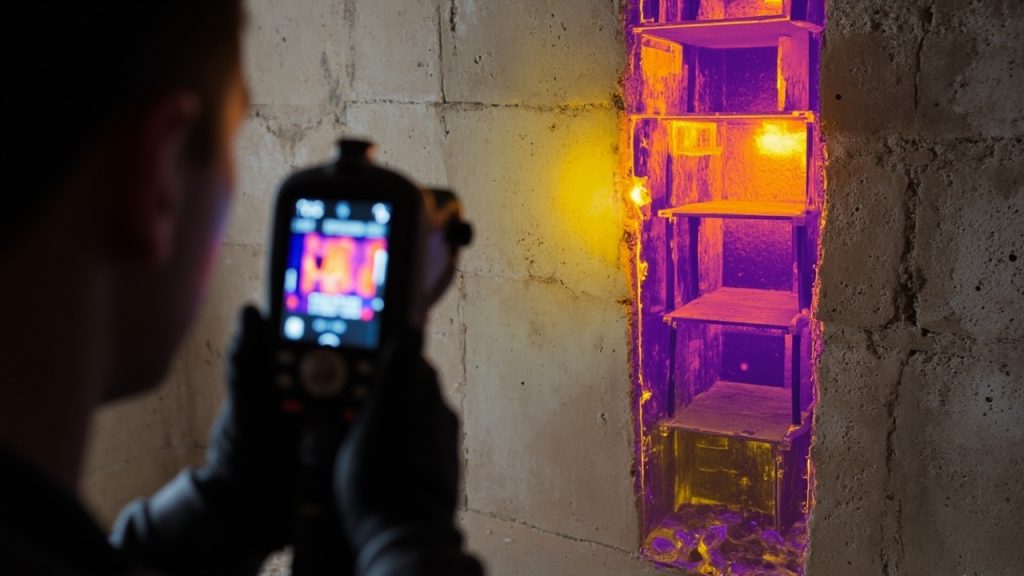
Thermal imaging cameras detect hidden moisture by identifying temperature differences. Wet materials stay cooler than dry materials. A thermal camera reveals moisture in walls where you cannot see it. This technology is standard in professional water damage assessment.
Hidden moisture beneath basement carpeting is common. Homeowners remove a few inches of water, dry the visible surfaces, and reinstall carpet before structural drying is complete. Moisture trapped under the carpet supports mold growth for months. The carpet must be removed and discarded. The subfloor beneath must be thoroughly dried and inspected.
If you experience basement flooding, remove all wet carpet immediately. Do not wait. Do not dry and reinstall. Remove it, and let professionals assess the subfloor. This single decision prevents thousands of dollars in mold remediation costs.
Preparing for Spring High Water Table Season
Spring arrives with predictable risk for Edgewater and Rogers Park homeowners. Late March through June brings snowmelt and heavy rain simultaneously. Preparation before this season begins prevents crisis response during peak flooding risk.
Test your sump pump before spring. Pour water directly into the pit and confirm that the pump activates and discharges water away from your home. If the pump does not activate, it has failed. Replace it before spring arrives. Do not wait for flooding to discover the failure.
Inspect the discharge line from your sump pump. Confirm that water exits at least five feet away from your foundation. If water discharges near the foundation, it re-enters the soil and adds pressure back to your basement. Extend the discharge line to daylight or a storm drain with proper permits from the city.
Clean gutters and downspouts. While gutter overflow does not cause groundwater seepage, it adds surface water pressure near your foundation. Proper gutter maintenance reduces the total water load around your home.
Check for visible cracks in your basement walls. Photograph any cracks you find and their location. If new cracks appear during spring, compare them to your baseline photos. Document changes. This helps professionals assess whether your foundation is experiencing new stress.
Clear your basement of stored items that cannot withstand water exposure. Move boxes, documents, and valuables to upper floors. Even if you have never experienced flooding, the risk in Edgewater and Rogers Park is real. Preparation protects your belongings.
When to Call a Professional Water Restoration Company
You need professional help if standing water is more than a few inches deep, if water entry is active and ongoing, if water has contacted insulation or electrical systems, or if you see signs of mold growth. You need professional help if you cannot identify where water is entering, if multiple basement areas show water simultaneously, or if your sump pump is running continuously without reducing water levels.
Call immediately if you smell a musty odor in your basement, even without visible water. This smell indicates mold colonization. Mold can hide in walls and under floors long before you see visible growth. Early intervention stops mold expansion.
Professional water restoration companies in Chicago should hold IICRC certifications in water damage restoration. This certification demonstrates that technicians understand the science of water removal, structural drying, and mold prevention. Verify certifications before hiring.
Ask whether the company offers sub-60-minute emergency response. For active groundwater seepage during peak season, speed determines whether mold takes hold. A company that can dispatch a team within one hour is materially different from one that arrives the next day. In Edgewater and Rogers Park, this response speed is achievable because of the high concentration of at-risk properties.
Your Next Step for Managing Lakefront Seepage
If your Edgewater basement shows signs of moisture, seepage, or if your sump pump has failed, contact a professional water mitigation company today. Do not wait for spring flooding. Do not assume the problem will resolve on its own. Lake Michigan’s water table will remain elevated. Your basement’s vulnerability increases with every day of delayed action. Call now, schedule a free assessment, and understand your specific risk. Managing lakefront seepage and basement moisture for Edgewater residents requires immediate action when water appears. Your foundation’s long-term health and your family’s safety depend on addressing groundwater seepage before it becomes a crisis.
{
“@context”: “https://schema.org”,
“@type”: “BlogPosting”,
“headline”: “Lake Michigan Rising Water Table and Basement Moisture for Edgewater Residents”,
“description”: “Managing lakefront seepage and basement moisture for Edgewater residents. Learn why water pressure affects your home and what professional solutions work.”,
“wordCount”: 3430,
“datePublished”: “2026-04-22T06:28:00.000Z”,
“dateModified”: “2026-04-22T06:28:00.000Z”,
“inLanguage”: “en-US”,
“mainEntityOfPage”: {
“@type”: “WebPage”,
“@id”: “https://cornerstonewaterdamagerestorationchicago.com”
},
“publisher”: {
“@type”: “LocalBusiness”,
“name”: “Cornerstone Water Damage Restoration Chicago”,
“url”: “https://cornerstonewaterdamagerestorationchicago.com”
},
“author”: {
“@type”: “Organization”,
“name”: “Cornerstone Water Damage Restoration Chicago”,
“url”: “https://cornerstonewaterdamagerestorationchicago.com”
},
“image”: {
“@type”: “ImageObject”,
“url”: “https://cornerstonewaterdamagerestorationchicago.com/wp-content/uploads/2026/03/managing-lakefront-seepage-and-basement-moisture-f-1.jpg”
}
}
{
“@context”: “https://schema.org”,
“@type”: “LocalBusiness”,
“name”: “Cornerstone Water Damage Restoration Chicago”,
“url”: “https://cornerstonewaterdamagerestorationchicago.com”,
“address”: {
“@type”: “PostalAddress”,
“addressLocality”: “Chicago”
},
“areaServed”: {
“@type”: “City”,
“name”: “Chicago”
}
}
{
“@context”: “https://schema.org”,
“@type”: “BreadcrumbList”,
“itemListElement”: [
{
“@type”: “ListItem”,
“position”: 1,
“name”: “Home”,
“item”: “https://cornerstonewaterdamagerestorationchicago.com”
},
{
“@type”: “ListItem”,
“position”: 2,
“name”: “Blog”,
“item”: “https://cornerstonewaterdamagerestorationchicago.com/blog”
},
{
“@type”: “ListItem”,
“position”: 3,
“name”: “Lake Michigan Rising Water Table and Basement Moisture for Edgewater Residents”
}
]
}
{
“@context”: “https://schema.org”,
“@type”: “Service”,
“serviceType”: “Water Damage Restoration”,
“provider”: {
“@type”: “LocalBusiness”,
“name”: “Cornerstone Water Damage Restoration Chicago”,
“url”: “https://cornerstonewaterdamagerestorationchicago.com”
},
“areaServed”: {
“@type”: “City”,
“name”: “Chicago”
},
“description”: “Managing lakefront seepage and basement moisture for Edgewater residents. Learn why water pressure affects your home and what professional solutions work.”
}