
Kitchen Water Damage Repair in Pilsen, Chicago
Your kitchen flooded at 2 AM. Water pours from under the sink or around your dishwasher. You panic. You think about your cabinets, your hardwood floor, the cost. Stop. The next three hours determine whether you save your kitchen or lose it.
Pilsen residents live in some of Chicago’s most beautiful historic homes. Many of these Lower West Side properties are classic worker cottages and brick flats built before modern plumbing codes existed. The kitchens in these homes sit on foundations vulnerable to water infiltration, and the plumbing itself is often original or has been patched many times over decades.
When water damage strikes your Pilsen kitchen, you need someone who understands the unique vulnerabilities of 60608 zip code properties. You need Cornerstone Water Damage Restoration.
Why Kitchen Floods Happen in Pilsen Homes
Pilsen’s historic architecture creates specific water damage risks. These homes were built on clay soil with high water tables. The combined sewer systems in the neighborhood can back up during heavy rains, sending water into the lowest parts of the house. Your kitchen, often at or below street level, becomes the first target.
The most common kitchen water sources in Pilsen homes include dishwasher leaks, ice maker line bursts, sink overflows, and burst supply pipes. Winter brings another threat. Chicago’s extreme freeze-thaw cycles cause pipes to expand and crack inside walls and under cabinets. A cracked copper line can drip unnoticed for weeks until you notice soft cabinetry or mold smell.
| Water Source | Common Location in Kitchen | Why Pilsen Homes Are Vulnerable |
|---|---|---|
| Dishwasher leak | Under island or base cabinets | Old homes have shallow foundation depth. Water spreads quickly to subfloor. |
| Burst ice maker line | Behind refrigerator | Copper tubing expands and cracks in freeze-thaw cycles common in Chicago winters |
| Supply line rupture | Inside walls or under sink cabinet | Original pipes from 1920s-1950s corrode. Renovations crimp lines with nails and staples |
| Sink overflow | Countertop and cabinet below | Historic kitchens have poor drainage. Clogs back up into visible and hidden spaces |
| Basement seepage | Below-grade kitchen areas | High clay content of Chicago Blue Clay creates hydrostatic pressure on foundations |
Understanding what caused the leak matters for insurance claims. It also prevents the same flood from happening again.
24/7 Emergency Kitchen Water Extraction in Pilsen
Time is your enemy when water sits in a kitchen. Mold begins growing within 24 to 48 hours in humid Chicago conditions. Summer humidity accelerates this. Cabinets absorb water like a sponge. Hardwood floors cup and buckle within hours of exposure.
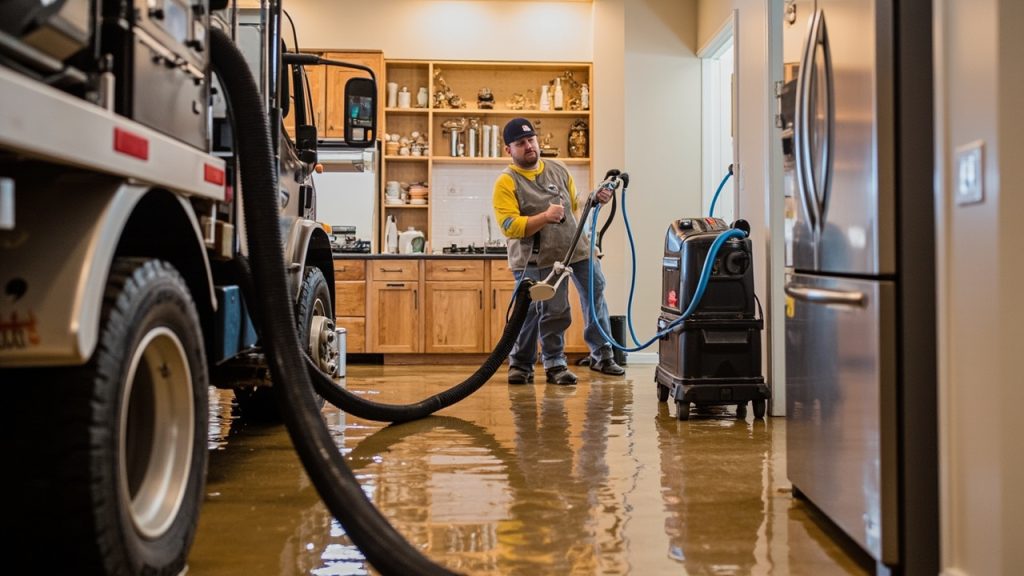
We arrive in under 60 minutes from your call. Our technicians bring industrial water extraction equipment. This includes truck-mounted extractors that remove standing water from cabinetry, subfloors, and wall cavities faster than conventional methods.
The first step is always removal of standing water. We use submersible pumps and wet vacs to extract water from base cabinets, dishwasher cavities, and floor cavities. This happens before we assess the damage underneath.
Next, we deploy industrial dehumidifiers and high-velocity air movers. These machines run 24/7 until moisture readings drop to safe levels. IICRC standards require drying to specific wood moisture content, measured with professional moisture meters. We do not guess. We measure.
Addressing Kitchen-Specific Mold Prevention
Kitchen cabinets create ideal conditions for mold growth. The space under base cabinets sits dark, humid, and often poorly ventilated. When water gets in, mold can colonize the interior surfaces of the cabinet box where you cannot see it.
We use thermal imaging to detect hidden moisture pockets. These cameras show wet areas inside walls and cavities that the human eye cannot see. Once identified, we dry these spaces using injection drying systems. This technique uses small tubes inserted into cavities to push warm, dry air directly into spaces between the cabinet box and the surrounding wall structure.
We also monitor for visible mold growth. If mold appears on cabinetry surfaces after water extraction, we use IICRC-compliant cleaning methods to stop it. This often involves HEPA-filtered vacuums, antimicrobial treatments, and proper containment to prevent spore spread to other rooms.
For Pilsen homes with older cabinetry, we take precautions around lead paint. Many kitchens in historic homes were painted before 1978 when lead paint was common. Our team follows Chicago Building Code requirements for lead-safe work practices during restoration.
Cabinetry and Hardwood Floor Restoration Decisions
After water extraction and drying, you face a choice. Can your cabinets be saved, or do they need replacement?
Solid wood cabinetry can sometimes be restored if the damage is caught early and drying is thorough. We sand damaged surfaces, allow wood to dry completely, and refinish. This works well for cabinets made of maple, oak, or cherry. Pilsen homes from the 1920s-1950s often have solid wood cabinets that are worth saving.
Plywood-based cabinets and particleboard are different. These materials delaminate when wet. The veneer separates from the base. Once this happens, the cabinet fails. Replacement becomes the only option.
Hardwood kitchen floors face similar challenges. Solid hardwood can cup, buckle, or develop permanent stains after water exposure. The extent depends on how long the wood sat wet. Sometimes we can sand and refinish. Sometimes the floor must be replaced.
| Cabinetry Type | Water Damage Impact | Restoration Option | Timeline |
|---|---|---|---|
| Solid wood cabinets (maple, oak, cherry) | Swelling, warping if dried quickly. Staining if water sat for days. | Dry, sand, refinish if caught within 48 hours | 2-3 weeks after extraction |
| Plywood with veneer | Veneer separates from plywood base. Irreversible delamination. | Replacement only | 1-2 weeks lead time for custom cabinets |
| Particleboard cabinets | Swells and crumbles. Loses structural integrity. | Replacement only | 3-5 days for stock cabinets |
| Solid hardwood floor (oak, maple) | Cups, buckles, stains. Reversible if dried in 72 hours. | Dry, sand, refinish | 1-2 weeks after full drying |
| Laminate or vinyl flooring | Water seeps under planks and causes swelling and mold underneath | Removal and replacement | 3-7 days depending on subfloor condition |
We help you document the condition of every cabinet and floor surface with photos. Insurance companies require this documentation. We also provide written assessments explaining what can be saved and what must be replaced. This gives your insurance adjuster the clarity they need to approve your claim.
The Full Restoration Process for Your Pilsen Kitchen
Restoration moves through five distinct phases. Understanding each phase helps you know what to expect.
- Emergency Response and Water Extraction
We arrive within 60 minutes. We assess water source and type. We remove standing water using truck-mounted and portable extraction equipment. We pump basements if needed. We remove any contaminated materials that cannot be saved.
- Drying and Dehumidification
We deploy industrial dehumidifiers sized to the cubic footage of your kitchen and connected spaces. We position high-velocity air movers to accelerate surface drying. We take moisture readings every 24 hours using professional moisture meters. We adjust equipment placement based on readings. This phase typically lasts 5 to 10 days depending on humidity and how much material is wet.
- Cleaning and Antimicrobial Treatment
Once the space is dry, we clean all hard surfaces with hospital-grade antimicrobial solutions. We HEPA-vacuum all surfaces to remove any mold spores that may have begun growing during wet stages. We address any visible mold growth with approved remediation methods.
- Cabinetry and Material Restoration or Replacement
For salvageable cabinets, we sand damaged surfaces, apply wood conditioner, and refinish to match original color. For cabinets that cannot be saved, we coordinate removal and replacement. We also handle hardwood floor restoration through sanding and refinishing or replacement as needed.
- Final Inspection and Handoff
We perform final moisture testing to confirm the space is dry. We provide you with all documentation needed for your insurance claim. We walk you through preventative steps to avoid future water damage.
Pilsen-Specific Building Code Requirements for Kitchen Reconstruction
The City of Chicago enforces strict building codes for kitchen work. If your restoration involves structural repairs, new cabinetry, or flooring replacement, permits are required.
Chicago Building Code requires sub-soil drainage on all residential properties. If water damage was caused by poor drainage or foundation seepage, the code may require you to address this as part of reconstruction. We coordinate with licensed plumbers to ensure compliance.
For homes built before 1978, lead paint protocols apply to any work that disturbs painted surfaces. We follow lead-safe work practices that include containment, HEPA-filtered cleanup, and proper disposal. This protects your family and keeps you compliant with city regulations.
Gas and electrical systems in kitchens must meet current code if they are disturbed during water damage repairs. We work with licensed electricians and gas installers to ensure all utilities are safe and compliant after reconstruction.
Insurance Claims Support for Pilsen Residents
Most homeowner policies cover water damage from burst pipes or sudden leaks. Some policies cover dishwasher and appliance failures. Policies do not cover damage from neglect, lack of maintenance, or backed-up sewers unless you have added coverage.
Your insurance company will send an adjuster to assess the damage. We provide detailed documentation that makes the adjuster’s job easier and strengthens your claim. This includes water extraction photos, moisture readings, cabinetry condition assessments, and material replacement estimates.
Many of our Pilsen customers have older policies with coverage gaps. We review your policy and explain what is covered. If you have questions, we coordinate with your insurance company on your behalf.
We bill your insurance company directly whenever possible. This reduces your out-of-pocket costs and speeds the claims process. You pay your deductible. We manage the rest of the paperwork.
Historic Home Plumbing Vulnerabilities in Pilsen
Pilsen’s homes were built during three distinct eras. Each presents unique plumbing challenges.
Worker cottages and brick flats from the 1920s-1940s often have original galvanized steel pipes. These pipes corrode from the inside out. You cannot see the corrosion from outside. The pipe wall thins, weakens, and eventually ruptures. This happens without warning. We recommend replacing galvanized pipes with modern copper or PEX as a preventative measure.
Homes from the 1950s-1960s may have a mix of galvanized, copper, and brass. Copper supply lines are more durable, but brass fittings and shutoff valves corrode and leak over time. We inspect these during water damage restoration and recommend replacements before the next leak occurs.
All Pilsen homes should have accessible shutoff valves in the kitchen. Older homes sometimes have shutoffs buried in walls or located outside the house. The first time you have an emergency, you need to stop the water in seconds. We identify your main shutoff location and ensure you can access it quickly.
Dishwasher Leaks and Burst Refrigerator Water Lines
Dishwasher leaks are among the most common kitchen water damage sources in Pilsen. The rubber seals and inlet hoses wear out after 5 to 10 years of use. A small leak can hide under the cabinet and saturate the subfloor for weeks before you notice.
We recommend inspecting your dishwasher hose every two years. Look for cracks, bulges, or mineral deposits. If you see damage, replace the hose immediately. This simple step prevents thousands of dollars in water damage.
Refrigerator water lines for ice makers and water dispensers use small copper or plastic tubing. These lines run behind the refrigerator where they are difficult to see. In winter, cold air from an open basement or uninsulated wall cavity can freeze the line. When it freezes, it cracks. When it thaws, it leaks.
Many Pilsen homes have kitchens connected to cold basement spaces. We recommend insulating ice maker lines or rerouting them through warmer areas of the house. This prevents freeze-thaw damage during Chicago winters.
Prevention and Ongoing Maintenance
The best way to avoid kitchen water damage is prevention. We recommend annual plumbing inspections in Pilsen homes. An IICRC-trained professional can identify corrosion, loose connections, and potential leak points before they fail.
Install water detection sensors under sinks and dishwashers. These battery-powered devices alert you to moisture before significant damage occurs. Pilsen’s high humidity means early detection is critical.
Keep gutters and downspouts clear of debris. Route water away from your foundation. This prevents the groundwater pressure that causes seepage into below-grade kitchens common in historic Pilsen homes.
In winter, let cabinet doors under the sink stand open on very cold nights. This allows warm air from the house to circulate around the pipes and prevent freezing. This simple step has prevented countless burst pipes in Chicago homes.
Choosing the Right Restoration Partner for Your Pilsen Kitchen
Not all water damage companies understand historic homes. Some treat Pilsen kitchens the same way they treat new construction. This is a mistake.
You need a restoration company that understands Pilsen’s specific challenges. You need technicians trained in IICRC standards who have hands-on experience drying and restoring historic cabinetry and hardwood floors. You need a company that knows Chicago Building Code requirements and can coordinate with local contractors.
Cornerstone Water Damage Restoration has served Pilsen and the Lower West Side for 15 years. We have restored hundreds of kitchens in historic homes throughout the 60608 zip code. We understand the soil conditions, the plumbing vulnerabilities, and the architectural details that make Pilsen homes unique.
We are IICRC certified. We are licensed, bonded, and insured. We provide written estimates before work begins. We communicate with you every step of the way. We handle insurance companies directly so you can focus on managing the crisis, not the paperwork.
Our service area includes all of Chicago, but we specialize in the neighborhoods where historic plumbing and foundation issues are most common. We serve residents in Lincoln Park, Lakeview, Logan Square, West Loop, Rogers Park, and other neighborhoods across the city.
For restoration projects outside Chicago, we have completed extensive work in Joliet, Bolingbrook, Springfield, and throughout the Chicagoland area. We understand the regional differences in building codes, soil conditions, and plumbing standards.
Mold Prevention After Your Kitchen Dries
Mold prevention does not end when extraction equipment leaves your home. Mold can grow on materials that remain slightly damp even after professional drying. High humidity in summer or poor ventilation after repair work can restart mold growth.
We recommend running exhaust fans in your kitchen for two hours daily for the first two weeks after restoration. This removes residual moisture from the air. We also suggest keeping cabinet doors open to allow air circulation inside the cabinet box.
If you notice musty smells or visible mold growth weeks after restoration, call immediately. This indicates that moisture remains trapped in materials. We return to assess and address the problem. This rarely happens with proper drying and ventilation, but Pilsen’s high humidity in summer makes it more common than in other areas.
For long-term protection, consider upgrading kitchen ventilation. Many historic Pilsen homes have poor exhaust fans or lack them entirely. Modern range hoods with ducting to outside reduce kitchen moisture year-round. This is not just an emergency response. It is preventative medicine for your kitchen.
What to Do Immediately After a Kitchen Flood
The first hours determine the outcome of your kitchen restoration. Here is what you should do right now if water is actively flooding your kitchen.
Turn off the water at the main shutoff valve if the flood is from a burst pipe or active leak. This is located near your water meter or where the main line enters your home from the street. If you cannot locate it, call a plumber immediately. Do not waste time searching.
If the water is from a dishwasher or sink overflow, turn off the water at the shutoff valve under that specific fixture. This stops the immediate source without shutting off water to the entire house.
Call Cornerstone Water Damage Restoration at the first sign of a flood. Do not wait. Do not try to dry it yourself. Professional water extraction equipment removes water from spaces you cannot reach. DIY efforts often spread water deeper into subfloors and wall cavities.
Do not move wet cabinets or appliances unless necessary to access water underneath. Moving them can damage them further. Let us assess the situation before you disturb anything.
Take photos of the damage for your insurance claim. Capture water level marks, saturated materials, and any visible mold. Include the date and time stamps on photos. These become important documentation for your claim.
Do not use your kitchen until we have cleared it safe. Electrical hazards and water-damaged materials can pose health risks. We complete a final safety inspection before you use the space again.
Frequently Asked Questions
How quickly can mold grow in a flooded kitchen?
Mold growth begins within 24 to 48 hours in wet materials. Chicago’s humid summers accelerate this. We prioritize extraction and drying to stop mold before it starts. If mold does begin growing, IICRC-compliant removal prevents spore spread to the rest of your home.
Will my homeowner insurance pay for kitchen water damage restoration?
Most policies cover sudden water damage from burst pipes, dishwasher failures, and supply line ruptures. Coverage depends on your specific policy and whether damage was caused by lack of maintenance or negligence. We review your policy and explain coverage limits. We coordinate with your insurance company directly.
Can hardwood kitchen floors be saved after water damage?
Hardwood can often be saved if drying begins within 48 hours. We sand, condition, and refinish the wood to restore appearance. If water sat for more than 72 hours, permanent warping or staining may require floor replacement. We assess your specific floor and recommend the best option.
How long does kitchen restoration take in Pilsen homes?
Emergency water extraction takes 4 to 8 hours. Industrial drying requires 5 to 10 days. Cabinetry restoration or replacement adds 1 to 2 weeks. Full kitchen restoration typically takes 2 to 3 weeks from water event to finished product. Complex cases in historic homes may take longer due to lead paint protocols or structural repairs needed to meet Chicago Building Code.
What is the difference between water extraction and drying?
Water extraction removes visible standing water using pumps and wet vacs. Drying removes moisture from materials using dehumidifiers and air movers. Both are necessary. Extraction happens first and fast. Drying happens over days or weeks until moisture content reaches safe levels measured by professional moisture meters.
Should I replace or repair my dishwasher after a leak?
This depends on the source of the leak and your dishwasher’s age. If the rubber inlet seal failed, replacement of the seal costs less than a new unit. If the tub cracked or the pump failed, replacement may be more cost-effective. We identify the leak source and recommend the best option for your situation.
How do I prevent burst pipes in my Pilsen home during winter?
Insulate exposed pipes in unheated basements and attics. Allow warm air to circulate under sinks by keeping cabinet doors open on very cold nights. Maintain heat in your home even if you leave for extended periods. Install pipe insulation sleeves in attic and basement areas. Consider replacing old galvanized steel pipes with modern copper or PEX that is less prone to corrosion and rupture.
What water damage signs indicate hidden moisture in my kitchen cabinets?
Soft or spongy spots on the interior surfaces of cabinet boxes indicate moisture. Musty odors coming from inside cabinets suggest mold growth. Visible warping or separation of veneer from plywood means water penetrated the cabinet structure. Discoloration or dark stains on cabinet interiors point to moisture and possible mold. We use thermal imaging to detect moisture you cannot see with the naked eye.
Professional Resources and External References
Our restoration methods align with standards set by the Institute of Inspection, Cleaning and Restoration Certification (IICRC). This organization sets the industry standard for water damage restoration, drying, and mold remediation. All our technicians maintain current IICRC certifications.
For detailed information on categories of water damage and contamination levels, the IICRC provides comprehensive guidelines that we follow on every project. Clean water from supply lines requires different protocols than grey water from toilets or black water from sewage backups.
Chicago Building Code requirements for residential restoration are available through the City of Chicago Department of Buildings. We ensure all reconstruction work meets current code standards, particularly for homes in historic districts like Pilsen where additional restrictions may apply.
If you need guidance on handling your insurance claim, we provide detailed documentation and direct communication with adjusters. We have also compiled resources on water damage restoration costs to help you understand what to expect.
Your Next Step When Your Kitchen Floods
Kitchen floods in Pilsen homes happen without warning. Winter pipe bursts, dishwasher failures, and sink overflows catch homeowners off guard. The difference between saving your kitchen and losing it comes down to how fast you respond.
Stop reading and take action now. Call Cornerstone Water Damage Restoration at 24/7 emergency service. Tell us your address in Pilsen and describe the flood source. We dispatch a technician within 60 minutes. We assess your kitchen, remove water, deploy drying equipment, and begin the path to full restoration.
Do not settle for generic water damage companies that treat all kitchens the same way. You need expertise in historic homes, understanding of Chicago’s unique climate and building codes, and local experience with Pilsen properties. We provide all three.
Contact us now for immediate emergency response. Your kitchen’s future depends on the decisions you make in the next hour.
{
“@context”: “https://schema.org”,
“@type”: “BlogPosting”,
“headline”: “Kitchen Water Damage Repair in Pilsen, Chicago”,
“description”: “Pilsen kitchen water damage restoration. Dishwasher leaks, burst pipes, cabinet repair. IICRC certified. 24/7 emergency response. Chicago-focused.”,
“wordCount”: 3540,
“datePublished”: “2026-02-23T10:28:00.000Z”,
“dateModified”: “2026-02-23T10:28:00.000Z”,
“inLanguage”: “en-US”,
“mainEntityOfPage”: {
“@type”: “WebPage”,
“@id”: “https://cornerstonewaterdamagerestorationchicago.com”
},
“publisher”: {
“@type”: “LocalBusiness”,
“name”: “Cornerstone Water Damage Restoration Chicago”,
“url”: “https://cornerstonewaterdamagerestorationchicago.com”
},
“author”: {
“@type”: “Organization”,
“name”: “Cornerstone Water Damage Restoration Chicago”,
“url”: “https://cornerstonewaterdamagerestorationchicago.com”
},
“image”: {
“@type”: “ImageObject”,
“url”: “https://cornerstonewaterdamagerestorationchicago.com/wp-content/uploads/2026/03/kitchen-flood-restoration-for-multi-unit-buildings-1.jpg”
}
}
{
“@context”: “https://schema.org”,
“@type”: “LocalBusiness”,
“name”: “Cornerstone Water Damage Restoration Chicago”,
“url”: “https://cornerstonewaterdamagerestorationchicago.com”,
“address”: {
“@type”: “PostalAddress”,
“addressLocality”: “Chicago”
},
“areaServed”: {
“@type”: “City”,
“name”: “Chicago”
}
}
{
“@context”: “https://schema.org”,
“@type”: “FAQPage”,
“mainEntity”: [
{
“@type”: “Question”,
“name”: “How quickly can mold grow in a flooded kitchen?”,
“acceptedAnswer”: {
“@type”: “Answer”,
“text”: “Mold growth begins within 24 to 48 hours in wet materials. Chicago’s humid summers accelerate this. We prioritize extraction and drying to stop mold before it starts. If mold does begin growing, IICRC-compliant removal prevents spore spread to the rest of your home.”
}
},
{
“@type”: “Question”,
“name”: “Will my homeowner insurance pay for kitchen water damage restoration?”,
“acceptedAnswer”: {
“@type”: “Answer”,
“text”: “Most policies cover sudden water damage from burst pipes, dishwasher failures, and supply line ruptures. Coverage depends on your specific policy and whether damage was caused by lack of maintenance or negligence. We review your policy and explain coverage limits. We coordinate with your insurance company directly.”
}
},
{
“@type”: “Question”,
“name”: “Can hardwood kitchen floors be saved after water damage?”,
“acceptedAnswer”: {
“@type”: “Answer”,
“text”: “Hardwood can often be saved if drying begins within 48 hours. We sand, condition, and refinish the wood to restore appearance. If water sat for more than 72 hours, permanent warping or staining may require floor replacement. We assess your specific floor and recommend the best option.”
}
},
{
“@type”: “Question”,
“name”: “How long does kitchen restoration take in Pilsen homes?”,
“acceptedAnswer”: {
“@type”: “Answer”,
“text”: “Emergency water extraction takes 4 to 8 hours. Industrial drying requires 5 to 10 days. Cabinetry restoration or replacement adds 1 to 2 weeks. Full kitchen restoration typically takes 2 to 3 weeks from water event to finished product. Complex cases in historic homes may take longer due to lead paint protocols or structural repairs needed to meet Chicago Building Code.”
}
},
{
“@type”: “Question”,
“name”: “What is the difference between water extraction and drying?”,
“acceptedAnswer”: {
“@type”: “Answer”,
“text”: “Water extraction removes visible standing water using pumps and wet vacs. Drying removes moisture from materials using dehumidifiers and air movers. Both are necessary. Extraction happens first and fast. Drying happens over days or weeks until moisture content reaches safe levels measured by professional moisture meters.”
}
},
{
“@type”: “Question”,
“name”: “Should I replace or repair my dishwasher after a leak?”,
“acceptedAnswer”: {
“@type”: “Answer”,
“text”: “This depends on the source of the leak and your dishwasher’s age. If the rubber inlet seal failed, replacement of the seal costs less than a new unit. If the tub cracked or the pump failed, replacement may be more cost-effective. We identify the leak source and recommend the best option for your situation.”
}
},
{
“@type”: “Question”,
“name”: “How do I prevent burst pipes in my Pilsen home during winter?”,
“acceptedAnswer”: {
“@type”: “Answer”,
“text”: “Insulate exposed pipes in unheated basements and attics. Allow warm air to circulate under sinks by keeping cabinet doors open on very cold nights. Maintain heat in your home even if you leave for extended periods. Install pipe insulation sleeves in attic and basement areas. Consider replacing old galvanized steel pipes with modern copper or PEX that is less prone to corrosion and rupture.”
}
},
{
“@type”: “Question”,
“name”: “What water damage signs indicate hidden moisture in my kitchen cabinets?”,
“acceptedAnswer”: {
“@type”: “Answer”,
“text”: “Soft or spongy spots on the interior surfaces of cabinet boxes indicate moisture. Musty odors coming from inside cabinets suggest mold growth. Visible warping or separation of veneer from plywood means water penetrated the cabinet structure. Discoloration or dark stains on cabinet interiors point to moisture and possible mold. We use thermal imaging to detect moisture you cannot see with the naked eye.”
}
}
]
}
{
“@context”: “https://schema.org”,
“@type”: “HowTo”,
“name”: “How to Restore a Flooded Kitchen”,
“step”: [
{
“@type”: “HowToStep”,
“position”: 1,
“name”: “Emergency Response and Water Extraction”,
“text”: “We arrive within 60 minutes. We assess water source and type. We remove standing water using truck-mounted and portable extraction equipment. We pump basements if needed. We remove any contaminated materials that cannot be saved.”
},
{
“@type”: “HowToStep”,
“position”: 2,
“name”: “Drying and Dehumidification”,
“text”: “We deploy industrial dehumidifiers sized to the cubic footage of your kitchen and connected spaces. We position high-velocity air movers to accelerate surface drying. We take moisture readings every 24 hours using professional moisture meters. We adjust equipment placement based on readings. This phase typically lasts 5 to 10 days depending on humidity and how much material is wet.”
},
{
“@type”: “HowToStep”,
“position”: 3,
“name”: “Cleaning and Antimicrobial Treatment”,
“text”: “Once the space is dry, we clean all hard surfaces with hospital-grade antimicrobial solutions. We HEPA-vacuum all surfaces to remove any mold spores that may have begun growing during wet stages. We address any visible mold growth with approved remediation methods.”
},
{
“@type”: “HowToStep”,
“position”: 4,
“name”: “Cabinetry and Material Restoration or Replacement”,
“text”: “For salvageable cabinets, we sand damaged surfaces, apply wood conditioner, and refinish to match original color. For cabinets that cannot be saved, we coordinate removal and replacement. We also handle hardwood floor restoration through sanding and refinishing or replacement as needed.”
},
{
“@type”: “HowToStep”,
“position”: 5,
“name”: “Final Inspection and Handoff”,
“text”: “We perform final moisture testing to confirm the space is dry. We provide you with all documentation needed for your insurance claim. We walk you through preventative steps to avoid future water damage.”
}
],
“image”: “https://cornerstonewaterdamagerestorationchicago.com/wp-content/uploads/2026/03/kitchen-flood-restoration-for-multi-unit-buildings-1.jpg”
}
{
“@context”: “https://schema.org”,
“@type”: “BreadcrumbList”,
“itemListElement”: [
{
“@type”: “ListItem”,
“position”: 1,
“name”: “Home”,
“item”: “https://cornerstonewaterdamagerestorationchicago.com”
},
{
“@type”: “ListItem”,
“position”: 2,
“name”: “Blog”,
“item”: “https://cornerstonewaterdamagerestorationchicago.com/blog”
},
{
“@type”: “ListItem”,
“position”: 3,
“name”: “Kitchen Water Damage Repair in Pilsen, Chicago”
}
]
}
{
“@context”: “https://schema.org”,
“@type”: “Service”,
“serviceType”: “Water Damage Restoration”,
“provider”: {
“@type”: “LocalBusiness”,
“name”: “Cornerstone Water Damage Restoration Chicago”,
“url”: “https://cornerstonewaterdamagerestorationchicago.com”
},
“areaServed”: {
“@type”: “City”,
“name”: “Chicago”
},
“description”: “Pilsen kitchen water damage restoration. Dishwasher leaks, burst pipes, cabinet repair. IICRC certified. 24/7 emergency response. Chicago-focused.”
}