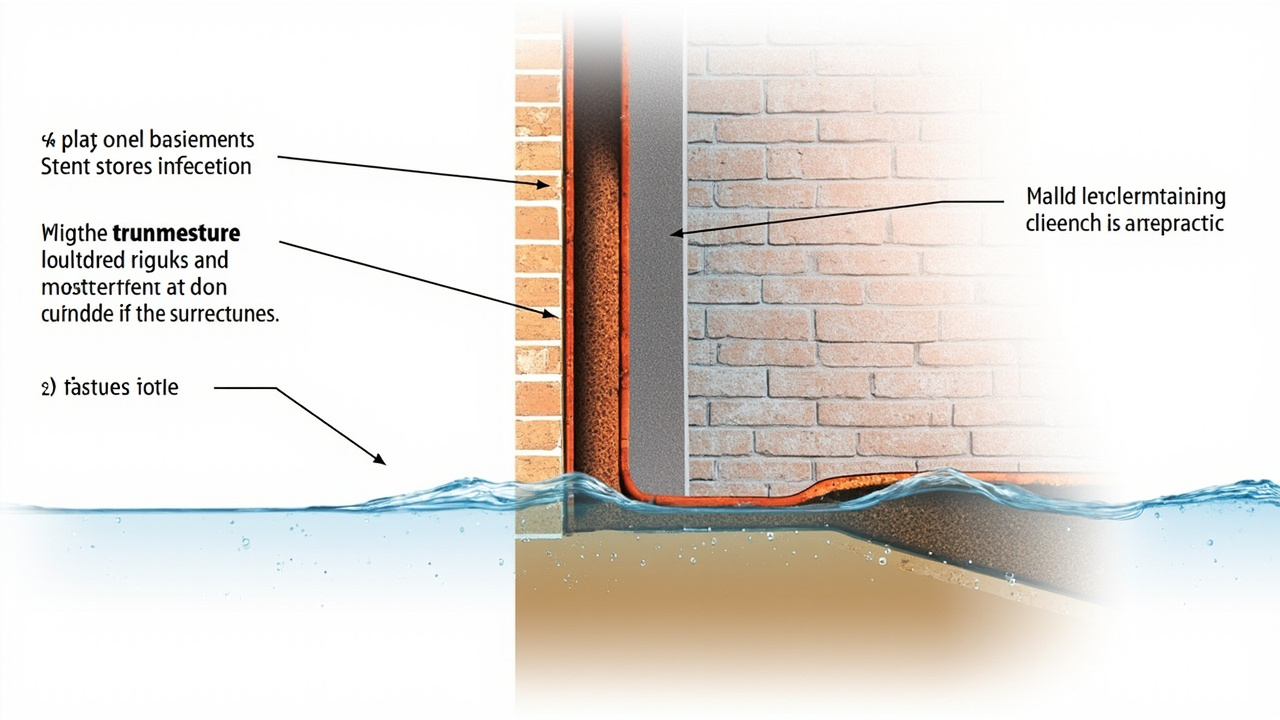






Chicago sits at the southwestern edge of Lake Michigan, which acts as a massive humidity source year-round. Summer winds push moist air inland, raising outdoor dew points into the uncomfortable 65 to 75 degree range. This outdoor moisture infiltrates homes through gaps in building envelopes and overwhelms air conditioning systems. Winter brings the opposite problem. Cold lake air creates temperature inversions that trap moisture close to the ground. Meanwhile, Chicago's clay soil holds water like a sponge. When snow melts or heavy rains fall, that water has nowhere to go. It saturates the ground around your foundation and pushes through cracks via hydrostatic pressure. The combination of lake humidity and clay soil creates indoor moisture problems that require local expertise to solve permanently.
Solving high relative humidity indoors in Chicago requires understanding local construction methods and building performance. Many Chicago homes were built before modern vapor barriers existed. Older brick homes have no moisture protection between soil and interior spaces. Newer homes often have improperly installed vapor barriers that fail at seams. We have worked in every Chicago neighborhood from Pilsen to Andersonville. We understand how different foundation types, soil conditions, and building ages impact indoor moisture problems. This local knowledge means faster diagnosis and solutions that actually work for Chicago's climate. When you hire Cornerstone Water Damage Restoration Chicago, you get technicians who live and work in the same environment you do.