
Expert Ceiling Water Damage Repair in Gold Coast, Chicago
You walk into your living room and notice a dark stain spreading across your ceiling. Water drips from the corner near the crown molding. Your upstairs neighbor says their pipes froze, or maybe their washing machine leaked. Either way, you need professional help now.
Ceiling water damage in Gold Coast properties requires speed and precision. Delays lead to structural failure, mold growth in hidden cavities, and thousands of dollars in additional repairs. Cornerstone Water Damage Restoration responds within hours to assess, contain, and repair ceiling leaks throughout Chicago and the surrounding Chicagoland area.
Why Gold Coast Ceiling Leaks Demand Immediate Action
Gold Coast buildings along Lake Shore Drive and near the Magnificent Mile are predominantly vertical structures. High-rise condos, brownstones, and historic buildings on Astor Street all share the same vulnerability. Water from an upstairs unit travels down through floor joists, plumbing penetrations, and mechanical chases before pooling in your ceiling.
The longer water sits, the more damage spreads. Drywall begins to fail within 24 hours. Mold spores germinate within 48 hours in the high humidity Chicago summers bring. The 60610 and 60611 zip codes experience humid conditions from June through September that accelerate mold colonization.
The structural weight of absorbed water creates hazardous conditions. A wet ceiling can collapse without warning, especially in historic plaster ceilings common in pre-1950 Gold Coast properties. Electrical wiring embedded in wet plaster creates shock hazards. You cannot safely access the damage yourself.
Identifying the Source of Your Ceiling Leak
You must know whether the leak originates from plumbing above you or a roof problem. The distinction determines repair cost, timeline, and who is liable for damages.
Upstairs Plumbing Leaks
Plumbing leaks appear directly below the source. Water drips in one concentrated area. The stain often has sharp edges rather than a gradual gradient. Ice dams are rare in Gold Coast high-rises because buildings have climate-controlled interiors, yet burst pipes happen regularly during Chicago’s polar vortex events when outdoor temperatures drop below negative 15 degrees Fahrenheit.
Common sources include washing machine lines, kitchen sink supply lines, condensation lines from HVAC systems, and toilet overflows in units directly above you. Your upstairs neighbor’s insurance typically covers the water damage to your unit if the leak results from a sudden, accidental discharge of water.
Roof Leaks
Roof damage appears near perimeter walls or around skylights and vents. Water often saturates a larger ceiling area because it travels along trusses and decking before dripping through. Wind-driven rain during Chicago spring storms can force water under flashing and shingles.
The building owner or HOA is liable for roof leaks. Your homeowner’s policy may cover interior damage, yet the building owner must repair the source. This distinction matters when you file insurance claims.
Your Immediate Action Plan
- Stop the water source
Contact your upstairs neighbor or building management immediately. They may need to shut off water to their unit. If the building super cannot identify the source, call a plumber. Do not attempt electrical work near wet areas.
- Protect your belongings
Move furniture, electronics, and valuables away from the dripping area. Wet drywall and insulation are not salvageable. Focus on protecting items that are.
- Document everything
Take photos and videos of all visible damage, including water stains, drips, and the affected area. Note the date, time, and what you observed. This documentation supports your insurance claim.
- Call a restoration company
Cornerstone Water Damage Restoration provides 24/7 emergency response throughout Chicago. A technician arrives to assess the damage, extract standing water, and establish a drying protocol before mold colonization begins.
- Notify your insurance carrier
File a claim immediately. Provide them with photos, contact information for the neighbor’s insurance, and the restoration company’s initial assessment. Delays in filing reduce coverage.
Professional Drying and Dehumidification
Water extraction is only the first step. Standing water removes easily with pumps and wet vacs. Moisture trapped inside ceiling cavities, insulation, and structural framing requires specialized equipment and expertise.
The Structural Drying Process
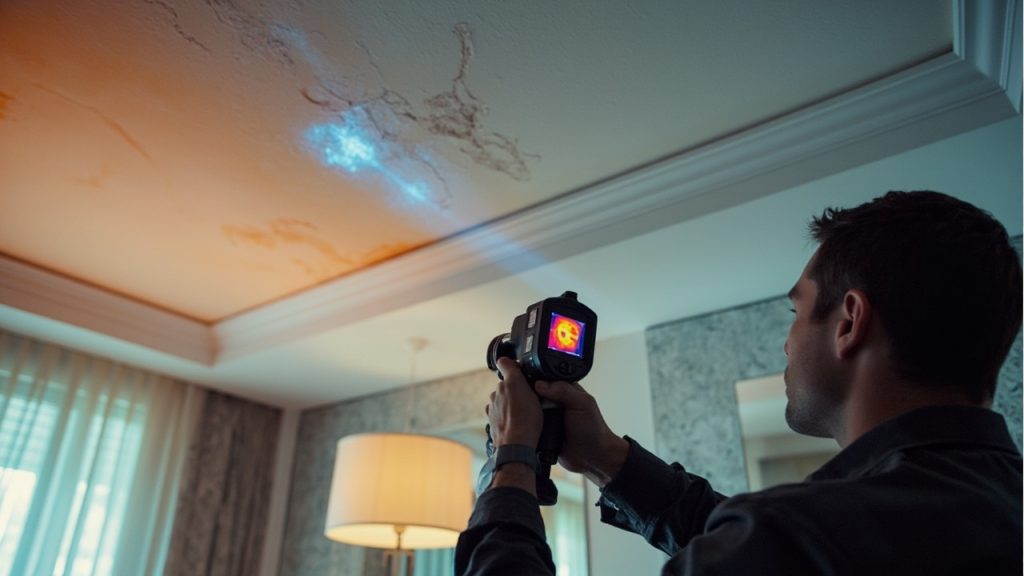
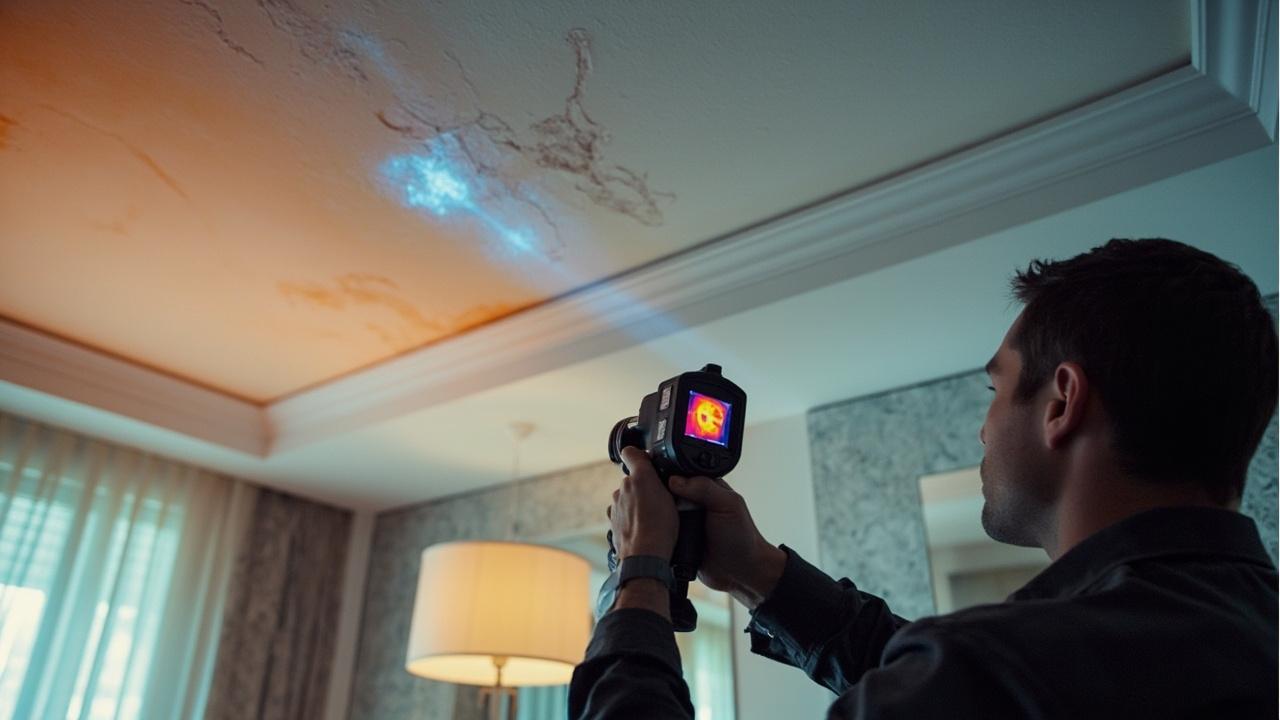
A professional restoration team uses thermal imaging cameras to detect moisture behind walls and in concealed spaces. Infrared thermography reveals where moisture hides. Wet materials appear cooler than dry ones, creating distinct visual patterns the technician interprets.
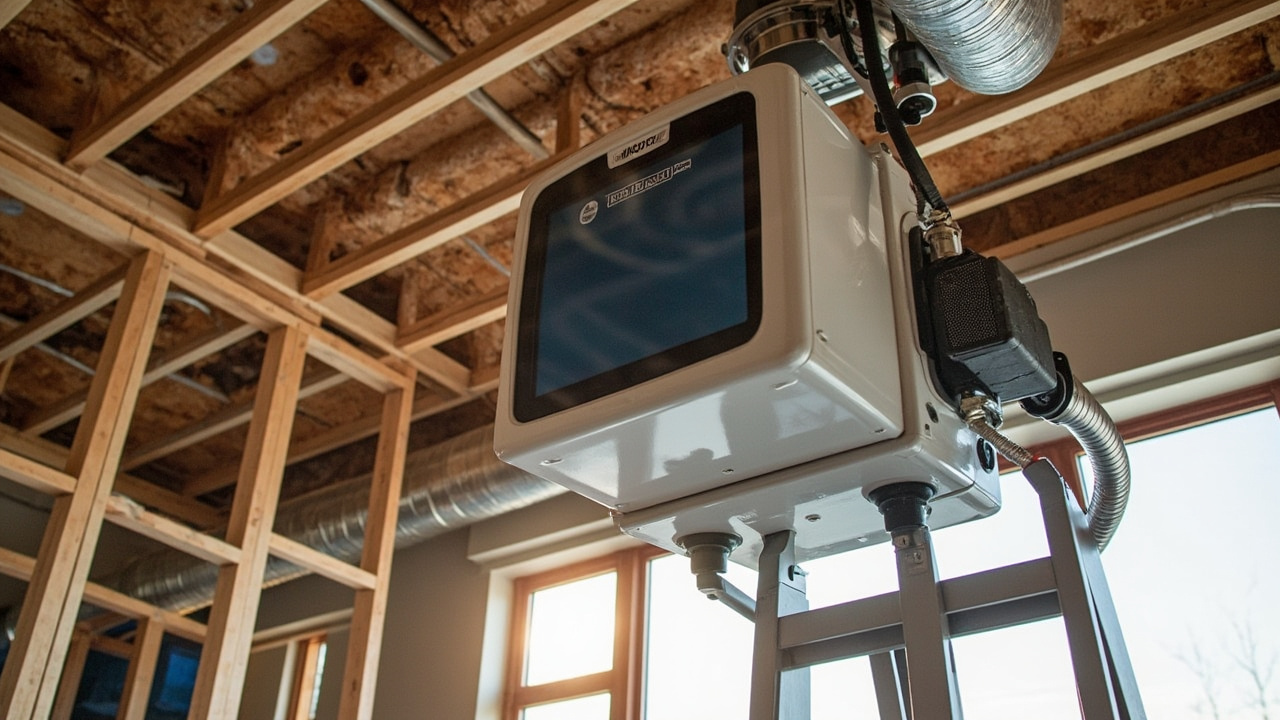
Once wet areas are mapped, the team removes affected drywall sections to expose wet framing. Perforated drywall panels allow air circulation through cavities. Industrial dehumidifiers extract moisture from the air while axial fans drive air through openings. The combination reduces relative humidity from saturated (95 to 100 percent) to safe levels (below 60 percent) within 48 to 72 hours for typical ceiling leaks.
Drying time depends on several factors. Thickness of insulation, cavity depth, ambient temperature, and how long the water sat all influence duration. A small localized leak may dry in two days. Water that spread through multiple cavities or ceiling voids may require a week of professional drying.
Dehumidification Strategy for Gold Coast High-Rise Units
High-rise apartments present unique drying challenges. Limited outdoor access restricts where technicians can vent equipment. Most restoration teams use portable dehumidifiers that drain continuously into building drains rather than requiring daily tank emptying.
The team seals off the affected area to concentrate dehumidification efforts. Temporary barriers containing moisture to one unit prevent humidity from spreading to neighboring units. Chicago’s strict building codes require that restoration work meet ventilation requirements, so technicians calculate the cubic footage of affected spaces and deploy appropriate equipment tonnage.
Mold Prevention and Antimicrobial Treatment
Mold begins growing within 48 hours on wet drywall, insulation, and wood. High humidity in Gold Coast summer months accelerates colonization. You cannot see mold spores with your naked eye, yet they multiply rapidly in warm, moist darkness.
Mold Testing and Assessment
Professional restoration companies collect air samples and surface swabs to determine mold species and spore counts. Laboratory analysis identifies which molds are present and whether they pose health risks. Some molds trigger allergic reactions and respiratory symptoms, particularly in people with asthma or immunosuppression.
The testing process takes three to five business days. Samples go to accredited labs for culture analysis. Results guide the scope of remediation. Light mold contamination limited to one area requires containment and removal. Extensive mold across multiple cavities may warrant full remediation protocols.
Antimicrobial Treatment Application
After drying is verified, technicians apply EPA-registered antimicrobial products to exposed framing, joists, and substructure. These treatments inhibit mold growth on wood surfaces. The product must not be applied to drywall, insulation, or finished surfaces. Exposed structural wood surfaces receive application only.
Application timing matters. Antimicrobial treatment works best on surfaces that are dry to the touch but still slightly cool. Applying product to hot, fully dried wood reduces effectiveness. Professional crews understand these nuances and time applications accordingly.
Ceiling Assessment and Replacement Decisions
Not all water-damaged ceilings require full replacement. A professional structural assessment determines whether drywall can be salvaged or must be removed and replaced.
| Assessment Factor | Salvageable Ceiling | Requires Replacement |
| Water saturation duration | Under 24 hours | Over 48 hours |
| Visible sagging or spongy texture | Minimal or none | Obvious soft spots or deformation |
| Mold growth extent | Surface staining only, limited area | Deep mold penetration, multiple areas |
| Structural integrity | Joists and framing dry and intact | Joists weakened or rotting visible |
| Insulation condition | Drying in place is possible | Fiberglass must be removed and replaced |
Drywall Replacement Process
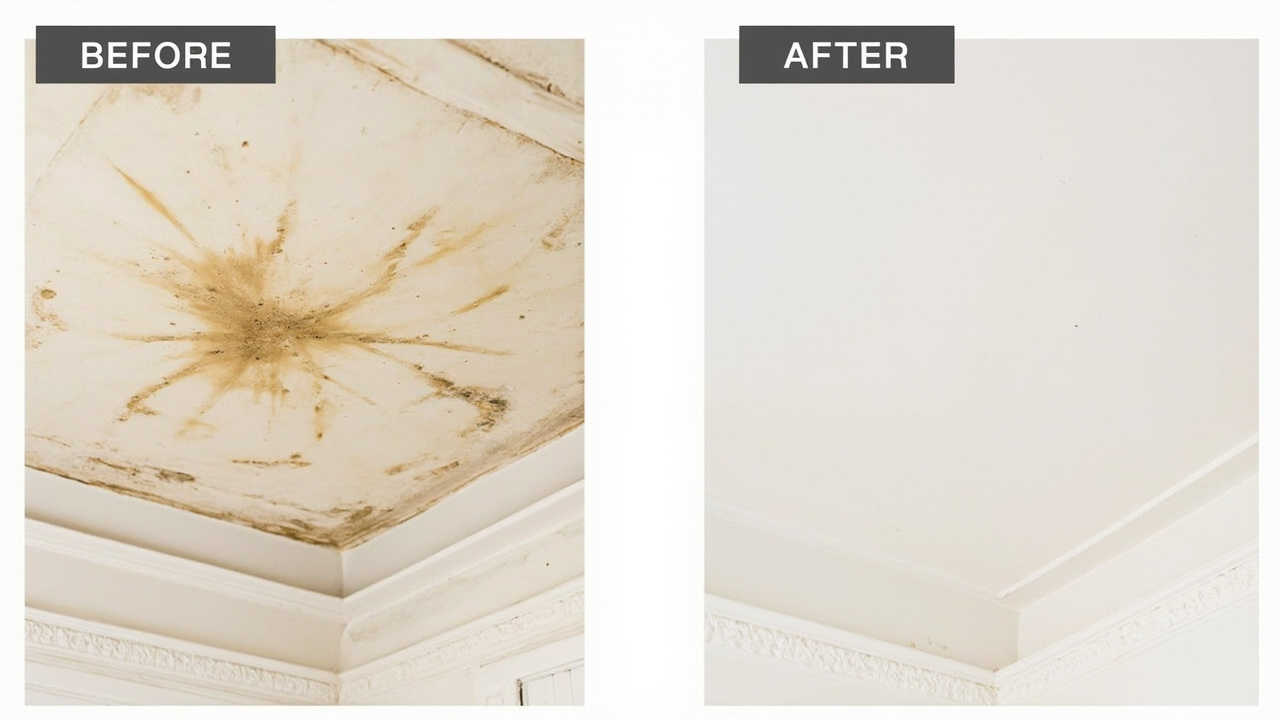
If drywall must be removed, technicians cut out saturated sections following stud lines. This containment approach limits demolition to affected areas and preserves structural stability. New drywall installs on the existing frame. Joint compound and tape seal seams. Paint matching restores the original finish.
Historic plaster ceilings in Gold Coast brownstones require specialized repair. Plasterers trained in historic restoration techniques apply lime-based compounds that match original plaster composition. Water damage to ornate plasterwork demands restoration artistry that standard drywall installation cannot replicate.
Deciding Between Repair and Replacement
Cost considerations influence the decision, yet safety and health come first. A ceiling that is weakened by water damage creates falling debris hazards. Mold embedded deep in plaster requires removal rather than surface treatment. You should not live with compromised structural integrity to save money.
Your insurance adjuster may push for minimal repairs. Cornerstone Water Damage Restoration documents all damage with photos and moisture readings. This evidence supports the scope of work needed and justifies full replacement when repair is insufficient.
Electrical Hazards in Wet Ceilings
Wet plaster and drywall conduct electricity. Ceiling fixtures, light switches, and wiring embedded in wet materials create shock hazards. You must treat any wet ceiling as an electrical hazard until a licensed electrician inspects the damage.
Do not touch ceiling fixtures or wall switches near the leak. Do not use electrical tools or fans until an electrician confirms the circuits serving the affected area are safe. Wet wiring insulation fails. Arcing and sparking inside walls cause fires long after the water has dried.
When the drywall is removed for drying, the electrician inspects all visible wiring. Damaged insulation requires wire replacement. If wiring shows corrosion or charring, the entire circuit may need replacement. This additional work adds to the project timeline and cost.
Gold Coast Building Code Compliance for Ceiling Repair
Chicago Building Code imposes strict requirements on water damage restoration, particularly in historic districts. Gold Coast properties often are designated as historically significant. Work must comply with Chicago’s Historic Preservation Ordinance.
Replacement materials must match original materials in composition and appearance. Drywall cannot replace original plaster without special approval. Paint color must match historic records. These requirements slow projects compared to standard residential repairs, yet they protect property values and architectural integrity.
Permits are required before major drywall replacement or structural work. Your restoration company should manage permit applications with the City of Chicago Department of Buildings. Unpermitted work can create problems when you sell the property or file insurance claims.
Insurance Claims and Documentation
Your insurance claim succeeds with thorough documentation. Restoration companies understand how insurers evaluate water damage claims and provide evidence that supports your claim value.
What Insurance Companies Require
Adjusters need moisture readings from affected areas, photos of all damage, a detailed scope of work explaining what was removed and replaced, and receipts for materials and labor. They also require proof that mold testing occurred if mold is suspected.
Water source documentation matters significantly. If the leak originates from your neighbor’s unit, your claim should identify that upstairs unit and provide the neighbor’s homeowner’s policy information. The neighbor’s insurance may be primary for the damage, reducing your deductible and increasing your recovery.
Common Claim Denials and How to Avoid Them
Insurance denies claims when the policyholder delays reporting damage. File your claim within days of discovering the leak, not weeks later. Denials also occur when homeowners attempt repairs without documentation. Do not remove damaged materials without photographing them first.
Some policies exclude damage from negligence. If your upstairs neighbor’s negligence caused the leak (leaving a window open during a freeze, for example), the claim may be denied. Your upstairs neighbor’s homeowner’s policy is the appropriate coverage source in that case.
Mold damage often is excluded from standard homeowner’s policies. Water damage that results in mold growth may not be covered. Your restoration company’s mold testing clarifies whether mold exists and whether it exceeds coverage limits. This clarity prevents disputes with your adjuster.
Timeline and Duration Expectations
| Project Phase | Duration | Key Activities |
| Initial assessment and extraction | First 24 hours | Moisture detection, standing water removal, dehumidifier deployment |
| Structural drying | 48 to 72 hours (typical) | Continuous dehumidification, moisture monitoring, equipment adjustment |
| Drywall removal and framing inspection | Day 3 or 4 | Contaminated materials removed, wet framing exposed and assessed |
| Antimicrobial application | Day 4 or 5 | Wood surfaces treated after moisture verification |
| Drywall installation and finishing | Days 5 to 10 | New drywall hung, joints taped and mudded, paint applied |
| Final inspection and cleanup | Day 10 to 12 | Cosmetic touch-ups, equipment removal, final walkthrough |
Small, localized ceiling leaks affecting 50 square feet or less may complete in 7 to 10 days. Extensive damage affecting 200 square feet or more, especially with plaster ceilings, may extend to three weeks or longer. Your restoration company provides a timeline after the initial assessment.
Preventing Future Ceiling Leaks
Once your ceiling is repaired, preventative measures reduce the risk of recurrence. Gold Coast properties benefit from regular plumbing inspection, particularly before Chicago winters arrive.
If the leak originated from a burst pipe in the unit above you, your upstairs neighbor should have the entire plumbing system inspected. Polar vortex events expose weak points in pipe insulation. Pipes in exterior walls, attics, and crawl spaces freeze first. Proper insulation and heat tape prevent failures.
Washing machine hoses should be inspected annually. Rubber hoses degrade and burst after 5 to 7 years of use. Metal braided hoses last longer and are less prone to sudden failure. Replace hoses proactively rather than waiting for a leak.
HVAC condensation drains require regular cleaning. Algae and sediment clog drains, causing water to back up and leak into ceilings. Your HVAC contractor should inspect drain lines annually, particularly before summer cooling season.
When to Call a Professional Versus DIY Limits
Small water stains from minor condensation may dry naturally with increased air circulation. Open windows on dry days, run ceiling fans to increase air movement, and monitor the area for mold growth. If the stain does not expand and no musty odor develops, the damage may be cosmetic only.
Active dripping water, visible sagging, or soft drywall demands professional intervention immediately. These signs indicate structural compromise and active water movement. Drying this damage yourself risks mold growth in hidden cavities and electrical hazards you cannot assess.
Mold visible on ceiling surfaces requires professional remediation. The mold you see represents only surface colonization. Deeper mold hides inside cavities and framing. A professional assessment with infrared imaging and air sampling determines the full extent.
Do not attempt to remove or replace drywall without professional help. Asbestos concerns in pre-1978 Gold Coast properties require certified asbestos contractors for removal. Lead paint in historic properties mandates lead-safe work practices. Professional restoration companies understand these hazards and work safely.
Water Damage Restoration in Neighboring Chicago Areas
Ceiling leak issues extend beyond Gold Coast. Residents in Lincoln Park, Lakeview, and Logan Square experience similar problems from upstairs neighbors and roof failures. The dense vertical construction throughout Chicago’s North Side creates the same vulnerability.
Cornerstone Water Damage Restoration serves the broader Chicago metropolitan area, including Water Damage Restoration in Evanston and Water Damage Restoration in Arlington Heights. Our 24/7 response covers Chicago neighborhoods from Cicero to Rogers Park and extends to Joliet and beyond.
For comprehensive understanding of water damage categories and restoration approaches, visit our guide on Categories of Water. When mold concerns exist, our Mold Remediation and Removal page provides detailed information on professional mold assessment and treatment.
Frequently Asked Questions
How quickly should I call a water damage restoration company after discovering a ceiling leak?
Call immediately. The first 24 to 48 hours determine whether mold prevention is possible. Delays compound damage and increase costs. Cornerstone Water Damage Restoration answers emergency calls 24/7 throughout Chicago.
Will my homeowner’s insurance cover water damage from my neighbor’s leak?
Your insurance covers sudden, accidental water damage from neighboring units. Your neighbor’s homeowner’s insurance is typically primary. Your claim covers damage to your unit and contents. File your claim within days of discovering the leak.
How long does it take for mold to grow after a ceiling gets wet?
Mold spores begin germinating within 24 to 48 hours on wet drywall and insulation. High humidity in Gold Coast summer months accelerates growth. Professional drying and dehumidification within 48 hours prevents mold colonization in most cases.
Can drywall be saved after water damage or does it always need replacement?
Drywall that dried within 24 hours and shows no mold growth may be salvageable. Surface staining alone does not require replacement. Drywall that remained wet longer than 48 hours, shows visible sagging, or has embedded mold requires removal and replacement.
What equipment and techniques remove hidden moisture from ceiling cavities?
Infrared thermal imaging cameras detect moisture invisible to the eye. Industrial dehumidifiers and high-velocity fans dry structural cavities. Moisture meters verify that wood framing and hidden spaces have reached safe dryness levels (below 17 percent wood moisture content) before drywall replacement begins.
Is electrical work required when repairing water-damaged ceilings?
A licensed electrician must inspect wiring and fixtures in affected ceiling areas. Wet wiring insulation may be damaged and requires replacement. Circuits serving the damaged area may need rewiring depending on corrosion and damage extent.
Your Next Step
Ceiling water damage in Gold Coast progresses rapidly. What appears as a small stain today becomes structural damage and mold contamination within days. Do not wait to see if the problem resolves on its own.
Contact Cornerstone Water Damage Restoration now for a professional assessment. Our technicians understand Gold Coast architecture, Chicago building codes, and how insurance companies evaluate ceiling leak claims. We respond within hours, provide 24/7 availability, and handle insurance documentation so you can focus on your family’s safety and your property’s recovery.
Call our emergency line today or visit our contact page to schedule your ceiling assessment. Stop the damage progression before mold growth and structural failure increase repair costs. Professional restoration begins now.
{
“@context”: “https://schema.org”,
“@type”: “BlogPosting”,
“headline”: “Expert Ceiling Water Damage Repair in Gold Coast, Chicago”,
“description”: “Professional ceiling leak repair in Gold Coast. 24/7 emergency response for water damage from upstairs neighbors. Insurance claims help included.”,
“wordCount”: 2876,
“datePublished”: “2026-02-27T12:55:00.000Z”,
“dateModified”: “2026-02-27T12:55:00.000Z”,
“inLanguage”: “en-US”,
“mainEntityOfPage”: {
“@type”: “WebPage”,
“@id”: “https://cornerstonewaterdamagerestorationchicago.com”
},
“publisher”: {
“@type”: “LocalBusiness”,
“name”: “Cornerstone Water Damage Restoration Chicago”,
“url”: “https://cornerstonewaterdamagerestorationchicago.com”
},
“author”: {
“@type”: “Organization”,
“name”: “Cornerstone Water Damage Restoration Chicago”,
“url”: “https://cornerstonewaterdamagerestorationchicago.com”
},
“image”: {
“@type”: “ImageObject”,
“url”: “https://cornerstonewaterdamagerestorationchicago.com/wp-content/uploads/2026/03/your-guide-to-fixing-a-ceiling-leak-from-an-upstai-1.jpg”
}
}
{
“@context”: “https://schema.org”,
“@type”: “LocalBusiness”,
“name”: “Cornerstone Water Damage Restoration Chicago”,
“url”: “https://cornerstonewaterdamagerestorationchicago.com”,
“address”: {
“@type”: “PostalAddress”,
“addressLocality”: “Chicago”
},
“areaServed”: {
“@type”: “City”,
“name”: “Chicago”
}
}
{
“@context”: “https://schema.org”,
“@type”: “FAQPage”,
“mainEntity”: [
{
“@type”: “Question”,
“name”: “How quickly should I call a water damage restoration company after discovering a ceiling leak?”,
“acceptedAnswer”: {
“@type”: “Answer”,
“text”: “Call immediately. The first 24 to 48 hours determine whether mold prevention is possible. Delays compound damage and increase costs. Cornerstone Water Damage Restoration answers emergency calls 24/7 throughout Chicago.”
}
},
{
“@type”: “Question”,
“name”: “Will my homeowner’s insurance cover water damage from my neighbor’s leak?”,
“acceptedAnswer”: {
“@type”: “Answer”,
“text”: “Your insurance covers sudden, accidental water damage from neighboring units. Your neighbor’s homeowner’s insurance is typically primary. Your claim covers damage to your unit and contents. File your claim within days of discovering the leak.”
}
},
{
“@type”: “Question”,
“name”: “How long does it take for mold to grow after a ceiling gets wet?”,
“acceptedAnswer”: {
“@type”: “Answer”,
“text”: “Mold spores begin germinating within 24 to 48 hours on wet drywall and insulation. High humidity in Gold Coast summer months accelerates growth. Professional drying and dehumidification within 48 hours prevents mold colonization in most cases.”
}
},
{
“@type”: “Question”,
“name”: “Can drywall be saved after water damage or does it always need replacement?”,
“acceptedAnswer”: {
“@type”: “Answer”,
“text”: “Drywall that dried within 24 hours and shows no mold growth may be salvageable. Surface staining alone does not require replacement. Drywall that remained wet longer than 48 hours, shows visible sagging, or has embedded mold requires removal and replacement.”
}
},
{
“@type”: “Question”,
“name”: “What equipment and techniques remove hidden moisture from ceiling cavities?”,
“acceptedAnswer”: {
“@type”: “Answer”,
“text”: “Infrared thermal imaging cameras detect moisture invisible to the eye. Industrial dehumidifiers and high-velocity fans dry structural cavities. Moisture meters verify that wood framing and hidden spaces have reached safe dryness levels (below 17 percent wood moisture content) before drywall replacement begins.”
}
},
{
“@type”: “Question”,
“name”: “Is electrical work required when repairing water-damaged ceilings?”,
“acceptedAnswer”: {
“@type”: “Answer”,
“text”: “A licensed electrician must inspect wiring and fixtures in affected ceiling areas. Wet wiring insulation may be damaged and requires replacement. Circuits serving the damaged area may need rewiring depending on corrosion and damage extent.”
}
}
]
}
{
“@context”: “https://schema.org”,
“@type”: “HowTo”,
“name”: “How to Respond to a Ceiling Leak”,
“step”: [
{
“@type”: “HowToStep”,
“position”: 1,
“name”: “Stop the water source”,
“text”: “Contact your upstairs neighbor or building management immediately. They may need to shut off water to their unit. If the building super cannot identify the source, call a plumber. Do not attempt electrical work near wet areas.”
},
{
“@type”: “HowToStep”,
“position”: 2,
“name”: “Protect your belongings”,
“text”: “Move furniture, electronics, and valuables away from the dripping area. Wet drywall and insulation are not salvageable. Focus on protecting items that are.”
},
{
“@type”: “HowToStep”,
“position”: 3,
“name”: “Document everything”,
“text”: “Take photos and videos of all visible damage, including water stains, drips, and the affected area. Note the date, time, and what you observed. This documentation supports your insurance claim.”
},
{
“@type”: “HowToStep”,
“position”: 4,
“name”: “Call a restoration company”,
“text”: “Cornerstone Water Damage Restoration provides 24/7 emergency response throughout Chicago. A technician arrives to assess the damage, extract standing water, and establish a drying protocol before mold colonization begins.”
},
{
“@type”: “HowToStep”,
“position”: 5,
“name”: “Notify your insurance carrier”,
“text”: “File a claim immediately. Provide them with photos, contact information for the neighbor’s insurance, and the restoration company’s initial assessment. Delays in filing reduce coverage.”
}
],
“image”: “https://cornerstonewaterdamagerestorationchicago.com/wp-content/uploads/2026/03/your-guide-to-fixing-a-ceiling-leak-from-an-upstai-1.jpg”
}
{
“@context”: “https://schema.org”,
“@type”: “BreadcrumbList”,
“itemListElement”: [
{
“@type”: “ListItem”,
“position”: 1,
“name”: “Home”,
“item”: “https://cornerstonewaterdamagerestorationchicago.com”
},
{
“@type”: “ListItem”,
“position”: 2,
“name”: “Blog”,
“item”: “https://cornerstonewaterdamagerestorationchicago.com/blog”
},
{
“@type”: “ListItem”,
“position”: 3,
“name”: “Expert Ceiling Water Damage Repair in Gold Coast, Chicago”
}
]
}
{
“@context”: “https://schema.org”,
“@type”: “Service”,
“serviceType”: “Water Damage Restoration”,
“provider”: {
“@type”: “LocalBusiness”,
“name”: “Cornerstone Water Damage Restoration Chicago”,
“url”: “https://cornerstonewaterdamagerestorationchicago.com”
},
“areaServed”: {
“@type”: “City”,
“name”: “Chicago”
},
“description”: “Professional ceiling leak repair in Gold Coast. 24/7 emergency response for water damage from upstairs neighbors. Insurance claims help included.”
}