
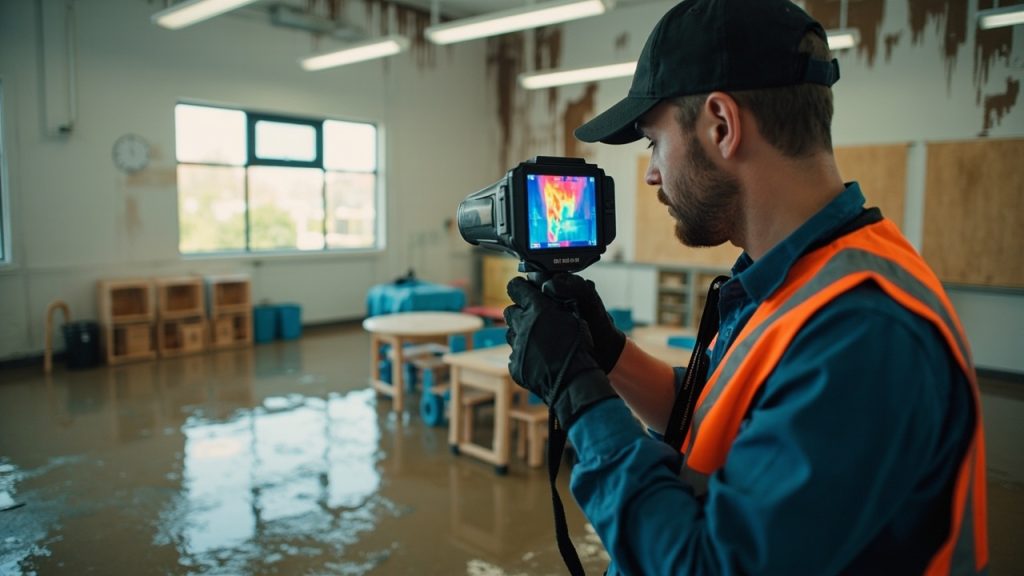
Daycare Water Damage Restoration in Chicago: Safe and Rapid Recovery
Water damage inside a Chicago daycare center creates a crisis that extends far beyond the visible water on the floor. Your facility must reopen safely and quickly to serve families who depend on your care. State health codes demand you eliminate all contamination before children return. Insurance companies scrutinize your restoration process. Parents need proof that their children will return to a clean, healthy space.. Read more about Choosing the right water damage restoration company for your West Loop business.
Cornerstone Water Damage Restoration understands this pressure because we have worked with daycare centers across Chicago, from South Shore to Logan Square and Evanston, through exactly these situations. We specialize in restoring childcare facilities while meeting Illinois Department of Children and Family Services (DCFS) requirements and protecting the respiratory health of every child who will walk through your doors.
Why Water Damage in Daycares Demands Specialized Expertise
A water leak in a residential home is serious. A water leak in a daycare center is a compliance emergency. Here is why standard water restoration falls short for childcare facilities.
Children’s immune systems are still developing. Mold spores and bacterial growth that might cause minor irritation in an adult can trigger asthma attacks, respiratory infections, and allergic reactions in young children. The Environmental Protection Agency (EPA) has documented that indoor mold exposure increases childhood asthma rates, making mold prevention in daycare spaces non-negotiable.
DCFS health and safety inspectors will walk through your facility before you reopen. They check for moisture in walls, verify humidity levels remain below 50 percent, and confirm you used only child-safe cleaning agents. Failure to meet these standards means closure extension and potential license suspension.
Chicago’s climate accelerates damage in ways restoration companies unfamiliar with the region often miss. Spring rains overwhelm aging sump pumps in older neighborhood facilities. Summer humidity, combined with water intrusion, creates perfect conditions for mold growth within 24 to 48 hours. The polar vortex winters cause pipe bursts in daycare centers built before modern plumbing codes, with frozen lines rupturing inside walls where water damage spreads hidden for days.
Your building materials matter too. Many Chicago daycare centers operate in historic bungalows or converted residential spaces with unfinished basements, limestone foundations, and plaster walls. These materials absorb and hold moisture differently than modern construction. Standard drying timelines fail in these older structures, requiring specialized psychrometric monitoring to track actual moisture content inside materials rather than surface readings.
24/7 Emergency Response for Chicago Childcare Centers
When water damage strikes, every hour matters. Cornerstone dispatches a team within 60 to 90 minutes of your call anywhere in the greater Chicago area. We operate around the clock because water damage does not wait for business hours.. Read more about Why IICRC certification matters when hiring a restoration pro in Chicago.
Your first call is the hardest. You need someone who understands immediately what you are facing. Our team asks the right questions. When did the water appear? Where is it coming from? Is it clean water from a broken supply line or contaminated water from a sewer backup? Are children currently in the facility or has staff already begun evacuation?
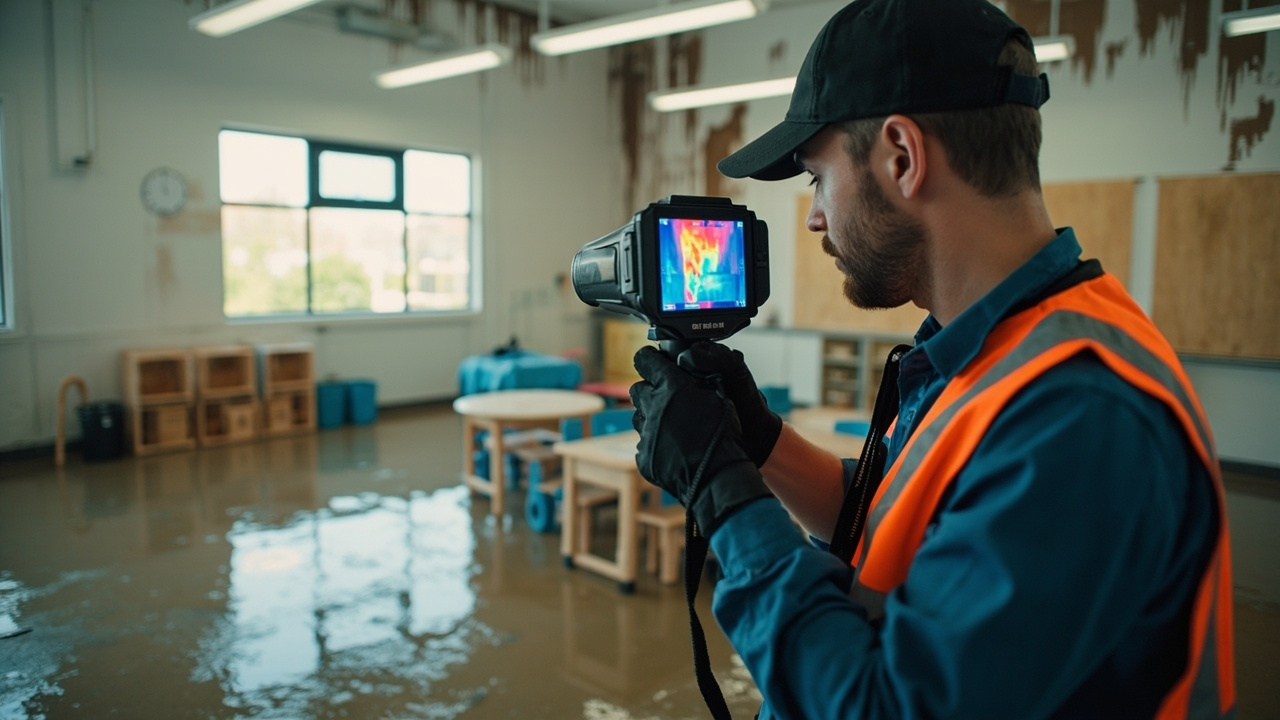
We arrive with extraction equipment, thermal imaging cameras, and moisture meters. Our technicians begin water removal while simultaneously assessing the extent of damage within your walls, under flooring, and inside structural materials you cannot see. Thermal imaging reveals wet areas invisible to the human eye, allowing us to dry areas before mold colonization begins.
Within the first 24 hours, our goal is water extraction, initial drying, and a realistic timeline for reopening. We provide this information to your director so you can notify families, coordinate alternative care, and prepare staff for the restoration process.
Our Child-Safe Restoration Process
Standard water damage restoration uses industrial-strength antimicrobials and bleach-based solutions. These products work in office buildings. They are inappropriate for spaces where children breathe, play on floors, and put hands in their mouths.
Our process prioritizes child safety without sacrificing effectiveness.
Water Extraction and Initial Drying
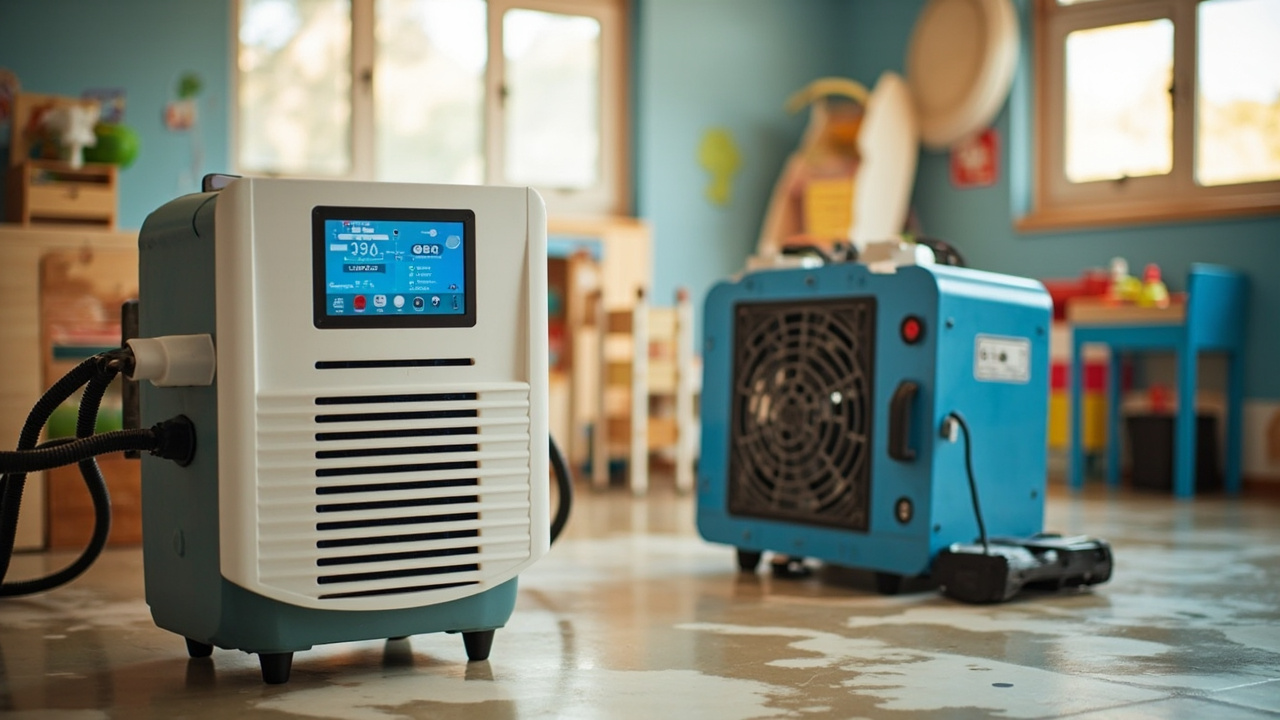
Technicians use submersible pumps and high-capacity wet vacuums to remove standing water. Once bulk water is gone, we place industrial dehumidifiers and high-velocity air movers throughout the facility. These machines are positioned to dry materials from the inside out. A single dehumidifier running continuously can remove 100 pounds of water from air and building materials daily.
Non-Toxic Antimicrobial Treatment
Once drying begins, we apply EPA-approved botanical disinfectants and enzymatic treatments designed specifically for childcare environments. These products eliminate bacterial and fungal growth without leaving chemical residues. They meet the safety standards set by the American Academy of Pediatrics (AAP) and pose zero risk to children once the facility dries and airs out.
We avoid quaternary ammonium compounds, phenol-based cleaners, and chlorine solutions. These chemicals off-gas VOCs (volatile organic compounds) that irritate respiratory systems. A child-safe restoration takes longer in some respects because we allow adequate ventilation time between treatment and occupancy.
Structural Drying with Continuous Monitoring
This is where most restoration companies underestimate the challenge. Drying the surface is simple. Drying materials inside walls, under flooring, and within structural lumber takes time and precision.
We install moisture meters at multiple depths within walls and flooring. We monitor humidity levels, air temperature, and actual moisture content. In older Chicago facilities with plaster walls and lime mortar, moisture wicks through materials slowly. We adjust dehumidification rates based on actual data rather than guesswork. This prevents over-drying, which cracks plaster and damages historic materials, while ensuring thorough drying that prevents mold.
Final Verification and Documentation
Before we declare your facility ready for occupancy, we perform final moisture readings, humidity verification, and visual inspection. We provide written documentation of all treatments, drying times, and measurements. DCFS inspectors can review this documentation and verify that your facility meets health and safety standards.
Navigating DCFS and Insurance Requirements
Illinois Department of Children and Family Services sets specific standards for water damage remediation in childcare facilities. Your facility must demonstrate that water damage has been fully remediated and that your space is free from biological hazards.
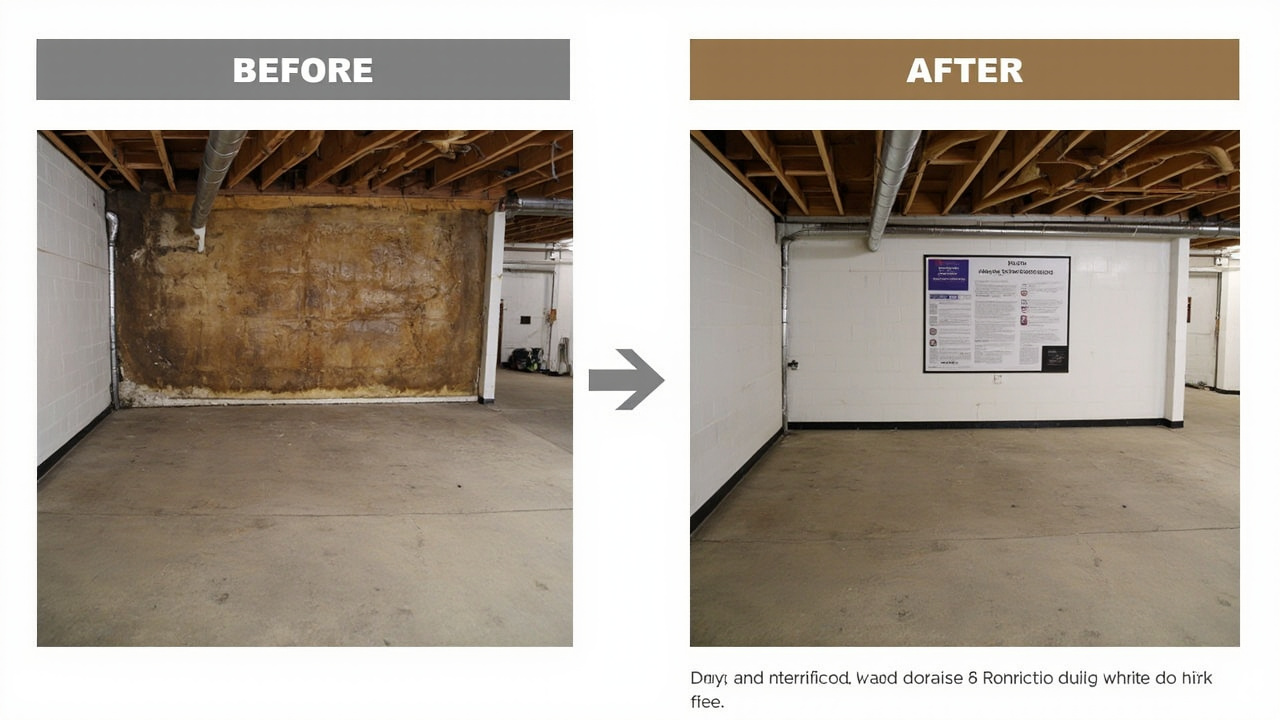
DCFS inspectors look for several specific markers. Humidity levels must measure between 30 and 50 percent. No visible mold growth can be present on any surface. All wet materials that cannot be completely dried must be removed and replaced. Water-damaged insulation in walls must be removed and replaced with non-water-absorbent alternatives. Flooring materials that absorbed water must be replaced unless they can be proven completely dry through moisture testing.
We manage this process on your behalf. After drying is complete, we provide DCFS-ready documentation proving that remediation meets state standards. We work directly with your insurance carrier to explain our process and justify our timeline. Insurance companies want confirmation that the restoration was thorough and that future claims from the same damage will not occur. Our photographic documentation, moisture readings, and treatment records provide that assurance.
Many daycare directors worry that restoration will be prohibitively expensive or will extend closure indefinitely. Our experience in Chicago facilities shows that rapid, professional response actually reduces total costs. Water damage left to sit for days spreads and worsens. Mold growth that requires complete room replacement costs far more than extracting water within the first 24 hours and beginning thorough drying immediately.
Mold Prevention for Pediatric Health
Mold is the enemy of childhood respiratory health. Once mold begins growing in a daycare facility, complete remediation becomes expensive and time-consuming. Our approach stops mold before it starts.
Chicago’s climate creates specific mold risks. Summer humidity regularly exceeds 70 percent. If your facility has water intrusion from a leaking roof, cracked foundation, or failed sump pump, that moisture combines with warm indoor air to create a mold growth environment within 24 to 48 hours. Basements in older Chicago neighborhoods, particularly in areas with high water tables near Lake Michigan, are particularly vulnerable.
We prevent mold through aggressive dehumidification and air movement. Industrial dehumidifiers remove moisture from air and materials. High-velocity air movers accelerate evaporation and circulate fresh air throughout the facility. These machines run continuously until moisture content drops below 12 to 15 percent in all materials, including inside walls and under flooring.
We also remove water-damaged porous materials that cannot be dried sufficiently. Insulation, drywall with heavy water absorption, and damaged subflooring are replaced with mold-resistant alternatives. This approach prevents future mold growth even if humidity spikes in the future.
Chicago Neighborhoods and Building-Specific Challenges
Daycare facilities across Chicago face different risks depending on their location and building style. Understanding these challenges helps us respond effectively to your specific situation.
South Shore facilities, many housed in older residential buildings or converted industrial spaces, deal with high water table conditions. The area sits close to Lake Michigan, and hydrostatic pressure from groundwater frequently pushes moisture into basement spaces. We size dehumidification equipment to handle continuous moisture intrusion while simultaneously identifying and fixing the source problem.
Logan Square daycare centers often operate in historic two-flats and three-flats with shared basement spaces and aging combined sewer systems. A sewer backup during heavy spring rains affects multiple units simultaneously. We prioritize contamination control in these situations, using sealed dehumidifiers and preventing cross-contamination between units.
Evanston facilities near the North Shore face lake effect snow melt and spring rain scenarios that overwhelm aging storm drains. Foundation cracks that appear minor during dry months become water entry points during the spring thaw. Thermal imaging identifies these cracks before significant damage occurs.
Older Chicago buildings built before the 1970s may contain asbestos insulation or lead-based paint. Water damage remediation in these facilities requires specialized protocols. Our team follows EPA and Illinois Department of Public Health standards for identifying and safely managing these hazards during restoration.
Real Costs and Timeline Expectations
Restoration timelines vary based on damage extent, building materials, and environmental conditions. However, a realistic expectation for Chicago daycare facilities follows this pattern.
| Damage Scenario | Water Extraction Timeline | Initial Drying Phase | Structural Drying Phase | Final Verification |
|---|---|---|---|---|
| Localized water in one room (burst supply line, overflowed toilet) | 2 to 4 hours | 24 to 48 hours | 3 to 5 days | 1 day |
| Moderate water damage affecting multiple rooms | 4 to 8 hours | 48 to 72 hours | 5 to 10 days | 1 to 2 days |
| Severe damage with water in walls or under flooring | 8 to 24 hours | 72 to 96 hours | 10 to 21 days | 2 to 3 days |
| Sewage contamination or flooding | 24 hours minimum | 96 to 120 hours | 14 to 28 days | 3 to 5 days |
These timelines assume optimal conditions. Older buildings with plaster walls or wood structure extend drying times. High outdoor humidity slows indoor drying. Equipment availability and technician scheduling may add days to the total restoration window.
Insurance typically covers water damage restoration as a covered loss. Your policy specifics determine your deductible and whether ancillary costs (alternative care arrangements, lost revenue due to closure) are reimbursable. We help you file the claim properly and provide documentation that supports approval.
Critical Factors That Separate Child-Safe Restoration From Standard Water Cleanup
Not every water damage contractor understands childcare facility requirements. The distinction matters significantly for your children and your license.
| Factor | Standard Water Restoration | Child-Safe Daycare Restoration |
|---|---|---|
| Antimicrobial Chemicals | Industrial bleach, quaternary ammonium compounds, phenol-based cleaners | EPA-approved botanical disinfectants, enzymatic treatments, zero VOC off-gassing |
| Drying Verification | Surface-level moisture meters, visual inspection | Multi-depth moisture monitoring in walls and subfloors, humidity tracking, thermographic analysis |
| Material Replacement Standards | Replace if visibly damaged or if moisture exceeds 20 percent | Replace if moisture exceeds 12 to 15 percent. Remove all water-damaged insulation. Replace flooring after any saturation |
| Ventilation Requirements | Standard HVAC operation | Extended air exchange, portable air scrubbers, continuous ventilation until VOC levels drop below 0.5 ppm |
| Final Certification | Completion invoice | DCFS-compliant documentation, moisture testing records, chemical treatment inventory, AAP compliance verification |
Why Chicago Daycares Trust Cornerstone
We have restored childcare facilities in South Shore after foundation seepage created mold in basement playrooms. We have managed sewer backups in Logan Square two-flats that affected multiple daycare operators sharing the building. We have worked through emergency pipe bursts in Evanston facilities during winter freeze-thaw cycles when parents needed their children back in care within 48 hours.
In each case, we met DCFS standards on the first inspection. Children returned to clean, healthy spaces. Insurance claims were approved without dispute because our documentation proved professional remediation. Directors regained control of their facilities instead of managing chaos and confusion.
We achieve this through IICRC S500 Standard compliance, which covers water damage restoration procedures. Our team members hold IICRC Water Removal Technician certifications and Mold Remediation Technician credentials. We understand psychrometrics and structural drying because we have applied this knowledge across hundreds of Chicago properties over 15 years.
We also understand the emotional weight of this situation. Your facility is your livelihood. The children are your responsibility. Parents trust you to keep their children safe. We treat that trust with the urgency and professionalism it deserves.
Steps to Take Immediately After Water Damage Occurs
Your response in the first hours determines the final outcome.
- Ensure safety and evacuate children. If water is still entering the facility or if electrical hazards exist, move children to an alternative space immediately. Do not delay for documentation or assessment.
- Call Cornerstone Water Damage Restoration immediately. Contact our 24/7 emergency line. Provide your address, describe the water source, and note the extent of visible water. We dispatch a team to your facility within 60 to 90 minutes.
- Contain and document. If safe to do so, close doors to isolate damaged areas and prevent water from spreading further. Take photographs of visible damage, wet materials, and affected spaces. This documentation supports insurance claims.
- Notify your insurance carrier. Report the claim as soon as possible. Insurance policies require prompt notice. Provide your policy number and a brief description of the damage.
- Notify DCFS. As a licensed facility, you are required to report significant water damage to your licenser. Contact your local DCFS office and describe the incident. They may inspect the facility before reopening.
- Secure alternative care arrangements. Contact families and provide honest information about closure duration. Work with other facilities or day programs to arrange temporary care if necessary.
- Begin the restoration process. Our team takes control of water removal and drying while you manage communications with families and regulators.
Speed in these first hours prevents secondary damage, reduces total restoration cost, and minimizes closure duration.
Protecting Your Facility From Future Water Damage
After we restore your facility, preventive steps reduce the risk of repeated incidents.
Chicago’s hydrostatic pressure, combined with aging municipal infrastructure, creates persistent water damage risk. Foundation seepage in South Shore facilities can be reduced through exterior drain tile installation or interior waterproofing. Sump pump reliability in Logan Square basements improves with backup battery systems and water alarm sensors that alert staff to early moisture intrusion.
Roof inspections before the spring rain season identify loose flashing and deteriorated shingles before water enters the building. Gutter cleaning and downspout extension prevent water from pooling against foundation walls. Internal plumbing inspections catch corrosion and weak connections before supply lines fail.
These preventive measures cost a fraction of full restoration and keep your facility operational instead of closed due to water damage.
For more information on insurance claim management, see our guide on how to handle a Chicago water damage insurance claim without getting overwhelmed. If you are concerned about signs of mold after a water event, read our detailed resource on hidden signs of mold after water damage, which covers respiratory warning signs in children.
Frequently Asked Questions
Can my daycare reopen while drying equipment is still running?
Yes, with conditions. DCFS allows operation while drying is underway if moisture has been removed from occupancy areas, no visible mold is present, and chemical treatments have fully cured. Dehumidifiers and air movers can operate during non-occupancy hours or in isolated spaces. We manage this timeline so your facility reopens as quickly as safely possible.
What if water damage involves sewage or contaminated water?
Sewage contamination requires full biohazard remediation. All porous materials that contacted sewage water must be removed and disposed of per EPA regulations. We use containment procedures to prevent cross-contamination of unaffected areas. DCFS will require proof of biohazard remediation before the facility reopens. Timeline extends significantly due to material replacement and additional verification.
Are my water damage costs covered by insurance?
Water damage from sudden, accidental events is typically covered under standard property insurance policies. Gradual water intrusion, maintenance failures, and flood damage are usually excluded. We review your specific situation with your insurance carrier to confirm coverage. Deductibles apply, so you may have out-of-pocket costs depending on your policy terms.
How do I know if my facility truly meets DCFS health standards after restoration?
We provide complete documentation including moisture readings at multiple depths, humidity levels, photographic records of all areas, and chemical treatment inventory with Safety Data Sheets (SDS) for every product used. This documentation proves to DCFS that your facility meets health standards. Request a final inspection from DCFS before reopening to ensure no additional concerns exist.
What is the difference between mold growth and mold spores?
Mold spores are microscopic particles naturally present in air and soil. They cause problems only when they land on damp surfaces and grow into visible mold colonies. Our drying approach prevents mold growth by keeping moisture content too low for colonization. Standard cleanup that does not fully dry materials allows spores to germinate into active mold growth within days.
Contact Cornerstone Now
Your daycare facility needs restoration that prioritizes children’s health while meeting state compliance requirements. Cornerstone Water Damage Restoration provides both. We respond within 60 to 90 minutes across the greater Chicago area, use child-safe treatments and verification procedures, and deliver DCFS-compliant documentation that proves your facility is ready for occupancy.
Call Cornerstone Water Damage Restoration immediately if water damage occurs at your facility. Our 24/7 emergency team is ready to stop the damage and begin the restoration process. Do not wait to see if the water damage resolves on its own. Do not attempt DIY drying with standard equipment. Contact us now so we can protect your children, your license, and your business.
{
“@context”: “https://schema.org”,
“@type”: “BlogPosting”,
“headline”: “Daycare Water Damage Restoration in Chicago: Safe and Rapid Recovery”,
“description”: “Child-safe water damage restoration for Chicago daycares. DCFS-compliant, rapid recovery, non-toxic treatments. Emergency response 24/7.”,
“wordCount”: 3011,
“datePublished”: “2026-05-09T12:24:00.000Z”,
“dateModified”: “2026-05-09T12:24:00.000Z”,
“inLanguage”: “en-US”,
“mainEntityOfPage”: {
“@type”: “WebPage”,
“@id”: “https://cornerstonewaterdamagerestorationchicago.com”
},
“publisher”: {
“@type”: “LocalBusiness”,
“name”: “Cornerstone Water Damage Restoration Chicago”,
“url”: “https://cornerstonewaterdamagerestorationchicago.com”
},
“author”: {
“@type”: “Organization”,
“name”: “Cornerstone Water Damage Restoration Chicago”,
“url”: “https://cornerstonewaterdamagerestorationchicago.com”
},
“image”: {
“@type”: “ImageObject”,
“url”: “https://cornerstonewaterdamagerestorationchicago.com/wp-content/uploads/2026/03/meeting-health-codes-after-a-water-leak-at-your-so-1.jpg”
}
}
{
“@context”: “https://schema.org”,
“@type”: “LocalBusiness”,
“name”: “Cornerstone Water Damage Restoration Chicago”,
“url”: “https://cornerstonewaterdamagerestorationchicago.com”,
“address”: {
“@type”: “PostalAddress”,
“addressLocality”: “Chicago”
},
“areaServed”: {
“@type”: “City”,
“name”: “Chicago”
}
}
{
“@context”: “https://schema.org”,
“@type”: “FAQPage”,
“mainEntity”: [
{
“@type”: “Question”,
“name”: “Can my daycare reopen while drying equipment is still running?”,
“acceptedAnswer”: {
“@type”: “Answer”,
“text”: “Yes, with conditions. DCFS allows operation while drying is underway if moisture has been removed from occupancy areas, no visible mold is present, and chemical treatments have fully cured. Dehumidifiers and air movers can operate during non-occupancy hours or in isolated spaces. We manage this timeline so your facility reopens as quickly as safely possible.”
}
},
{
“@type”: “Question”,
“name”: “What if water damage involves sewage or contaminated water?”,
“acceptedAnswer”: {
“@type”: “Answer”,
“text”: “Sewage contamination requires full biohazard remediation. All porous materials that contacted sewage water must be removed and disposed of per EPA regulations. We use containment procedures to prevent cross-contamination of unaffected areas. DCFS will require proof of biohazard remediation before the facility reopens. Timeline extends significantly due to material replacement and additional verification.”
}
},
{
“@type”: “Question”,
“name”: “Are my water damage costs covered by insurance?”,
“acceptedAnswer”: {
“@type”: “Answer”,
“text”: “Water damage from sudden, accidental events is typically covered under standard property insurance policies. Gradual water intrusion, maintenance failures, and flood damage are usually excluded. We review your specific situation with your insurance carrier to confirm coverage. Deductibles apply, so you may have out-of-pocket costs depending on your policy terms.”
}
},
{
“@type”: “Question”,
“name”: “How do I know if my facility truly meets DCFS health standards after restoration?”,
“acceptedAnswer”: {
“@type”: “Answer”,
“text”: “We provide complete documentation including moisture readings at multiple depths, humidity levels, photographic records of all areas, and chemical treatment inventory with Safety Data Sheets (SDS) for every product used. This documentation proves to DCFS that your facility meets health standards. Request a final inspection from DCFS before reopening to ensure no additional concerns exist.”
}
},
{
“@type”: “Question”,
“name”: “What is the difference between mold growth and mold spores?”,
“acceptedAnswer”: {
“@type”: “Answer”,
“text”: “Mold spores are microscopic particles naturally present in air and soil. They cause problems only when they land on damp surfaces and grow into visible mold colonies. Our drying approach prevents mold growth by keeping moisture content too low for colonization. Standard cleanup that does not fully dry materials allows spores to germinate into active mold growth within days.”
}
}
]
}
{
“@context”: “https://schema.org”,
“@type”: “BreadcrumbList”,
“itemListElement”: [
{
“@type”: “ListItem”,
“position”: 1,
“name”: “Home”,
“item”: “https://cornerstonewaterdamagerestorationchicago.com”
},
{
“@type”: “ListItem”,
“position”: 2,
“name”: “Blog”,
“item”: “https://cornerstonewaterdamagerestorationchicago.com/blog”
},
{
“@type”: “ListItem”,
“position”: 3,
“name”: “Daycare Water Damage Restoration in Chicago: Safe and Rapid Recovery”
}
]
}
{
“@context”: “https://schema.org”,
“@type”: “Service”,
“serviceType”: “Water Damage Restoration”,
“provider”: {
“@type”: “LocalBusiness”,
“name”: “Cornerstone Water Damage Restoration Chicago”,
“url”: “https://cornerstonewaterdamagerestorationchicago.com”
},
“areaServed”: {
“@type”: “City”,
“name”: “Chicago”
},
“description”: “Child-safe water damage restoration for Chicago daycares. DCFS-compliant, rapid recovery, non-toxic treatments. Emergency response 24/7.”
}