
Chicago Downspout Disconnection Guidelines, Benefits, and Flood Prevention
Your downspouts channel thousands of gallons of water directly into Chicago’s aging combined sewer system every time it rains. Water flows somewhere. It overwhelms aging pipes, backs up into basements, and leaves you facing tens of thousands of dollars in restoration costs. The City of Chicago’s mandatory downspout disconnection program exists for one reason: to stop this cycle before it starts.
This guide explains what disconnection means, why it matters for your home’s longevity, and how to do it right without accidentally flooding your neighbor’s foundation or creating ice hazards in winter.
Chicago’s Combined Sewer System and Why Disconnection Matters
Chicago’s infrastructure tells a story of a city built fast in the 1800s. Much of the city still uses what engineers call a “combined sewer system.” This means rainwater and sewage share the same pipes. During a normal day, this works. During a heavy rain, it fails catastrophically.
When 2 inches of rain falls in 30 minutes, the system cannot handle it. The excess backs up through the lowest points in your home: basement foundation cracks, floor drains, and toilet overflows. The Chicago Department of Water Management estimates that disconnected downspouts can reduce stormwater runoff by 40 to 50 percent on a typical residential lot.
Neighborhoods like Lincoln Park and Lakeview sit closer to Lake Michigan and deal with naturally high water tables that fluctuate dramatically in February through March and again in June through July. During these seasonal peaks, Lake Michigan’s water pressure pushes groundwater levels higher, increasing foundation stress. The clay-rich Chicago Blue Clay soil restricts drainage, trapping water against your foundation during these critical months. Disconnecting downspouts removes one major source of that pressure when it matters most.
Adjacent neighborhoods like Ravenswood and Old Town experience similar challenges. The Metropolitan Water Reclamation District invests billions in the Deep Tunnel Project to capture overflow, but that system has limits. Your disconnected downspouts serve as the first line of defense.
Who Must Disconnect in Chicago
The City of Chicago does not leave this optional. The city requires disconnection for all residential properties with separate storm and sanitary sewer lines. If your home has a basement or crawlspace, you almost certainly fall into this category.
Commercial and multi-unit properties must follow similar requirements under different codes. Properties in flood-prone zones, including parts of Lincoln Park, Lakeview, Ravenswood, and Old Town, face even stricter requirements and may qualify for incentive programs.
You can check your property’s sewer configuration by contacting the City’s Department of Water Management at 311 or by reviewing your property records online.
Step-by-Step Guide to Proper Downspout Disconnection
- Locate your sewer connection
Find where your downspouts currently connect to underground pipes. Most Chicago homes have the connection on the side or back of the house. You will see either a visible drain pipe or a catch basin in the ground.
- Gather materials and tools
You will need a hacksaw or PVC saw, PVC pipe (4-inch diameter is standard), elbow fittings, a splash block or extension, PVC primer and cement, work gloves, and safety glasses. For most Chicago homes built before 1980, you may encounter galvanized steel pipes. These require different cutting techniques than PVC. A reciprocating saw works better for metal.
- Cut and cap the underground line
The critical step: disconnect the downspout from the underground sewer pipe. Cut cleanly and cap the sewer standpipe with a proper fitting. This prevents sewage gases from entering your basement and stops insects from using the pipe as an entry point. Chicago building codes require this cap for exactly that reason.
- Install the extension
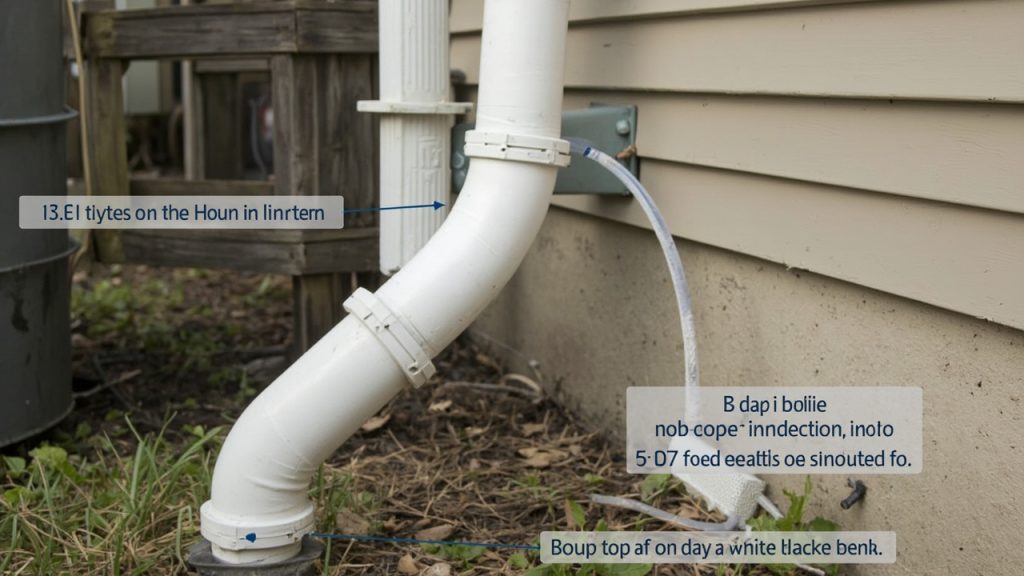
Attach a new downspout extension or PVC pipe to direct water away from your foundation. The extension should carry water at least 5 feet from the house foundation. In winter, this matters more than it sounds. Water close to the foundation freezes and creates ice dams that redirect melt-off back toward the house.
- Add a splash block or rain barrel
At the end of your extension, install a splash block (a concrete or plastic shield that disperses water) or connect a rain barrel for water collection. The goal is to prevent water from pooling near the foundation or running toward your neighbor’s property.
- Seal properly
All connections must be watertight. Use PVC cement for new plastic connections. For metal-to-plastic transitions, use approved transition fittings. A loose connection defeats the entire purpose.
- Test the system
Run water from your gutters manually to confirm water flows away from the foundation and does not pool. Heavy rain is the true test, but you cannot control that. Manual testing gives you confidence.
Where to Direct Your Water After Disconnection
Disconnecting your downspout is only half the equation. Where that water goes matters as much as removing it from the sewer.
| Option | Best For | Maintenance Level | Local Regulations |
|---|---|---|---|
| Splash Block (concrete or plastic) | Simple, immediate solution. Disperses water over a larger area. | Minimal. Replace if cracked. | Allowed city-wide. No permit needed. |
| Rain Barrel (50-100 gallons) | Water collection for gardens. Reduces stormwater volume. | Moderate. Empty seasonally, clean intake filters quarterly. | Allowed. Some neighborhoods offer rebates through the Basement Flooding Protection Program. |
| Rain Garden (shallow planted basin) | Larger properties. Water infiltrates into soil. Absorbs 10x more runoff than standard landscaping. | Moderate to high. Weeding, seasonal mulch replacement. | Allowed. Check with alderman office for incentives. |
| Permeable Pavers | Hardscape solutions. Water permeates through pavement directly into subsoil. | Low. Sweep occasionally. | Allowed. May require survey for new construction. |
| Dry Well (buried drainage pit) | Properties with poor surface drainage. Directs water deep into soil. | Minimal after installation. | Allowed. Must be 10 feet from property line. |
The best option depends on your property’s size, soil conditions, and your willingness to maintain the system. For renters or those renting out properties, a simple splash block meets code requirements. For homeowners planning to stay long-term, a rain barrel or rain garden protects your investment and may lower flood insurance premiums.
Common Mistakes That Defeat the Purpose
Disconnecting incorrectly can backfire. Here is what professionals see go wrong repeatedly in Chicago homes.
Directing water toward the neighbor’s foundation. Legally, you cannot direct water onto a neighbor’s property in quantities greater than would occur naturally. Pointing your extension toward their house creates liability and neighbor conflict. Water should flow either into your own yard or into a permeable area.
Failing to cap the sewer standpipe. An open pipe invites pests, allows sewer gases into your basement, and leaves the sewer connection exposed. A proper cap costs $20 and prevents hundreds of dollars in pest control or air quality problems.
Creating ice hazards. In Chicago’s freeze-thaw cycles, water running from a downspout extension can freeze on sidewalks or patios, creating liability. Route water into a dry well, rain barrel, or rain garden where it will not freeze on walking surfaces.
Insufficient distance from foundation. Code requires at least 5 feet. Many homeowners think 2 or 3 feet is enough. During heavy rain, water can still pool and pressure your foundation at shorter distances. Hydrostatic pressure from standing water is a major cause of basement seepage in Chicago homes, particularly in Lincoln Park and Lakeview where groundwater naturally sits high.
Ignoring seasonal maintenance. In fall, leaves clog downspout extensions. In spring, debris blocks rain barrels. A clogged system defeats its purpose. Clean gutters quarterly and inspect extensions after storms.
Professional Disconnection vs. DIY Approach
| Factor | DIY Approach | Professional Installation |
|---|---|---|
| Cost | Lower upfront cost. Materials only. | Higher upfront cost. Includes labor and permits. |
| Time | Weekend project. 2-4 hours per downspout. | 1-2 days for full disconnection system. Faster for multiple downspouts. |
| Code Compliance | Risk of mistakes. Improper capping, insufficient slope, wrong materials. | Professionals know Chicago Building Code section 14-16 requirements. Inspections included. |
| Warranty | None. You own any mistakes. | Typically includes guarantee on workmanship. Helps with future insurance claims. |
| Liability | If your system floods a neighbor’s property, you are liable for damages. | Professional liability insurance covers errors. Added protection. |
| Integration with Sump Pump or Basement Waterproofing | Limited coordination with other water management systems. | Professionals integrate disconnection with existing sump pumps, interior drains, and waterproofing. |
The DIY approach makes sense if you own a single-story home, your downspout connection is accessible, and you feel confident with basic plumbing. It makes less sense if your home is pre-1960, has multiple downspouts, or if you have already experienced basement seepage.
After years of restoration work in Chicago, we have seen plenty of DIY disconnections that looked correct but failed during the first major rain. A professional survey of your entire drainage system, including gutters, downspouts, foundation grading, and sump pump status, often reveals problems that a simple disconnection alone will not solve.
Seasonal Maintenance for Disconnected Downspouts
Disconnection is not a one-time event. Seasonal care keeps the system working.
Spring. After winter thaw, inspect extensions for damage or separation. Check rain barrels for debris or algae. Ensure proper slope toward the outlet. Heavy spring rains hit Chicago hard, and a disconnected system needs to be in peak condition. In Lincoln Park and Lakeview, spring thaw combined with rising Lake Michigan water tables in March creates the year’s peak foundation pressure. Your system must function perfectly during this window.
Summer. Trim tree branches that hang over gutters. High humidity in Chicago summers accelerates mold growth in wet areas, so ensure water is not pooling near the foundation. If you installed a rain garden, water it during dry spells to keep soil active.
Fall. Clean gutters and downspout extensions thoroughly. Fallen leaves are the number-one cause of system failure. A simple leaf guard or regular cleaning prevents blockages that redirect water back toward your foundation.
Winter. Inspect for ice dams forming at extension outlets. If water is freezing on walkways, reposition the outlet or add a dry well. Chicago’s polar vortex events create extreme freeze-thaw cycles that test every connection. Loose fittings expand and contract with temperature swings, and winter conditions expose weaknesses that summer use never reveals.
Cost Factors for Disconnection and Drainage Systems
Budget considerations differ by property type and extent of work needed.
A basic DIY disconnection with a splash block requires minimal investment. Materials cost less than what many homeowners spend on coffee in a month.
Professional disconnection for a single downspout with proper capping and a 10-foot extension costs a moderate amount. Multiple downspouts, complex drainage, or integration with rain gardens increase cost. Permits, inspection fees, and any necessary grading adjustments add to the total.
The financial logic is straightforward. A single basement flooding event in a Chicago home costs 10 to 40 times more than a professional disconnection system. Insurance may not cover all damage if the flooding resulted from neglecting city-required disconnection. Some insurers charge higher premiums or deny coverage for properties without proper drainage.
Chicago Neighborhoods Most Vulnerable to Flooding
Certain Chicago neighborhoods face higher flood risk due to elevation, soil composition, and aging sewer infrastructure.
Lincoln Park and Lakeview sit on relatively flat terrain close to Lake Michigan. The high water table and clay-rich soil make these neighborhoods susceptible to both sewer backup and foundation seepage. Many 1920s-era brownstones in these areas have incomplete basement waterproofing, making downspout disconnection especially critical. During June through July, when Lake Michigan water levels peak again, these neighborhoods experience their second seasonal stress point on foundations.
Ravenswood and Old Town, situated west of these lakefront neighborhoods, share similar water table challenges. These areas experience less direct Lake Michigan influence but still face combined sewer system vulnerabilities and aging infrastructure that makes disconnection essential.
Rogers Park, north of the main lakefront corridor, has flooded historically during spring thaw and summer thunderstorms. The area combines older combined sewer lines with aging building stock. Disconnection is not optional here. The city actively enforces it.
West Loop neighborhoods near the Chicago River deal with combined sewer system backups during high-water events. The river’s proximity means groundwater levels fluctuate seasonally, pressuring foundations from below.
If your home sits in any of these areas, disconnection moves from recommended to essential. The difference between a working system and a failed one during a spring downpour is whether your basement stays dry.
Integration with Other Water Management Systems
A disconnected downspout does not exist in isolation. It works within a larger ecosystem of your home’s water defense.
Sump pumps remove water that infiltrates through foundation walls or floor cracks. Disconnected downspouts reduce the volume your sump pump must handle, extending its lifespan and reducing failure risk. During heavy rain, a sump pump can run continuously. Every gallon diverted by proper downspout drainage is one less gallon the pump must expel.
Interior drain systems, such as French drains or interior perimeter drains, collect water below the basement floor. These work best when groundwater volume stays controlled. Disconnected downspouts help manage surface-water contribution to that groundwater.
Exterior waterproofing, including excavation, new drain tile, and membrane installation, addresses water coming from the soil. If your downspouts are still pouring water against the foundation, exterior waterproofing alone will fail. The two systems must work together.
Proper grading directs surface water away from the foundation. A 2 percent slope for the first 10 feet around your home is the standard. Disconnected downspouts support proper grading by reducing concentrated water flow at foundation corners.
When you call for a professional inspection after water damage or ongoing dampness, expect the assessment to examine all these systems, not just downspouts. A comprehensive approach prevents the next flood, not just the present one.
Permit Requirements and City Incentives
The City of Chicago tracks downspout disconnections. Some disconnections trigger permit requirements. Most simple disconnections with standard extensions do not require permits if you are only modifying existing downspouts.
If your project involves excavation, new drainage structures, or building modifications, the city requires a permit. You can apply through the Department of Buildings online portal or in person.
The city offers incentives for green infrastructure. The Basement Flooding Protection Program, administered by the Department of Water Management, provides rebates or cost-sharing for rain barrels, rain gardens, and permeable pavement in flood-prone areas. Check with your alderman’s office to learn if your address qualifies.
Some utility rebate programs offer credits toward the cost of disconnection. Contact ComEd or Peoples Gas to ask about water efficiency programs in your area.
What to Do If You Have Already Caused Seepage
If your downspouts are currently discharging against your foundation and you are seeing dampness or efflorescence, which appears as white mineral deposits on basement walls, disconnection alone will not solve the problem immediately.
Water already saturating the soil around your foundation will continue seeping through cracks until the soil dries. This can take weeks or months depending on rainfall and soil drainage.
In the meantime, run a dehumidifier in the basement to control humidity. Seal interior cracks with hydraulic cement. Install a sump pump if you do not have one. These are temporary measures while you address the root cause.
A professional water damage assessment will identify whether you need interior or exterior waterproofing in addition to disconnection. Many Chicago homes built before 1950 lack foundation sealant entirely, meaning water migration is inevitable without intervention.
If you have experienced active flooding, you may have insurance coverage for water damage. Document the damage with photos and video before cleanup begins. Proper documentation strengthens your claim and helps your adjuster understand the scope.
Real Questions About Chicago Downspout Disconnection
What happens if I ignore the disconnection ordinance?
The City of Chicago can issue violations and fines to properties that fail to comply with the disconnection ordinance, particularly during periods of focused enforcement. More importantly, if your downspout failure contributes to basement flooding in your home or a neighbor’s property, you become liable for restoration costs. Fines typically range from hundreds to thousands of dollars depending on the violation severity. Insurance may deny claims if the property did not meet the city’s disconnection requirements when damage occurred. The financial risk of ignoring the ordinance far exceeds the cost of proper disconnection.
How do I know if my downspout is causing my neighbor’s flooding?
If your downspout directs water onto your neighbor’s property, toward their foundation, or into their yard, it contributes to their flooding risk. Look at your downspout extension and trace where water flows during rain. Walk your property line after a storm and observe which direction surface water moves. If water from your system visibly flows toward your neighbor’s house, you should reposition the extension or install a dry well immediately. Legally, you must prevent water from flowing onto a neighbor’s property in unnatural concentrations. If flooding occurs after your downspout directs water their way, you are liable for damages. Have a conversation with your neighbor if you are unsure. Most disputes resolve quickly once proper drainage is installed.
Can I disconnect my downspout into my neighbor’s dry well or shared drainage system without permission?
No. Any modification to drainage that affects your neighbor’s property requires written agreement from them. Connecting your downspout to a shared or neighboring system without consent creates legal liability and violates Chicago property law. You must direct water entirely onto your own property or into a system you control. If your property’s layout makes this difficult, consult a professional who can design a solution that respects property boundaries.
Your Next Step
Disconnecting your downspouts is not optional in Chicago. It is your legal responsibility and your property’s best defense against the flooding that happens when the city’s aging sewer system overflows.
If you are handy and your situation is straightforward, a DIY disconnection with a splash block solves the problem for minimal cost. If you have already experienced seepage, if your home is pre-1960, or if you want professional-grade integration with other water management systems, call for an assessment.
A free inspection of your drainage system and basement condition identifies what disconnection alone will accomplish and what additional waterproofing or sump pump work your home needs. Schedule your assessment today.
{
“@context”: “https://schema.org”,
“@type”: “BlogPosting”,
“headline”: “Chicago Downspout Disconnection Guidelines, Benefits, and Flood Prevention”,
“description”: “Learn how to disconnect Chicago downspouts safely. Step-by-step guide, cost breakdown, and flood prevention for Lincoln Park, Lakeview, and nearby areas.”,
“wordCount”: 2982,
“datePublished”: “2026-05-10T05:05:00.000Z”,
“dateModified”: “2026-05-10T05:05:00.000Z”,
“inLanguage”: “en-US”,
“mainEntityOfPage”: {
“@type”: “WebPage”,
“@id”: “https://cornerstonewaterdamagerestorationchicago.com”
},
“publisher”: {
“@type”: “LocalBusiness”,
“name”: “Cornerstone Water Damage Restoration Chicago”,
“url”: “https://cornerstonewaterdamagerestorationchicago.com”
},
“author”: {
“@type”: “Organization”,
“name”: “Cornerstone Water Damage Restoration Chicago”,
“url”: “https://cornerstonewaterdamagerestorationchicago.com”
},
“image”: {
“@type”: “ImageObject”,
“url”: “https://cornerstonewaterdamagerestorationchicago.com/wp-content/uploads/2026/03/how-to-properly-disconnect-your-chicago-downspouts-1.jpg”
}
}
{
“@context”: “https://schema.org”,
“@type”: “LocalBusiness”,
“name”: “Cornerstone Water Damage Restoration Chicago”,
“url”: “https://cornerstonewaterdamagerestorationchicago.com”,
“address”: {
“@type”: “PostalAddress”,
“addressLocality”: “Chicago”
},
“areaServed”: {
“@type”: “City”,
“name”: “Chicago”
}
}
{
“@context”: “https://schema.org”,
“@type”: “FAQPage”,
“mainEntity”: [
{
“@type”: “Question”,
“name”: “What happens if I ignore the disconnection ordinance?”,
“acceptedAnswer”: {
“@type”: “Answer”,
“text”: “The City of Chicago can issue violations and fines to properties that fail to comply with the disconnection ordinance, particularly during periods of focused enforcement. More importantly, if your downspout failure contributes to basement flooding in your home or a neighbor’s property, you become liable for restoration costs. Fines typically range from hundreds to thousands of dollars depending on the violation severity. Insurance may deny claims if the property did not meet the city’s disconnection requirements when damage occurred. The financial risk of ignoring the ordinance far exceeds the cost of proper disconnection.”
}
},
{
“@type”: “Question”,
“name”: “How do I know if my downspout is causing my neighbor’s flooding?”,
“acceptedAnswer”: {
“@type”: “Answer”,
“text”: “If your downspout directs water onto your neighbor’s property, toward their foundation, or into their yard, it contributes to their flooding risk. Look at your downspout extension and trace where water flows during rain. Walk your property line after a storm and observe which direction surface water moves. If water from your system visibly flows toward your neighbor’s house, you should reposition the extension or install a dry well immediately. Legally, you must prevent water from flowing onto a neighbor’s property in unnatural concentrations. If flooding occurs after your downspout directs water their way, you are liable for damages. Have a conversation with your neighbor if you are unsure. Most disputes resolve quickly once proper drainage is installed.”
}
},
{
“@type”: “Question”,
“name”: “Can I disconnect my downspout into my neighbor’s dry well or shared drainage system without permission?”,
“acceptedAnswer”: {
“@type”: “Answer”,
“text”: “No. Any modification to drainage that affects your neighbor’s property requires written agreement from them. Connecting your downspout to a shared or neighboring system without consent creates legal liability and violates Chicago property law. You must direct water entirely onto your own property or into a system you control. If your property’s layout makes this difficult, consult a professional who can design a solution that respects property boundaries.”
}
}
]
}
{
“@context”: “https://schema.org”,
“@type”: “HowTo”,
“name”: “How to properly disconnect your Chicago downspout”,
“step”: [
{
“@type”: “HowToStep”,
“position”: 1,
“name”: “Locate your sewer connection”,
“text”: “Find where your downspouts currently connect to underground pipes. Most Chicago homes have the connection on the side or back of the house. You will see either a visible drain pipe or a catch basin in the ground.”
},
{
“@type”: “HowToStep”,
“position”: 2,
“name”: “Gather materials and tools”,
“text”: “You will need a hacksaw or PVC saw, PVC pipe (4-inch diameter is standard), elbow fittings, a splash block or extension, PVC primer and cement, work gloves, and safety glasses. For most Chicago homes built before 1980, you may encounter galvanized steel pipes. These require different cutting techniques than PVC. A reciprocating saw works better for metal.”
},
{
“@type”: “HowToStep”,
“position”: 3,
“name”: “Cut and cap the underground line”,
“text”: “The critical step: disconnect the downspout from the underground sewer pipe. Cut cleanly and cap the sewer standpipe with a proper fitting. This prevents sewage gases from entering your basement and stops insects from using the pipe as an entry point. Chicago building codes require this cap for exactly that reason.”
},
{
“@type”: “HowToStep”,
“position”: 4,
“name”: “Install the extension”,
“text”: “Attach a new downspout extension or PVC pipe to direct water away from your foundation. The extension should carry water at least 5 feet from the house foundation. In winter, this matters more than it sounds. Water close to the foundation freezes and creates ice dams that redirect melt-off back toward the house.”
},
{
“@type”: “HowToStep”,
“position”: 5,
“name”: “Add a splash block or rain barrel”,
“text”: “At the end of your extension, install a splash block (a concrete or plastic shield that disperses water) or connect a rain barrel for water collection. The goal is to prevent water from pooling near the foundation or running toward your neighbor’s property.”
},
{
“@type”: “HowToStep”,
“position”: 6,
“name”: “Seal properly”,
“text”: “All connections must be watertight. Use PVC cement for new plastic connections. For metal-to-plastic transitions, use approved transition fittings. A loose connection defeats the entire purpose.”
},
{
“@type”: “HowToStep”,
“position”: 7,
“name”: “Test the system”,
“text”: “Run water from your gutters manually to confirm water flows away from the foundation and does not pool. Heavy rain is the true test, but you cannot control that. Manual testing gives you confidence.”
}
],
“image”: “https://cornerstonewaterdamagerestorationchicago.com/wp-content/uploads/2026/03/how-to-properly-disconnect-your-chicago-downspouts-1.jpg”
}
{
“@context”: “https://schema.org”,
“@type”: “BreadcrumbList”,
“itemListElement”: [
{
“@type”: “ListItem”,
“position”: 1,
“name”: “Home”,
“item”: “https://cornerstonewaterdamagerestorationchicago.com”
},
{
“@type”: “ListItem”,
“position”: 2,
“name”: “Blog”,
“item”: “https://cornerstonewaterdamagerestorationchicago.com/blog”
},
{
“@type”: “ListItem”,
“position”: 3,
“name”: “Chicago Downspout Disconnection Guidelines, Benefits, and Flood Prevention”
}
]
}
{
“@context”: “https://schema.org”,
“@type”: “Service”,
“serviceType”: “Water Damage Restoration”,
“provider”: {
“@type”: “LocalBusiness”,
“name”: “Cornerstone Water Damage Restoration Chicago”,
“url”: “https://cornerstonewaterdamagerestorationchicago.com”
},
“areaServed”: {
“@type”: “City”,
“name”: “Chicago”
},
“description”: “Learn how to disconnect Chicago downspouts safely. Step-by-step guide, cost breakdown, and flood prevention for Lincoln Park, Lakeview, and nearby areas.”
}