
Can Wet Drywall Be Saved? A Chicago Homeowner’s Guide to Water Damage Recovery
If water reached your drywall within the last 12 hours, stop reading and call a professional restoration team immediately. The first 24 to 48 hours determine whether your drywall survives or requires replacement.
If more time has passed, or if you are still assessing the situation, this guide walks you through the exact factors that determine salvageability. Before you commit to either drying or replacement, you need to understand your options and know which choice makes sense for your specific situation. Three variables matter most: how much time has passed since water first contacted the drywall, what kind of water caused the damage, and how deeply the moisture has penetrated the gypsum. In Chicago, where sump pump failures during spring rains and polar vortex freeze-thaw cycles cause thousands of basement floods each year, understanding these factors can save you thousands of dollars and prevent serious mold contamination in your home.
The Golden Window The First 24 to 48 Hours Matter
Drywall absorbs water like a sponge. Once saturated, gypsum board begins to lose structural integrity within hours. Mold spores, which live in every Chicago home, start germinating within 24 to 48 hours if conditions stay moist and warm. During humid Chicago summers, when indoor air sits at 60 to 70 percent relative humidity even without active flooding, that timeline compresses dramatically.
Your window to salvage wet drywall is narrow. Speed matters more than almost anything else.
If you discovered the water damage within the first 12 hours and the affected drywall has not yet felt soft or begun to warp, you have a reasonable chance of saving it with aggressive drying. But wait 72 hours? Mold colonies are already establishing themselves inside the walls, invisible to the eye.
How to Tell If Your Drywall Is Salvageable
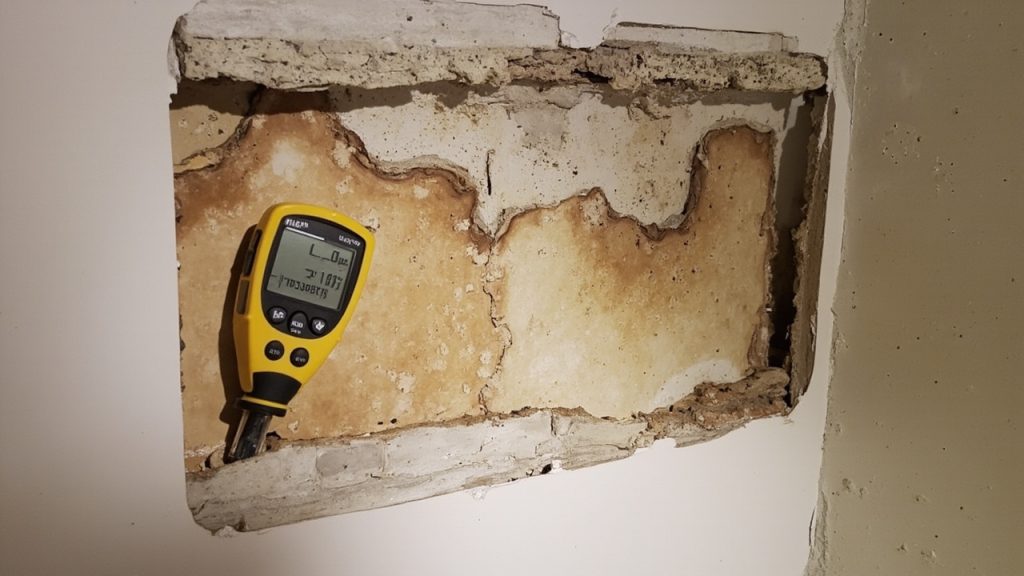
Before you decide whether to dry or replace, you need to measure the actual moisture content inside the gypsum. The thumb test is not precise enough. Press your thumb against the drywall. If it indents and does not spring back, the drywall is waterlogged. But this tells you nothing about the internal moisture levels.
Professionals use a moisture meter to measure moisture content by percentage. This is the gold standard for drywall assessment.
| Moisture Level | Gypsum Board Condition | Salvageable? | Timeline to Dry |
|---|---|---|---|
| Under 12% | Normal, dry drywall | N/A (not wet) | N/A |
| 12% to 17% | Elevated moisture, early stages | Yes, with professional drying | 5 to 10 days |
| 17% to 20% | Significant saturation, structural compromise beginning | Marginal (depends on contamination and time) | 10 to 21 days |
| Over 20% | Severe saturation, structural failure risk | No, recommend replacement | Not recommended for drying |
The key threshold is 17 percent. Below that, drywall that has not been exposed to contaminated water can typically be restored using professional dehumidifiers and air movers. Above 17 percent, the gypsum loses tensile strength. The paper facing can separate from the core. Mold colonization accelerates.
You can rent a basic moisture meter from hardware stores in Lincoln Park, Lakeview, Logan Square, Ravenswood, and Bucktown. But residential-grade meters often underread. Professional hygrometers and pin-type moisture meters used by water damage restoration companies in Chicago are far more accurate. If you are facing repair decisions that affect your insurance claim, get a professional measurement.
Water Category Determines Drywall Fate More Than Moisture Level
Not all water is equal. The source of the water determines whether drywall can ever be truly salvaged, regardless of drying time or moisture levels.
The Institute of Inspection, Cleaning and Restoration Certification (IICRC) classifies water damage into three categories. Your drywall’s fate depends on which category applies to your situation.
| Water Category | Source | Contamination Level | Drywall Salvageable? | Health Risks |
|---|---|---|---|---|
| Category 1 | Clean water from burst pipes, water heaters, rainwater (initial exposure) | No significant biological or chemical contaminants | Yes, if dried within 48 hours and moisture under 17% | None if handled quickly |
| Category 2 | Greywater from washing machines, dishwashers, toilet overflow (urine only) | Moderate microbial contaminants | Marginal. Requires professional assessment and aggressive remediation | Respiratory irritation, microbial infection |
| Category 3 | Blackwater from sewage backups, contaminated floodwater, toilet overflow (feces), standing water after 48 hours | Severe biological and chemical hazards | No. Drywall must be removed and replaced per Chicago Building Code | Pathogenic bacteria, viruses, parasites. Serious health risk |
In Chicago, Category 3 water damage is common. Combined sewer systems in older neighborhoods like West Loop, Andersonville, Logan Square, and Edgewater can back up into basements during heavy spring rains. Sump pump failures in homes across the suburbs from Joliet to Naperville leave standing water that transitions to Category 3 within 48 hours as bacteria colonize it. A 2025 survey of Chicago water damage insurance claims showed that 62% of suburban incidents involved sump pump failures, with the highest concentration in Naperville, Bolingbrook, and neighboring communities. Far South Side neighborhoods with aging infrastructure also face elevated sewage backup risk.
If your drywall has been exposed to sewage, basement floodwater mixed with soil, or water from an overflowing toilet, do not attempt to dry it. Professional remediation requires removal and replacement. This is not negotiable for health and safety. Your homeowner’s insurance will typically cover this as an essential remediation step.
The Three Signs Your Drywall Has Crossed the Point of No Return
Even if moisture readings suggest drywall might be savable, certain visual and structural indicators tell you replacement is the only option.
First, check for structural sagging. Press gently on the affected wall. If it feels soft or spongy, or if you see visible bowing or sagging, the gypsum core has lost cohesion. The paper facing is no longer bonded to the core. Drying will not restore structural integrity. The wall is a collapse risk. Remove it.
Second, look for bubbling or the paper facing separating from the gypsum. This means the bond between layers has failed. Water has penetrated deeply, and the paper is delaminating. Once this happens, drying cannot reverse the damage. The wall will never regain its original strength.
Third, smell the drywall. If you detect a strong musty or acrid odor, microbial growth is well established. Mold and bacterial colonies are feeding on the gypsum and paper. This is not salvageable drywall. It is a biohazard. Drying will not kill the mold already embedded in the material. It will only preserve it, allowing continued off-gassing of mycotoxins into your home.
If you detect any of these three signs, stop considering drying options. Contact a restoration specialist to remove and replace the damaged sections.
Professional Drying vs. DIY What You Need to Know
If your drywall has not reached any of those three failure points, and you are dealing with Category 1 water, drying is possible. But drying wet drywall is not the same as running a dehumidifier you borrowed from your neighbor.
Professional drying follows IICRC S500 Standards, which specify precise procedures for moisture mapping, equipment placement, and monitoring. The goal is to remove moisture from the drywall fast enough that mold does not establish itself, but gradually enough that you do not damage other materials through uneven drying.
DIY drying with household fans and a single dehumidifier is slow and unreliable. It works for small areas with light water exposure. A single wet corner that dried within 24 hours? A dehumidifier and some air circulation might suffice. But active water seeping from basement walls during Chicago’s wet season? Significant soaking from a burst pipe in a historic bungalow? You need professional equipment and monitoring.
What Professional Restoration Teams Bring to the Job
Industrial-grade dehumidifiers remove 50 to 100 pints of water per day, far more than household units. Air movers create laminar airflow that accelerates evaporation without blowing moist air into other rooms. Thermal imaging cameras reveal hidden moisture inside walls and behind insulation that meters cannot detect.
A professional team also monitors progress daily. They measure moisture levels at multiple points to confirm drying is occurring uniformly. If one area dries faster than others, pockets of standing moisture can hide inside the wall, fueling mold growth. Pros adjust equipment placement and running times based on real data, not guesswork.
For historic Chicago homes like the bungalows common in Beverly and Rogers Park, this monitoring is critical. Old plaster walls hidden behind modern drywall, mineral-rich masonry foundations, and unconventional framing mean standard drying procedures do not always apply. A technician experienced in Chicago’s unique building stock knows to look for these complications.
The Mold Timeline Why the 48 Hour Window Shapes Everything
You cannot see mold spores, and they exist everywhere. Mold needs three things to germinate: moisture above 50 percent relative humidity, temperatures between 60 and 80 degrees Fahrenheit, and an organic food source. Gypsum and paper form drywall, and both are organic and both feed mold.
At humidity above 70 percent, which is typical in Chicago basements year-round and in above-ground spaces during humid summers, mold spores begin germinating within 24 to 48 hours. By day three, visible colonies can start to appear. By day seven, mold has established deep roots in the drywall.
This is why speed is non-negotiable. Every hour your drywall sits wet increases mold risk. After 48 hours of wetness, even if you start professional drying, mold is already there. You cannot dry it out. You have to remove the material.
Professional restoration teams understand this urgency. When you call an emergency water damage service, the fastest response times are the ones that matter. Waiting for Monday morning to address water damage that occurred on Friday night means you have already crossed the mold threshold. The drywall is now unsalvageable from a health perspective, even if it is still structurally intact.
The Flood Cut Technique When Drying Is Not Enough
Sometimes drywall is savable above a certain height, but not below. Water wicks up drywall like a plant drawing water through its roots. In a typical Chicago basement with concrete foundation walls and clay-based soil, water can wick up 12 to 24 inches above the point where water actually contacts the wall.
Professional restoration teams perform a flood cut to remove the bottom section of drywall that water damaged, even if it is not visibly wet. A flood cut typically runs 12 to 16 inches above the waterline. This removes the portion of the wall most likely to harbor hidden moisture and mold.
You can sometimes save the drywall above the flood cut. The section below is disposed of and replaced after the wall has dried completely. This hybrid approach salvages part of the drywall while eliminating the most contaminated section. For homeowners in Bolingbrook, Elmhurst, and other suburbs where sump pump failures cause periodic basement water intrusion, this technique can reduce replacement costs by 30 to 50 percent compared to removing an entire wall section.
Chicago Building Code Requirements for Water Damage Recovery
Chicago enforces strict building codes for structural repairs following water damage. You cannot simply dry the wall, tape it up, and call it done. If drywall was removed or substantially damaged, the repair must meet current code standards.
The Chicago Department of Buildings requires that repairs comply with current code standards. For pre-1978 homes, common in neighborhoods like Lincoln Park, Lakeview, and Hyde Park, there are additional complications. Lead-based paint may be present on old drywall and plaster. If you are removing water-damaged drywall in a home built before 1978, lead abatement procedures must be followed. This means specialized contractors, containment procedures, and proper disposal. The cost and complexity mean it is not a DIY project.
The Deep Tunnel and Reservoir Plan (TARP) project has reduced backup frequency from combined sewers in some Chicago neighborhoods, but many older areas still rely on aging infrastructure. If you live in West Loop, Cicero, or other neighborhoods with combined sewer systems, your risk of Category 3 water damage from sewage backup is higher than areas with separate storm and sanitary sewers. Know your neighborhood’s infrastructure. It changes the likelihood and severity of water damage you may face.
For any significant water damage requiring removal of drywall or structural components, check with Chicago’s Department of Buildings. Licensed contractors know these requirements. DIY repairs that do not meet code will fail inspection and may void your insurance coverage.
Moisture Mapping and Thermal Imaging What Pros See That You Cannot
Your eyes cannot see moisture hidden inside walls. A moisture meter gives you a reading at the surface. But water travels through materials. It hides inside cavities, behind insulation, and deep in the gypsum core.
Professional restoration teams use thermal imaging cameras to detect temperature differences caused by evaporating moisture. Wet materials are cooler than dry ones. A thermal camera reveals these cold spots, showing technicians exactly where moisture is hiding. Combined with pin-type moisture meters that measure internal gypsum moisture, thermal imaging creates a complete picture of water damage severity.
This matters because it prevents the false confidence that comes from surface drying. You might dry the wall surface to 15 percent moisture and feel optimistic. But if the interior of the drywall cavity still reads 25 percent, mold is still growing in there. Without thermal imaging, you would not know until visible mold appears weeks later.
Moisture mapping also guides dehumidifier and air mover placement. Pros do not just set equipment randomly. They identify the wettest areas and concentrate drying effort there. As those areas dry, they move equipment to focus on the next-wettest zones. This systematic approach dramatically reduces drying time and mold risk compared to guess-and-check placement.
Insurance Documentation Getting Your Claim Approved
After water damage, your homeowner’s insurance will cover drying costs and necessary replacement. But they need documentation to approve the claim. Moisture readings, photographs, videos of the damage, and professional assessments all support your claim.
If you hire a professional restoration team, they handle much of this documentation. They take photos, record moisture readings, and provide a detailed scope of work explaining what is salvageable and what must be replaced. This report becomes part of your insurance claim file.
If you try to manage drying on your own, you become responsible for proving the damage level and the necessity of the work. Insurance adjusters are familiar with professional assessment standards. A homeowner’s personal measurements and descriptions carry less weight.
For properties in Joliet, Springfield, and surrounding areas outside Chicago proper, insurance company adjusters may be less familiar with local climate and infrastructure risks. Having a professional assessment from a restoration company experienced in the Chicago metropolitan area strengthens your claim significantly. The adjuster respects the IICRC certification and experience.
Cost Comparison Drying vs. Replacement
The financial comparison between drying and replacing drywall depends on several factors. The size of the affected area, the height of water damage, water category, local labor rates, and current material costs all influence cost.
Drying requires equipment rental, dehumidifiers, air movers, and daily monitoring by technicians. For a small area under 100 square feet affected by Category 1 water and discovered within 24 hours, professional drying might cost less than replacement. For larger areas or delayed discovery, replacement becomes competitive in price and eliminates the mold risk entirely.
Drywall replacement includes removal of damaged material, disposal, new drywall installation, taping, mudding, sanding, and painting. In Chicago’s labor market, this is not inexpensive. But it is often faster and guarantees a clean result. Once drywall is installed, your wall is new and carries no mold risk.
Insurance coverage affects the true cost to you. Many policies cover emergency mitigation (drying) at 100 percent, but replacement at 80 to 90 percent of cost after your deductible. Check your policy before deciding on a course of action.
When to Call a Professional Restoration Specialist
Do not wait to assess whether you can handle water damage yourself. Call a professional immediately if any of these conditions apply.
- Water exposure occurred more than 12 hours ago.
- The affected drywall area is larger than 50 square feet.
- Water source is unknown or possibly contaminated (Category 2 or Category 3).
- Drywall feels soft, spongy, or shows visible sagging.
- You detect musty odor from the drywall.
- Your home is in an area prone to sewage backup or flooding (West Loop, Lakeview, Beverly neighborhoods, or homes in flood zones).
- Your home was built before 1978 and may contain lead-based paint.
- The water damage is in a basement or crawlspace where you cannot access the full extent of the damage.
Professional restoration teams bring speed, equipment, expertise, and documentation. They reduce mold risk and protect your insurance claim. Contact a licensed water damage restoration specialist in Chicago today for immediate assessment and a clear action plan for your home.
{
“@context”: “https://schema.org”,
“@type”: “BlogPosting”,
“headline”: “Can Wet Drywall Be Saved? A Chicago Homeowner’s Guide to Water Damage Recovery”,
“description”: “Learn when to dry or replace wet drywall in Chicago. Expert guide on salvageability, mold timelines, and costs for Hermosa homes.”,
“wordCount”: 2768,
“datePublished”: “2026-03-22T09:24:00.000Z”,
“dateModified”: “2026-03-22T09:24:00.000Z”,
“inLanguage”: “en-US”,
“mainEntityOfPage”: {
“@type”: “WebPage”,
“@id”: “https://cornerstonewaterdamagerestorationchicago.com”
},
“publisher”: {
“@type”: “LocalBusiness”,
“name”: “Cornerstone Water Damage Restoration Chicago”,
“url”: “https://cornerstonewaterdamagerestorationchicago.com”
},
“author”: {
“@type”: “Organization”,
“name”: “Cornerstone Water Damage Restoration Chicago”,
“url”: “https://cornerstonewaterdamagerestorationchicago.com”
},
“image”: {
“@type”: “ImageObject”,
“url”: “https://cornerstonewaterdamagerestorationchicago.com/wp-content/uploads/2026/03/knowing-when-to-cut-or-dry-wet-drywall-in-your-her-1.jpg”
}
}
{
“@context”: “https://schema.org”,
“@type”: “LocalBusiness”,
“name”: “Cornerstone Water Damage Restoration Chicago”,
“url”: “https://cornerstonewaterdamagerestorationchicago.com”,
“address”: {
“@type”: “PostalAddress”,
“addressLocality”: “Chicago”
},
“areaServed”: {
“@type”: “City”,
“name”: “Chicago”
}
}
{
“@context”: “https://schema.org”,
“@type”: “BreadcrumbList”,
“itemListElement”: [
{
“@type”: “ListItem”,
“position”: 1,
“name”: “Home”,
“item”: “https://cornerstonewaterdamagerestorationchicago.com”
},
{
“@type”: “ListItem”,
“position”: 2,
“name”: “Blog”,
“item”: “https://cornerstonewaterdamagerestorationchicago.com/blog”
},
{
“@type”: “ListItem”,
“position”: 3,
“name”: “Can Wet Drywall Be Saved? A Chicago Homeowner’s Guide to Water Damage Recovery”
}
]
}
{
“@context”: “https://schema.org”,
“@type”: “Service”,
“serviceType”: “Water Damage Restoration”,
“provider”: {
“@type”: “LocalBusiness”,
“name”: “Cornerstone Water Damage Restoration Chicago”,
“url”: “https://cornerstonewaterdamagerestorationchicago.com”
},
“areaServed”: {
“@type”: “City”,
“name”: “Chicago”
},
“description”: “Learn when to dry or replace wet drywall in Chicago. Expert guide on salvageability, mold timelines, and costs for Hermosa homes.”
}