


menu

Business Interruption Mitigation in Chicago – Get Operations Back Online in 48 Hours or Less

Commercial water damage restoration designed for business continuity restoration. Our rapid-deployment teams work 24/7 to minimize operational downtime and protect your revenue in Chicago's competitive market.

Slider Image 1
Slider Image 2
Slider Image 3
Slider Image 4
Slider Image 5
Slider Image 7
Slider Image 8
Slider Image 9
Slider Image 10
Slider Image 11

Why Chicago Businesses Lose $8,000 Per Hour After Water Damage

Water intrusion in a commercial facility triggers a cascading failure that compounds every hour. Your production stops. Employees sit idle. Clients reschedule. Inventory gets contaminated. Equipment corrodes.

Chicago's freeze-thaw cycles create unique vulnerabilities for commercial buildings. When temperatures swing 40 degrees in 24 hours, pipes burst in walls. Roof membranes crack along seams. Loading dock drains back up during rapid snowmelt. These failures happen fast and hit hard.

The real damage is not the water. It is the revenue you lose while closed. Retail locations lose foot traffic. Restaurants cannot serve customers. Warehouses cannot ship product. Medical offices reschedule patient appointments. Each closed day bleeds profit and damages your reputation.

Traditional restoration companies treat commercial properties like oversized homes. They work standard business hours. They use residential-grade equipment. They do not understand that minimizing business downtime is the actual priority, not just drying the space.

Chicago businesses face added pressure from high commercial lease rates and thin profit margins. You cannot afford a two-week closure while contractors take their time. Every delay costs you customers, payroll, and lease payments on a space you cannot use.

Mitigating commercial downtime requires a different approach. You need industrial dehumidifiers that process 10 times the cubic feet per minute. You need coordination with your insurance adjuster, your landlord, and your supply chain. You need a team that works overnight and on weekends to restore business continuity while your competitors stay open.

Why Chicago Businesses Lose $8,000 Per Hour After Water Damage
How We Achieve Business Interruption Mitigation in 48 Hours

How We Achieve Business Interruption Mitigation in 48 Hours

Speed without precision creates more problems. We deploy a structured protocol that addresses water extraction, structural drying, and operational readiness simultaneously.

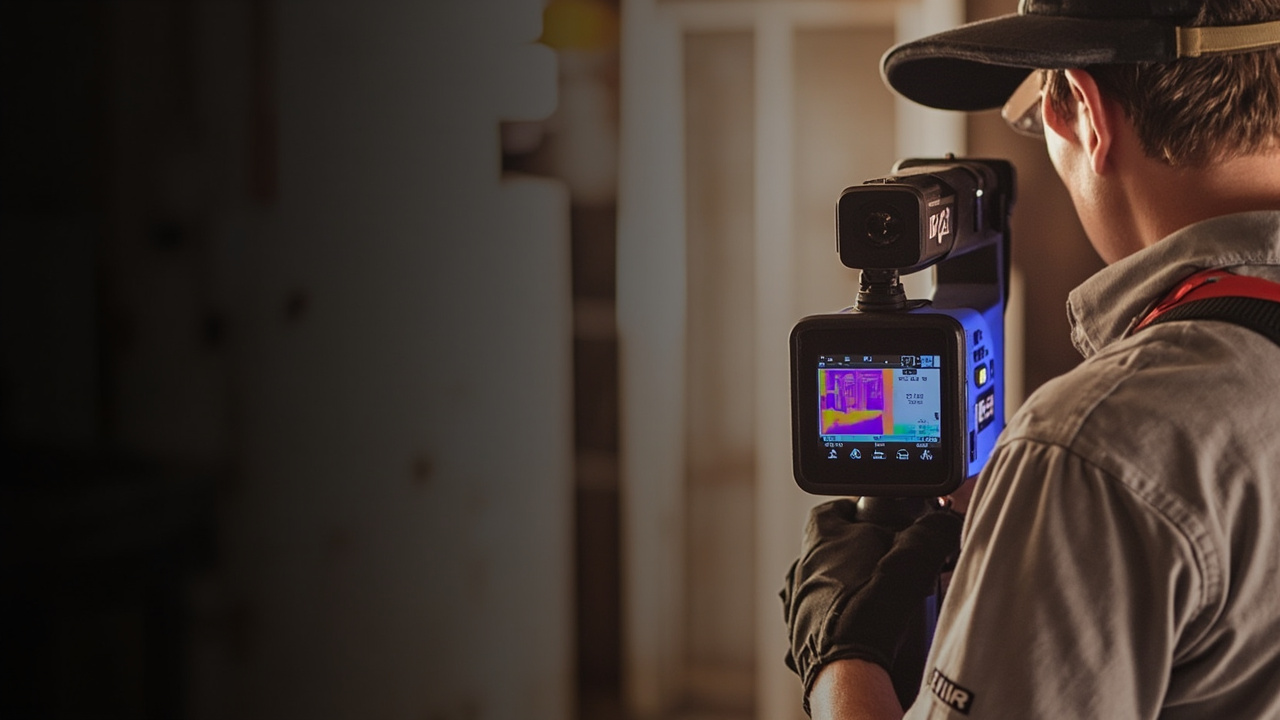
Our initial response includes thermal imaging to map moisture migration behind walls and under flooring. We identify which zones can remain operational while we address damaged areas. This compartmentalization strategy keeps parts of your business running while we work.

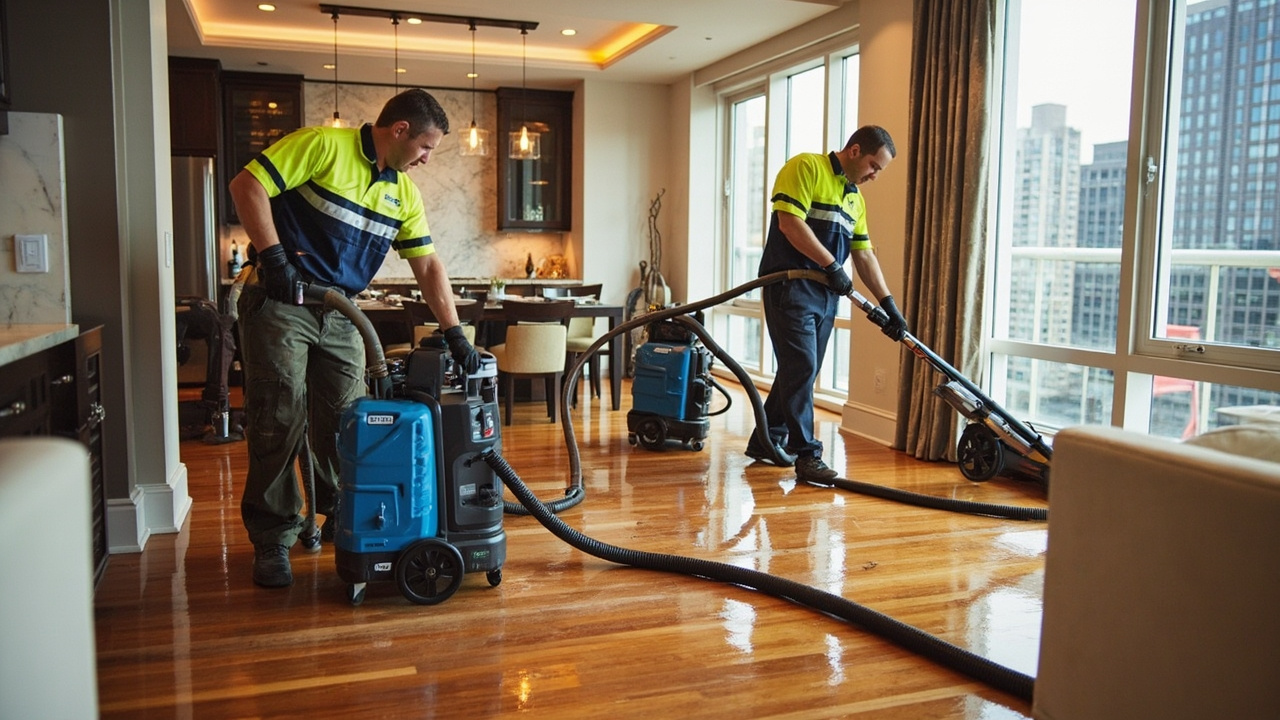
We use trailer-mounted extractors that remove 500 gallons per hour, far exceeding portable units. For drying, we deploy low-grain refrigerant dehumidifiers that pull moisture even in cold Chicago winters when desiccant units lose efficiency. We monitor progress with moisture meters calibrated to commercial materials like concrete slab, metal studs, and commercial carpet padding.

Your business likely has specific compliance requirements. Restaurants need health department sign-off. Medical facilities need HIPAA-compliant documentation. Warehouses need certificate of occupancy renewals. We document every phase with timestamped photos, moisture readings, and air quality reports that satisfy inspectors and insurance adjusters.

Coordination separates fast restoration from chaotic restoration. We run night shifts to avoid disrupting your daytime operations. We schedule noisy equipment during your closed hours. We coordinate with your IT team to protect servers and data centers. We work with your HVAC contractor to prevent cross-contamination through ductwork.

Reducing operational downtime means understanding your revenue model. A retailer needs the sales floor dry first. A manufacturer needs the production line operational before the office. We customize sequencing based on your priorities, not a generic checklist. Cornerstone Water Damage Restoration Chicago treats your timeline as the primary success metric, not just dry readings on a meter.

What Happens When You Call for Emergency Commercial Restoration

Business Interruption Mitigation in Chicago – Get Operations Back Online in 48 Hours or Less
01

Immediate Damage Assessment

Our team arrives within 90 minutes to assess the extent of water intrusion and identify your most critical operational areas. We use thermal imaging and moisture mapping to determine which spaces can remain open and which require immediate closure. You receive a written scope of work and timeline within two hours of our arrival, giving you concrete information to communicate with stakeholders, insurance carriers, and employees about expected restoration timeframes.
02

Staged Zone Restoration

We section your facility into operational zones and damaged zones using physical barriers and negative air pressure systems. Water extraction and structural drying happen in the affected areas while your team continues working in unaffected spaces. This compartmentalization approach allows you to maintain partial operations, preserving revenue streams and keeping key staff productive. Industrial dehumidifiers run continuously with real-time monitoring to ensure drying progresses on schedule without extending your closure timeline unnecessarily.
03

Verified Operational Readiness

Before we clear a space for reopening, we verify that moisture levels meet industry standards for your specific building materials and use case. You receive detailed documentation including moisture readings, air quality reports, and photographic evidence that satisfies insurance requirements and regulatory inspections. We coordinate final walkthroughs with your team, your insurance adjuster, and any required inspectors to ensure you can resume full operations without compliance delays or failed inspections that would extend your downtime further.

Why Chicago Commercial Properties Require Specialized Restoration Protocols

Chicago's commercial real estate landscape includes buildings constructed across 150 years of evolving building codes. A water loss in a 1920s brick warehouse requires different treatment than a 2015 steel-frame office tower. We understand these distinctions because we work in this market daily.

Older Chicago commercial buildings often have concealed pipe chases and outdated drainage systems. Water travels horizontally through wall cavities before appearing three rooms away from the actual source. We trace water migration patterns using infrared technology and moisture mapping, preventing secondary damage in areas that appear dry on the surface.

The city's shifting clay soil creates foundation movement that stresses plumbing connections. Commercial slab foundations in buildings south of the Loop experience more settlement than properties built on bedrock closer to the lake. We account for these geological factors when assessing whether pipe failures indicate isolated incidents or systemic building issues requiring broader remediation.

Chicago's Department of Buildings requires specific permits for commercial restoration work affecting structural elements or mechanical systems. We handle permit applications and coordinate inspections, preventing delays that extend your closure. Many out-of-state restoration companies do not understand local permitting requirements and discover compliance issues only after work begins.

Your commercial lease likely includes restoration obligations and notification requirements. We work directly with property managers and building engineers to ensure our work meets lease specifications and does not create liability for your business. This coordination protects you from disputes over restoration quality or timeline compliance.

Cornerstone Water Damage Restoration Chicago maintains relationships with commercial insurance adjusters who regularly work Chicago properties. We speak their documentation language and provide the detailed reporting they require for claim processing. This familiarity accelerates approval cycles and reduces the back-and-forth that delays restoration funding and extends your closure timeline unnecessarily.

What Business Interruption Mitigation Looks Like in Practice

Response Time and Deployment

We operate 24-hour dispatch specifically for commercial emergencies. When you call, you reach a project manager who can deploy a crew, not an answering service that takes messages. Our average response time to Chicago commercial properties is 90 minutes from initial contact. We arrive with industrial extraction equipment, not residential shop vacs. Our trucks carry trailer-mounted dehumidifiers, thermal cameras, and moisture detection equipment necessary for commercial-scale water removal. You get a written assessment and projected timeline within two hours of our arrival, giving you concrete information to share with stakeholders.

Site Assessment and Loss Documentation

Our initial assessment maps all affected areas using thermal imaging and moisture meters calibrated for commercial building materials. We document water intrusion sources, affected inventory, and damaged equipment with timestamped photographs that support your insurance claim. You receive a detailed scope of work outlining which areas require closure and which can remain operational. This assessment identifies structural concerns that could create liability if left unaddressed, protecting you from future claims related to mold growth or compromised building integrity. We coordinate this assessment with your insurance adjuster whenever possible to eliminate redundant inspections that delay restoration approval.

Restoration Quality and Compliance

We dry your facility to IICRC S500 standards for commercial water damage restoration. Our moisture readings must meet specific thresholds for your building materials before we remove equipment. Concrete slabs must read below 4.5 percent moisture content. Drywall must reach equilibrium with ambient conditions. We provide written certification of these readings for your records and insurance documentation. All work complies with Chicago building codes and any industry-specific regulations governing your business type. Health department approvals for food service properties, occupancy certificates for retail spaces, and compliance documentation for medical facilities all get handled as part of our scope.

Post-Restoration Monitoring and Support

After extraction and drying complete, we conduct a 72-hour post-restoration moisture check to verify that readings remain stable and no concealed moisture continues migrating. You receive a final report documenting all work performed, moisture readings at project completion, and photographs showing restored conditions. This documentation package satisfies insurance claim requirements and provides protection if questions arise later about restoration quality. We remain available for 30 days after project completion to address any concerns or answer questions from your insurance carrier, property manager, or regulatory inspectors. This continuity prevents gaps in documentation that could complicate claim settlement or compliance verification.

Frequently Asked Questions

You Have Questions,
We Have Answers

What does business interruption coverage cover? +

Business interruption coverage reimburses lost income when physical damage forces your Chicago operation to close temporarily. It covers ongoing expenses like payroll, rent, loan payments, and taxes during the shutdown. The policy kicks in after a covered peril, such as fire, storm damage, or water intrusion, makes your facility inoperable. Coverage typically includes net profit you would have earned and operating expenses you must continue paying. For Chicago businesses facing Lake Michigan storm surges or winter pipe bursts, this coverage maintains cash flow during restoration. The policy requires direct physical loss to trigger benefits, not market downturns or voluntary closures.

What is mitigation in business? +

Mitigation in business means taking immediate action to reduce financial loss when an incident disrupts operations. After a covered event like water damage or fire, you must document losses, secure the premises, prevent further damage, and implement temporary solutions to resume revenue generation. For Chicago commercial properties, this includes emergency board-up after break-ins, deploying industrial dehumidifiers after flooding, or relocating to temporary facilities. Mitigation demonstrates due diligence to insurers and minimizes claim amounts. Failure to mitigate can result in partial claim denial. The process creates a defensible timeline showing you acted reasonably to protect business continuity and limit economic impact.

Is business interruption insurance worth it? +

Business interruption insurance proves essential for Chicago operations vulnerable to seasonal disruptions. If your annual revenue exceeds overhead by meaningful margins, the coverage protects against catastrophic cash flow gaps during forced closures. Manufacturing facilities, retail stores, and restaurants face the highest risk. Calculate potential loss by multiplying daily revenue by estimated downtime for realistic scenarios like frozen pipe flooding or equipment failure. Properties in flood-prone areas near the Chicago River or older buildings with aging infrastructure benefit most. The premium cost typically represents a small fraction of potential loss. Companies with tight profit margins or irregular cash flow cannot absorb prolonged shutdowns without this protection.

What is not covered under business interruption? +

Business interruption policies exclude losses unrelated to direct physical damage. Voluntary closures, market downturns, economic recessions, and pandemic-related government shutdowns typically receive no coverage. Utility service interruptions occurring off-premises, like power outages affecting the Chicago grid, require specific endorsements. Losses from outdated equipment, deferred maintenance, or normal wear do not qualify. The policy excludes fine art, currency, and accounts receivable unless specifically added. Most carriers exclude cyber incidents causing operational shutdowns without physical damage. Chicago businesses must verify coverage for ordinance compliance costs when older buildings require code upgrades during repairs. Read policy sub-limits carefully for equipment breakdown and spoilage coverage.

What is an example of the types of damages covered by business interruption insurance? +

A Chicago warehouse suffers roof collapse from heavy snow, forcing a three-month closure. Business interruption coverage pays the net profit the company would have earned during those 90 days, calculated from prior year financial statements. The policy also covers continuing expenses including employee salaries, property taxes, loan payments, lease obligations, and utility bills that continue despite zero revenue. Additional covered damages include costs to notify customers of temporary closure, expenses for temporary relocation to maintain key accounts, and advertising to rebuild market presence after reopening. The claim requires documentation including tax returns, profit and loss statements, payroll records, and lease agreements to substantiate loss calculations.

What is the 80% rule in insurance? +

The 80% rule requires you to insure your property for at least 80% of its replacement value to avoid coinsurance penalties. If your Chicago building has a $1 million replacement cost, you must carry at least $800,000 in coverage. Underinsuring triggers a penalty formula that reduces claim payments proportionally. This matters for business interruption because the calculation often ties to property coverage limits. Many Chicago commercial properties purchased decades ago have appreciated significantly, making older policies inadequate. Annual policy reviews ensure coverage keeps pace with construction cost increases and property improvements. The rule protects insurers from adverse selection while incentivizing adequate coverage levels.

What are 5 examples of mitigation? +

Five mitigation examples for Chicago businesses include installing backflow preventers to stop sewer backups during heavy storms, deploying emergency generators during power outages to maintain refrigeration, implementing hot site agreements for immediate data recovery, establishing vendor relationships for rapid equipment replacement, and cross-training staff to maintain operations with reduced workforce. Additional measures include maintaining emergency cash reserves, diversifying supplier networks to avoid single points of failure, securing temporary facilities in advance, documenting all assets with photos for rapid claim processing, and maintaining relationships with emergency restoration contractors. These actions demonstrate due diligence to insurers and reduce the severity of business interruption claims when incidents occur.

What are the three types of mitigation? +

The three mitigation types are structural, non-structural, and operational. Structural mitigation involves physical improvements like flood barriers, fire suppression systems, or reinforced roofing for Chicago wind loads. Non-structural mitigation includes policy changes, emergency plans, and insurance coverage that reduce financial exposure without altering the building. Operational mitigation focuses on business continuity planning, establishing backup suppliers, maintaining emergency funds, and training staff for crisis response. Chicago businesses typically combine all three approaches. A manufacturing facility might install sump pumps (structural), purchase business interruption coverage (non-structural), and develop alternative production plans (operational) to create layered protection against revenue loss from unexpected shutdowns.

What is an example of mitigation in insurance? +

A Chicago restaurant experiences kitchen fire damage requiring two months of repairs. Mitigation in this insurance context means the owner immediately contacts emergency restoration services, documents all damaged equipment with photos, notifies the insurer within policy timeframes, secures the premises against theft, and arranges a temporary pop-up location to maintain some revenue. The owner preserves all receipts, tracks labor hours spent on recovery, and maintains detailed loss calculations. This mitigation effort reduces the business interruption claim from $80,000 to $45,000 by generating partial revenue during closure. The insurer reimburses both the actual loss and reasonable mitigation expenses because the owner demonstrated good faith effort to minimize damages.

What is an example of a business interruption insurance claim? +

A Chicago printing company suffers catastrophic water damage when a second-floor tenant's pipe bursts, flooding the production floor and destroying equipment. The company files a business interruption claim after closing for four months during repairs. The claim includes $180,000 in lost net profit based on prior year revenue, $95,000 in continuing expenses like rent and insurance premiums, $22,000 for temporary equipment rental to fulfill critical contracts, and $8,000 for customer notifications. The insurer requires detailed financial documentation including tax returns, accounts receivable aging reports, payroll records, and vendor invoices. The claim also covers extra expenses for expedited equipment delivery to minimize downtime and reduce total loss exposure.

How Chicago's Building Age and Infrastructure Complexity Affect Business Interruption Mitigation

Chicago's commercial building stock includes structures dating from the 1880s to present, creating unique challenges for water damage restoration. Buildings in the Loop and near south side often have cast iron plumbing, concealed pipe chases, and antiquated drainage systems that complicate water intrusion tracing. The city's shifting clay soil causes ongoing foundation settlement that stresses plumbing connections, particularly in buildings south of Roosevelt Road. Winter freeze-thaw cycles create roof membrane failures and parapet wall cracks that allow water infiltration during rapid snowmelt events common in late winter. These factors require restoration teams familiar with Chicago's specific building vulnerabilities and climate patterns to prevent extended downtime from misdiagnosed water sources or incomplete drying protocols.

Commercial restoration in Chicago requires coordination with the Department of Buildings for permits affecting structural or mechanical systems. Projects in landmark districts face additional review from the Commission on Chicago Landmarks. Businesses operating in mixed-use buildings must coordinate with property management companies that often require specific insurance coverage, bonding, and contractor certification before authorizing restoration work. Local restoration companies understand these administrative requirements and maintain established relationships with building engineers, property managers, and city inspectors. This local expertise eliminates permitting delays and compliance issues that extend business closures when out-of-market contractors discover regulatory requirements only after work begins, forcing project stoppages while they obtain proper authorizations.
Water Damage Restoration Services in The Chicago Area

Cornerstone proudly serves the entire Chicago area with fast, dependable water damage restoration services. Whether you’re located in downtown, the suburbs, or surrounding neighborhoods, we’re ready to respond to your call—day or night. Use the map below to see our local service coverage and find our nearest team. With mobile units throughout the city, help is never far away. If you’re facing water damage, reach out now and let us show you why homeowners and businesses choose Cornerstone.

Address:
Cornerstone Water Damage Restoration Chicago, 171 N Aberdeen St, Chicago, IL, 60607

Additional Services We Offer

Our news updates

Latest Articles & News from The Blogs

High Humidity and Mold Growth in Chicago Summers What Homeowners Need to Know Your basement smells musty. Your bathroom mirror…

Why high humidity in the Chicago summer makes water damage worse in Calumet Heights

High Humidity and Mold Growth in Chicago Summers What Homeowners Need to Know Your basement smells musty. Your bathroom mirror…

Managing water damage restoration in the high-end luxury builds of the Near North Side

Luxury Home Water Damage Restoration in Chicago's Near North Side A burst pipe at 2 AM in your Gold Coast…

How we use thermal imaging to find hidden leaks in West Ridge homes

Expert Infrared Leak Detection in Chicago Homes and Businesses A hidden pipe leak can destroy your property long before you…

Contact Us

Every hour you wait extends your closure and increases revenue loss. Call Cornerstone Water Damage Restoration Chicago at (872) 266-1616 for immediate commercial water damage response. Our crew deploys within 90 minutes with industrial equipment and a plan to get your operations back online fast.