
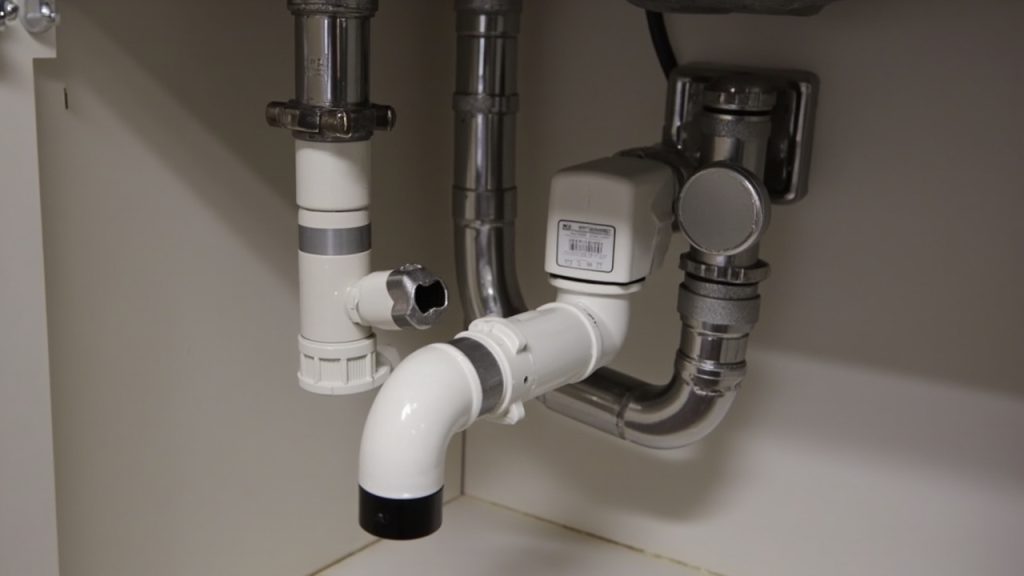
Best Smart Leak Detectors for Chicago High Rise Condos and What Installation Really Requires
One leak in a South Loop or West Loop condo tower can damage ten units stacked below it. A broken supply line behind your kitchen wall spreads water through shared plumbing stacks before you notice the first drip. Smart leak detectors change this game entirely by alerting you to moisture within seconds and shutting off water automatically.. Read more about Fixing interior water damage from failing rooftop deck drains in West Town.
After 15 years of restoring water-damaged Chicago condos, I’ve seen how the right leak detection system prevents tens of thousands of dollars in restoration costs. Condo owners in high-rise buildings face unique challenges that single-family homeowners in other areas don’t encounter. Shared water risers, limited crawl space, HOA board approvals, and concrete walls make installation different. Choosing the right system for a Chicago condo requires understanding both the technology and the building code constraints that govern it.. Read more about Professional restoration for steam shower leaks in Gold Coast luxury bathrooms.
Why Chicago Condo Owners Need Smart Leak Detection Right Now
Chicago winters create a specific threat to high-rise plumbing. During a Polar Vortex event, temperatures drop below minus 20 degrees Fahrenheit. Pipes running through exterior walls or inadequately insulated chases freeze solid. When thawing occurs, the ice expands and ruptures copper or PVC lines. The damage spreads fast in a stacked building.
A single burst pipe on the 15th floor of a South Loop tower sends water cascading through three stories below. You’re liable for damage to your neighbors’ units. Your condo master policy may require you to file a claim, which triggers deductibles for multiple units. Professional water removal and mold remediation in a three-unit vertical section of a building runs into the tens of thousands.
Smart leak detectors with automatic shut-off valves prevent this scenario. The moment a sensor detects water outside its designated location, the valve closes. You stop water at the source before gravity pulls it downward through shared stacks.. Read more about Finding the source of mystery moisture in your Printers Row loft.
Spring rains compound the problem. Chicago’s flat prairie geography and high water table near Lake Michigan mean standing water and sump pump failures. If your condo has an interior or basement component, or if a pipe runs to an exterior wall, moisture enters faster than you think.
Chicago’s Deep Tunnel Project (TARP) helps manage combined sewer overflow during heavy rains, but the system works at capacity during spring storms. Neighborhoods in South Loop and Pilsen still experience sewer backups when rainfall exceeds the system’s capacity. A smart sensor near floor drains alerts you to backup before water spreads.
Sensor Only Versus Automatic Shut Off Valves for High Rise Living
Before comparing brands, understand the two detection approaches available to condo owners.
Sensor-only systems detect water and send you a phone notification. You receive an alert on your smartphone within seconds. You then get out of bed, walk to your main water shut-off valve, and manually turn it off. In a condo, your main shut-off may be in a locked mechanical closet shared with other units, or it may be in a cabinet under your kitchen sink. Either way, you need physical access and time to act.
Automatic water shut-off valve systems (AWSVs) combine a sensor with an electronic valve. The moment the sensor detects water in the wrong place, the valve closes on its own. You receive the alert seconds later. By the time you read the notification, the water supply to your unit has stopped.
For Chicago condos, automatic shut-off valves are the better choice. If a pipe bursts behind your wall at 3 AM, you don’t want to fumble in the dark looking for a shut-off valve. The system acts without you.
Top Smart Leak Detection Systems for Chicago Condos in 2026
Three systems dominate the Chicago condo market right now. Each handles high-rise concrete construction and Chicago plumbing code requirements differently.. Read more about How to handle a flooded elevator pit in your Streeterville high rise.
| System | Type | Automatic Shut Off | Wi Fi in Concrete | Installation in Tight Spaces | Chicago Insurance Discounts |
|---|---|---|---|---|---|
| Flo by Moen | Whole unit sensor plus valve | Yes | Good, uses own hub | Moderate, requires main line access | Up to 10 percent premium reduction |
| Phyn Plus | Smart meter plus point sensors | Yes, at meter | Excellent, uses 2.4GHz mesh | Flexible, multiple sensor placement options | Up to 12 percent premium reduction |
| LeakSmart | Point sensors only or with cartridge valve | Optional cartridge valve | Fair, requires relay in dense concrete | Excellent, works under sinks and toilets | Up to 8 percent premium reduction |
Flo by Moen for Newer Chicago Condos
Flo by Moen installs at your main water line. It measures water pressure, flow rate, and temperature continuously. An internal valve shuts off water if it detects an abnormal flow pattern consistent with a burst pipe or major leak.
In newer South Loop condos with accessible main shut-off locations, Flo by Moen works well. The system requires a one inch water line with enough clearance underneath for the valve body and a Wi Fi hub mounted nearby. Concrete high-rises in Chicago have less space under kitchen sinks than suburban homes. If your condo’s main line runs through a tight chase, installation becomes difficult.
Flo by Moen communicates through its own hub, so you don’t need Thread or Matter integration. The system connects directly to Wi Fi and sends alerts through the Moen app.
Phyn Plus for Dense Urban Environments
Phyn Plus combines a smart water meter mounted at the main line with additional moisture sensors placed throughout your unit. The meter reads water flow patterns and pressure. If it detects a sudden drop in pressure or abnormal flow, the valve closes automatically.
The wireless mesh network used by Phyn Plus penetrates concrete and steel walls better than standard Wi Fi. In a concrete high-rise where Wi Fi signals get absorbed by thick exterior walls, Phyn Plus maintains connectivity better. You can place additional water sensors near your washer, dishwasher, toilet, and under bathroom vanities. The system learns your normal patterns and alerts you to tiny slow leaks that a whole-unit sensor might miss.
Phyn Plus integrates with Thread networks if your condo has other Thread-enabled smart home devices. Newer smart home hubs like the latest Apple TV models or select Amazon Echo devices support Thread.
LeakSmart for Flexible Point Leak Detection
LeakSmart emphasizes individual sensor placement over a main-line meter. You install small puck shaped sensors under every sink, near the toilet supply line, around the washer, and in any location where a leak could cause secondary damage.. Read more about The real cost of ignoring a small damp spot in your Lincoln Park brownstone.
LeakSmart sensors are thin and fit easily in tight spaces common in Chicago condos. If you can’t access your main water line or if your HOA restricts installation at the main shutoff, LeakSmart sensors under individual fixtures catch water before it spreads.
The trade off is that point sensors don’t shut off water automatically unless you add the cartridge valve. You can retrofit a LeakSmart cartridge valve under your main line later if you want automatic shut off capability.
Chicago Building Code and Plumbing Standards
Chicago’s building code permits automatic shut-off valves but requires specific installation standards. The valve must have a bypass line to prevent excessive pressure buildup. If the main valve closes completely, water pressure in the closed section can exceed safe limits and damage the system. A small bypass line releases pressure gradually when the main line is shut.
All three systems I mentioned above include bypass capability or operate at low enough pressures that bypass is not required. Confirm this detail when you order.
Chicago also requires that automatic shut-off systems have a manual override. If the electronic shut-off fails, you need a way to close the water supply manually. All three systems include a manual lever or valve handle for this reason.
Lead pipe segments still exist in Chicago’s oldest residential buildings, but most condos built after 1980 use copper or PEX. Smart leak detectors work the same regardless of pipe material. For specific code requirements, consult the Chicago Department of Buildings code database to verify your installation meets all local requirements.
The HOA Approval Process for Smart Leak Detection
Your condo’s homeowners association has rules about what you can install inside your unit and in shared spaces. Before you buy a leak detection system, check your condo’s bylaws.
If the system is entirely inside your unit and doesn’t affect shared plumbing or common areas, you typically don’t need board approval. Sensor only systems mounted under sinks meet this criteria. You install them, they work, no one else knows.
If your system includes a valve that shuts off your entire unit’s water supply, the board may want to know that the system has redundancy. An electronic valve that fails closed (meaning no water reaches your unit) could leave you without water. All modern systems have manual overrides, but the board needs documentation.
If you want to install a valve at the main water line in a shared mechanical chase, you absolutely need HOA approval. The main water lines serving multiple units are common property. Anything touching them requires board consent.
Your HOA approval checklist should include these items.
- Product name and manufacturer
- Installation location and schematic diagram
- Proof that the system meets Chicago Building Code
- Manual override documentation
- Wi Fi frequency and interference mitigation
- Maintenance requirements if any
- Insurance documentation if available
Most HOAs approve smart leak detectors without hesitation. Board members understand the liability risk a water leak poses to the building. A system that prevents damage to multiple units is in everyone’s interest.
Installation Challenges Specific to Chicago High Rise Condos
Chicago’s stock of condos includes three very different building types. Each has unique installation constraints.
Converted Three Flats in Pilsen and West Loop
Many three-flat buildings from the early 1900s were converted to three-unit condos. These buildings have original galvanized steel pipes with questionable isolation between units. Galvanized pipe corrodes from the inside out and can spring leaks without warning. Installing a whole-unit automatic shut-off valve on a 100 year old water line is risky. The valve creates back pressure that stresses weakened pipes.
For three-flat conversions, Phyn Plus or LeakSmart point sensors are safer choices. Place sensors at every connection point and under fixtures. You get early warning without the pressure risk.
Modern Glass Tower Condos in South Loop
Contemporary condos built in the last 20 years have PEX or copper lines running through concrete chases. These buildings have adequate space at the main shut-off location. Installing Flo by Moen or the Phyn Plus meter presents no structural challenge.
The challenge in modern towers is wireless connectivity. Concrete and steel walls absorb Wi Fi signals. South Loop towers near the Chicago River and Willis Tower have significant signal attenuation. Before you buy, test the Wi Fi strength in your unit. If your home Wi Fi operates on 5GHz only, you may have weak connectivity. Phyn Plus, which uses a mesh network on 2.4GHz, penetrates better.
Shared Plumbing Stacks and Limited Shut Off Access
In some Chicago condos, the main water shut-off sits in a locked mechanical closet serving five or six units. You can’t install a valve there without HOA approval. Your only option is to install point sensors under fixtures and handle main-line shut off manually if needed.
This setup is not ideal, but it’s common in older Chicago buildings. Phyn Plus and LeakSmart work well in this scenario. You get detection everywhere and you avoid the access problem entirely.
How Smart Leak Detectors Lower Your Condo Insurance Costs
Illinois insurance companies recognize smart leak detection as a risk mitigation tool. Homes equipped with automatic water shut-off valves or continuous monitoring systems qualify for premium discounts from most major carriers. Learn more about water damage coverage and risk mitigation from the Insurance Information Institute.
Current discount levels from insurers operating in Chicago range from 8 to 12 percent off your annual homeowners insurance premium. If your condo insurance costs $1,200 per year, a 10 percent discount saves $120 annually.
A complete Flo by Moen system costs between $400 and $600 installed. A Phyn Plus system costs $500 to $750. LeakSmart sensors run $50 to $100 each, with a cartridge valve adding $300 to $400.
If you install a system that qualifies for a 10 percent discount, the insurance savings alone cover the system cost within 4 to 6 years. After that point, you get the protection for free from an insurance perspective.
Different insurers offer different discount percentages. When you’re deciding which system to install, call your insurance agent and ask which brands qualify for the highest discount. Some carriers offer 12 percent for systems with automatic shut-off valves. Others offer 8 percent for sensor-only systems. One percent difference across systems sounds small, but it affects the payback timeline.
File your system documentation with your insurance company to ensure the discount applies. Forward them the product manual, installation date, and photos of the installed system. Insurance companies need proof that the system is functioning to approve the discount.
Real Costs of Water Damage in Chicago Condos
Understanding what you’re protecting against clarifies why smart leak detection matters.. Read more about Protecting your University Village rental property from student related floods.
A burst copper pipe behind a wall that runs for eight hours before discovery causes water damage to drywall, insulation, and subfloor across your unit and the unit below. Professional water extraction, dehumidification, and drying for a 1,200 square foot condo costs $8,000 to $15,000. Mold remediation if secondary mold growth occurs adds another $5,000 to $25,000 depending on extent.
Your condo master policy covers damage to common areas. Your individual homeowners policy covers your unit. If your leak spreads to three units below you, you’re looking at $30,000 to $45,000 in total restoration costs spread across four units. Your liability exposure on your homeowners policy could exceed your coverage limits.
A smart leak detection system prevents the scenario. By catching a leak within minutes instead of hours, you reduce water volume by 90 percent. The damage stays confined to a small area. Restoration costs drop to $2,000 to $5,000 maximum.
The financial case for smart leak detection is clear. Insurance savings plus avoided water damage costs justify the system investment many times over.
Wi Fi and Connectivity in Chicago’s High Rise Concrete Buildings
Concrete and steel high-rise buildings present unique connectivity challenges. A South Loop condo in a concrete and steel tower may have Wi Fi signals that drop in the bathroom or bedroom. Thick concrete walls absorb signals and create dead zones.
Test your Wi Fi strength before selecting a smart leak detector. Download an app that measures signal strength in decibels. Walk through your unit and check the strength in the kitchen, bathroom, laundry area, and near your main water line location. Signals stronger than minus 50 decibels are strong. Signals weaker than minus 70 decibels cause dropouts.
If your Wi Fi is weak near the main water line location, choose Phyn Plus. Its mesh network uses lower frequencies that penetrate concrete better. Alternatively, ask your internet provider to install a mesh Wi Fi system that places access points throughout your unit. Many internet plans now include mesh Wi Fi at no additional cost.
Flo by Moen includes its own hub, so you don’t rely on your existing Wi Fi. The hub communicates with Flo’s cloud servers directly. This independence from your home Wi Fi can be an advantage in buildings with poor connectivity.
Spring and Winter Risks Specific to Chicago Condos
Chicago’s climate creates two seasons of elevated leak risk.
Winter brings the Polar Vortex. Temperatures plummet below minus 15 degrees Fahrenheit. Any pipe running along an exterior wall or through an inadequately insulated chase freezes. When thawing occurs, ice expansion ruptures the line. A frozen and burst pipe is a guaranteed major leak. Smart detection systems catch the water within seconds of the burst.
Spring brings heavy rains and sump pump failures. If your condo has a basement component or if rainwater infiltrates near the foundation, sump pumps work overtime. A power outage during a spring storm leaves sump pumps inactive. Water backs up through floor drains and low-lying fixtures. A smart sensor under a floor drain or in the lowest part of the unit alerts you before water spreads throughout.
Chicago’s flat prairie geography means poor natural drainage. The city’s Deep Tunnel Project (TARP) helps manage combined sewer overflow, but neighborhoods in South Loop, Pilsen, and West Loop still experience sewer backups during heavy rains. Aging sewer systems in these areas can handle only so much volume. After heavy rains, sanitary sewers back up into buildings. If your condo has a floor drain in the mechanical room, a smart sensor near it alerts you to sewer backup before it damages finished areas.
Comparing System Features and Reliability
| Factor | Flo by Moen | Phyn Plus | LeakSmart |
|---|---|---|---|
| Initial Setup | Requires plumbing access, professional install recommended | Requires plumbing access, professional install recommended | DIY friendly, installs under sinks and around fixtures |
| Ongoing Maintenance | Minimal, check battery in hub annually | Minimal, check batteries in hub and sensors annually | Moderate, replace sensor batteries every 18 to 24 months |
| Reliability in Older Pipes | Lower, back pressure can stress old lines | Higher, no main line valve pressure | Highest, no main line involvement |
| Speed to Detection | Seconds, detects abnormal flow at meter | Seconds, detects abnormal flow at meter plus point sensors | Seconds, detects water at sensor location only |
| False Alarm Risk | Low to moderate, pressure drops from normal usage can trigger alerts | Low, learns patterns over time | Very low, only alerts if water present at sensor |
Flo by Moen excels in newer buildings with solid plumbing. Phyn Plus offers the best balance of whole unit protection and point sensing in high-rise environments. LeakSmart is the safest choice for older buildings where you want to avoid main-line valve pressure altogether.
For technical documentation on specific systems, review the Flo by Moen system specifications and installation guides to ensure your unit meets all equipment requirements before purchase.
Next Steps to Protect Your Chicago Condo
Start by checking your condo’s bylaws regarding water system modifications. Call your HOA board president and ask whether smart leak detectors are permitted inside units and whether main-line installation requires approval.
Test your Wi Fi strength near the location where you would install a smart meter if you go that route. Use a Wi Fi analyzer app to measure signal strength in decibels.
Call your insurance company and ask which smart leak detection brands they recognize for premium discounts. Get the exact discount percentage for each brand so you can factor this into the payback calculation.
Get a quote from a licensed plumber in Chicago for installation. Professional installation ensures the system meets Chicago Building Code and your condo’s specifications. Most plumbers charge $400 to $800 for installation depending on how accessible your main water line is.
If a leak has already started or if you suspect existing water damage in your condo, contact a water restoration professional immediately. Water damage spreads quickly, and professional mitigation stops mold growth before it becomes a health and liability problem. Cornerstone Water Damage Restoration operates 24/7 across the Chicago area and works directly with insurance companies to streamline claims and reduce your out of pocket costs. Our team responds to emergency water damage in South Loop, West Loop, and Pilsen condos within one hour of your call.
Don’t wait for a leak to damage your South Loop, West Loop, or Pilsen condo. Install smart leak detection now. You’ll gain immediate peace of mind and years of insurance savings that pay for the system many times over.
{
“@context”: “https://schema.org”,
“@type”: “BlogPosting”,
“headline”: “Best Smart Leak Detectors for Chicago Condos: A Restoration Expert’s Guide”,
“description”: “Smart leak detectors for Chicago high-rise condos. Automatic shut-off systems, HOA approval, insurance discounts, and installation in concrete towers.”,
“wordCount”: 3224,
“datePublished”: “2026-05-11T09:54:00.000Z”,
“dateModified”: “2026-05-11T09:54:00.000Z”,
“inLanguage”: “en-US”,
“mainEntityOfPage”: {
“@type”: “WebPage”,
“@id”: “https://cornerstonewaterdamagerestorationchicago.com”
},
“publisher”: {
“@type”: “LocalBusiness”,
“name”: “Cornerstone Water Damage Restoration Chicago”,
“url”: “https://cornerstonewaterdamagerestorationchicago.com”
},
“author”: {
“@type”: “Organization”,
“name”: “Cornerstone Water Damage Restoration Chicago”,
“url”: “https://cornerstonewaterdamagerestorationchicago.com”
},
“image”: {
“@type”: “ImageObject”,
“url”: “https://cornerstonewaterdamagerestorationchicago.com/wp-content/uploads/2026/03/the-best-smart-leak-detectors-for-high-rise-condos-1.jpg”
}
}
{
“@context”: “https://schema.org”,
“@type”: “LocalBusiness”,
“name”: “Cornerstone Water Damage Restoration Chicago”,
“url”: “https://cornerstonewaterdamagerestorationchicago.com”,
“address”: {
“@type”: “PostalAddress”,
“addressLocality”: “Chicago”
},
“areaServed”: {
“@type”: “City”,
“name”: “Chicago”
}
}
{
“@context”: “https://schema.org”,
“@type”: “BreadcrumbList”,
“itemListElement”: [
{
“@type”: “ListItem”,
“position”: 1,
“name”: “Home”,
“item”: “https://cornerstonewaterdamagerestorationchicago.com”
},
{
“@type”: “ListItem”,
“position”: 2,
“name”: “Blog”,
“item”: “https://cornerstonewaterdamagerestorationchicago.com/blog”
},
{
“@type”: “ListItem”,
“position”: 3,
“name”: “Best Smart Leak Detectors for Chicago Condos: A Restoration Expert’s Guide”
}
]
}
{
“@context”: “https://schema.org”,
“@type”: “Service”,
“serviceType”: “Water Damage Restoration”,
“provider”: {
“@type”: “LocalBusiness”,
“name”: “Cornerstone Water Damage Restoration Chicago”,
“url”: “https://cornerstonewaterdamagerestorationchicago.com”
},
“areaServed”: {
“@type”: “City”,
“name”: “Chicago”
},
“description”: “Smart leak detectors for Chicago high-rise condos. Automatic shut-off systems, HOA approval, insurance discounts, and installation in concrete towers.”
}