
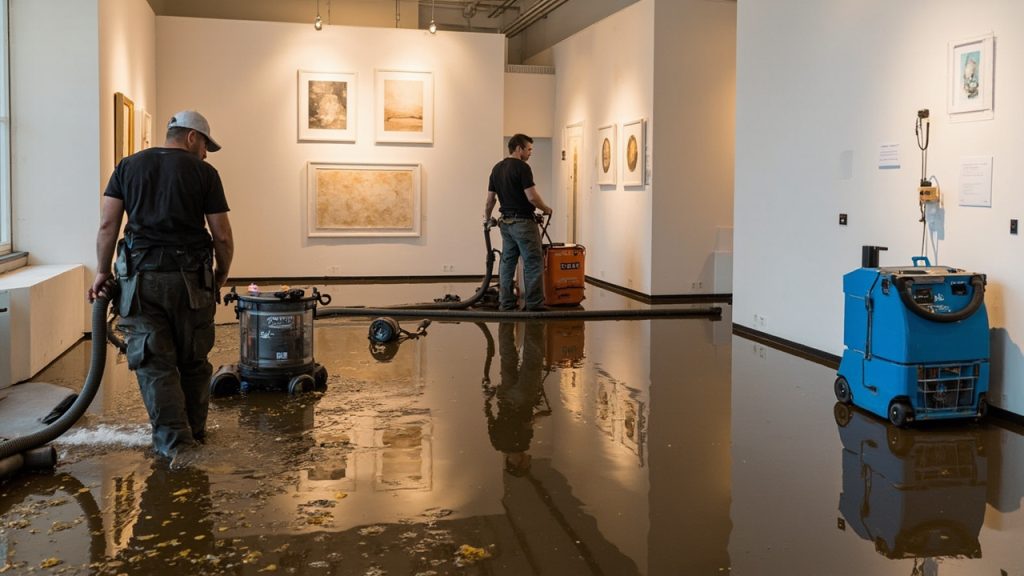
Art Gallery Flood Restoration in River North and Chicago’s Gallery Districts
When water enters a gallery in River North, minutes matter. Unlike standard water damage restoration, art galleries house irreplaceable collections worth hundreds of thousands of dollars. Your response in the first two hours determines whether paintings survive or become total losses.. Read more about Restoring water damaged documents and archives in Hyde Park faculty offices.
Cornerstone Water Damage Restoration brings 15 years of experience handling high-stakes commercial floods across Chicago’s premier art districts. We understand the intersection of structural drying, climate control, and fine art preservation. This article walks you through what happens when water hits a gallery, how our team responds, and why specialized expertise makes the difference between recovery and catastrophe.. Read more about Choosing the right water damage restoration company for your West Loop business.
Why Gallery Floods Require Specialized Response
Standard water damage crews focus on extraction and dehumidification. Gallery restoration demands something different. Fine art responds to rapid environmental changes the way living organisms respond to shock. A painting dried too quickly develops stress fractures in the canvas and cracking in the paint layers. Paper becomes brittle. Sculptures warp and lose structural integrity.
Chicago galleries sit in neighborhoods with specific flood risks. River North sits blocks from the Chicago River, which can overflow during heavy spring rains. The West Loop’s converted loft galleries occupy older industrial buildings with aging plumbing and compromised foundations. Both neighborhoods experience the same problem: water enters fast, and the building’s climate control system fails under the load.. Read more about How to dry out a flooded industrial warehouse in the Back of the Yards.
Your response strategy must address three simultaneous concerns. First, stop the water entry and remove standing water. Second, stabilize the environment to prevent shock to the collection. Third, document everything for insurance claims that often exceed six figures.
Immediate Response: Why the First 24 Hours Matter for Fine Art
The moment water enters your gallery, mold begins developing. Mold grows in relative humidity above 65 percent. Chicago’s humid summers create ideal conditions for microbial colonization. In a flooded gallery, humidity climbs to near 100 percent within hours. Every painting, sculpture, and paper piece faces exposure.
Your first action is to call for help. Our 24/7 emergency line dispatches a crew to Chicago galleries within 60 minutes of your call. We arrive with industrial water extraction equipment, humidity monitoring devices, and protocols designed specifically for art preservation.
Before we arrive, you should take these steps:
- Stop the water source if safe to do so. Shut off water mains if a pipe burst occurred. Do not enter standing water deeper than ankle depth.
- Open windows and doors to increase air circulation, but only if the outdoor air is drier than indoor air. Check humidity with a basic hygrometer before opening windows.
- Move collection pieces to elevated surfaces if water has not yet reached them. Do not attempt to move actively wet pieces. Wait for professional guidance.
- Photograph all damage for insurance documentation. Take wide shots of the overall space and close-ups of individual pieces showing water staining or damage.
- Gather all provenance documentation, appraisals, and insurance policies. These become critical for claims processing.
- Turn off HVAC systems if they are spreading contaminated water or air throughout the building. Local power grid strain during Chicago storms sometimes causes temporary shutdowns anyway.
Do not use household fans or portable heaters. Both create uneven drying and temperature shock. Uneven drying causes paintings to warp. Temperature shock causes paint to crack and separate from canvas.
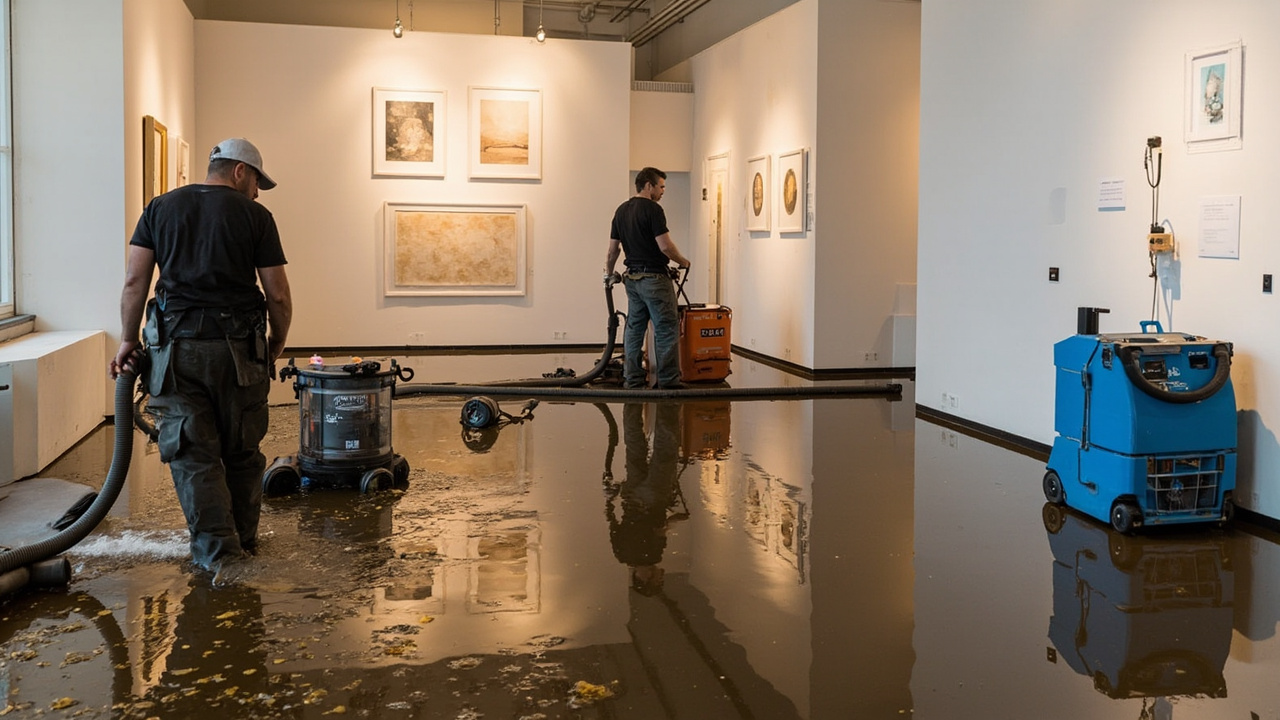
Our Art-First Restoration Process From Mitigation to Conservation
Phase One. Water Extraction and Initial Assessment
Our team arrives with truck-mounted extraction equipment rated for commercial environments. We assess how much water entered, which materials got exposed, and whether contamination occurred. River North and West Loop galleries often have basements that flood before upper floors. We check those first because art stored in climate-controlled basement galleries faces total loss without immediate attention.
We use commercial-grade submersible pumps to remove standing water. We do not use shop vacuums or standard carpet extraction equipment. Those systems leave residual moisture that creates delayed mold growth. We extract down to the substrate, leaving less than 1 percent residual moisture.
We also assess structural damage. Chicago’s historic gallery buildings often have masonry or limestone foundations that absorb water like a sponge. We identify capillary moisture in walls and plan for phase two drying before residual moisture wicks upward and damages pieces stored on upper floors.
Phase Two. Climate Control and Psychrometric Management
This phase separates professional gallery restoration from standard water removal. Psychrometrics is the science of moisture in air. Your gallery maintains relative humidity between 45 and 55 percent. After flooding, humidity spikes to 95 percent or higher. Bringing it back down requires precision.
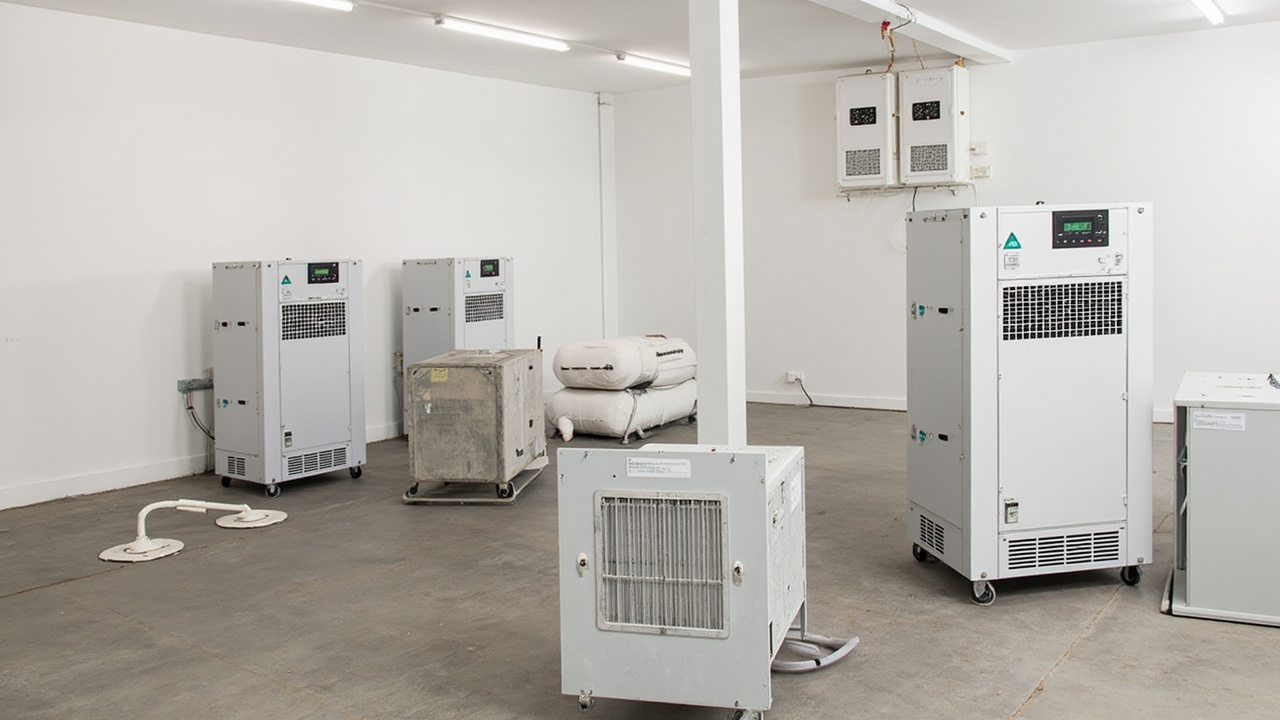
We deploy industrial-grade desiccant dehumidifiers rated for 800 to 1200 pints per day of moisture removal. Standard rental dehumidifiers remove 30 to 50 pints per day. In a flooded gallery, standard equipment leaves you waiting three weeks for acceptable humidity levels. Desiccant systems reach target humidity in three to five days.
We position equipment strategically. Fans alone do not dry a space. They create air movement, which accelerates evaporation from wet surfaces. We combine fans with dehumidification and direct low-temperature airflow across affected materials. We monitor humidity continuously with data-logging equipment that records every reading for your insurance file.
Temperature matters too. We maintain 60 to 70 degrees Fahrenheit during drying. Lower temperatures slow evaporation and microbial growth simultaneously. Higher temperatures speed drying but increase mold risk. We balance both factors using equipment that lets us control temperature independently from humidity reduction.
Chicago’s building codes for commercial spaces require that flood mitigation be completed within specific timeframes tied to insurance coverage. We track your timeline and document progress daily so you have proof of compliance if insurers question your claims.
Phase Three. Professional Pack-Out and Inventory Services
After water removal but before full drying, we conduct a complete inventory. Every piece damaged or potentially damaged gets documented. We photograph it, assign it a unique identifier, and log its location in the gallery space. This inventory becomes your insurance claim evidence.
For pieces with direct water exposure, we offer professional pack-out services. We move items to a climate-controlled storage facility operated to strict archival standards. Our facility maintains 45 to 55 percent relative humidity and 65 to 70 degrees Fahrenheit. We store items on acid-free materials using archival standards compliant with conservation guidelines.
For pieces still in the gallery, we monitor them daily. We check for secondary damage like mold colonization or warping. If a piece shows signs of deterioration, we move it to storage before damage worsens.
We maintain detailed chain-of-custody documentation for every item. Insurance adjusters require proof that items were properly handled and stored. Our records provide that proof. West Loop and River North galleries have successfully recovered insurance claims using our documentation when pieces were properly inventoried and stored during the drying phase.
Phase Four. Secondary Restoration and Mold Remediation
Once humidity drops below 60 percent and structural surfaces dry, we conduct secondary restoration. This includes removing debris, decontaminating surfaces, and addressing microbial growth.
We use HEPA filtration equipment that captures particles larger than 0.3 microns. This protects your collection from secondary contamination during cleanup. We do not spray chemicals in occupied galleries. We focus on physical removal of debris and moisture-damaged materials that cannot be recovered.
For mold, we use targeted remediation. Some surfaces can be cleaned and preserved. Others must be removed entirely. A gallery with mold colonization on wooden frames, for example, requires professional evaluation of whether frames can be salvaged or must be replaced. We make those calls based on species identification and extent of growth.
Climate Control After Flood Recovery Prevents Future Problems
Most galleries lose power during storms that cause flooding. The HVAC system shuts down. Humidity climbs. Without backup power or emergency climate control, the space becomes a mold incubator within 12 hours.
We recommend portable backup systems for galleries in flood-prone areas. River North’s proximity to the Chicago River and the West Loop’s aging infrastructure create specific risk. A backup dehumidifier running on a battery or generator maintains humidity control if the main system fails during an emergency.
We also recommend that galleries have their HVAC systems evaluated for flood resistance. Chicago’s Deep Tunnel Project handles overflow during extreme rain, but localized flooding from burst pipes or sump pump failures happens every year. Systems installed above the first floor of historic buildings survive floods better than basement-mounted equipment.
Managing Insurance Claims for High-Value Art Collections
Commercial property insurance covers building damage but not fine art. Art galleries need separate fine art insurance that specifically covers water damage, mold, and climate-related loss. Standard commercial policies often exclude or limit coverage for water damage in basements, and basement galleries are common in Chicago’s historic neighborhoods.
Your insurance claim starts with documentation. We provide detailed reports showing what water damage occurred, how much moisture was present, and what steps we took to prevent secondary damage. Fine art insurance adjusters want to see evidence that you responded quickly and professionally.
We work directly with adjusters. Most galleries find this enormously helpful during a crisis. While you handle operational questions and collection concerns, we handle the technical dialogue with insurance. We explain what caused the damage, what we did to stop it, and why our fees are necessary and reasonable.
For high-value collections, appraisals become crucial. We recommend that you contact your appraiser immediately. Insurance adjusters will want independent confirmation of piece values before releasing claim payments. Your appraiser can also assess whether pieces sustained damage that diminishes value.
Claims for water-damaged fine art are complex because value depends on condition. A painting worth $50,000 in perfect condition might be worth $8,000 if a water stain affects the visible surface. Insurance adjusters understand this but need documentation. Our detailed inventory and photography give adjusters what they need to process claims fairly.
Serving Chicago’s Gallery Districts with Specialized Expertise
River North concentrates the largest gallery density in Chicago. Buildings built in the 1920s to 1960s for industrial use now house contemporary and mid-century art. Most lack the environmental controls installed in modern museums. Basements flood regularly during spring when the Chicago River rises above normal levels.
The West Loop galleries occupy converted manufacturing lofts with massive windows, exposed brick, and open floor plans. These spaces are beautiful for displaying art but challenging to climate control during emergencies. Water entering one corner of a 10,000-square-foot loft spreads quickly because there are few interior walls to slow it.
Both neighborhoods experience humid summers driven by Lake Michigan and the Chicago River system. That humidity accelerates mold growth if drying does not begin immediately after water removal. We have responded to more post-flood mold emergencies in these two neighborhoods than anywhere else in Chicago.
We maintain emergency equipment stationed to serve River North and the West Loop within 60 minutes. When you call, we dispatch from our local facility, not from a distant warehouse. You get rapid response because we understand the urgency of gallery floods.
Specialized Equipment and Certifications Prove Our Expertise
We maintain IICRC S500 certification in water restoration. That certification requires 72 hours of specialized training in psychrometrics, moisture detection, and structural drying. We renew this certification every two years. Our team stays current with the latest standards in the field.
We also hold certification from the American Institute of Inspection, Cleaning and Restoration Certification Program (IICRC AMIR). This specialty covers archival and fine art restoration protocols. Not every water restoration company invests in this certification. We did because we work with galleries regularly.
Our equipment matches our expertise. We use only commercial-grade dehumidifiers from manufacturers like Phoenix and LGR. We maintain psychrometric charts and moisture meters calibrated annually. We deploy data-logging equipment that provides continuous records for your insurance file.
| Equipment Type | Residential Use | Gallery Use | Why Gallery Use Differs |
| Dehumidifier Capacity | 30 to 50 pints per day | 800 to 1200 pints per day | Gallery flood requires rapid humidity reduction to prevent art damage and mold growth |
| Temperature Control | Standard HVAC only | Independent temperature and humidity control | Fine art requires temperature stability independent of humidity drying rate |
| Monitoring | Basic humidity meter | Continuous data-logging with multiple sensors | Insurance claims require documented proof of environmental conditions during recovery |
| Air Filtration | Standard HVAC filter | HEPA filtration and negative pressure containment | Fine art cannot tolerate dust or contaminant exposure during drying phase |
| Drying Duration | Two to four weeks | Three to seven days | Slower drying in galleries risks permanent damage to paintings, sculptures, and paper |
This comparison shows why hiring a standard water removal company for a gallery flood creates risk. The equipment, training, and protocols differ significantly. Using standard equipment in a gallery typically means compromised art recovery.
Water Extraction from Specialized Gallery Flooring
Many Chicago galleries have concrete floors polished to a high shine. That finish looks beautiful but traps water on the surface. We use extraction techniques that remove water without damaging the finish. We also manage the residual moisture in the concrete itself, which is hygroscopic and absorbs water rapidly.
Some galleries have hardwood floors in display areas. Historic buildings in River North sometimes feature original oak or maple flooring. After flooding, that wood must be dried carefully to prevent permanent cupping and warping. We use low-temperature, high-humidity drying for hardwood to minimize dimensional changes.
Specialty finishes like epoxy or resinous coatings require specific drying protocols. Too-rapid drying can cause adhesion failure. Too-slow drying risks mold colonization under the coating. We assess the specific flooring material and adjust our approach accordingly.
Document and Archive Recovery Services
Many galleries maintain archives of artist documentation, exhibition catalogs, and historical records. If a flood damages these materials, recovery becomes complex. Paper and cardboard are hygroscopic. They absorb water quickly and dry slowly, creating extended mold risk.
We offer freeze-drying services for damaged documents and archives. This process removes water from paper while minimizing deterioration. We coordinate with professional document recovery companies that operate specialized freeze-drying chambers. Success rates for paper recovery using freeze-drying exceed 85 percent if the work begins within 48 hours of water damage.
Digital inventory systems have reduced reliance on physical documents in newer galleries. Older galleries in River North and the West Loop sometimes maintain extensive paper records. Those records become valuable if flood damage threatens them. We help galleries prioritize which documents to recover based on historical value and feasibility of restoration.
Common Questions About Gallery Water Damage and Recovery
Can a painting survive complete water submersion?
Yes, with immediate professional response. Oil paintings on canvas are actually more resilient than many people assume. The paint layer itself is not harmed by water. Canvas and stretchers can be cleaned and dried. Frames present more challenge because wood absorbs water and swells. If a submerged painting is professionally dried within 48 hours, recovery rates exceed 90 percent. After 48 hours, mold colonization begins and damage becomes permanent.
What about sculptures and three-dimensional art?
Recovery depends entirely on material. Bronze or stainless steel sculptures survive water well. Stone sculptures risk damage only if water contains minerals that stain or if freeze-thaw cycles occur. Wooden sculptures face significant risk. Wood warps and develops permanent cracks as it dries. Some wooden sculptures can be saved with controlled drying. Others cannot. We assess each piece individually.
Can we move wet paintings ourselves to prevent mold?
No. Moving wet paintings causes permanent damage. Water-saturated canvas is fragile. Canvas stretches and can tear if moved while wet. Paint can separate from the canvas. The proper approach is to stabilize the environment first, then move pieces only after they have been partially dried and reinforced by a conservator.
How long before we can display art again after a gallery flood?
Structural drying takes three to seven days depending on flood severity. After that, pieces in storage need individual assessment. A painting that was not directly exposed to water but was in high-humidity storage needs careful acclimation as humidity returns to normal levels. This acclimation takes two to four weeks. Pieces with direct water damage may require months of conservation work. Most galleries open with partial displays within two weeks of a flood, displaying pieces that were undamaged and stored safely.
Does insurance actually cover art gallery floods?
This depends on your policy. Standard commercial property insurance covers the building but not fine art contents. Most galleries carry separate fine art insurance. That policy should specifically address water damage. Some older policies exclude water damage entirely. We recommend that you contact your broker immediately after a flood to clarify coverage. Do not assume you are covered until you confirm it in writing.
Next Steps After Discovering Water in Your Gallery
If you discover water in your River North or West Loop gallery, your response timeline is measured in minutes. Call Cornerstone Water Damage Restoration immediately. Do not wait to assess the damage yourself or contact other companies first. Every minute of delay increases mold risk and collection damage.
Our emergency line handles gallery floods 24 hours a day, 7 days a week. We dispatch crews with specialized equipment and training specific to fine art preservation. We provide detailed documentation for your insurance claim and work directly with adjusters to process claims fairly.
Stop the water source if safe. Document the damage with photographs. Contact your fine art insurance broker. Call us. Those four actions protect your gallery and collection during the critical first hours after a flood.
You can reach our emergency team at our office or through our 24/7 hotline. We have crews stationed in Chicago ready to respond to gallery emergencies within the hour. Do not delay. Call now if you discover water in your gallery.
{
“@context”: “https://schema.org”,
“@type”: “BlogPosting”,
“headline”: “Art Gallery Flood Restoration in River North and Chicago’s Gallery Districts”,
“description”: “Expert art gallery water damage restoration in River North, West Loop, and Chicago. 24/7 emergency response protecting fine art, climate control, and specialized salvage.”,
“wordCount”: 2923,
“datePublished”: “2026-05-04T05:11:00.000Z”,
“dateModified”: “2026-05-04T05:11:00.000Z”,
“inLanguage”: “en-US”,
“mainEntityOfPage”: {
“@type”: “WebPage”,
“@id”: “https://cornerstonewaterdamagerestorationchicago.com”
},
“publisher”: {
“@type”: “LocalBusiness”,
“name”: “Cornerstone Water Damage Restoration Chicago”,
“url”: “https://cornerstonewaterdamagerestorationchicago.com”
},
“author”: {
“@type”: “Organization”,
“name”: “Cornerstone Water Damage Restoration Chicago”,
“url”: “https://cornerstonewaterdamagerestorationchicago.com”
},
“image”: {
“@type”: “ImageObject”,
“url”: “https://cornerstonewaterdamagerestorationchicago.com/wp-content/uploads/2026/03/protecting-valuable-art-and-galleries-from-water-d-1.jpg”
}
}
{
“@context”: “https://schema.org”,
“@type”: “LocalBusiness”,
“name”: “Cornerstone Water Damage Restoration Chicago”,
“url”: “https://cornerstonewaterdamagerestorationchicago.com”,
“address”: {
“@type”: “PostalAddress”,
“addressLocality”: “Chicago”
},
“areaServed”: {
“@type”: “City”,
“name”: “Chicago”
}
}
{
“@context”: “https://schema.org”,
“@type”: “FAQPage”,
“mainEntity”: [
{
“@type”: “Question”,
“name”: “Can a painting survive complete water submersion?”,
“acceptedAnswer”: {
“@type”: “Answer”,
“text”: “Yes, with immediate professional response. Oil paintings on canvas are actually more resilient than many people assume. The paint layer itself is not harmed by water. Canvas and stretchers can be cleaned and dried. Frames present more challenge because wood absorbs water and swells. If a submerged painting is professionally dried within 48 hours, recovery rates exceed 90 percent. After 48 hours, mold colonization begins and damage becomes permanent.”
}
},
{
“@type”: “Question”,
“name”: “What about sculptures and three-dimensional art?”,
“acceptedAnswer”: {
“@type”: “Answer”,
“text”: “Recovery depends entirely on material. Bronze or stainless steel sculptures survive water well. Stone sculptures risk damage only if water contains minerals that stain or if freeze-thaw cycles occur. Wooden sculptures face significant risk. Wood warps and develops permanent cracks as it dries. Some wooden sculptures can be saved with controlled drying. Others cannot. We assess each piece individually.”
}
},
{
“@type”: “Question”,
“name”: “Can we move wet paintings ourselves to prevent mold?”,
“acceptedAnswer”: {
“@type”: “Answer”,
“text”: “No. Moving wet paintings causes permanent damage. Water-saturated canvas is fragile. Canvas stretches and can tear if moved while wet. Paint can separate from the canvas. The proper approach is to stabilize the environment first, then move pieces only after they have been partially dried and reinforced by a conservator.”
}
},
{
“@type”: “Question”,
“name”: “How long before we can display art again after a gallery flood?”,
“acceptedAnswer”: {
“@type”: “Answer”,
“text”: “Structural drying takes three to seven days depending on flood severity. After that, pieces in storage need individual assessment. A painting that was not directly exposed to water but was in high-humidity storage needs careful acclimation as humidity returns to normal levels. This acclimation takes two to four weeks. Pieces with direct water damage may require months of conservation work. Most galleries open with partial displays within two weeks of a flood, displaying pieces that were undamaged and stored safely.”
}
},
{
“@type”: “Question”,
“name”: “Does insurance actually cover art gallery floods?”,
“acceptedAnswer”: {
“@type”: “Answer”,
“text”: “This depends on your policy. Standard commercial property insurance covers the building but not fine art contents. Most galleries carry separate fine art insurance. That policy should specifically address water damage. Some older policies exclude water damage entirely. We recommend that you contact your broker immediately after a flood to clarify coverage. Do not assume you are covered until you confirm it in writing.”
}
}
]
}
{
“@context”: “https://schema.org”,
“@type”: “BreadcrumbList”,
“itemListElement”: [
{
“@type”: “ListItem”,
“position”: 1,
“name”: “Home”,
“item”: “https://cornerstonewaterdamagerestorationchicago.com”
},
{
“@type”: “ListItem”,
“position”: 2,
“name”: “Blog”,
“item”: “https://cornerstonewaterdamagerestorationchicago.com/blog”
},
{
“@type”: “ListItem”,
“position”: 3,
“name”: “Art Gallery Flood Restoration in River North and Chicago’s Gallery Districts”
}
]
}
{
“@context”: “https://schema.org”,
“@type”: “Service”,
“serviceType”: “Water Damage Restoration”,
“provider”: {
“@type”: “LocalBusiness”,
“name”: “Cornerstone Water Damage Restoration Chicago”,
“url”: “https://cornerstonewaterdamagerestorationchicago.com”
},
“areaServed”: {
“@type”: “City”,
“name”: “Chicago”
},
“description”: “Expert art gallery water damage restoration in River North, West Loop, and Chicago. 24/7 emergency response protecting fine art, climate control, and specialized salvage.”
}