
Wet Spray Foam Insulation in Chicago Homes Why Professional Drying Matters
If your spray foam is wet, you have 24 hours to act. Most Chicago homeowners discover water trapped inside spray foam insulation only after mold and rot appear. By then, the damage multiplies daily. Structural decay accelerates in your walls, mold spores contaminate your air, and your home loses tens of thousands of dollars in value while you still decide what to do.
You installed spray foam thinking you bought durability and energy savings. Then a roof leak, burst pipe, or foundation crack allowed water to penetrate the barrier. Now the foam is wet. The question is not just whether you can dry it. The question is whether you can save your home’s structural integrity before hidden rot destroys the wood framing behind it.
After 15 years of handling water damage in Lincoln Park, Lakeview, and Rogers Park, I have seen this scenario destroy hundreds of thousands of dollars in property value. The foam looked fine on the surface. The real disaster lived inside the wall cavity where moisture feeds mold and eats through wood studs at alarming speed, especially in Chicago’s high-humidity climate where Lake Michigan air accelerates decay. This is not a minor inconvenience. This is an emergency.
Why Spray Foam Holds Water Like a Hidden Reservoir
Not all foam is created equal. Open-cell spray foam and closed-cell spray foam behave completely differently when wet. Understanding this distinction determines whether your insulation survives or you must remove it entirely.
Open-Cell Spray Foam Absorbs Water Aggressively
Open-cell foam has a structure full of tiny connected air pockets. Water enters those pockets and spreads through the material like a sponge. Once saturated, open-cell foam loses its R-value, which is thermal resistance, and becomes a breeding ground for microbial growth within 24 to 48 hours, depending on temperature and humidity.
In Chicago’s humid summers, when basement temperatures can reach 75 to 80 degrees Fahrenheit with relative humidity above 70 percent, open-cell foam becomes a mold incubator. The foam itself does not prevent mold. The moisture inside creates the perfect environment for rapid colonization and spore production.
Closed-Cell Spray Foam Traps Moisture Behind a Barrier
Closed-cell foam resists water absorption. The cells are tightly sealed. Water does not penetrate the material itself. This seems like the safer option, but it creates a far more dangerous problem. Moisture gets trapped behind the foam against wood framing, and you cannot see it happening.
This is the scenario that wakes homeowners at 2 a.m. in panic. The foam looks completely normal from the inside. But behind it, wood studs, rim boards, and roof decking are rotting away. By the time anyone discovers the rot, structural failure becomes imminent and expensive removal becomes your only choice.
Chicago’s freeze-thaw cycles make this far worse. During winter, water that enters wall cavities freezes and expands, pushing moisture deeper into wood. When spring warmth arrives, that water thaws and remains trapped behind the foam, unable to evaporate outward. The moisture stays inside the cavity all spring and summer, feeding rot and mold.
| Foam Type | Water Absorption Rate | Drying Potential | Mold Risk Timeline | Structural Rot Risk |
|---|---|---|---|---|
| Open-Cell | High (acts like sponge) | Professional equipment can dry it successfully | 24 to 48 hours | Moderate (visible growth alerts homeowner) |
| Closed-Cell | Low (water-resistant) | You must remove it (drying fails) | 7 to 14 days (hidden) | Critical (damage invisible until structural failure) |
The distinction matters because it shapes your entire response strategy. Open-cell foam demands aggressive, immediate dehumidification. Closed-cell foam often demands complete removal and replacement.
The Trapped Moisture Problem Chicago Contractors Ignore
Most general contractors and even some restoration firms treat wet insulation as a simple drying problem. Dry the foam and the problem is solved. This approach fails because it ignores vapor drive, capillary action, and the specific chemistry of polyurethane materials when exposed to sustained moisture.
Moisture Migrates Behind the Foam, Not Just Through It
Water does not stop at the foam surface. It follows the path of least resistance. In a wall cavity with closed-cell foam, that path leads behind the insulation to the wood sheathing and framing members. The foam acts as a vapor barrier, trapping that moisture against wood where rot develops silently.
Capillary action pulls water upward through wood fibers, even when the wood appears dry on the surface. Wood moisture content above 20 percent triggers fungal growth. At 28 percent, structural wood rot accelerates dramatically. In Chicago’s climate, where summertime humidity regularly exceeds 65 percent, wood trapped behind closed-cell foam reaches dangerous moisture levels within two weeks.
You cannot see this happening. The foam on the inside of the wall looks fine. The rot progresses silently in the cavity behind it until structural damage becomes severe and repair costs skyrocket.
Lake Michigan Humidity Accelerates Hidden Decay
Chicago residents in Lakeview and Lincoln Park experience humidity levels influenced directly by Lake Michigan. On humid summer days, outdoor air reaches 75 to 85 percent relative humidity. This air infiltrates through wall leaks and roof penetrations. If that air contacts cold surfaces during early spring or late fall, condensation forms inside the cavity automatically.
Spray foam installations in Chicago homes often fail to account for this geographic moisture problem. Contractors install foam as an insulation upgrade, not as a moisture control system. When water enters from above or sideways, the foam becomes a liability instead of an asset that protects your home.
Why Standard Drying Equipment Fails With Spray Foam
Wet drywall responds well to standard air movers and refrigerant dehumidifiers. Wet spray foam does not respond to the same approach. The equipment works on the foam’s exterior surface, but moisture trapped in the material or behind it never reaches the dehumidifier intake where it can be removed.. Read more about How to tell if your wet drywall can be saved or needs to be tossed.
LGR Dehumidifiers Remove Surface Moisture Only
LGR, which stands for Low Grain Refrigerant, dehumidifiers pull water vapor from the air around wet materials. They work when moisture escapes the material into the air. With open-cell foam, some escape happens if the foam has exposure to air circulation. But with closed-cell foam and wood framing behind it, the moisture never reaches the dehumidifier. It stays trapped inside the wood indefinitely.
IICRC S500 Standards, the restoration industry’s water damage protocol, require moisture content testing to validate that materials have actually dried, not just that the air feels drier. Most contractors never conduct this testing on insulation, which means they have no proof the foam actually dried.
Injection Drying Systems Target Hidden Cavities Directly
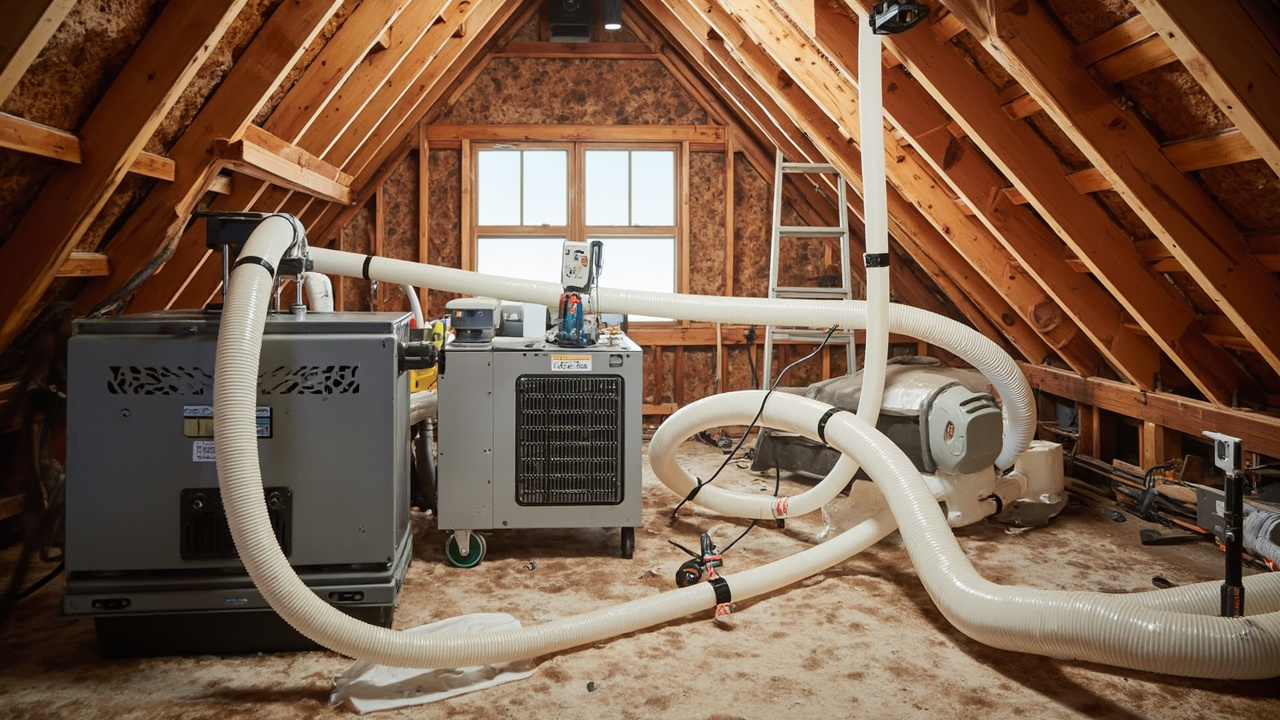
Professional restoration teams use injection drying, a technique that pumps warm, dry air directly into wall cavities and attic spaces. This forces moisture out from behind the foam and allows it to escape through exit ports. The process requires access points, often small holes drilled strategically, and sustained equipment operation over 7 to 21 days, depending on the cavity size and wood moisture content.
This is not a DIY project. Incorrect injection pressure damages the foam and framing permanently. Inadequate airflow leaves moisture behind where mold grows. Poor equipment selection extends the project timeline and costs more in the end than professional work from the start.
Thermal Imaging Reveals What Your Eyes Cannot See
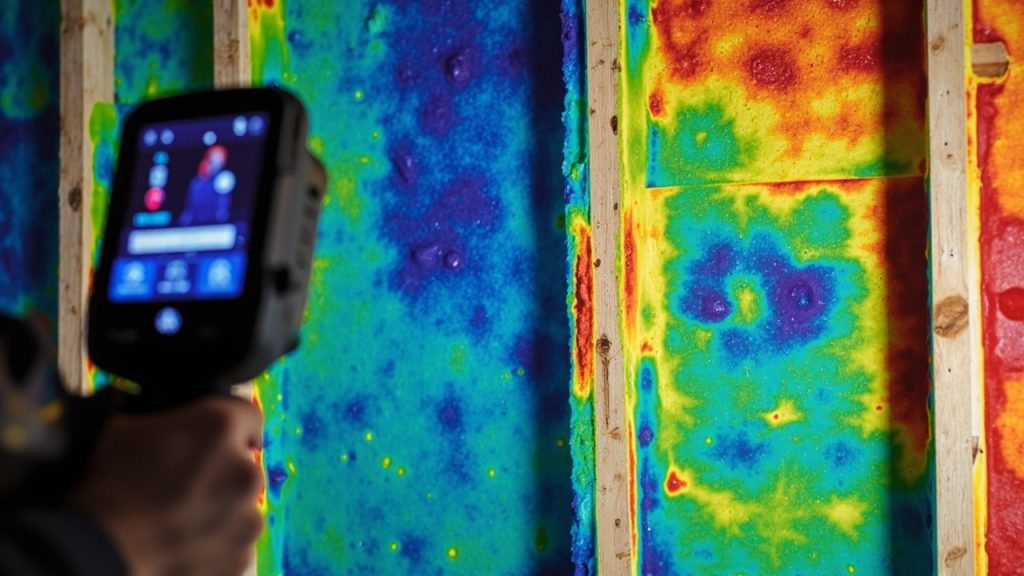
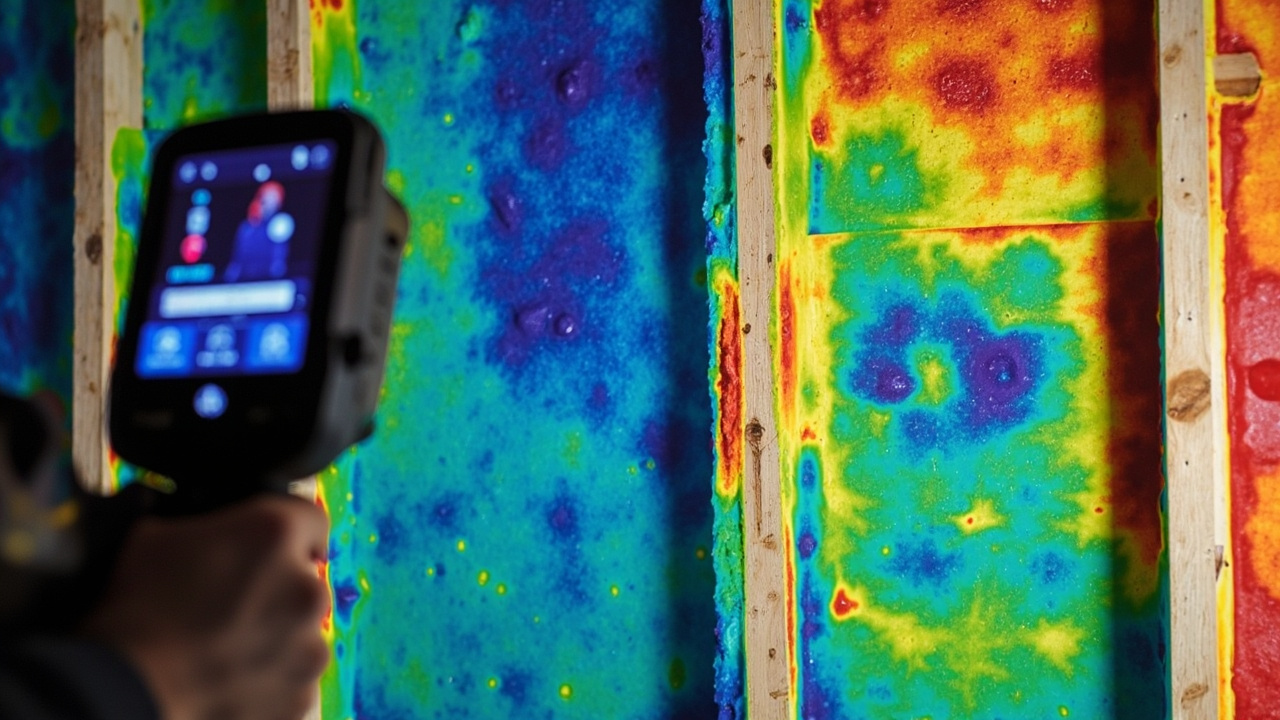
FLIR thermal imaging cameras detect temperature differences in materials. Wet materials cool faster than dry ones because water absorbs and distributes thermal energy differently. A trained technician uses these cameras to create heat maps showing exactly where moisture hides inside walls and cavities.
This technology is non-destructive. No removal required to assess the damage. The camera images help determine whether the water is trapped behind the foam or throughout the material. If the image shows a clear pattern of cooler zones running along the wood framing behind closed-cell foam, rot is already starting and removal becomes necessary.
Chicago water damage firms equipped with thermal imaging assess your situation in hours instead of days. The images also serve as documentation for insurance claims, showing the adjuster exactly where the problem exists and how extensive the damage has become.
Mold Growth Accelerates in Spray Foam Cavities
Mold spores exist everywhere in Chicago’s environment. What mold needs to grow is moisture, oxygen, and a food source. Spray foam provides the oxygen and food. Water provides the moisture. Chicago’s climate provides the temperature range mold prefers for rapid reproduction.
Mold Colonizes Foam Surfaces in Days, Not Weeks
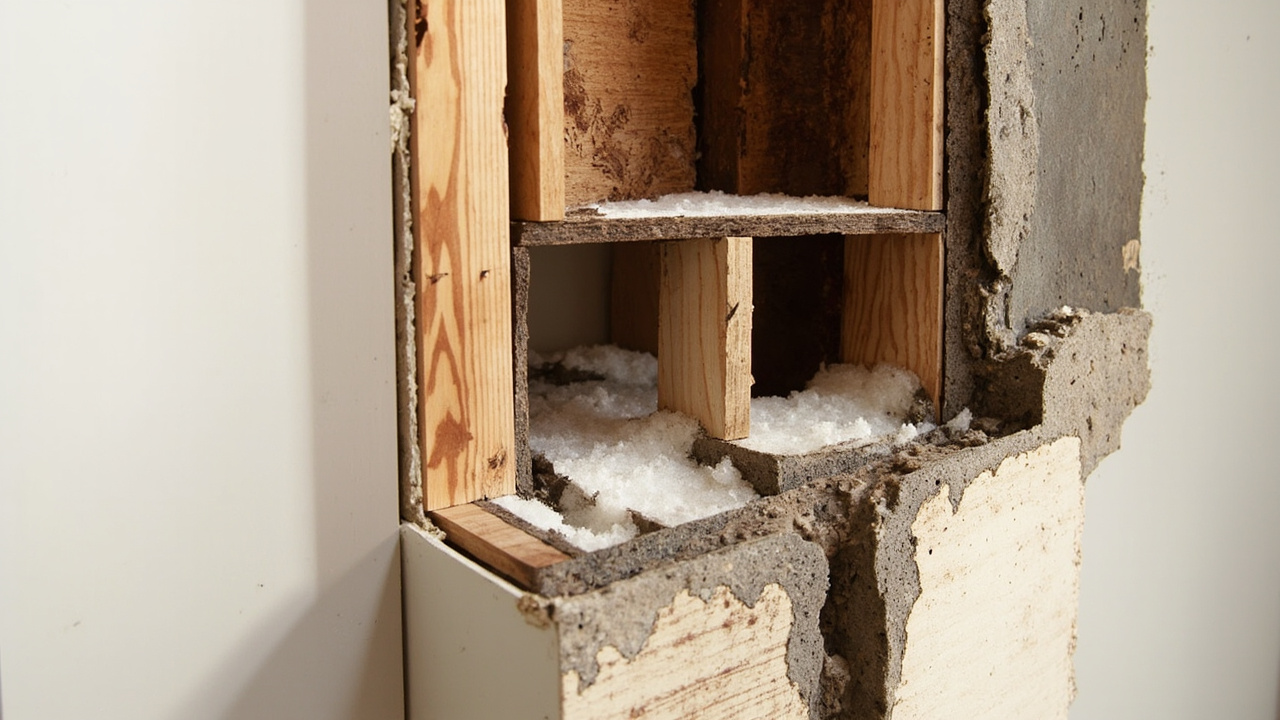
Visible mold on foam surfaces indicates the cavity is already heavily colonized. Mold grows on the foam, on the wood framing, on insulation paper, and on fasteners simultaneously. In Chicago’s high-humidity conditions, mold becomes visible within 5 to 10 days if the moisture environment stays favorable.
Once mold colonies establish, spore counts inside the wall cavity reach levels that contaminate surrounding air. These spores migrate into living spaces through gaps around electrical outlets, pipe penetrations, and HVAC returns. Residents develop respiratory symptoms, allergies worsen, and children experience asthma triggers without understanding the source is hidden in their walls.
Removal becomes unavoidable. Cleaning mold out of foam cavities is ineffective because the foam structure allows mold hyphae to penetrate deeply into the material. Professional restoration requires extraction of all contaminated material and replacement with new insulation and a proper moisture-control system.
Black Mold Risks Require Immediate Professional Response
Stachybotrys, commonly called black mold, thrives in the exact conditions spray foam creates. These conditions include consistent moisture, enclosed spaces, and wood substrates for food. Chicago homes, particularly older structures in Rogers Park and similar neighborhoods with aging building envelopes, face elevated risk from this dangerous mold species.
When you suspect black mold, do not attempt removal yourself. Disturbing mold colonies releases spores into the air where they spread throughout your home. Professional mold remediation requires proper containment, personal protective equipment, and disposal protocols that follow EPA guidelines and regulations.
Structural Rot Progresses Faster Than Most Homeowners Expect
Wood rot is not a surface problem. Fungal decay attacks the wood cell structure, reducing load-bearing capacity dramatically. A rim board that looks solid can lose 50 percent of its strength while appearing intact from the outside. A roof rafter can fail under normal snow load after moisture damage reaches critical levels.
Chicago Building Code Requires Structural Assessments After Water Events
The Chicago Department of Buildings enforces structural safety standards throughout the city. Properties with water damage affecting insulation, framing, or foundation support require professional structural evaluation before the property passes inspection. This requirement applies to residential and commercial buildings throughout Lincoln Park, Lakeview, Rogers Park, and all Chicago neighborhoods where spray foam insulation is common.
Inspectors specifically examine whether water damage has compromised structural capacity. Chicago Building Code requires engineers to certify that load-bearing members retain minimum strength ratings. This certification process is mandatory before your property receives approval for occupancy after water damage events involving foam insulation.
Insurance companies increasingly require structural reports for water damage claims involving insulation. Without documentation showing the wood framing remains sound, claim denials become common. Conversely, if a structural engineer certifies that wood must be replaced due to rot, insurance covers the cost of removal, replacement, and new insulation installation.
Repair Costs Multiply When Rot Advances Unchecked
Catching water damage at the foam stage costs a fraction of addressing it after structural decay develops. Removing wet foam and drying cavities costs within the range of standard water removal services. Removing wet foam, replacing rotted rim boards, replacing rotted roof decking, and installing new insulation costs exponentially more and requires structural oversight.
The real cost is property value loss. A home with a history of structural water damage and mold remediation carries permanent value reduction. Buyers require extensive inspections. Insurance rates increase. Resale becomes difficult and produces lower offers.
| Damage Stage | Timeline | Visible Signs | Professional Response Required | Approximate Cost Impact |
|---|---|---|---|---|
| Water enters foam | 0 to 24 hours | Wet surface, dripping water | Emergency mitigation within 4 hours | Standard water removal cost |
| Mold begins colonizing | 2 to 5 days | Musty odor, visible discoloration | Thermal imaging assessment, drying protocol initiated | Drying equipment plus foam removal |
| Wood moisture reaches 25 percent | 5 to 10 days | Soft spots in wood, visible rot | Structural inspection, containment, selective removal | Foam plus wood framing replacement |
| Structural failure risk emerges | 10 to 21 days | Sagging, movement, cracking | Emergency structural stabilization, complete remediation | Full cavity reconstruction plus engineering oversight |
When Foam Can Be Dried Versus When You Must Remove It
Not every wet foam situation demands removal. Understanding the decision criteria protects your property and your wallet from unnecessary costs.
You can dry foam successfully when these conditions exist together.
- Open-cell foam only (closed-cell cannot dry safely)
- Water contact is less than 48 hours old
- No mold is visible on the foam surface or in the cavity
- Wood moisture content is below 20 percent (verified with moisture meter)
- The cavity has direct access for injection drying equipment
- You have eliminated and repaired the source of water entry
You must remove foam when any of these apply.
- Closed-cell foam is involved and moisture extends behind it
- Visible mold exists on the foam or wood framing
- Water contact has lasted more than 48 hours
- Wood moisture content exceeds 25 percent or structural wood shows decay
- The water source cannot be permanently eliminated
- Chicago Building Code compliance requires it based on material damage extent
Your decision should never be based on cost alone. Attempting to dry foam that you must remove delays structural failure and multiplies final costs exponentially. Removing foam that you could have dried wastes money and disrupts your home unnecessarily.
Professional assessment using moisture meters, thermal imaging, and visual inspection takes one to two hours and provides the clarity you need to make the right choice for your situation.
Chicago Climate Factors That Worsen Spray Foam Water Damage
Chicago’s geography and weather patterns create unique hazards for homes with spray foam insulation that distant properties do not face.
Winter Freeze-Thaw Cycles Force Water Deeper Into Cavities
The polar vortex and extreme winter cold are routine in Chicago. Temperatures drop to 10 to 20 degrees below zero. Water trapped in wall cavities freezes. As ice expands, it pushes water deeper into wood framing and forces moisture into previously dry areas where it then refreezes.
Spring brings rapid warming. Ice thaws. Water in the cavity has nowhere to migrate because the foam blocks vapor escape to the outside. The water remains trapped against wood, setting the stage for mold and rot as humidity rises through spring and summer months.
Lake Michigan Humidity Sustains Moisture in Wall Cavities
Residents in Lakeview and Lincoln Park experience Lake Effect humidity directly from the water. When wind brings air from across the lake, relative humidity exceeds 80 percent even on days when downtown Chicago measures 60 percent humidity. This moisture-laden air penetrates wall cavities through small leaks and gaps in the building envelope.
Closed-cell foam blocks that humidity from escaping outward. The cavity becomes a passive humidifier, maintaining moisture levels that sustain mold growth and wood decay even without active water damage from leaks or pipe bursts.
Heavy Spring Rains Overwhelm Roof Drains and Combined Sewer System
Chicago receives heavy rains in April, May, and September. A single storm drops two to three inches of rain in hours. Roof drains, gutters, and downspouts designed decades ago become inadequate. Water overflows, backs up into roof cavities, and soaks insulation and framing throughout the home.
Chicago relies on combined sewer systems in many neighborhoods including Lincoln Park, Lakeview, and Rogers Park. These systems combine stormwater and sanitary sewage in single pipes. Heavy rains trigger backups when the system exceeds capacity. Water backs up into basements and lower-level walls. If spray foam insulation exists in these areas, water penetration is nearly certain during severe weather events. Properties near combined sewer lines face elevated risk from urban storm flooding that activates mold and decay behind foam insulation faster than homeowners can respond.
IICRC S500 Standards and Professional Restoration Protocol
The Institute of Inspection, Cleaning and Restoration Certification (IICRC) publishes standards that guide water damage restoration across North America. The S500 Standard specifically addresses how restoration professionals should approach water-damaged materials, including insulation in all forms.
Professional restoration firms follow S500 guidelines because they ensure materials actually dry, not just feel dry to the touch. The protocol requires the following steps for every project.
- Professionals must measure moisture content using calibrated moisture meters before, during, and after drying
- Professionals must document relative humidity in the affected space continuously
- Professionals must select equipment matched to material type and moisture saturation level
- Professionals must direct air movement into cavities to force moisture out through exit ports
- Professionals must verify that wood framing reaches equilibrium moisture content, typically 12 to 15 percent in Chicago
- Professionals must conduct structural assessment by qualified inspectors if decay is visible
Contractors who claim they can dry your foam without moisture measurement are not following industry standards or best practices. Demand that any restoration firm working on spray foam insulation provide documentation of moisture readings and final verification that wood framing has actually dried to safe levels.
What You Should Do Immediately If Your Spray Foam Gets Wet
The first 24 hours determine whether your insulation survives. Delay costs money and risks structural damage that becomes irreversible.
Contact a water damage professional immediately. Within hours, they will assess the foam type, measure moisture content in the cavity, and determine whether drying or removal is your only safe option. This professional assessment takes the guesswork out of a decision that could cost you tens of thousands of dollars later.
If the damage is from a roof leak, have the roof repaired immediately. If it is from a burst pipe, repair the plumbing before restoration begins. You cannot successfully dry spray foam if water is still entering the cavity.
Photograph everything. Document the source of the water, the date you discovered it, and the condition of the foam and framing. Insurance companies require this evidence. Professional photos from thermal imaging cameras also help document the extent of the problem for your insurance claim.
Do not attempt to remove or cut open closed-cell foam yourself. If mold is present, you risk releasing spores throughout your home and contaminating areas that were previously safe. If the foam is structural, removing it improperly can destabilize roof or wall assemblies and create safety hazards.
Insurance Claims and Spray Foam Water Damage
Most standard homeowners insurance covers water damage from sudden, accidental sources like burst pipes, roof leaks, or storm damage. This coverage extends to insulation and framing damage resulting from these covered events.
Claims are often denied when homeowners delay reporting or attempt DIY drying without professional documentation. Document everything immediately. Report the loss within 30 days. Provide the insurance company with professional assessment reports showing the extent of damage and the cost of proper restoration.
If you need help navigating the claim process, a professional water damage firm can guide you through insurance negotiations and ensure the claim covers the actual restoration cost.
Why DIY Drying Almost Always Fails With Spray Foam
You can run window fans and open windows after standard water damage. With spray foam in cavities, this approach fails completely because the moisture is hidden behind the foam where air circulation cannot reach it.
Standard air circulation does not penetrate closed cavities. A window fan cools the room but does not reach the moisture trapped inside a wall. Humidity inside the cavity remains at 95 to 100 percent while the room humidity drops. The cavity stays wet. Mold grows unchecked where you cannot see it.
Professional injection drying systems force warm, dry air directly into the cavity at pressure. This overcomes the insulation barrier and forces moisture out through controlled exit points. Home equipment cannot match this performance. The energy cost of running consumer dehumidifiers long enough to dry cavity moisture exceeds the cost of professional drying completed once and verified with measurements.
Long-Term Prevention: Protecting New Spray Foam Installations
If you are installing new spray foam insulation in your Chicago home, design for moisture management from the start of the project.
Specify closed-cell foam only in areas with potential water exposure, such as below-grade rim boards and basement walls. Use open-cell foam in dry interior cavities where it provides cost savings without moisture risk. This selective approach balances performance with safety.
Ensure vapor barriers are properly installed by certified professionals. Specify a capillary break between the foam and the foundation to prevent moisture wicking from soil. In high-humidity areas like Lakeview and Rogers Park, demand continuous ventilation systems that manage interior humidity below 50 percent year-round.
Install roof gutters and downspouts that extend water at least 6 feet from the foundation. Repair roof penetrations immediately when they leak. These steps prevent water from reaching the foam in the first place and protect your investment.
The Bottom Line
Wet spray foam is not a minor drying project. It is a structural emergency that demands professional assessment within 24 hours. The choice between drying and removal determines whether you spend money once or multiple times as problems escalate. The speed of your response determines whether your home suffers mold, rot, and permanent value loss.
Chicago’s climate, humidity, and aging building envelope create ideal conditions for spray foam water damage. Homes in Lincoln Park, Lakeview, and Rogers Park with modern renovations face elevated risk during heavy rains and freeze-thaw cycles. The combined sewer system backups unique to Chicago neighborhoods add another risk factor to your property.
Do not guess. Do not delay. Call a water damage professional today if you suspect moisture in spray foam insulation. They will measure, assess, and provide the clarity you need to make a decision that protects your property and your family’s health.
Contact Cornerstone Water Damage Restoration now for emergency assessment. We operate 24/7 and respond within one hour of your call. Our team will conduct thermal imaging and moisture measurement to determine your exact situation, explain your options, and guide you through insurance claims and restoration planning. Call us today. Your home’s structural integrity depends on the next 24 hours.
{
“@context”: “https://schema.org”,
“@type”: “BlogPosting”,
“headline”: “Wet Spray Foam Insulation in Chicago Homes: Why Professional Drying Matters”,
“description”: “Wet spray foam is a structural emergency. Professional drying within 24 hours saves your Chicago home from mold and rot.”,
“wordCount”: 3663,
“datePublished”: “2026-05-05T06:32:00.000Z”,
“dateModified”: “2026-05-05T06:32:00.000Z”,
“inLanguage”: “en-US”,
“mainEntityOfPage”: {
“@type”: “WebPage”,
“@id”: “https://cornerstonewaterdamagerestorationchicago.com”
},
“publisher”: {
“@type”: “LocalBusiness”,
“name”: “Cornerstone Water Damage Restoration Chicago”,
“url”: “https://cornerstonewaterdamagerestorationchicago.com”
},
“author”: {
“@type”: “Organization”,
“name”: “Cornerstone Water Damage Restoration Chicago”,
“url”: “https://cornerstonewaterdamagerestorationchicago.com”
},
“image”: {
“@type”: “ImageObject”,
“url”: “https://cornerstonewaterdamagerestorationchicago.com/wp-content/uploads/2026/03/why-spray-foam-insulation-makes-drying-out-your-ch-1.jpg”
}
}
{
“@context”: “https://schema.org”,
“@type”: “LocalBusiness”,
“name”: “Cornerstone Water Damage Restoration Chicago”,
“url”: “https://cornerstonewaterdamagerestorationchicago.com”,
“address”: {
“@type”: “PostalAddress”,
“addressLocality”: “Chicago”
},
“areaServed”: {
“@type”: “City”,
“name”: “Chicago”
}
}
{
“@context”: “https://schema.org”,
“@type”: “BreadcrumbList”,
“itemListElement”: [
{
“@type”: “ListItem”,
“position”: 1,
“name”: “Home”,
“item”: “https://cornerstonewaterdamagerestorationchicago.com”
},
{
“@type”: “ListItem”,
“position”: 2,
“name”: “Blog”,
“item”: “https://cornerstonewaterdamagerestorationchicago.com/blog”
},
{
“@type”: “ListItem”,
“position”: 3,
“name”: “Wet Spray Foam Insulation in Chicago Homes: Why Professional Drying Matters”
}
]
}
{
“@context”: “https://schema.org”,
“@type”: “Service”,
“serviceType”: “Water Damage Restoration”,
“provider”: {
“@type”: “LocalBusiness”,
“name”: “Cornerstone Water Damage Restoration Chicago”,
“url”: “https://cornerstonewaterdamagerestorationchicago.com”
},
“areaServed”: {
“@type”: “City”,
“name”: “Chicago”
},
“description”: “Wet spray foam is a structural emergency. Professional drying within 24 hours saves your Chicago home from mold and rot.”
}