
How to Save Your Finished Basement Bar After Water Damage in Lincoln Park
Your finished basement bar is ruined. Water pools around the custom cabinetry. The refrigerator line burst, or the sump pump failed during last night’s storm. You stand in your Lincoln Park basement right now, watching moisture creep across handcrafted wood paneling and granite countertops that you spent thousands of dollars on.. Read more about The real cost of ignoring a small damp spot in your Lincoln Park brownstone.
The first 24 hours are critical. The decisions you make in the next few hours will determine whether your bar is salvageable or becomes a total loss. This guide walks you through the emergency response, the professional restoration process, and how to navigate insurance claims specific to Cook County properties in Lincoln Park, Lakeview, Old Town, and Wrighterville neighborhoods.. Read more about Professional restoration for steam shower leaks in Gold Coast luxury bathrooms.
Why Basement Bars Fail During Water Damage Events
Basement bars in Lincoln Park face unique vulnerabilities. The soil beneath Chicago is predominantly Chicago Blue Clay, a dense clay layer that holds water instead of draining it. The water table in this area sits close to the surface, especially near Lake Shore Drive and east of Lincoln Park Zoo. When spring rains or heavy summer storms hit, the ground becomes saturated, and hydrostatic pressure pushes water up through foundation cracks and into your basement.
Your wet bar is a perfect storm of risk factors. Unlike a typical basement room, a bar combines three water danger zones. The plumbing lines for the ice maker, keg system, and drain lines run under the floor and through the walls. The custom cabinetry sits directly on a concrete subfloor with no elevation. The granite or marble countertop absorbs water from below, swelling the substrate underneath.
Most basement bars fail because you do not recognize the signs of imminent failure until water is already present. You may miss a slow weep from a copper supply line behind the bar for weeks. A sump pump battery dies silently. The first indication of trouble comes when you walk downstairs and find standing water or wet wood.
Common Water Damage Sources in Chicago Basement Bars
Understanding what caused your water damage is the first step toward preventing it from happening again. Different sources require different response protocols.
Sump Pump Failure During Heavy Rain
Chicago experiences heavy spring rainfall and sudden summer thunderstorms that overwhelm standard sump pumps. The city’s combined sewer system means that stormwater and sewage travel through the same pipes. During peak rainfall events, the municipal system backs up, and water pressure forces sewage into basement areas connected to floor drains. Lincoln Park and Lakeview neighborhoods sit directly above sections of the combined sewer system that experience frequent backup during precipitation events exceeding 0.5 inches per hour.
A standard sump pump rated for 2,000 to 3,000 gallons per hour will fail within minutes of an extreme rainfall event. If your sump pump has no backup power source, a single power grid failure during a storm leaves your basement defenseless. Chicago experiences frequent power disruptions during severe weather, meaning your pump stops working precisely when it is needed most.
Frozen Wet Bar Supply Lines
Chicago’s Polar Vortex events drop temperatures below minus 20 degrees Fahrenheit. Copper supply lines running along the exterior basement wall or near an uninsulated rim joist freeze and burst. A slow leak from a fractured line may go undetected until water accumulates beneath the bar floor. Old Town and Wrighterville neighborhoods feature older homes with basements lacking modern insulation, making freeze-related damage more common in these areas.
Ice maker lines are the most vulnerable. These small-diameter copper tubes carry water at low pressure and freeze before larger supply lines. A burst ice maker line pumps water directly into your cabinetry substructure.
Sewage Backup Into the Basement
This is the most dangerous scenario. Chicago’s aging combined sewer system in older neighborhoods like Lincoln Park handles both stormwater and sanitary sewage. During heavy rain or system failure, sewage backs up into basement floor drains, especially in properties with floor drains connected directly to the sewer line. Properties in Lincoln Park, Lakeview, and Old Town neighborhoods sit in zones most vulnerable to sewer backup during heavy precipitation events. The Chicago Department of Water Management tracks combined sewer overflow events monthly, and these neighborhoods experience backup incidents during spring thaw and summer storms.
If you have a floor drain in your basement bar area, you are vulnerable to Category 3 water damage. This is black water contaminated with human waste, bacteria, and pathogens. It requires specialized hazmat-level cleaning and cannot be handled with standard water removal equipment.
Refrigerator and Ice Maker Leaks
A slow refrigerator water line leak seeps water into cabinetry for days or weeks before visible damage appears. The water soaks into particle board substrate, wood framing, and subflooring beneath the appliance. Mold begins growing in the hidden spaces within 48 hours.
| Water Damage Source | Response Urgency | Health Risk Level | Typical Restoration Time |
|---|---|---|---|
| Sump pump failure during storm | Immediate (within 2 hours) | Low to Moderate | 5 to 10 days |
| Frozen supply line burst | Within 4 hours | Low | 3 to 7 days |
| Sewage backup | Immediate (do not enter) | Severe | 7 to 14 days |
| Refrigerator line leak | Within 24 hours | Low to Moderate | 4 to 8 days |
What to Do in the First 24 Hours
The steps you take immediately after discovering water damage determine whether your bar cabinetry survives or is permanently compromised.
- Stop the water source
If the water is still flowing, shut off the main water supply to the house. For frozen burst lines, call a plumber immediately. For sump pump failure, call a restoration company. Do not attempt to mop or remove water if you cannot identify the source. Unknown water sources may be sewage backup, which requires professional hazmat protocols.
- Photograph and document the damage
Use your phone to take photos and video of all affected areas before any cleanup. Document water height on walls, damaged cabinetry, wet flooring, and any visible mold or staining. This documentation is essential for insurance claims. Include timestamps and wide-angle shots showing the overall scene.
- Extract standing water if it is safe to do so
If the water is clear (Category 1 clean water from a fresh supply line or sump pump backup), you can begin removing it using a wet/dry vacuum or submersible pump. If the water smells foul, contains discoloration, or originated from a floor drain, do not touch it. This is Category 3 water and requires professional remediation.
- Increase air circulation immediately
Open all basement windows and doors if outdoor humidity is lower than indoor humidity. Turn on all exhaust fans. Position portable fans to direct air across wet surfaces. Chicago’s summer humidity accelerates mold growth. Your goal is to drop moisture levels below 50% relative humidity within the first 12 hours.
- Remove wet materials from the bar if possible
If the bar is movable, remove stools, bottles, and loose items to a dry area. Do not attempt to move built-in cabinetry. Porous materials like cardboard boxes, insulation, and fabric should be removed and discarded immediately. Wet wood and particle board are total losses if they are contaminated or if mold growth has begun.
- Call a restoration company before calling your insurance company
A professional restoration crew can assess whether the damage is salvageable and establish a mitigation timeline. The restoration company will coordinate directly with your insurance adjuster. You do not need to handle communication between multiple parties. Tell the company that your basement bar is involved so they understand the value at stake.
Professional Restoration Process for Luxury Bar Cabinetry
Standard basement water removal is not sufficient for a high-end bar. Wet bar cabinetry requires specialized drying because moisture becomes trapped beneath granite or marble countertops and inside cabinet framing where standard dehumidifiers cannot reach.
Water Extraction and Moisture Assessment
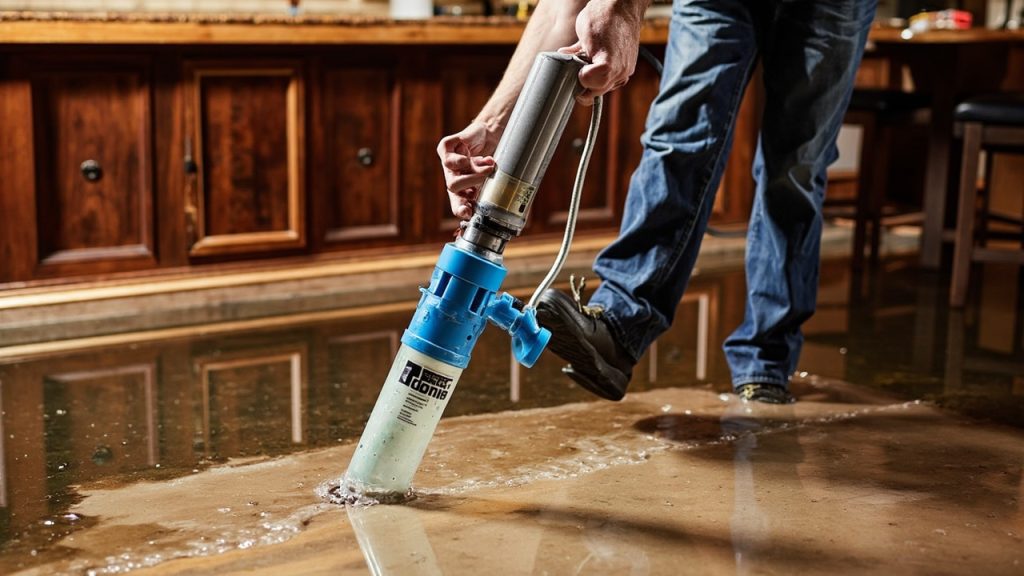
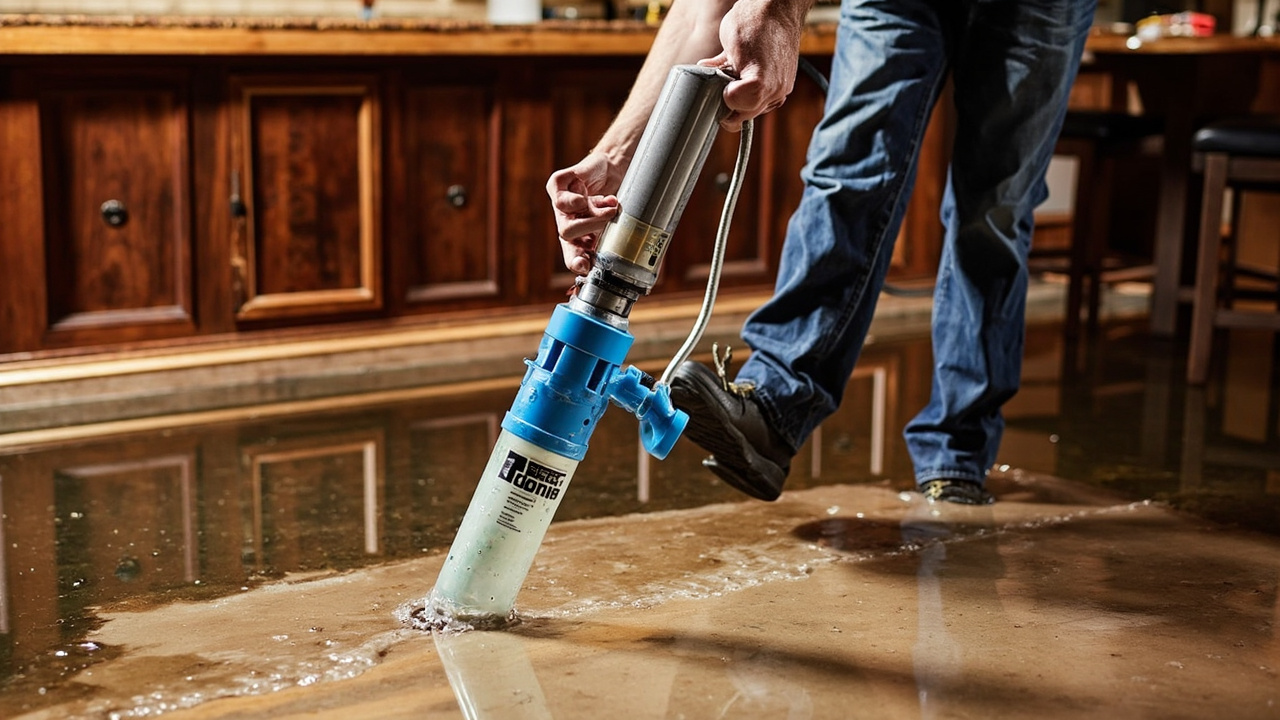
A professional restoration crew arrives with industrial extraction equipment and moisture-sensing instruments. They extract standing water using submersible pumps rated for 2,000 to 5,000 gallons per hour. For a typical basement bar with moderate flooding, extraction takes 4 to 8 hours.
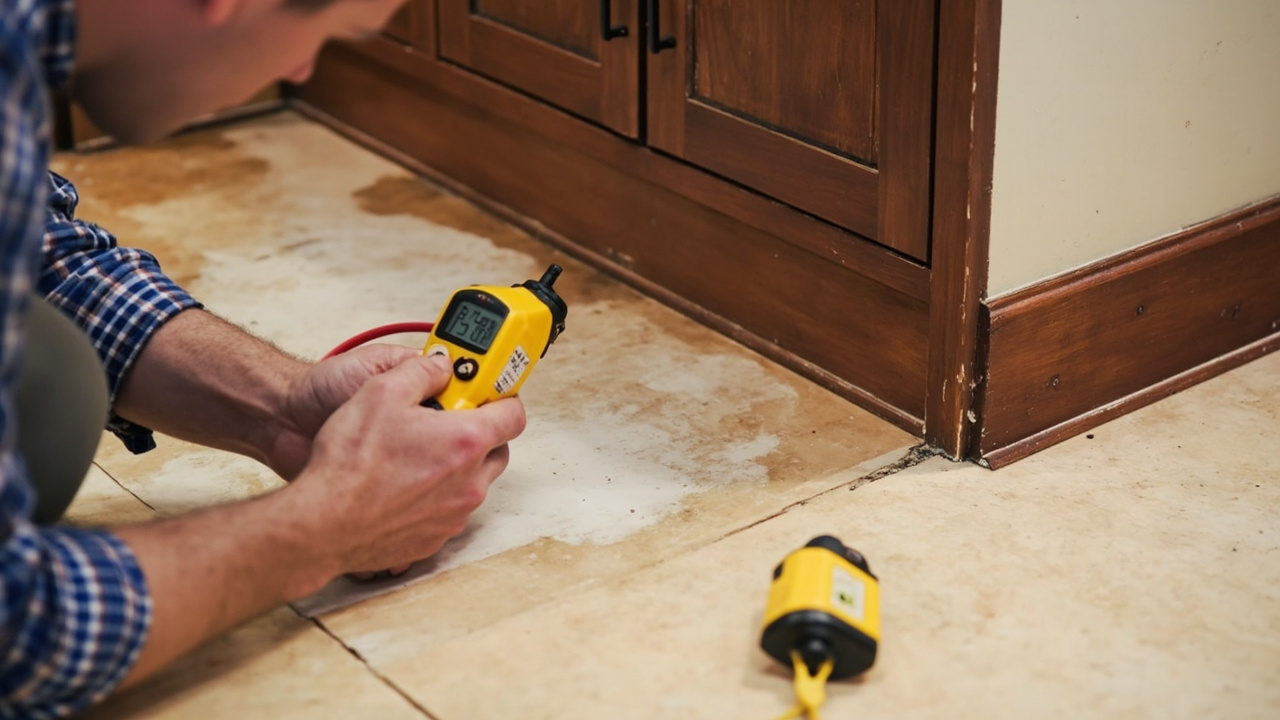
The technician uses a moisture meter to measure water content in materials. Wet drywall, concrete, and wood read above 20% moisture content. The goal is to reduce all materials to below 13% moisture content, the standard for safe, dry restoration. This process typically takes 5 to 10 days depending on the size of the affected area and the materials involved.. Read more about How to tell if your wet drywall can be saved or needs to be tossed.
Dehumidification and Drying Equipment Placement
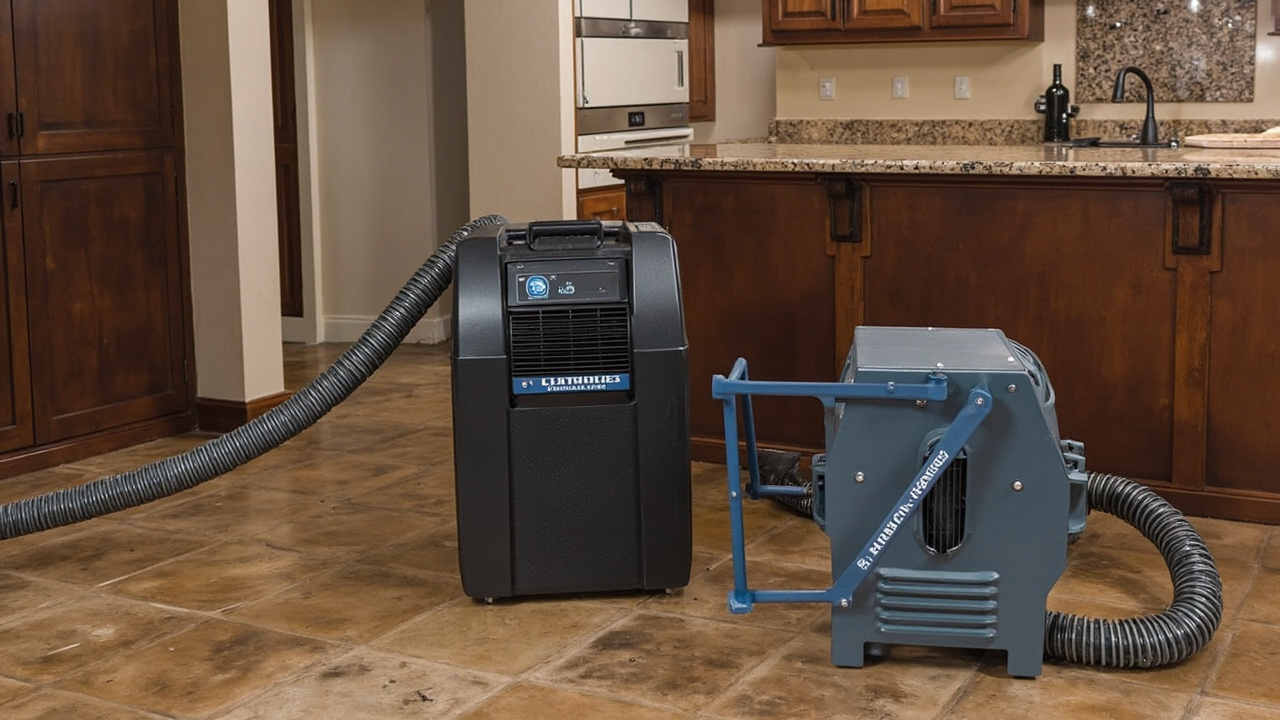
Industrial dehumidifiers remove moisture from the air, forcing it out of porous materials. A typical basement bar requires two to four large dehumidifiers capable of removing 150 to 200 pints of moisture per day. The equipment runs continuously for 5 to 10 days. The compressor noise is loud. Plan on your basement being inaccessible during this period.
The restoration company positions dehumidifiers away from furniture and equipment, creates air channels using temporary ducting, and vents moisture outside the home. Without proper venting, humidity simply moves from one area to another without actually leaving the property.
Targeted Drying of Bar Cabinetry and Flooring
For custom cabinetry, the restoration team may need to drill small access holes to allow dehumidified air to reach internal spaces. These holes are carefully placed behind areas that will remain hidden after restoration. High-velocity air movers direct warm, dry air across all wet surfaces and into hidden cavities.
Subfloor drying is critical. If your bar sits on a standard concrete subfloor with a finish layer of vinyl, engineered wood, or laminate, moisture can remain trapped beneath the finish for months. The restoration crew may need to remove and discard the finish layer to access the subfloor beneath, dry it completely, and reinstall new finish material.
Mold Remediation and Prevention
If mold growth is present, the restoration company removes affected materials and treats remaining surfaces with an EPA-approved antimicrobial. Chicago’s high humidity during summer months means mold growth can begin within 48 hours of water exposure. The drying process itself prevents future mold by keeping humidity levels below 50%.
Hidden Mold and Structural Risks in Basement Bars
You cannot see mold growing in wall cavities. It thrives in the gap between your granite countertop and the substrate beneath it, in the interior walls of cabinetry, and in the subflooring under the bar.
After water damage, mold spores begin colonizing within 24 to 48 hours. Your nose will eventually detect the problem, but by then mold spores have already populated multiple cubic feet of space. The health risk includes respiratory irritation, allergic reactions, and long-term immune system effects, especially for children and elderly residents.
Structural damage compounds the mold risk. Wet wood swells and loses its structural integrity. Particle board substrate, commonly used under granite countertops, disintegrates when exposed to water. The marble or granite top loses its adhesive bond and becomes unstable. Subflooring buckles and develops gaps where mold colonies thrive in the protected spaces underneath.
Professional assessment using thermal imaging or moisture meters identifies hidden moisture pockets that visual inspection misses. Restoration crews know exactly where mold grows because they have seen the damage pattern hundreds of times across Chicago basements. IICRC-certified technicians follow the S500 standard for water damage assessment, which includes protocols for identifying and remediating mold in complex restoration projects.
Managing Insurance Claims for Basement Water Damage in Cook County
Your homeowners insurance policy covers water damage caused by sudden, accidental events like burst pipes, sump pump failure, or sewage backup. It does not cover damage from poor maintenance, gradual leaks, or flooding from external sources outside your home.
The distinction matters when your basement bar is involved. A burst ice maker line is covered. A slow refrigerator leak that went unnoticed for weeks may be classified as gradual damage and denied. Sewage backup coverage depends on your specific policy. Many policies require a separate sewage backup rider, which covers only floor drain backup, not basement flooding from overland water.
File Your Claim Immediately
Contact your insurance company within 24 hours of discovering water damage. Provide the date and time damage occurred, the suspected cause, and a description of affected materials. Tell the adjuster that your basement bar is involved so they understand the property value at stake.
Provide Complete Documentation
Submit photographs of wet materials, water depth, damaged cabinetry, and flooring. Include photos of the water source if it is visible. Document the value of the bar through purchase receipts, contractor estimates, or professional appraisals if the bar was custom built. An adjuster will not replace a 2,000-dollar bar with a 500-dollar payout without documentation.
Request the Restoration Company Handle the Claim
A reputable restoration company will coordinate directly with your insurance adjuster. They submit repair estimates, manage mitigation work, and handle the claim process. This reduces your burden during a stressful time and ensures the adjuster understands the scope of the problem.
| Claim Phase | Timeline | Your Responsibility | Restoration Company Role |
|---|---|---|---|
| Initial notification | Within 24 hours of discovery | Contact insurer, describe damage | Provide verbal estimate |
| Adjuster inspection | Within 2 to 5 days | Provide access, answer questions | Brief adjuster on scope |
| Mitigation work | Begins immediately, runs 5 to 10 days | Authorize work, track progress | Execute mitigation, submit invoices |
| Restoration estimates | 5 to 10 days after mitigation | Review estimates, approve repairs | Submit detailed repair bids |
| Claim approval and payment | 10 to 30 days total | Provide information as requested | Manage claim on your behalf |
Why Chicago Homeowners in Lincoln Park Trust Professional Restoration
You need a restoration company that understands Chicago. Understanding means knowing that the water table is high, the soil holds water, and spring storms overwhelm municipal sewers. It means understanding Chicago building codes, the vulnerabilities of the combined sewer system, and the specific moisture challenges of Chicago’s climate. Professionals also understand the Chicago Blue Clay composition that affects Lincoln Park, Lakeview, and Old Town basements differently than areas built on different soil types.
A team with local experience knows the timeline for drying materials in Chicago’s humid summers. They understand which insurance adjusters are thorough and which ones try to minimize payouts. They know that a bar built with custom millwork and granite countertops is not a standard basement finishing project.
Professional restoration companies hold IICRC certification through the Institute of Inspection Cleaning and Restoration Certification, which requires training in water damage restoration standards, mold remediation, and documentation. Certified technicians must pass the S500 standard for professional water damage restoration, the WRT (Water Restoration Technician) certification, and the ASD (Applied Structural Drying) certification. A certified technician understands moisture science, drying principles, and the timeline for mold growth. They use calibrated moisture meters and follow established protocols for professional water damage restoration. The Chicago Department of Water Management publishes combined sewer overflow data that certified technicians use to assess sewer backup risk for properties in specific neighborhoods.
Local reputation matters. Lincoln Park residents rely on word-of-mouth recommendations because water damage claims involve significant money and insurance negotiations. A company that fails to deliver on estimates or produces poor results gains a bad reputation quickly in a tight-knit neighborhood.
Preventing Future Basement Bar Water Damage
After your bar is restored, you should take steps to prevent a second flood. The most common prevention measures include installing a backup sump pump with battery power, insulating exposed water supply lines, and installing a sewage backup valve.
A backup sump pump with a dedicated battery system keeps your pump running during power failures. Chicago experiences frequent outages during storms, precisely when your sump pump is working hardest. A battery-powered backup pump rated for several hours of operation costs between 1,500 and 3,000 dollars installed but prevents 20,000 to 50,000 dollars in water damage.
Insulating exposed water supply lines prevents freeze-related bursts. Foam pipe insulation costs less than 2 dollars per linear foot and takes 20 minutes to install. It is one of the highest-return prevention measures available.
A sewage backup valve prevents Category 3 water from entering your basement if the municipal sewer backs up. This valve is a one-way check that allows water to leave your home but prevents backflow. Installation costs 500 to 1,200 dollars but protects against the most dangerous type of basement water damage. The City of Chicago enforces building codes through the Department of Buildings, which mandates basement waterproofing and drainage systems on properties in Cook County. Check with your local building inspector about required prevention measures for basement bars in Lincoln Park and adjacent neighborhoods.
What Happens If You Delay Professional Restoration
Delaying professional drying and mitigation creates cascading problems. Mold growth accelerates. Structural damage compounds. Insurance claims become harder to justify because visible deterioration occurs between the initial damage date and the claim approval date.
Your bar cabinetry begins to warp and separate. Wood framing swells and loses load-bearing capacity. Particle board disintegrates entirely. The stone countertop develops separation from its substrate as adhesive fails under water stress. Hidden mold colonies spread into walls and HVAC systems.
Insurance adjusters understand this timeline. If you wait more than 10 days to begin mitigation, the adjuster may reduce your claim payout based on the theory that secondary damage resulted from negligence on your part rather than the original incident.
Professional restoration companies work on your timeline. A 24/7 emergency response means technicians can arrive at your Lincoln Park home within 60 minutes of your call. They begin extraction and mitigation immediately, stopping secondary damage and protecting your insurance claim.
The Cost of Inaction Versus Professional Mitigation
Professional water removal and drying costs between 2,000 and 8,000 dollars for a basement bar depending on the size of the affected area, the materials involved, and the extent of secondary damage. This cost is covered by homeowners insurance after your deductible.
Full restoration including cabinetry repair, countertop replacement, and subflooring repair ranges from 5,000 to 25,000 dollars depending on the quality and extent of the original bar installation.
The cost of inaction is always higher. Allowing water to sit for several days costs an additional 3,000 to 10,000 dollars in secondary damage from mold growth and structural failure. Insurance adjusters may deny portions of the claim if they determine the damage worsened due to delayed mitigation.
The return on investment from professional mitigation is measured in thousands of dollars. The 2,000 to 8,000-dollar mitigation cost prevents 10,000 to 40,000 dollars in additional damage.
Frequently Asked Questions
How does Chicago Blue Clay affect my basement bar restoration timeline
Chicago Blue Clay creates unique challenges for basement bar restoration. This dense clay layer holds water instead of allowing it to drain naturally, which means hydrostatic pressure builds up against your foundation during spring thaw and heavy rainfall. For properties in Lincoln Park and Lakeview built on Blue Clay, restoration crews expect longer drying times because moisture continues wicking up from the ground during the mitigation process. A standard basement bar might dry in 5 to 10 days in other regions, but Lincoln Park basements require 7 to 14 days of continuous dehumidification. The restoration company must run dehumidifiers longer and position them strategically to counteract the upward moisture pressure. This extends your out-of-pocket costs if the damage exceeds your insurance coverage, but professional teams account for this delay in their initial timeline estimates.
Why is my Lincoln Park basement vulnerable to sewage backup during spring thaw
Lincoln Park, Lakeview, and Old Town neighborhoods sit above Chicago’s combined sewer system, which carries both stormwater and sanitary sewage through shared pipes. During spring thaw when snowmelt combines with spring rains, the volume of water entering the system exceeds the pipes’ capacity. The municipal system backs up, forcing sewage to reverse direction and enter basement floor drains. Properties with direct floor drain connections to the sewer line face the highest risk. The Chicago Department of Water Management tracks combined sewer overflow events, and these neighborhoods experience multiple overflow incidents each spring and during heavy summer storms. If your basement bar has a floor drain, you are vulnerable to Category 3 black water contamination that requires hazmat-level remediation. The solution is a sewage backup valve installed in your drain line, which prevents backflow while allowing water to exit your home normally.
Can I remove water from my basement bar myself, or do I need professionals
You can remove standing water yourself if it is clear and originated from a supply line or clean sump pump backup. Use a wet/dry vacuum or submersible pump to extract water. Do not attempt removal if the water smells foul, contains discoloration, or originated from a floor drain. This is sewage backup and requires professional hazmat-level cleaning. Even for clean water, you should call professionals for the drying phase because specialty equipment and expertise are required to prevent mold and secondary damage. Professional teams bring industrial dehumidifiers, air movers, and moisture meters that you cannot access on your own. They understand drying patterns specific to Chicago’s climate and Blue Clay conditions. They also document the drying process for insurance claims, which protects you if the adjuster questions the restoration timeline.
Taking Action Now Protects Your Investment
Your basement bar represents years of planning and thousands of dollars of investment. Water damage threatens that investment in minutes. The decisions you make in the first hours after discovering water determine whether your bar survives or becomes a total loss.
Professional water damage restoration companies in Chicago understand the specific challenges facing Lincoln Park, Lakeview, Old Town, and Wrighterville basements. They know the soil composition, the climate patterns, the combined sewer system vulnerabilities, and the insurance landscape in Cook County. They manage the entire process from emergency mitigation through final restoration.
If you discover water damage in your basement bar today, call a local Chicago restoration company immediately. Provide details about the water source, the affected materials, and the size of the wet area. A professional can assess whether your bar is salvageable and begin mitigation within hours. Your bar can be restored. But only if you act today.
{
“@context”: “https://schema.org”,
“@type”: “BlogPosting”,
“headline”: “Basement Bar Water Damage in Lincoln Park – Emergency Recovery Guide”,
“description”: “Save your finished basement bar after water damage in Lincoln Park. Emergency recovery steps, professional restoration, and insurance claims guide for Chicago homeowners.”,
“wordCount”: 3637,
“datePublished”: “2026-05-03T11:41:00.000Z”,
“dateModified”: “2026-05-03T11:41:00.000Z”,
“inLanguage”: “en-US”,
“mainEntityOfPage”: {
“@type”: “WebPage”,
“@id”: “https://cornerstonewaterdamagerestorationchicago.com”
},
“publisher”: {
“@type”: “LocalBusiness”,
“name”: “Cornerstone Water Damage Restoration Chicago”,
“url”: “https://cornerstonewaterdamagerestorationchicago.com”
},
“author”: {
“@type”: “Organization”,
“name”: “Cornerstone Water Damage Restoration Chicago”,
“url”: “https://cornerstonewaterdamagerestorationchicago.com”
},
“image”: {
“@type”: “ImageObject”,
“url”: “https://cornerstonewaterdamagerestorationchicago.com/wp-content/uploads/2026/03/how-to-save-your-finished-basement-bar-after-a-plu-1.jpg”
}
}
{
“@context”: “https://schema.org”,
“@type”: “LocalBusiness”,
“name”: “Cornerstone Water Damage Restoration Chicago”,
“url”: “https://cornerstonewaterdamagerestorationchicago.com”,
“address”: {
“@type”: “PostalAddress”,
“addressLocality”: “Chicago”
},
“areaServed”: {
“@type”: “City”,
“name”: “Chicago”
}
}
{
“@context”: “https://schema.org”,
“@type”: “HowTo”,
“name”: “First 24 Hours After Basement Bar Water Damage”,
“step”: [
{
“@type”: “HowToStep”,
“position”: 1,
“name”: “Stop the water source”,
“text”: “If the water is still flowing, shut off the main water supply to the house. For frozen burst lines, call a plumber immediately. For sump pump failure, call a restoration company. Do not attempt to mop or remove water if you cannot identify the source. Unknown water sources may be sewage backup, which requires professional hazmat protocols.”
},
{
“@type”: “HowToStep”,
“position”: 2,
“name”: “Photograph and document the damage”,
“text”: “Use your phone to take photos and video of all affected areas before any cleanup. Document water height on walls, damaged cabinetry, wet flooring, and any visible mold or staining. This documentation is essential for insurance claims. Include timestamps and wide-angle shots showing the overall scene.”
},
{
“@type”: “HowToStep”,
“position”: 3,
“name”: “Extract standing water if it is safe to do so”,
“text”: “If the water is clear (Category 1 clean water from a fresh supply line or sump pump backup), you can begin removing it using a wet/dry vacuum or submersible pump. If the water smells foul, contains discoloration, or originated from a floor drain, do not touch it. This is Category 3 water and requires professional remediation.”
},
{
“@type”: “HowToStep”,
“position”: 4,
“name”: “Increase air circulation immediately”,
“text”: “Open all basement windows and doors if outdoor humidity is lower than indoor humidity. Turn on all exhaust fans. Position portable fans to direct air across wet surfaces. Chicago’s summer humidity accelerates mold growth. Your goal is to drop moisture levels below 50% relative humidity within the first 12 hours.”
},
{
“@type”: “HowToStep”,
“position”: 5,
“name”: “Remove wet materials from the bar if possible”,
“text”: “If the bar is movable, remove stools, bottles, and loose items to a dry area. Do not attempt to move built-in cabinetry. Porous materials like cardboard boxes, insulation, and fabric should be removed and discarded immediately. Wet wood and particle board are total losses if they are contaminated or if mold growth has begun.”
},
{
“@type”: “HowToStep”,
“position”: 6,
“name”: “Call a restoration company before calling your insurance company”,
“text”: “A professional restoration crew can assess whether the damage is salvageable and establish a mitigation timeline. The restoration company will coordinate directly with your insurance adjuster. You do not need to handle communication between multiple parties. Tell the company that your basement bar is involved so they understand the value at stake.”
}
],
“image”: “https://cornerstonewaterdamagerestorationchicago.com/wp-content/uploads/2026/03/how-to-save-your-finished-basement-bar-after-a-plu-1.jpg”
}
{
“@context”: “https://schema.org”,
“@type”: “BreadcrumbList”,
“itemListElement”: [
{
“@type”: “ListItem”,
“position”: 1,
“name”: “Home”,
“item”: “https://cornerstonewaterdamagerestorationchicago.com”
},
{
“@type”: “ListItem”,
“position”: 2,
“name”: “Blog”,
“item”: “https://cornerstonewaterdamagerestorationchicago.com/blog”
},
{
“@type”: “ListItem”,
“position”: 3,
“name”: “Basement Bar Water Damage in Lincoln Park – Emergency Recovery Guide”
}
]
}
{
“@context”: “https://schema.org”,
“@type”: “Service”,
“serviceType”: “Water Damage Restoration”,
“provider”: {
“@type”: “LocalBusiness”,
“name”: “Cornerstone Water Damage Restoration Chicago”,
“url”: “https://cornerstonewaterdamagerestorationchicago.com”
},
“areaServed”: {
“@type”: “City”,
“name”: “Chicago”
},
“description”: “Save your finished basement bar after water damage in Lincoln Park. Emergency recovery steps, professional restoration, and insurance claims guide for Chicago homeowners.”
}