
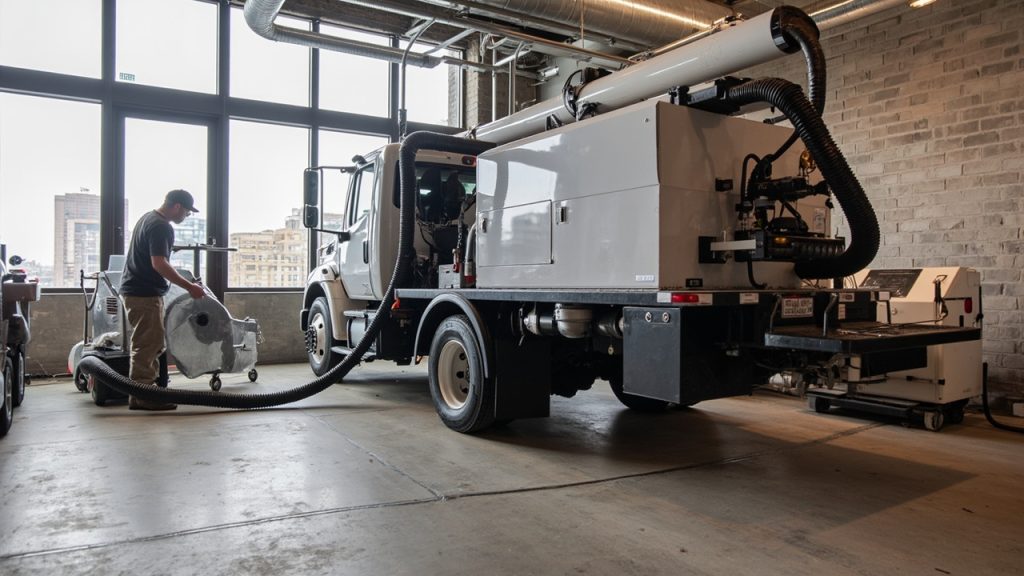
Large Fish Tank Leak Cleanup and Water Damage Restoration in Chicago
An aquarium leak creates water damage that is different from a burst pipe or a toilet overflow. The water carries biological contaminants, can corrode electrical systems, and damages subfloors in ways standard flooding does not. Before an emergency happens, you need to know what separates aquarium water damage from other water events and why the first hour matters most.
We have handled dozens of aquarium disasters in West Loop condos and Lincoln Park high-rises. The buildings in these neighborhoods face unique challenges. West Loop condos from the 1980s sit on concrete slabs directly over Chicago’s moisture-retaining clay soil. Lincoln Park high-rises have shared HVAC systems and neighbors directly below you. Each building type demands different extraction and drying strategies. In this article, we walk you through exactly what to do in the first 30 minutes, why aquarium water damages more than you think, and how professional restoration prevents the structural and mold risks that follow.
What to Do in the First 30 Minutes After an Aquarium Leak
Stop the water. Turn off power to the aquarium and any electrical outlets near the spill. Stand at your electrical panel and flip the breaker for the room where the tank sits. Do not touch wet electrical equipment.
Move the fish. If your aquarium still holds water, carefully transfer surviving fish to clean containers using aquarium water you can access. If the tank is empty, place fish in buckets with old aquarium water or tap water treated with dechlorinator. They will survive 24 hours in a bucket if the temperature stays stable. Do not use hot water.
Stop the flow. If water still comes from a pump, sump line, or overflow tube, turn off the pump and clamp or cover the line with duct tape. If the tank itself is cracked, you cannot stop the leak. Move to containment.
Contain the spread. Push the tank away from walls and electronics. Shove towels and old blankets under the spreading water to slow its movement toward the subfloor and into adjoining rooms. This buys you time. In Chicago high-rises, a leak on the 8th floor will reach your neighbor’s ceiling below within minutes. Corral the water before it travels.
Document with photos. Take pictures of the damage, the tank setup, the leak source, and the water spreading pattern. Your insurance company will ask for proof. Do this before you start cleanup.
Call Cornerstone Water Damage Restoration immediately. Our 24/7 emergency line responds within one hour across the West Loop and Lincoln Park. We bring industrial-grade extraction equipment and moisture mapping tools that stop secondary damage before it starts.
Why Aquarium Leaks Are Worse Than Regular Water Damage
Aquarium water is not clean water. It contains biological waste, dissolved organics, and if the tank is saltwater, it carries sodium chloride that corrodes metal and accelerates decay in porous materials like wood and drywall.
Freshwater aquariums release ammonia, nitrate, and nitrite into the water column. These compounds feed mold growth when the water saturates subfloors and baseboards. The biological load turns your under-floor into a petri dish within 48 hours if moisture is not extracted.
Saltwater tanks present an additional hazard. Salt draws moisture from the air and delays the natural drying process. It also corrodes copper wiring, galvanized fasteners, and steel support beams embedded in your subfloor structure. A saltwater leak in a century-old Chicago bungalow with limestone foundations can compromise structural integrity within weeks if left untreated.
The volume matters too. A 100-gallon tank dumps roughly one pound of water per gallon onto your floor. That is 100 pounds of force pressing into your subfloor, which in many Chicago homes is unfinished wood or concrete sitting directly on clay soil. The hydrostatic pressure from standing water can separate hardwood planks and cause cupping that requires full floor replacement.
Chicago humidity makes this worse. In summer, outdoor humidity climbs above 75 percent. Lake Michigan humidity patterns intensify this effect in neighborhoods closer to the shoreline. Without dehumidification, your subfloor moisture lingers for weeks. Mold colonizes between 24 and 72 hours in those conditions. We have seen aquarium leaks in West Loop condos trigger mold in wall cavities that took months to fully remediate because the concrete slab construction traps moisture longer than traditional wood frame homes.
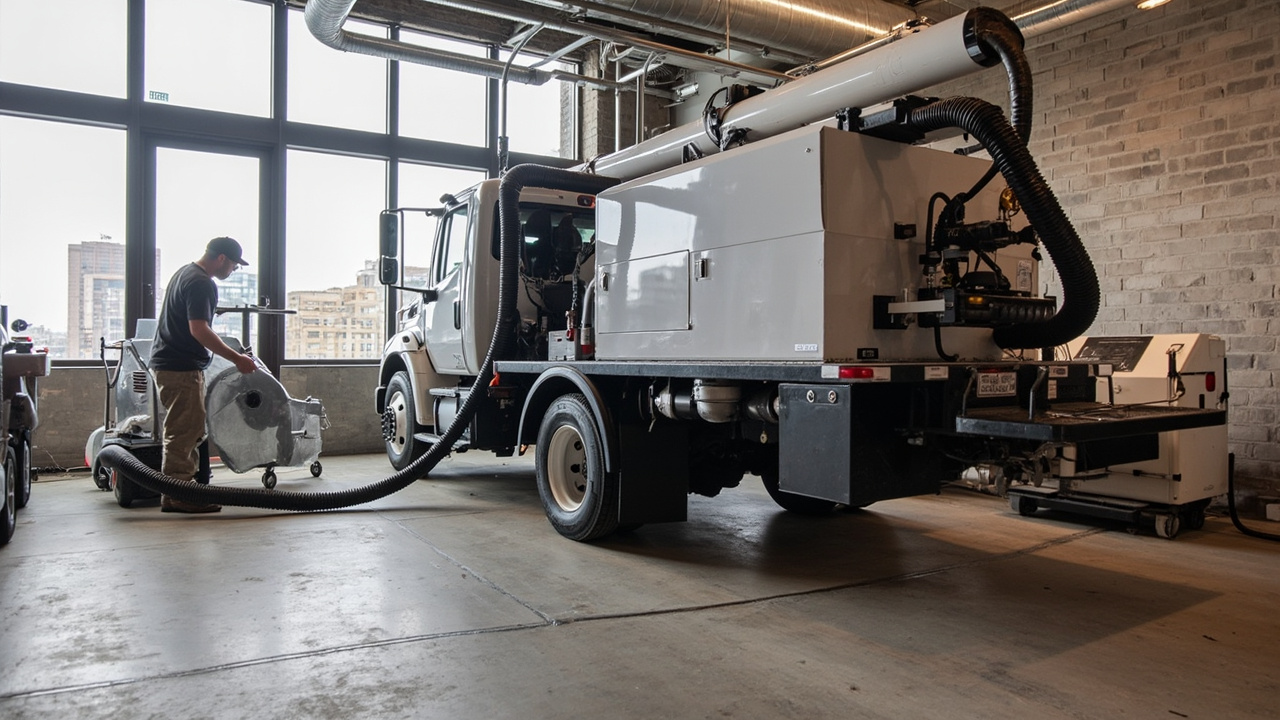
Professional Water Extraction for Aquarium Spills
You cannot dry a 100-gallon spill with towels and fans. The water moves under baseboards, through cracks in concrete, and into subfloor cavities where moisture meters cannot easily reach. Professional extraction uses industrial equipment that our team positions before the water spreads further.
We deploy truck-mounted extraction units that pull water from flooring and subfloor simultaneously. These units operate at 500 pounds per square inch, removing water that towels and mop buckets leave behind. A standard household pump vacuum removes maybe 5 gallons per minute. Our equipment removes 50 to 100 gallons per minute.
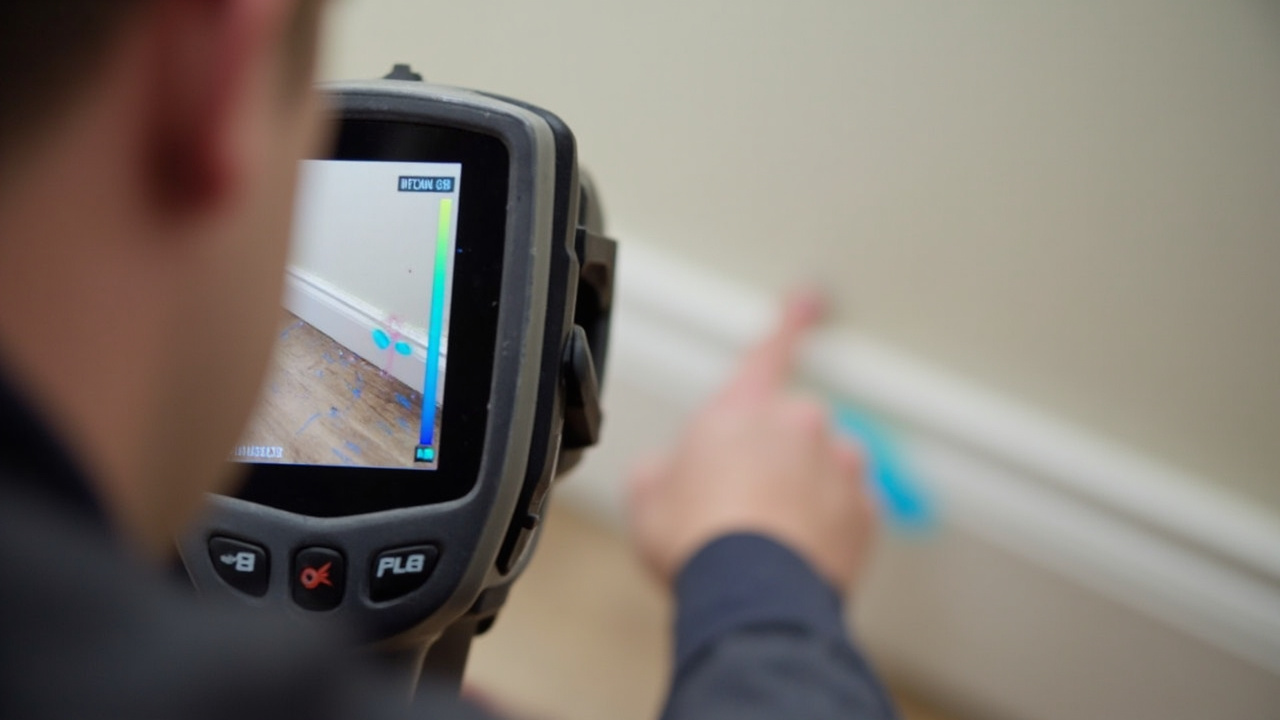
After extraction, we use thermal imaging to identify moisture that has already migrated into wall cavities, subfloor structures, and the space below hardwood floors. Thermal imaging shows cold spots where trapped moisture sits. This prevents us from missing hidden saturation that causes mold weeks later.
Once extraction is complete, we apply antimicrobial treatment. Because aquarium water carries biological contaminants, we spray affected surfaces with disinfectants approved under the IICRC S500 Standard for Professional Water Restoration that kill bacteria and prevent mold spore germination. This step is critical for freshwater tanks, which carry the highest bioload.
Structural Drying and Dehumidification Following the Leak
Removing standing water is only half the job. The remaining moisture in subfloors, framing, and concrete must be dried. We follow the IICRC S500 Standard for Professional Water Restoration, which specifies drying timelines and equipment placement for different materials.
Hardwood flooring in Chicago homes typically requires 5 to 7 days of continuous dehumidification after an aquarium leak. Concrete subfloors in West Loop condos may need 10 to 14 days if the leak soaked through to lower levels. Chicago’s clay soil composition means moisture in concrete takes far longer to evaporate than in other regions. The clay retains water and prevents natural drying, requiring extended equipment operation. We position industrial dehumidifiers throughout the affected space and monitor moisture levels daily using carbide moisture testing.
Air movers complement dehumidification. These are not household fans. We use low-velocity air movers that circulate air across wet surfaces without stirring up mold spores. Rapid air circulation accelerates evaporation from flooring and subfloor wood. We run these continuously until moisture readings drop below normal range.
Humidity control matters in Chicago. Our dehumidifiers pull moisture from the air while fans move that moisture to the units for removal. In summer months when outdoor humidity is 75 percent or higher, we work against natural moisture migration. We often run dehumidification longer in July and August than in spring months, even for the same square footage of saturation. Lake Michigan creates persistent humidity patterns that inland contractors do not encounter.
| Flooring Type | Typical Drying Time | Equipment Required | Special Considerations |
|---|---|---|---|
| Hardwood | 5 to 7 days | Dehumidifier, air movers, thermal imaging | Cupping risk if dried too fast. Monitor edge grain |
| Carpet | 3 to 5 days | Dehumidifier, high-velocity air movers | Padding underneath may require removal |
| Concrete | 10 to 14 days | Heavy-duty dehumidifier, perimeter extraction | Chicago clay prevents evaporation. Longest drying time |
| Tile | 3 to 4 days | Dehumidifier, thermal imaging for grout lines | Grout absorbs moisture. Check subfloor beneath |
West Loop Condos and Concrete Slab Challenges
West Loop condos present a specific restoration challenge that differs from Lincoln Park high-rises and Chicago bungalows. Many West Loop buildings from the 1980s were built on concrete slabs placed directly over Chicago clay soil. This construction method creates moisture management problems that require expertise specific to this neighborhood and building era.
When an aquarium leaks in a West Loop condo on a concrete slab, water does not drain downward through the slab. Instead, it spreads sideways through the concrete and toward foundation perimeters. Chicago’s clay soil traps moisture. The clay does not absorb water quickly like sand or gravel in other regions. This means saturation persists under the concrete, creating conditions where mold can develop in wall cavities and in the cavity space between the slab and the ground below.
West Loop conversions from the 1980s and 1990s often feature original industrial concrete, which is porous and absorbs aquarium water readily. A saltwater leak on a West Loop condo slab penetrates the concrete surface and spreads throughout the porous matrix. Extraction teams unfamiliar with this specific construction type may miss the need for extended concrete drying periods and perimeter dehumidification.
Non-local restoration companies treat West Loop concrete slab leaks like standard residential water events. They extract standing water and run dehumidifiers for the typical seven to ten day period. Our team understands that West Loop concrete slab construction requires 10 to 14 days of continuous dehumidification, perimeter moisture monitoring, and assessment of building envelope penetration. We also verify compliance with Chicago Building Code Chapter 3 water intrusion requirements for commercial conversions that may still carry commercial property standards.
Saltwater Versus Freshwater Aquarium Leak Hazards
The type of aquarium you own determines the restoration approach. Saltwater tanks carry unique risks that freshwater tanks do not.
Saltwater leaks corrode electrical components faster than freshwater. Salt is hygroscopic, meaning it pulls water from the surrounding air and delays the natural drying process. A saltwater spill in your West Loop condo will stay damp longer than an identical freshwater spill, giving mold more time to colonize. We extend dehumidification timelines for saltwater leaks by 2 to 3 additional days.
Saltwater also attacks metal. If the leak reaches copper piping, galvanized conduit, or steel support beams, corrosion begins immediately. West Loop condos built during the 1980s and 1990s with pre-1980 construction techniques often use galvanized steel in their structural systems. Salt water accelerates rust formation, weakening those beams over months. This is a risk that applies specifically to this neighborhood and building era.
Freshwater leaks carry biological threats. Ammonia and nitrate in the water feed mold growth and create odors that persist for weeks. We use HEPA air scrubbers during and after restoration to trap spores and prevent them from spreading through HVAC systems to other floors or units in your building.
Both require antimicrobial treatment. We apply EPA-approved disinfectants to all affected surfaces. For saltwater spills, we add a corrosion inhibitor spray to protect any metal within the splash zone. For freshwater spills, we focus on mold prevention with aggressive dehumidification and air scrubbing.
Managing Water Damage in Chicago High-Rise Condos
A 100-gallon aquarium leak in a Lincoln Park high-rise creates complications that West Loop slab condos and single-family homes do not face. Your building has overhead sewers or drainage systems, shared HVAC returns, and neighbors directly below you. Lincoln Park high-rises often feature older brownstone conversions with multiple units sharing walls and floor assemblies.
The Chicago Building Code Chapter 3 requires high-rises to have containment systems for overflow scenarios. If your unit allows water to flow into common areas or into a neighbor’s space, you face liability. Our team extracts water aggressively to prevent it from draining through the structure into lower units.
We also communicate with your building management. Most Chicago condos require notification within two hours of a major leak. Your property manager may need to inspect the unit below to confirm no water has penetrated their ceiling or walls. We coordinate this inspection and provide documentation for your condo association.
Ventilation matters in high-rises. Your unit may have a fresh air intake connected to a building-wide HVAC system. If aquarium water contaminates this intake, the odor and biological particles spread through the entire building. We isolate your unit by sealing HVAC vents during extraction and dehumidification, then confirm the system is clean before reopening it.
Mold Prevention After Aquarium Leaks
Mold grows in moist environments within 24 to 72 hours. An aquarium leak creates the perfect mold environment. Biological contaminants from the water provide nutrients. Moisture trapped in subfloors and wall cavities provides the water mold needs. Warm Chicago summers accelerate the process.
We prevent mold by drying quickly and aggressively. After extraction, dehumidification runs continuously for the full drying period. We check moisture readings every 24 hours and do not stop until levels reach normal for the material type. For hardwood flooring, we target 11 to 13 percent moisture content. For concrete, we target below 3 percent.
We also address hidden moisture. Aquarium water seeps behind baseboards and into wall cavities where moisture stays trapped. Thermal imaging shows these cold spots. We use moisture meters to confirm saturation, then we drill small weep holes to allow drying from inside the cavity. Once dry, we seal the holes with paintable caulk and restore the baseboard.
If mold has already begun to grow, we stop it with antimicrobial application. IICRC standards allow treatment with biocides for category 2 water, which includes water from aquariums. We spray affected surfaces and let the treatment sit for the manufacturer-recommended time before wiping clean.
Insurance Claims and Aquarium Water Damage
Most homeowner insurance policies cover sudden, accidental water damage. An aquarium tank failure qualifies. You must document the damage correctly and notify your insurer quickly.
Take photos of the tank, the leak source, the water spreading across the floor, and the equipment you had running. Photograph the fish, any corals, and any irreplaceable items damaged by the leak. Your insurer will ask for proof of contents.
Your policy has a deductible, typically 500 to 1000 dollars. You pay this. Insurance covers the rest of extraction, drying, and restoration. Some policies exclude aquarium contents, so review your policy or call your agent before our crew arrives.
We help you with the claim. We provide detailed itemized invoices that show exactly what we extracted, dried, and treated. We photograph every step of the process. We submit reports that demonstrate we followed IICRC S500 standards. This documentation helps your adjuster approve your claim faster.
For more guidance on claims handling, read how to handle a Chicago water damage insurance claim without getting overwhelmed.
Hidden Damage Aquarium Leaks Cause Below the Surface
You see water on the floor. You cannot see what is happening underneath. Aquarium water seeps into subfloor wood, through cracks in concrete, and into the soil beneath your home.
In Chicago bungalows with unfinished basements, a second-floor aquarium leak can penetrate to the basement level within hours. Water flows through floor joists, saturates them, and causes rot. Once wood rots, it loses structural strength. A severely rotted joist may require replacement, which means taking up flooring and bracing the structure during work.
In West Loop condos built on concrete slabs with pre-1980 construction methods, the leak may soak through to the concrete, then seep sideways through the slab toward lower units or the building exterior. This sideways migration can cause water intrusion in apartments below, leading to liability claims against you. This risk is specific to West Loop slab construction and differs completely from what happens in a traditional wood-frame home.
We use moisture mapping to find this hidden water. Thermal imaging cameras show temperature variations caused by wet materials. Carbide moisture testing confirms saturation levels in materials we cannot see. We drill small holes in inconspicuous areas to place moisture probes inside walls and subfloors. These probes send readings to a meter we monitor daily. Once readings show materials are dry, we extract the probes and seal the holes.
This hidden damage prevention is critical in Chicago. Our clay soil holds water. Saturation in subfloor wood or concrete lingers without active extraction and dehumidification. A homeowner who tries to dry an aquarium leak with towels and a home dehumidifier risks weeks of trapped moisture and eventual mold growth that becomes visible only when the damage is severe.
| Hidden Damage Scenario | Detection Method | Risk if Missed | Timeline to Failure |
|---|---|---|---|
| Subfloor saturation under hardwood | Thermal imaging plus carbide testing | Mold growth, wood decay, subfloor replacement | 3 to 8 weeks |
| Water in wall cavities via baseboards | Thermal imaging, moisture probes in walls | Mold in insulation, drywall degradation, musty odor | 2 to 6 weeks |
| Concrete slab saturation in West Loop condos | Concrete moisture meter, thermal imaging, perimeter assessment | Efflorescing paint, salt attack on rebar, floor warping, lower unit intrusion | 4 to 12 weeks |
| Floor joist saturation in bungalows | Visual inspection plus carbide testing of wood | Structural rot, sagging floors, joist replacement | 8 to 16 weeks |
Why Professional Aquarium Leak Restoration Beats DIY Drying
A homeowner with towels and a rental dehumidifier cannot match professional restoration speed and thoroughness. Here is why.
- Industrial extraction removes 50 to 100 gallons per minute. Household pumps remove 5 gallons per minute. Professional extraction stops hidden water migration within the first hour. DIY attempts leave saturation that worsens over days.
- Thermal imaging detects moisture behind walls and under floors that eyes cannot see. A homeowner without this technology misses hidden saturation that causes mold weeks later.
- HEPA air scrubbers trap mold spores during drying. Household fans and dehumidifiers circulate spores through your home, spreading mold risk to other rooms.
- Antimicrobial treatment kills bacteria and prevents mold germination. Bleach and vinegar do not work on biological contaminants in aquarium water.
- Continuous monitoring prevents re-wetting. We check moisture levels daily and adjust equipment placement if needed. Homeowners often stop drying too early because they think the space looks dry.
For additional information on when professional help is necessary, read whether you should dry your own basement after a flood or call for professional help.
Why Local Chicago Expertise Beats Out-of-State Companies
A restoration company from the Southwest or Southeast operates under different environmental conditions. Desert regions have low humidity and fast evaporation rates. They dry water damage in three to five days because the surrounding air removes moisture naturally. Chicago aquarium leaks do not dry that fast because our Lake Michigan humidity and clay soil create conditions those companies have never encountered.
An out-of-state company will apply standard drying timelines to your West Loop condo or Lincoln Park high-rise. They run dehumidifiers for seven days, think the job is done, and leave before hidden moisture in your concrete slab or wall cavities has fully dried. Thirty days later, you find mold growing in spaces they never checked. They never understood that Chicago clay soil traps water and that Lake Michigan humidity prevents the low-humidity conditions that speed drying in other regions.
Local Chicago restoration companies understand these specific challenges. We know that West Loop concrete slabs require 10 to 14 days of dehumidification, not seven. We know that saltwater leaks in 1980s West Loop condos corrode galvanized steel that was installed during a specific construction era, and we check for this corrosion risk. We know that Lincoln Park brownstone conversions have shared wall assemblies that require containment strategies to prevent water from flowing to neighboring units. We understand the difference between a bungalow with a basement, a slab condo, and a high-rise unit because we work in these neighborhoods every week.
We also understand Chicago Building Code requirements specific to these neighborhoods. We verify compliance with Chapter 3 water intrusion standards and can guide you on what your condo association or building management requires. An out-of-state company cannot do this because they do not know Chicago code.
Aquarium Fish and Pet Safety During Restoration
Your fish cannot stay in your home during extraction and dehumidification. The noise, vibration, and chemical treatments are stressful and potentially harmful.
We help you arrange temporary housing for surviving fish. Many Chicago aquarium shops will board fish for 7 to 14 days at reasonable rates. Some shops charge 1 to 2 dollars per fish per day. If you have expensive specialty fish, boarding is worth the cost to protect them during the restoration period.
For fish you decide to keep at home, use clean water treated with dechlorinator. A five-gallon bucket with an air stone from an old air pump will sustain fish for two weeks if you do partial water changes every three days. Feed sparingly. Uneaten food fouls water quickly in confined spaces.
Corals and invertebrates are more fragile. They require stable salinity, temperature, and lighting. If you have a saltwater reef tank, professional boarding is the safest option. Do not attempt to maintain corals in a temporary container.
The Restoration Timeline for a 100-Gallon Aquarium Leak
You want to know how long this takes. Here is a realistic timeline assuming the leak is caught within the first hour and you call us immediately.
Hour 1. We arrive and assess damage. We shut off power to the tank and surrounding outlets. We begin extraction. Within 60 minutes, 80 percent of standing water is gone.
Hours 2 to 4. Remaining water extraction continues. We place dehumidifiers and air movers. We apply antimicrobial treatment to affected surfaces. Thermal imaging maps hidden moisture. We document everything with photos and video for your insurance claim.
Days 2 to 7. Continuous dehumidification runs. We visit daily to check moisture readings and adjust equipment. For hardwood flooring, drying typically completes by day 5 to 7. For concrete, it extends to day 10 to 14.
Day 7 to 14. Final walkthrough. We remove all equipment, return moisture levels to normal, and confirm mold has not begun to grow. We provide you with a moisture report showing all readings throughout the drying period. This documentation supports your insurance claim.
If hidden damage appears during work, repair timelines extend based on the scope of work. A single damaged joist takes three days to replace. Extensive subfloor replacement takes two to three weeks.
Getting Aquarium Tank Replacement and Prevention
Once your space is dry, you will want to replace your tank and prevent this from happening again. We do not sell aquariums, yet we offer advice on placement and setup.
Place the new tank away from electrical outlets and exterior walls. In Chicago high-rises, position it on an interior wall, away from windows. The concrete core walls support weight better than exterior curtain walls. Use a high-quality stand with a drip pan underneath. The pan will catch minor leaks before water reaches flooring.
Install a secondary catch basin under the stand. A large plastic tray with three-inch sides will contain a small leak and buy you time to shut off the pump and transfer fish. Cost is 20 to 50 dollars and prevents thousands in restoration damage.
Have a sump pump inspection on the schedule if your tank sits in a basement. A failing sump pump often precedes a full water intrusion event. Catch pump problems before they compound with an aquarium disaster.
For more information on mold signs that develop after water events, read critical signs of mold after water damage in Chicago homes.
Why Cornerstone Water Damage Restoration Handles Aquarium Leaks Better Than General Contractors
General contractors and handymen focus on reconstruction. They show up after the water is already gone and the damage is visible. We focus on stopping the damage before it spreads.
We specialize in water extraction and moisture control. We carry industrial-grade equipment that general contractors do not own. We understand Chicago’s clay soil, Lake Michigan humidity patterns, and the specific challenges of West Loop slab condos versus Lincoln Park high-rises versus Chicago bungalows. Our team includes IICRC certified technicians who follow the S500 Standard for Professional Water Restoration.
We also manage aquarium-specific hazards. We know the difference between saltwater and freshwater contamination. We understand bioload risks and apply appropriate antimicrobial treatments. We understand that a 1980s West Loop condo with galvanized steel structural elements needs corrosion assessment after a saltwater leak. We understand that a Lincoln Park high-rise needs containment strategy to prevent water from flowing to lower units. General contractors treat an aquarium leak like any other water damage, which misses critical steps that prevent mold and structural failure.
We handle insurance claims from start to finish. We photograph damage, provide itemized reports, and communicate directly with adjusters. We do not ask you to navigate the claim process alone.
Your Next Steps Right Now
If your aquarium is leaking, your next action is simple. Turn off power to the tank and surrounding outlets. Move the fish to a safe container. Call Cornerstone Water Damage Restoration on our 24/7 emergency line. We respond within one hour across the West Loop and Lincoln Park.
We bring extraction equipment, thermal imaging, dehumidifiers, and antimicrobial treatments. We dry your space to IICRC standards and prevent mold and structural damage. We manage your insurance claim and document everything professionally.
An aquarium leak is an emergency. The longer water sits in your subfloor and wall cavities, the worse the damage becomes. The cost of drying now is far less than the cost of replacing rotted flooring and repairing mold damage six months from now.
Do not wait. Call us now.
{
“@context”: “https://schema.org”,
“@type”: “BlogPosting”,
“headline”: “Large Fish Tank Leak Cleanup and Water Damage Restoration in Chicago”,
“description”: “What to do after an aquarium leak in your Chicago condo or home. Professional water extraction, drying, and mold prevention in West Loop and Lincoln Park.”,
“wordCount”: 4146,
“datePublished”: “2026-04-21T06:19:00.000Z”,
“dateModified”: “2026-04-21T06:19:00.000Z”,
“inLanguage”: “en-US”,
“mainEntityOfPage”: {
“@type”: “WebPage”,
“@id”: “https://cornerstonewaterdamagerestorationchicago.com”
},
“publisher”: {
“@type”: “LocalBusiness”,
“name”: “Cornerstone Water Damage Restoration Chicago”,
“url”: “https://cornerstonewaterdamagerestorationchicago.com”
},
“author”: {
“@type”: “Organization”,
“name”: “Cornerstone Water Damage Restoration Chicago”,
“url”: “https://cornerstonewaterdamagerestorationchicago.com”
},
“image”: {
“@type”: “ImageObject”,
“url”: “https://cornerstonewaterdamagerestorationchicago.com/wp-content/uploads/2026/03/what-to-do-after-a-massive-aquarium-leak-in-your-n-1.jpg”
}
}
{
“@context”: “https://schema.org”,
“@type”: “LocalBusiness”,
“name”: “Cornerstone Water Damage Restoration Chicago”,
“url”: “https://cornerstonewaterdamagerestorationchicago.com”,
“address”: {
“@type”: “PostalAddress”,
“addressLocality”: “Chicago”
},
“areaServed”: {
“@type”: “City”,
“name”: “Chicago”
}
}
{
“@context”: “https://schema.org”,
“@type”: “BreadcrumbList”,
“itemListElement”: [
{
“@type”: “ListItem”,
“position”: 1,
“name”: “Home”,
“item”: “https://cornerstonewaterdamagerestorationchicago.com”
},
{
“@type”: “ListItem”,
“position”: 2,
“name”: “Blog”,
“item”: “https://cornerstonewaterdamagerestorationchicago.com/blog”
},
{
“@type”: “ListItem”,
“position”: 3,
“name”: “Large Fish Tank Leak Cleanup and Water Damage Restoration in Chicago”
}
]
}
{
“@context”: “https://schema.org”,
“@type”: “Service”,
“serviceType”: “Water Damage Restoration”,
“provider”: {
“@type”: “LocalBusiness”,
“name”: “Cornerstone Water Damage Restoration Chicago”,
“url”: “https://cornerstonewaterdamagerestorationchicago.com”
},
“areaServed”: {
“@type”: “City”,
“name”: “Chicago”
},
“description”: “What to do after an aquarium leak in your Chicago condo or home. Professional water extraction, drying, and mold prevention in West Loop and Lincoln Park.”
}