
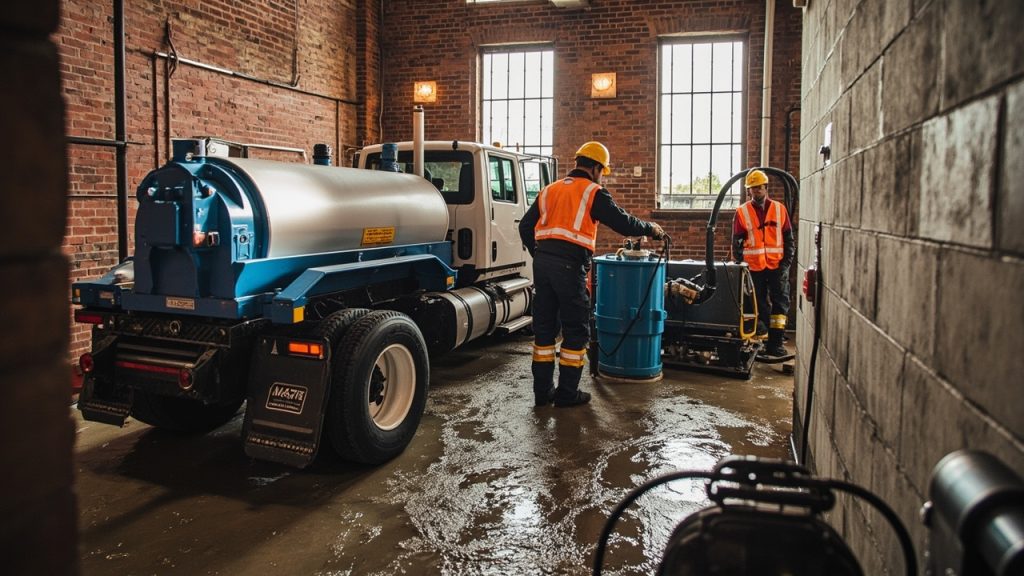
How We Restore Water Damaged Community Centers and Churches in South Deering
Water damage at a community center or church in South Deering means lost programming, displaced residents, and urgent financial pressure on your nonprofit board. You need a restoration partner who understands both the technical demands of structural drying and the operational constraints of tax-exempt organizations.
Cornerstone Water Damage Restoration serves Chicago nonprofits with emergency water extraction and structural drying that puts your facility back in service fast. We hold IICRC S500 certification for professional water restoration and have managed water damage recovery for shelters, food banks, and congregations across the greater Chicago metro for 15 years.
Water Damage in South Deering Nonprofits Requires Specialized Response
South Deering sits near the Illinois Ship and Sanitary Canal, in an area where groundwater pressure and aging combined sewer systems create chronic flood risk. Properties along Commercial Avenue and throughout the 100th Street corridor face particular vulnerability to spring rains that overwhelm drainage systems. Winter freeze-thaw cycles crack foundations and burst pipes in older community buildings constructed on Chicago Blue Clay soil with high hydrostatic pressure. High humidity summers accelerate mold growth in spaces you cannot afford to close for months.
Buildings in the South Deering historic district often feature brick construction with limestone foundations, unfinished basements, and outdated plumbing systems that compound water intrusion risk. The neighborhood’s topography and proximity to both canal drainage systems and aging storm sewers means that foundation water problems strike regularly. Many structures predate modern waterproofing methods.
Your nonprofit property has constraints that differ from residential homes. You cannot simply shut down for weeks. Board members demand transparency on costs and timelines. Insurance adjusters scrutinize tax-exempt property claims differently. Donors and community members depend on your space for meals, shelter, or worship.
Standard restoration contractors miss these realities. They quote generic timelines and generic costs. Then the board gets caught between the insurance deductible and unexpected additional costs.
We approach nonprofit water damage as a project that balances speed, cost control, and minimal service disruption.
24/7 Emergency Response for Chicago Nonprofits
Water damage does not wait for business hours. A pipe burst at 3 AM on a Sunday during a polar vortex hits your community center when you have no staff on site.
Our team responds to South Deering and adjacent neighborhoods in Hegewisch and East Side within 60 minutes of your call. We arrive with extraction equipment, moisture monitoring tools, and the authority to make immediate decisions. Our technicians assess water category (clean water, gray water, or sewage backup) and begin extraction and containment before secondary damage spreads.
You speak to a human when you call. Not a call center in another state. A Chicago restoration specialist who understands South Deering’s infrastructure, the 100th Street corridor’s building profiles, and the unique soil and drainage patterns near the Canal can coordinate directly with your board president or facility manager.
| Response Metric | Standard Timeline | Cornerstone Commitment |
|---|---|---|
| Initial Phone Response | 24 to 48 hours | Under 5 minutes (24/7) |
| Technician On-Site | 4 to 8 hours | Under 60 minutes in Chicago metro |
| Water Extraction Begins | Same day or next day | Within first 2 hours on-site |
| Initial Assessment Report | 3 to 5 business days | Same day (before 6 PM if morning call) |
This speed matters. Every hour water sits in your walls and floor increases mold risk and structural damage. Nonprofits with limited reserves cannot afford weeks of restoration delays.
Understanding South Deering Building Codes and Nonprofit Compliance Requirements
Many community centers and churches in South Deering occupy buildings constructed before 1970. Older brick buildings with limestone foundations, unfinished basements, and outdated plumbing systems sit on Chicago Blue Clay soil with high hydrostatic pressure. Properties near the 100th Street corridor and along Commercial Avenue frequently battle foundation water problems stemming from the neighborhood’s subsoil conditions and aging infrastructure.
When water damage occurs, restoration must comply with Chicago Building Code requirements for sub-soil drainage. Historic properties demand special attention to lead and asbestos regulations. Tax-exempt properties sit in zones governed by different flood insurance and drainage requirements than residential homes.
Your nonprofit board needs an assurance that the restoration work meets code. Insurance adjusters will ask if the work follows EPA mold prevention standards. Future donors want proof that your facility was restored to safe standards.
We document every restoration phase with photos, moisture meter readings, and drying logs that satisfy both insurance adjusters and municipal inspectors. Our technicians carry current certifications in structural drying and mold remediation.
Water Extraction and Structural Drying for Large Community Spaces
A community center basement or church fellowship hall holds hundreds of gallons of water across thousands of square feet. Standard household shop vacs fail. You need commercial extraction equipment that removes water fast and thoroughly.
Our process follows IICRC S500 standards for professional water restoration. We extract water with truck-mounted and portable extraction units capable of removing 500 plus gallons per hour. We then deploy high-capacity dehumidifiers and air movers to dry structural materials (concrete, wood framing, drywall) to safe moisture levels within days, not weeks.
Drying speed depends on water category and material type. Clean water from a burst pipe dries faster than gray water from a dishwasher leak. Gray water dries faster than black water from a sewage backup. Finished drywall dries faster than concrete floor slabs on grade. Our team measures actual moisture content with electronic meters and adjusts equipment placement to target stubborn areas like inside wall cavities or under subfloors.
For a 2,000-square-foot community room flooded to 6 inches, extraction takes 6 to 8 hours. Full structural drying typically requires 3 to 7 days depending on humidity, temperature, and ventilation. We minimize disruption by scheduling drying work to avoid peak program hours.
| Drying Phase | Water Category | Typical Timeline | Key Equipment |
|---|---|---|---|
| Initial Extraction | Clean water (burst pipe) | 4 to 8 hours | Truck-mounted extractor, submersible pumps |
| Initial Extraction | Gray water (dishwasher leak) | 6 to 10 hours plus sanitization | Submersible pumps, containment barriers |
| Initial Extraction | Black water (sewer backup) | 8 to 12 hours plus decontamination | Submersible pumps, biohazard containment |
| Structural Drying | All categories | 3 to 7 days (climate dependent) | Dehumidifiers, air movers, moisture monitoring |
We monitor moisture content throughout the drying phase with handheld and electronic sensors. Concrete typically dries to safe levels (below 3 percent moisture) within 5 to 7 days. Wood framing and subfloors may need additional attention in high-humidity environments to prevent mold colonization.
Mold Prevention After Water Events in South Deering Buildings
Mold begins growing within 24 hours in warm, damp conditions. South Deering summers bring high humidity and heat. An older community center basement with poor ventilation creates ideal mold habitat. Properties in the South Deering historic district often face mold risk from foundation seepage and moisture migration through masonry walls.
Our restoration strategy prevents mold growth by aggressive dehumidification and air circulation during the drying phase. We remove wet carpet and padding immediately since these materials trap moisture. We open wall cavities and inspect for hidden moisture behind drywall. If we find active mold, we perform remediation according to EPA guidelines.
Mold remediation for nonprofit facilities involves containment protocols that protect adjacent spaces. We use negative air pressure units to prevent spore migration into worship areas, classrooms, or food service zones. We remove affected materials and replace with mold-resistant alternatives where applicable. We install HEPA filtration during remediation to capture airborne spores.
For properties with significant mold colonization, we recommend post-remediation testing to verify that spore counts return to normal levels. This documentation protects your nonprofit from future liability claims. If a community member later develops respiratory issues and claims the facility caused them, your records show that you took professional remediation steps and verified clean air quality afterward.
We also address the structural causes that enabled mold growth. If a basement wall leaks, we recommend waterproofing measures. If foundation cracks admit water, we seal them. This prevents recurring mold problems that drain nonprofit budgets year after year.
Managing Insurance and Grants for Nonprofit Water Damage Claims
Tax-exempt properties trigger different insurance claim processes than residential homes. Your nonprofit carries property insurance, but the policy language, deductibles, and coverage limits work differently than homeowner policies. Nonprofit policies often exclude certain water events (flood, groundwater intrusion) or require different documentation protocols.
When water damage strikes, your first steps are to document the loss with photos and itemized inventories, contact your insurance company and adjuster, and avoid disposing of damaged materials until the adjuster inspects them.
We coordinate directly with your insurance adjuster. We provide scope of work, timeline estimates, and daily progress photos. This prevents surprises and disputes later. Many nonprofits have limited reserves and cannot absorb unexpected restoration costs. By working transparently with the adjuster from day one, we help your organization stay within insurance coverage.
Nonprofit insurance policies differ from homeowner coverage in important ways. Replacement cost coverage works differently for charitable organizations. Deductibles may apply per event rather than per location. Some policies exclude water damage from specific sources (sump pump failure, foundation seepage) that strike nonprofit facilities regularly. We explain these distinctions and help your board understand what insurance will and will not cover.
Beyond insurance, nonprofits may qualify for disaster grants or community assistance funds. FEMA often provides grants after declared disasters. State and local emergency management agencies fund recovery work. Community foundations and government agencies support community facility restoration. We advise boards on documenting losses in ways that qualify for supplemental funding. We prepare scope of work and cost estimates suitable for grant applications. We photograph damage in ways that satisfy grant agency requirements.
Minimizing Service Disruption During Restoration
A shelter, food bank, or community center cannot simply close for a week. Residents need beds. Families need meals. Congregations need worship space.
We schedule restoration work around your programming. If water damage hits the basement of a church, we work nights and weekends to dry and restore the space while the sanctuary remains open. If a community center loses kitchen access, we prioritize that restoration phase first so meal programs resume.
We also work with your facilities team to protect undamaged areas. We install barriers, containment, and dehumidifier placement to minimize noise and disruption in adjacent rooms. We remove construction debris immediately so your hallways remain passable. We respect your building’s daily rhythm and the people who depend on your services.
For nonprofits with multiple facilities, we can sequence work across buildings to keep some spaces operational while others are being restored. We coordinate with your program director to understand which spaces carry greatest operational importance and prioritize those for earliest restoration completion.
Why South Deering Nonprofits Choose Cornerstone
Our experience with Chicago nonprofits extends beyond technical water restoration. We understand budget constraints. We know your donors ask questions. We recognize that facility managers carry immense responsibility with small staff.
A 15-year track record in the Chicago metro means we have worked in South Deering during polar vortex pipe bursts, spring floods, and humid summer mold events. We know the soil conditions near the 100th Street corridor and along Commercial Avenue. We understand how the Illinois Ship and Sanitary Canal affects groundwater pressure in the neighborhood. We recognize the specific building challenges that South Deering historic district properties face.
We hold IICRC S500 certification, the industry standard for professional water damage restoration. We carry workers compensation and liability insurance. We follow EPA and OSHA regulations for hazardous materials and mold remediation. We document every project with moisture readings, photos, and written reports your board can share with donors and grant agencies.
We also provide nonprofit-specific support that standard restoration contractors do not offer. We understand how nonprofit insurance claims differ from residential claims. We help your board navigate coverage limits and policy exclusions. We prepare documentation that qualifies for disaster grants. We work around nonprofit programming schedules and facility constraints. We speak nonprofit language because we have spent 15 years working with shelters, food banks, and congregations across Chicago.
If Your Nonprofit Faces Water Damage
If water damage strikes your facility, call our emergency line at your earliest concern. We respond within 60 minutes to South Deering and adjacent areas to assess the damage immediately.
Do not wait for business hours. Do not attempt to dry the space yourself or delay extraction. Every hour of delay increases damage and mold risk.
When you call, our team dispatches a certified technician to your location and begins protecting your facility from further damage. We assess water type, contamination level, and structural impact on arrival. We begin extraction and containment immediately to stop secondary damage before it spreads.
We then work with your board to develop a restoration timeline and cost estimate. We coordinate insurance documentation and adjuster communication. We schedule work around your programming so your facility remains operational during restoration. We provide daily updates so you stay informed and can answer questions from board members and community stakeholders.
Your community depends on your facility. Water damage is a crisis, but professional restoration turns crisis into recovery.
{
“@context”: “https://schema.org”,
“@type”: “BlogPosting”,
“headline”: “How We Restore Water Damaged Community Centers and Churches in South Deering”,
“description”: “IICRC-certified water restoration for South Deering nonprofits. 60-minute emergency response, structural drying, mold prevention, insurance coordination.”,
“wordCount”: 2164,
“datePublished”: “2026-04-24T05:58:00.000Z”,
“dateModified”: “2026-04-24T05:58:00.000Z”,
“inLanguage”: “en-US”,
“mainEntityOfPage”: {
“@type”: “WebPage”,
“@id”: “https://cornerstonewaterdamagerestorationchicago.com”
},
“publisher”: {
“@type”: “LocalBusiness”,
“name”: “Cornerstone Water Damage Restoration Chicago”,
“url”: “https://cornerstonewaterdamagerestorationchicago.com”
},
“author”: {
“@type”: “Organization”,
“name”: “Cornerstone Water Damage Restoration Chicago”,
“url”: “https://cornerstonewaterdamagerestorationchicago.com”
},
“image”: {
“@type”: “ImageObject”,
“url”: “https://cornerstonewaterdamagerestorationchicago.com/wp-content/uploads/2026/03/how-we-restore-water-damaged-community-centers-and-1.jpg”
}
}
{
“@context”: “https://schema.org”,
“@type”: “LocalBusiness”,
“name”: “Cornerstone Water Damage Restoration Chicago”,
“url”: “https://cornerstonewaterdamagerestorationchicago.com”,
“address”: {
“@type”: “PostalAddress”,
“addressLocality”: “Chicago”
},
“areaServed”: {
“@type”: “City”,
“name”: “Chicago”
}
}
{
“@context”: “https://schema.org”,
“@type”: “BreadcrumbList”,
“itemListElement”: [
{
“@type”: “ListItem”,
“position”: 1,
“name”: “Home”,
“item”: “https://cornerstonewaterdamagerestorationchicago.com”
},
{
“@type”: “ListItem”,
“position”: 2,
“name”: “Blog”,
“item”: “https://cornerstonewaterdamagerestorationchicago.com/blog”
},
{
“@type”: “ListItem”,
“position”: 3,
“name”: “How We Restore Water Damaged Community Centers and Churches in South Deering”
}
]
}
{
“@context”: “https://schema.org”,
“@type”: “Service”,
“serviceType”: “Water Damage Restoration”,
“provider”: {
“@type”: “LocalBusiness”,
“name”: “Cornerstone Water Damage Restoration Chicago”,
“url”: “https://cornerstonewaterdamagerestorationchicago.com”
},
“areaServed”: {
“@type”: “City”,
“name”: “Chicago”
},
“description”: “IICRC-certified water restoration for South Deering nonprofits. 60-minute emergency response, structural drying, mold prevention, insurance coordination.”
}