
Refrigerator Ice Maker Line Leak Cleanup and Restoration in Chicago
A puddle behind your refrigerator seems small. You wipe it up, push the fridge back, and move on. But that tiny leak from your ice maker line can damage your subfloor, rot wooden supports, and grow mold in less than 48 hours, especially in Chicago’s high-humidity summers. What starts as a maintenance annoyance becomes a structural emergency if you miss the warning signs.
Cornerstone Water Damage Restoration responds to refrigerator leaks across Chicago neighborhoods every week. We understand the specific risks ice maker leaks pose in Chicago buildings, from historic bungalows with unfinished basements to modern high-rise condos where water damage affects units below yours. This article walks you through stopping the leak immediately, identifying hidden damage, and knowing when to call a professional before mold takes hold.
Stop the Leak Now With These Emergency First Steps
The moment you spot water behind your refrigerator, your goal is to cut off the water supply to the ice maker line. Act fast. The faster you stop water flow, the less damage spreads into your subfloor and walls. You have minutes, not hours, before water begins soaking into wood and drywall.
Most refrigerators have a shut-off valve located behind the unit where the water supply line connects. Get behind your refrigerator immediately and look for a small valve, usually made of plastic or metal, attached to the wall or the refrigerator back panel. Turn this valve clockwise until it stops. You should feel firm resistance but no need to force it. This single action stops the leak from worsening.
If you cannot locate the shut-off valve behind the refrigerator, find your home’s main water shut-off right now. In Chicago homes and apartments, this valve is typically in the basement, under the kitchen sink, or near the water meter. Turn the main valve clockwise to stop all water flow into your home. Yes, this cuts water to your entire kitchen and bathrooms temporarily, but it prevents catastrophic water damage from continuing to spread.
Once water flow stops, use towels or a wet vacuum to remove standing water from the kitchen floor immediately. Do not leave water sitting. Water that pools under vinyl, linoleum, or hardwood begins soaking into the subfloor within hours and can reach structural materials in your basement or lower units.
Open cabinet doors and pull the refrigerator away from the wall slightly to allow air circulation. Do not move it so far that you risk damaging the water line further. Moisture needs to evaporate fast, and stagnant air accelerates mold growth. After you have stopped the water and removed standing water, call a professional water damage restoration company. Do not wait. Mold can colonize wet surfaces in 24 to 48 hours in humid Chicago conditions. Professional crews bring industrial dehumidifiers and thermal imaging that you cannot replicate with fans and open windows.
Identify the Root Cause of Your Ice Maker Line Failure
Refrigerator water supply lines fail for different reasons, and understanding the cause helps prevent the leak from recurring after restoration.
Plastic water lines, typically made of polyethylene or PEX tubing, weaken over time. Chicago’s hard water contains dissolved minerals from Lake Michigan water sources. These minerals build up inside plastic lines, creating deposits that crack the tubing. Once a crack forms, water pressure causes steady leaking that worsens each day.
Copper supply lines last longer but still fail. Compression fittings, which connect the copper line to your refrigerator’s inlet valve, loosen with vibration and temperature changes. Chicago’s extreme freeze-thaw cycles and Polar Vortex events cause metal fittings to expand and contract. A fitting that was tight in summer becomes loose by winter.
Solenoid valves control water flow into your ice maker and water dispenser. When the solenoid fails, it sticks in the open position, and water runs continuously. You may hear buzzing or clicking from inside your refrigerator before the leak becomes visible.
Braided stainless steel supply lines offer better protection than plastic and resist mineral buildup. If your refrigerator has an original plastic line from more than five years ago, replacing it with braided stainless steel prevents future leaks and saves you from water damage cleanup.
Recognize Hidden Water Damage Before Mold Spreads
The danger of ice maker leaks lies in what you cannot see immediately. Water soaks into subfloors and drywall. In Chicago bungalows with unfinished basements, a leak in the kitchen above spreads down through wooden joists and rim joist areas. In West Loop lofts and high-rise condos, water can damage the unit below yours, creating liability for repair costs.
Check for these signs of hidden damage within 24 hours of discovering the leak.
Warped or cupped hardwood flooring appears near the refrigerator or under the sink. The wood surface develops a domed shape as it absorbs moisture unevenly. This damage is permanent if not addressed quickly through professional drying.
Peeling or bubbling baseboards indicate water has traveled along the wall. Run your hand along the baseboard near the refrigerator. Soft spots or bending mean moisture has penetrated the wood.
Musty odors near the kitchen or in adjacent rooms signal mold colonization. In Chicago’s humid summers, mold spores germinate on wet surfaces within 24 to 48 hours. A musty smell means mold is already growing, and you need professional remediation.
Damp drywall or insulation visible in the basement ceiling directly below the leak area shows water has traveled through your home’s structure. Even if your kitchen floor looks dry, water can hide in cavities behind walls and between joists.
If you own a condo in a Chicago high-rise, check with your building management to see if residents in units below yours reported water stains on their ceilings. Do not ignore this. Water damage liability spreads fast in multi-unit buildings.
| Sign of Hidden Damage | What It Means | Timeline for Action |
|---|---|---|
| Warped hardwood or soft spots | Water penetrated subfloor, wood is saturated | 24 hours. Drying must begin immediately. |
| Musty smell in kitchen or adjacent room | Mold is colonizing wet surfaces | Immediately. Mold grows in 24 to 48 hours in humid conditions. |
| Peeling baseboard or damp drywall | Water traveled along wall cavity, may be inside wall | 24 hours. Professional moisture mapping identifies full extent. |
| Water stains on basement ceiling below | Structural water damage affecting joists and rim joist | Immediately. Structural integrity is at risk. |
| Discoloration spreading beyond visible spill | Water is traveling through porous flooring materials | 12 hours. Professional extraction stops the spread. |
Why Ice Maker Leaks Demand Professional Restoration in Chicago
Chicago’s building stock and climate create specific risks that make DIY cleanup insufficient. You need professional water damage restoration to prevent structural failure and mold infestations that generic cleanup misses.
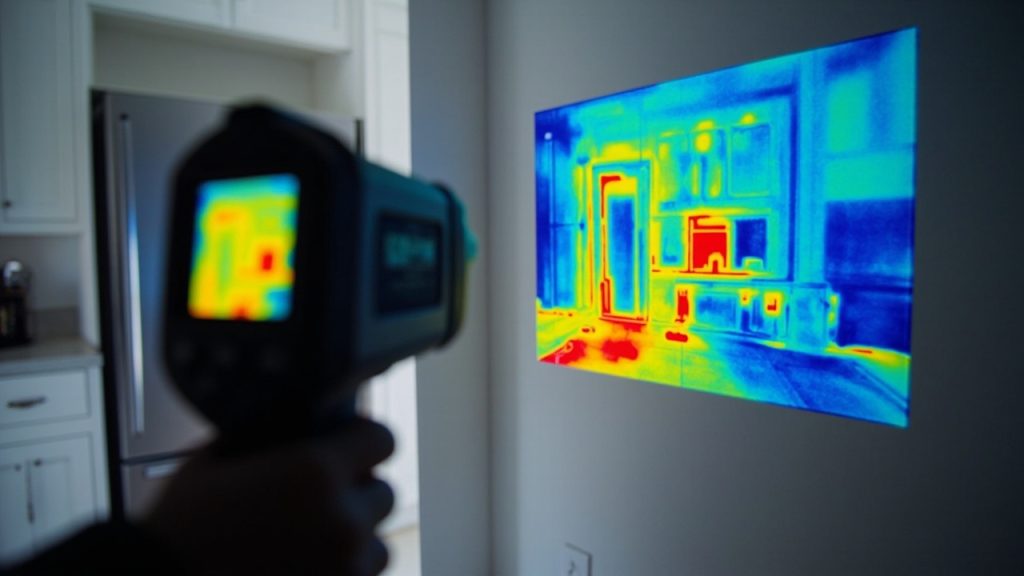
Professional restoration crews bring equipment and expertise you cannot replicate. They use thermal imaging cameras to detect moisture hidden inside walls and under flooring. They employ moisture meters and psychrometric measurements to verify that wood and drywall have dried completely, preventing mold growth months later. Thermal imaging cameras display real-time heat signatures that reveal moisture pockets invisible to the naked eye. Moisture meter readings show exact water content percentages in wood and drywall, confirming when materials reach safe dry conditions. Water extraction equipment in action pulls standing water from subfloors and cavities, removing gallons that household vacuums cannot reach.
Chicago Neighborhoods and Their Specific Water Damage Risks
Your neighborhood determines specific restoration challenges and structural vulnerabilities.
Lakeview two-flats and three-flats with shared walls and plumbing face elevated risks. A leak in one unit travels through shared wall cavities and affects neighbors. Professional restoration must address these cavities and ensure shared spaces dry completely to prevent liability disputes. Water moving between units requires specialized containment and testing to verify that affected areas meet safe moisture baselines.
West Loop condos and high-rise units create downward liability. If your ice maker leak damages the unit below yours, you bear repair costs for that unit. Building management coordinates inspections and requires professional documentation from certified restoration crews. Condo associations demand proof that your water damage was mitigated properly and did not spread to lower units. Professional restoration companies experienced with condo associations understand the paperwork, inspections, and certification required by these agreements.
Bucktown bungalows and worker cottages built before 1950 risk rim joist rot due to unfinished basements and porous limestone foundations. Water from a kitchen leak above travels through wooden rim joist areas that support your home’s structure. Limestone and brick foundations common in these homes absorb water like sponges. Saturated wood begins rotting, and structural failure becomes possible if drying does not occur within 48 to 72 hours. Professional crews understand these aging foundation systems and address moisture in rim joist areas aggressively.
Chicago’s high-humidity summers accelerate mold growth compared to drier climates. A wet surface in a damp basement environment becomes a mold colony in less than two days. Professional restoration includes antimicrobial treatment and sustained drying using industrial dehumidifiers that remove moisture faster than fans and open windows.
Chicago’s soil composition with clay content and poor drainage means your foundation and sump pump area are naturally prone to high water tables and hydrostatic pressure. When water enters from above via an ice maker leak, it compounds your basement moisture problem. Professional restoration addresses baseline moisture and ensures your home dries faster than the surrounding soil conditions would allow naturally.
Professional Water Extraction and Drying Process
Once professionals arrive, they follow a structured protocol to extract water, dry your home, and treat surfaces to prevent mold. Understanding this process helps you know what to expect and why it takes time.
- Assess and Document
Restoration crews photograph and document all visible damage for your insurance claim. They use moisture meters and thermal imaging to find hidden water inside walls, under flooring, and in basement areas. This assessment determines the full scope of work and drying time required.
- Extract Standing Water
Industrial-grade water extraction machines remove standing water from flooring and subfloors. These machines pull water from porous materials far more aggressively than household wet vacuums. For ice maker leaks affecting large areas, extraction typically takes two to four hours.
- Remove Wet Materials
Saturated baseboards, damaged drywall, and severely wet subfloor sections are removed. This prevents mold colonization in materials that cannot dry quickly enough. In older Chicago homes, this may include removing sections of hardwood flooring to access and dry the subfloor beneath.
- Deploy Dehumidifiers and Air Movers
Industrial dehumidifiers and high-velocity air movers are positioned throughout the affected area. These run continuously for five to seven days depending on the moisture level and ambient humidity. Chicago’s summer humidity requires extended dehumidification cycles.
- Monitor Moisture Levels Daily
Technicians return daily to measure moisture content in wood, drywall, and concrete. They adjust equipment placement and settings based on readings. Drying is complete when moisture levels drop to normal baseline levels, verified by meters.
- Apply Antimicrobial Treatment
Once surfaces reach target moisture levels, professionals apply antimicrobial solutions to all affected surfaces. This prevents mold spores from colonizing even if humidity spikes temporarily. This step is critical in humid Chicago environments.
- Rebuild and Restore
Damaged drywall is replaced, baseboards are reinstalled, and flooring is repaired or refinished. Structural damage like rotted joists or rim joist sections is addressed before your home is closed back up. Final inspection confirms that your kitchen is safe and functional.
The Mold Risk Every Chicago Homeowner Faces
Mold growth is the most dangerous secondary effect of ice maker leaks. Chicago’s climate makes mold a serious threat in ways that drier regions do not face.
Mold spores exist everywhere in your home. They are dormant until they land on a wet surface. In Chicago’s high-humidity environment, especially during summer months, wet surfaces provide ideal conditions for germination. Mold colonies become visible within 48 hours on some materials.
Once mold spreads, it causes respiratory problems, allergic reactions, and asthma attacks. Children and elderly residents in your home face the highest risk. Mold also damages structural materials. Wood joists and rim joist areas rot faster once mold begins digesting the cellulose.
Professional restoration includes inspection for mold using visual inspection and moisture verification. If mold is found, crews follow IICRC S500 Standards for mold remediation. This includes containment, HEPA air scrubbing, and disposal of contaminated materials in accordance with EPA guidelines. IICRC S500 Standards documentation specifies exact protocols for mold containment, removal, and clearance testing that ensure your home reaches safe indoor air quality standards.
You cannot clean mold yourself with bleach or vinegar. These solutions kill surface mold but do not penetrate porous materials. Mold inside drywall cavities or subfloor spaces requires professional removal by certified technicians. Mold symptoms after water damage include persistent coughing, sinus pressure, and musty odors that worsen when you enter affected rooms.
Working With Your Insurance Company on Appliance Leak Claims
Most homeowners insurance policies cover sudden and accidental water damage from appliance leaks, but the claim process requires documentation and professional assessment.
Your insurance company wants proof that the leak was sudden and not caused by lack of maintenance. A refrigerator water line that fails due to age or a solenoid valve that sticks qualifies as sudden and accidental. Poor maintenance like never replacing an ancient plastic water line may trigger denial.
Contact your insurance agent the same day you discover the leak. Report the incident in writing, either by email or through your policy’s online portal. Provide the date and time you discovered the leak and describe what caused it, if known.
Take photographs of the damage before you clean anything up. Show the wet kitchen floor, the damaged baseboard, and the refrigerator with water pooling behind it. These photos support your claim and protect you if the insurance company disputes the damage scope.
Do not delay getting professional estimates. Insurance adjusters expect prompt action. Delayed cleanup suggests negligence, which can reduce your payout. Get a professional water damage restoration company to assess the damage within 24 hours. Their report becomes your documentation for the claim.
Most restoration companies handle direct communication with insurance adjusters on your behalf. You do not need to manage this yourself. Let the professionals present the technical findings about moisture levels, affected materials, and required restoration work. This reduces your stress and improves your chances of full coverage.
| Insurance Claim Step | Timeline | Your Action |
|---|---|---|
| Report the leak to your insurance agent | Same day you discover it | Call or email your agent with date, time, and description |
| Take photographs of all damage | Before cleaning anything | Capture wet flooring, damaged baseboards, water source |
| Get professional damage assessment | Within 24 hours | Call Cornerstone for immediate inspection and report |
| Provide documentation to insurance | Within 48 hours of discovery | Submit photos and professional assessment report |
| Schedule insurance adjuster inspection | Within 3 to 5 days typically | Coordinate with your agent and restoration company |
| Receive insurance approval and estimate | 5 to 10 days after adjuster visit | Review coverage and approved restoration scope |
Professional water damage restoration companies navigate Chicago insurance claims with expertise. They submit technical documentation that supports your coverage and accelerates the approval process.
Preventing Future Ice Maker Leaks in Your Chicago Home
Once your home is restored, take steps to prevent another leak.
Replace plastic water supply lines with braided stainless steel. Stainless steel braiding resists mineral buildup from hard water and resists bursting from freeze-thaw cycles. The upgrade costs under your insurance deductible and lasts 15 to 20 years.
Inspect your refrigerator water line every six months. Look for cracks, soft spots, or any visible water weeping. If you notice any damage, shut off the water and replace the line immediately before it fails.
Install a leak detection device under your refrigerator. Battery-powered sensors alert you to water before it spreads. These devices cost under thirty dollars and can save thousands in restoration costs.
Check the shut-off valve behind your refrigerator at least once per year. Turn it slightly to ensure it is not frozen or corroded. A valve that does not turn smoothly needs replacement before it fails when you need it most.
For Chicago homeowners with basements prone to moisture, addressing baseline humidity helps prevent secondary mold after any water event. Proper basement drying after water damage prevents long-term structural problems and mold recurrence.
Hardwood Floor and Subfloor Drying After Ice Maker Leaks
Hardwood floors are expensive to replace, and water damage threatens their integrity. Professional drying saves your floors when the process is done correctly and quickly.
Hardwood cupping, where the wood surface domes up as moisture enters from below, is reversible if caught within 48 to 72 hours. Industrial dehumidifiers and air movers reduce wood moisture content gradually. Rapid drying causes checking and splitting, which is permanent damage.
Engineered hardwood and laminate floors installed over concrete are more vulnerable. Moisture travels through the subfloor and attacks the adhesive bond. Once the bond fails, the flooring separates and buckles. Professional extraction and sustained dehumidification often prevent replacement.
Subfloor materials matter too. Plywood subfloors, common in Chicago homes, are water resistant but not waterproof. Extended saturation causes delamination, where the plies separate. Concrete subfloors, found in newer construction and some high-rises, develop mold on their surface when saturated. Professional drying addresses both scenarios with equipment and monitoring you cannot replicate.
Do You Have Standing Water or Just Dampness After the Ice Maker Leak
The amount of water determines your urgency and restoration approach.
Standing water visible on your floor requires immediate professional extraction. Do not try to handle this yourself with household wet vacuums. Professional extraction equipment removes water from porous materials, not just surface water. Household vacuums cannot extract water from subfloor and drywall cavities.
If water has soaked into walls or is dripping into your basement from above, that is immediate professional territory. Water traveling through structural cavities causes rot and mold hidden from sight.
If you see only dampness without standing water, but you smell musty odors or see discoloration spreading, professional assessment is still essential. Moisture has traveled into materials you cannot see. Thermal imaging identifies exactly where the moisture is located.
Chicago Building Code and Water Damage Restoration Compliance
Chicago Building Code and Illinois state regulations govern water damage restoration, especially for properties built before 1978, which may contain lead paint or asbestos in insulation. Professional restoration companies follow Chicago Building Code requirements for material removal, containment, and disposal. Violations of these codes create liability for you if water damage recurs or mold regrows.
Professional restoration companies certified in IICRC S500 Standards follow EPA and Chicago Health Department guidelines. Any removal of damaged materials is handled as regulated waste if those materials contain lead or asbestos.
Your restoration company must be licensed and insured in Illinois. Do not hire unlicensed crews that offer cheap rates. Improper remediation violates building codes and creates liability for you if mold recurs or structural damage worsens.
Emergency Contact and Next Steps
If you have water pooling behind your refrigerator right now, stop reading and act. First, shut off the water supply behind the refrigerator or at your main water valve. Remove standing water with towels. Open doors and windows to increase air circulation.
Then call Cornerstone Water Damage Restoration immediately. We respond 24 hours daily to emergency calls. A technician will assess your damage, begin mitigation, and coordinate with your insurance company. The faster you respond, the less extensive your restoration will be and the lower your final costs.
Do not wait to see if the problem resolves itself. Water damage accelerates when you delay. Mold grows within 48 hours in humid conditions. Structural damage compounds daily. Your fastest and most cost-effective response is professional mitigation today.
Call Cornerstone Water Damage Restoration now for 24-hour emergency water extraction and restoration service in Chicago and surrounding areas. We bring expertise, equipment, and speed to stop the damage and restore your home.
{
“@context”: “https://schema.org”,
“@type”: “BlogPosting”,
“headline”: “Refrigerator Ice Maker Line Leak Cleanup and Restoration in Chicago”,
“description”: “Stop refrigerator water line leaks fast in Chicago. Shut off water immediately, remove standing water, and call professionals within 24 hours before mold spreads.”,
“wordCount”: 3294,
“datePublished”: “2026-04-15T09:46:00.000Z”,
“dateModified”: “2026-04-15T09:46:00.000Z”,
“inLanguage”: “en-US”,
“mainEntityOfPage”: {
“@type”: “WebPage”,
“@id”: “https://cornerstonewaterdamagerestorationchicago.com”
},
“publisher”: {
“@type”: “LocalBusiness”,
“name”: “Cornerstone Water Damage Restoration Chicago”,
“url”: “https://cornerstonewaterdamagerestorationchicago.com”
},
“author”: {
“@type”: “Organization”,
“name”: “Cornerstone Water Damage Restoration Chicago”,
“url”: “https://cornerstonewaterdamagerestorationchicago.com”
},
“image”: {
“@type”: “ImageObject”,
“url”: “https://cornerstonewaterdamagerestorationchicago.com/wp-content/uploads/2026/03/how-to-handle-a-refrigerator-water-line-leak-in-yo-1.jpg”
}
}
{
“@context”: “https://schema.org”,
“@type”: “LocalBusiness”,
“name”: “Cornerstone Water Damage Restoration Chicago”,
“url”: “https://cornerstonewaterdamagerestorationchicago.com”,
“address”: {
“@type”: “PostalAddress”,
“addressLocality”: “Chicago”
},
“areaServed”: {
“@type”: “City”,
“name”: “Chicago”
}
}
{
“@context”: “https://schema.org”,
“@type”: “HowTo”,
“name”: “Professional Water Damage Restoration After Ice Maker Leak”,
“step”: [
{
“@type”: “HowToStep”,
“position”: 1,
“name”: “Assess and Document”,
“text”: “Restoration crews photograph and document all visible damage for your insurance claim. They use moisture meters and thermal imaging to find hidden water inside walls, under flooring, and in basement areas. This assessment determines the full scope of work and drying time required.”
},
{
“@type”: “HowToStep”,
“position”: 2,
“name”: “Extract Standing Water”,
“text”: “Industrial-grade water extraction machines remove standing water from flooring and subfloors. These machines pull water from porous materials far more aggressively than household wet vacuums. For ice maker leaks affecting large areas, extraction typically takes two to four hours.”
},
{
“@type”: “HowToStep”,
“position”: 3,
“name”: “Remove Wet Materials”,
“text”: “Saturated baseboards, damaged drywall, and severely wet subfloor sections are removed. This prevents mold colonization in materials that cannot dry quickly enough. In older Chicago homes, this may include removing sections of hardwood flooring to access and dry the subfloor beneath.”
},
{
“@type”: “HowToStep”,
“position”: 4,
“name”: “Deploy Dehumidifiers and Air Movers”,
“text”: “Industrial dehumidifiers and high-velocity air movers are positioned throughout the affected area. These run continuously for five to seven days depending on the moisture level and ambient humidity. Chicago’s summer humidity requires extended dehumidification cycles.”
},
{
“@type”: “HowToStep”,
“position”: 5,
“name”: “Monitor Moisture Levels Daily”,
“text”: “Technicians return daily to measure moisture content in wood, drywall, and concrete. They adjust equipment placement and settings based on readings. Drying is complete when moisture levels drop to normal baseline levels, verified by meters.”
},
{
“@type”: “HowToStep”,
“position”: 6,
“name”: “Apply Antimicrobial Treatment”,
“text”: “Once surfaces reach target moisture levels, professionals apply antimicrobial solutions to all affected surfaces. This prevents mold spores from colonizing even if humidity spikes temporarily. This step is critical in humid Chicago environments.”
},
{
“@type”: “HowToStep”,
“position”: 7,
“name”: “Rebuild and Restore”,
“text”: “Damaged drywall is replaced, baseboards are reinstalled, and flooring is repaired or refinished. Structural damage like rotted joists or rim joist sections is addressed before your home is closed back up. Final inspection confirms that your kitchen is safe and functional.”
}
],
“image”: “https://cornerstonewaterdamagerestorationchicago.com/wp-content/uploads/2026/03/how-to-handle-a-refrigerator-water-line-leak-in-yo-1.jpg”
}
{
“@context”: “https://schema.org”,
“@type”: “BreadcrumbList”,
“itemListElement”: [
{
“@type”: “ListItem”,
“position”: 1,
“name”: “Home”,
“item”: “https://cornerstonewaterdamagerestorationchicago.com”
},
{
“@type”: “ListItem”,
“position”: 2,
“name”: “Blog”,
“item”: “https://cornerstonewaterdamagerestorationchicago.com/blog”
},
{
“@type”: “ListItem”,
“position”: 3,
“name”: “Refrigerator Ice Maker Line Leak Cleanup and Restoration in Chicago”
}
]
}
{
“@context”: “https://schema.org”,
“@type”: “Service”,
“serviceType”: “Water Damage Restoration”,
“provider”: {
“@type”: “LocalBusiness”,
“name”: “Cornerstone Water Damage Restoration Chicago”,
“url”: “https://cornerstonewaterdamagerestorationchicago.com”
},
“areaServed”: {
“@type”: “City”,
“name”: “Chicago”
},
“description”: “Stop refrigerator water line leaks fast in Chicago. Shut off water immediately, remove standing water, and call professionals within 24 hours before mold spreads.”
}