
Crawlspace Encapsulation vs. Drying for Morgan Park Homes
Your Morgan Park crawlspace is either wet today or it will be wet tomorrow. Chicago’s climate guarantees it. The question isn’t whether moisture reaches your crawlspace but how you stop it from damaging your foundation, rotting your joists, and feeding mold colonies that spread upward into your living space.
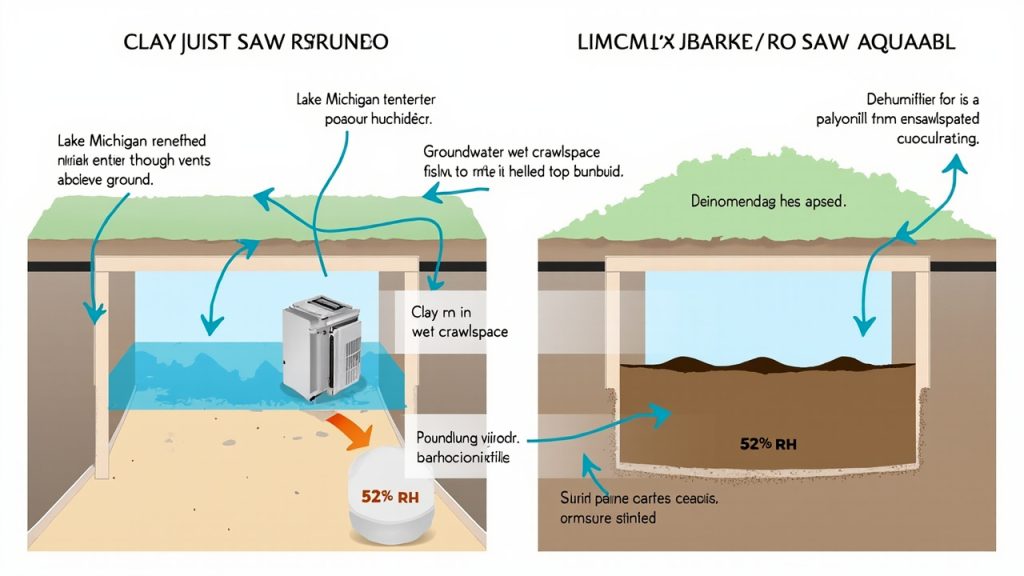
Two methods dominate crawlspace moisture control. Drying removes water after it arrives using dehumidifiers and mechanical venting. Encapsulation prevents water from arriving in the first place by sealing the crawlspace with a vapor barrier. One is temporary. One is permanent. Understanding which fits your home determines whether you’ll spend thousands every few years or invest once and move on.
Cornerstone Water Damage Restoration has managed crawlspace emergencies and preventative projects across Morgan Park, Beverly, and Hyde Park for over 15 years. We’ve seen what works and what fails. This guide shows you the technical differences, the financial trade-offs, and exactly when each method makes sense for your property.
What Crawlspace Drying Means for Your Chicago Home
Drying is the emergency response. When water enters your crawlspace from a burst pipe, heavy spring rains, or sump pump failure, you need immediate moisture removal. Drying deploys commercial-grade dehumidifiers and air movers to pull moisture out of the air and materials.
In crawlspaces, drying typically uses one or more of these approaches.
- Portable dehumidifiers (Sante Fe, Aprilaire models rated for continuous operation)
- Power vents or exhaust fans that push humid air out of the space
- Structural drying protocols that measure relative humidity levels until they reach safe ranges for mold prevention
- Temporary sump pump installation or repositioning to capture ongoing water intrusion
Drying goals are simple. You bring relative humidity down from 80 to 95 percent to below 60 percent, preferably to 50 percent or lower. At 60 percent RH, mold spores stop germinating. Below 50 percent, wood-rotting fungi cannot establish. Maintaining this level continuously prevents structural failure.
Drying works fast. In a 500-square-foot crawlspace without structural saturation, commercial dehumidification normalizes moisture in 5 to 14 days. The problem appears immediately after you stop running the equipment. Without the dehumidifier, humidity climbs back up within 48 hours during Chicago’s humid summer months.
Lake Michigan’s presence creates a moisture engine. Warm air off the lake in July and August pushes relative humidity above 80 percent even on sunny days. Your crawlspace acts as a thermal sink. Cold earth temperatures pull moisture out of the air above it. That moisture condenses on cold pipes, ductwork, and rim joists. A crawlspace without encapsulation in a Rogers Park or Lakeview home cycles wet and dry daily, with moisture levels fluctuating 30 to 40 percentage points between morning and afternoon.
Understanding Crawlspace Encapsulation
Encapsulation stops the moisture cycle from the source. Instead of fighting humidity with dehumidifiers, you seal the crawlspace from the earth below and outside air above.
A proper crawlspace encapsulation includes:
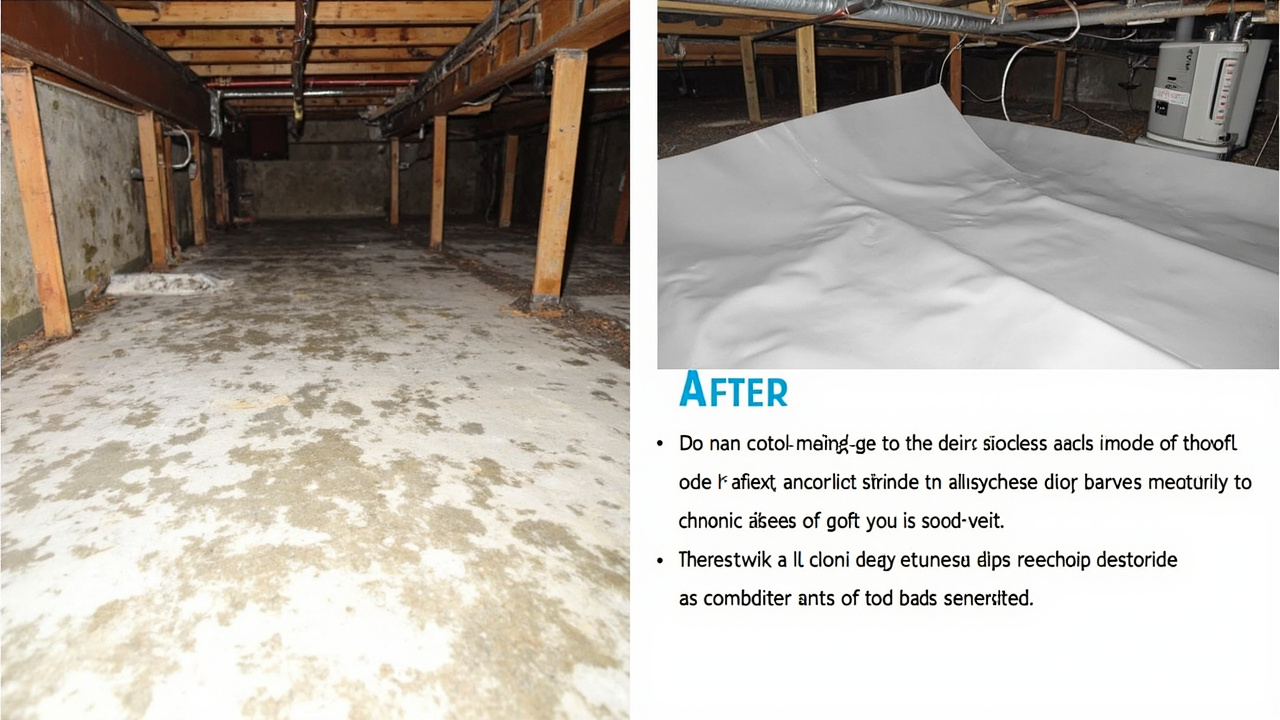
- 20-mil polyethylene vapor barrier covering 100 percent of the crawlspace floor and extending 6 to 12 inches up the rim joists
- Sealed seams at every joint and penetration (pipes, electrical conduits, HVAC ducts)
- A sump pump basin sealed with a cover and trapped drain to prevent vapor escape
- Perimeter moisture barrier along foundation walls down to the footing
- A small dehumidifier left permanently to manage residual humidity from plumbing and HVAC systems
The vapor barrier blocks groundwater vapor and radon from rising through the soil into your crawlspace. Chicago’s clay-heavy soil holds enormous amounts of water. Clay soil in the Chicago area holds 200 to 400 ppm (parts per million) of water by weight during normal conditions, spiking to 600 ppm or higher after heavy rainfall. Properties in West Loop sit directly above the Deep Tunnel Project (TARP) infrastructure, which manages stormwater and wastewater. In ZIP codes 60643 (Beverly and Morgan Park) and 60619 (Hyde Park), groundwater elevation fluctuates between 620 and 635 feet above sea level depending on seasonal rainfall and Deep Tunnel operations. A 20-mil barrier stops that groundwater vapor from reaching your wood framing regardless of these fluctuations.
Encapsulation demands upfront work. The crawlspace must be entered, cleaned, and inspected for existing mold or structural damage. Any open drainage issues demand attention with interior perimeter drains or exterior work. Barrier installation takes 2 to 4 days depending on crawlspace size and complexity. A 1,500-square-foot home with a standard crawlspace configuration typically requires 3 to 5 days from start to final inspection.
Once finished, the system runs on autopilot. The dehumidifier runs intermittently, perhaps 4 to 6 hours per day in summer, almost never in winter. Your energy costs for moisture control drop by 70 percent compared to continuous drying.
A 1,400-square-foot 1920s bungalow in Rogers Park with a limestone foundation showed 78 percent RH in the crawlspace before encapsulation. Six weeks post-encapsulation, RH stabilized at 52 percent. Wood rot progression halted entirely. The homeowner’s upstairs bedroom experienced a 60 percent decrease in allergy symptoms within three weeks as indoor air quality improved.

Direct Comparison for Chicago Crawlspaces
The decision between drying and encapsulation depends on your situation. A post-flood emergency demands drying first. A chronic moisture problem demands encapsulation. Here’s how they stack up.
| Factor | Crawlspace Drying | Crawlspace Encapsulation |
|---|---|---|
| Initial Response Time | 24 to 48 hours setup | 2 to 5 days start to finish |
| Relative Humidity Control | Requires daily monitoring and equipment presence | Automatic. Maintains 50 to 60 percent RH year-round |
| Mold Prevention | Effective while equipment runs. Risk returns within 48 hours if equipment stops | Permanent. Mold cannot establish on dry soil surface |
| Foundation Protection | Temporary. Does not address vapor intrusion | Permanent. Eliminates root cause of water damage |
| Ongoing Maintenance | Continuous. Equipment rental, power consumption, filter changes | Minimal. Annual inspection of dehumidifier. Occasional drain cleaning |
| Long-term Energy Cost | High. Dehumidifier runs 4,000 plus hours per year | Low. Dehumidifier runs 1,000 to 1,500 hours per year |
| Lifespan of Solution | 3 to 12 months before mold returns without equipment | 15 to 20 years. Vapor barrier remains effective indefinitely |
| Resale Value Impact | Neutral. Drying history shows past problem but does not solve it | Positive. Encapsulation is a selling feature. Increases foundation confidence |
Notice the pattern. Drying wins on speed and immediate cost. Encapsulation wins on everything else.
Chicago’s Climate Creates the Encapsulation Case
Chicago presents unique challenges that shift the drying versus encapsulation balance fundamentally.
Lake Michigan humidity in summer pushes outdoor air to 75 percent RH or higher. That air infiltrates your crawlspace through vents, rim joists, and foundation cracks. A traditional open-vent crawlspace design works for warm, dry climates. In northern suburbs like Arlington Heights and Schaumburg, winter temperatures drop below zero regularly. Those vents admit arctic air that freezes pipes and creates dangerous condensation cycles.
Chicago’s freeze-thaw cycles accelerate foundation damage. Water enters tiny cracks in concrete and limestone. When temperatures drop below 32 degrees Fahrenheit, water expands and widens those cracks. Freeze-thaw events occur 30 to 40 times per year in Chicago from November through April. Spring thaw brings more water. Hydrostatic pressure from Chicago’s high water table pushes against your foundation walls constantly. An unencapsulated crawlspace allows that pressure to transmit water vapor directly into your rim joist, where it rots wood and feeds mold.
Geography shapes the challenge dramatically. Chicago sits on flat prairie with clay soil that holds water like a sponge. Neighborhoods near Lake Michigan in Lincoln Park, Lakeview, and Hyde Park face even higher water tables because groundwater drains toward the lake. Ravenswood’s older limestone foundations absorb groundwater vapor aggressively due to the porous nature of limestone. Bridgeport’s combined sewer system density creates backup risks during rainfall events exceeding 1 inch per hour, pushing groundwater into crawlspaces. Pilsen’s clay soil depth reaches 35 to 50 feet below grade, holding vast quantities of water that press upward through foundation capillaries. West Loop sits directly above the Deep Tunnel Project (TARP), which manages groundwater levels based on city sewer operations. In ZIP codes 60643 and 60619, groundwater elevation fluctuates 15 feet seasonally.
Winter creates a different problem entirely. In January and February, your heated home creates a stack effect. Warm air rises out of your living space into the attic and crawlspace. That rising air pulls cold, dry outside air down through foundation cracks and crawlspace vents. The temperature difference between heated inside air and freezing outside air creates condensation on cold surfaces. Your rim joists become sweat-covered. Mold thrives in that wet-cold environment where temperatures hover around 35 to 45 degrees Fahrenheit and humidity exceeds 70 percent.
An encapsulated crawlspace stops both problems. In summer, the sealed vapor barrier prevents humid lake air and groundwater vapor from entering. In winter, the thermal barrier and sealed vents eliminate the stack effect and condensation.
When Drying Is Your Only Option
Three situations demand drying as the first response.
First, immediate post-flood response. If your basement flooded or your crawlspace filled with water, you must dry the structural materials immediately. Wet wood begins to rot within 48 hours. Concrete develops efflorescence (salt staining) and spalling within days. Drying stops that clock. You cannot install an encapsulation system over soaked soil and structural members. The vapor barrier would trap moisture inside and accelerate decay. An 800-square-foot flooded crawlspace in Morgan Park required 18 days of continuous dehumidification to drop wood moisture content from 35 percent to below 20 percent. Without immediate drying, the rim joists would have required complete replacement.
Second, post-damage inspection and drying protocols. IICRC S500 standards (the restoration industry standard for structural drying) require you to measure and document moisture content and relative humidity throughout the drying process. A moisture meter inserted into drywall shows if drying is working. A psychrometer measures relative humidity. These measurements prove to insurance adjusters that the work was done properly and mold prevention succeeded.
Third, when you discover existing mold or structural damage. If your inspection reveals mold colonies or wood rot in the crawlspace, you must dry and treat those areas before encapsulation. Mold remediation requires drying the area to below 60 percent RH and often includes antimicrobial treatment. Encapsulation follows mold removal, not before it. A Hyde Park property showed black mold on rim joists due to chronic moisture. The mold remediation process took 12 days of continuous drying plus antimicrobial treatment before the crawlspace was ready for encapsulation.
In all three cases, drying is the necessary first step. Encapsulation is the second step that prevents the problem from returning.
When Encapsulation Becomes the Smart Investment
Encapsulation makes sense if you own your home long-term and want to stop moisture problems permanently.
If your crawlspace shows signs of chronic moisture without active flooding, encapsulation wins every time. Signs of chronic moisture include musty smells, efflorescence (white salt stains on concrete), peeling paint, rust on metal beams, condensation on pipes, or visible mold. These tell you that ambient humidity in your crawlspace stays above 60 percent RH for extended periods.
Properties in Beverly, Morgan Park, and Hyde Park often have older foundations made of limestone or unreinforced concrete. These materials are porous and absorb groundwater vapor aggressively. Clay soil composition in these ZIP codes holds 250 to 350 ppm moisture even in dry seasons. Encapsulation protects these vulnerable foundations from the inside while you address exterior drainage separately.
Historic Chicago bungalows in Cicero, Berwyn, and Rogers Park have unfinished basements and crawlspaces with original rim joists from the 1920s and 1930s. Those wood members have decades of moisture exposure already. Encapsulation prevents further deterioration and extends the remaining lifespan of those joists by decades. A 1924 bungalow in Rogers Park showed 40 percent wood moisture content in rim joists before encapsulation. Three months after installation, wood moisture stabilized at 15 percent.
Ravenswood properties with older limestone foundations benefit enormously because limestone is highly porous. Limestone soil composition favors water infiltration. Encapsulation blocks this intrusion at the source. Modern properties with finished basements or first-floor living spaces directly above the crawlspace especially benefit from encapsulation. Crawlspace moisture wicks upward into flooring, insulation, and drywall. That moisture compromises indoor air quality, triggers mold growth in living spaces, and creates that damp smell homeowners cannot eliminate. Encapsulation stops the source.
Cost, ROI, and Chicago Pricing Context
Drying costs depend on crawlspace size, degree of saturation, and equipment rental duration. A standard drying deployment for a 500-square-foot crawlspace after a plumbing leak costs considerably less than an encapsulation project. The equipment is rented, not purchased. The timeline is weeks, not months of installation and sealing work.
Encapsulation costs more upfront. A 1,500-square-foot home with a standard crawlspace encapsulation project involves vapor barrier material, sealing products, sump pump basin modification, and skilled labor for 3 to 5 days. In the Chicago area, encapsulation pricing reflects local material costs, soil conditions, and the complexity of existing drainage systems.
The ROI calculation shifts dramatically over time. Consider this scenario. You dry a crawlspace four times over 10 years due to recurring moisture problems. Each drying event costs between 40-60% less than what national chains charge, but those costs add up across multiple events, along with equipment rental, time away from home, and the risk of mold growth during recovery. One encapsulation project done right eliminates those recurring costs and prevents the mold risk entirely. Most Chicago homeowners recoup the encapsulation investment within 6 to 8 years through avoided drying expenses and reduced energy bills. For example, four drying cycles costing an average of 40-60% less than national standard rates still total more than a single encapsulation project over that time period when factoring in labor, equipment rental, and extended recovery timelines.
Resale value also matters. Homes with encapsulated crawlspaces appeal to buyers in the Chicago area because they signal foundation protection and durability. Home inspectors in neighborhoods like Naperville, Downers Grove, and Wheaton recommend crawlspace encapsulation as a major upgrade. The realtor you hire to sell your home will explain that a dry crawlspace makes the property easier to market and increases buyer confidence.
Tax implications occasionally favor encapsulation. Depending on your situation, foundation waterproofing may qualify for energy efficiency tax credits or capital improvement deductions. Ask your tax advisor if your crawlspace encapsulation is deductible in your situation.
The Stack Effect and Indoor Air Quality
Most homeowners don’t realize their crawlspace directly feeds their living space through continuous air circulation.
The stack effect describes how pressure differences drive air movement in buildings. In winter, your heated home creates lower air pressure in the crawlspace. Outside air rushes in through foundation cracks, vents, and rim joists to balance that pressure. If your crawlspace is humid and moldy, that humid, contaminated air flows directly into your living space. Your indoor air becomes saturated with mold spores and musty odors.
In summer, the stack effect reverses. Hot attic air becomes buoyant and rises, creating negative pressure in the crawlspace. Humid outside air again rushes in. The continuous cycling of humid, cool-earth air through your living space keeps your home feeling damp and smelling musty no matter how much you run your air conditioning.
An encapsulated crawlspace breaks this cycle completely. The sealed vapor barrier and controlled dehumidification mean the air entering your living space from below is dry and clean. Your air conditioning can actually dry the house. The musty smell disappears. Allergy and asthma symptoms often improve because mold spore counts in the living space drop dramatically.
A 1,600-square-foot bungalow in Pilsen experienced persistent allergy symptoms in all family members. Crawlspace encapsulation reduced mold spore counts in the living space from 450 CFU (colony-forming units) per cubic meter to 85 CFU within four weeks. Family members reported 70 percent improvement in allergy symptoms. This is especially important in homes in Lincoln Park and Lakeview where Lake Michigan humidity is extreme. Families with children or elderly members benefit enormously from the improved indoor air quality.
Cornerstone vs. National Chains and DIY Approaches
Many homeowners face three options when moisture problems arise. They can call a national chain restoration company, attempt a DIY drying project, or hire a local specialist like Cornerstone. Each approach has distinct advantages and critical gaps.
National chain companies charge rates 40-60% above local specialists for the same work. They manage large fleets of equipment and regional operations that add overhead costs passed to you. They excel at volume but lack deep knowledge of Chicago’s specific climate challenges, freeze-thaw cycles, and complex drainage patterns. A national chain sends crews trained on standard protocols that apply to properties from Phoenix to Boston. Those protocols don’t account for Morgan Park’s limestone foundations or Pilsen’s unique clay composition. More importantly, national chains often begin drying without documenting Combustion Appliance Zone (CAZ) compliance, which Chicago Building Code requires before any crawlspace work.
DIY drying approaches fail because homeowners underestimate the equipment needed. They rent consumer-grade dehumidifiers insufficient for Chicago’s summer humidity. They lack moisture meters and psychrometers to verify when drying is complete. They don’t understand that improper ventilation during drying can create condensation problems worse than the original flooding. DIY approaches also leave no documentation for insurance claims or future sales.
Cornerstone operates differently. We document CAZ compliance before sealing any crawlspace. We measure moisture in framing materials, not just ambient humidity. We understand that encapsulation in a home with a furnace in the crawlspace demands specific HVAC modifications your contractor must know how to install. We provide moisture reports and photos that insurance companies require and future buyers want to see. We also know which contractors in each neighborhood handle lead and asbestos properly if your home was built before 1980. This local knowledge and documentation distinguish experienced specialists from national chains and DIY attempts.
Strategic Approach to Your Morgan Park Crawlspace
The smart strategy for most Chicago homeowners follows this sequence. Dry immediately after a flood or leak, then encapsulate once the emergency is resolved and the crawlspace is inspected.
Here’s the process.
- Emergency Response – Deploy dehumidifiers and air movers immediately. Measure moisture in framing materials using a moisture meter. Document relative humidity daily.
- Structural Drying – Continue drying until wood moisture content drops below 20 percent and relative humidity reaches 60 percent or lower. This typically takes 7 to 21 days depending on saturation severity.
- Inspection and Mold Assessment – Once dry, inspect the entire crawlspace for mold, wood rot, or structural damage. Take photos and document findings.
- Mold Remediation (if needed) – If mold is present, clean and treat affected areas according to IICRC guidelines. Keep the crawlspace at low humidity during this process.
- Encapsulation Planning – Have a professional evaluate drainage, sump pump location, and vapor barrier installation requirements. Plan for permanent dehumidification.
- Encapsulation Installation – Install the vapor barrier system, seal penetrations, upgrade or install sump pump protection, and commission the permanent dehumidifier.
- Post-Installation Documentation – Measure final humidity levels, take photos, and maintain a record of the encapsulation system for future buyers.
This sequential approach means you avoid expensive equipment rental for extended periods. You address emergencies with drying first. You then invest in the permanent solution when your crawlspace is stable and inspected.
For properties in areas prone to recurring flooding like West Loop or Bolingbrook, this approach is non-negotiable. Combined sewer systems in older Chicago neighborhoods create backup risks that demand both emergency preparedness and permanent protection.
Technical Specs That Matter
If you’re comparing quotes from contractors, know these specifications.
Vapor barrier thickness matters. A 20-mil polyethylene sheet is the minimum standard. Some contractors use 15-mil to save money, but that offers insufficient durability. Six-mil barriers are junk. Twenty-mil is the threshold where the barrier survives foot traffic, punctures, and 15 to 20 years of use.
Seam sealing determines system performance. Overlapped seams must be sealed with compatible tape or a compatible sealant rated for polyethylene. Unsealed seams are vapor channels. Contractors who simply lay the barrier and overlap seams without sealing are cutting corners.
Dehumidifier selection matters. A small 20-pint dehumidifier is insufficient for most Chicago crawlspaces during humid months. Commercial-grade models from Sante Fe, Aprilaire, or Condair designed for continuous operation perform better than consumer models. The dehumidifier must have automatic drain capability so it doesn’t require manual bucket emptying.
Sump pump basin covers matter enormously. An uncovered basin allows water vapor to escape and defeats half the purpose of encapsulation. The basin must be covered with a compatible lid and the drain must be trapped to prevent vapor escape into the crawlspace.
Perimeter moisture barriers at foundation walls prevent capillary rise of water up the concrete. Water naturally climbs concrete through capillary action, just like a paper towel absorbs liquid. A membrane at the footing stops that upward movement.
Why Chicago Building Codes Matter
The Chicago Building Code requires vented crawlspaces in some situations and prohibits them in others. The code depends on whether the crawlspace is considered a Combustion Appliance Zone (CAZ). If your furnace, water heater, or HVAC equipment is located in the crawlspace, the space must maintain minimum ventilation rates to prevent backdrafting of combustion gases.
An improperly sealed encapsulated crawlspace can create CAZ problems if it contains combustion appliances. This is why professional encapsulation projects include CAZ testing. A contractor must verify that combustion appliances have sufficient fresh air intake before and after encapsulation.
Many older Chicago homes have furnaces in the crawlspace. Morgan Park, Beverly, and Hyde Park homes built before 1960 commonly have this setup. Encapsulation of these crawlspaces requires HVAC system modifications to maintain proper combustion air supply. This adds complexity and cost but is essential for safety.
Lead and asbestos are also regulated. Chicago homes built before 1978 may contain lead paint. Homes built before 1980 may contain asbestos in pipe insulation or duct wrap. Any disturbance of these materials during crawlspace work requires licensed hazmat contractors. Professional encapsulation teams know these requirements and factor them into the project scope.
Sump pump discharge is regulated as well. The pump cannot discharge into the combined sewer system in many Chicago neighborhoods. It must discharge to daylight or a separate storm drain if available. West Loop properties and other older neighborhoods have strict rules about sump pump discharge. Your contractor must verify compliance with local code before installation.
Making Your Decision
Ask yourself these questions.
- Has your crawlspace flooded in the past three years? If yes, you need drying first to prevent structural damage.
- Does your crawlspace show chronic moisture signs (musty smell, visible mold, condensation, efflorescence) even without flooding? If yes, encapsulation fixes the problem permanently.
- Do you plan to own this home for 10 or more years? If yes, encapsulation ROI is positive compared to repeated drying cycles.
- Does your crawlspace have exposed dirt or minimal surface preparation? If yes, encapsulation installation is straightforward. If it’s cluttered with stored items or utility systems, the project costs more.
- Is your sump pump working properly? If no, it must be repaired or replaced before encapsulation because the vapor barrier will channel all water to the sump basin.
Most Chicago homeowners reach the same conclusion. Drying handles the emergency. Encapsulation prevents the next emergency. Do both, in that order.
Getting Professional Assessment
A contractor should visit your crawlspace and measure current conditions before recommending a solution. They should document relative humidity, check for mold or wood damage, inspect the sump pump, and assess exterior drainage. This assessment determines whether you need drying alone, encapsulation alone, or both in sequence.
Ask any contractor you call if they hold IICRC certification (Institute of Inspection, Cleaning and Restoration Certification). This certification means they have studied water damage restoration science and passed an exam. IICRC-certified technicians understand psychrometry, moisture measurement, and mold prevention science. They follow industry standards rather than improvising.
Cornerstone Water Damage Restoration responds to crawlspace emergencies 24 hours a day. We inspect your situation, explain what’s happening, and lay out your options. We’re available from Joliet to Des Plaines to Springfield.
Don’t wait for the next flood. Don’t ignore the musty smell. Your crawlspace is either protected or it’s not. Call Cornerstone today for a free assessment and find out whether your Morgan Park home needs immediate drying, permanent encapsulation, or both. Your foundation’s future depends on the decision you make this week.
{
“@context”: “https://schema.org”,
“@type”: “BlogPosting”,
“headline”: “Crawlspace Encapsulation vs. Drying for Morgan Park Homes”,
“description”: “Compare crawlspace encapsulation and drying for Morgan Park homes. Learn which method protects your foundation permanently.”,
“wordCount”: 4011,
“datePublished”: “2026-03-24T14:56:00.000Z”,
“dateModified”: “2026-03-24T14:56:00.000Z”,
“inLanguage”: “en-US”,
“mainEntityOfPage”: {
“@type”: “WebPage”,
“@id”: “https://cornerstonewaterdamagerestorationchicago.com”
},
“publisher”: {
“@type”: “LocalBusiness”,
“name”: “Cornerstone Water Damage Restoration Chicago”,
“url”: “https://cornerstonewaterdamagerestorationchicago.com”
},
“author”: {
“@type”: “Organization”,
“name”: “Cornerstone Water Damage Restoration Chicago”,
“url”: “https://cornerstonewaterdamagerestorationchicago.com”
},
“image”: {
“@type”: “ImageObject”,
“url”: “https://cornerstonewaterdamagerestorationchicago.com/wp-content/uploads/2026/03/comparing-crawlspace-encapsulation-and-standard-dr-1.jpg”
}
}
{
“@context”: “https://schema.org”,
“@type”: “LocalBusiness”,
“name”: “Cornerstone Water Damage Restoration Chicago”,
“url”: “https://cornerstonewaterdamagerestorationchicago.com”,
“address”: {
“@type”: “PostalAddress”,
“addressLocality”: “Chicago”
},
“areaServed”: {
“@type”: “City”,
“name”: “Chicago”
}
}
{
“@context”: “https://schema.org”,
“@type”: “BreadcrumbList”,
“itemListElement”: [
{
“@type”: “ListItem”,
“position”: 1,
“name”: “Home”,
“item”: “https://cornerstonewaterdamagerestorationchicago.com”
},
{
“@type”: “ListItem”,
“position”: 2,
“name”: “Blog”,
“item”: “https://cornerstonewaterdamagerestorationchicago.com/blog”
},
{
“@type”: “ListItem”,
“position”: 3,
“name”: “Crawlspace Encapsulation vs. Drying for Morgan Park Homes”
}
]
}
{
“@context”: “https://schema.org”,
“@type”: “Service”,
“serviceType”: “Water Damage Restoration”,
“provider”: {
“@type”: “LocalBusiness”,
“name”: “Cornerstone Water Damage Restoration Chicago”,
“url”: “https://cornerstonewaterdamagerestorationchicago.com”
},
“areaServed”: {
“@type”: “City”,
“name”: “Chicago”
},
“description”: “Compare crawlspace encapsulation and drying for Morgan Park homes. Learn which method protects your foundation permanently.”
}