
Post-Mold Air Quality Testing and Clearance in Chicago
Your remediation is only complete when independent testing proves it. This means understanding your timeline, your costs, and your decision points before you move forward. After a mold remediation project completes, your home needs one final verification that proves the air inside your property is safe to breathe. A clearance test confirms that mold spore levels match outdoor baseline conditions. This testing matters because it affects whether you can sell your home, file an insurance claim, or rent out the property without legal liability. Your decision to retest or accept initial results depends on knowing what the lab report actually says and what your next steps should be.
Chicago’s humid summers and aging building stock create persistent moisture conditions that make post-remediation testing especially critical. Homeowners in Lincoln Park, Lakeview, Logan Square, Pilsen, Bronzeville, and Hyde Park face additional risk because foundation moisture is endemic to these neighborhoods. The difference between a successful remediation and a failed one lies in the documentation. Without proper clearance testing, you have no proof that the mold problem is resolved and your home remains a liability.
Why Post-Remediation Verification Testing Matters
Post-Remediation Verification (PRV) is a third-party air quality assessment that happens after all mold removal work finishes. It is not the same as initial mold testing. PRV compares the indoor air samples taken from your home to outdoor baseline samples collected from the same geographic area. This comparison tells you whether the remediation work succeeded.
Chicago’s climate makes this step essential. High humidity during summer months from June through September accelerates mold growth in basements, crawlspaces, and poorly ventilated areas. Lake effect humidity patterns create moisture that persists in structural materials long after initial water events. The city’s historic building stock, including Chicago bungalows with unfinished basements, classic two-flats, and workers cottages built on limestone foundations, traps moisture in ways that modern homes do not. After remediation, PRV confirms that air handling systems are functioning properly and that no residual spore contamination remains hidden in wall cavities or HVAC ductwork.
Insurance companies require clearance documentation before they close a claim. Real estate transactions demand it before closing. Tenants expect it before moving into a rental property. Without PRV results, you cannot legally represent the property as mold-free.
Understanding Post-Remediation Verification Protocol
PRV follows a strict sequence that IICRC S520 standards define. The remediation contractor cannot perform this test themselves. This separation is the critical protection that distinguishes legitimate PRV from self-serving claims.
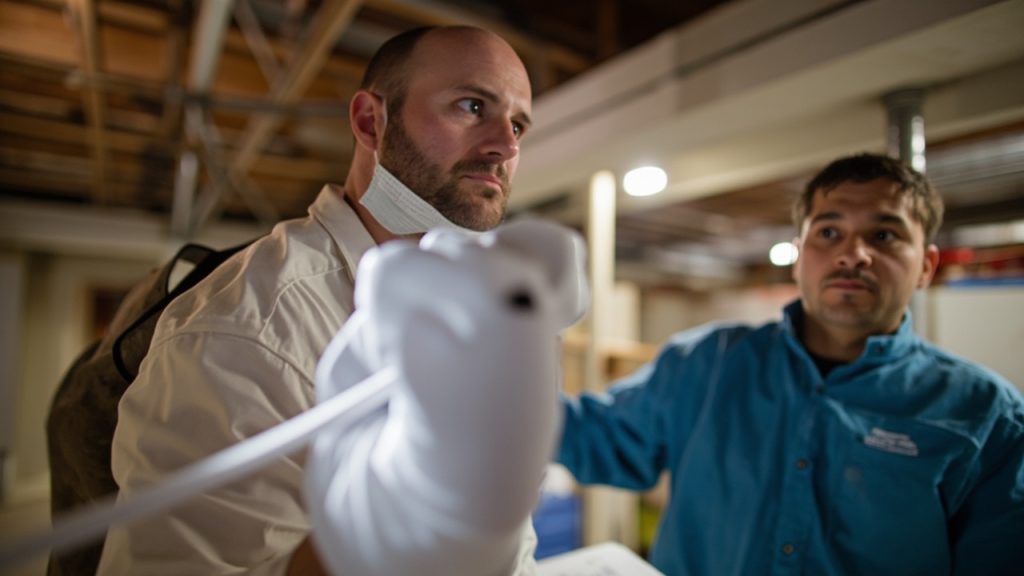
A certified independent environmental professional, not affiliated with the remediation company, enters your home after all visible mold removal work completes. This professional collects air samples from multiple locations inside the home using standardized equipment. Simultaneously, outdoor baseline samples get collected to establish the natural spore count in Chicago’s air on that specific day.
The samples travel to an accredited laboratory within hours. Results typically arrive within 24 to 48 hours. The lab compares indoor counts to outdoor baseline counts. If indoor fungal particulate levels are equal to or lower than outdoor levels, the home receives clearance. This is the threshold for safety.
The entire process protects you. An independent tester has no financial incentive to declare your home clean if it is not. The laboratory has no connection to the remediation company. The results reflect reality, not corporate interests.
The IICRC S520 Standard and What It Requires
The Institute of Inspection, Cleaning and Restoration Certification published the S520 standard to establish a single protocol for mold remediation and verification across North America. Chicago-area remediation firms that claim IICRC certification follow this standard. The standard matters because it means you know what to expect and can compare results across different testing scenarios.
S520 states that PRV testing must include air sampling using one of two methods. Air-o-cell sampling uses a pump that pulls air through a cassette for 5 to 10 minutes, collecting particles on a sticky surface. Tape lift sampling involves pressing clear tape to surfaces and examining it under a microscope. For post-remediation work, air-o-cell sampling is the standard method because it captures airborne spores currently in the air, not just settled particles on surfaces.
The standard also requires that baseline outdoor samples come from the same geographic location on the same day. Chicago’s air quality varies by neighborhood and weather conditions. The outdoor sample collected in Lincoln Park on a humid August afternoon differs from one collected in Bolingbrook on a dry spring morning. IICRC S520 accounts for this variability. For further details on IICRC S520 standards, visit the IICRC official documentation.
Results must document specific spore types. Common mold species tested include Aspergillus, Penicillium, Stachybotrys, Alternaria, and Cladosporium. The lab counts spores per cubic meter of air. Clearance occurs when indoor spore counts are no higher than outdoor counts for the same genera.
Chicago-Specific Building Challenges in Mold Testing
Chicago’s architecture and climate create unique mold problems that affect how PRV testing interprets results. Understanding these challenges helps you make informed decisions about retesting versus accepting initial results.
Historic Chicago bungalows built between 1900 and 1930 have unfinished basements with exposed foundation stone sitting on Chicago Blue Clay, a soil composition with 50 to 70 percent clay content that holds water against foundation walls. This limestone absorbs moisture from the surrounding soil at water table depths of 35 to 45 feet below street grade in older neighborhoods near Lake Michigan. Basements in these homes are almost always damp. After remediation, PRV testing focuses heavily on basement air samples because this is where mold recurrence is most likely.
Two-flats and three-flats common in West Loop and Logan Square neighborhoods have interior plumbing that runs through uninsulated exterior walls. During Chicago winters, these pipes freeze and burst, flooding basements. The structure dries slowly, creating weeks of mold risk. PRV testing after burst pipe flooding verifies that air handling systems removed all moisture and spore contamination.
Modern high-rise condos near downtown and around Millennium Park have different challenges. Internal plumbing is concentrated, yet sewage backups through shared drain lines affect multiple units. The combined sewer system that serves older Chicago neighborhoods increases backup risk during heavy rains. PRV testing must account for these shared building dynamics when sampling multiple units.
Chicago building code section 13-200 et seq requires that mold remediation work meet professional standards established by the Environmental Protection Agency and industry organizations. Unlike some states, Chicago enforces compliance through building permits and inspections. Any remediation work must follow EPA guidance for moisture management and contamination removal. This gives Chicago homeowners stronger legal protection than national standards alone provide.
High humidity during Chicago summers accelerates mold growth after water damage. A flooded basement in June dries slower than one in September. Moisture persists longer in the structural materials. PRV testing scheduled too early may still show elevated spore counts even after thorough remediation work. Your decision about when to test depends on how long drying took and what conditions were present during remediation.
When to Retest Versus Accepting Initial Results
Your PRV report gives you clear information to decide whether results are acceptable or if additional remediation and retesting are needed. If your initial test passes, the decision is straightforward. You move forward with selling, occupying, or renting the property with clearance documentation in hand.
If your initial test fails, meaning indoor spore counts exceed outdoor baseline for one or more mold types, you face a decision point. Determine whether the remediation company provides warranty coverage for retesting. Most legitimate firms include one or two retests in their initial contract at no additional cost. Ask your remediation contractor what their warranty covers before signing the remediation agreement.
Consider the source of contamination that the lab report reveals. If elevated Stachybotrys appears in the basement sample, hidden mold growth likely exists in wall cavities or crawlspace areas. Your remediation company needs to investigate further, which means opening walls or inspecting hidden spaces. This adds time and cost to the project. Budget an additional 1 to 2 weeks for investigation and remediation if initial testing fails.
Calculate the cost-benefit of different testing turnaround speeds. Standard lab turnaround is 24 to 48 hours at regular cost. Rush same-day processing adds 30 to 50 percent to the testing fee. If you are selling a home under a tight closing deadline, rush processing is worth the cost. If you are addressing a private remediation for occupancy, standard turnaround saves money with minimal delay.
The Testing Process Step by Step
Understanding what happens during PRV helps you prepare your home and know what to expect.
- Schedule Testing After All Work Completes
Contact an independent environmental consultant or certified industrial hygienist the day before you want testing. Do not use the same company that performed the remediation. They need 24 hours to coordinate their schedule and prepare equipment. Testing must happen at least 24 hours after all mold removal, cleaning, and air scrubbing finishes.
- Ensure HVAC System Is Running
The tester will ask you to run your air handling system during sampling. This circulates air throughout the home and allows proper sampling of all zones. Leave windows closed and doors closed except for the tester’s entry point.
- Prepare Multiple Interior Sampling Locations
The tester collects samples from at least three interior rooms, typically the basement, living area, and bedroom. These locations represent different zones and air movement patterns in your home. Ensure these spaces are accessible and unobstructed.
- Collect Outdoor Baseline Samples
The tester positions equipment outside, away from building vents and air handling exhausts. This sample represents the natural Chicago air spore count on that date and time. It is the comparison point for your indoor results.
- Receive Results Within 48 Hours
The lab processes samples and issues a detailed report comparing indoor to outdoor spore counts. The report includes a clearance statement if results meet S520 standards. If testing fails, the report identifies which spore types exceeded outdoor baselines, helping target further remediation.
Interpreting Your Lab Results and Clearance Certificate
Lab reports use technical language that confuses homeowners. The key metric is straightforward. Indoor fungal particulate count must be equal to or lower than the outdoor baseline count.
A sample report might show the following data.
| Spore Type | Indoor Count (spores per cubic meter) | Outdoor Baseline (spores per cubic meter) | Pass or Fail |
|---|---|---|---|
| Aspergillus | 145 | 320 | Pass |
| Penicillium | 89 | 210 | Pass |
| Stachybotrys | 0 | 15 | Pass |
| Alternaria | 56 | 85 | Pass |
| Cladosporium | 220 | 380 | Pass |
This home passes clearance. Every indoor spore count is lower than the corresponding outdoor baseline. The lab issues a clearance certificate stating the property meets IICRC S520 Post-Remediation Verification standards and is suitable for occupancy.
If a result shows “Fail,” it means indoor spore counts for one or more genera exceed outdoor levels. This indicates residual contamination. The source could be incomplete remediation, inadequate HVAC cleaning, or hidden mold in wall cavities. Remediation must continue. A second round of testing follows after additional work completes.
The clearance certificate becomes your proof of remediation success. You provide it to insurance companies, real estate buyers, mortgage lenders, and renters. It is your legal documentation that the problem is resolved.
Why Independent Third Party Testing Protects You
The most critical protection in PRV is independence. The remediation company cannot test its own work. This prevents the obvious conflict of interest where a contractor declares success regardless of actual conditions.
This matters especially in the Chicago market because basement mold is endemic in older neighborhoods. Homeowners in Beverly, Hyde Park, Rogers Park, Pilsen, and Bronzeville deal with persistent moisture because of Chicago’s high clay content soil and elevated water table near Lake Michigan. Contractors face pressure to pass homes on first testing to keep costs down. An independent tester faces no such pressure. They earn their credibility by issuing honest results.
The laboratory analyzing air samples must be accredited by a recognized body such as the American Industrial Hygiene Conference or similar. This third layer of independence ensures the lab has no relationship to either the homeowner or the remediation company. The lab’s reputation depends on accuracy, not customer satisfaction.
Air Sampling Methods and What They Detect
Two main air sampling techniques exist. Post-remediation verification typically uses air-o-cell sampling, but understanding both methods helps you ask informed questions.
| Sampling Method | How It Works | When Used | What It Captures |
|---|---|---|---|
| Air-o-cell (Spore Trap) | Pump pulls air through a cassette with sticky surface for 5 to 10 minutes. Airborne particles stick to the surface. | Post-remediation verification testing | Viable and non-viable spores currently floating in the air. Most accurate for clearance testing. |
| Tape Lift (Bulk Sampling) | Clear tape pressed to surfaces, walls, HVAC ducts, insulation. Tape examined under microscope. | Initial mold inspection or hidden area assessment | Settled spores and mold fragments on surfaces. Does not measure airborne levels. |
For post-remediation testing, air-o-cell sampling is the standard because it measures current airborne spore levels. This is what you breathe. Settled spores matter less if your air handling system is functioning properly and removing them from circulation.
Equipment used in Chicago includes Z-Lite pumps calibrated to pump air at a standard rate. Bio-aerosol cassettes capture particles on a sticky substrate. These tools are standardized across accredited laboratories to ensure consistency.
VOC Testing Versus Mold Spore Testing
Some homeowners confuse Volatile Organic Compound (VOC) testing with mold spore testing. They measure different things.
VOC testing detects gaseous compounds released by mold, called microbial volatile organic compounds or mVOCs. These are the chemicals that create the musty smell in basements. VOC testing requires special equipment and is more expensive than spore trap sampling.
Spore trap sampling (air-o-cell) measures actual mold particles in the air. This is the standard for post-remediation verification under IICRC S520. Spore counts are the metric that insurance companies and real estate transactions require.
After remediation, your home needs spore trap testing, not VOC testing. If a consultant recommends expensive VOC analysis for post-remediation clearance, ask why. The standard protocol does not require it. Your clearance certificate comes from spore count comparisons.
Timeline for Testing After Remediation Completes
Timing affects both testing accuracy and your ability to move forward with selling or occupying the home.
All visible mold removal must finish before any testing begins. The crew scrubs surfaces, removes contaminated materials, and runs air scrubbers for the remediation period, typically 3 to 5 days depending on the size of the affected area. Once all remediation equipment stops running, you wait 24 hours before scheduling PRV testing. This allows air to settle and circulate normally.
If you are selling a home, schedule PRV testing as soon as the 24 hour wait ends. Buyers need clearance certification before closing. If testing fails, you need time to address the issues and retest. Timeline pressure is real in real estate transactions.
If you are occupying the home, wait for clearance results before bringing the family back. Do not move children, elderly relatives, or people with respiratory conditions into a home pending PRV results. Insurance implications could be significant if mold recurs and someone gets sick.
Cost Factors and What Influences Pricing
PRV testing costs vary based on the number of sampling locations, lab turnaround time, and whether you need rush processing. A typical post-remediation test in Chicago neighborhoods from Bolingbrook to Rogers Park ranges from moderate to high cost, with factors including the following.
- Number of rooms sampled (three locations is standard, larger homes may need more)
- Laboratory turnaround time (standard 24 to 48 hours versus rush same-day service)
- Travel distance for the tester from their office
- Whether you need the report formatted for insurance or real estate purposes
- Additional testing such as moisture mapping or VOC analysis if remediation raised questions
You receive one detailed report comparing your indoor and outdoor spore counts with lab analysis and a clearance statement if results pass. This document is your proof of successful remediation.
What Happens if Testing Reveals Hidden Mold
Sometimes PRV testing uncovers problems the initial remediation missed. This happens in older homes where mold grew inside wall cavities or HVAC ductwork beyond what visual inspection revealed.
If testing fails, meaning indoor spore counts exceed outdoor baseline for any mold type, the lab report identifies which species are elevated. Elevated Stachybotrys or Aspergillus in an interior sample suggests active mold growth somewhere in the home. The remediation company must investigate further. They may need to open walls, inspect ductwork, or use more aggressive drying methods.
A failed PRV test is not a failure of the testing process. It is a failure of the remediation work to fully address the problem. This is exactly why PRV testing protects you. You do not accept a failed remediation and move on. You have documentation that work remains.
The remediation company conducts additional work at no cost to you if they warranty their job. They retest through the same independent laboratory. This continues until clearance is achieved.
Documentation for Insurance Claims and Real Estate Transactions
The clearance certificate serves as your primary documentation for both insurance and real estate purposes.
For insurance claims, submit the PRV report with your final claim settlement request. The insurer will review the independent laboratory results and release final payment. Some insurers require notification before remediation begins. Others accept it after completion if proper documentation exists. The clearance certificate proves that the claim was resolved to industry standards.
For real estate sales, the clearance certificate becomes part of the property disclosure package. In Illinois, sellers must disclose known mold issues. If you have undergone remediation and obtained clearance certification, you can represent the property as having been professionally remediated and verified as mold free. This protects you from liability and gives buyers confidence.
For rental properties, the clearance certificate demonstrates compliance with building code requirements and EPA guidance. Tenants expect a safe living environment. Mold remediation documentation proves your diligence as a landlord.
Choosing the Right Independent Tester in Chicago
Not all environmental consultants understand IICRC S520 standards or Chicago’s specific building challenges. When you need PRV testing, ask the following questions.
- Are you IICRC certified for post-remediation verification testing?
- Do you use accredited third party laboratories for analysis?
- What is your turnaround time for lab results?
- Can you provide references from remediation companies or real estate transactions in Chicago?
- Do you explain results in writing and help me understand the clearance certificate?
- What is your experience with historic Chicago homes and their specific moisture profiles?
When selecting a remediation partner, verify that they coordinate with independent testers and do not perform testing in house. This separation ensures that you receive impartial results based on actual conditions, not on the remediation company’s desire for a quick clearance. Legitimate remediation firms welcome independent testing because it validates their work.
Frequently Asked Questions
Should the remediation company perform the post-remediation verification test?
No. IICRC S520 standards require that PRV testing be performed by an independent third party with no financial relationship to the remediation company. This prevents the obvious conflict of interest. If the same company that profits from remediation work also profits from declaring it successful, the results lose credibility.
What spore levels require clearance?
Indoor spore counts must be equal to or lower than the outdoor baseline count collected on the same day. The comparison is what matters, not an absolute threshold. Chicago’s outdoor air naturally contains mold spores. Clearing does not mean zero spores. It means your indoor levels match what nature provides outside.
How long does the entire PRV process take?
From the end of remediation work to receiving clearance certification typically takes 3 to 5 business days. The 24 hour wait after remediation finishes is day one. Testing happens day two. Lab processing takes 24 to 48 hours. You receive results by day four or five.
What if my home is in a condo building with a mold problem in shared spaces?
Shared building mold is the responsibility of the building management and the condominium association, not individual unit owners. Your PRV testing focuses on your unit’s air quality. If common areas like HVAC return plenums or crawlspaces serve your unit, testing samples those areas to ensure your unit is not being recontaminated.
Is PRV testing required by law in Illinois?
Illinois does not mandate PRV testing by statute. Most real estate transactions, insurance claims, and rental property disclosures in practice require it. The City of Chicago building code requires remediation to meet professional standards, which means IICRC S520 compliance including PRV testing.
What should I do if results show elevated mold in my HVAC ductwork?
Elevated spore counts in air samples suggest contamination in your air handling system. The remediation company typically addresses this by having HVAC ducts professionally cleaned and disinfected. Ductwork cleaning is a specialized service that removes settled spores and biofilm inside the ducts. After cleaning, retesting confirms that airborne spore levels have dropped to acceptable levels.
Can I occupy my home before PRV clearance?
You can occupy your home after remediation completes, even before testing. You cannot legally represent the property as remediated or safe for sale, lease, or insurance claims until independent testing confirms clearance. If you plan to sell or rent the property, waiting for clearance before occupying protects your liability.
What does a failed PRV test cost me?
Retesting costs the same as initial PRV testing unless you use rush processing. Your remediation company typically covers retesting and additional remediation work if they warranty their initial work. Verify warranty terms before signing a remediation contract. Additional investigative work to find hidden mold sources, such as opening walls or inspecting crawlspaces, adds cost beyond retesting alone.
Next Steps for Your Home After Mold Remediation
If you have completed mold remediation work on your Chicago home, schedule post-remediation verification testing immediately. Contact an IICRC certified environmental professional who partners with accredited laboratories. Ask for a detailed report comparing your indoor spore counts to outdoor baseline measurements. Request the official clearance certificate for your insurance company or real estate transaction.
Do not move back into a home without clearance results. Do not list a property for sale without clearance documentation. Do not assume remediation succeeded without independent verification.
For properties in neighborhoods like Lincoln Park, Lakeview, West Loop, Hyde Park, and Pilsen where mold risk is highest due to moisture conditions and older building construction, having experienced remediation guidance paired with proper verification testing ensures a successful outcome. The investment in professional remediation and independent testing protects your property value and your family’s health.
{
“@context”: “https://schema.org”,
“@type”: “BlogPosting”,
“headline”: “Post-Mold Air Quality Testing and Clearance in Chicago”,
“description”: “Independent air quality testing after mold remediation in Chicago. Learn clearance standards, costs, and what your lab results mean.”,
“wordCount”: 3739,
“datePublished”: “2026-03-17T15:39:00.000Z”,
“dateModified”: “2026-03-17T15:39:00.000Z”,
“inLanguage”: “en-US”,
“mainEntityOfPage”: {
“@type”: “WebPage”,
“@id”: “https://cornerstonewaterdamagerestorationchicago.com”
},
“publisher”: {
“@type”: “LocalBusiness”,
“name”: “Cornerstone Water Damage Restoration Chicago”,
“url”: “https://cornerstonewaterdamagerestorationchicago.com”
},
“author”: {
“@type”: “Organization”,
“name”: “Cornerstone Water Damage Restoration Chicago”,
“url”: “https://cornerstonewaterdamagerestorationchicago.com”
},
“image”: {
“@type”: “ImageObject”,
“url”: “https://cornerstonewaterdamagerestorationchicago.com/wp-content/uploads/2026/03/testing-the-air-quality-in-your-garfield-park-hous-1.jpg”
}
}
{
“@context”: “https://schema.org”,
“@type”: “LocalBusiness”,
“name”: “Cornerstone Water Damage Restoration Chicago”,
“url”: “https://cornerstonewaterdamagerestorationchicago.com”,
“address”: {
“@type”: “PostalAddress”,
“addressLocality”: “Chicago”
},
“areaServed”: {
“@type”: “City”,
“name”: “Chicago”
}
}
{
“@context”: “https://schema.org”,
“@type”: “FAQPage”,
“mainEntity”: [
{
“@type”: “Question”,
“name”: “Should the remediation company perform the post-remediation verification test?”,
“acceptedAnswer”: {
“@type”: “Answer”,
“text”: “No. IICRC S520 standards require that PRV testing be performed by an independent third party with no financial relationship to the remediation company. This prevents the obvious conflict of interest. If the same company that profits from remediation work also profits from declaring it successful, the results lose credibility.”
}
},
{
“@type”: “Question”,
“name”: “What spore levels require clearance?”,
“acceptedAnswer”: {
“@type”: “Answer”,
“text”: “Indoor spore counts must be equal to or lower than the outdoor baseline count collected on the same day. The comparison is what matters, not an absolute threshold. Chicago’s outdoor air naturally contains mold spores. Clearing does not mean zero spores. It means your indoor levels match what nature provides outside.”
}
},
{
“@type”: “Question”,
“name”: “How long does the entire PRV process take?”,
“acceptedAnswer”: {
“@type”: “Answer”,
“text”: “From the end of remediation work to receiving clearance certification typically takes 3 to 5 business days. The 24 hour wait after remediation finishes is day one. Testing happens day two. Lab processing takes 24 to 48 hours. You receive results by day four or five.”
}
},
{
“@type”: “Question”,
“name”: “What if my home is in a condo building with a mold problem in shared spaces?”,
“acceptedAnswer”: {
“@type”: “Answer”,
“text”: “Shared building mold is the responsibility of the building management and the condominium association, not individual unit owners. Your PRV testing focuses on your unit’s air quality. If common areas like HVAC return plenums or crawlspaces serve your unit, testing samples those areas to ensure your unit is not being recontaminated.”
}
},
{
“@type”: “Question”,
“name”: “Is PRV testing required by law in Illinois?”,
“acceptedAnswer”: {
“@type”: “Answer”,
“text”: “Illinois does not mandate PRV testing by statute. Most real estate transactions, insurance claims, and rental property disclosures in practice require it. The City of Chicago building code requires remediation to meet professional standards, which means IICRC S520 compliance including PRV testing.”
}
},
{
“@type”: “Question”,
“name”: “What should I do if results show elevated mold in my HVAC ductwork?”,
“acceptedAnswer”: {
“@type”: “Answer”,
“text”: “Elevated spore counts in air samples suggest contamination in your air handling system. The remediation company typically addresses this by having HVAC ducts professionally cleaned and disinfected. Ductwork cleaning is a specialized service that removes settled spores and biofilm inside the ducts. After cleaning, retesting confirms that airborne spore levels have dropped to acceptable levels.”
}
},
{
“@type”: “Question”,
“name”: “Can I occupy my home before PRV clearance?”,
“acceptedAnswer”: {
“@type”: “Answer”,
“text”: “You can occupy your home after remediation completes, even before testing. You cannot legally represent the property as remediated or safe for sale, lease, or insurance claims until independent testing confirms clearance. If you plan to sell or rent the property, waiting for clearance before occupying protects your liability.”
}
},
{
“@type”: “Question”,
“name”: “What does a failed PRV test cost me?”,
“acceptedAnswer”: {
“@type”: “Answer”,
“text”: “Retesting costs the same as initial PRV testing unless you use rush processing. Your remediation company typically covers retesting and additional remediation work if they warranty their initial work. Verify warranty terms before signing a remediation contract. Additional investigative work to find hidden mold sources, such as opening walls or inspecting crawlspaces, adds cost beyond retesting alone.”
}
}
]
}
{
“@context”: “https://schema.org”,
“@type”: “HowTo”,
“name”: “How to Prepare for Post-Remediation Verification Testing”,
“step”: [
{
“@type”: “HowToStep”,
“position”: 1,
“name”: “Schedule Testing After All Work Completes”,
“text”: “Contact an independent environmental consultant or certified industrial hygienist the day before you want testing. Do not use the same company that performed the remediation. They need 24 hours to coordinate their schedule and prepare equipment. Testing must happen at least 24 hours after all mold removal, cleaning, and air scrubbing finishes.”
},
{
“@type”: “HowToStep”,
“position”: 2,
“name”: “Ensure HVAC System Is Running”,
“text”: “The tester will ask you to run your air handling system during sampling. This circulates air throughout the home and allows proper sampling of all zones. Leave windows closed and doors closed except for the tester’s entry point.”
},
{
“@type”: “HowToStep”,
“position”: 3,
“name”: “Prepare Multiple Interior Sampling Locations”,
“text”: “The tester collects samples from at least three interior rooms, typically the basement, living area, and bedroom. These locations represent different zones and air movement patterns in your home. Ensure these spaces are accessible and unobstructed.”
},
{
“@type”: “HowToStep”,
“position”: 4,
“name”: “Collect Outdoor Baseline Samples”,
“text”: “The tester positions equipment outside, away from building vents and air handling exhausts. This sample represents the natural Chicago air spore count on that date and time. It is the comparison point for your indoor results.”
},
{
“@type”: “HowToStep”,
“position”: 5,
“name”: “Receive Results Within 48 Hours”,
“text”: “The lab processes samples and issues a detailed report comparing indoor to outdoor spore counts. The report includes a clearance statement if results meet S520 standards. If testing fails, the report identifies which spore types exceeded outdoor baselines, helping target further remediation.”
}
],
“image”: “https://cornerstonewaterdamagerestorationchicago.com/wp-content/uploads/2026/03/testing-the-air-quality-in-your-garfield-park-hous-1.jpg”
}
{
“@context”: “https://schema.org”,
“@type”: “BreadcrumbList”,
“itemListElement”: [
{
“@type”: “ListItem”,
“position”: 1,
“name”: “Home”,
“item”: “https://cornerstonewaterdamagerestorationchicago.com”
},
{
“@type”: “ListItem”,
“position”: 2,
“name”: “Blog”,
“item”: “https://cornerstonewaterdamagerestorationchicago.com/blog”
},
{
“@type”: “ListItem”,
“position”: 3,
“name”: “Post-Mold Air Quality Testing and Clearance in Chicago”
}
]
}
{
“@context”: “https://schema.org”,
“@type”: “Service”,
“serviceType”: “Water Damage Restoration”,
“provider”: {
“@type”: “LocalBusiness”,
“name”: “Cornerstone Water Damage Restoration Chicago”,
“url”: “https://cornerstonewaterdamagerestorationchicago.com”
},
“areaServed”: {
“@type”: “City”,
“name”: “Chicago”
},
“description”: “Independent air quality testing after mold remediation in Chicago. Learn clearance standards, costs, and what your lab results mean.”
}