
Why Chicago’s Mature Trees Damage Your Pipes and Sewer Lines (And What to Do)
Your beautiful backyard trees are slowly destroying your sewer line right now. You do not see it happening, but the roots are already there, penetrating the joints in your clay pipes and multiplying inside the line. By the time you smell sewage backing up into your basement, the damage is severe.
This is not a hypothetical concern for Chicago homeowners. The combination of aging infrastructure, Chicago Blue Clay soil conditions, and mature tree canopy makes root intrusion one of the most common plumbing emergencies we handle across Lincoln Park, Logan Square, Rogers Park, and the surrounding suburbs. In Kenwood near the Lake Michigan shoreline, the high water table amplifies the problem dramatically. Root damage affects Chicago bungalows built between 1900 and 1950 with particular severity, as their 80 to 125 year old clay pipe infrastructure sits at the end of its lifespan.
This guide explains how to identify tree root damage in your sewer line, why it happens so fast in Chicago, and what to do when sewage backs up into your home.
Why Tree Roots Target Your Sewer Pipes
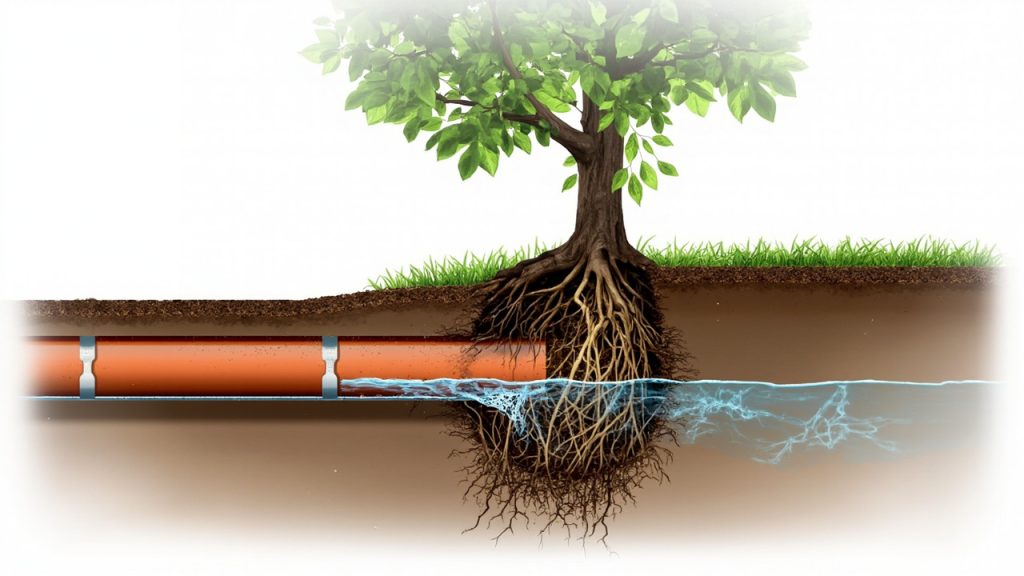
Tree roots need three things to grow into your sewer line: water, oxygen, and a nutrient source. Your sewer pipe provides all three. Every time you flush a toilet or drain your sink, you send water and nutrients down the line. Roots search for this source the way bloodhounds search for a scent.
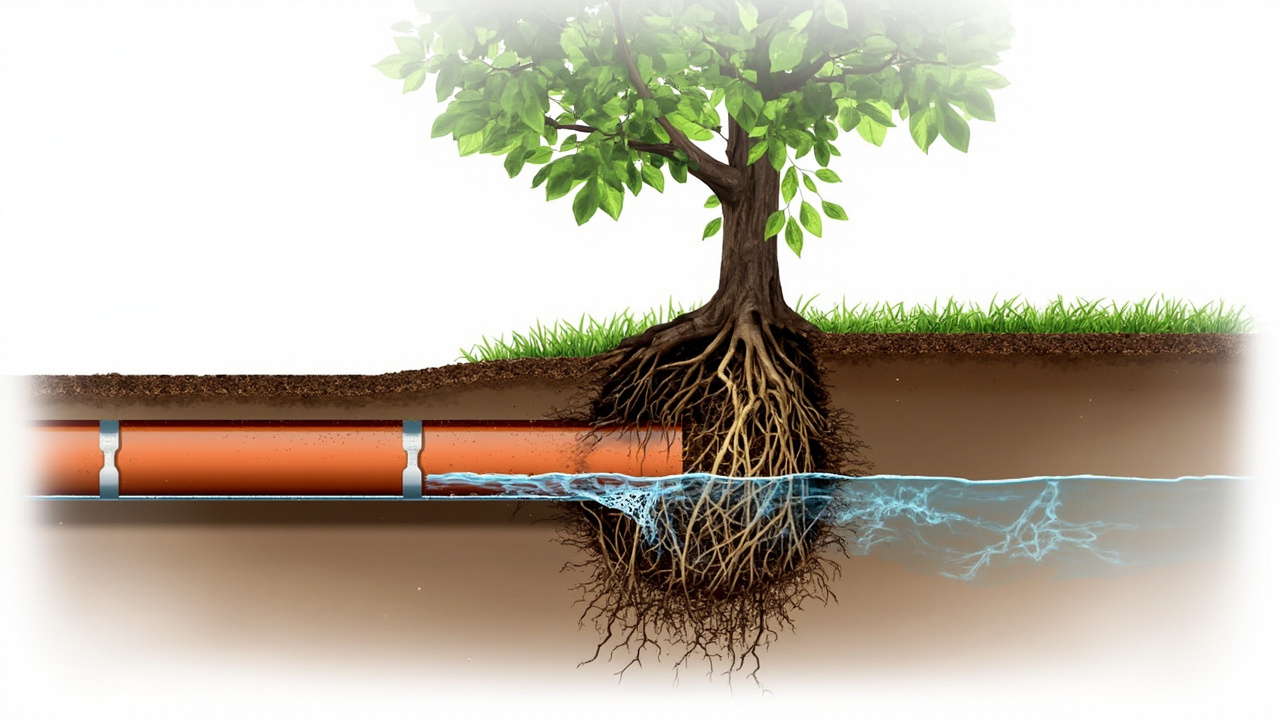
Roots do not break through solid pipe. They exploit existing cracks and gaps, particularly at the joints where two sections of pipe connect. Once a hairlike root enters the opening, it grows thicker. More roots follow, creating a tangled mass that traps grease, toilet paper, and solid waste. The blockage worsens until the line backs up completely.
Vitrified Clay Pipe (VCP), the standard material in Chicago homes built before 1970, is especially vulnerable. These pipes connect with simple rubber gaskets and clay-to-clay joints. Over decades, Chicago’s freeze-thaw cycles expand and contract the soil, creating tiny separations. Roots slip through. Unlike modern PVC pipes, VCP cannot flex or expand when roots grow inside.
The problem accelerates in clay-heavy soil like Chicago Blue Clay. This dense, moisture-retaining soil surrounds most Chicago sewer lines. It compresses when dry and swells when wet, stressing pipe joints further. A single freeze-thaw winter can open gaps that roots exploit the following spring.
Common Trees That Damage Chicago Sewer Lines
Not all trees pose equal risk. The species matters. Fast-growing, water-loving trees with aggressive root systems are the primary threats to Chicago properties.
Silver Maples and Willows are the worst offenders. Both grow rapidly and have roots that reach far from the tree seeking moisture. A Silver Maple near your property line can send roots 60 feet in all directions. Elms, Poplars, and Ash trees also damage sewer lines frequently across Beverly, West Loop, and older North Shore neighborhoods.
Slower-growing trees like Oaks and Hickories cause less trouble. Their roots grow deeper, not wider, and they are less dependent on surface moisture. Evergreens like spruce and pine are the safest choice for properties with known sewer issues.
Damage does not always come from trees on your property. A neighbor’s Silver Maple planted 30 feet away can send roots directly into your sewer line if the pipe runs between the two properties. This creates complex liability questions that homeowners often do not anticipate.
Signs Your Sewer Line Is Being Invaded by Roots
Root damage does not announce itself with a single dramatic failure. Early warnings appear months before a full backup. Recognizing these signs gives you time to call a professional before sewage floods your basement.
Slow drains throughout the house. Water drains sluggishly from multiple fixtures (kitchen sink, bathroom tub, shower) at the same time. This indicates a blockage in the main sewer line, not a localized clog.
Toilets that gurgle or bubble. When you flush a toilet or run the washing machine, you hear gurgling sounds from other drains. This happens because the blockage forces air out through alternate routes.
Sewage smell in the basement or yard. A sharp, unmistakable smell of human waste near your foundation or in the lowest points of your home signals a backup. The smell grows stronger when it rains or immediately after thawing periods.
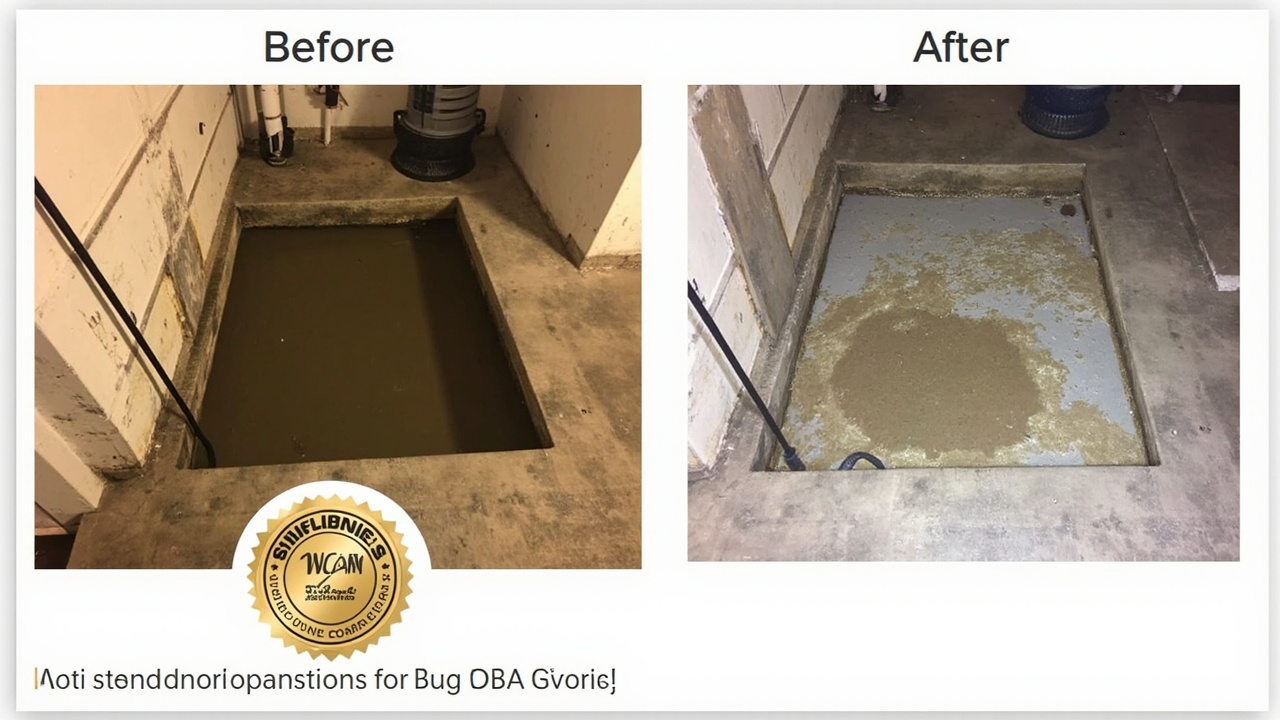
Raw sewage in the basement. This is the emergency stage. Sewage backs up through floor drains, showers, or toilets, pooling on your basement floor. If this happens, stop using water immediately and call a restoration professional.
Patches of lush grass or sunken areas in your yard. Sewage leaking from a damaged underground pipe creates nutrient-rich water that feeds grass. You might see bright green patches even during dry spells. Conversely, settling above a collapse creates soft or sunken spots.
Rat or insect activity in the basement. Rats and insects follow sewage leaks looking for food and nesting sites. An unexplained rodent problem in an otherwise clean basement often signals a damaged sewer line.
Chicago Infrastructure and Why Root Damage Is Getting Worse
Your home’s age and location within Chicago determine your risk level. Neighborhoods with the oldest housing stock face the highest rates of sewer damage.
Chicago bungalows built between 1900 and 1950, concentrated in areas like Lincoln Park, Hyde Park, and Beverly, sit on top of clay pipe infrastructure now 80 to 125 years old. These pipes are at the end of their lifespan. They crack under ground movement, burst during polar vortex winters, and become highways for root invasion.
The city’s combined sewer system adds another layer of risk. In older neighborhoods, storm drains and sanitary sewers share the same line. Heavy spring rains overwhelm the system, causing backups. Root-blocked lines cannot handle normal flow, let alone storm surge.
Chicago’s flat prairie geography and high water table, particularly near the Lake Michigan shoreline in Lakeview and Rogers Park, amplify the problem. Water cannot drain away from your property naturally. It pools around your foundation and sewer line, keeping the soil perpetually moist. Roots thrive in wet conditions.
The city’s recent investment in the Deep Tunnel Project (TARP) manages stormwater yet does nothing to extend the life of aging clay laterals on private property. Homeowners remain responsible for their own sewer lines from the foundation to the city main.
How Professionals Diagnose Root Intrusion
You cannot know for certain that roots are blocking your line without a professional sewer camera inspection. This is the industry standard diagnostic tool.
A technician feeds a waterproof video camera attached to a flexible cable down your sewer cleanout or roof stack. The camera transmits a live color image to a monitor above ground. The technician can see cracks, root damage, bellies (low spots), and blockages in real time. Most inspections take 30 to 45 minutes for a typical residential lateral.
A camera inspection costs significantly less than an emergency excavation. It tells you exactly where the damage is, what type of pipe you have, and which repair method makes sense. Insurance companies often require a camera inspection before covering sewer backup claims.
The technician documents the inspection with time-stamped video. This becomes evidence for insurance claims and proof of the problem’s scope. Keep this recording. You may need it later.
Removal Methods. Hydro-Jetting, Augering, and Pipe Lining
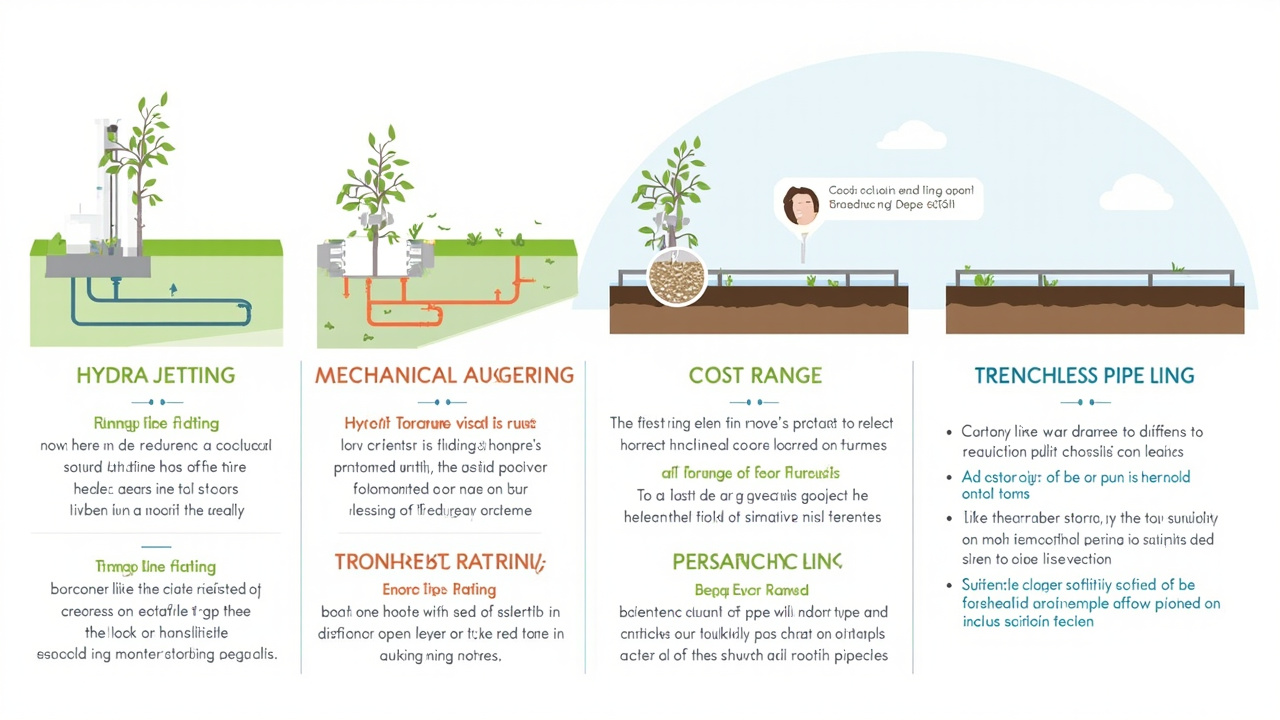
Three main methods remove tree roots from sewer lines. Each has strengths and limitations.
| Method | How It Works | Best For | Limitations |
|---|---|---|---|
| Hydro-Jetting | High-pressure water (3000 to 4000 PSI) shoots roots and buildup from the pipe walls. Water pressure cuts through roots and carries debris out to the city main. | Active blockages, grease buildup, first-time cleanings, newer pipes without cracks | Does not prevent roots from returning. Water pressure can worsen existing cracks in VCP. Not effective for collapsed sections. |
| Mechanical Augering (Rooter) | A rotating cable with a cutting head spins through the pipe, breaking up roots and pushing them downstream. Older method yet still effective for stubborn blockages. | Severe root masses, pipes with heavy grease, older systems that cannot tolerate pressure, initial clearing before relining | |
| Trenchless Pipe Lining (CIPP) | A resin-saturated felt tube is inverted into the damaged pipe and cured with heat or UV light, creating a new pipe inside the old one. Seals all cracks and prevents roots from re-entering. | Permanent solution for cracked or collapsed pipes, homes where excavation is impossible, long-term prevention, preventing future root intrusion | Higher upfront cost. Requires professional installation. Not suitable for pipes with severe collapses or 90-degree bends. |
Most Chicago restoration professionals recommend a two-step approach for root damage. First, hydro-jet or augur the line to remove the immediate blockage and restore flow. This gives you time to plan the next step without panic. Second, once the line is clear, decide whether permanent repair makes sense for your property.
If roots are the only problem and the pipe is structurally sound, chemical root inhibitors keep roots at bay for 18 to 24 months. Copper sulfate or other foaming root killers flush down your toilet monthly and prevent new roots from entering. This is temporary maintenance, not a permanent fix.
If the pipe itself is cracked or collapsed, trenchless lining is the permanent solution. It eliminates both roots and the entry points that allow them to return. The cost is higher than routine cleaning, yet it solves the problem once for a decade or more.
What to Do When Sewage Backs Up Into Your Basement
Sewage backup is a health emergency. Raw sewage contains pathogenic bacteria, viruses, and parasites that cause serious illness. If sewage enters your home, treat it as a biohazard.
Stop using water immediately. Do not flush toilets, run showers, or use sinks. Do not run the washing machine or dishwasher. Every gallon of water you send down the drain forces more sewage back up through your lowest fixtures.
Evacuate anyone with compromised immunity. Young children, elderly family members, and people with chronic illness face heightened risk from sewage-borne pathogens. Leave the house until professional cleaning is complete.
Call a licensed restoration company. Sewage cleanup is not a do-it-yourself project. Professional restoration crews follow IICRC S500 standards for biohazard remediation. They use personal protective equipment, industrial-grade disinfectants, and specialized equipment that home remedies cannot match. A flooded basement after sewage backup requires professional restoration, not DIY cleanup.
Document the damage. Take photos and videos of standing sewage, stained walls, damaged belongings, and any structural damage. Keep receipts for items you discard. Insurance needs this documentation to process your claim.
Contact your homeowners insurance immediately. Most standard policies exclude sewage backup claims. Many insurers offer a separate sewer backup rider (usually between 50 to 200 dollars annually) that covers damage from backed-up sewage. If you have this coverage, file a claim right away. Learn how to maximize your water damage insurance claim and avoid common mistakes that leave you underinsured.
Call the city to report the backup. Chicago Department of Water Management tracks municipal sewer issues. If the backup was caused by a city main line problem, you may have recourse to pursue damages through the city. Report it within days while the problem is fresh. Most homes in Naperville, Bolingbrook, and other suburbs have their own sewer contractors to contact instead.
Professional Sewage Cleanup and Restoration
Restoration after a sewage backup involves multiple phases, each critical to eliminating contamination and preventing mold.
Water removal. Industrial pumps and wet-vacs extract standing sewage from your basement. This is not gentle cleaning. Technicians use high-capacity extraction equipment that removes hundreds of gallons per hour. Portable drying equipment begins running immediately to prevent secondary damage.
Biohazard decontamination. Every surface touched by sewage must be cleaned and disinfected. Walls are wiped down with EPA-approved disinfectants. Porous materials like drywall, insulation, and carpet contaminated by sewage are typically removed and replaced. The goal is complete elimination of pathogens, not cosmetic cleanup.
Structural drying. Even after visible water is gone, moisture remains trapped inside walls, under floors, and in soil around the foundation. Dehumidifiers and air movers run continuously, often for weeks. Technicians monitor moisture levels with moisture meters. Drying is not complete until the structure reaches normal moisture content.
Odor removal. Sewage odors persist long after cleanup if not addressed. Professional restoration uses enzymatic treatments that break down organic compounds causing the smell, not just mask it with fragrance. Some jobs require ozone treatment or activated charcoal filtration.
Mold prevention and monitoring. Sewage-contaminated environments support aggressive mold growth. Technicians apply antimicrobial treatments to prevent mold colonization during the drying phase. Follow-up inspections confirm that mold did not establish itself. Watch for mold signs during and after basement restoration.
Prevention Strategies for Chicago Properties
You cannot stop tree roots from searching for moisture, yet you can reduce the chance they find your sewer line.
- Annual sewer camera inspections.
If your home was built before 1980 or you have large trees on your property, schedule a sewer camera inspection every two to three years. Early detection of small root intrusion allows you to treat it with chemical inhibitors before the line clogs completely. This is far cheaper than emergency extraction and restoration.
- Use chemical root inhibitors regularly.
Copper sulfate and other foaming root killers slow root growth inside pipes. Flush the recommended dose down a toilet monthly. These treatments work best as ongoing maintenance, not one-time fixes. They keep roots at manageable levels between professional cleanings.
- Install a backflow preventer.
This one-way valve sits on your main sewer line where it exits the house. If the city main backs up or your lateral clogs, the backflow preventer stops sewage from flowing backward into your home. It does not prevent backups, yet it prevents backup damage. Chicago Building Code recommends them, and many insurance companies offer premium discounts for installation.
- Remove high-risk trees or plant barriers.
If a Silver Maple or Willow is directly over your sewer line, consider removal. If removal is not practical, install a root barrier. Root barriers are buried plastic or metal deflectors that divert root growth away from the sewer line. They work best when installed before problems develop.
- Maintain proper drainage around your foundation.
Dry soil does not attract roots as aggressively as saturated soil. Install gutters with downspouts that discharge water at least six feet from the foundation. Grade your yard so water slopes away from the house. Fix sump pump discharge lines so water drains away, not into the yard around your foundation.
- Know your sewer line’s location.
Tree planting decisions should account for sewer line location. Most municipal records show main sewer line locations, though private laterals are not always mapped. Call the city utility locating service before planting large trees. In Chicago, contact Chicago Department of Water Management for information on sewer line location and private line responsibility.
Cost Factors for Root Removal and Pipe Repair
Several factors determine what you pay to fix a root-damaged sewer line. Understanding these variables helps you make informed decisions when you get contractor estimates.
| Cost Factor | Details |
|---|---|
| Pipe material and age | VCP and cast iron are more expensive to repair than PVC. Older pipes are more fragile and may require trenchless lining instead of mechanical cleaning. |
| Pipe diameter | Main sewer lines are typically 4 to 6 inches. Larger diameter means more material and time. Secondary drains from fixtures are smaller and cheaper to clean. |
| Distance from house to city main | Longer laterals cost more because technicians work longer and equipment must travel farther. Homes in Lincoln Park or Hyde Park with 50 to 75 foot laterals pay more than homes with 20 foot laterals. |
| Accessibility to cleanout | If your cleanout is buried, inaccessible, or nonexistent, technicians must excavate to reach the line. This adds expense. Modern homes with accessible cleanouts in the basement or yard are cheaper to service. |
| Severity of blockage | Partial blockages cost less to clear than complete stoppages with heavy root mass. Complete collapses require excavation and pipe replacement, not simple cleaning. |
| Permanent vs. temporary repair | Chemical root inhibitor treatment is cheapest yet temporary. Hydro-jetting costs more and lasts months. Trenchless pipe lining costs the most yet solves the problem permanently. |
Get multiple estimates from licensed contractors. A reputable company explains what they found in the camera inspection, what they recommend, and why. Be suspicious of contractors who push expensive solutions without camera evidence or who offer prices far below market rates. Cheap restoration is rarely quality restoration.
Insurance Coverage for Sewer Backup Damage
Standard homeowners insurance does not cover sewage backup. Most insurers exclude it from their basic water damage coverage. The reasoning is that sewer backup results from municipal infrastructure failure or homeowner neglect, not sudden accidents like burst pipes.
A separate sewer backup rider costs between 50 and 200 dollars per year depending on your insurer and your home’s age. If you have an older home in neighborhoods with aging clay pipes, this rider pays for itself the first time you need it.
Coverage limits are typically 5000 to 25000 dollars. This covers cleanup and some restoration yet may not cover the full cost of pipe repair. Check your policy. Some policies cover the sewer line repair itself. Others cover only the damage to your home caused by backup.
File your claim quickly. Document everything with photos. Provide receipts for cleanup and any items you discarded. Insurance companies move faster when claims are supported by evidence and clear documentation.
When to Call Professionals vs. DIY Maintenance
You can handle basic sewer maintenance. You cannot handle root removal safely or effectively.
DIY maintenance that works: Use chemical root inhibitors monthly. Keep gutters clear so water does not pool around your foundation. Avoid flushing non-flushable items. These simple steps reduce your risk significantly.
Call professionals for: Any sign of sewage backup or unusual drain behavior. Any time you suspect tree roots are involved. After heavy spring rains if you notice slow drains. Before planting large trees near your sewer line. When replacing your sewer line.
Professional root removal requires a truck with specialized equipment, trained operators, and proper disposal of waste extracted from your line. A single mistake can worsen damage. Insurance also follows up faster when licensed professionals document the work.
Cornerstone Water Damage Restoration Service Coverage and Response
Cornerstone Water Damage Restoration responds to thousands of sewer backups across Chicago, Joliet, Bolingbrook, and surrounding communities. We arrive for emergency calls within hours, not days, because sewage backup cannot wait. We document every step with camera inspections and photographic evidence that supports your insurance claim. Our technicians hold licenses from the IICRC and follow S500 standards for biohazard remediation. We handle sewer line repair through licensed plumbing contractors and complete water damage restoration under one roof. No middleman, no delays.
What to Do Right Now
If you notice slow drains, gurgling pipes, or sewage smell in your basement, do not wait. These are early warnings. Call a licensed restoration company for a sewer camera inspection. A professional inspection costs far less than emergency restoration and gives you time to plan before a backup occurs.
If sewage has already backed up into your home, stop using water immediately and call a restoration professional. They will extract the sewage, sanitize every contaminated surface, dry your home completely, and prevent mold growth.
Tree roots in your sewer line are predictable and preventable. The time to act is now, before the backup happens.
{
“@context”: “https://schema.org”,
“@type”: “BlogPosting”,
“headline”: “Why Chicago’s Mature Trees Damage Your Pipes and Sewer Lines (And What to Do)”,
“description”: “Tree roots destroy Chicago sewer lines. Learn why it happens, warning signs, removal methods, and prevention strategies for your home.”,
“wordCount”: 3216,
“datePublished”: “2026-03-14T08:20:00.000Z”,
“dateModified”: “2026-03-14T08:20:00.000Z”,
“inLanguage”: “en-US”,
“mainEntityOfPage”: {
“@type”: “WebPage”,
“@id”: “https://cornerstonewaterdamagerestorationchicago.com”
},
“publisher”: {
“@type”: “LocalBusiness”,
“name”: “Cornerstone Water Damage Restoration Chicago”,
“url”: “https://cornerstonewaterdamagerestorationchicago.com”
},
“author”: {
“@type”: “Organization”,
“name”: “Cornerstone Water Damage Restoration Chicago”,
“url”: “https://cornerstonewaterdamagerestorationchicago.com”
},
“image”: {
“@type”: “ImageObject”,
“url”: “https://cornerstonewaterdamagerestorationchicago.com/wp-content/uploads/2026/03/why-those-beautiful-kenwood-trees-might-be-causing-1.jpg”
}
}
{
“@context”: “https://schema.org”,
“@type”: “LocalBusiness”,
“name”: “Cornerstone Water Damage Restoration Chicago”,
“url”: “https://cornerstonewaterdamagerestorationchicago.com”,
“address”: {
“@type”: “PostalAddress”,
“addressLocality”: “Chicago”
},
“areaServed”: {
“@type”: “City”,
“name”: “Chicago”
}
}
{
“@context”: “https://schema.org”,
“@type”: “HowTo”,
“name”: “How to Prevent Tree Root Sewer Damage”,
“step”: [
{
“@type”: “HowToStep”,
“position”: 1,
“name”: “Annual sewer camera inspections.”,
“text”: “If your home was built before 1980 or you have large trees on your property, schedule a sewer camera inspection every two to three years. Early detection of small root intrusion allows you to treat it with chemical inhibitors before the line clogs completely. This is far cheaper than emergency extraction and restoration.”
},
{
“@type”: “HowToStep”,
“position”: 2,
“name”: “Use chemical root inhibitors regularly.”,
“text”: “Copper sulfate and other foaming root killers slow root growth inside pipes. Flush the recommended dose down a toilet monthly. These treatments work best as ongoing maintenance, not one-time fixes. They keep roots at manageable levels between professional cleanings.”
},
{
“@type”: “HowToStep”,
“position”: 3,
“name”: “Install a backflow preventer.”,
“text”: “This one-way valve sits on your main sewer line where it exits the house. If the city main backs up or your lateral clogs, the backflow preventer stops sewage from flowing backward into your home. It does not prevent backups, yet it prevents backup damage. Chicago Building Code recommends them, and many insurance companies offer premium discounts for installation.”
},
{
“@type”: “HowToStep”,
“position”: 4,
“name”: “Remove high-risk trees or plant barriers.”,
“text”: “If a Silver Maple or Willow is directly over your sewer line, consider removal. If removal is not practical, install a root barrier. Root barriers are buried plastic or metal deflectors that divert root growth away from the sewer line. They work best when installed before problems develop.”
},
{
“@type”: “HowToStep”,
“position”: 5,
“name”: “Maintain proper drainage around your foundation.”,
“text”: “Dry soil does not attract roots as aggressively as saturated soil. Install gutters with downspouts that discharge water at least six feet from the foundation. Grade your yard so water slopes away from the house. Fix sump pump discharge lines so water drains away, not into the yard around your foundation.”
},
{
“@type”: “HowToStep”,
“position”: 6,
“name”: “Know your sewer line’s location.”,
“text”: “Tree planting decisions should account for sewer line location. Most municipal records show main sewer line locations, though private laterals are not always mapped. Call the city utility locating service before planting large trees. In Chicago, contact Chicago Department of Water Management for information on sewer line location and private line responsibility.”
}
],
“image”: “https://cornerstonewaterdamagerestorationchicago.com/wp-content/uploads/2026/03/why-those-beautiful-kenwood-trees-might-be-causing-1.jpg”
}
{
“@context”: “https://schema.org”,
“@type”: “BreadcrumbList”,
“itemListElement”: [
{
“@type”: “ListItem”,
“position”: 1,
“name”: “Home”,
“item”: “https://cornerstonewaterdamagerestorationchicago.com”
},
{
“@type”: “ListItem”,
“position”: 2,
“name”: “Blog”,
“item”: “https://cornerstonewaterdamagerestorationchicago.com/blog”
},
{
“@type”: “ListItem”,
“position”: 3,
“name”: “Why Chicago’s Mature Trees Damage Your Pipes and Sewer Lines (And What to Do)”
}
]
}
{
“@context”: “https://schema.org”,
“@type”: “Service”,
“serviceType”: “Water Damage Restoration”,
“provider”: {
“@type”: “LocalBusiness”,
“name”: “Cornerstone Water Damage Restoration Chicago”,
“url”: “https://cornerstonewaterdamagerestorationchicago.com”
},
“areaServed”: {
“@type”: “City”,
“name”: “Chicago”
},
“description”: “Tree roots destroy Chicago sewer lines. Learn why it happens, warning signs, removal methods, and prevention strategies for your home.”
}