
Why Vintage Brick Walls in Your Woodlawn Greystone Trap Moisture
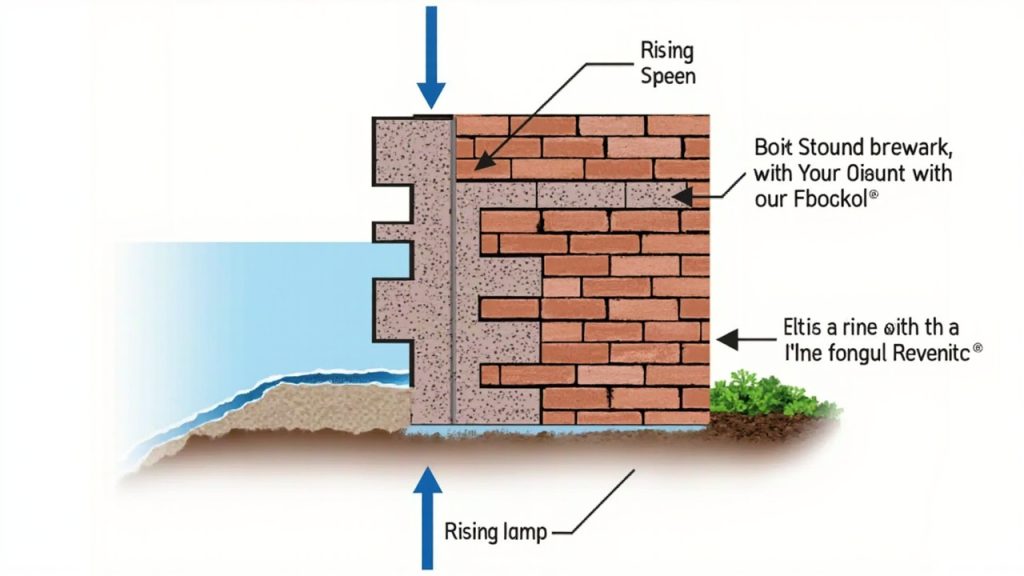
Your Woodlawn greystone sits on land that once formed the shoreline of Lake Michigan. That proximity to water, combined with Chicago’s freeze-thaw cycles and the specific properties of Chicago Common Brick, creates a perfect storm for moisture infiltration. The brick walls that give your home its character are also its greatest vulnerability.
Moisture trapped behind brick facades causes structural failure, mold growth, and the loss of basement living space. Most homeowners don’t realize the problem exists until efflorescence appears on interior walls or a musty smell signals active mold growth in the wall cavity.
Professional restoration costs between $3,000 and $12,000 for a typical basement, depending on moisture extent and whether structural repairs are needed. The investment protects your property value, prevents mold-related health risks, and extends the life of your masonry by decades. Waiting to address moisture problems guarantees far higher costs. This guide explains what happens inside your brick walls, how to spot the early warning signs, and why professional restoration differs from DIY drying attempts.
The Unique Challenge of Chicago Common Brick
Chicago Common Brick dominates the greystone architecture found in Woodlawn, Lincoln Park, Rogers Park, and Lakeview. This soft brick was manufactured in local kilns and used for load-bearing walls from the 1880s through the 1920s.
Chicago Common Brick has significantly higher porosity than modern face brick. Water absorption rates reach 15 to 20 percent by weight. The brick itself acts like a sponge. A single brick can hold multiple ounces of water. When 10,000 bricks comprise your external wall, you’re dealing with hundreds of gallons of trapped moisture.
The mortar joints between these bricks are equally porous. Lime-based mortar used during construction allows water to migrate through easily. Modern Portland cement mortar is harder and less permeable. It also prevents the wall from breathing and creates a barrier that traps moisture behind the brick surface.
Why Chicago’s Climate Accelerates Moisture Damage
Chicago’s weather patterns create ideal conditions for moisture problems in masonry. The city experiences extreme temperature swings, high summer humidity near Lake Michigan, and intense freeze-thaw cycles during winter months.
When outdoor temperatures drop below freezing, water inside the brick expands by 9 percent. This pressure forces the brick apart from the inside. The outer face of the brick flakes away. Small cavities form and allow more water to penetrate deeper into the wall.
Spring rains and heavy summer thunderstorms add water faster than the brick can dry. High humidity during summer months slows evaporation dramatically. A wall that stays damp from April through September never fully dries before the next freeze cycle begins in October.
The Illinois State Geological Survey documents that Chicago Blue Clay underlies most residential neighborhoods. This clay has low permeability. Water cannot drain downward efficiently. Hydrostatic pressure builds against foundation walls and migrates upward into basement masonry.
Understanding Rising Damp Versus Lateral Water Penetration
Two distinct mechanisms move water into your brick walls. Understanding the difference matters because the restoration approach differs for each.
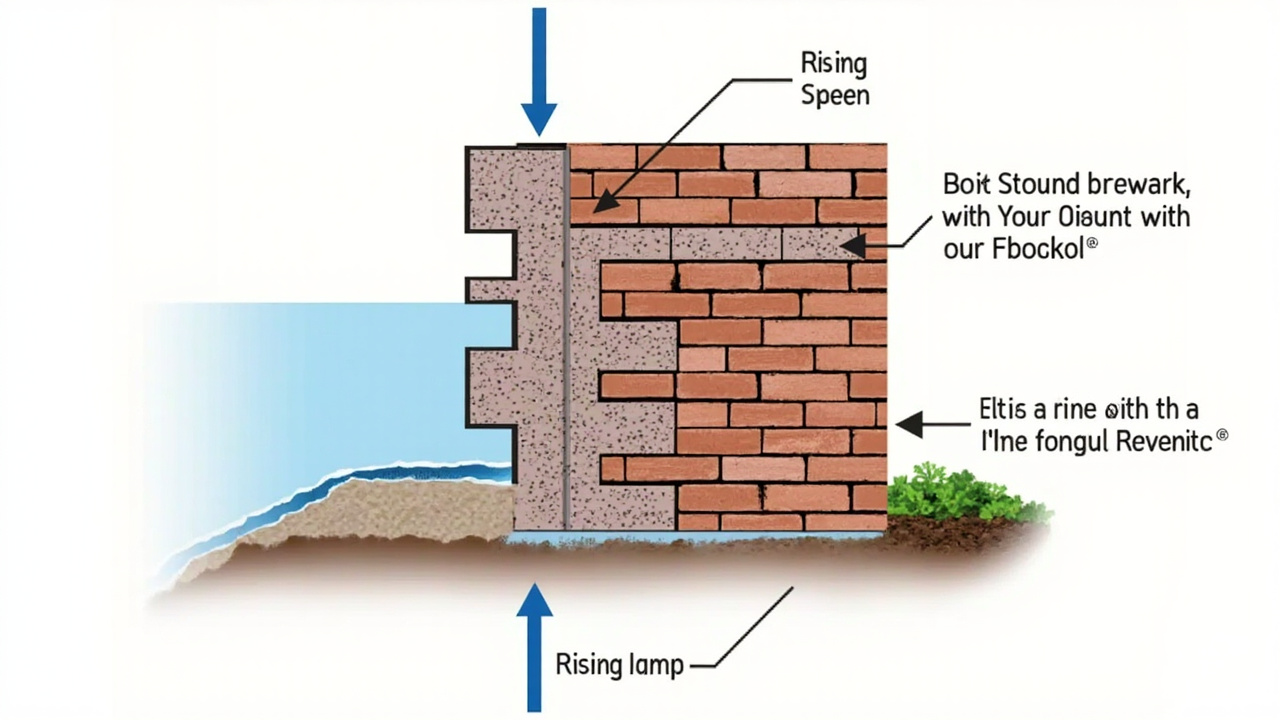
Rising damp occurs when water moves vertically upward from the soil through capillary action. Imagine a paper towel touching water. The water climbs the towel fibers against gravity. The same process happens in masonry. Water molecules bond to the brick and mortar. They pull more water up through the wall.
In Woodlawn and similar neighborhoods where water tables sit high, rising damp can penetrate 3 to 6 feet above grade. This explains why basements in older Chicago homes develop damp patches consistently at the same height each year.
Lateral water penetration occurs when rain or groundwater pushes horizontally into brick from the outside. Wind-driven rain strikes the face of the wall. Hydrostatic pressure from saturated soil pushes water through the brick facade. Both mechanisms work simultaneously in Chicago basements.
Rising damp creates slow, chronic dampness. Lateral penetration can cause rapid water entry during heavy rains or when gutters fail. A properly functioning drainage plane and weep holes should prevent lateral water from reaching interior surfaces. In greystones from the 1880s through 1920s, these protection systems either don’t exist or have failed.
Identifying Efflorescence, Spalling, and Salt Damp
Your brick walls communicate their moisture problems through visible symptoms. Learning to read these signs determines whether you need routine maintenance or emergency structural intervention.
Efflorescence appears as white, chalky deposits on brick surfaces. These salts migrate outward as water evaporates. While efflorescence looks unsightly, it indicates that water is moving through the brick and exiting on the outer face. This is preferable to the alternative.
When water cannot exit the outer face, it backs up into the wall cavity and into your interior basement spaces. Efflorescence disappears and the wall stays perpetually damp. Mold begins growing inside the wall where you cannot see it.
Spalling occurs when freeze-thaw cycles break the brick surface into fragments. Look for small flakes or chunks missing from the brick face. Spalling always indicates water saturation inside the brick. The damage accelerates with each freeze cycle.
Salt damp is more subtle but more dangerous. Salts in the brick and mortar absorb moisture from the air even when liquid water isn’t present. These salts keep the masonry damp and promote mold growth. Salt damp is common in Chicago basements after years of rising damp issues.
What Thermal Imaging Reveals About Hidden Moisture
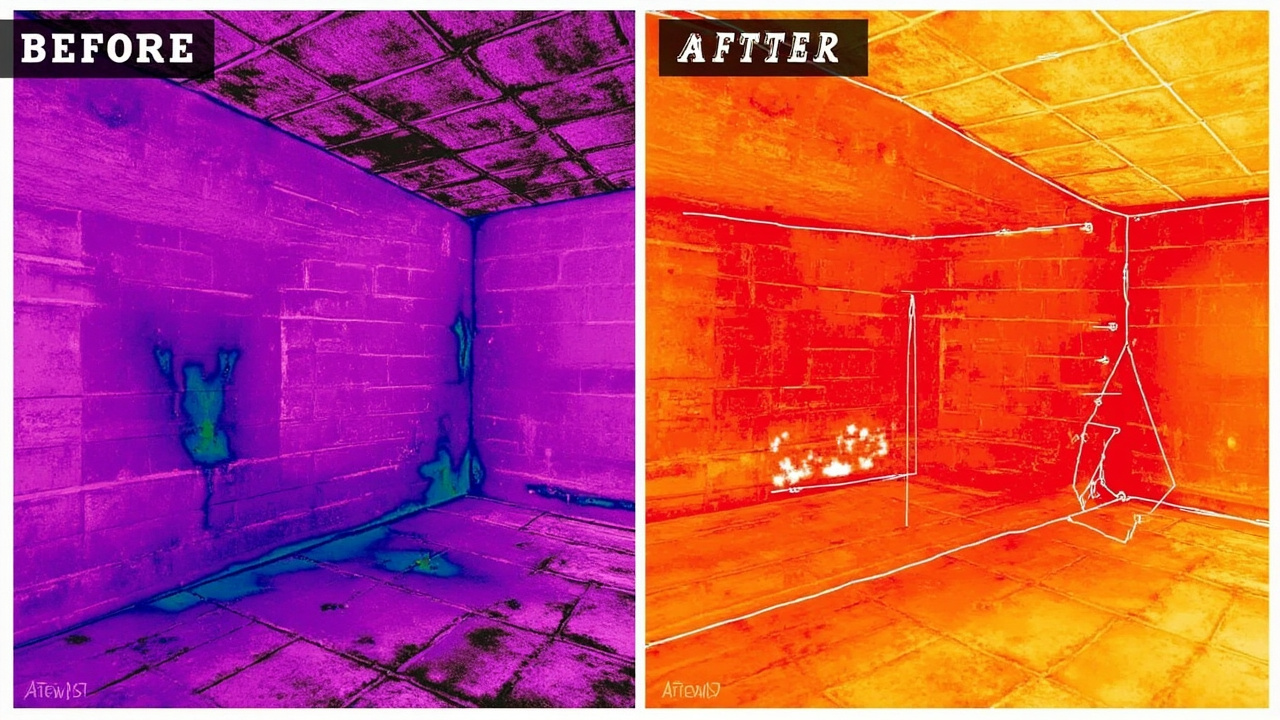
Professional restoration technicians use thermal imaging cameras to map moisture inside walls without invasive testing. The camera detects temperature differences caused by evaporating water.
Wet masonry stays cooler than dry masonry because water evaporation pulls heat from the surface. A thermal imaging scan shows moist areas as darker patches. Technicians photograph the entire wall system and create moisture maps that identify exactly where water is hiding.
In greystones with cavity wall construction, thermal imaging often reveals moisture in the air space between the exterior brick and interior masonry or plaster. This cavity space can hold significant water. The brick outer wythe stays saturated while the inner surface appears dry until the water finally breaks through.
Traditional moisture meters measure moisture content in the first inch of material. Thermal imaging shows moisture patterns deeper in the wall. This is critical for greystones in areas like Beverly, Hyde Park, and Cicero where wall thickness reaches 16 to 24 inches.
How Professional Restoration Differs From Standard Drying
Most property owners assume that running fans and opening windows will dry wet brick walls. This approach fails because brick walls don’t behave like drywall or wood framing.
Brick dries slowly. Water molecules bond tightly to the mineral structure. Standard air movement doesn’t provide enough drying capacity. More critically, opening windows in humid Chicago summers introduces moisture-laden air to the drying process. The wall actually absorbs more moisture than it releases.
Professional restoration uses Low Grain Refrigerant (LGR) dehumidifiers designed for masonry drying. These units remove moisture from the air more aggressively than standard portable dehumidifiers. They function effectively in cold basements and humid outdoor conditions where traditional equipment fails.
The restoration process follows IICRC S500 standards established by the Institute of Inspection Cleaning and Restoration Certification. This protocol includes documentation of moisture levels before and after treatment, monitoring of structural drying progress, and verification that moisture content drops below acceptable thresholds.
| Drying Method | Moisture Removal Rate | Cost Range | Duration for Brick |
|---|---|---|---|
| Standard Fans and Open Windows | Minimal in Chicago humidity | Low upfront cost | Months or never |
| Portable Dehumidifier | Moderate | Moderate rental cost | Weeks to months |
| LGR Dehumidification System | High extraction capacity | Professional service cost | 7 to 21 days depending on saturation |
| Desiccant Dehumidification | Very high in cold conditions | Professional service cost | 5 to 14 days in winter months |
Desiccant dehumidifiers use moisture-absorbing materials to extract water from air. They work better than LGR units in cold basements because they don’t rely on refrigeration cycles. During Chicago’s winter months, desiccant systems often dry brick walls faster than any other method.
Regional Soil Differences Across Chicago Neighborhoods
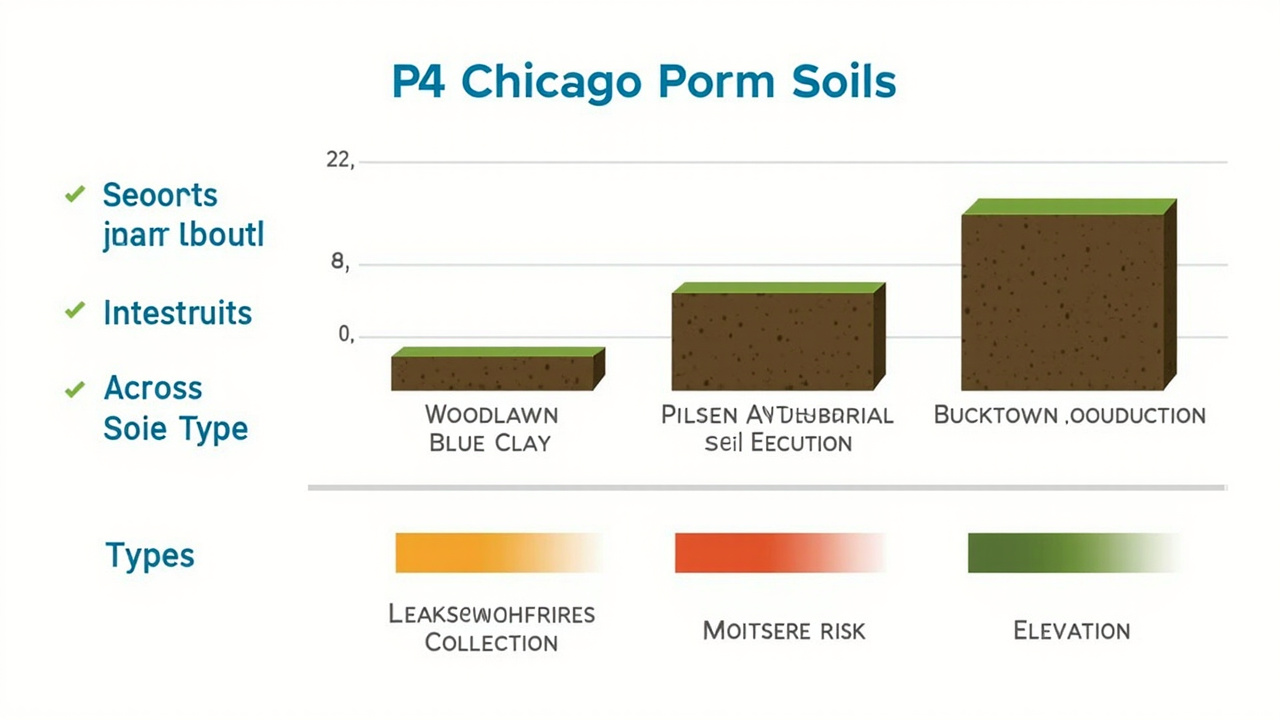
Water damage patterns vary significantly depending on where your greystone sits within the greater Chicago area. Lake-adjacent neighborhoods like Lakeview and Lincoln Park have different soil composition and drainage challenges than inland areas.
Neighborhoods bordering Lake Michigan experience fine sand and clay layer combinations that drain differently than the deep Chicago Blue Clay found further inland. The lake creates a groundwater gradient that pushes water inland and upward. Lakeview and Lincoln Park properties often experience lateral water penetration during storm surge events because the lake elevation rises during heavy rains. Restoration approaches in these neighborhoods frequently require interior moisture barriers and supplemental sump systems because external drainage solutions prove insufficient.
Inland neighborhoods like Beverly, Southwest Chicago, and areas near the Chicago Ridge sit on prairie clay with seasonal water table fluctuations. These areas experience rising damp primarily during spring thaw and after prolonged rainfall. The soil composition allows better drainage than near-lake areas. The higher elevation means water takes different paths into basements. Restoration contractors in Beverly and Southwest neighborhoods often prioritize exterior drainage improvement over interior systems because the water source operates differently than in Lakeview.
Neighborhoods like Pilsen, Bucktown, and Noble Square feature varied soil profiles shaped by industrial history and proximity to the Chicago and Des Plaines Rivers. Pilsen sits in a lower elevation zone with higher water tables year-round. The soil contains mixed fill materials and clay layers that create unpredictable drainage patterns. Bucktown and Noble Square sit on the Chicago Ridge. They experience better natural drainage than Pilsen, yet both areas contain greystones and vintage brick buildings vulnerable to moisture infiltration during heavy rains. Restoration specialists in these neighborhoods must account for combined sewer systems that can back up during storm events, creating rapid lateral water penetration through basement walls.
Understanding your neighborhood’s soil composition helps you anticipate restoration costs and prevention strategies. A contractor experienced in your specific area knows whether external waterproofing will solve your problem or whether you need supplemental interior drying systems. This regional knowledge prevents expensive trial-and-error approaches and guides you toward the most effective solutions for your property’s location.
The Restoration Protocol for Masonry Drying
Professional water damage restoration specialists follow a structured approach to moisture control in brick masonry.
- Initial Moisture Assessment
Technicians measure moisture content at multiple depths using non-invasive moisture meters and thermal imaging. They document baseline conditions photographically. This establishes the scope of the problem and prevents disputes about pre-existing conditions later.
- Source Identification and Temporary Mitigation
The team locates the source of water entry. Is groundwater pushing through from outside? Is rain penetrating failed mortar? Are weep holes blocked? Temporary measures stop active water entry. They seal exterior cracks with temporary caulk or clear blocked weep holes.
- Dehumidification Equipment Placement
LGR or desiccant units are positioned to maximize air circulation through the affected space. In basement applications, multiple units often run simultaneously to accelerate drying. Technicians monitor humidity levels continuously and adjust equipment as drying progresses.
- Continuous Monitoring
Daily moisture readings track progress. The masonry dries when moisture content stabilizes at acceptable levels. For brick, this typically means 15 percent moisture content by weight or lower.
- Structural Assessment and Repair Planning
Once the wall is dry, technicians evaluate structural damage. Spalled brick needs replacement. Failed mortar joints require tuckpointing. Water damage to interior finishes needs documentation for insurance purposes.
- Permanent Water Protection Installation
After repairs are complete, the exterior wall receives protective treatment. Siloxane or silane sealers penetrate the brick surface. They reduce water absorption while allowing vapor transmission. This prevents future moisture problems without trapping water inside the wall.
Evaluating Restoration Company Capabilities and Assessment Process
Not all water damage restoration companies understand masonry restoration. Many specialize in water-damaged drywall and personal property recovery. When you contact a restoration company, you need to assess whether their team has specific experience with brick wall moisture problems and Chicago’s unique masonry challenges.
Ask potential contractors these specific questions during your initial consultation. First, ask whether they hold IICRC S500 certification for structural drying. This certification ensures they follow industry standards for moisture assessment and drying protocols. Second, ask how many brick masonry restoration projects they completed in the past two years. Experience matters because brick restoration differs significantly from water damage to wood and drywall construction. Third, inquire about their thermal imaging capabilities. Any company claiming to assess moisture in brick walls should own professional thermal imaging equipment, not borrow or outsource this critical diagnostic tool.
The assessment process should take 2 to 4 hours for a typical basement. The contractor brings moisture meters, thermal imaging equipment, and documentation materials. They measure moisture at multiple depths and locations. They take thermal images of all affected walls and photograph visible damage. A thorough assessment produces a written report with moisture maps, damage photos, and specific recommendations. Any company offering a 15-minute assessment and immediate price quote is cutting corners. Quality assessment requires time and professional equipment.
Professional contractors also discuss the source of your moisture problem explicitly. They should explain whether you’re dealing with rising damp, lateral penetration, or combination problems. They should clarify whether your water source originates outside the foundation or from groundwater within the soil. This diagnosis determines whether external waterproofing, interior moisture barriers, or drainage system improvements will prevent future problems. A good contractor prevents you from making expensive mistakes by sealing exterior brick that’s trapping water or installing interior moisture barriers that accelerate damage to the masonry itself.
Tuckpointing and Masonry Sealing for Long-Term Protection
Once moisture is removed and structural damage is repaired, attention turns to preventing future problems. Tuckpointing is the process of removing deteriorated mortar from joints and replacing it with new mortar that matches the original.
Old lime mortar in greystones is softer than modern Portland cement. It absorbs water readily. Tuckpointing with historically appropriate lime mortar restores the wall’s integrity while allowing the wall to breathe. This is critical in Chicago neighborhood historic districts like Lincoln Park and West Loop where period-appropriate restoration is required.
After tuckpointing, masonry sealers provide an additional moisture barrier. Siloxane sealers penetrate the brick surface and reduce water absorption by 70 to 80 percent. They don’t create a topical film that traps moisture. Water vapor can still escape from inside the wall. This prevents future moisture accumulation.
Silane sealers offer different performance characteristics than siloxane. Silane penetrates deeper but provides shorter protection windows. Siloxane products last longer and work better for greystones that face Lake Michigan winds and moisture in areas like Lakeview and Rogers Park.
Drainage and Weep Hole Maintenance
Weep holes are small openings in the mortar joints of the exterior brick wall, typically at the base near grade level. These holes let water that enters the outer brick wythe drain out before it reaches interior surfaces.
Many Chicago greystones never had weep holes installed. Others have holes that are now blocked by paint, debris, or mortar buildup. Clearing blocked weep holes and installing new ones in proper locations dramatically reduces moisture damage.
Weep holes must sit positioned below interior grade level so that water exits the wall below the grade line. If weep holes sit too high, they become visible entry points for insects and create aesthetic concerns.
Behind the brick exterior, a drainage plane should exist to direct water downward toward the weep holes. In older greystones, this plane is often missing. New construction now includes plastic or rigid foam drainage boards. Retrofit installation of drainage planes is possible but expensive because it requires opening the brick cavity.
Why DIY Approaches Fail and When Professional Intervention Becomes Urgent
Homeowners often attempt moisture control solutions before calling a professional. These attempts sometimes cause more damage than the original moisture problem.
Applying waterproof coatings to interior basement walls traps moisture inside the masonry. The coating blocks evaporation from the interior surface. Water backs up into the wall. Mold grows inside the wall cavity where fungicide treatments cannot reach. Within months, the wall fails structurally.
Sealing exterior brick without first removing moisture is equally problematic. The sealant traps water already inside the wall. Subsequent freeze-thaw cycles cause accelerated spalling because the water has nowhere to escape.
Professional intervention becomes urgent when you observe the following conditions.
- Water actively entering the basement during or immediately after heavy rainfall
- Visible spalling affecting more than 5 to 10 percent of the brick face
- Musty odors in the basement indicating active mold growth
- Efflorescence combined with interior dampness suggesting backing up of moisture
- Structural cracks forming in the brick or foundation wall
- Visible mold growth on interior surfaces or in wall cavities
In areas like Joliet, Bolingbrook, and Springfield where greystones and similar vintage construction are common, spring rains frequently overwhelm aging masonry. The Chicago Building Code requires that water management systems protect structural integrity. Failure to address moisture damage can violate building codes and create liability if the property is sold.
The Cost of Ignoring Moisture Problems
Moisture damage compounds over time. A small damp spot in your basement this year becomes a large mold colony next year. Spalling brick that you overlook this season causes interior plaster failure in two years.
Mold hidden inside brick walls becomes dangerous to occupant health. Certain mold species trigger respiratory problems, particularly in children and older adults. Removing hidden mold requires opening walls and replacing damaged sections. This cost far exceeds professional drying and restoration performed early.
Property value suffers dramatically when moisture damage goes unaddressed. Buyers in areas like Evanston, Oak Park, and Arlington Heights conduct professional home inspections that reveal hidden moisture problems. Undisclosed water damage reduces sale price by 10 to 20 percent.
Insurance claims become complicated when homeowners wait to address damage. Documentation must show that the property owner acted promptly to mitigate damage. Delays in restoration suggest negligence and can result in claim denial.
When to Call a Professional Water Damage Restoration Company
Moisture problems in Chicago greystones require assessment by professionals trained in masonry restoration and water damage protocols. Professional water damage restoration teams operate 24/7 to respond to emergency flooding. They also serve homeowners managing chronic moisture issues.
A qualified restoration company assesses the scope of moisture damage, identifies root causes, and recommends solutions specific to your home’s age and construction type. Teams certified in IICRC protocols document all findings and work with insurance adjusters to expedite claims.
For residents in Woodlawn, Lincoln Park, and similar neighborhoods with high concentrations of vintage brick construction, professional assessment should occur if you notice any of these conditions. Rapid response to basement flooding prevents structural damage and mold growth.
Restoration specialists also provide guidance on permanent solutions. Should you seal the exterior brick? Install interior moisture barriers? Improve exterior drainage? These decisions depend on your specific moisture source and construction details. Professional consultation clarifies the most cost-effective approach for your situation.
For greystones in areas like West Loop and Cicero where combined sewer systems create additional flooding risks during heavy rains, understanding your neighborhood’s sewage infrastructure helps prevent catastrophic backups.
Moisture Problems in Specific Chicago Neighborhoods
Water damage patterns vary across Chicago due to differences in soil composition, proximity to Lake Michigan, and the age and quality of building construction.
| Neighborhood | Primary Water Challenges | Soil and Drainage Factors | Typical Building Age |
|---|---|---|---|
| Woodlawn and Hyde Park | High water table near lake. Rising damp. Lateral penetration during storm surge. | Chicago Blue Clay with poor drainage. High groundwater. | 1880s to 1920s greystones and brownstones |
| Lincoln Park and Lakeview | Lake Effect moisture. High humidity. Aging combined sewer overflow during rain. | Fine sand and clay layers. Proximity to lake affects drainage. | 1870s to 1910s historic properties |
| West Loop and Pilsen | Combined sewer flooding. Lateral water penetration. High groundwater zones. | Industrial area legacy with variable fill and clay. | 1880s to 1930s commercial and residential |
| Rogers Park and Uptown | Storm drain overflow. Rising damp. Wind-driven rain off Lake Michigan. | Mixed soil types. Proximity to lake increases moisture. | 1900s to 1920s vintage construction |
| Bucktown and Noble Square | Storm drain capacity issues. Rising damp in lower elevation zones. Aging infrastructure. | Chicago Ridge elevation with variable soil. Some areas have clay lenses. | 1890s to 1920s vintage brick construction |
| Beverly and Southwest neighborhoods | Aging infrastructure. Standard storm drain systems with limited capacity. | Prairie clay with seasonal water table fluctuations. | 1920s to 1940s bungalows and small homes |
| Suburbs like Evanston and Oak Park | Similar moisture challenges as Chicago proper. Smaller storm drain capacity in many areas. | Varies. Some areas have high water tables. Others drain well. | 1900s to 1940s vintage homes predominate |
Homeowners in these neighborhoods face similar moisture challenges stemming from Chicago’s climate and the prevalence of vintage brick construction. The solutions discussed in this guide apply broadly across the greater Chicago metropolitan area including Joliet, Bolingbrook, Naperville, Aurora, Des Plaines, and Springfield.
Your Next Steps
If you own a greystone or vintage brick home in Chicago and suspect moisture problems, start by documenting what you observe. Take photos of any visible efflorescence, spalling, or damp spots. Note when moisture appears (after rain, during certain seasons, consistently year-round). Record any musty smells or indoor air quality changes.
Inspect basement spaces and interior masonry carefully. Look for water stains on wood framing, efflorescence on brick walls, or active moisture on concrete floors. These observations inform a professional assessment.
Contact a water damage restoration company certified in IICRC S500 protocols to arrange a moisture assessment. A qualified technician brings thermal imaging equipment and moisture meters to your home. They evaluate the extent of moisture infiltration and recommend specific restoration and prevention measures.
Professional restoration addresses both the immediate moisture problem and the underlying cause. This prevents recurring damage, protects your property value, and safeguards the health of your family.
Your brick walls tell the story of Chicago’s construction history. With proper moisture management, they can protect your home for another century. Ignoring moisture problems allows that protective layer to fail. Start your assessment today to prevent expensive structural damage tomorrow.
{
“@context”: “https://schema.org”,
“@type”: “BlogPosting”,
“headline”: “Why Vintage Brick Walls in Your Woodlawn Greystone Trap Moisture”,
“description”: “Learn why Chicago greystones develop moisture problems and how professional restoration prevents costly structural damage.”,
“wordCount”: 3634,
“datePublished”: “2026-03-05T13:04:00.000Z”,
“dateModified”: “2026-03-05T13:04:00.000Z”,
“inLanguage”: “en-US”,
“mainEntityOfPage”: {
“@type”: “WebPage”,
“@id”: “https://cornerstonewaterdamagerestorationchicago.com”
},
“publisher”: {
“@type”: “LocalBusiness”,
“name”: “Cornerstone Water Damage Restoration Chicago”,
“url”: “https://cornerstonewaterdamagerestorationchicago.com”
},
“author”: {
“@type”: “Organization”,
“name”: “Cornerstone Water Damage Restoration Chicago”,
“url”: “https://cornerstonewaterdamagerestorationchicago.com”
},
“image”: {
“@type”: “ImageObject”,
“url”: “https://cornerstonewaterdamagerestorationchicago.com/wp-content/uploads/2026/03/why-those-vintage-brick-walls-in-your-woodlawn-gre-1.jpg”
}
}
{
“@context”: “https://schema.org”,
“@type”: “LocalBusiness”,
“name”: “Cornerstone Water Damage Restoration Chicago”,
“url”: “https://cornerstonewaterdamagerestorationchicago.com”,
“address”: {
“@type”: “PostalAddress”,
“addressLocality”: “Chicago”
},
“areaServed”: {
“@type”: “City”,
“name”: “Chicago”
}
}
{
“@context”: “https://schema.org”,
“@type”: “HowTo”,
“name”: “How to Professionally Restore Moisture-Damaged Brick Walls”,
“step”: [
{
“@type”: “HowToStep”,
“position”: 1,
“name”: “Initial Moisture Assessment”,
“text”: “Technicians measure moisture content at multiple depths using non-invasive moisture meters and thermal imaging. They document baseline conditions photographically. This establishes the scope of the problem and prevents disputes about pre-existing conditions later.”
},
{
“@type”: “HowToStep”,
“position”: 2,
“name”: “Source Identification and Temporary Mitigation”,
“text”: “The team locates the source of water entry. Is groundwater pushing through from outside? Is rain penetrating failed mortar? Are weep holes blocked? Temporary measures stop active water entry. They seal exterior cracks with temporary caulk or clear blocked weep holes.”
},
{
“@type”: “HowToStep”,
“position”: 3,
“name”: “Dehumidification Equipment Placement”,
“text”: “LGR or desiccant units are positioned to maximize air circulation through the affected space. In basement applications, multiple units often run simultaneously to accelerate drying. Technicians monitor humidity levels continuously and adjust equipment as drying progresses.”
},
{
“@type”: “HowToStep”,
“position”: 4,
“name”: “Continuous Monitoring”,
“text”: “Daily moisture readings track progress. The masonry dries when moisture content stabilizes at acceptable levels. For brick, this typically means 15 percent moisture content by weight or lower.”
},
{
“@type”: “HowToStep”,
“position”: 5,
“name”: “Structural Assessment and Repair Planning”,
“text”: “Once the wall is dry, technicians evaluate structural damage. Spalled brick needs replacement. Failed mortar joints require tuckpointing. Water damage to interior finishes needs documentation for insurance purposes.”
},
{
“@type”: “HowToStep”,
“position”: 6,
“name”: “Permanent Water Protection Installation”,
“text”: “After repairs are complete, the exterior wall receives protective treatment. Siloxane or silane sealers penetrate the brick surface. They reduce water absorption while allowing vapor transmission. This prevents future moisture problems without trapping water inside the wall.”
}
],
“image”: “https://cornerstonewaterdamagerestorationchicago.com/wp-content/uploads/2026/03/why-those-vintage-brick-walls-in-your-woodlawn-gre-1.jpg”
}
{
“@context”: “https://schema.org”,
“@type”: “BreadcrumbList”,
“itemListElement”: [
{
“@type”: “ListItem”,
“position”: 1,
“name”: “Home”,
“item”: “https://cornerstonewaterdamagerestorationchicago.com”
},
{
“@type”: “ListItem”,
“position”: 2,
“name”: “Blog”,
“item”: “https://cornerstonewaterdamagerestorationchicago.com/blog”
},
{
“@type”: “ListItem”,
“position”: 3,
“name”: “Why Vintage Brick Walls in Your Woodlawn Greystone Trap Moisture”
}
]
}
{
“@context”: “https://schema.org”,
“@type”: “Service”,
“serviceType”: “Water Damage Restoration”,
“provider”: {
“@type”: “LocalBusiness”,
“name”: “Cornerstone Water Damage Restoration Chicago”,
“url”: “https://cornerstonewaterdamagerestorationchicago.com”
},
“areaServed”: {
“@type”: “City”,
“name”: “Chicago”
},
“description”: “Learn why Chicago greystones develop moisture problems and how professional restoration prevents costly structural damage.”
}