
Should You Dry Your Own Basement After a Flood in Avondale? When Professional Help Is Non-Negotiable
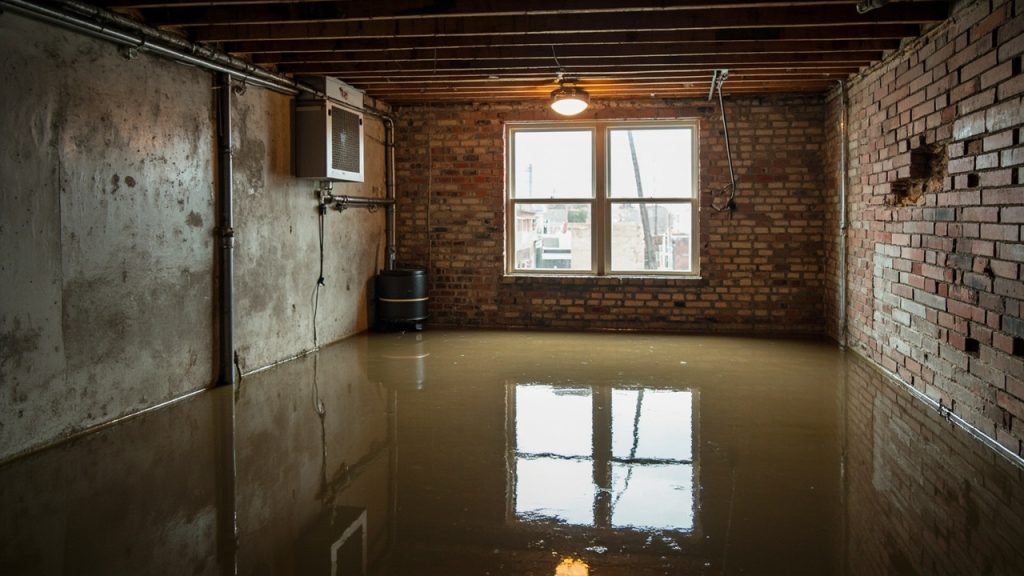
Your basement is flooded. Water covers the floor. Most homeowners underestimate the complexity of drying a flooded basement, and this underestimation costs thousands in hidden damage and health risks.
Avondale homeowners face specific basement flooding risks due to the neighborhood’s aging combined sewer infrastructure, proximity to ravines, and high water table in the area near the North Shore Channel. The brick bungalows and courtyard apartment buildings typical of Avondale were built with basement designs that absorb water from multiple sources during heavy rain events and spring snowmelt.
After 15 years of restoring water-damaged properties across Chicago from Lincoln Park to Bolingbrook, this simple truth emerges. Most homeowners confuse water removal with water drying. The difference between a DIY approach and professional restoration often determines whether your home recovers fully or develops mold, structural rot, and insurance claim denials.
This guide walks you through the decision-making process. You will learn when small-scale water damage is manageable and when you must call a professional.
The Golden Rule for DIY Drying
DIY drying works in narrow circumstances. You can handle the situation yourself if all of these conditions are true.
- The water damage affects less than 10 square feet of your basement
- The water source is clean (Category 1 water from a burst indoor pipe or roof leak)
- The water arrived less than 24 hours ago
- No electrical outlets, panels, or water heaters sit in the affected area
- You have access to industrial-grade equipment or can rent it immediately
- Your homeowner’s insurance policy does not require professional mitigation for claim approval
If you meet all these criteria, you might manage the initial water removal yourself. Understand this important distinction: removal and drying are not the same thing. Removing visible water is the first 10 percent of the job.
Water Classifications Matter More Than You Think
The IICRC S500 Standards form the restoration industry’s baseline and classify water damage into three categories. Your water type determines whether DIY is even a consideration.
Category 1 water originates from clean sources. A burst supply line or roof leak produces Category 1 water. This water poses minimal health risk in the first 24 to 48 hours. Drying it demands speed and proper equipment, but the health hazard remains low.
Category 2 water is called grey water and contains contaminants. Washing machine discharge, toilet overflow when the bowl contains only urine, or sump pump backup produces grey water. This water harbors bacteria. You should not handle it without protective equipment.
Category 3 water is sewage. It includes toilet overflow with fecal matter, backups from municipal sewers, or groundwater containing human waste. Category 3 water is biohazardous and you do not handle this yourself under any circumstances.
Many homeowners misidentify their water type. You might think your basement flooded with clean water when in fact it contains grey or black water from a sewer backup. Chicago’s combined sewer system increases this risk significantly, especially in older neighborhoods. Rogers Park and West Loop still have combined sewers that merge storm and sanitary drainage into single pipes. Logan Square experiences frequent backups during heavy rainfall due to its position in the middle Maumee drainage basin. Avondale’s area near the North Shore Channel has experienced multiple combined sewer overflow events in recent years, sending contaminated water into basements throughout the neighborhood’s vintage building stock. Andersonville faces similar risks due to aging municipal infrastructure.
The Danger Zones for Professional Help
Call a professional immediately if any of the following apply.
Sewer backup or grey water exposure. Your basement flooded through a floor drain, toilet, or sump pump discharge. The water contains pathogens that cause serious illness. Cleanup requires hazmat protocols.
Electrical hazards present. The water is within 6 feet of a panel, breaker box, or live outlets. Water and electricity kill. Even if the breaker is shut off, hidden moisture can cause fires days or weeks later. Chicago’s older homes, particularly the Chicago Bungalows found throughout Avondale near Kimball Avenue and Wrightwood Avenue, Lincoln Square near Western Avenue and Leland Avenue, and Rogers Park near Clark Street and Morse Avenue, often have basements with electrical equipment located low on walls. These basement layouts create significant electrical danger zones.
Structural damage is visible. The foundation shows cracks. Concrete is spalling, which means flaking. The floor is buckling. These signs indicate hydrostatic pressure or freeze-thaw damage from the water intrusion. Chicago Blue Clay soil and Chicago’s freeze-thaw cycles accelerate this damage. Professionals assess structural integrity with moisture meters and thermal imaging cameras. You cannot.
The water damage exceeds 10 square feet. Larger incidents require industrial-grade extraction and dehumidification. Consumer equipment cannot manage the moisture load.
You lack industrial drying equipment. Renting a few consumer dehumidifiers and fans from a hardware store will fail. Psychrometry, which is the science of moisture in air, demands precise control. Industrial drying systems monitor humidity levels, air temperature, and dew point. They adjust in real time. Consumer units do not.
Your insurance company requires professional mitigation. Most Illinois homeowner’s policies require a licensed, IICRC-certified professional to perform the initial mitigation. If you skip this step and handle it yourself, your insurance company may deny the claim or reduce your payout.
Why DIY Drying Fails and Costs More Later
The most common mistake homeowners make is confusing water removal with water drying. You remove standing water with a shop vacuum or pump. You then think the job is done. It is not.
After water removal, moisture remains trapped in concrete, drywall, insulation, wooden joists, and soil beneath the foundation. This moisture must be extracted through a process called structural drying.
Industrial dehumidification systems remove moisture from the air and the structure simultaneously. They work by drawing humid air across refrigerated coils, condensing the moisture, and draining it. Consumer-grade dehumidifiers cannot handle the volume. They overheat, shut down, and need constant emptying.
Without proper drying, mold begins growing within 24 to 48 hours. Chicago’s high humidity levels, especially in summer months and near Lake Michigan, accelerate mold growth exponentially. Stachybotrys, a toxic black mold common in Midwest basements, thrives in the damp, cool environment of a Chicago basement.
Mold remediation costs thousands more than the original water damage. You also face potential health effects. Your family breathes mold spores. Children and people with respiratory conditions suffer most.
Moisture trapped in wooden framing also causes rot. Joist rot compromises structural integrity. Repairs require replacing sections of the foundation support system, a project that costs tens of thousands of dollars and may require temporary shoring.
A homeowner attempting DIY drying typically spends money on rental equipment, discovers mold within two weeks, and then calls a professional. The cost at that point is higher because the mold must be removed before drying can resume properly.
The Cost Equation for DIY Versus Professional Restoration
| Cost Factor | DIY Approach | Professional Restoration |
| Initial water removal (pump rental, 24 hours) | $80 to $150 | Included in service package |
| Dehumidifier rental (per unit per day) | $150 to $300 per unit, 3 to 5 units needed minimum | Included in service package |
| Industrial fan rental (per unit per day) | $100 to $200 per unit, 4 to 6 units needed minimum | Included in service package |
| Moisture meters and monitoring equipment | You do not own this; cannot rent affordably | Included in service package |
| Cleanup labor (your time, unpaid) | Significant personal time investment over 2 to 3 weeks | Professional crew handles it |
| Mold remediation if DIY fails (likely) | Additional $3,000 to $8,000 minimum, added delay | Risk minimized with professional drying |
| Insurance claim denial or reduction | Possible loss of entire claim payout | Professional mitigation supports claim approval |
| Structural rot and joist replacement (worst case) | Tens of thousands of dollars | Prevented by proper drying timeline |
The DIY approach appears cheap upfront. The real cost emerges when secondary damage develops.
The Professional Restoration Process in Chicago
Professional restoration follows the IICRC S500 Standard for Professional Water Damage Restoration. Understanding this process helps you know what you are paying for and why it costs what it does.
Assessment and water classification. The restoration team arrives, examines the water source, tests the water if needed, and classifies it as Category 1, 2, or 3. They also assess structural damage, identify electrical hazards, and check for pre-existing mold or asbestos (critical in Chicago homes built before 1978). They use moisture meters to measure moisture content in materials and thermal imaging cameras to identify hidden wet areas.
Water extraction. High-powered pumps and extractors remove standing water. This phase typically takes 4 to 8 hours for a basement.
Demolition of damaged materials. Wet drywall, insulation, and flooring that cannot be salvaged are removed. In Chicago Bungalows and workers cottages found in Avondale near Cicero Avenue and throughout the neighborhood’s south-central blocks, the team checks limestone block basement walls and mortar joints for moisture penetration. In high-rise condos in Lakeview along the lakefront near Fullerton Avenue and in West Loop near Randolph Street, the team must address complex shared plumbing and HVAC systems that span multiple units. In vintage brownstones found in Lincoln Park near Fullerton Parkway and Andersonville near Foster Avenue, the team assesses solid masonry exterior walls that absorb and retain moisture differently than modern construction.
Structural drying. Industrial dehumidifiers and air movers are positioned to achieve optimal drying. The team monitors humidity levels, air temperature, and dew point continuously. Drying typically takes 5 to 10 days depending on the extent of damage and the materials involved.
Moisture verification. The team uses moisture meters to verify that materials have returned to normal moisture content. They do not simply stop when the basement feels dry to the touch.
Sanitization and antimicrobial treatment. The team applies antimicrobial treatments to prevent mold growth on exposed surfaces. This is not the same as mold remediation. Antimicrobial treatment prevents mold after water damage. Mold remediation removes mold that has already grown.
Document and coordinate insurance claims. Professionals provide detailed photos, timelines, and reports that insurance adjusters require. Many professionals handle direct communication with the insurance company, reducing the cognitive load on the homeowner during an already stressful time.
Chicago Specific Risks That Make DIY Dangerous
Chicago presents unique water damage challenges that DIY approaches simply cannot manage.
The combined sewer system in older neighborhoods. Chicago’s Deep Tunnel Project, also called TARP (Tunnel and Reservoir Plan), captured some sewer overflow. Neighborhoods including Rogers Park, West Loop, Logan Square, and parts of Lincoln Park still use combined sewers. During heavy rain events, the municipal sewer backs up into basements. Your basement fills with Category 3 water when this happens. You cannot handle this yourself.
Sump pump failures during spring storms. Chicago receives heavy rainfall in spring. Sump pumps in basements throughout Cook County fail due to power outages, mechanical failure, or overwhelming during extreme events. A failed sump pump means groundwater floods the basement. This water is Category 2 or 3 depending on the source. Cleanup requires professional protocols.
Freeze-thaw cycles and burst pipes. Chicago winters bring polar vortex conditions. Pipes freeze and burst. A burst water line inside the walls or under the foundation creates ongoing moisture intrusion. Finding and fixing the burst is a plumber’s job. Drying the resulting water damage is a restoration specialist’s job. Both are necessary.
Lake Michigan effects on humidity. Summers in Lakeview, Lincoln Park, and other neighborhoods near the lake bring sustained high humidity. Mold growth accelerates beyond the typical 24 to 48 hour timeline when a basement floods in summer. Drying must be faster and more aggressive.
Historic building construction and lead and asbestos concerns. Chicago Bungalows, built from the 1920s through 1960s, contain asbestos in insulation, floor tiles, and pipe wrap. Any demolition of damaged materials requires licensed abatement contractors. DIY restoration violates Chicago Building Code and Cook County regulations. Andersonville’s Queen Anne and Victorian-era homes present similar contamination risks and legal compliance challenges.
The Insurance Claim Reality
Most Illinois homeowner’s insurance policies include water damage coverage for sudden, accidental events. A burst pipe or a roof leak triggers coverage. A sump pump failure also triggers coverage in most policies.
Insurers expect professional mitigation, even if they do not explicitly state this expectation. If your insurance adjuster discovers that you handled the water removal yourself and did not call a professional water damage restoration company, the adjuster may deny the claim. Their reasoning is that you failed to mitigate damages.
The cost of professional mitigation is deductible against your claim, just like any other claim cost. If your claim is for damage and professional mitigation is needed, you pay the deductible and your insurance covers the rest of both the mitigation and the restoration.
If you skip professional mitigation and handle it yourself, then mold develops and your claim could be reduced or denied entirely. You become responsible for the full cost of mold remediation.
Always file the insurance claim immediately and ask whether professional mitigation is required. If the answer is yes, and it usually is, call a restoration company.
The Mold Timeline and Chicago Humidity
Mold does not wait for you to decide whether to call a professional. Mold growth begins within 24 hours of water exposure in normal conditions. In Chicago’s humid summer environment, mold can begin growing within 12 hours.
| Timeline | What Happens | DIY Risk Level |
| 0 to 24 hours | Water settles into materials. Mold spores begin to activate if humidity is above 50 percent. In Chicago summer, humidity is 60 to 70 percent in basements. | Low if action taken immediately |
| 24 to 48 hours | Visible mold growth begins on porous materials. Drywall, insulation, and wood become breeding grounds. | High. Most homeowners have not achieved proper drying yet. |
| 48 hours to 1 week | Mold colonies spread across affected surfaces. Mycotoxins (mold toxins) enter the air. Health effects begin for sensitive individuals. | Very High. DIY drying has likely failed by now. |
| 1 to 4 weeks | Mold has colonized deep into materials. Remediation now requires removal of affected materials, not just drying. | Critical. Cost to fix doubles or triples. |
This timeline is compressed in Chicago during summer. A basement that floods in July faces mold growth risk within 12 hours. You do not have time for DIY. Call a professional immediately.
Quick Decision Matrix for Avondale and Greater Chicago Homeowners
Use this matrix to decide in under 60 seconds whether you can handle it yourself or must call a professional.
Call a professional immediately if.
- The water came from a toilet, floor drain, or sump pump (grey or black water)
- The water damage exceeds 10 square feet
- Electrical equipment, panels, or outlets are within 6 feet of the water
- The flooding happened more than 12 hours ago (in summer) or 24 hours ago (in winter)
- You see visible mold or smell a musty odor
- Your basement is in an older Chicago home and you suspect asbestos or lead paint
- Your insurance company requires professional mitigation for claim approval
- The foundation shows cracks or structural damage
- You lack access to industrial-grade dehumidifiers and air movers
You might handle it yourself only if all of these are true.
- The water came from a clean source (burst supply line or roof leak)
- The damage is less than 10 square feet
- It happened fewer than 24 hours ago
- No electrical hazards are present
- You can rent or own industrial-grade equipment immediately
- Your insurance company does not require professional mitigation
- You have time to monitor the area for mold growth over the next week
If you are not certain about any of these conditions, call a professional. The cost of uncertainty is far greater than the cost of professional mitigation.
What You Should Do Right Now If Your Basement Just Flooded
Take these steps immediately if water has entered your basement.
Step 1. Ensure safety. If water is near electrical outlets or panels, turn off power to that circuit or the entire basement. If sewage smell is present, leave the basement and do not return until a professional has assessed the water.
Step 2. Document the damage. Take photos and videos from multiple angles. These photos are critical for your insurance claim. Do not touch anything yet.
Step 3. Call your insurance company. File the claim immediately. Ask whether professional mitigation is required. Ask for the claims adjuster’s contact information. Ask whether the adjuster wants photos before any cleanup begins.
Step 4. Call a professional water damage restoration company. Do not wait. Do not think about it. Call them now. Most offer 24/7 emergency response. The company will assess the water type, determine the drying timeline, and begin the process immediately. Look for IICRC-certified firms that provide detailed moisture mapping and structural drying services specific to Chicago’s climate and older building stock.
Step 5. Keep the adjuster and restoration company in contact. Let them communicate directly. You are managing a crisis, not a project. Let the professionals do their jobs.
The Bottom Line on DIY Versus Professional Restoration
You can handle very small, clean water incidents yourself under narrow circumstances. Everything else demands professional intervention.
The financial logic is straightforward. A professional mitigation service costs a moderate amount for a typical basement. Mold remediation, structural repair, and joist replacement cost tens of thousands of dollars. Insurance claim denial costs you everything out of pocket.
The health logic is simpler. Your family’s respiratory health and safety matter more than saving money today.
Chicago’s unique environmental factors create water damage scenarios that far exceed what a homeowner can manage. The combined sewer system, Lake Michigan humidity, freeze-thaw cycles, and clay soil hydrostatic pressure all contribute to serious flooding risks.
Your basement will dry fully and safely only if you hire professionals who understand IICRC standards, own industrial-grade equipment, and can monitor drying with moisture meters and thermal imaging. They will coordinate your insurance claim, identify hidden damage, and prevent mold growth.
If your basement has flooded, call a licensed water damage restoration professional in Chicago immediately. Do not wait. Do not try to handle it yourself. The risk to your home and your family is too great.
{
“@context”: “https://schema.org”,
“@type”: “BlogPosting”,
“headline”: “Should You Dry Your Own Basement After a Flood in Avondale? When Professional Help Is Non-Negotiable”,
“description”: “Avondale homeowners face specific basement flooding risks. Learn when DIY drying works and when you must call a professional water damage restoration company.”,
“wordCount”: 3007,
“datePublished”: “2026-03-01T15:37:00.000Z”,
“dateModified”: “2026-03-01T15:37:00.000Z”,
“inLanguage”: “en-US”,
“mainEntityOfPage”: {
“@type”: “WebPage”,
“@id”: “https://cornerstonewaterdamagerestorationchicago.com”
},
“publisher”: {
“@type”: “LocalBusiness”,
“name”: “Cornerstone Water Damage Restoration Chicago”,
“url”: “https://cornerstonewaterdamagerestorationchicago.com”
},
“author”: {
“@type”: “Organization”,
“name”: “Cornerstone Water Damage Restoration Chicago”,
“url”: “https://cornerstonewaterdamagerestorationchicago.com”
},
“image”: {
“@type”: “ImageObject”,
“url”: “https://cornerstonewaterdamagerestorationchicago.com/wp-content/uploads/2026/03/is-it-safe-to-dry-your-own-basement-after-a-flood-1.jpg”
}
}
{
“@context”: “https://schema.org”,
“@type”: “LocalBusiness”,
“name”: “Cornerstone Water Damage Restoration Chicago”,
“url”: “https://cornerstonewaterdamagerestorationchicago.com”,
“address”: {
“@type”: “PostalAddress”,
“addressLocality”: “Chicago”
},
“areaServed”: {
“@type”: “City”,
“name”: “Chicago”
}
}
{
“@context”: “https://schema.org”,
“@type”: “BreadcrumbList”,
“itemListElement”: [
{
“@type”: “ListItem”,
“position”: 1,
“name”: “Home”,
“item”: “https://cornerstonewaterdamagerestorationchicago.com”
},
{
“@type”: “ListItem”,
“position”: 2,
“name”: “Blog”,
“item”: “https://cornerstonewaterdamagerestorationchicago.com/blog”
},
{
“@type”: “ListItem”,
“position”: 3,
“name”: “Should You Dry Your Own Basement After a Flood in Avondale? When Professional Help Is Non-Negotiable”
}
]
}
{
“@context”: “https://schema.org”,
“@type”: “Service”,
“serviceType”: “Water Damage Restoration”,
“provider”: {
“@type”: “LocalBusiness”,
“name”: “Cornerstone Water Damage Restoration Chicago”,
“url”: “https://cornerstonewaterdamagerestorationchicago.com”
},
“areaServed”: {
“@type”: “City”,
“name”: “Chicago”
},
“description”: “Avondale homeowners face specific basement flooding risks. Learn when DIY drying works and when you must call a professional water damage restoration company.”
}