
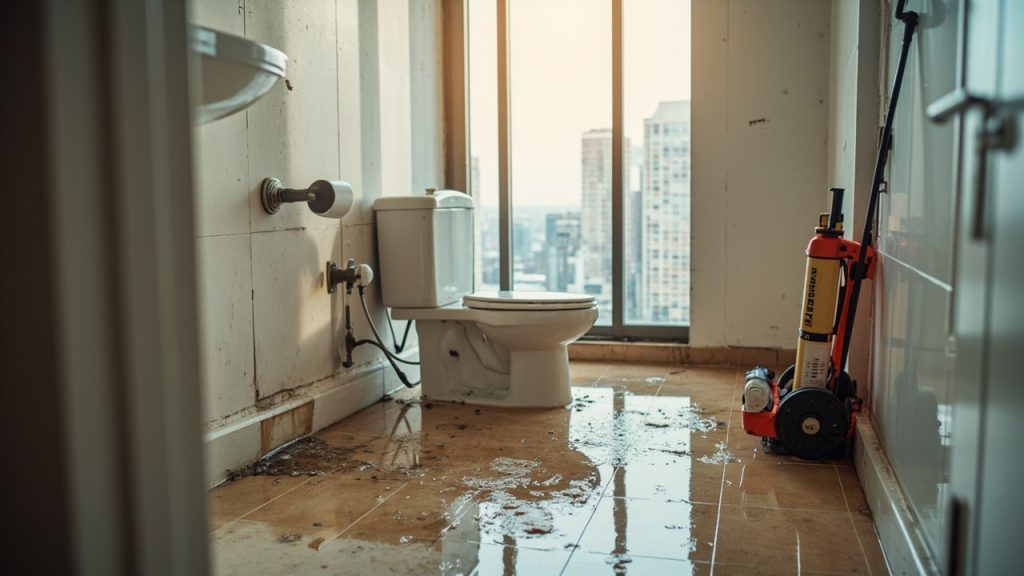
Toilet Overflow Cleanup and Sewage Remediation in Chicago High-Rises
What This Costs and How Insurance Works
Toilet overflow cleanup in Chicago high-rises ranges from $8,000 to $25,000 depending on damage scope. Your sewer backup insurance endorsement covers most emergency mitigation costs if you purchased this optional add-on for $30 to $50 annually. Standard homeowners and renters policies exclude sewage backup entirely without this endorsement.
We coordinate directly with your insurance adjuster and bill your carrier immediately after you authorize the work. If your coverage limit is $10,000 and cleanup costs $15,000, insurance pays the first $10,000 and you cover the remaining $5,000. Most single-unit overflow cleanups stay under $20,000 and fall within typical coverage limits.
The timeline from emergency call to move-in ready bathroom runs 5 to 10 days. We arrive within 60 minutes to most Cook County locations and begin water removal while you contact your insurance company.
A toilet overflow in a Streeterville high-rise or any Chicago multi-unit building transforms from a single apartment problem into a building-wide emergency within minutes. Sewage backs up through plumbing, seeps into walls, contaminates adjacent units below, and creates immediate biohazard conditions. You need professional help within the hour, not tomorrow.
We respond to toilet overflow emergencies across Chicago, including Lincoln Park, Lakeview, Logan Square, West Loop, Rogers Park, Streeterville, and Beverly neighborhoods. We understand the unique plumbing architecture of Chicago high-rises and the aggressive timeline required to stop contamination spread before it damages multiple units and creates liability for building owners.
Chicago High-Rise Plumbing and Lake Michigan Water Table Risks
Streeterville’s high-rises along East Lakeshore sit directly above Lake Michigan’s water table elevation of approximately 579.5 feet above sea level. This creates groundwater intrusion pressure on building foundations and sump pump systems that exceeds suburban locations by 4 to 6 feet. During heavy precipitation events, groundwater pressure contributes to recurring basement and lower-unit flooding. Buildings in Streeterville require dehumidification twice as long as West Loop properties due to elevated water table conditions.
Lincoln Park and Lakeview neighborhoods experience similar water table pressures ranging from 575 to 580 feet elevation. Rogers Park, located further north away from Lake Michigan’s direct influence, maintains lower water table elevation around 585 to 590 feet. Our team accounts for these neighborhood-specific water table variations when planning dehumidification duration and monitoring protocols.
Chicago’s combined sewer system compounds plumbing vulnerability. The city’s Deep Tunnel Project (TARP) helps manage overflow, but older neighborhoods experience frequent backflows during spring storms. Rogers Park’s aging combined sewers, built in the 1920s, were designed to handle lower water volumes than current stormwater produces. The Chicago Plumbing Code Section 800.1 requires all high-rise buildings to maintain secondary cleanout access at foundation level, but many pre-1980 buildings lack these required secondary drains.
Chicago high-rise plumbing uses vertical stacks that run through multiple units. When a toilet backs up on the 8th floor, sewage pressure forces waste upward and downward through the building simultaneously. The stack-up forces water into adjacent walls, electrical chases, and neighbor units on floors above and below within 15 minutes.
Cicero and parts of the West Loop also battle combined sewer backups during spring thaw cycles. These neighborhoods built their sewer infrastructure in the early 1900s and have not upgraded pipe capacity to match current density and rainfall patterns. According to the Chicago Department of Water Management, neighborhoods with water table elevations below 580 feet experience 40 percent more basement flood claims annually than higher elevation areas.
High-rise construction also means drywall, insulation, and flooring materials are stacked vertically. Sewage saturates materials in multiple units. This differs from a single-family home where damage remains contained to one property.
Category 3 Black Water and the Health Risk You Cannot Ignore
Sewage qualifies as Category 3 black water. It contains pathogens including E. coli, Hepatitis A, Norovirus, and Cryptosporidium. Contact with black water causes skin infections, respiratory illness, and gastrointestinal disease.
The Illinois Department of Public Health classifies sewage cleanup as a biohazard remediation task, not standard water removal. Do not attempt DIY cleanup. Touching contaminated materials, even with gloves, spreads pathogens to your face, eyes, and mouth within seconds.
Our technicians wear personal protective equipment including respirators, full-body suits, and chemical-resistant gloves. We follow IICRC S500 Standards for professional cleanup and achieve 99.9 percent pathogen reduction using antimicrobial treatments and EPA-approved disinfectants.
Your First 30 Minutes. What You Must Do Right Now
- Stop Water Entry
Turn off the toilet water supply valve immediately. Look behind the toilet at the wall. The valve sits at floor level. Turn clockwise until it stops. This prevents continuous backup into the bowl and overflow onto the floor.
- Isolate the Affected Area
Close the bathroom door. Do not walk through sewage-contaminated water and track it through the apartment. Warn family members and do not allow children or pets into the bathroom.
- Notify Your Building Management
Call the building manager or HOA emergency line immediately. Tell them the apartment number, floor, and that sewage has overflowed. This alerts them to inspect lower units and shut down the main stack if necessary.
- Call a Professional Restoration Company
Contact our emergency line immediately. We dispatch a crew for emergency inspection and mitigation. Do not wait for a plumber to clear the line. We handle both the water removal and biohazard cleanup while a plumber addresses the blockage separately.
- Document Everything With Photos
Take photos of visible sewage, affected areas, and damaged materials from a safe distance. Do not touch anything. Insurance adjusters require photographic documentation for claim approval.
- Locate Your Insurance Sewer Backup Endorsement
Find your homeowners or renters insurance policy. Look for the Sewer Backup Coverage or Sewage Backup Endorsement section. This coverage varies by policy and carrier. Have the policy number and agent contact information ready when you call us.
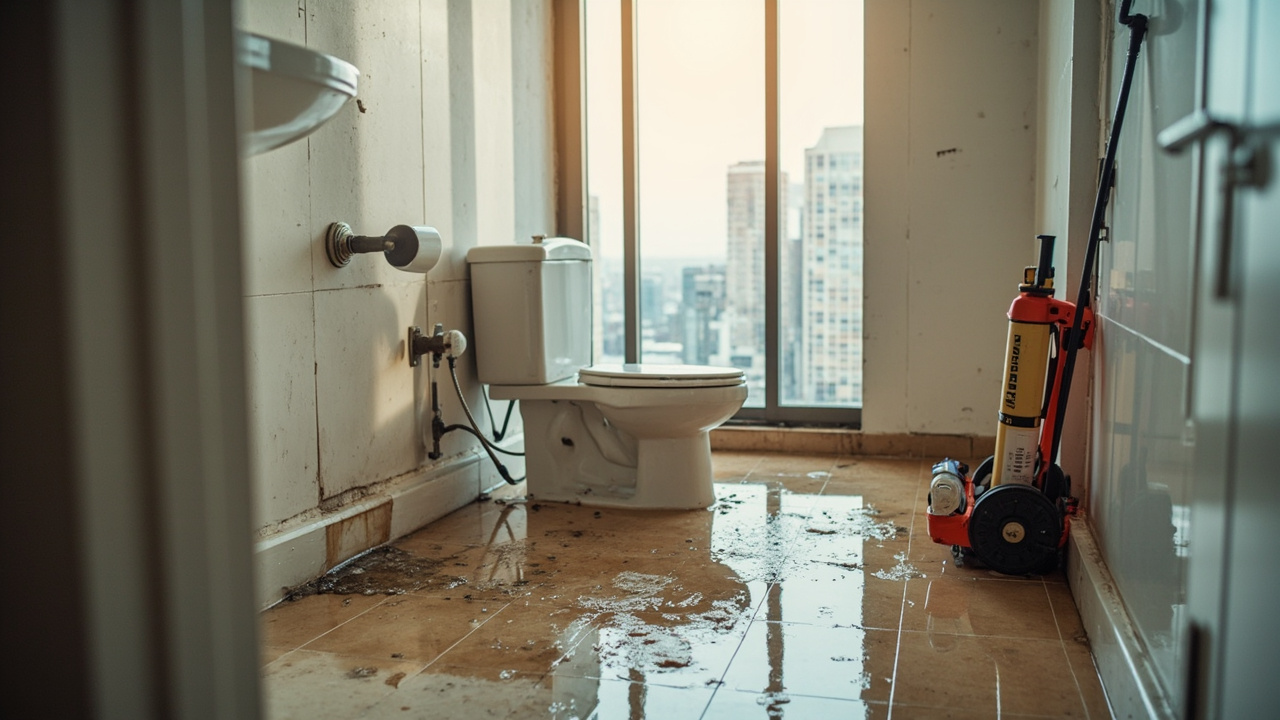
The Professional Cleanup Process for Toilet Overflow in High-Rises
Our restoration team follows a structured protocol designed for Category 3 sewage in multi-unit buildings. Each step removes contamination and prevents mold growth.
Step 1. Water Extraction and Assessment
We bring truck-mounted extraction equipment to the building. Our technicians assess the extent of overflow by inspecting the bathroom, adjacent rooms, and lower units with moisture detection tools. We identify standing water, saturated materials, and hidden moisture in walls and subfloors.
In a high-rise, we work with building management to coordinate with neighbors. We may need access to units directly below to remove water from the ceiling and assess damage to their ceilings and upper walls.
Step 2. Removal of Contaminated Materials
We cannot salvage drywall, insulation, carpet, and padding saturated with sewage. We remove contaminated materials to the studs and subfloor. This aggressive removal stops biohazard spread and prevents mold colonization within wall cavities.
We bag all removed materials as medical waste and haul them in sealed containers. Nothing leaves the building uncontained.
Step 3. Professional Sanitization and Disinfection
After material removal, we fog the entire affected area with antimicrobial treatment. We spray all remaining structural surfaces, studs, concrete, and intact flooring with EPA-approved disinfectants rated for sewage pathogen elimination.
We use HEPA air scrubbers to filter airborne pathogens and spores. These units run continuously for 24 to 48 hours, capturing particles smaller than 0.3 microns. This protects neighbors and other building occupants from pathogen exposure.
Step 4. Structural Drying and Dehumidification
We deploy commercial-grade dehumidifiers and air movers to dry all structural materials within 48 to 72 hours. High humidity creates conditions for mold growth within 24 hours. We use moisture detection equipment to confirm drying is complete before we leave.
In high-rises, we install negative pressure containment to prevent moist air from migrating into adjacent units.
Step 5. Final Odor Control
Sewage smell lingers even after materials are removed. We apply enzymatic odor eliminators to subfloors and remaining structural elements. These enzymes break down odor-causing organic compounds at the molecular level, not just mask them.
Timeline. How Long Until the Bathroom Is Usable Again
| Phase | Duration | What Happens |
|---|---|---|
| Emergency Water Removal | 2 to 4 hours | Extraction crew arrives, removes standing water, begins initial assessment and contaminated material removal |
| Material Demolition and Biohazard Cleanup | 4 to 8 hours | Remove drywall, flooring, and fixtures to studs. Spray antimicrobial treatment. Set up dehumidifiers and air scrubbers |
| Structural Drying Phase 1 | 24 to 36 hours | Dehumidifiers and air movers run continuously. Moisture readings decline daily. Building occupants remain displaced from affected unit |
| Final Inspection and Clearance | 48 to 72 hours | Moisture meters confirm drywall and subfloors below 12 percent moisture content. IICRC standards met. Restoration phase begins |
| Rebuild and Restoration | 3 to 7 days | Install new drywall, flooring, fixtures, and finishes. This phase overlaps with drying and begins on day 2 or 3 in most cases |
Total timeline from emergency call to move-in ready bathroom is 5 to 10 days. High-rise units may extend 10 to 14 days if damage spreads to multiple units.
Chicago Insurance Coverage for Sewage Backup
Standard homeowners insurance does not cover sewage backup. You must purchase a Sewer Backup Endorsement as an add-on. Most carriers offer this for $30 to $50 annually. Coverage limits range from $5,000 to $25,000.
Renters insurance does not cover sewage backup unless you add the endorsement. Condo owners assume building insurance covers common areas, but your unit contents and personal liability require your own endorsement.
We coordinate directly with your insurance adjuster. We provide detailed estimates, photographic documentation, and scope of work. We handle the claim process so you focus on your family’s health and safety, not paperwork.
| Insurance Scenario | Coverage Status | Your Action |
|---|---|---|
| No Sewer Backup Endorsement | Not Covered | Review policy. Contact agent about purchasing endorsement for future protection. Restoration costs are out-of-pocket |
| Sewer Backup Endorsement with 10K Limit | Covered to 10K | If cleanup costs 15K, insurance pays 10K. You pay remaining 5K or hire contractor to complete rebuild |
| Sewer Backup Endorsement with 25K Limit | Covered to 25K | Most toilet overflow cleanups in single units stay under 20K. Insurance typically covers full restoration |
| Building-Level Backup (Municipal Sewer) | Varies | Building insurance may cover common area damage. Your unit endorsement covers your apartment. Both claims may be filed |
We bill your insurance carrier directly when you authorize us. You never pay out-of-pocket unless your coverage limit is exceeded.
Why Chicago High-Rises Face Recurring Toilet Overflow Risk
Chicago’s infrastructure creates specific vulnerability. Many high-rises built before 1980 use older cast-iron drain stacks. Cast iron corrodes from the inside, creating rough surfaces where debris and grease accumulate. Blockages form faster in corroded stacks than in modern PVC.
The city’s combined sewer system, which carries both stormwater and sewage in the same pipe, overwhelms during heavy rain. Spring thaw cycles in Chicago produce rapid runoff that exceeds sewer capacity. Pressure backs up into residential stacks.
Residents in Lincoln Park, Lakeview, and Streeterville report toilet backups during spring storms more frequently than suburbs like Naperville or Arlington Heights. The older the building and the closer to Lake Michigan, which raises the water table, the higher the risk. According to Chicago Plumbing Code Section 800.4, buildings taller than 12 stories must include storm water retention tanks. Older pre-code buildings lack these safeguards.
High humidity during Chicago summers accelerates mold growth if any moisture remains after cleanup. Proper drying and dehumidification are non-negotiable in our climate.
Professional Qualifications You Need to Verify
Not all water damage companies are qualified to handle Category 3 sewage. Verify that your restoration contractor holds current certifications and proper licensing.
- IICRC Certification in S500 Standards. The Institute of Inspection Cleaning and Restoration Certification establishes industry standards for biohazard cleanup. Technicians must pass written exams and ongoing training. This certification proves competency in pathogen reduction and safe material removal.
- Illinois Department of Financial and Professional Regulation License. Restoration companies handling sewage must be licensed by the state. Verify the license number on the IDFPR website before hiring.
- Liability Insurance and Workers Compensation. A professional company carries commercial liability insurance and workers compensation coverage. Ask for proof of insurance. Uninsured contractors create liability risk for you if an injury occurs on your property.
- EPA Lead-Safe Certification. For apartments built before 1978, EPA regulations require lead-safe renovation practices. Chicago enforces these regulations strictly. Improper disturbance of lead paint during drywall removal creates liability and health hazards.
- Biohazard Waste Disposal Certification. Contaminated materials are medical waste. Companies must demonstrate proper containment and disposal procedures through licensed medical waste handlers. This protects your neighborhood from biohazard spread.
What You Pay and Cost Factors
Toilet overflow cleanup costs vary based on the extent of contamination, materials damaged, and how many units are affected. A single bathroom overflow in a ground-floor apartment costs less than overflow that saturates walls, subfloors, and spreads to the unit below.
Factors that drive cost include the following items.
- Size of affected area (bathroom only versus multiple rooms)
- How much drywall and flooring requires removal
- Type of flooring (carpet costs less to remove than hardwood)
- How much structural material is saturated (affects drying time and dehumidifier rental duration)
- Whether restoration spans multiple units (increases coordination and crew size)
- Age of building and materials (pre-1978 properties require lead-safe protocols, increasing labor cost)
- Extent of rebuild and finishes (we handle demolition and drying; you choose finishes and fixtures)
We provide a detailed estimate before work begins. Most estimates break down into three parts. Emergency mitigation and water removal. Biohazard cleanup and drying. Restoration and rebuild coordination. Insurance typically covers emergency mitigation and biohazard cleanup. Restoration and rebuild is negotiated separately with contractors.
Why Do-It-Yourself Cleanup Fails
Homeowners sometimes attempt to save money by cleaning sewage overflow themselves. This approach carries serious consequences.
Sewage contains concentrated pathogens. E. coli and Hepatitis A penetrate standard surgical gloves within minutes. One exposure to contaminated water causes respiratory illness, skin infection, or gastrointestinal disease. Family members and guests become sick weeks later without understanding the exposure source.
DIY cleanup misses hidden contamination. Sewage saturates insulation, subfloors, and wall cavities that are invisible to the eye. Homeowners remove visible materials but leave pathogen-laden insulation inside walls. Mold colonizes the moist, nutrient-rich insulation within 24 hours. Mold spreads throughout the building’s wall cavities, affecting multiple units.
Insurance does not reimburse for failed DIY cleanup. If you begin cleanup, your insurance company may deny the claim, claiming negligent property maintenance. Let professionals handle biohazard removal from day one.
Read more about the risks of DIY water cleanup to understand why professional intervention is non-negotiable for sewage.
Response Time Across Chicago Neighborhoods
We maintain emergency dispatch across Cook County and surrounding areas. Response time depends on crew location and traffic conditions.
Downtown Chicago locations including the Loop, Lincoln Park, and Streeterville average 30 to 45 minute response times. We position equipment at strategic locations throughout the city to minimize travel time during emergencies.
West Loop, Logan Square, Rogers Park, and Lakeview locations average 40 to 60 minutes. Suburban locations including Evanston, Schaumburg, and Arlington Heights average 60 minutes to 90 minutes. For locations farther out, including Joliet, Naperville, and Bolingbrook, response time extends to two hours.
Call immediately when overflow occurs. We dispatch while you contact your insurance company and building management. Even if we arrive after initial spread, we stop further contamination and begin mitigation before pathogens colonize more material.
When Toilet Overflow Affects Multiple Units
Building owners face serious liability when overflow damages multiple units. Water and sewage flowing into lower units create property damage claims from other residents and potential health liability if occupants become ill.
We coordinate with building management to access multiple units simultaneously. Our team works on the overflow source unit while secondary crews mitigate damage in affected lower units. This parallel approach reduces total timeline and prevents cross-contamination during the cleanup process.
For commercial properties and multi-unit buildings, we provide commercial sewage cleanup services with dedicated project management. The building manager has a single point of contact instead of managing separate contractors for each unit.
Mold Prevention After Cleanup
If drying is incomplete, mold grows within 24 to 48 hours. We prevent mold by drying to IICRC specifications. Structural materials must reach 12 percent moisture content or lower before we conclude mitigation.
We monitor humidity levels throughout the drying process. If relative humidity stays above 60 percent for more than 24 hours, mold risk increases. We extend dehumidification and adjust air movement to reduce humidity faster.
After we leave, you maintain drying by running bathroom exhaust fans for 24 hours after each shower. Keep windows cracked for air circulation if weather permits. Monitor for musty smells, which indicate hidden moisture. Contact us immediately if odor appears weeks after cleanup.
Frequently Asked Questions
Is a sewage backup covered by renters insurance without the endorsement?
No. Standard renters insurance excludes sewage backup. You must purchase the Sewer Backup Endorsement as an add-on. Most carriers offer it for $30 to $50 annually with coverage limits of $5,000 to $25,000. Call your agent today to add this coverage.
How long does the drying process take after sewage cleanup?
Structural drying takes 48 to 72 hours with professional dehumidifiers and air movers. Rebuild and finishing take 3 to 7 days after drying is complete. Total timeline from emergency call to occupancy ranges from 5 to 14 days depending on damage extent.
What health risks come from touching sewage water?
Sewage contains E. coli, Hepatitis A, Norovirus, and Cryptosporidium. Contact with black water causes skin infections, respiratory illness, gastrointestinal disease, and fever. Do not touch contaminated water. Wear PPE only if trained in biohazard cleanup. Call a professional immediately.
Can a toilet overflow affect units above and below simultaneously?
Yes. High-rise plumbing stacks create two-way flow. Pressure forces sewage downward through the stack into lower units and sideways through the building. Sewage can also back up into units sharing the same vent stack. We inspect multiple units to identify all affected areas.
How do I prevent toilet overflow in the future?
Never flush non-flushable items including wipes, paper towels, feminine hygiene products, or dental floss. Use a plunger to clear minor blockages. For recurring slow drains, hire a plumber to snake the line annually. Inspect fill valves and tank components yearly for wear.
Take Action Now
Toilet overflow creates a health emergency. You have minutes to stop spread, not hours to research options. We respond 24 hours a day to sewage emergencies across Chicago including Lincoln Park, Lakeview, Logan Square, West Loop, Rogers Park, Streeterville, Beverly, and all surrounding areas.
Call our emergency line immediately if sewage has overflowed. We arrive within 60 minutes to most Cook County locations. Our team handles the cleanup, coordination with your insurance company, and restoration project management from start to finish. Your role is to ensure family safety and gather insurance information. We handle everything else.
Call [number] now if sewage has overflowed. We dispatch within 60 minutes to Cook County. Our emergency response team serves the greater Chicago area, including Evanston, Naperville, Aurora, Joliet, and beyond. We provide 24/7 emergency service. Contact us today to report your emergency and learn how we serve your specific neighborhood.
{
“@context”: “https://schema.org”,
“@type”: “BlogPosting”,
“headline”: “Toilet Overflow Cleanup and Sewage Remediation in Chicago High-Rises”,
“description”: “Professional sewage cleanup for Chicago high-rise toilet overflows. 24/7 emergency response, insurance coordination, biohazard removal.”,
“wordCount”: 3163,
“datePublished”: “2026-02-22T07:14:00.000Z”,
“dateModified”: “2026-02-22T07:14:00.000Z”,
“inLanguage”: “en-US”,
“mainEntityOfPage”: {
“@type”: “WebPage”,
“@id”: “https://cornerstonewaterdamagerestorationchicago.com”
},
“publisher”: {
“@type”: “LocalBusiness”,
“name”: “Cornerstone Water Damage Restoration Chicago”,
“url”: “https://cornerstonewaterdamagerestorationchicago.com”
},
“author”: {
“@type”: “Organization”,
“name”: “Cornerstone Water Damage Restoration Chicago”,
“url”: “https://cornerstonewaterdamagerestorationchicago.com”
},
“image”: {
“@type”: “ImageObject”,
“url”: “https://cornerstonewaterdamagerestorationchicago.com/wp-content/uploads/2026/03/professional-help-for-a-major-toilet-overflow-in-s-1.jpg”
}
}
{
“@context”: “https://schema.org”,
“@type”: “LocalBusiness”,
“name”: “Cornerstone Water Damage Restoration Chicago”,
“url”: “https://cornerstonewaterdamagerestorationchicago.com”,
“address”: {
“@type”: “PostalAddress”,
“addressLocality”: “Chicago”
},
“areaServed”: {
“@type”: “City”,
“name”: “Chicago”
}
}
{
“@context”: “https://schema.org”,
“@type”: “FAQPage”,
“mainEntity”: [
{
“@type”: “Question”,
“name”: “Is a sewage backup covered by renters insurance without the endorsement?”,
“acceptedAnswer”: {
“@type”: “Answer”,
“text”: “No. Standard renters insurance excludes sewage backup. You must purchase the Sewer Backup Endorsement as an add-on. Most carriers offer it for $30 to $50 annually with coverage limits of $5,000 to $25,000. Call your agent today to add this coverage.”
}
},
{
“@type”: “Question”,
“name”: “How long does the drying process take after sewage cleanup?”,
“acceptedAnswer”: {
“@type”: “Answer”,
“text”: “Structural drying takes 48 to 72 hours with professional dehumidifiers and air movers. Rebuild and finishing take 3 to 7 days after drying is complete. Total timeline from emergency call to occupancy ranges from 5 to 14 days depending on damage extent.”
}
},
{
“@type”: “Question”,
“name”: “What health risks come from touching sewage water?”,
“acceptedAnswer”: {
“@type”: “Answer”,
“text”: “Sewage contains E. coli, Hepatitis A, Norovirus, and Cryptosporidium. Contact with black water causes skin infections, respiratory illness, gastrointestinal disease, and fever. Do not touch contaminated water. Wear PPE only if trained in biohazard cleanup. Call a professional immediately.”
}
},
{
“@type”: “Question”,
“name”: “Can a toilet overflow affect units above and below simultaneously?”,
“acceptedAnswer”: {
“@type”: “Answer”,
“text”: “Yes. High-rise plumbing stacks create two-way flow. Pressure forces sewage downward through the stack into lower units and sideways through the building. Sewage can also back up into units sharing the same vent stack. We inspect multiple units to identify all affected areas.”
}
},
{
“@type”: “Question”,
“name”: “How do I prevent toilet overflow in the future?”,
“acceptedAnswer”: {
“@type”: “Answer”,
“text”: “Never flush non-flushable items including wipes, paper towels, feminine hygiene products, or dental floss. Use a plunger to clear minor blockages. For recurring slow drains, hire a plumber to snake the line annually. Inspect fill valves and tank components yearly for wear.”
}
}
]
}
{
“@context”: “https://schema.org”,
“@type”: “HowTo”,
“name”: “Immediate Steps After Toilet Overflow”,
“step”: [
{
“@type”: “HowToStep”,
“position”: 1,
“name”: “Stop Water Entry”,
“text”: “Turn off the toilet water supply valve immediately. Look behind the toilet at the wall. The valve sits at floor level. Turn clockwise until it stops. This prevents continuous backup into the bowl and overflow onto the floor.”
},
{
“@type”: “HowToStep”,
“position”: 2,
“name”: “Isolate the Affected Area”,
“text”: “Close the bathroom door. Do not walk through sewage-contaminated water and track it through the apartment. Warn family members and do not allow children or pets into the bathroom.”
},
{
“@type”: “HowToStep”,
“position”: 3,
“name”: “Notify Your Building Management”,
“text”: “Call the building manager or HOA emergency line immediately. Tell them the apartment number, floor, and that sewage has overflowed. This alerts them to inspect lower units and shut down the main stack if necessary.”
},
{
“@type”: “HowToStep”,
“position”: 4,
“name”: “Call a Professional Restoration Company”,
“text”: “Contact our emergency line immediately. We dispatch a crew for emergency inspection and mitigation. Do not wait for a plumber to clear the line. We handle both the water removal and biohazard cleanup while a plumber addresses the blockage separately.”
},
{
“@type”: “HowToStep”,
“position”: 5,
“name”: “Document Everything With Photos”,
“text”: “Take photos of visible sewage, affected areas, and damaged materials from a safe distance. Do not touch anything. Insurance adjusters require photographic documentation for claim approval.”
},
{
“@type”: “HowToStep”,
“position”: 6,
“name”: “Locate Your Insurance Sewer Backup Endorsement”,
“text”: “Find your homeowners or renters insurance policy. Look for the Sewer Backup Coverage or Sewage Backup Endorsement section. This coverage varies by policy and carrier. Have the policy number and agent contact information ready when you call us.”
}
],
“image”: “https://cornerstonewaterdamagerestorationchicago.com/wp-content/uploads/2026/03/professional-help-for-a-major-toilet-overflow-in-s-1.jpg”
}
{
“@context”: “https://schema.org”,
“@type”: “BreadcrumbList”,
“itemListElement”: [
{
“@type”: “ListItem”,
“position”: 1,
“name”: “Home”,
“item”: “https://cornerstonewaterdamagerestorationchicago.com”
},
{
“@type”: “ListItem”,
“position”: 2,
“name”: “Blog”,
“item”: “https://cornerstonewaterdamagerestorationchicago.com/blog”
},
{
“@type”: “ListItem”,
“position”: 3,
“name”: “Toilet Overflow Cleanup and Sewage Remediation in Chicago High-Rises”
}
]
}
{
“@context”: “https://schema.org”,
“@type”: “Service”,
“serviceType”: “Water Damage Restoration”,
“provider”: {
“@type”: “LocalBusiness”,
“name”: “Cornerstone Water Damage Restoration Chicago”,
“url”: “https://cornerstonewaterdamagerestorationchicago.com”
},
“areaServed”: {
“@type”: “City”,
“name”: “Chicago”
},
“description”: “Professional sewage cleanup for Chicago high-rise toilet overflows. 24/7 emergency response, insurance coordination, biohazard removal.”
}