
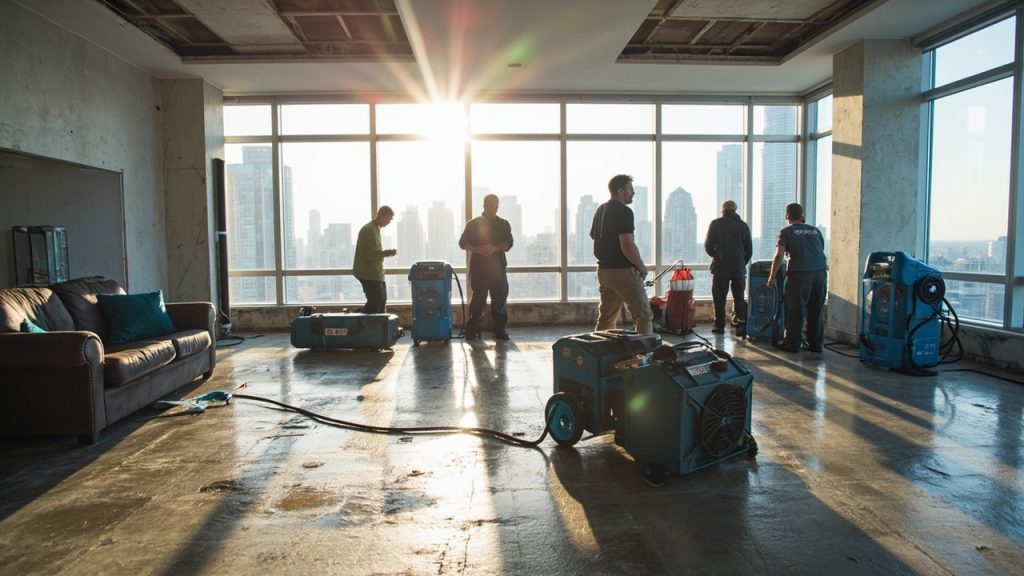
Condo Water Damage Restoration in Chicago: Fast Response for High-Rise and Multi-Unit Buildings
A burst pipe in your South Loop condo at 2 AM is not just your problem. Water spreads vertically through shared walls, drips into the unit below, triggers your HOA’s insurance requirements, and suddenly you’re managing multiple liability questions while your home sits wet and damaged. Condo water damage in Chicago moves faster and demands more coordination than a single-family home restoration. You need a restoration team that knows the unique challenges of high-rise living, understands Chicago HOA bylaws, and can navigate the complex insurance landscape without leaving you caught in the middle.
Cornerstone Water Damage Restoration has spent 15 years managing exactly these scenarios across Chicago’s densest neighborhoods. The Loop, River North, Lincoln Park, and the Gold Coast all share the same core problem: multi-unit buildings where one unit’s emergency becomes a building-wide issue. This guide walks you through what happens when water strikes your condo, who pays for what, and why the first 60 minutes determine whether you face a $5,000 restoration or a $50,000 mold remediation nightmare.
Why Condo Water Damage Demands Different Response
A condo water event is not a residential water event. The moment water touches a shared wall, you enter a legal and financial gray zone that most general restoration companies do not understand. Your unit sits inside a larger structure governed by an HOA, a master insurance policy, and a set of bylaws that allocate financial responsibility based on where the damage originated and where it traveled.
Chicago condos face unique vulnerabilities. The city’s aging building stock includes 1920s high-rises with original plumbing stacks that share vertical chases across 30 floors. Modern condos like those in Lakeshore East use interior drywall to separate units while sharing HVAC systems that can spread moisture and mold horizontally in minutes. The high water table near Lake Michigan and the clay-rich soil beneath most Loop buildings mean that even minor plumbing failures can trigger hydrostatic pressure issues in basement common areas.
Chicago’s freeze-thaw cycles during the polar vortex create pipe burst scenarios that strike multiple units simultaneously. Spring rains overwhelm shared roof drains. High summer humidity accelerates mold growth in damp drywall before residents notice the problem. Each season brings different triggers, but all of them demand a restoration approach that accounts for the HOA, the master policy, the unit owner’s HO-6 policy, and the precise sequence of water travel.
Understanding HOA Insurance and the Master Policy
This is where most condo owners get confused. Your HOA maintains a master insurance policy that covers “common elements” and “limited common elements.” Your individual HO-6 policy covers your personal property and your unit’s interior improvements. The question of who pays for what depends on the exact boundaries defined in your condo bylaws.
Common elements typically include the building’s structural frame, the roof, external walls, the lobby, hallways, elevators, and shared mechanical systems. Limited common elements might include the balcony attached to your unit, the plumbing that supplies your unit, or the HVAC ductwork running through your space. If a leak originates in a common element (like a water main or roof), the HOA master policy typically covers the restoration. If the leak originates in your unit (your washing machine or your water heater), your HO-6 policy covers the damage to your belongings and your interior walls, but the HOA master policy still covers damage to shared structural elements.
When water from a unit above damages your ceiling and drywall, responsibility depends on the source. If the water came from a common element plumbing failure, the HOA master policy applies. If the water came from negligence within the upper unit (a clogged drain the owner ignored, for example), the upper unit owner’s HO-6 policy becomes responsible for damages below.
Here is what matters for your immediate decision. Do not let the HOA or your neighbor’s insurance company delay your mitigation efforts. Water damage restoration is time-sensitive. The first call goes to a 24/7 emergency restoration team that documents everything, extracts water, and begins drying immediately. The insurance questions and responsibility allocation happen in parallel, not as a prerequisite to emergency action.
High-Rise Logistics in Chicago Water Damage
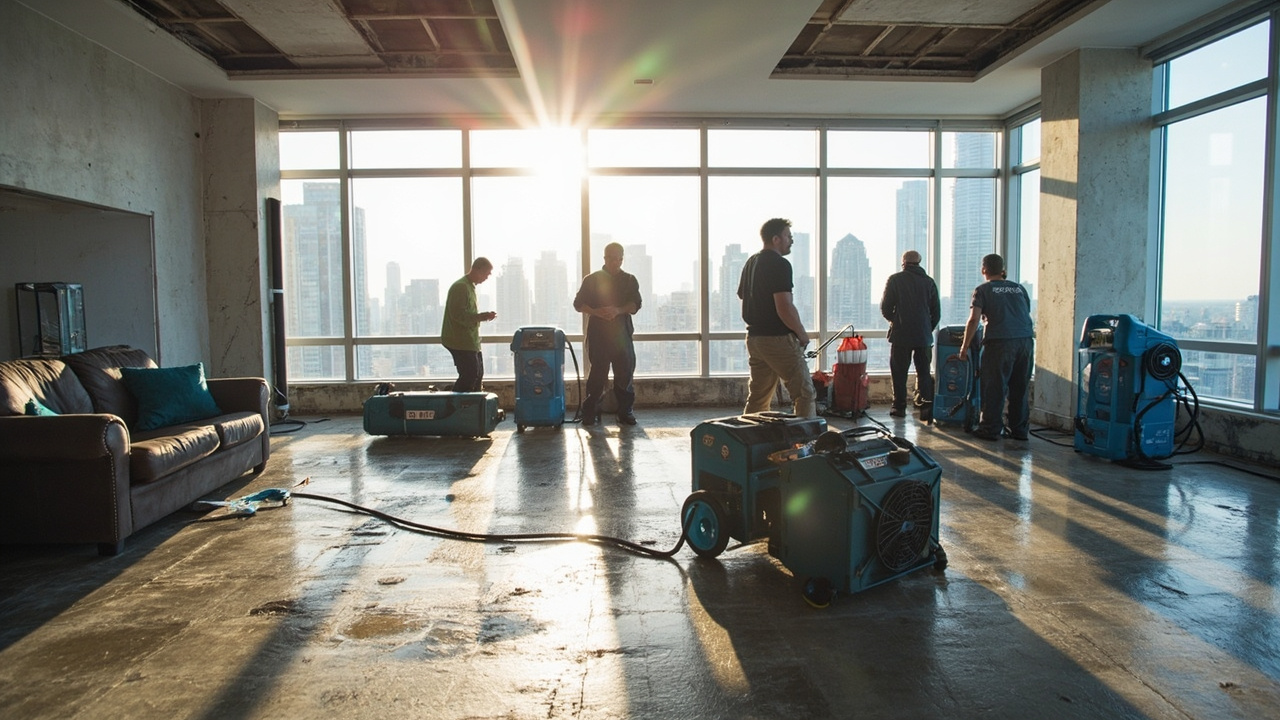
A water extraction team arriving at a 22-story residential building in Lincoln Park or River North faces constraints that single-family homes do not. Your team cannot simply park a truck at the curb and run hoses through the lobby. High-rises require coordination with building management, elevator access agreements, water shut-off locations known only to the building engineer, and liability waivers that protect the building from damage caused by the restoration equipment itself.
Chicago’s older high-rises often have only one or two service elevators shared by maintenance, deliveries, and now a restoration crew hauling dehumidifiers and air movers up 15 or 20 floors. If the service elevator is broken or reserved for another use, your restoration crew needs alternative staging areas, which may not exist. Some buildings require all equipment brought through a loading dock accessible only during specific hours. Others prohibit water extraction equipment that weighs more than a certain limit per floor due to old structural load ratings.
The building’s water main shut-off is sometimes in a locked vault in the sub-basement accessible only with a key held by the building manager. The plumbing chase that your burst pipe occupies may run vertically through six units, meaning the shut-off point sits three floors below your unit. Emergency water extraction requires knowing the building’s layout before the leak happens. Experienced restoration teams maintain relationships with major Chicago building management companies and keep digital records of shut-off locations, elevator policies, and access protocols for frequently serviced buildings.
Parking adds another layer. Downtown Chicago and neighborhoods like the Loop charge premium rates for commercial parking, and many high-rise buildings reserve no spots for service vehicles. A restoration crew working an 8-hour drying operation may need to park on the street, incurring city parking citations that add to the total cost. Some buildings insist that only one exterior service vehicle occupy the loading zone at any time, creating logistical constraints if multiple trucks are required.
The Down-Unit Problem and Shared Wall Moisture
When water originates in the unit above yours, the damage cascade creates a liability puzzle. The water travels downward through drywall, insulation, and structural framing. It saturates shared walls that belong to both units. It drips onto your ceiling, through your light fixtures, and into your walls. Now you face both property damage to your belongings and the question of who stops the moisture from spreading further into the shared wall cavity, where it will grow mold for months before anyone notices.
Standard drywall used in residential condos does not resist moisture. Once saturated, it becomes a medium for mold growth. The mold spores travel through the shared wall cavity and into the unit below. HVAC systems in multi-unit buildings sometimes pull air from common spaces or adjacent units, spreading mold spores throughout the building. A burst pipe on the 15th floor can trigger a mold problem on the 13th, 14th, and 15th floors before anyone sees visible growth.
This is why immediate structural drying matters more in condos than in single-family homes. The moment water stops flowing from the burst pipe, the critical race begins to dry the drywall, insulation, and framing before mold establishes itself. Standard air movement equipment works, but high-rise condos benefit from equipment specifically designed for cavity drying. Specialized drying chambers, injectidry systems, and high-powered dehumidifiers (LGR units) extract moisture from wall cavities without requiring walls to be torn open.
Shared wall drying also implicates the unit above. If restoration crews need to access the source of the leak, they work from the upper unit. If they need to dry the wall cavity completely, they may need to cut access holes in both the upper and lower units. This requires coordination between two separate unit owners, potentially two different insurance companies, and building management. The restoration team must document which party authorized which repairs to prevent disputes during claims settlement.
Water Classification and Health Implications in Multi-Unit Buildings
Not all water is created equal. The three categories of water define the health risk and the required restoration protocol.
Category 1 is clean water from a burst supply line, an overflowing toilet that contains only urine, or a leaking water heater. Category 1 water poses minimal health risk but still requires rapid drying to prevent mold.
Category 2 is gray water from a washing machine overflow, a dishwasher leak, or a backed-up drain. Category 2 contains some microbial contaminants but not fecal matter. Category 2 water requires professional extraction, antimicrobial treatment, and faster drying timelines.
Category 3 is black water from sewage backup, flooding from external sources contaminated with fecal matter, or any water exposed to chemical contamination. Category 3 water in a condo requires containment to prevent spread to adjacent units, professional remediation, and in some cases, complete material removal and replacement.
In high-rise condos, a sewage backup in a lower-level unit can affect multiple units. Water pressure forces contaminated water upward through shared plumbing stacks, affecting units several floors above. Emergency sewage cleanup in a multi-unit building demands immediate containment to prevent the contamination from traveling through shared ventilation systems and mechanical spaces.
Chicago Building Code Requirements for Condo Restoration
Chicago’s municipal code and the International Building Code impose specific requirements for water damage restoration in multi-unit residential buildings. The city requires proof that the building’s fire-rated assemblies remain intact after drying and repair. If fire-rated drywall is damaged by water, it cannot be replaced with standard drywall. It must be replaced with fire-rated material of the same rating.
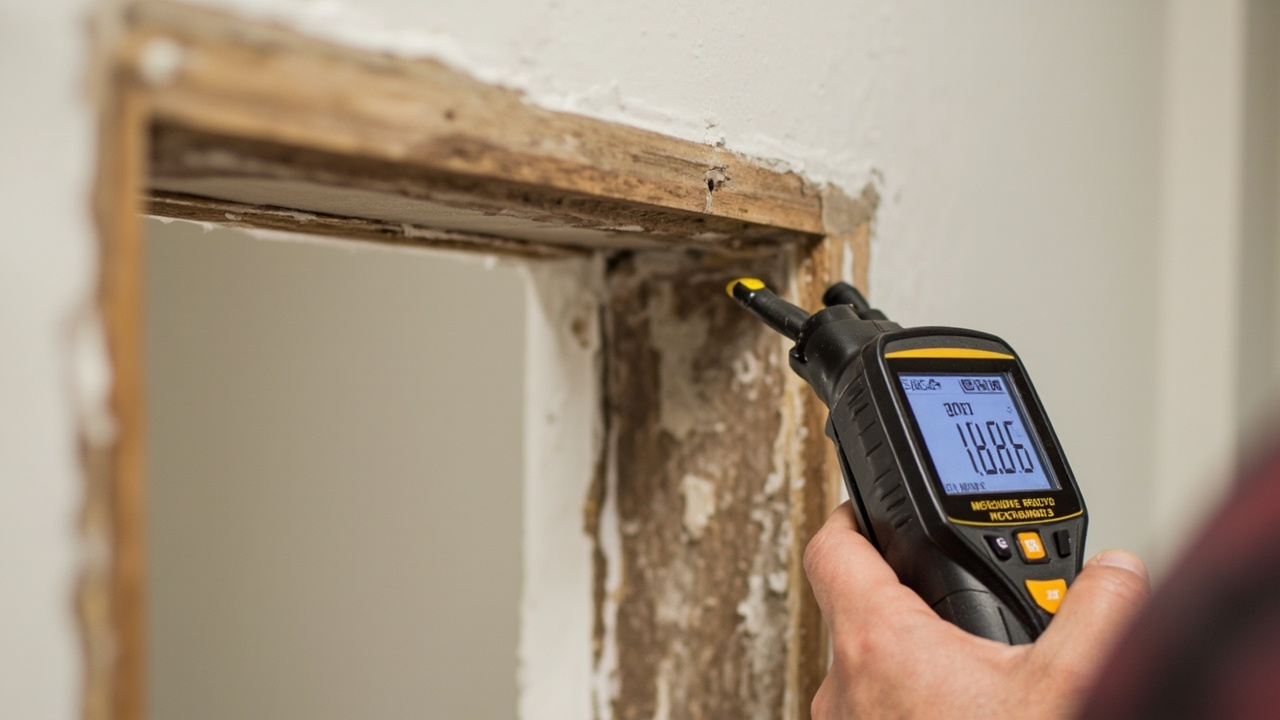
Chicago’s building code also mandates specific moisture targets for structural drying. Wood framing must be dried to a moisture content below 20 percent. Drywall must reach below 12 percent moisture content. These numbers are not optional. They are enforceable by the building department and required for insurance claim closure. A restoration team that claims drying is “complete” without measuring actual moisture content is guessing, and that guess can cost you thousands in deferred mold remediation.
Condos built before 1978 in Chicago and older neighborhoods like Lincoln Park and Rogers Park must comply with lead and asbestos disclosure requirements. Any drywall removal, insulation replacement, or structural repair may disturb materials containing lead paint or asbestos. Licensed abatement contractors must handle these materials. The restoration team must coordinate with licensed environmental consultants to test and properly contain or dispose of potentially hazardous materials.
Chicago’s combined sewer system in older neighborhoods adds another requirement. When heavy rains overwhelm the sewer system, sewage can back up through building drains. Buildings in flood-prone zones near the Chicago River or in neighborhoods like West Loop must comply with Chicago’s backflow prevention ordinance. Some older buildings have not been updated with required backflow preventers, which creates liability if sewage backup occurs.
Timeline for Condo Water Restoration
The speed of condo restoration depends on several factors, but most projects follow a predictable sequence.
| Phase | Timeframe | Activities |
|---|---|---|
| Emergency Response and Water Extraction | 0-24 hours | Team arrival, shut-off of water, water removal, initial assessment and documentation, equipment placement |
| Initial Drying | 24-72 hours | Continuous operation of dehumidifiers and air movers, moisture readings in walls and structural elements, equipment adjustment |
| Secondary Drying and Assessment | 3-7 days | Moisture levels approach targets, cavity drying continues if needed, mold inspection, materials assessment for replacement |
| Structural Repairs and Replacement | 7-14 days | Removal of unsalvageable drywall and insulation, replacement with new materials, structural repairs, painting preparation |
| Finishing and Inspection | 14-21 days | Final painting, trim replacement, HOA inspection, building department sign-off if applicable |
High-rise condos sometimes experience delays in this timeline due to HOA approval processes, coordination with the building engineer, or elevator access limitations. A project that would take 10 days in a single-family home might take 14-18 days in a condo because the restoration team must schedule work during hours when the service elevator is available, coordinate with the building manager about noise and water disposal, and accommodate HOA inspection requirements.
Insurance Claims and Documentation in Condo Water Damage
Your restoration team is not your insurance adjuster, but they are your best source of credible documentation for your claim. The moment water stops flowing, the team begins photographing and videoing the damage. They record moisture readings, document the water source, and create a timeline of events. This documentation becomes the foundation of your insurance claim.
If the damage involves both the master policy and your HO-6 policy, the restoration team must maintain separate documentation for each insurance carrier. Water damage that originated in a common element (covered by the master policy) must be documented separately from damage that involves your unit’s interior. Some restoration companies create two separate scopes of work and two separate restoration reports, one for each insurance carrier.
If the damage involves a down-unit liability claim (the upper unit’s leak damaged the lower unit), the documentation must establish causation and extent. Photos of the source (the burst pipe in the upper unit), photos of the damage path (how water traveled through the wall), and photos of the final damage in the lower unit all support the liability claim. Without clear documentation, insurance companies dispute causation and delay payment.
Your restoration team should also flag any visible code violations discovered during the restoration. If the restoration uncovers improper plumbing installation, inadequate fire-rating, or building code violations, your team should document these findings. Some insurance companies require code violations to be corrected before they close a claim.
Mold Risk in Shared Ventilation Systems
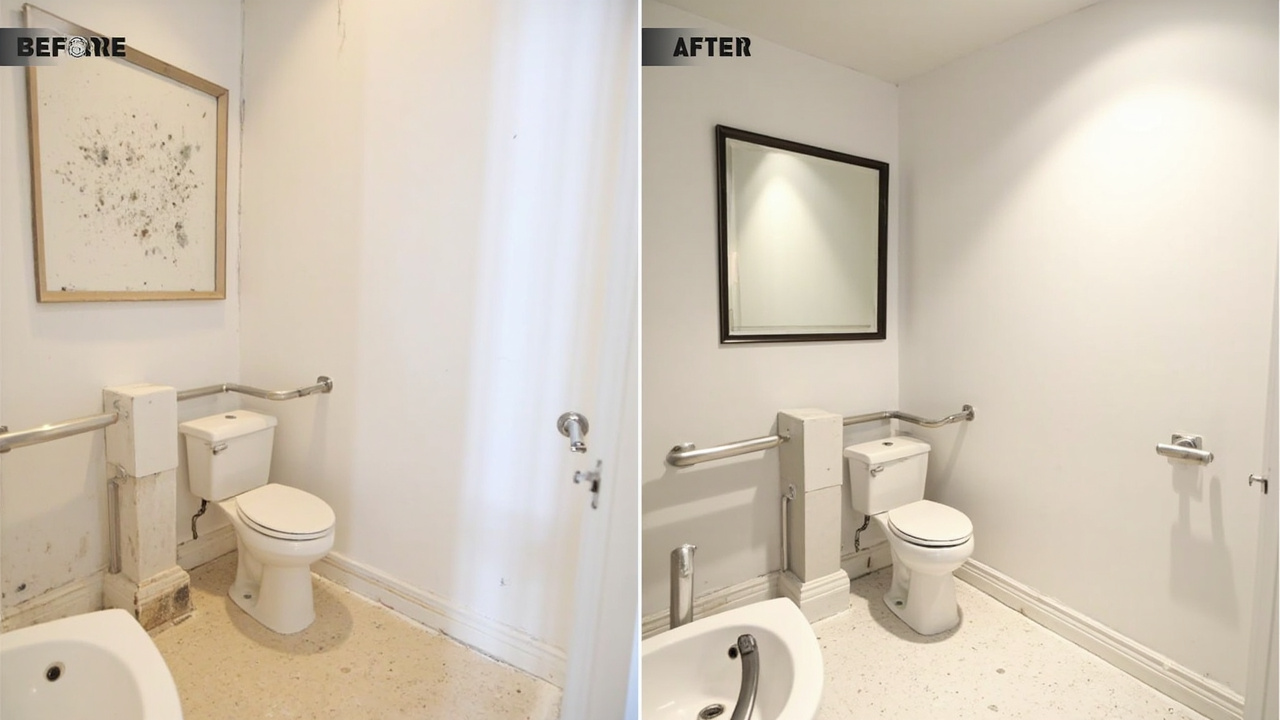
Chicago’s humid summers accelerate mold growth in damp materials. A condo restoration that successfully extracts standing water but fails to dry wall cavities completely will face mold growth within 48 to 72 hours. In a multi-unit building with shared HVAC systems, mold spores from a damp wall cavity in one unit can be drawn into the shared ductwork and distributed throughout the building.
This scenario is common in high-rise condos with central air handling units serving 10 to 20 units. A water event in Unit 1505 creates mold in the shared drywall cavity. The building’s HVAC system pulls air from the common corridor and shared mechanical spaces. Mold spores travel through the return air ductwork. Residents in Units 1502, 1503, 1504, and 1507 begin experiencing mold-related respiratory symptoms before anyone realizes the source.
Prevention requires aggressive structural drying and, in some cases, professional HVAC cleaning. If mold growth is suspected in shared ductwork, the building’s HVAC contractor must perform a professional duct inspection and cleaning. This is not the responsibility of the individual unit owner or their restoration contractor. It is a common-element item that should be handled by the HOA.
Mold in a shared ventilation system is expensive to remediate because it requires a licensed HVAC contractor, professional ductwork cleaning equipment, and verification that all spores have been removed. The cost can easily exceed ten thousand dollars. This is why early detection and aggressive drying matter so much. A restoration team that dries your unit completely within 72 hours prevents the mold scenario from occurring in the first place.
Choosing a Restoration Team That Understands Chicago Condos
Not all restoration companies have experience working in high-rise condos. Many regional companies operate primarily in suburban homes and basements. They do not understand HOA coordination, service elevator logistics, or the insurance complexity of multi-unit buildings. When you call for help, ask specific questions.
Has the company handled at least 50 condo water damage projects in Chicago? Do they maintain relationships with major Chicago building management companies? Can they explain the difference between a master policy and an HO-6 policy? Can they provide references from local HOA boards or property managers? Can they articulate the specific challenges of high-rise drying and mold risk in shared ventilation systems?
Your restoration team should hold IICRC certification in water restoration. The Institute of Inspection Cleaning and Restoration Certification requires passing a comprehensive exam that covers water damage classification, drying theory, mold assessment, and restoration techniques. IICRC certification is not a state requirement, but it is the industry standard for professional restoration work. A company without IICRC certification may lack the technical foundation to handle complex condo scenarios.
Ask about their moisture monitoring protocol. Do they use professional-grade moisture meters to measure moisture content in drywall and wood? Do they take daily readings? Do they create a moisture report showing that all materials have reached acceptable levels before equipment is removed? A team that does not document moisture levels is cutting corners.
Ask about their mold assessment capability. If mold is suspected, does the team have a trained mold assessor on staff, or do they subcontract to an environmental consultant? Some condo projects require a third-party mold assessment before insurance companies will close a claim. You want a restoration team that can coordinate this seamlessly.
Prevention and Preparedness in Chicago Condos
The best water damage restoration is the one that never needs to happen. If you own a condo in Chicago, several preventative steps reduce your risk.
Request your HOA provide a copy of the master insurance policy and the condo bylaws. Understand your coverage limits. If your building’s master policy has a low sublimit for water damage, request that the HOA board increase coverage. Some older buildings carry master policies with only fifty thousand dollars in water damage coverage, which is insufficient for a major event.
Maintain your unit’s plumbing. Have a licensed plumber inspect supply lines under sinks, water heater connections, and washing machine hoses annually. Replace rubber hoses every five years. Rubber hoses fail without warning. Braided stainless steel hoses are more durable. Install a water shut-off valve inside your unit if your building has not already done so. Many Chicago condos have only a main shut-off accessible to the building engineer. An interior valve allows you to stop water flow to your unit within seconds if a pipe bursts.
Install water sensors in high-risk areas. Wireless moisture sensors under sinks, behind toilets, and near water heaters will alert you to leaks before they spread. These sensors cost less than fifty dollars and can prevent thousands in restoration costs.
Verify your HO-6 insurance includes water damage coverage. Some HO-6 policies exclude or limit coverage for water damage. Ask your agent specifically about coverage for burst pipes, water heater failure, and accidental overflow. Make sure your policy includes coverage for the interior walls and drywall of your unit.
If your building has experienced past water damage, request that the HOA conduct a building-wide inspection of plumbing stacks, roof drains, and basement common areas. Preventative maintenance by the HOA prevents emergencies in individual units.
Frequently Asked Questions
Who pays for water damage restoration in a Chicago condo if the leak originated in the unit above?
Responsibility depends on the source of the leak and your condo bylaws. If the leak originated in a common element (the building’s main water supply, shared plumbing in the walls, the roof), the HOA’s master policy covers restoration to your unit and the unit above. If the leak originated due to negligence within the upper unit (a clogged drain the owner ignored, a washing machine the owner left unattended), the upper unit owner’s HO-6 policy typically covers your damages as a third-party claim. Your restoration team and your insurance agent should coordinate with both policies to prevent disputes.
How long does it take to dry a condo after water damage?
Most Chicago condo water damage projects reach acceptable moisture levels within 7 to 10 days. Structural repairs and finishing work extend the timeline to 14 to 21 days. High-rise condos sometimes experience longer timelines due to service elevator access limitations and HOA scheduling requirements. Ask your restoration team for a detailed timeline before work begins.
Can mold grow in the walls of my condo if drying is incomplete?
Yes. Mold can begin growing on damp materials within 24 to 48 hours. In shared wall cavities, mold growth can spread to adjacent units before it becomes visible. This is why aggressive structural drying and continuous moisture monitoring are critical. Ask your restoration team how they monitor moisture in wall cavities and ensure drying is complete.
Does Chicago’s building code require any specific repairs after water damage?
Yes. Chicago requires that fire-rated drywall be replaced with fire-rated material of the same rating. Structural elements must be dried to specific moisture content targets. Pre-1978 buildings must address lead paint and asbestos through licensed contractors. Your restoration team should be familiar with these requirements and coordinate with the building department if necessary.
What should I do immediately after water damage in my condo?
Call a 24/7 emergency restoration team immediately. Shut off the water at the main if possible. Do not attempt to dry the area yourself. Do not remove drywall or materials. Document the damage with photos and video. Notify your HOA and your insurance company. Contact your restoration team before making any repairs or purchasing materials, as this may affect your insurance claim.
Next Steps for Condo Water Damage in Chicago
Water damage in your Chicago condo demands fast, informed action. The first 72 hours determine whether you face a straightforward restoration or a complex mold remediation. You need a team that knows the specific challenges of high-rise living, understands HOA coordination, and can navigate Chicago’s building codes and insurance requirements.
Cornerstone Water Damage Restoration maintains 24/7 emergency response throughout Chicago, including the Loop, River North, Lincoln Park, and every neighborhood in between. We have handled over 2,000 water damage events in Chicago condos. We coordinate directly with HOAs, property managers, and insurance companies. We use professional-grade equipment and moisture monitoring to ensure complete drying. We understand your bylaws, your master policy, and your individual HO-6 coverage.
Call us now at the first sign of water damage. Do not wait. Do not attempt DIY solutions. Do not delay because you are unsure about insurance coverage. Our team arrives within 60 minutes in most Chicago locations. We assess the situation, begin emergency water extraction, and work with your HOA and insurance company to restore your unit properly.
If you live in greater Chicagoland beyond the city limits, we also serve Joliet, Bolingbrook, Schaumburg, Naperville, Evanston, Aurora, and Springfield.
Contact Cornerstone Water Damage Restoration immediately when water strikes your condo. Let us handle the restoration so you can focus on your family and your property’s recovery. Call our 24/7 emergency line now.
{
“@context”: “https://schema.org”,
“@type”: “BlogPosting”,
“headline”: “Condo Water Damage Restoration in Chicago: Fast Response for High-Rise and Multi-Unit Buildings”,
“description”: “Chicago condo water damage restoration experts. We handle HOA coordination, high-rise logistics, and insurance claims. 24/7 emergency response.”,
“wordCount”: 3747,
“datePublished”: “2026-02-18T14:59:00.000Z”,
“dateModified”: “2026-02-18T14:59:00.000Z”,
“inLanguage”: “en-US”,
“mainEntityOfPage”: {
“@type”: “WebPage”,
“@id”: “https://cornerstonewaterdamagerestorationchicago.com”
},
“publisher”: {
“@type”: “LocalBusiness”,
“name”: “Cornerstone Water Damage Restoration Chicago”,
“url”: “https://cornerstonewaterdamagerestorationchicago.com”
},
“author”: {
“@type”: “Organization”,
“name”: “Cornerstone Water Damage Restoration Chicago”,
“url”: “https://cornerstonewaterdamagerestorationchicago.com”
},
“image”: {
“@type”: “ImageObject”,
“url”: “https://cornerstonewaterdamagerestorationchicago.com/wp-content/uploads/2026/03/high-rise-water-damage-restoration-for-south-loop-1.jpg”
}
}
{
“@context”: “https://schema.org”,
“@type”: “LocalBusiness”,
“name”: “Cornerstone Water Damage Restoration Chicago”,
“url”: “https://cornerstonewaterdamagerestorationchicago.com”,
“address”: {
“@type”: “PostalAddress”,
“addressLocality”: “Chicago”
},
“areaServed”: {
“@type”: “City”,
“name”: “Chicago”
}
}
{
“@context”: “https://schema.org”,
“@type”: “FAQPage”,
“mainEntity”: [
{
“@type”: “Question”,
“name”: “Who pays for water damage restoration in a Chicago condo if the leak originated in the unit above?”,
“acceptedAnswer”: {
“@type”: “Answer”,
“text”: “Responsibility depends on the source of the leak and your condo bylaws. If the leak originated in a common element (the building’s main water supply, shared plumbing in the walls, the roof), the HOA’s master policy covers restoration to your unit and the unit above. If the leak originated due to negligence within the upper unit (a clogged drain the owner ignored, a washing machine the owner left unattended), the upper unit owner’s HO-6 policy typically covers your damages as a third-party claim. Your restoration team and your insurance agent should coordinate with both policies to prevent disputes.”
}
},
{
“@type”: “Question”,
“name”: “How long does it take to dry a condo after water damage?”,
“acceptedAnswer”: {
“@type”: “Answer”,
“text”: “Most Chicago condo water damage projects reach acceptable moisture levels within 7 to 10 days. Structural repairs and finishing work extend the timeline to 14 to 21 days. High-rise condos sometimes experience longer timelines due to service elevator access limitations and HOA scheduling requirements. Ask your restoration team for a detailed timeline before work begins.”
}
},
{
“@type”: “Question”,
“name”: “Can mold grow in the walls of my condo if drying is incomplete?”,
“acceptedAnswer”: {
“@type”: “Answer”,
“text”: “Yes. Mold can begin growing on damp materials within 24 to 48 hours. In shared wall cavities, mold growth can spread to adjacent units before it becomes visible. This is why aggressive structural drying and continuous moisture monitoring are critical. Ask your restoration team how they monitor moisture in wall cavities and ensure drying is complete.”
}
},
{
“@type”: “Question”,
“name”: “Does Chicago’s building code require any specific repairs after water damage?”,
“acceptedAnswer”: {
“@type”: “Answer”,
“text”: “Yes. Chicago requires that fire-rated drywall be replaced with fire-rated material of the same rating. Structural elements must be dried to specific moisture content targets. Pre-1978 buildings must address lead paint and asbestos through licensed contractors. Your restoration team should be familiar with these requirements and coordinate with the building department if necessary.”
}
},
{
“@type”: “Question”,
“name”: “What should I do immediately after water damage in my condo?”,
“acceptedAnswer”: {
“@type”: “Answer”,
“text”: “Call a 24/7 emergency restoration team immediately. Shut off the water at the main if possible. Do not attempt to dry the area yourself. Do not remove drywall or materials. Document the damage with photos and video. Notify your HOA and your insurance company. Contact your restoration team before making any repairs or purchasing materials, as this may affect your insurance claim.”
}
}
]
}
{
“@context”: “https://schema.org”,
“@type”: “BreadcrumbList”,
“itemListElement”: [
{
“@type”: “ListItem”,
“position”: 1,
“name”: “Home”,
“item”: “https://cornerstonewaterdamagerestorationchicago.com”
},
{
“@type”: “ListItem”,
“position”: 2,
“name”: “Blog”,
“item”: “https://cornerstonewaterdamagerestorationchicago.com/blog”
},
{
“@type”: “ListItem”,
“position”: 3,
“name”: “Condo Water Damage Restoration in Chicago: Fast Response for High-Rise and Multi-Unit Buildings”
}
]
}
{
“@context”: “https://schema.org”,
“@type”: “Service”,
“serviceType”: “Water Damage Restoration”,
“provider”: {
“@type”: “LocalBusiness”,
“name”: “Cornerstone Water Damage Restoration Chicago”,
“url”: “https://cornerstonewaterdamagerestorationchicago.com”
},
“areaServed”: {
“@type”: “City”,
“name”: “Chicago”
},
“description”: “Chicago condo water damage restoration experts. We handle HOA coordination, high-rise logistics, and insurance claims. 24/7 emergency response.”
}