
24/7 Frozen Pipe Water Damage Restoration in Logan Square, Chicago
Your water is flowing right now. Here is what to do in the next 60 minutes.
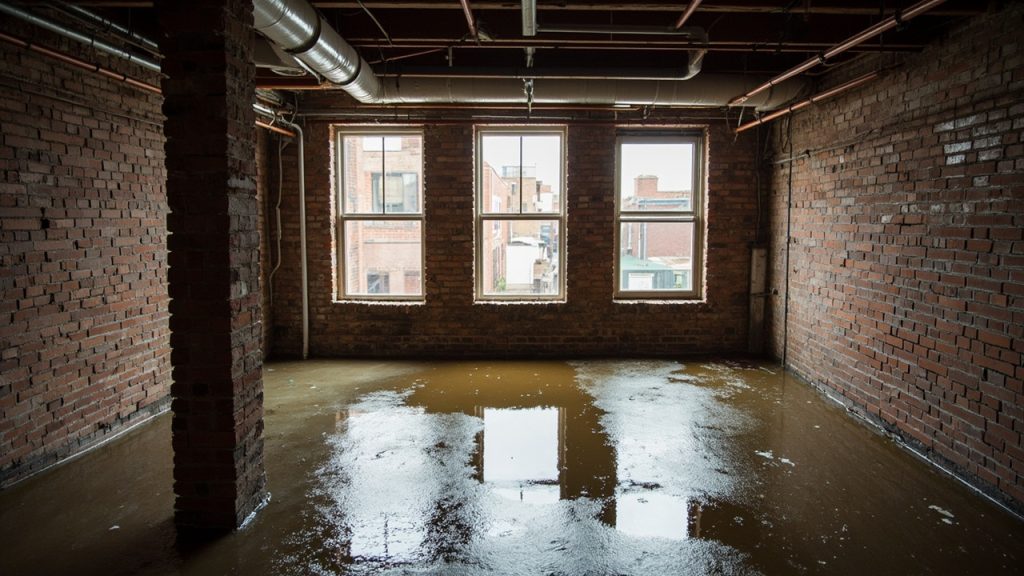
Your basement just flooded. A pipe froze and burst somewhere behind the walls. Water is spreading across your hardwood floors. Your first instinct is to panic. Stop. You have a clear action plan, and you need to execute it right now. Cornerstone Water Damage Restoration responds to burst pipe emergencies in Logan Square every winter. We dispatch a crew to your address within 60 minutes of your call. Our technicians bring commercial-grade dehumidifiers, air movers, moisture meters, and extraction equipment. We begin the mitigation process while you handle insurance notification.
- Locate your main water shut-off valve. Your main shut-off valve is typically located where the water line enters your home. This is usually in the basement, crawl space, or near the foundation wall. It looks like a lever or a round knob attached to a copper or PVC pipe. Rotate the lever 90 degrees clockwise or turn the knob clockwise until it stops. This cuts water to the entire house. If you cannot find it or turn it, go to the street-level meter box outside your home. A water meter lies inside a concrete or plastic box. You can close the valve at the meter if your home shut-off fails.
- Turn off the electricity to affected rooms. If water has reached outlets, light switches, or appliances, turn off power at the breaker panel to prevent electrical hazards. Never touch standing water near outlets or cords.
- Open doors and windows to maximize airflow. Move furniture and belongings away from wet areas. Damp air accelerates mold growth, and ventilation is your first defense. If outdoor temperatures are below freezing, open windows carefully. The cool air will slow bacterial growth until extraction equipment arrives.
- Remove standing water manually if possible. Use towels, buckets, or a wet-dry vacuum to pull water away from high-value items. Photographs, documents, and furniture can be salvaged if dried within 24 to 48 hours.
- Take photographs and video of all damage. Document the wet areas, the source of the leak, and the extent of saturation. Send these images to your insurance company and to our team. This creates the record you need for claims adjustment.
- Call Cornerstone Water Damage Restoration immediately. We dispatch a crew to Logan Square within 60 minutes of your call.
These steps save thousands of dollars in secondary damage. Mold growth accelerates in humid conditions. Hardwood floors buckle and warp if saturation persists beyond 48 hours. Drywall loses structural integrity. Every hour matters.
Why Frozen Pipes Are More Dangerous Than You Think
Chicago winters bring Polar Vortex events. Temperatures plunge to minus 10, minus 20, sometimes minus 30 degrees Fahrenheit. When cold air finds your home’s exterior walls or uninsulated pipes in crawl spaces, water inside those pipes freezes solid within three to six hours of exposure.
The problem is not the freeze itself. The problem is what happens next. As water freezes, it expands. Ice forms a plug inside the pipe. When the temperature rises, that ice melts. But if the ice has created a blockage and pressure builds from thawing water behind it, the pipe splits. The rupture often occurs in a hidden location. Behind baseboards. Inside wall cavities. Under concrete. The water flows for hours before you notice it.
Logan Square’s vintage housing stock amplifies this risk. The Greystones lining Milwaukee Avenue have narrow crawl spaces between the first floor and basement. These spaces are unheated and often uninsulated. Water lines running through them are exposed to outdoor air temperatures during winter. Ice forms faster in these spaces than in heated basements. Ruptures in crawl space pipes are also harder to detect because the spaces are cramped and poorly lit.
Worker cottages scattered throughout Logan Square, particularly near Palmer Square and the 606 trail, present another challenge. These single-story homes were built in the early 1900s with minimal insulation. Exterior walls have no vapor barriers. Skirting around piers allows cold air to flow beneath the house. Main water lines often run along exterior walls before entering the home.
Garden apartments near the intersection of Kimball Avenue and Logan Boulevard were built in the 1960s and 1970s with concrete slab foundations. Pipes were embedded in the slab or run between floors in wall cavities. If a pipe in a concrete slab freezes, detection is nearly impossible until water appears in the unit below. If a pipe in a shared wall cavity freezes, it may burst and damage an adjacent unit without the owner knowing until water seeps through the wall.
A single burst pipe can release 250 gallons of water per day into your home. After 72 hours without extraction, mold colonies begin visible growth on drywall, insulation, and wood studs.
Thawing Frozen Pipes in Vintage Chicago Homes
If you discover a frozen pipe before it bursts, you have a narrow window to thaw it safely. Do not use a blowtorch or flame. Open flames create fire hazards, especially in vintage homes with older electrical systems and combustible materials.
Safe thawing methods include heat lamps positioned 12 to 18 inches from the pipe, hairdryers on high heat directed at the frozen section, or heating cables wrapped around the pipe. Keep heat sources away from walls and insulation. Never leave heating equipment unattended.
After thawing, the pipe may leak slightly. This is normal. Do not ignore it. A slow leak indicates the pipe wall is compromised. Call a plumber to replace the damaged section before it ruptures completely.
Prevention is far more cost-effective than repair. Insulate exposed pipes in crawl spaces and basements using foam sleeves or heat tape. Keep cabinet doors under kitchen sinks open so warm air circulates around pipes. Maintain indoor temperatures above 55 degrees Fahrenheit in unoccupied spaces. Let faucets drip slightly overnight during extreme cold snaps. Moving water is harder to freeze than stagnant water.
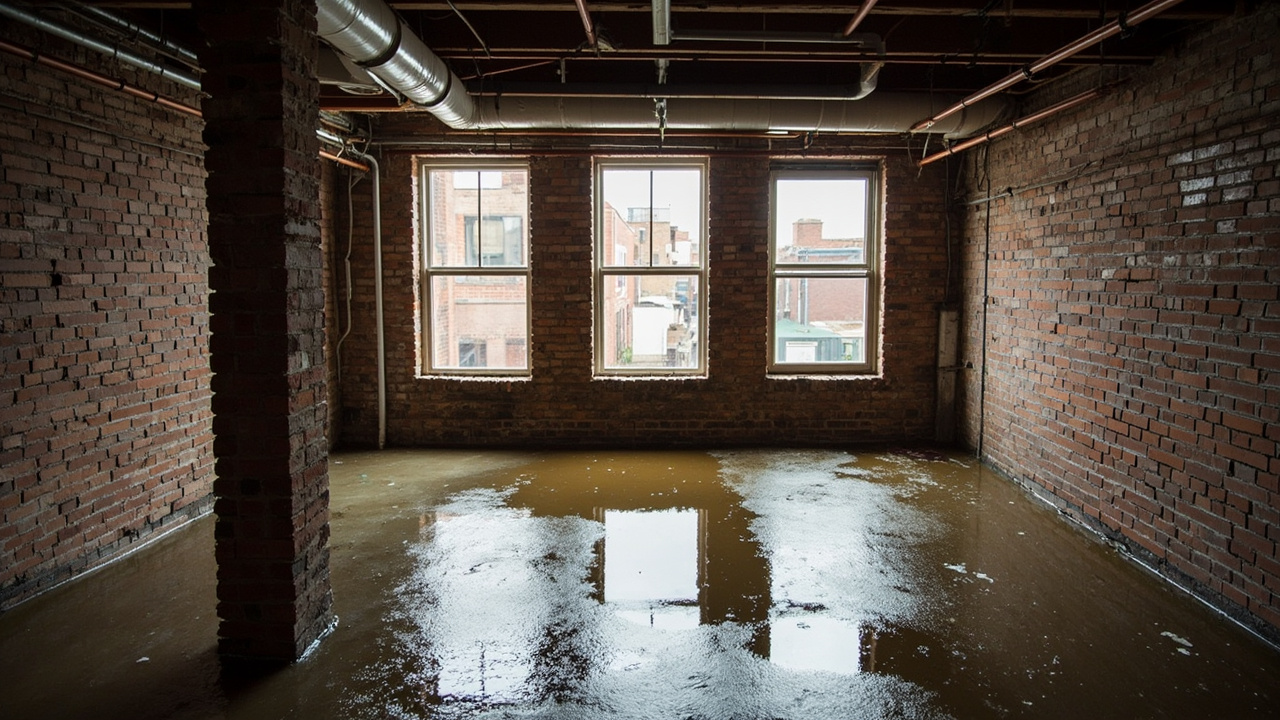
The Water Extraction and Structural Drying Process
Once our team arrives at your Logan Square home, we follow an IICRC-certified protocol. This is the industry standard for water mitigation and restoration. It protects your health, your property, and your insurance claim.
Step 1. Inspection and Moisture Detection
Our technicians assess the scope of water damage using moisture meters and thermal imaging cameras. These tools identify saturated materials behind walls and under flooring that are invisible to the naked eye. We create a drying plan based on the severity, humidity levels, and the types of materials affected.
In older Logan Square homes, we pay special attention to foundation walls. Chicago Blue Clay soil surrounds most basements in the neighborhood. This clay retains groundwater and creates hydrostatic pressure against concrete and limestone foundations. If the burst pipe is near the foundation, seepage may continue even after we extract standing water.
Step 2. Water Extraction
We deploy industrial-grade pumps and wet-dry vacuums to remove standing water. A single pump can extract 3,000 to 5,000 gallons per hour. We work systematically from the affected room outward, ensuring no water remains in carpet padding, insulation, or subflooring.
For burst pipes in second-floor or attic locations, gravity works in our favor. Water flows downward. We catch it at low points and channel it away from critical structural areas. For basement floods, we may need to pump water over foundation walls or connect to floor drains to prevent recontamination.
Step 3. Dehumidification and Air Movement
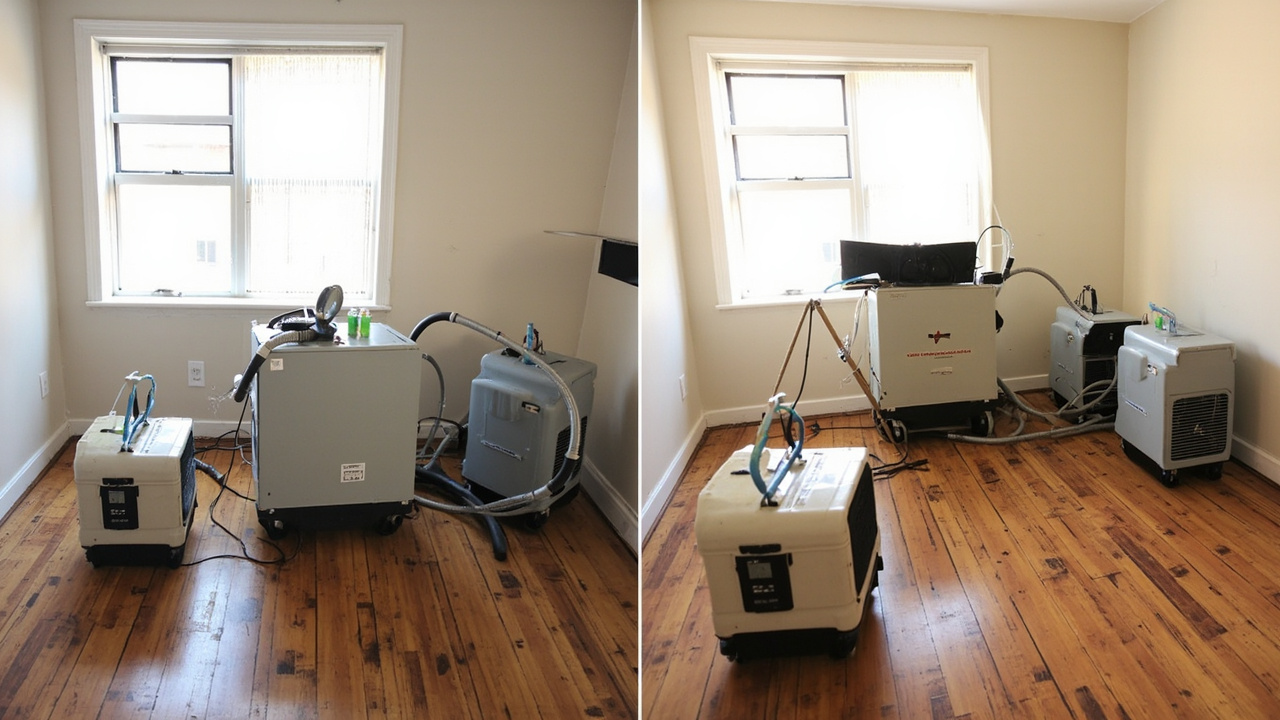
After standing water is gone, structural drying begins. We position commercial dehumidifiers throughout the home. These machines pull moisture from the air and from the porous materials in walls and floors. We run air movers in conjunction with dehumidifiers. Air movers create circulation that accelerates evaporation.
The combination of dehumidification and air movement reduces moisture levels from saturation (100 percent relative humidity) down to normal levels (30 to 50 percent relative humidity) in five to seven days for most residential spaces. Heavily saturated areas or those with thick insulation may require additional time.
We monitor moisture levels daily using meters placed in drywall, subfloors, and insulation. When readings reach acceptable levels, we remove equipment and seal the space to prevent re-absorption of moisture from humid outdoor air.
Step 4. Structural Repair and Sanitization
After drying is complete, we assess what can be salvaged and what must be replaced. Drywall that has dried may be painted over. Insulation that was saturated must be removed and replaced. Hardwood floors that have cupped or buckled may require sanding and refinishing or replacement.
We treat all affected surfaces with antimicrobial solutions to prevent mold growth. This is especially critical in humid climates like Chicago, where summer humidity and mold spores are ever-present. The antimicrobial barrier buys you time if moisture levels spike again.
Carpet and padding that have been wet for more than 24 hours are typically not salvageable. Mold spores and bacteria colonize the fibers and padding beneath. Replacement is safer and more cost-effective than attempting to save them.
How Insurance Coverage Works for Frozen Pipe Damage in Chicago
Most homeowners insurance policies in Chicago cover sudden pipe bursts, yet coverage is conditional. The policy must include a water damage rider, and the damage must result from an accidental rupture, not negligence or lack of maintenance.
Insurance companies in Illinois deny claims based on these factors.
- The homeowner failed to maintain adequate heat in the home during winter months
- The pipes were already known to be vulnerable or previously frozen, indicating preventable negligence
- The damage resulted from gradual leaking, not a sudden burst
- The policy period had lapsed or the claim was filed after the statute of limitations
To strengthen your claim, document the following.
- The exact date and time you discovered the damage
- Photographs and video of the burst pipe and the water damage
- The outdoor temperature on the date of the burst (public weather records confirm this)
- Any recent repairs or maintenance records for the plumbing system
- Evidence that you maintained adequate heat (utility bills, thermostat records)
Cornerstone handles communication with your insurance adjuster on your behalf. We provide detailed estimates, mitigation photos, and documentation of the work performed. This reduces the back-and-forth that often delays claims. We also know which insurers in Chicago are most likely to dispute frozen pipe claims and what information they request during investigation.
Coverage typically includes water extraction, structural drying, and necessary repairs to damaged materials. It may not include preventative measures like pipe insulation or waterproofing improvements. We discuss coverage limits with you before we proceed so you understand what your insurance will pay and what costs fall to you. Learn more about handling insurance claims for water damage in Chicago.
Preventing Secondary Mold Damage After a Frozen Pipe Burst
Mold is not just unsightly. It is a health hazard. Mold spores trigger allergic reactions, respiratory infections, and asthmatic episodes, particularly in children and elderly household members. After a water damage event, mold prevention is your top priority.
Chicago’s humid summers create a perfect storm for mold growth. After we extract water and dry your home, keep relative humidity below 50 percent for at least two weeks. This prevents mold colonies from establishing themselves in materials that retained residual moisture.
Steps to prevent mold after restoration.
- Run dehumidifiers continuously during warm, humid months, even after structural drying is complete
- Ensure all bathroom and kitchen exhaust fans vent to the outside, not into attic spaces or crawl spaces
- Seal air leaks around windows and doors to reduce moisture infiltration
- Clean and replace HVAC filters monthly during the cooling and heating seasons
- Inspect crawl spaces and basement walls monthly for water stains or musty odors
- Grade soil away from the foundation so rainwater does not pool against the walls
- Maintain gutters and downspouts so they direct water at least six feet away from the house
If you notice musty smells or visible mold growth weeks or months after the initial damage, do not delay. Mold spreads through spores and mycelium networks inside walls and insulation. Early intervention prevents it from colonizing large areas. Professional mold remediation becomes necessary if colonies exceed 10 square feet or if they are located in HVAC ducts or insulation.
Logan Square Architecture and Frozen Pipe Risk
Logan Square is defined by its vintage housing stock. The neighborhood’s Greystones were built between 1910 and 1920. These three to five-story brick buildings feature grand facades, ornate cornices, and interior woodwork that is stunning. Their plumbing systems, however, are a liability in modern winters.
Understanding your home’s architecture is the first step toward prevention. If you live in a vintage Logan Square property, have a licensed plumber inspect your system annually before winter. Identify vulnerable pipes and insulate them. Replace old galvanized steel pipes with modern copper or PEX if budget allows. These investments prevent emergencies and increase your home’s value.
Drying Timelines for Logan Square Home Types
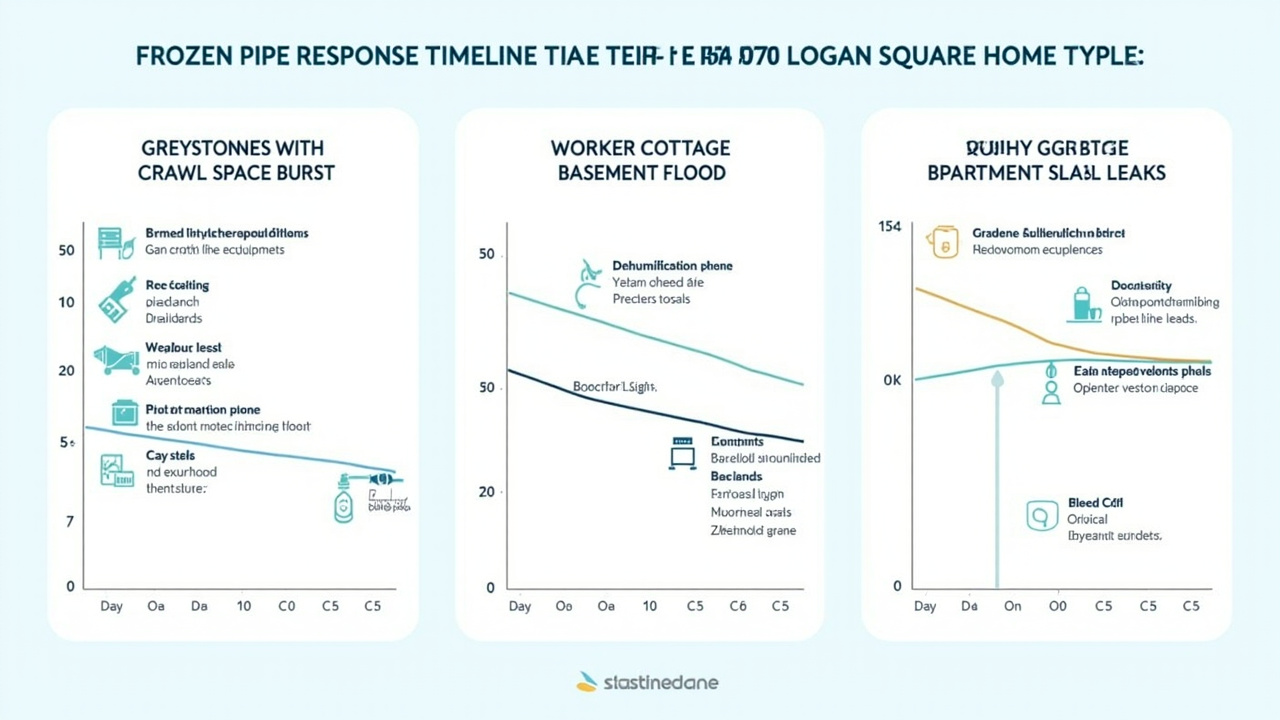
Greystones with Crawl Space Burst Pipes. A burst pipe in the crawl space of a typical four-story Greystones releases water that flows downward and spreads across the basement floor. Initial extraction takes six to eight hours. Structural drying of the concrete floor, foundation walls, and any insulation in the crawl space takes 10 to 14 days with professional equipment. The crawl space’s poor ventilation and thick concrete foundation slow evaporation. Expect daily monitoring visits and equipment adjustments throughout this period.
Worker Cottage Basement Flooding. A burst pipe in a single-story worker cottage creates rapid basement saturation due to the foundation’s proximity to the main floor. These homes often lack vapor barriers in basement walls. Initial extraction takes four to six hours. Structural drying takes seven to ten days. The larger concern in worker cottages is the skirting beneath the home. If water enters the space beneath the house, mold growth accelerates due to poor air circulation. Professional extraction must include this underfloor area.
Garden Apartment Slab Leak. A burst pipe embedded in a concrete slab foundation requires the longest drying timeline. Water trapped beneath the slab creates moisture that wicks upward through the concrete for weeks. Initial detection is slow because the water spreads laterally under the slab. Once identified, extraction of surface water takes three to four hours. Structural drying of the slab itself takes 14 to 21 days. The flooring installed above the slab (wood, vinyl, or tile) may need removal and replacement if moisture readings remain elevated after two weeks. These projects are the most expensive to resolve.
Why Professional Restoration Beats DIY Cleanup
You might be tempted to save money by handling cleanup yourself. Rent a dehumidifier, open the windows, and let time do the work. This approach fails for three reasons.
First, residential dehumidifiers are underpowered. They extract 15 to 30 pints of moisture per day. Commercial dehumidifiers extract 150 to 200 pints per day. A single commercial unit removes more moisture in one day than a residential unit removes in two weeks. Speed matters because mold begins growing within 48 hours of saturation in warm, humid conditions.
Second, you cannot see moisture trapped inside walls, under baseboards, or in insulation cavities. Moisture meters detect saturation levels that are invisible to the eye. If you do not measure and monitor, you are guessing. Missed pockets of moisture become mold growth. Hidden moisture detection is a critical part of professional restoration that prevents costly secondary damage.
Third, insurance claims require documentation. Professional restoration companies maintain detailed reports, before-and-after photos, equipment logs, and drying curves that prove the work was performed correctly. This documentation strengthens your claim and protects you if the insurer disputes coverage. DIY cleanup creates no documentation. If mold appears six months later, you have no proof that you attempted proper mitigation.
The cost of professional restoration is typically covered by insurance, making it free to you. The cost of dealing with mold, structural repairs, and potential health issues from improper cleanup far exceeds the cost of professional mitigation.
Protecting Your Logan Square Home From Future Frozen Pipe Events
After you have recovered from a burst pipe, the next step is prevention. Chicago winters will happen again. Temperatures will drop below zero. Your home needs to be ready.
Work with a plumber to identify all vulnerable pipes in your home. Priority areas include exterior walls, crawl spaces, unheated garages, and attics. These spaces are most likely to freeze. Wrap exposed pipes with foam insulation sleeves or install heat tape that automatically activates when temperatures drop.
Improve insulation in crawl spaces and attics. Better insulation keeps these spaces warmer and reduces the temperature differential that causes pipes to freeze. In Logan Square, many homes benefit from crawl space encapsulation. This involves sealing the crawl space, installing a vapor barrier, and ensuring ventilation is adequate. The result is a warmer, drier crawl space that is less likely to experience pipe freezing.
Install a sump pump if your basement is prone to groundwater intrusion. During a pipe burst, a sump pump helps remove excess water quickly. Regular maintenance of the sump pump, including testing and battery backup systems, ensures it works when you need it. Proper sump pump maintenance prevents backup failures during winter and spring.
Consider basement waterproofing if water intrusion is a recurring problem. Waterproofing involves sealing cracks in foundation walls, installing interior or exterior drainage systems, and ensuring proper grading around the foundation. These improvements reduce the overall moisture load in your home and lower the risk of secondary water damage from groundwater if a pipe burst occurs near the foundation.
For residents of Logan Square and surrounding neighborhoods like West Town, Rogers Park, and Avondale, seasonal preparation is essential. In October, before the first freeze, have your heating system serviced. Ensure your thermostat is functioning and set to maintain at least 55 degrees Fahrenheit in all spaces, including basements and crawl spaces. Shut off water to exterior faucets and drain the lines.
In spring, after the last freeze, inspect your home for signs of undetected leaks or damage. Look for water stains on basement walls, musty smells, or areas of efflorescence (white mineral deposits) on concrete. These signs indicate ongoing moisture problems that need attention before mold colonizes the space.
What To Expect When Cornerstone Arrives at Your Logan Square Home
Call us at the moment you discover a burst pipe. We respond to Logan Square within 60 minutes. Our technician arrives in a fully equipped van with extraction pumps, dehumidifiers, air movers, moisture meters, and protective equipment.
The first 30 minutes are spent on assessment. The technician inspects the damage, identifies the burst pipe, shuts off water if you have not already, and begins planning the extraction and drying strategy. We photograph the damage and answer your questions about the process, timeline, and what your insurance will cover.
The technician initiates extraction and dehumidification immediately. While equipment runs, we contact your insurance company on your behalf. We explain what happened, what we are doing to mitigate damage, and what the claim process will look like. Most insurers appreciate the proactive communication and are more likely to approve claims when a certified professional handles initial notification.
Over the next five to seven days, we visit daily to monitor moisture levels, adjust equipment, and remove drying equipment as materials reach acceptable dryness. Once drying is complete, we provide a final inspection report with before-and-after moisture readings. This documentation supports your insurance claim and confirms that the restoration was completed properly.
Serving Logan Square and the Greater Chicago Area
Cornerstone Water Damage Restoration serves Logan Square, Palmer Square, West Town, Rogers Park, Lincoln Park, Lakeview, the West Loop, and neighborhoods throughout Cook County. We also respond to emergencies in surrounding areas including Evanston, Naperville, Joliet, and Springfield.
Our team holds IICRC certifications in water restoration, applied structural drying, and mold remediation. We maintain equipment certifications and attend continuing education annually to stay current with industry standards and best practices. This is not a one-time job for us. We handle frozen pipe emergencies every winter in Logan Square. We understand the unique challenges of vintage Chicago homes and the insurance landscape in Illinois.
Whether your burst pipe damaged a single room or multiple floors, we manage the entire process from initial extraction to final restoration. We work directly with insurance adjusters, track all costs, and document every step. Our goal is to restore your home to pre-loss condition as quickly as possible so you can return to normal life.
Frequently Asked Questions
How long does it take for a burst pipe to cause mold damage in a Chicago home?
Mold spores begin colonizing saturated materials within 24 to 48 hours of water exposure. Visible mold growth appears within 7 to 10 days if the affected area remains wet and warm. Professional extraction and dehumidification must begin within the first 24 hours to prevent mold growth. This is why rapid response is critical.
Does homeowners insurance in Chicago cover frozen pipe damage?
Yes, most homeowners insurance policies in Illinois cover sudden pipe bursts resulting from freezing. Coverage is conditional on the homeowner maintaining adequate heat in the home. Policies typically exclude damage from gradual leaks or failure to winterize. Check your policy documents or call your insurance agent to confirm coverage limits and deductibles before an emergency occurs.
What are the signs that a pipe is about to freeze in a Logan Square home?
Common warning signs include reduced water pressure at faucets, a slight water flow even when the valve is closed, or frost visibly accumulating on exposed pipes. If you notice these signs during a cold snap, open the faucet slightly to maintain water movement. Contact a plumber to inspect the vulnerable area and add insulation if needed.
Can you salvage hardwood floors after a burst pipe flood?
Hardwood floors can sometimes be salvaged if they are dried within 48 to 72 hours. Professional drying equipment can prevent permanent cupping or warping. Hardwood floor water damage restoration depends on the speed of response and the severity of saturation. If floors have warped or were wet for more than 72 hours, replacement is typically the only option. Modern engineered hardwood or solid hardwood installed after professional drying are the most common solutions.
How often should I have my plumbing system inspected to prevent frozen pipes?
We recommend annual inspections before winter, particularly if your home is older than 50 years or if you have experienced pipe freezing in the past. A licensed plumber can identify vulnerable areas, recommend insulation upgrades, and replace deteriorating pipes before failure occurs.
A burst pipe in the middle of a Chicago winter is terrifying. Water spreads through your home faster than you can contain it. Yet you have power in this moment. Shut off the main water valve. Open your doors and windows. Take photographs. Call Cornerstone Water Damage Restoration. We arrive within 60 minutes with the equipment, expertise, and certifications to stop the damage and begin restoration immediately.
Do not delay. Do not attempt DIY cleanup. Your home’s recovery depends on speed and professional intervention. Call our 24/7 emergency line now if you discover a burst pipe or active water damage. We are standing by to respond to Logan Square and the greater Chicago area. Your first call determines everything that happens next. Make it count.
{
“@context”: “https://schema.org”,
“@type”: “BlogPosting”,
“headline”: “24/7 Frozen Pipe Water Damage Restoration in Logan Square, Chicago”,
“description”: “Emergency frozen pipe burst restoration in Logan Square. 60-minute response. IICRC certified. Call 24/7 for water extraction and structural drying.”,
“wordCount”: 3884,
“datePublished”: “2026-02-15T09:32:00.000Z”,
“dateModified”: “2026-02-15T09:32:00.000Z”,
“inLanguage”: “en-US”,
“mainEntityOfPage”: {
“@type”: “WebPage”,
“@id”: “https://cornerstonewaterdamagerestorationchicago.com”
},
“publisher”: {
“@type”: “LocalBusiness”,
“name”: “Cornerstone Water Damage Restoration Chicago”,
“url”: “https://cornerstonewaterdamagerestorationchicago.com”
},
“author”: {
“@type”: “Organization”,
“name”: “Cornerstone Water Damage Restoration Chicago”,
“url”: “https://cornerstonewaterdamagerestorationchicago.com”
},
“image”: {
“@type”: “ImageObject”,
“url”: “https://cornerstonewaterdamagerestorationchicago.com/wp-content/uploads/2026/03/fixing-water-damage-from-frozen-pipes-in-logan-squ-1.jpg”
}
}
{
“@context”: “https://schema.org”,
“@type”: “LocalBusiness”,
“name”: “Cornerstone Water Damage Restoration Chicago”,
“url”: “https://cornerstonewaterdamagerestorationchicago.com”,
“address”: {
“@type”: “PostalAddress”,
“addressLocality”: “Chicago”
},
“areaServed”: {
“@type”: “City”,
“name”: “Chicago”
}
}
{
“@context”: “https://schema.org”,
“@type”: “FAQPage”,
“mainEntity”: [
{
“@type”: “Question”,
“name”: “How long does it take for a burst pipe to cause mold damage in a Chicago home?”,
“acceptedAnswer”: {
“@type”: “Answer”,
“text”: “Mold spores begin colonizing saturated materials within 24 to 48 hours of water exposure. Visible mold growth appears within 7 to 10 days if the affected area remains wet and warm. Professional extraction and dehumidification must begin within the first 24 hours to prevent mold growth. This is why rapid response is critical.”
}
},
{
“@type”: “Question”,
“name”: “Does homeowners insurance in Chicago cover frozen pipe damage?”,
“acceptedAnswer”: {
“@type”: “Answer”,
“text”: “Yes, most homeowners insurance policies in Illinois cover sudden pipe bursts resulting from freezing. Coverage is conditional on the homeowner maintaining adequate heat in the home. Policies typically exclude damage from gradual leaks or failure to winterize. Check your policy documents or call your insurance agent to confirm coverage limits and deductibles before an emergency occurs.”
}
},
{
“@type”: “Question”,
“name”: “What are the signs that a pipe is about to freeze in a Logan Square home?”,
“acceptedAnswer”: {
“@type”: “Answer”,
“text”: “Common warning signs include reduced water pressure at faucets, a slight water flow even when the valve is closed, or frost visibly accumulating on exposed pipes. If you notice these signs during a cold snap, open the faucet slightly to maintain water movement. Contact a plumber to inspect the vulnerable area and add insulation if needed.”
}
},
{
“@type”: “Question”,
“name”: “Can you salvage hardwood floors after a burst pipe flood?”,
“acceptedAnswer”: {
“@type”: “Answer”,
“text”: “Hardwood floors can sometimes be salvaged if they are dried within 48 to 72 hours. Professional drying equipment can prevent permanent cupping or warping. Hardwood floor water damage restoration depends on the speed of response and the severity of saturation. If floors have warped or were wet for more than 72 hours, replacement is typically the only option. Modern engineered hardwood or solid hardwood installed after professional drying are the most common solutions.”
}
},
{
“@type”: “Question”,
“name”: “How often should I have my plumbing system inspected to prevent frozen pipes?”,
“acceptedAnswer”: {
“@type”: “Answer”,
“text”: “We recommend annual inspections before winter, particularly if your home is older than 50 years or if you have experienced pipe freezing in the past. A licensed plumber can identify vulnerable areas, recommend insulation upgrades, and replace deteriorating pipes before failure occurs.”
}
}
]
}
{
“@context”: “https://schema.org”,
“@type”: “HowTo”,
“name”: “How to Respond to a Burst Pipe in Your Logan Square Home”,
“step”: [
{
“@type”: “HowToStep”,
“position”: 1,
“name”: “Locate your main water shut-off valve”,
“text”: “. Your main shut-off valve is typically located where the water line enters your home. This is usually in the basement, crawl space, or near the foundation wall. It looks like a lever or a round knob attached to a copper or PVC pipe. Rotate the lever 90 degrees clockwise or turn the knob clockwise until it stops. This cuts water to the entire house. If you cannot find it or turn it, go to the street-level meter box outside your home. A water meter lies inside a concrete or plastic box. You can close the valve at the meter if your home shut-off fails.”
},
{
“@type”: “HowToStep”,
“position”: 2,
“name”: “Turn off the electricity to affected rooms”,
“text”: “. If water has reached outlets, light switches, or appliances, turn off power at the breaker panel to prevent electrical hazards. Never touch standing water near outlets or cords.”
},
{
“@type”: “HowToStep”,
“position”: 3,
“name”: “Open doors and windows to maximize airflow”,
“text”: “. Move furniture and belongings away from wet areas. Damp air accelerates mold growth, and ventilation is your first defense. If outdoor temperatures are below freezing, open windows carefully. The cool air will slow bacterial growth until extraction equipment arrives.”
},
{
“@type”: “HowToStep”,
“position”: 4,
“name”: “Remove standing water manually if possible”,
“text”: “. Use towels, buckets, or a wet-dry vacuum to pull water away from high-value items. Photographs, documents, and furniture can be salvaged if dried within 24 to 48 hours.”
},
{
“@type”: “HowToStep”,
“position”: 5,
“name”: “Take photographs and video of all damage”,
“text”: “. Document the wet areas, the source of the leak, and the extent of saturation. Send these images to your insurance company and to our team. This creates the record you need for claims adjustment.”
},
{
“@type”: “HowToStep”,
“position”: 6,
“name”: “Call Cornerstone Water Damage Restoration immediately”,
“text”: “. We dispatch a crew to Logan Square within 60 minutes of your call.”
}
],
“image”: “https://cornerstonewaterdamagerestorationchicago.com/wp-content/uploads/2026/03/fixing-water-damage-from-frozen-pipes-in-logan-squ-1.jpg”
}
{
“@context”: “https://schema.org”,
“@type”: “BreadcrumbList”,
“itemListElement”: [
{
“@type”: “ListItem”,
“position”: 1,
“name”: “Home”,
“item”: “https://cornerstonewaterdamagerestorationchicago.com”
},
{
“@type”: “ListItem”,
“position”: 2,
“name”: “Blog”,
“item”: “https://cornerstonewaterdamagerestorationchicago.com/blog”
},
{
“@type”: “ListItem”,
“position”: 3,
“name”: “24/7 Frozen Pipe Water Damage Restoration in Logan Square, Chicago”
}
]
}
{
“@context”: “https://schema.org”,
“@type”: “Service”,
“serviceType”: “Water Damage Restoration”,
“provider”: {
“@type”: “LocalBusiness”,
“name”: “Cornerstone Water Damage Restoration Chicago”,
“url”: “https://cornerstonewaterdamagerestorationchicago.com”
},
“areaServed”: {
“@type”: “City”,
“name”: “Chicago”
},
“description”: “Emergency frozen pipe burst restoration in Logan Square. 60-minute response. IICRC certified. Call 24/7 for water extraction and structural drying.”
}